

You need to clean agricultural tools properly to prevent corrosion and maintain cutting efficiency. Select cleaning methods based on tool materials and soil contamination levels. Use warm water and soft brushes for routine cleaning, but avoid harsh chemicals that can damage metal surfaces. Remove all dirt and debris before storage, since organic matter accelerates deterioration. What happens when you skip this critical first step?
Choose the Right Method to Clean Agricultural Tools
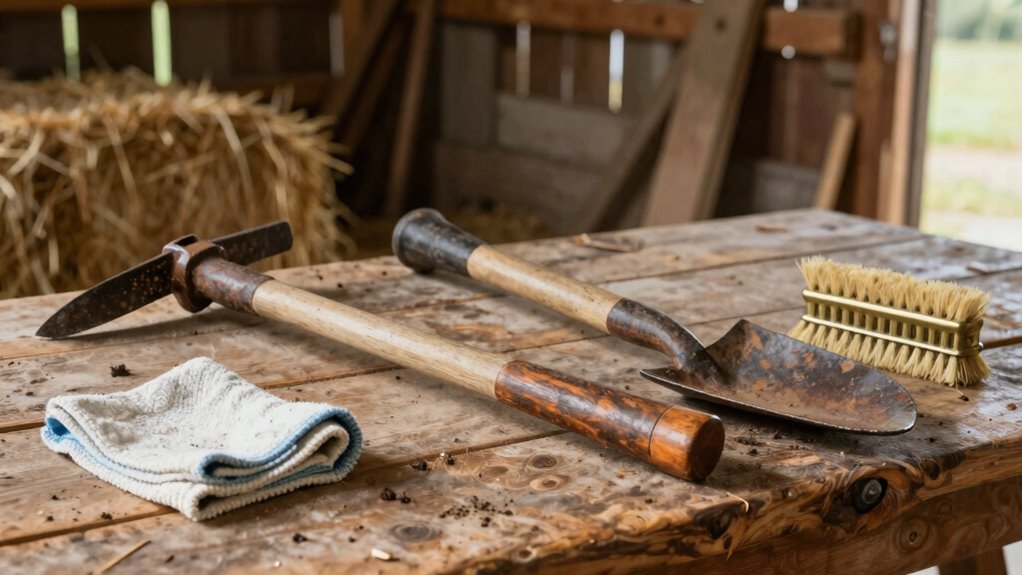
When cleaning agricultural tools, you must select appropriate methods based on the tool’s material composition and soil contamination level. Steel implements require different treatment than aluminum or wooden handles.
Assess soil type first—clay demands soaking, while sandy soil responds to brushing. You should examine each tool individually, identifying rust spots, embedded debris, and wear patterns. Carbon steel needs immediate attention to prevent oxidation, while stainless varieties tolerate more aggressive cleaning.
Plastic components require gentle handling to avoid cracking. Match your cleaning approach to contamination severity: light buildup needs wiping, heavy accumulation requires scraping followed by scrubbing.
Water temperature matters—warm water accelerates detergent action without damaging materials. Your method choice directly impacts tool longevity and performance. Proper assessment prevents unnecessary damage while ensuring effective cleaning results.
Degrease Tools Efficiently Without Damage
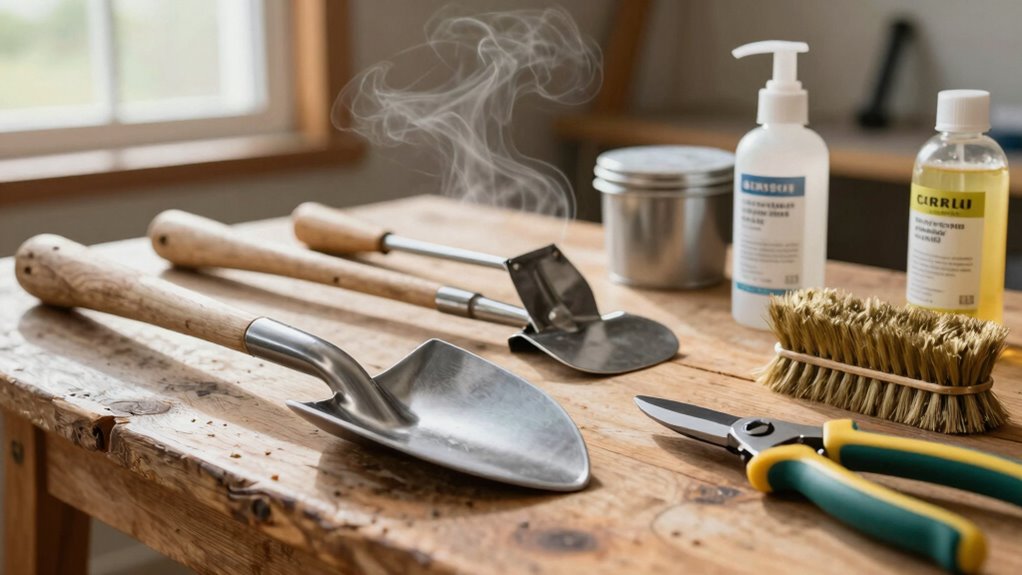
You must select appropriate degreasing solutions that won’t compromise your tool’s metal integrity or protective coatings.
Effective solvents like mineral spirits or specialized agricultural tool cleaners break down stubborn grease without causing corrosion or damage to underlying materials.
Apply these solutions using proper techniques such as soaking, scrubbing with non-abrasive brushes, and thorough rinsing to guarantee complete grease removal while maintaining tool functionality.
Effective Degreasing Solutions
Effective degreasing requires selecting solvents that remove stubborn grease without compromising metal integrity or protective coatings.
You should choose citrus-based degreasers for light to medium buildup, as they’re less aggressive than petroleum solvents. For heavy-duty applications, mineral spirits work effectively but require thorough rinsing afterward.
Isopropyl alcohol dissolves grease quickly while evaporating completely, leaving no residue.
Avoid using caustic cleaners on aluminum or galvanized surfaces since they cause corrosion. Always check manufacturer specifications before applying any degreasing solution.
Test new products on hidden areas first to verify compatibility with your tools’ materials and finishes.
Safe Cleaning Techniques
While selecting appropriate degreasing solutions proves essential, employing proper cleaning techniques guarantees ideal results without compromising your agricultural tools’ structural integrity.
You should always pre-clean tools by removing loose dirt and debris before applying degreasers. Apply solutions using soft-bristled brushes or clean cloths, working in gentle circular motions. Avoid excessive pressure that might damage protective coatings or metal surfaces.
Rinse thoroughly with clean water immediately after degreasing to prevent chemical residue buildup. Dry tools completely using lint-free towels, paying special attention to crevices where moisture accumulates. Store cleaned tools in dry environments to prevent rust formation.
Never use wire brushes on painted surfaces or delicate components. Test degreasing solutions on small, inconspicuous areas first to verify compatibility with your specific tool materials and finishes before full application.
Sharpen Blades Safely and Accurately
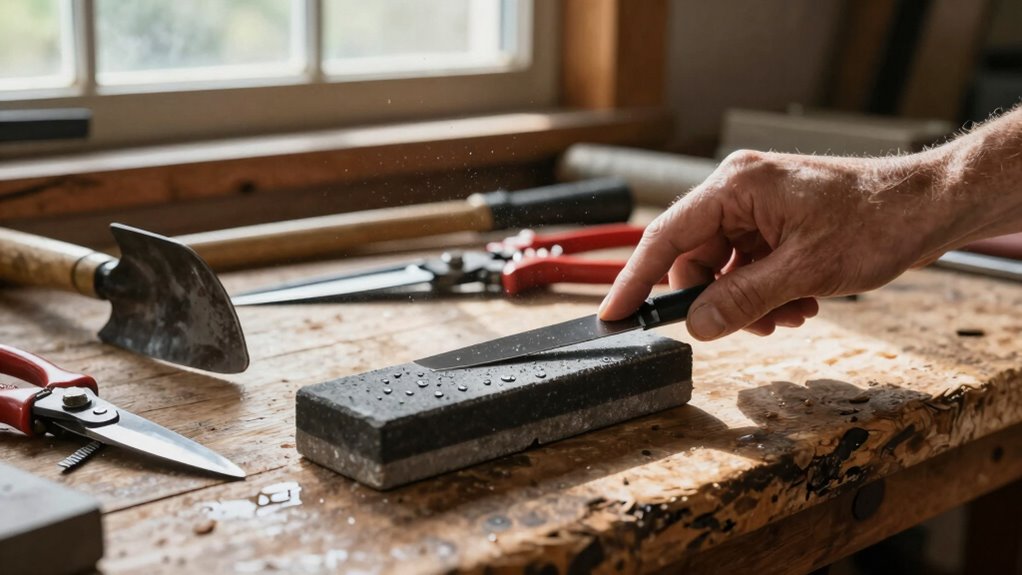
When sharpening blades, maintaining proper angle and pressure guarantees clean cuts without damaging the metal’s temper.
Hold your sharpening stone at twenty to thirty degrees against the blade’s edge. Apply consistent, moderate pressure while moving the stone in controlled, overlapping strokes. Alternate between sides to confirm even sharpening.
Check progress frequently by running your thumb perpendicular to the edge – you’ll feel the burr forming. Remove this burr by lightly stroking the opposite side.
Use progressively finer grits for best results. Store blades properly between sessions.
Master these techniques and you’ll join the ranks of experienced farmers who rely on razor-sharp tools. Your equipment demands precision maintenance.
Don’t settle for dull edges that tear instead of slicing cleanly through materials.
Stop Rust Before It Starts on Metal Tools
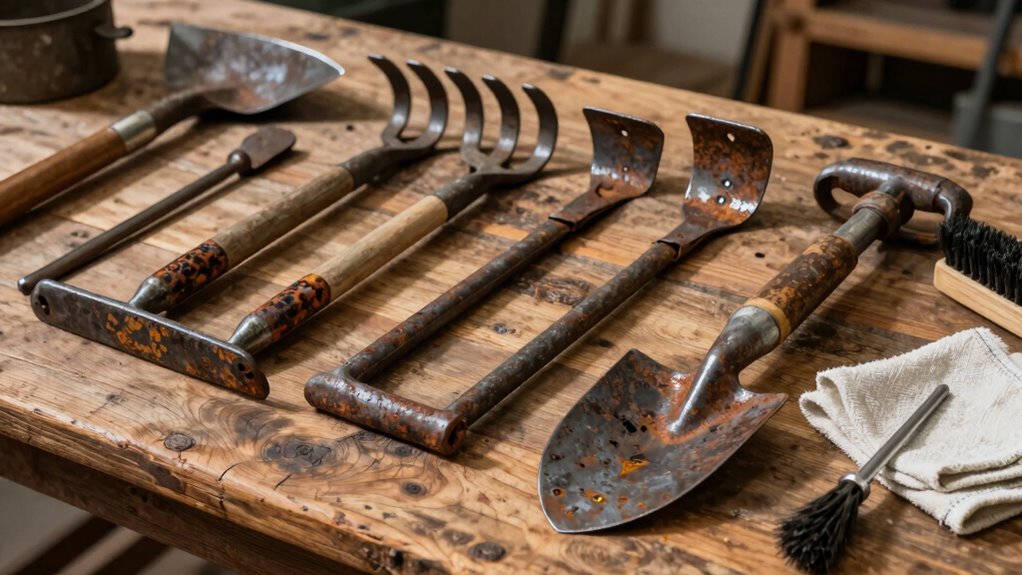
Proper sharpening creates clean cuts, but exposed metal surfaces need immediate protection to prevent corrosion. You must apply a thin coat of oil or wax to freshly sharpened edges within minutes.
Moisture and oxygen react with bare steel, forming iron oxide that compromises tool integrity. Clean tools thoroughly before storage, removing all dirt and debris that trap moisture. Store implements in dry environments, using moisture-absorbing packets when necessary.
Inspect tools regularly for early rust signs, addressing spots immediately with fine sandpaper or wire brushes. Apply protective coatings like linseed oil or specialized metal protectants.
Don’t overlook crevices, joints, and hard-to-reach areas where moisture accumulates. Metal tools require proactive corrosion prevention, not reactive repairs. Your tools’ longevity depends on consistent protective measures.
Lubricate Tools Regularly for Peak Performance
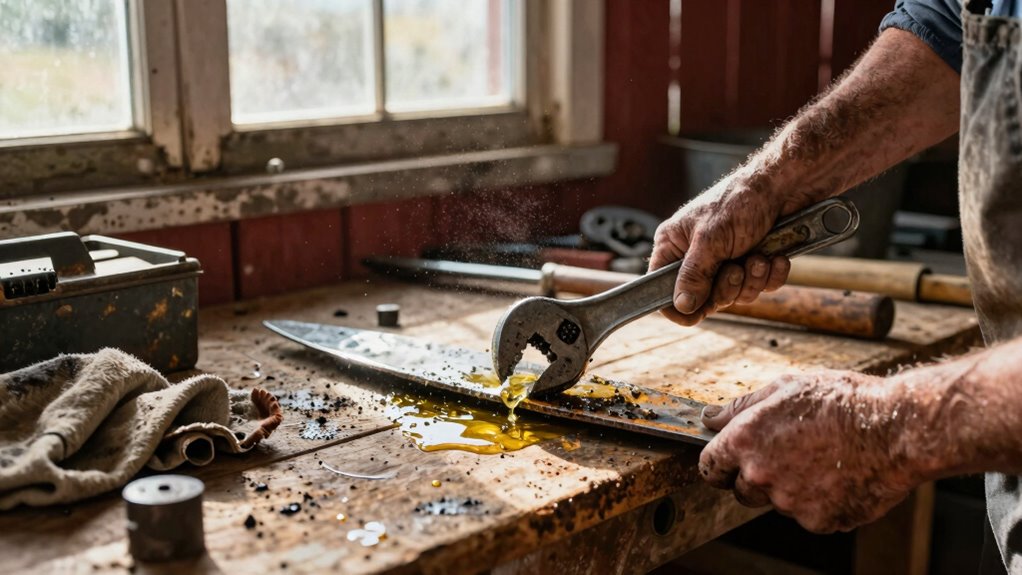
Regular lubrication prevents premature wear and guarantees smooth operation of your agricultural tools.
You should apply lightweight machine oil to moving parts like hinges, pivots, and blades before each use.
Focus on metal-to-metal contact points where friction generates heat and accelerates deterioration. Use grease fittings on heavy-duty equipment and check manufacturer specifications for appropriate lubricant types.
Don’t overlook pivot points on plows, cultivators, and harvesting equipment.
Wipe excess lubricant from surfaces to prevent dirt accumulation.
Check lubrication levels monthly during active seasons and before long-term storage.
Proper lubrication reduces operating resistance, minimizes energy consumption, and extends tool lifespan considerably.
Store Agricultural Tools Where They Last Longer
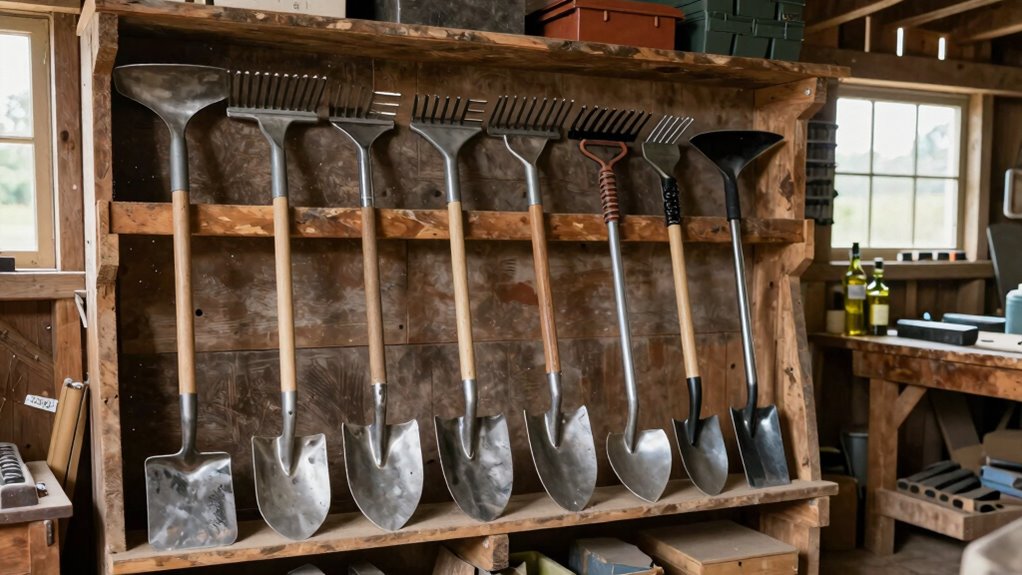
You must select storage locations that protect tools from moisture, temperature fluctuations, and physical damage to maximize their service life.
Establish a regular maintenance schedule that includes cleaning, inspection, and protective coating applications before storage. These practices prevent corrosion, wear, and structural degradation that commonly shorten agricultural tool lifespan.
Proper Storage Location
While selecting appropriate storage locations for agricultural tools may seem straightforward, choosing the right environment greatly impacts their longevity and performance.
You should store tools in dry, well-ventilated areas away from moisture and humidity sources. Temperature fluctuations cause metal expansion and contraction, leading to stress fractures and rust formation. Ideal storage maintains consistent temperatures between 50-70°F.
You must elevate tools off concrete floors using wooden pallets or shelving to prevent moisture absorption. Wall-mounted racks keep cutting edges safe while maximizing space efficiency. Label storage areas clearly so you can quickly locate specific tools.
Keep storage zones organized by tool type and frequency of use. You should never store wet tools long-term, as trapped moisture accelerates corrosion.
Proper lighting guarantees you can inspect tools thoroughly before and after use.
Regular Maintenance Schedule
A systematic approach to maintaining agricultural tools requires establishing a consistent maintenance schedule that prevents deterioration and guarantees prime performance.
You should clean tools after each use, removing dirt, debris, and moisture that accelerate wear. Apply protective coatings monthly to prevent rust formation on metal surfaces.
Sharpen cutting edges weekly to maintain peak functionality and reduce strain during operation. Inspect handles, hinges, and mechanical components bi-weekly for cracks, loose fasteners, or worn parts.
Lubricate moving parts quarterly with appropriate grease or oil formulations. Store tools in climate-controlled environments between 45-75°F with 30-50% humidity.
Document maintenance activities in logbooks for tracking purposes. Schedule professional servicing annually for complex equipment.
Replace worn components immediately rather than risking equipment failure. Following this schedule guarantees your tools perform reliably while maximizing service life and maintaining warranty compliance.
Conclusion
Like a blacksmith’s forge requires constant tending to prevent rust and brittleness, your agricultural tools demand regular maintenance to avoid premature failure. Clean soil from blades immediately, sharpen edges at precise angles, apply protective oils, lubricate moving parts, and store in dry conditions. Each neglected tool becomes a costly lesson in entropy—prevention remains cheaper than replacement when the harvest season arrives.
