

You could clutter your garage floor with bikes, or you could maximize your space efficiently. Installing proper bike storage takes planning, but the right setup saves time and protects your investment. Before you buy hooks or racks, you’ll need to assess your garage layout and decide between wall, ceiling, or floor options. Each method has trade-offs for accessibility and space use.
Compare Wall Vs Ceiling Vs Floor Bike Storage Options
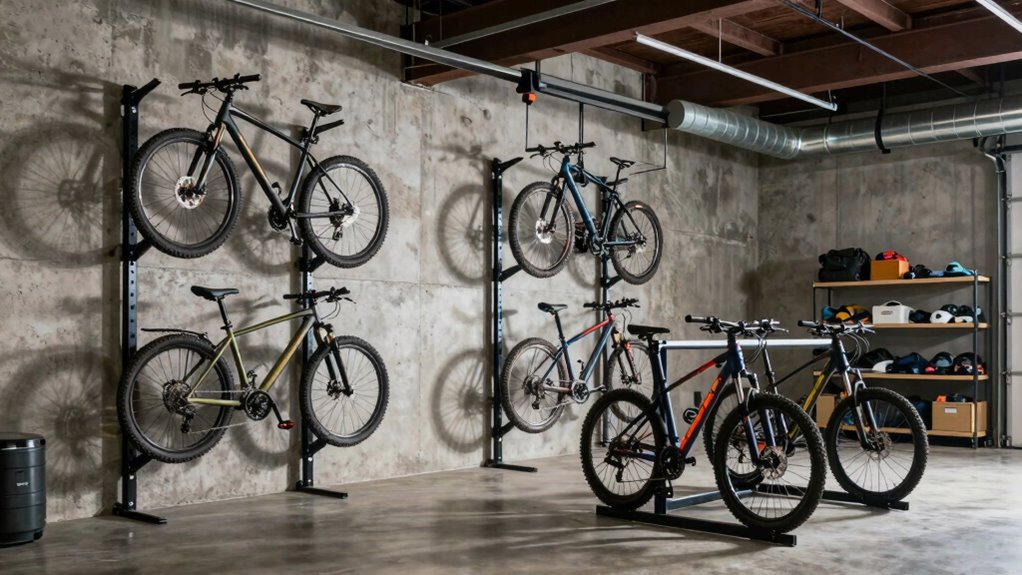
When choosing bike storage, you’ll need to decide between mounting on the wall, hanging from the ceiling, or using floor-based options.
Wall-mounted racks save floor space and keep bikes visible, but require sturdy wall anchors. Ceiling hooks maximize floor area and work well for multiple bikes, though you’ll need a ladder for access.
Floor stands offer easy bike access and don’t require drilling, but they take up valuable garage space. Consider your garage’s layout, ceiling height, and how often you ride.
If you belong to the weekend warrior crowd, ceiling storage might work best. Daily riders should prioritize easy access with wall or floor options. Your neighborhood garage probably uses a mix of these solutions.
Plan Your Garage Layout Around Your Bike Storage Needs
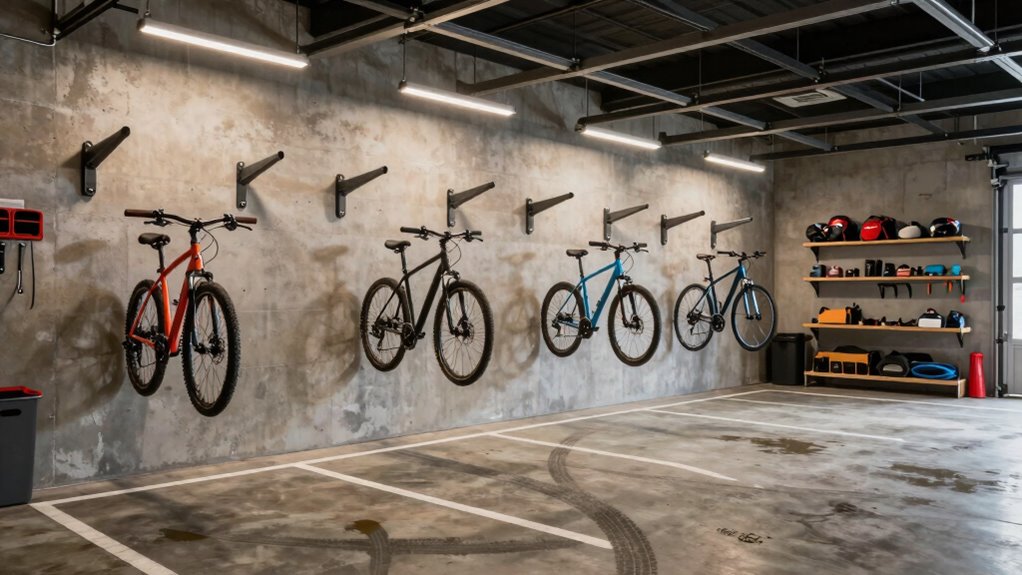
Before you buy any bike storage system, assess your garage’s dimensions and existing layout to determine the best placement strategy.
Measure your bike’s length, width, and height when positioned upright or hung. Consider door swing clearance, walkway space, and access to other garage items.
Think about how many bikes you need to store and whether you want floor, wall, or ceiling mounting. Account for seasonal equipment storage and parking space requirements.
Your garage’s structural elements like beams, outlets, and lighting fixtures will influence placement options.
Plan for easy bike access while maximizing remaining garage functionality. Consider future storage needs and potential garage reorganization when selecting your ideal bike storage location and system type.
Install Wall-Mounted Hooks Or Racks Securely
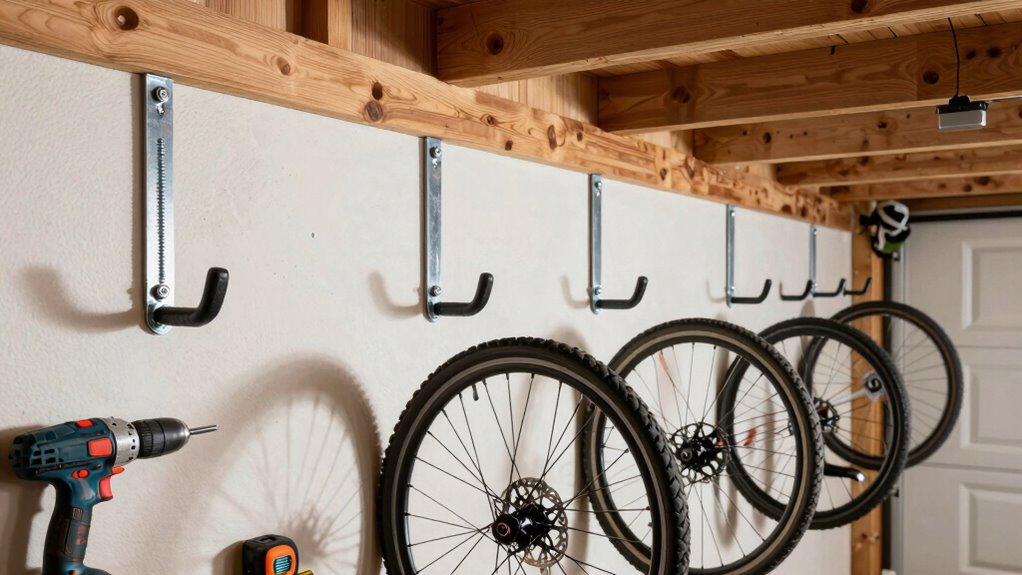
Since you’ve planned your garage layout around your bike storage needs, it’s time to install wall-mounted hooks or racks securely.
Choose sturdy hooks rated for your bike’s weight, preferably steel or heavy-duty plastic. Locate wall studs using a stud finder, as drywall anchors won’t support much weight. Mark your drilling points with pencil, ensuring hooks align properly.
Pre-drill holes slightly smaller than your screws to prevent wood splitting. Use appropriate screws – lag bolts for wooden studs, toggle bolts for concrete or brick. Tighten everything firmly, but don’t over-torque.
Test each hook’s stability by applying pressure. Install hooks at comfortable height, typically 5-6 feet high. Space multiple hooks according to your bike’s width, allowing room for handlebars and pedals.
Make sure bikes hang level and won’t swing into each other. Double-check all connections before hanging your bike.
Set Up Ceiling-Mounted Bike Storage Systems
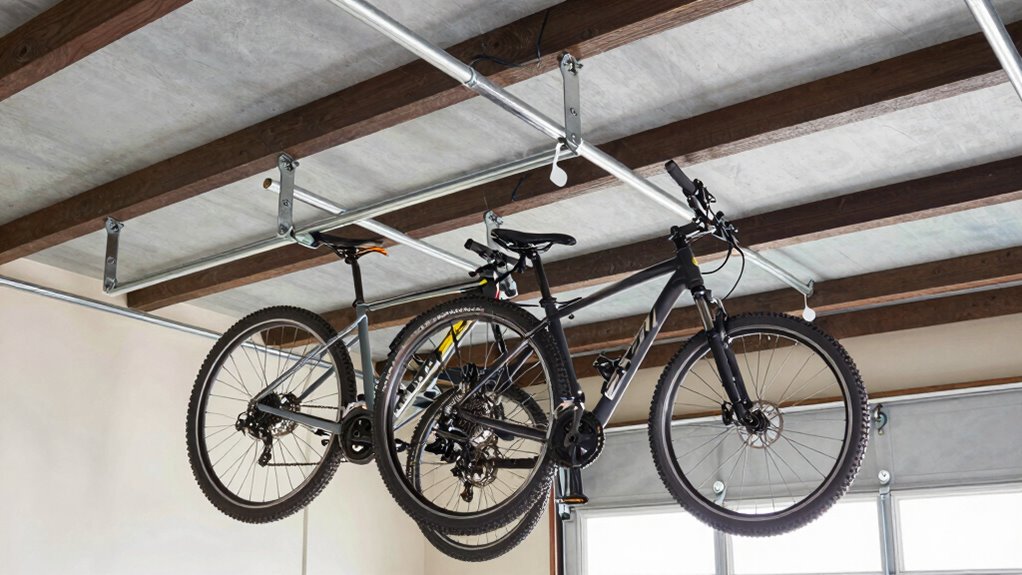
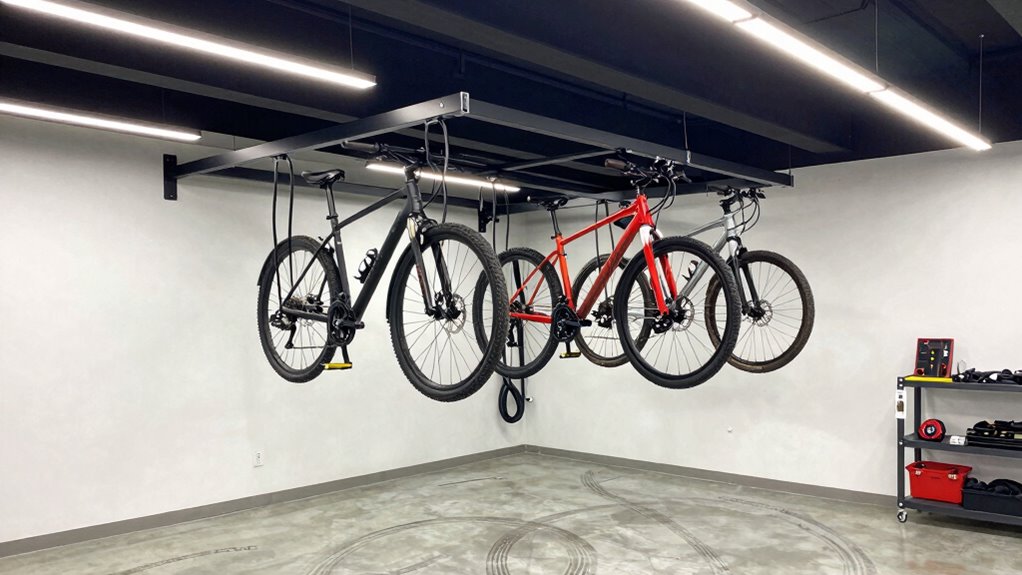
A ceiling-mounted bike storage system maximizes your garage’s vertical space while keeping bikes completely out of the way.
You’ll free up floor space for other activities while protecting your bikes from accidental bumps.
1. Choose sturdy ceiling joists – Locate solid wooden beams above your drywall and mark them with a pencil.
Your storage system needs this strong foundation to support bike weight safely.
2. Install pulley systems or hooks – Mount quality hardware directly into joists using proper bolts.
Thread rope through pulleys or attach hooks securely, ensuring everything feels solid when you tug downward.
3. Test lift mechanisms smoothly – Raise your bike slowly off the ground several inches.
Check that all connections remain tight and the system operates without jerking or binding.
Make adjustments before fully trusting it with your prized bicycle.
Protect And Maintain Bikes Easily
One essential step in protecting your bikes is to keep them clean and dry at all times. You should wipe down your bikes after each ride, removing dirt and moisture that attracts rust.
Store them in a climate-controlled garage area away from direct sunlight and humidity. Check your tires regularly for proper inflation and inspect brake pads for wear. Clean your chain monthly with degreaser and apply fresh lubricant.
Tighten any loose bolts or screws you notice during routine checks. Cover your bikes when not in use to prevent dust accumulation. You’ll want to rotate tires periodically to guarantee even wear patterns.
Keep a maintenance schedule handy so you don’t forget important tune-ups. These simple steps will keep your bikes running smoothly.
Conclusion
You’ve got this! Whether you choose wall, ceiling, or floor storage, proper installation guarantees your bikes stay safe and accessible. Don’t forget to measure twice and secure those mounts properly.
