

You’re probably wondering why your neighbor’s garage floor still looks brand new while yours is already showing wear—you both started with similar concrete. The difference lies in choosing the right coating system from the beginning. Before you decide on epoxy or polyurea, you’ll need to understand how surface preparation, traffic patterns, and chemical exposure all interact to determine which coating actually performs best over time. Let’s break down what matters most.
What Makes a Garage Floor Coating Durable and Long-Lasting?
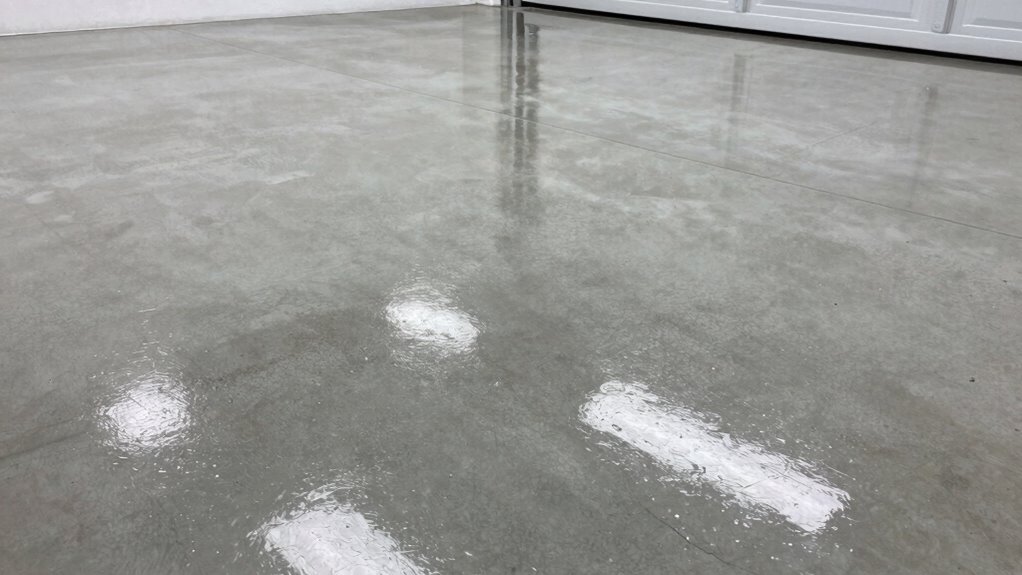
When you’re selecting a garage floor coating, understanding what makes these systems durable requires examining their chemical composition and physical properties.
You need coatings with high tensile strength and chemical resistance to withstand automotive fluids, tire abrasion, and temperature fluctuations.
Epoxy systems provide excellent adhesion and impact resistance, while polyurea offers superior flexibility and UV stability.
Your coating’s longevity depends on proper surface preparation, adequate thickness, and compatible primer selection.
You should evaluate abrasion resistance, measured in milligrams lost during testing, and chemical resistance against common garage substances.
Thermal shock resistance prevents cracking when temperatures rapidly change.
You want systems that maintain clarity and color stability over time.
How Do You Assess Your Garage’s Specific Needs?
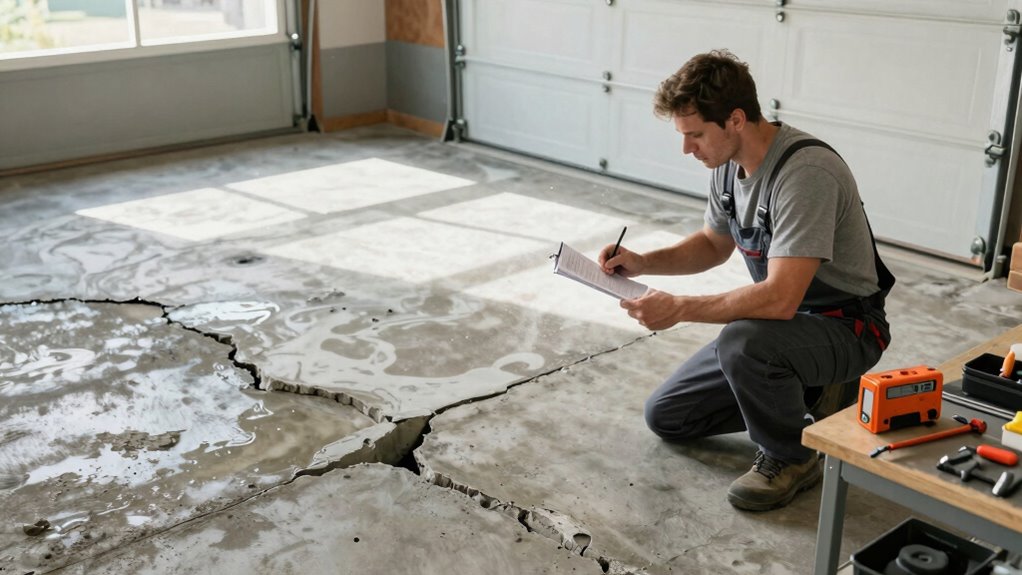
You need to evaluate your concrete’s current state by checking for cracks, spalling, or existing coatings that might affect adhesion.
Your garage’s intended use determines coating requirements, whether it’s heavy vehicle traffic, storage, or light workshop activities.
These factors directly influence which coating system will perform best long-term.
Identify Concrete Condition
Before applying any coating, assess your concrete’s structural integrity and surface condition to determine the most suitable preparation method and coating system. Check for cracks, spalling, or crumbling areas that need repair.
Test for moisture by taping a plastic sheet to the floor overnight; condensation indicates high moisture levels requiring special treatment.
Examine the surface texture – smooth concrete needs etching or grinding for proper adhesion, while porous surfaces may require additional preparation.
Look for oil stains, grease spots, or chemical damage that could compromise coating bonding.
Measure any uneven areas or significant damage that might need patching compounds.
Determine if your concrete is new or previously coated, as this affects preparation requirements.
These assessments directly impact which coating system works best for your specific garage conditions.
Determine Usage Requirements
Everyone’s garage serves different purposes, so identifying your specific usage requirements determines which coating system delivers best performance.
Consider your daily activities: do you park vehicles, store heavy equipment, or use the space as a workshop? High-traffic areas need abrasion-resistant coatings like epoxy or polyurethane.
If you handle chemicals or oils, choose chemical-resistant formulations. Temperature fluctuations affect coating selection—polyurea withstands extreme conditions better than epoxy.
Assess moisture exposure; damp concrete requires moisture-tolerant systems. Heavy machinery demands thicker coatings with impact resistance.
Light residential use might only need basic protection. Your specific needs directly influence coating thickness, material type, and installation method.
Don’t overlook future plans—will you upgrade equipment or change usage patterns? Matching your garage’s unique demands guarantees ideal coating longevity and performance.
Epoxy vs. Polyurethane: Which Coating Suits Your Garage?
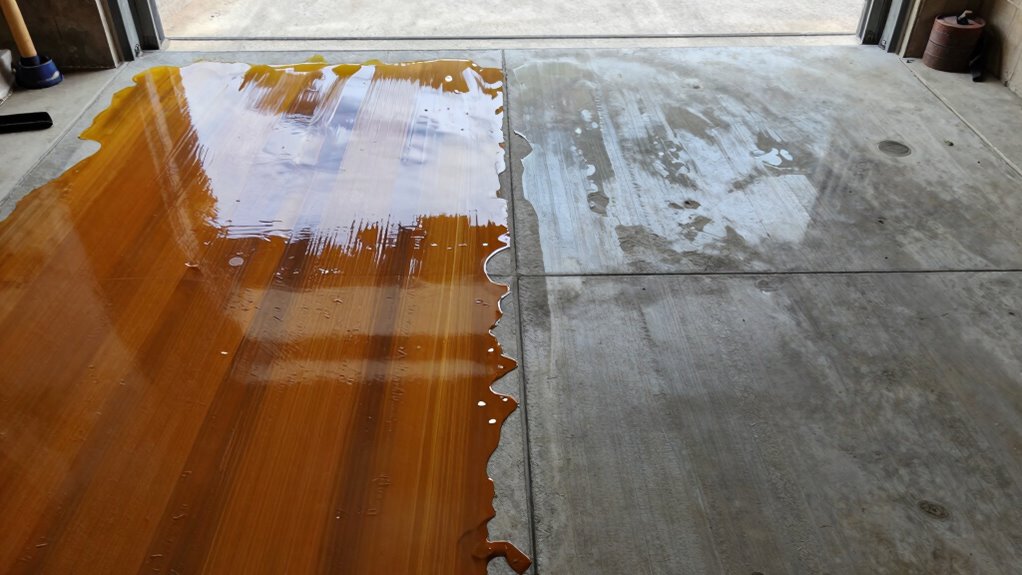
How do you determine whether epoxy or polyurethane garage floor coating best matches your specific needs? Consider your garage’s traffic intensity and chemical exposure levels.
Epoxy handles heavy automotive traffic better while polyurethane excels at resisting petroleum-based fluids. You’ll find epoxy cures faster, typically within 24-48 hours, whereas polyurethane requires 72 hours.
Epoxy provides excellent adhesion to concrete and withstands temperature fluctuations well. Polyurethane offers superior UV resistance, preventing yellowing.
Both require proper surface preparation including cleaning, grinding, and etching. Epoxy costs less initially but polyurethane lasts longer.
Your climate matters too – epoxy performs better in colder temperatures while polyurethane handles heat better. Professional installation guarantees exceptional results regardless of your choice.
Should You Add Decorative Flakes for Style or Function?
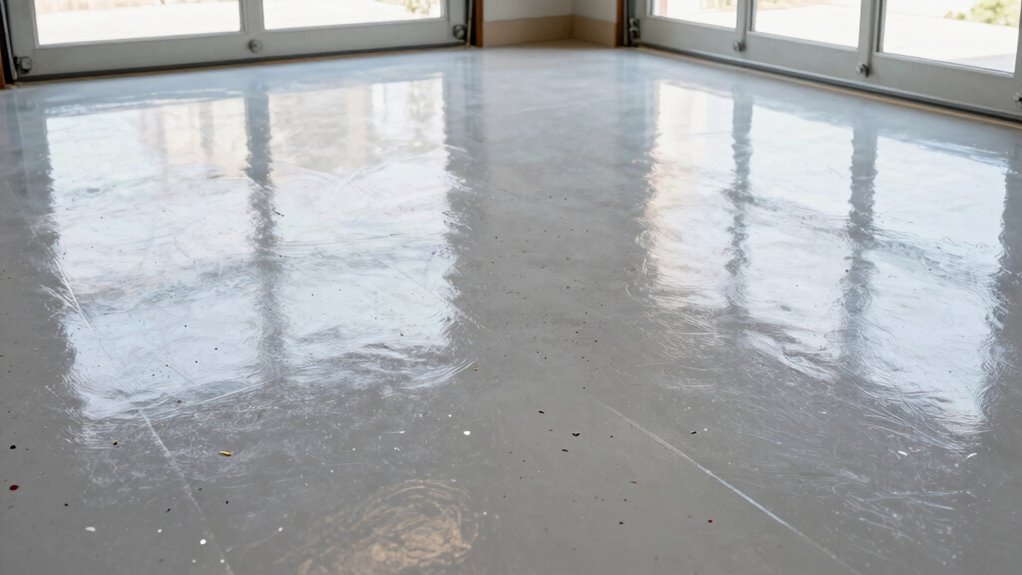
Why should you consider adding decorative flakes to your garage floor coating? You’ll gain both aesthetic appeal and functional benefits that elevate your space.
Flake materials like aluminum oxide or colored vinyl provide slip resistance, essential for safety zones where you work on projects. These broadcasted chips embed into wet epoxy or polyurethane, creating texture that hides minor surface imperfections while reflecting light for better visibility.
You choose flake size and color intensity based on your garage’s purpose – heavier chips for industrial workshops, finer speckles for cleaner residential appearances.
The installation timing matters; broadcasting during the wet phase guarantees proper adhesion. Consider vinyl ester flakes for chemical resistance if you handle automotive fluids regularly.
Popular color combinations include charcoal with silver or earth tones that complement most garage aesthetics.
Remember that flakes aren’t merely decorative – they’re practical investments that boost both form and function in your finished flooring system.
What’s the Real Cost of Garage Floor Coating?
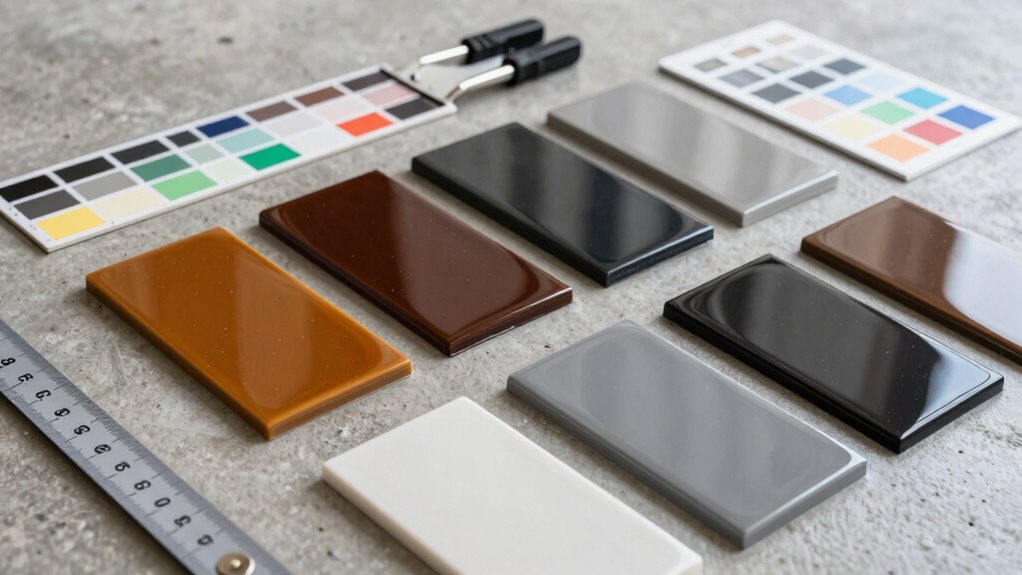
While decorative flakes enhance both safety and appearance, understanding garage floor coating expenses helps you make informed decisions about your investment.
Epoxy coatings typically cost $3-7 per square foot, while polyaspartic ranges from $8-15 per square foot. Premium polyurea systems can reach $12-20 per square foot. Your garage’s square footage directly impacts total costs, with most two-car garages requiring $2,000-5,000 for professional application.
Material quality affects pricing notably. Higher solids content epoxies cost more but provide better durability. You’ll also encounter additional expenses like surface preparation, crack repair, and decorative additives.
Don’t overlook concrete profiling requirements, which can add $1-3 per square foot. Quality coatings demand proper surface etching or grinding, increasing project costs but ensuring better adhesion.
Factor in regional labor rate variations when budgeting for your garage floor transformation.
Can You Handle Installation on Your Own?
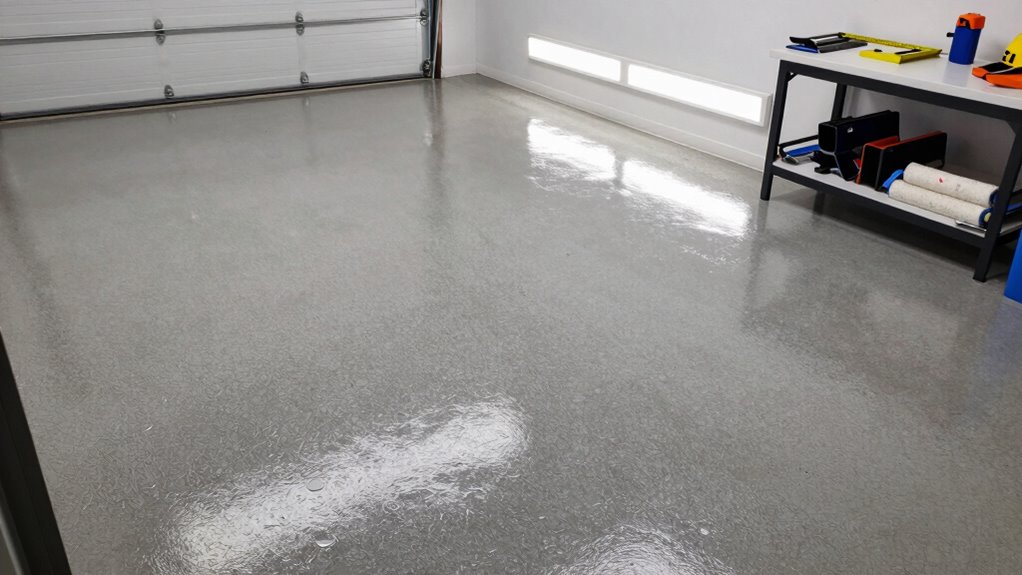
You need to evaluate whether your skill level matches the technical demands of garage floor coating installation, including surface preparation, material mixing ratios, and application techniques.
Professional installers bring specialized equipment like industrial grinders and spray systems that guarantee proper adhesion and finish quality.
Your decision should balance cost savings against potential mistakes that could compromise coating performance and require costly rework.
DIY Installation Considerations
Before tackling garage floor coating installation yourself, assess whether you have the necessary skills, tools, and time commitment for a successful outcome.
You’ll need experience with surface preparation, including concrete etching and crack repair. Proper ventilation is essential since epoxy fumes are harmful. Temperature control matters—ideal conditions range between 50-80°F.
You must own a quality roller frame, squeegee, and respirator mask. Application requires working in sections systematically, maintaining wet edges. Floor coating isn’t forgiving of shortcuts or rushed work.
Consider your schedule realistically; curing takes 24-72 hours depending on product. If you’re meticulous about prep work and follow manufacturer instructions precisely, DIY works.
However, improper surface cleaning or incorrect mixing ratios lead to costly failures. Your comfort level with detailed, messy work determines success.
Professional Application Benefits
Although DIY installation seems cost-effective initially, professional application delivers superior results through expertise and specialized equipment that most homeowners lack.
You’ll achieve ideal surface preparation using commercial-grade grinders and shot blasters that remove contaminants completely. Professionals apply coatings at precise thicknesses ensuring uniform coverage and proper curing conditions. They understand temperature and humidity requirements that directly impact adhesion and durability.
Your garage floor deserves seamless application without pinholes or uneven spots that compromise protection. Professional installers handle hazardous materials safely while complying with environmental regulations. You gain warranty coverage and accountability when issues arise.
Time investment for DIY often exceeds initial estimates considerably. Professional application prevents costly mistakes like improper mixing ratios or inadequate degreasing. You’ll enjoy long-term performance that justifies higher upfront costs. Quality installation extends coating lifespan greatly.
Professional results deliver satisfaction you can’t achieve alone. Your investment protects against premature failure effectively.
Is Proper Prep Worth the Coating Results?
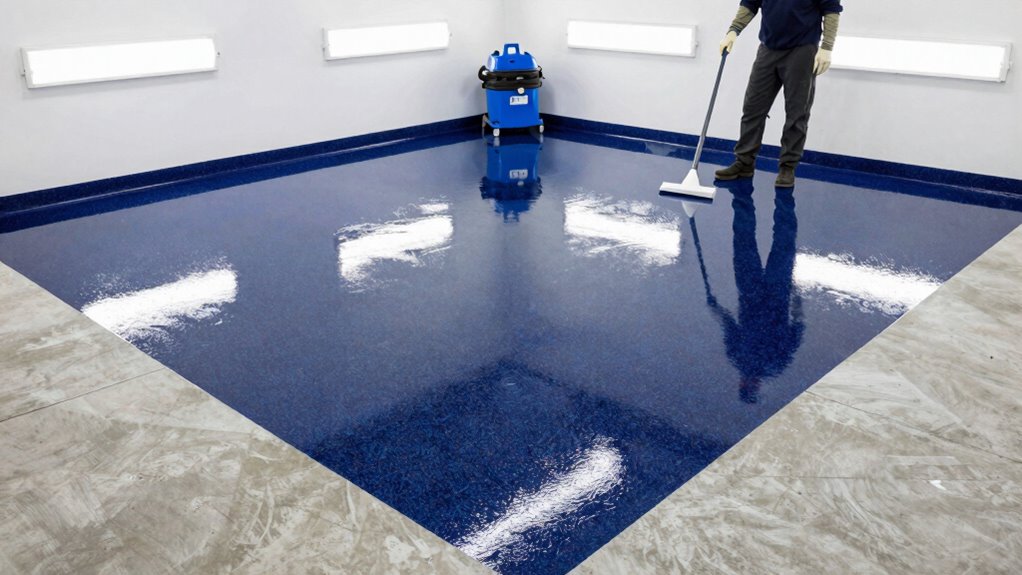
While proper surface preparation may seem like an unnecessary step that adds time and cost to your garage floor coating project, it directly determines whether your investment will last years or require premature replacement.
You must remove all oil stains, grease, and previous coatings using chemical degreasers and mechanical abrasion. Concrete surfaces need etching or grinding to create adequate profile for coating adhesion.
Moisture testing prevents coating failure from trapped vapor. Temperature and humidity control during application guarantees proper curing.
Skipping preparation creates weak bonds, bubbling, peeling, and delamination. Proper prep work transforms your concrete into an ideal substrate that accepts coatings uniformly.
You’ll achieve maximum adhesion, durability, and appearance when you invest time in surface preparation. The coating performs only as well as the surface allows.
How Long Will Your Coating Stay Intact?
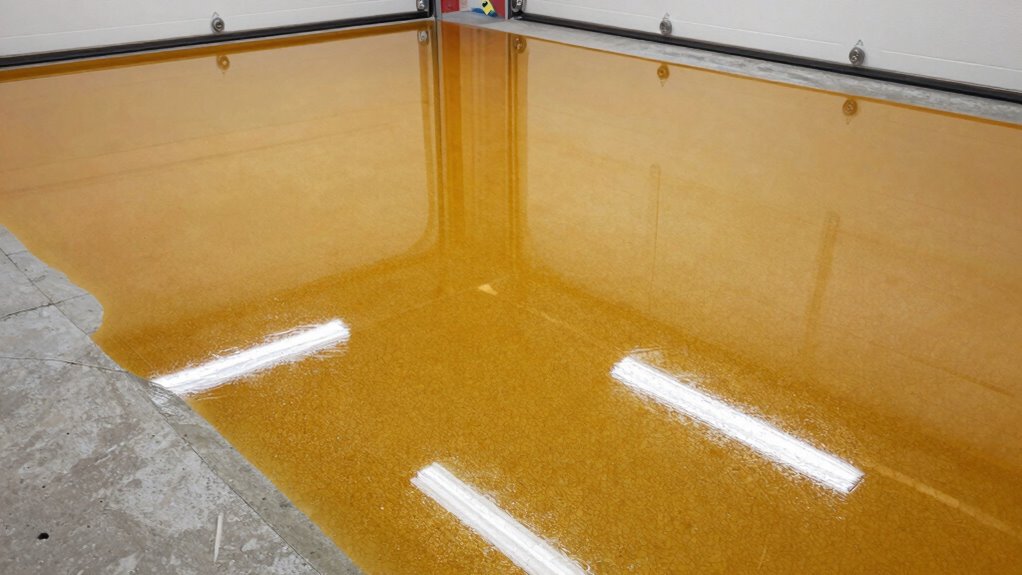
You need to understand that coating longevity depends on several key durability factors including material composition, thickness, and environmental exposure.
Your maintenance requirements will directly impact how long the coating stays intact, with regular cleaning and avoiding harsh chemicals extending lifespan markedly.
These factors work together to determine whether your investment lasts 5 years or 15 years.
Durability Factors
Because garage floor coatings face constant exposure to chemicals, temperature fluctuations, and mechanical stress, their longevity depends on several critical durability factors that directly impact performance.
You’ll want to evaluate chemical resistance against automotive fluids, salts, and cleaning agents. Thermal cycling tolerance matters since concrete expands and contracts with temperature changes. Abrasion resistance handles tire scuffing, foot traffic, and dropped tools. Impact resistance prevents chipping from falling objects. UV stability prevents yellowing and degradation from sunlight exposure. Material thickness affects overall durability.
Epoxy coatings offer excellent chemical resistance but may amber under UV exposure. Polyurea provides superior flexibility and impact resistance. Polyaspartic coatings deliver fast curing with good UV stability.
Your substrate preparation directly affects adhesion longevity. Moisture vapor transmission through concrete affects coating integrity. Surface profile creation guarantees proper mechanical bonding.
Maintenance Requirements
Although garage floor coatings are designed for long-term protection, their lifespan depends heavily on proper maintenance practices that prevent premature failure. You must regularly clean your coated surface with pH-neutral cleaners to avoid chemical degradation.
Avoid using harsh solvents or abrasive tools that scratch the protective layer. Remove spills immediately, especially oil and automotive fluids that break down epoxy bonds.
You should inspect for chips, cracks, or peeling quarterly and address damage promptly. Reapply topical sealers every 2-3 years depending on traffic exposure.
Control temperature fluctuations and moisture levels to prevent substrate movement that compromises adhesion. Don’t ignore warning signs like discoloration or soft spots.
Your coating’s integrity relies on consistent care routines matching its specific chemistry and installation requirements.
Which Coatings Resist Stains and Chemical Exposure?
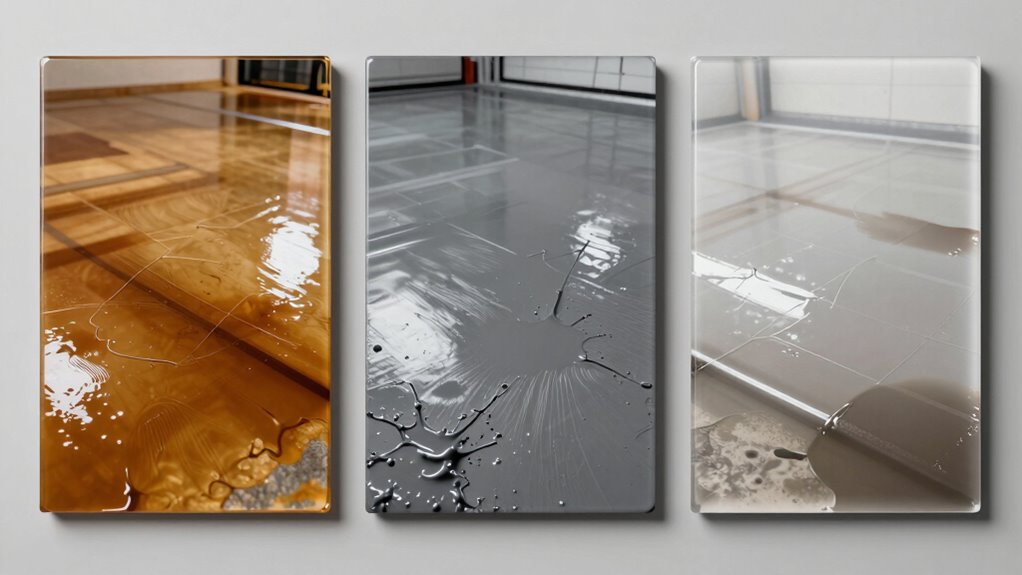
How do different garage floor coatings perform when exposed to common automotive fluids and household chemicals? You need coatings that withstand oil, gasoline, brake fluid, and cleaning solvents without degrading.
Epoxy coatings offer excellent chemical resistance but may stain from petroleum products. Polyurea and polyaspartic coatings provide superior protection against most automotive chemicals while maintaining color stability.
Consider these critical performance factors:
- Chemical resistance ratings against automotive fluids
- Stain prevention capabilities for common garage contaminants
- Long-term durability under repeated chemical exposure
You want a coating that keeps your garage floor looking clean while handling daily automotive maintenance spills. Look for products specifically tested against motor oils, transmission fluids, and battery acid.
Your coating choice directly impacts how well your garage floor resists permanent staining and chemical damage.
Should You Choose a Glossy or Textured Coating Finish?
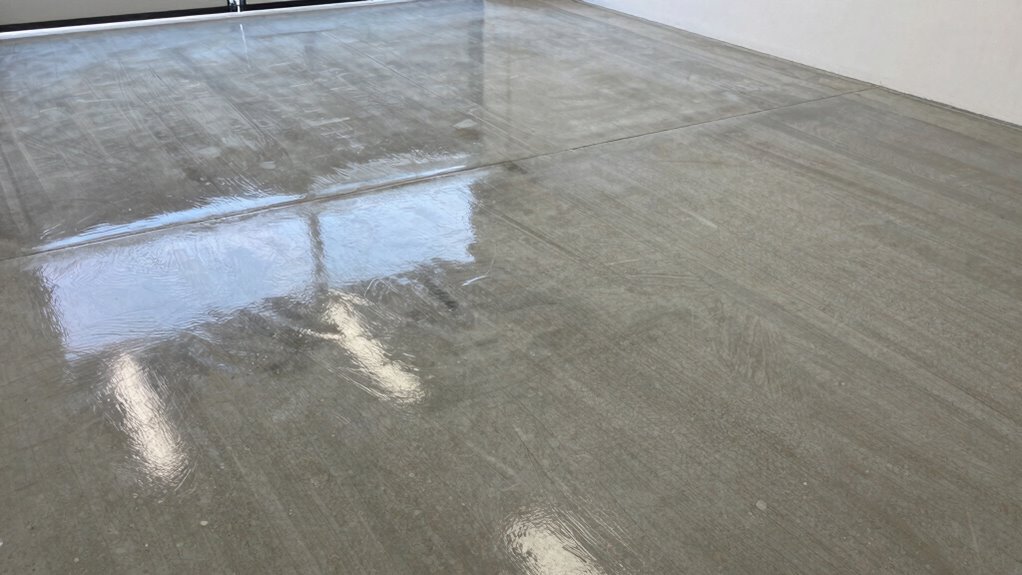
While you’re deciding between glossy and textured garage floor coatings, understanding how each finish affects performance and maintenance helps you make the right choice.
Glossy finishes provide superior stain resistance and easier cleaning due to their smooth, non-porous surface. You’ll notice better light reflection, making your garage appear brighter. However, glossy coatings show imperfections and scratches more prominently.
Textured finishes excel at hiding minor flaws and provide better slip resistance, especially when wet. They’re more forgiving of surface preparation issues and offer enhanced durability against heavy traffic.
Consider your garage’s primary use: if you prioritize easy maintenance and aesthetics, choose glossy. If safety and durability matter most, textured finishes deliver better long-term performance.
Your coating choice should match your specific needs and usage patterns.
How Do You Maintain Your Coated Garage Floor?
Proper maintenance of your coated garage floor depends on the finish type you selected and directly impacts the coating’s longevity and performance.
You’ll need to clean your floor regularly with pH-neutral cleaners and avoid harsh chemicals that can degrade the coating. Establish a routine sweeping schedule to prevent abrasive dirt and debris from scratching the surface.
- Clean spills immediately – Oil, antifreeze, and other automotive fluids can penetrate coatings if left unattended
- Use proper cleaning tools – Soft-bristle brooms and microfiber mops prevent surface abrasion
- Monitor for wear signs – Check high-traffic areas monthly for coating degradation
You should reapply protective topcoats every 3-5 years depending on usage intensity.
Address minor scratches promptly with touch-up kits to prevent moisture penetration.
What Mistakes Ruin Coating Jobs?
Several critical errors can compromise your garage floor coating project before it even cures properly.
You’ll sabotage your investment if you skip proper surface preparation—grease, oil, and debris must go.
Don’t apply coatings over damp concrete; moisture creates bubbling and peeling. Temperature matters: applying epoxy when it’s too cold prevents proper curing. You’re better off waiting for ideal conditions than rushing a coat job over a wet weekend.
Another amateur mistake: ignoring manufacturer’s mixing ratios.
Too much or too little hardener creates weak films. Thin coats seem economical but lack durability—your floor needs adequate thickness for long-term protection.
Finally, never coat over existing failed coatings; remove old material first.
These errors turn promising projects into costly disasters.
Conclusion
Your garage floor coating choice depends on traffic patterns, chemical exposure, and aesthetic preferences. Don’t let poor preparation undermine your investment—proper surface assessment and cleaning are non-negotiable. Epoxy handles heavy use better than polyurethane, while polyaspartic resists UV damage. Consider maintenance requirements and long-term costs before deciding. A well-chosen coating acts like armor, protecting your concrete from daily wear while enhancing workspace functionality for years.
