

You can take control of weeds naturally by understanding their life cycles and striking at the right moment. Timing matters most when you remove weeds before they flower and set seed. Hand tools help you dig deep for stubborn roots while organic mulch stops new weeds from sprouting. Companion plants like marigolds and garlic naturally repel unwanted growth. Healthy soil gives your crops the edge they need to outcompete weeds without chemicals. There’s more to learn about making your garden thrive naturally.
Start With the Basics of Natural Weed Control
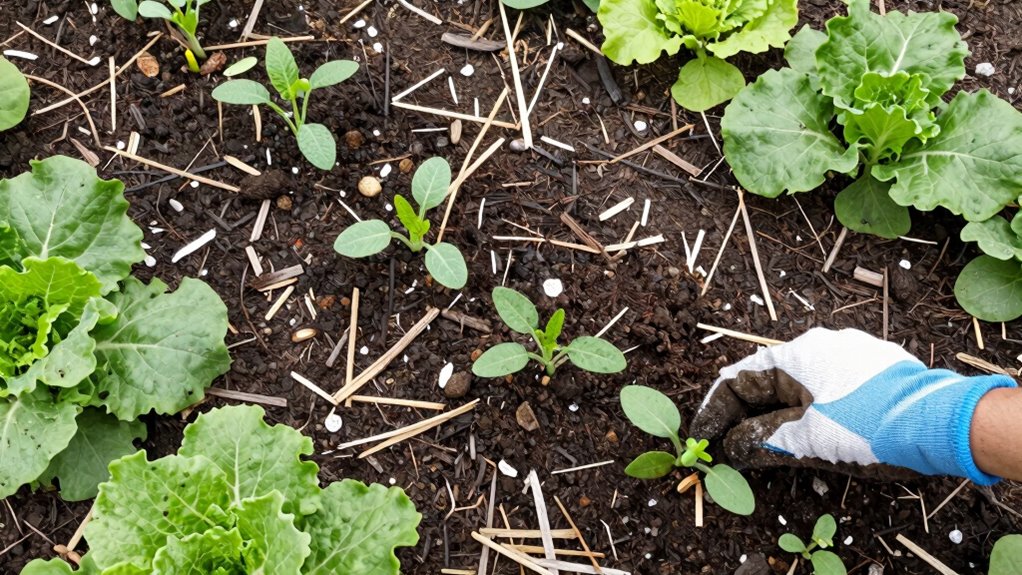
While you might think that organic weed control requires complex techniques, mastering the fundamentals will save you time and effort in the long run.
You should focus on understanding weed life cycles and their vulnerabilities. Annual weeds die after seeding, so preventing seeds from forming stops future problems. Perennial weeds need repeated removal to exhaust their root systems.
You’ll discover that timing matters enormously – catching weeds before they flower prevents seeding. Soil health plays a vital role since healthy soil supports stronger crops that outcompete weeds naturally.
You’re part of a growing community that chooses sustainable methods over quick chemical fixes. These basic principles form your foundation for successful organic weed management.
Once you grasp these concepts, you’ll find organic control becomes intuitive and effective.
Essential Tools for Hand Weeding and Mulching
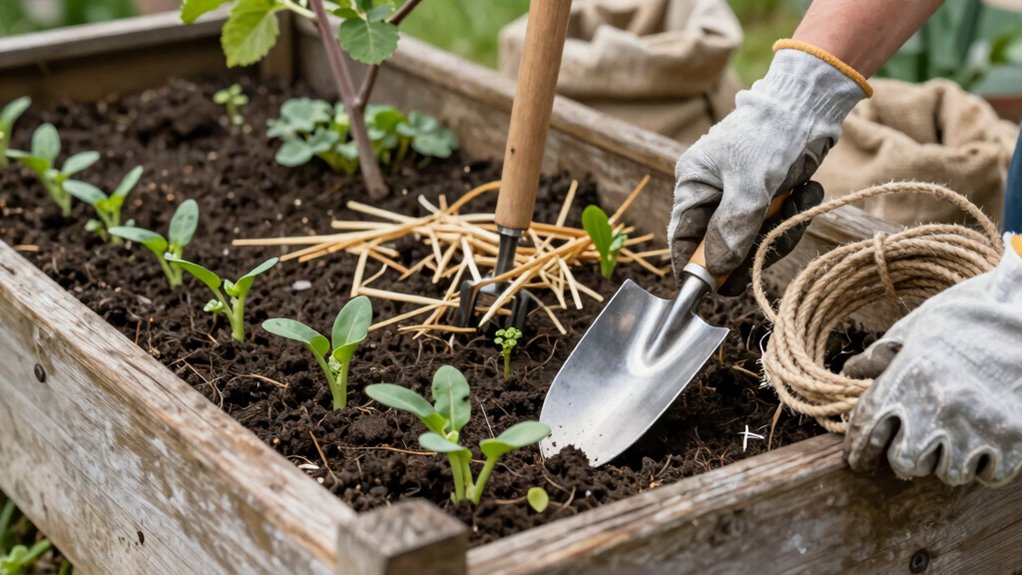
You’ll need reliable hand tools like a hoe, hand trowel, and weeding knife to effectively remove weeds by their roots.
Choose organic mulching materials such as straw, wood chips, or compost to suppress weed growth while improving soil health.
These essential tools and techniques form the foundation of successful organic weed control in your garden.
Essential Hand Weeding Tools
Having the right tools makes hand weeding far more efficient than relying on bare hands alone. You’ll remove weeds faster while protecting your hands and garden soil.
- Hand trowel – Dig out deep-rooted weeds like dandelions without breaking your nails.
- Hoe – Slice through weed stems at soil level for quick removal.
- Weeding knife – Perfect for precise cutting in tight spaces between plants.
- Garden fork – Loosen soil around stubborn weeds for easier extraction.
- Knee pads – Protect your joints during extended weeding sessions.
These tools help you work smarter, not harder. Choose quality, durable options that’ll last years.
Metal handles resist breaking, while sharp blades cut cleanly through roots. Your garden will thank you for the extra care.
Mulching Materials And Techniques
Mulching transforms your garden into a low-maintenance haven while suppressing weeds naturally. You should apply organic materials like straw, wood chips, or shredded leaves around your plants.
These materials block sunlight, preventing weed seeds from germinating. Spread mulch 2-4 inches deep, keeping it away from plant stems to avoid rot. You can use newspaper or cardboard as a base layer before adding organic mulch for extra weed suppression.
Avoid synthetic materials that don’t break down naturally. You’ll find that mulching retains soil moisture, regulates temperature, and adds nutrients as it decomposes. Choose locally sourced materials when possible to support your community and reduce environmental impact while creating a thriving garden ecosystem.
Use Mulch to Suppress Weeds Organically
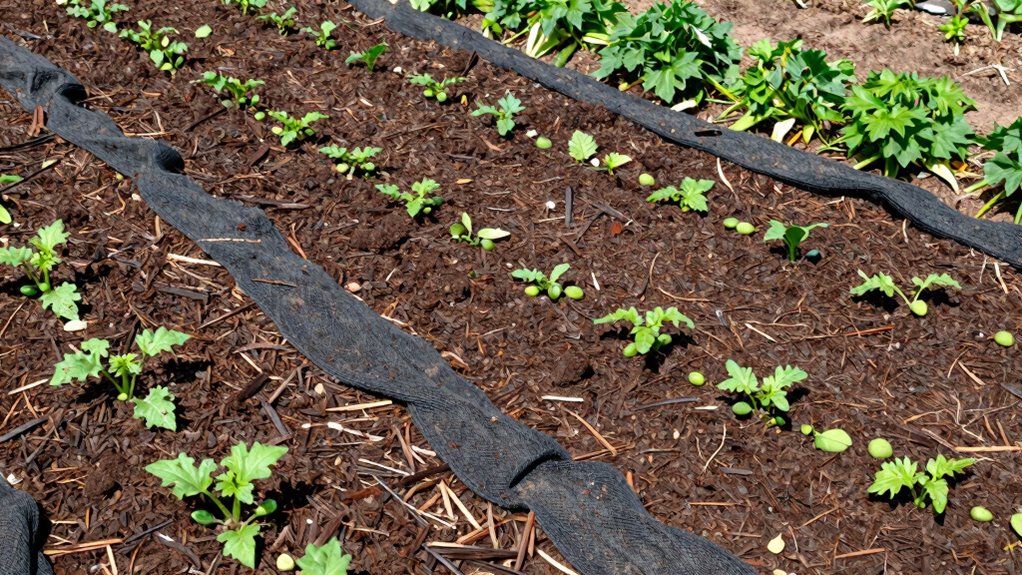
Suppressing weeds naturally becomes much easier when you harness the power of mulch.
You’re taking control of your garden while supporting environmental health.
- Apply 2-4 inches of organic mulch like wood chips, straw, or leaves around plants.
- Keep mulch away from plant stems to prevent rot and pest issues.
- Renew mulch yearly as it decomposes, feeding soil organisms.
- Choose locally sourced materials to reduce transportation emissions.
- Spread mulch after soil warms in spring for ideal temperature regulation.
You’re creating a weed barrier that retains moisture, regulates soil temperature, and gradually improves soil structure.
Mulching connects you to sustainable gardening practices while reducing chemical dependency.
Your garden thrives naturally when you work with organic mulch systems.
Plant Companions That Repel Garden Weeds
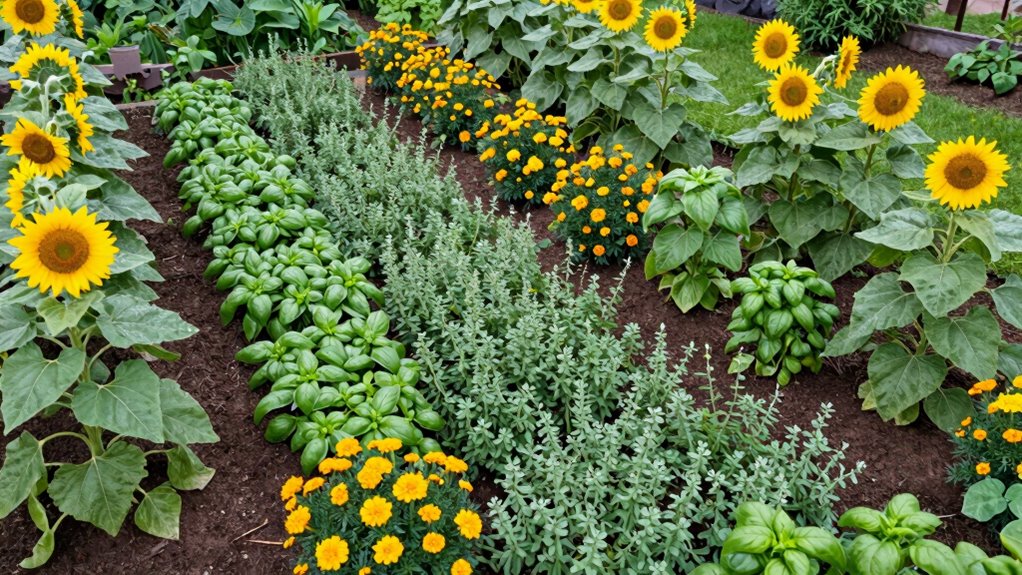
While you’re building your garden’s natural defenses, consider planting companions that actively repel weeds through their root exudates and aromatic compounds.
Marigolds release chemicals that deter nematodes and suppress weed seed germination. Plant them throughout your beds as natural protectors.
Garlic and onions produce sulfur compounds that prevent weed establishment while enhancing your crop’s flavor. Sprinkle these bulbs strategically between vegetables.
Nasturtiums act as sacrificial companions, attracting pests away from crops while their dense foliage shades out emerging weeds. Let them cascade around your garden’s edges.
Chamomile releases compounds that inhibit nearby weed growth while attracting beneficial insects. Scatter these feathery plants liberally.
These companion relationships create a living weed barrier that reduces your workload while supporting biodiversity. You’ll belong to nature’s system when you plant these natural allies.
Pull Weeds at the Right Time
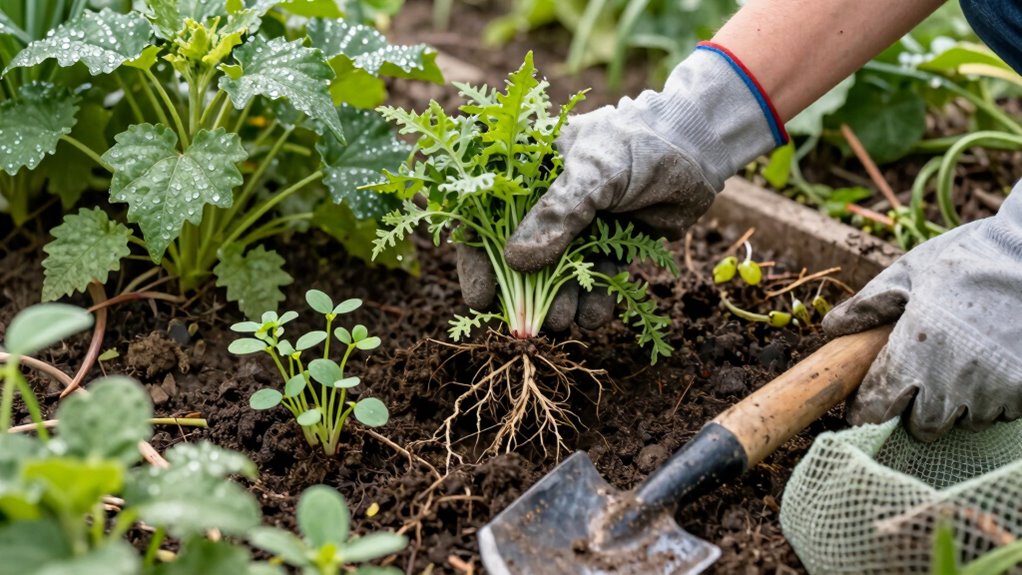
Since timing determines how effectively you can eliminate weeds before they establish deep root systems, pull them when the soil is moist from recent rain or watering. This makes removal easier and guarantees you get the entire root system.
- Early morning or evening – Cooler temperatures reduce stress on desirable plants.
- After light rain – Soil moisture loosens weed roots naturally.
- Before flowering – Prevents seed production and spread.
- Weekly routine – Regular inspection catches weeds young.
- Target young weeds – Seedlings pull easier than established plants.
You’ll find that consistent timing creates a rhythm that becomes part of your gardening routine. Pulling weeds regularly prevents them from competing with your plants for nutrients and water.
Remember that moist soil conditions make the job effortless compared to dry, compacted earth. Your garden will thank you for this simple yet effective organic approach.
Make DIY Natural Herbicides Fast
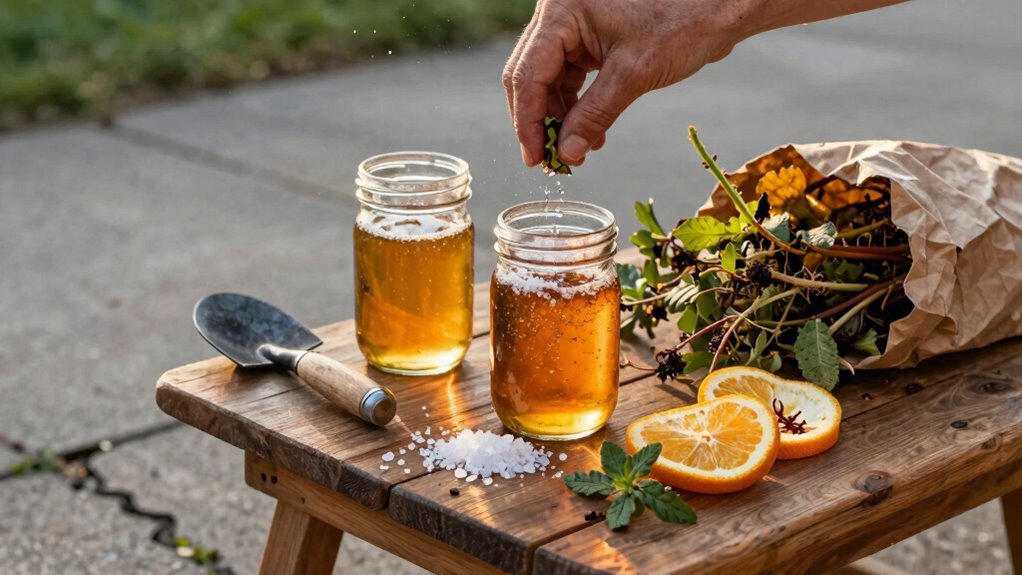
A few simple ingredients from your kitchen can create powerful natural herbicides that target weeds without harming your garden’s ecosystem.
You can whip up effective solutions using vinegar, salt, and dish soap. Mix one gallon of white vinegar with one cup of salt and a tablespoon of liquid soap. This combination works best on sunny days when weeds are actively growing. Spray directly onto unwanted plants, avoiding your desired vegetation.
Boiling water alone can kill young weeds instantly. Pour it carefully over targeted weeds in cracks or garden edges.
Corn gluten meal prevents weed seeds from germinating when applied early spring. These homemade remedies help you maintain control while protecting beneficial insects and soil health.
You’re taking charge naturally.
Maintain a Chemical-Free Garden Year-Round
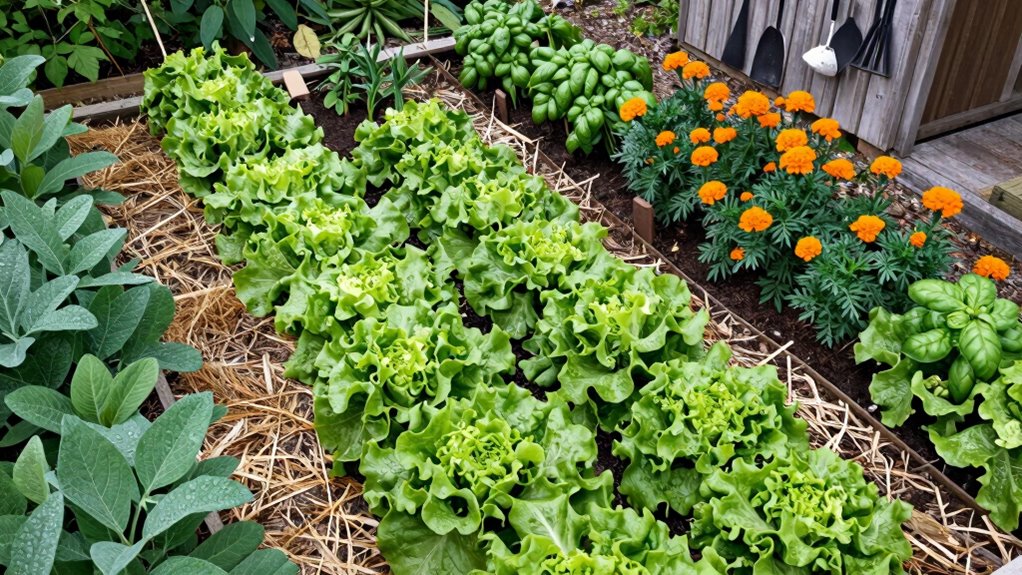
Although maintaining a chemical-free garden requires year-round commitment, you can successfully protect your landscape’s health by implementing consistent organic practices. Your garden’s ecosystem depends on your dedication to natural methods that support soil health and plant resilience.
- Mulch heavily in fall to suppress winter weeds and retain soil moisture
- Rotate crops seasonally to prevent soil depletion and break pest cycles
- Compost regularly to feed beneficial microorganisms and improve soil structure
- Plant cover crops during dormant seasons to protect soil from erosion
- Hand-pull weeds before they seed to reduce future infestations naturally
These practices create a thriving environment where your plants flourish without synthetic interventions.
You’re building a sustainable garden community that supports wildlife, conserves water, and produces healthier harvests.
Stay consistent, and your chemical-free garden will reward your efforts with vibrant, robust plant life.
Conclusion
You’ve got this! Think of your garden as a symphony—every plant plays its part. Stay consistent with mulching, pull weeds before they march across your beds, and let companion plants dance together naturally. Your soil health conducts the whole performance. Keep tuning nature’s rhythm, and watch your chemical-free paradise bloom.
