

You’re probably wondering why some cuts turn out clean while others leave rough edges or burning. The secret isn’t just technique—it’s choosing the right blade for your specific material and cut type. Picking the wrong blade can ruin expensive wood or compromise your project’s precision. So how do you select a blade that delivers consistently smooth results? Let’s break down the critical factors you can’t afford to ignore.
What Makes a Saw Blade Cut Cleanly?
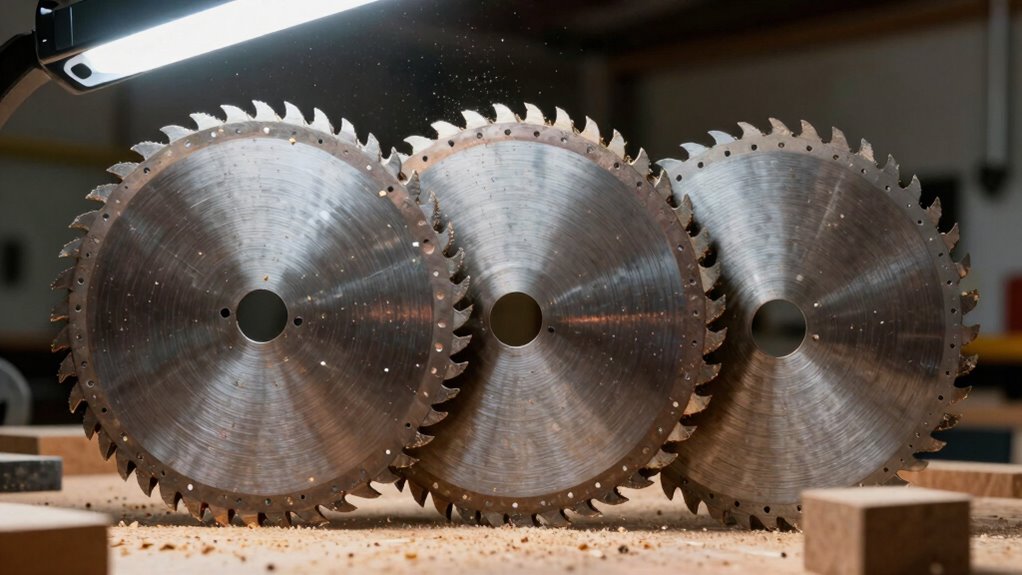
A sharp saw blade cuts cleanly because it severs wood fibers rather than crushing them. You achieve this precision through proper tooth geometry and sharp edges.
When teeth are properly aligned and sharpened, they slice through material with minimal tear-out. You’ll notice clean cuts happen when blades maintain their original tooth angles and haven’t been damaged by overheating or improper use.
Carbide-tipped blades retain sharpness longer than standard steel ones. You should regularly inspect your blades for missing or damaged teeth.
Proper blade tension prevents wobbling that causes rough cuts. Understanding how blades work helps you make better cutting decisions.
You belong among serious woodworkers when you recognize that clean cutting isn’t just about the blade’s initial sharpness, but maintaining peak cutting conditions throughout its lifespan.
How to Match Blade Type to Your Material
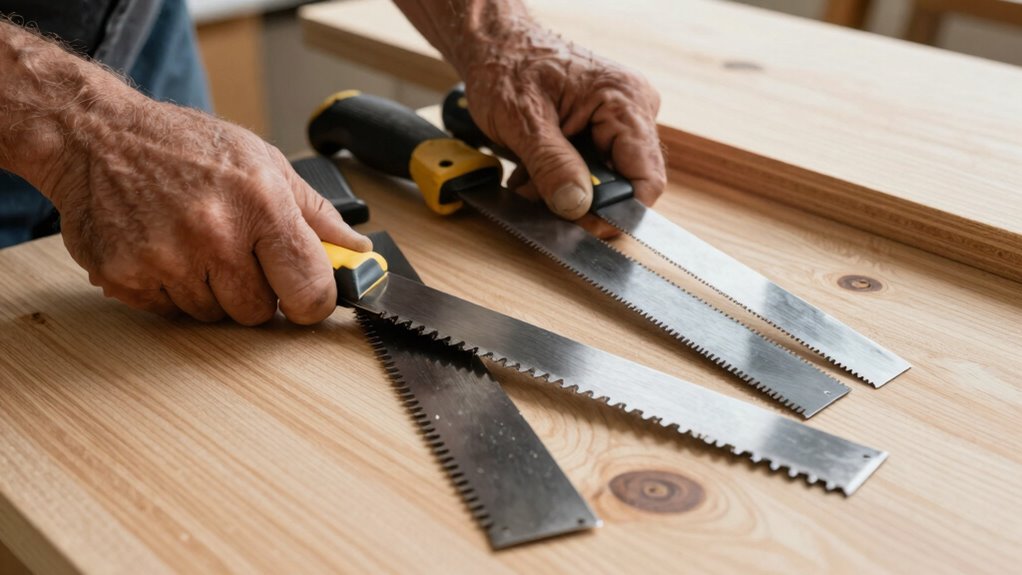
Matching the right blade type to your material makes all the difference in achieving clean, efficient cuts. You need to understand that different materials require specific blade characteristics.
For hardwoods, choose blades with carbide tips designed for dense wood fibers. Softwoods work better with blades that have larger gullets to handle the faster cutting action. Metal cutting demands bi-metal blades that can withstand high temperatures and resist dulling. Plastic requires blades with fine teeth to prevent melting and chipping.
Always check your blade’s material compatibility before cutting. Don’t assume a general-purpose blade works for everything – it won’t. You’ll achieve better results and extend blade life when you match the blade type to your specific material requirements.
Why Tooth Count and Configuration Matter
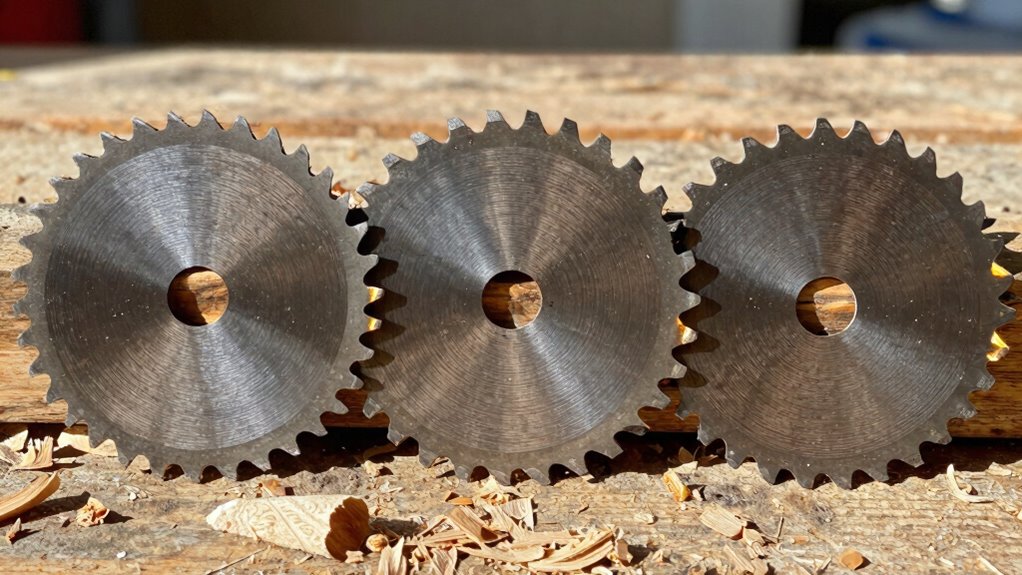
Tooth count and configuration directly determine your blade’s cutting performance and finish quality. Higher tooth counts create smoother cuts but remove material slower, while fewer teeth cut faster but leave rougher surfaces. You’ll notice this when cutting hardwood versus softwood.
Blade configuration affects chip removal and heat generation. Alternate top bevel (ATB) teeth create clean cuts across materials. Flat top grind (FTG) teeth excel at ripping lumber quickly. Combination blades blend both styles for versatile performance.
Your project requirements dictate ideal choices. Fine finish work demands high-tooth-count blades with precise configurations. Rough carpentry accepts aggressive, lower-tooth-count options.
Understanding these relationships helps you select blades that match your specific cutting needs and deliver professional results every time.
Which Blade Coatings and Materials Deliver Precision?
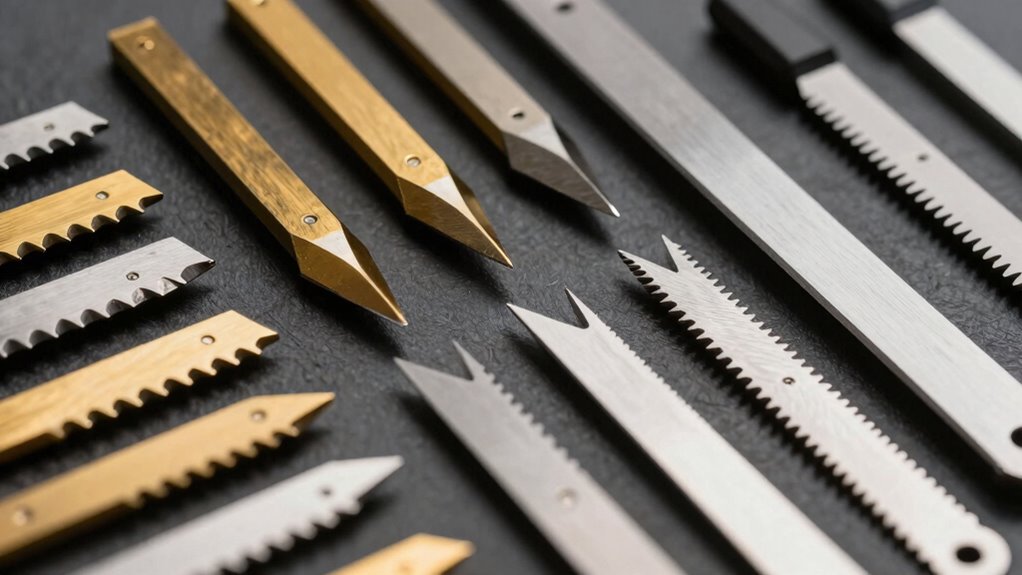
How do you guarantee your saw blade maintains sharpness and accuracy throughout demanding cuts? You need the right coating and materials.
Carbide-tipped blades excel with their tungsten carbide teeth that stay sharp longer than high-speed steel. For clean cuts, look for blades with chromium or titanium coatings that reduce friction and heat buildup. These coatings prevent material buildup while maintaining cutting precision.
Diamond-coated blades work exceptionally well for cutting hard materials like stone or ceramic. You should choose blades made from high-quality steel bodies that resist warping under pressure.
Laser-cut blades often provide better accuracy than stamped alternatives. Don’t overlook brazed carbide teeth versus welded ones; brazed teeth typically offer superior durability.
Your blade’s backing material also matters – thicker plates reduce vibration and deliver smoother cuts. Match these materials to your specific cutting applications for maximum precision.
How to Avoid Common Cutting Mistakes With the Right Blade Choice
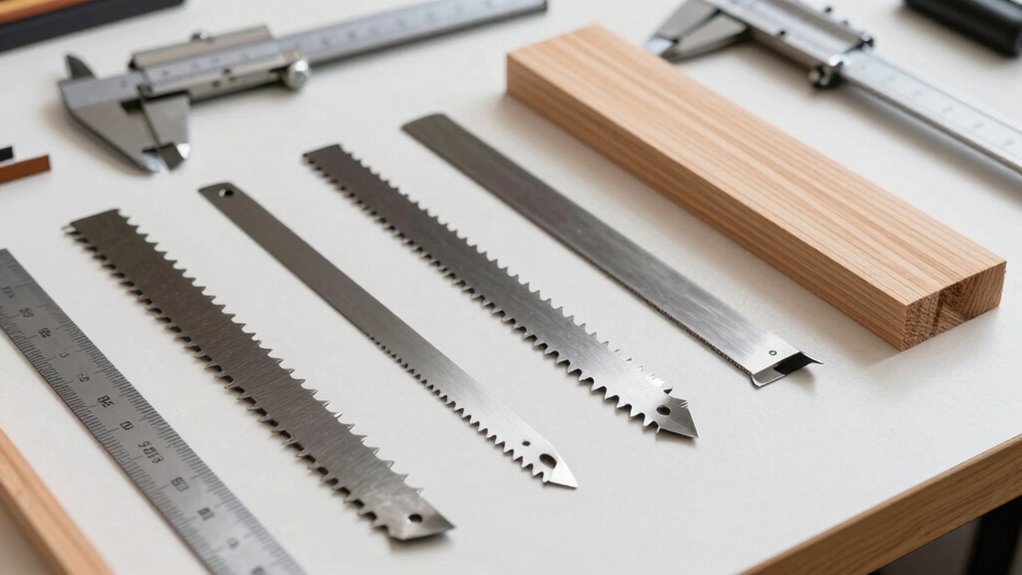
Several common cutting errors stem from using the wrong blade for your material.
You’ll experience burn marks, tear-out, and rough edges when your blade teeth don’t match your workpiece characteristics.
Softwoods require fewer teeth per inch than hardwoods, while plywood needs alternating top bevel blades to prevent chipping.
Don’t use carbide blades on aluminum; you’ll create dangerous kickback.
Match blade geometry to your material’s density and grain structure.
Thin materials need fine-tooth blades, while thick stock handles coarse teeth better.
Check your blade’s hook angle – positive angles cut aggressively, negative angles provide cleaner finishes.
You’ll avoid frustration and rework when you select blades based on material properties rather than grabbing whatever’s handy.
Conclusion
You’ve learned the sharp truth: clean cuts demand the right blade marriage. Like a surgeon’s scalpel finding its perfect angle, your saw blade must match material, tooth count, and coating to achieve precision. Don’t let rough edges dull your project’s potential – choose wisely, and watch your work transform from rough cuts to seamless artistry. The difference lies not in the saw, but in the blade that guides your vision.
