

Have you ever wondered why some woodworkers develop persistent coughs and respiratory issues? Wood dust isn’t just an annoyance—it’s a serious health hazard that demands your immediate attention. You’ll need proper protective equipment and ventilation strategies to avoid inhaling these dangerous particles. What specific steps should you take when working with different types of wood?
Recognize Signs of Wood Dust Exposure Early

When you work with wood regularly, you should monitor for early indicators of dust exposure that can prevent long-term health complications.
You’ll notice respiratory symptoms first: persistent coughing, throat irritation, and difficulty breathing during or after woodworking sessions. Your eyes may become red, watery, or unusually sensitive to light.
Skin reactions include dryness, itching, or rash-like conditions where dust particles contact your body. You might experience frequent headaches or nasal congestion that doesn’t respond to typical treatments.
These symptoms often worsen throughout the day and may temporarily improve when you’re away from your workspace.
Don’t dismiss these warning signs as minor inconveniences. Your body’s telling you something important about your working environment.
Early recognition allows you to implement protective measures before developing chronic respiratory conditions. Pay attention to these signals—they’re your first line of defense against serious health consequences.
What Makes Wood Dust Dangerous?
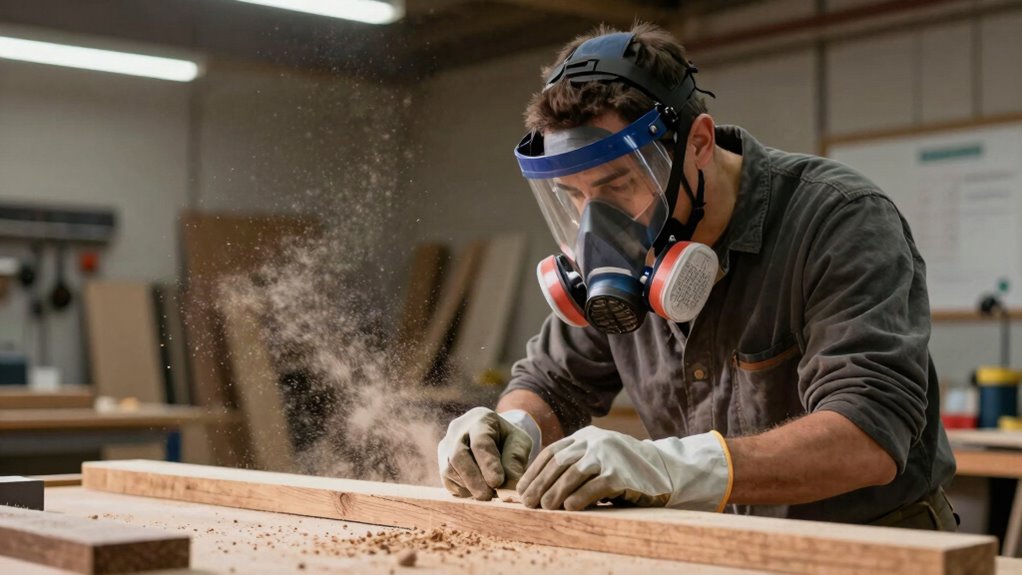
You must understand that wood dust particles smaller than 10 microns penetrate deep into your lungs, causing immediate respiratory irritation and long-term health complications.
The chemical composition of wood dust contains allergens, toxins, and carcinogens that trigger asthma, dermatitis, and nasal cancer when inhaled regularly.
Your body accumulates damage from repeated exposure, leading to chronic obstructive pulmonary disease and other serious conditions that develop over months or years of contact.
Health Risks Of Inhalation
Wood dust becomes dangerous when fine particles penetrate deep into your respiratory system, where they can cause both immediate irritation and long-term health complications. You’ll experience coughing, wheezing, and throat irritation from initial exposure.
Prolonged inhalation leads to more serious conditions including occupational asthma, chronic bronchitis, and lung function decline. Fine particles bypass your body’s natural defense mechanisms, embedding themselves in lung tissue.
You’re particularly vulnerable if you work regularly with hardwoods, which produce smaller, more harmful particles. Certain wood species cause allergic reactions ranging from skin rashes to severe respiratory distress. Your risk increases with exposure duration and particle concentration.
Without proper protection, you’re fundamentally breathing abrasive materials that scar lung tissue over time. Serious health consequences include reduced lung capacity, persistent breathing difficulties, and increased susceptibility to respiratory infections.
You must understand these risks because woodworking shouldn’t cost your long-term health.
Chemical Composition Hazards
While wood dust primarily consists of cellulose, lignin, and hemicellulose, its danger lies in the complex mixture of organic compounds and contaminants that become airborne during processing.
You encounter volatile organic compounds, including formaldehyde and benzene, which release during cutting and sanding. These particles carry extractives like phenols and quinones that cause respiratory irritation. Hardwood dusts contain higher concentrations of these harmful substances than softwoods.
You also face exposure to pesticides, preservatives, and metal particles from treated lumber. Particle size determines penetration depth in your respiratory system. Finer particles reach deeper lung tissues, increasing health risks.
Understanding these chemical hazards helps you make informed decisions about protective equipment and ventilation strategies. You must recognize that seemingly harmless wood processing creates toxic airborne mixtures requiring serious safety precautions.
Long-Term Exposure Effects
Beyond the immediate chemical hazards present in wood dust, prolonged exposure triggers serious long-term health consequences that develop silently over months or years.
You face increased risk of respiratory diseases including chronic bronchitis, asthma, and pulmonary fibrosis. Wood dust particles accumulate in your lungs, causing persistent inflammation and scarring. Your immune system weakens over time, making you more susceptible to infections. Nasal passages become irritated and inflamed, potentially leading to chronic sinusitis.
Some wood species contain carcinogenic compounds that increase your cancer risk, particularly nasal and sinus cancers. These effects compound gradually, often showing symptoms only after significant damage occurs.
You might experience persistent coughing, breathing difficulties, and frequent respiratory infections. Regular exposure without proper protection fundamentally guarantees these health complications will manifest eventually.
Choose the Right Respiratory Protection

What type of respiratory protection should you select for woodworking tasks? You need protection that filters particles effectively while maintaining comfort during extended use.
For fine wood dust, choose N95 or P100 particulate filters rated for woodworking applications. Disposable masks work for light sanding, but half-face respirators with replaceable cartridges offer better protection for heavy cutting or prolonged exposure.
Verify proper fit by testing seal around your face before each use. You should replace filters regularly based on manufacturer guidelines and visible dust accumulation.
Don’t use medical masks designed for biological contaminants. Your respiratory protection must specifically target wood dust particles, which vary in size depending on cutting method.
Always match protection level to exposure intensity.
Control Wood Dust at the Source
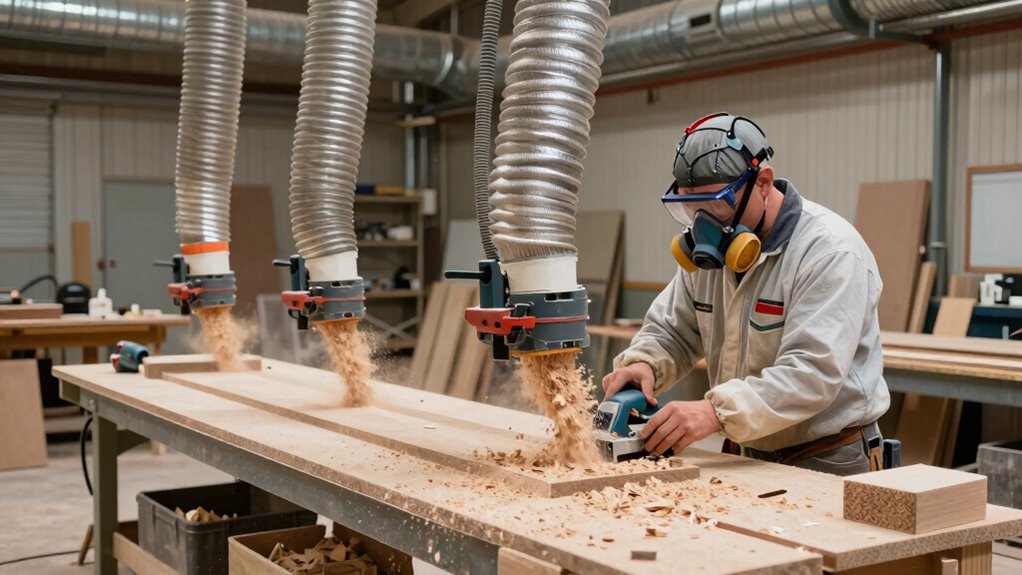
You must implement local exhaust ventilation systems to capture wood dust before it disperses into your workspace.
Position dust collection hoods as close as possible to cutting and sanding operations for maximum effectiveness.
These source control measures prevent airborne particles from reaching your breathing zone and surrounding areas.
Local Exhaust Ventilation Systems
Local exhaust ventilation systems capture wood dust directly at the source before it can spread throughout your workspace. You’ll want these systems because they’re more effective than relying solely on dust masks or respirators.
These systems consist of hoods, ductwork, and fans that create negative pressure zones around cutting tools. You must size the system properly based on your specific woodworking operations and dust generation rates. Professional-grade systems offer superior performance compared to basic shop vacuums.
You’ll achieve excellent results when the system moves adequate airflow volumes through strategically positioned inlets. Effective local exhaust ventilation becomes essential for protecting your health during extended woodworking sessions. You’ll notice immediate air quality improvements once properly installed.
These systems represent your best defense against inhaling harmful wood dust particles. You’re not alone in recognizing their importance. Serious woodworkers rely on proper ventilation as their primary dust control method.
Dust Collection Hood Placement
Effective hood placement controls wood dust at the source by capturing particles before they disperse into the workspace. You must position hoods as close as possible to dust generation points for maximum efficiency.
Place them slightly above or beside cutting tools, not directly underneath where gravity pulls particles away. Guarantee adequate capture velocity—typically 1,000 to 2,000 feet per minute—for your specific woodworking operations.
You’ll want hoods angled appropriately to work with natural dust flow patterns. Avoid placing them too far from tools, which reduces effectiveness considerably.
Consider tool mobility and adjust hood positioning accordingly. Proper placement eliminates reliance on secondary cleanup methods while protecting your respiratory health efficiently.
Test different positions to optimize capture rates.
Maintain Clean Work Habits

Keep your workspace organized and free of accumulated wood dust by implementing strict housekeeping protocols. You must clean surfaces regularly using approved methods and equipment.
Don’t allow dust to accumulate on floors, benches, or machinery. Use vacuum systems designed for wood dust collection rather than compressed air blowing. You should wipe down tools and equipment after each use. Store materials properly to minimize dust generation.
Clean up spills immediately using appropriate containment methods. Maintain clear pathways and work zones. You must dispose of collected dust according to local regulations. Regular cleaning prevents dust from becoming airborne and reduces exposure risks.
Establish daily, weekly, and monthly cleaning schedules. Your consistent housekeeping practices directly impact workplace safety and air quality. Proper maintenance creates a professional environment where everyone can work confidently.
How to Respond After Inhaling Wood Dust

When you inhale wood dust, immediately move to fresh air and avoid further exposure to contaminated environments. Your respiratory system needs immediate relief from irritants.
- Assess your symptoms – Check for coughing, wheezing, or throat irritation that indicates respiratory distress.
- Drink water slowly – Hydration helps your body process and eliminate inhaled particles naturally.
- Monitor breathing patterns – Watch for shortness of breath or chest tightness over the next several hours.
- Seek medical attention if needed – Contact healthcare providers for persistent cough, difficulty breathing, or worsening symptoms.
Wood dust contains fine particulates that irritate lung tissue. Your body’s natural defenses work to expel these particles, but continued exposure worsens outcomes.
Take symptoms seriously, especially if you have asthma or respiratory conditions. Prevention remains your best defense, but knowing proper response protocols protects your long-term health and maintains your place in woodworking communities.
Conclusion
Wood dust isn’t just sawdust—it’s a stealthy adversary that can silently compromise your health. Don’t let its innocuous appearance fool you; this microscopic menace demands respect. Equip yourself with proper respiratory protection, control dust at its source like a fortress defending against invaders, and maintain pristine work habits. When exposure strikes, act swiftly. Your lungs are the battleground where prevention wins the war. Stay vigilant, stay protected.
