

You’ll need to choose the right anchors for your concrete type – wedge anchors work well for solid concrete, while expansion anchors suit hollow walls. Don’t skip measuring twice; inaccurate marks lead to crooked shelves and weak holds. Use a hammer drill with masonry bits, but don’t push too hard or you’ll crack the concrete. What’s the first mistake most people make when installing shelves in concrete walls?
Understand Why Concrete Requires Special Shelving
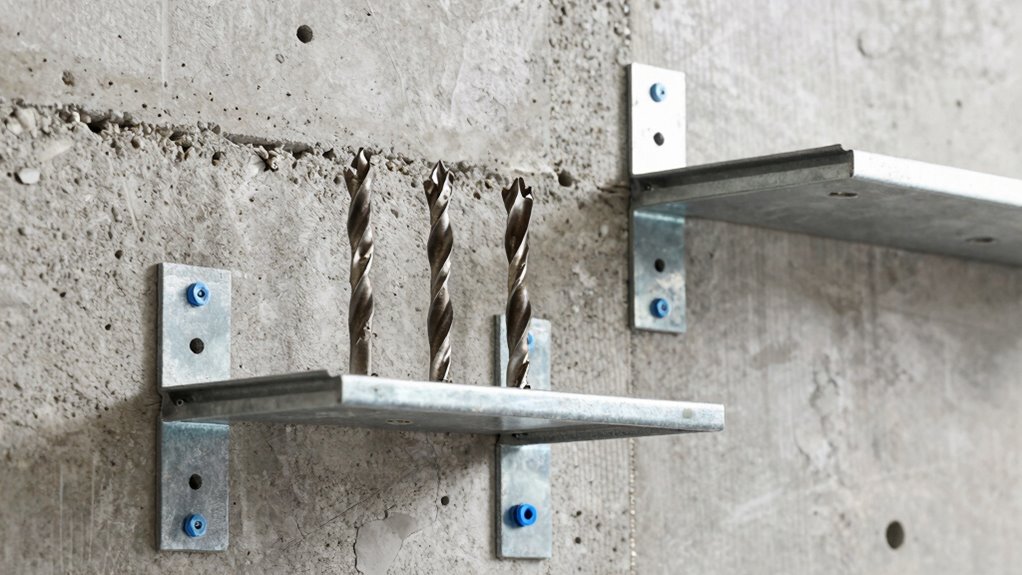
Concrete walls require specialized shelving installation techniques because standard wall anchors and mounting hardware can’t penetrate concrete’s dense, rigid composition.
You’ll need specialized tools like masonry bits and hammer drills to create proper anchor holes. Concrete’s hardness demands carbide-tipped drill bits that can handle aggregate materials.
Regular screws won’t cut it; you must use concrete-specific anchors that expand properly within the material. The installation process requires precise measuring and drilling depth control.
Concrete dust management becomes essential for safety and accuracy. You’ll experience different resistance levels when drilling through concrete versus drywall.
Proper anchor selection depends on your shelving load requirements. Heavy-duty applications need stronger anchoring systems.
Your success depends on understanding concrete’s unique properties and matching appropriate installation methods accordingly.
Select the Right Anchors Based on Wall Type
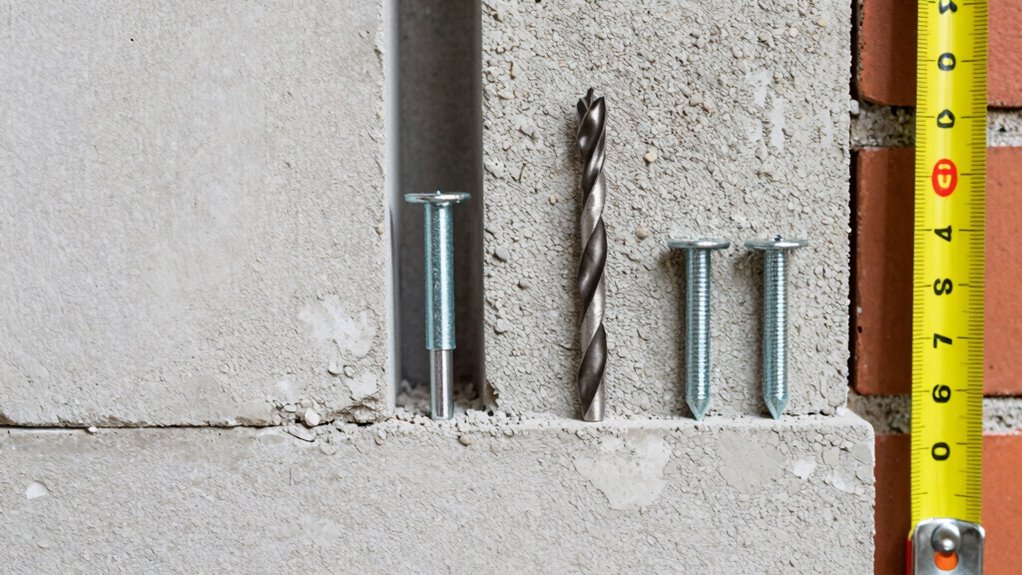
When installing shelves in concrete walls, you must choose anchors that match your specific wall type and load requirements. Solid concrete walls require different anchors than hollow concrete blocks.
For solid concrete, use wedge anchors or expansion bolts that create friction against the hole walls. Concrete blocks need toggle bolts or molly bolts that expand behind the block’s hollow section.
Lightweight shelves work with plastic anchors, but heavy loads demand metal anchors rated for your shelf’s maximum weight.
Check your wall’s composition first – tap it with a hammer to determine if it sounds solid or hollow. Don’t guess because incorrect anchors will fail under load. Your shelf’s stability depends entirely on proper anchor selection.
Match the anchor diameter to your shelf bracket’s bolt size for ideal holding power.
Gather Tools and Materials Before Starting
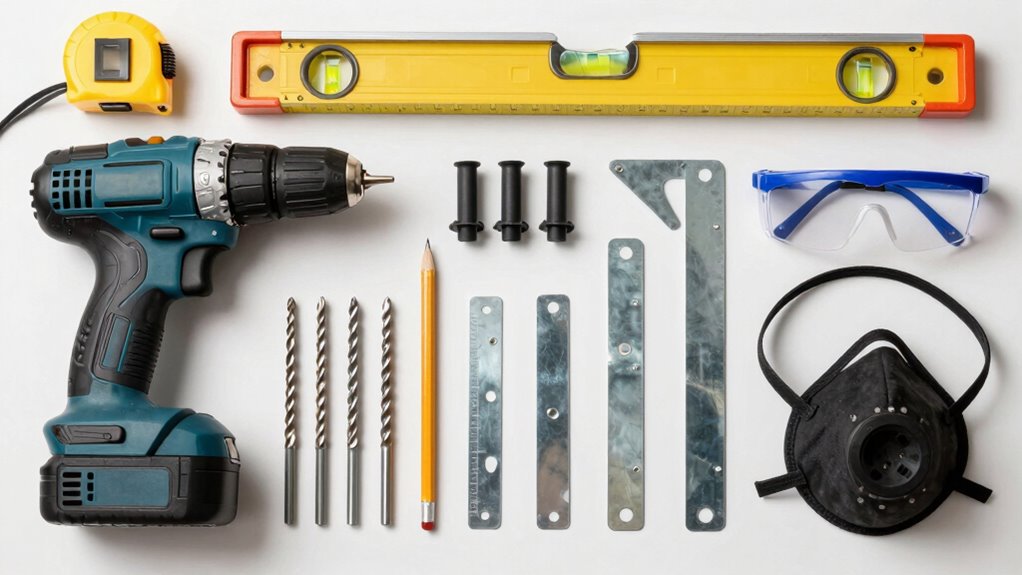
You’ll need specific tools and materials before beginning your concrete shelf installation.
Gather your hammer drill, masonry bits, level, measuring tape, and appropriate anchors for concrete applications.
Having everything ready guarantees you won’t waste time during the installation process.
Essential Tools Required
Drill bits and anchors are fundamental components for successfully mounting shelves to concrete walls. You’ll need a rotary hammer drill with masonry bits ranging from 1/4-inch to 3/8-inch diameter. Carbide-tipped bits cut through concrete efficiently while resisting wear.
Select wedge anchors or sleeve anchors rated for your shelf’s load capacity. A hammer drill alone won’t suffice; concrete requires percussion action. Use a stud finder to locate existing anchors or measure carefully for new holes. A level guarantees proper shelf alignment during installation.
An adjustable wrench tightens anchor nuts flush against brackets. Don’t skip safety glasses and work gloves. A vacuum or shop rag removes concrete dust from holes before inserting anchors.
These tools aren’t optional luxuries—they’re essential for secure, professional results that last years.
Necessary Materials List
Gathering the right materials before starting your concrete shelf installation prevents unnecessary stops and guarantees efficient progress.
You’ll want to make sure you have everything listed below before beginning this project.
- Concrete anchors or sleeve anchors – These provide secure mounting points for your shelves
- Shelf brackets or mounting hardware – Choose corrosion-resistant options rated for your shelf weight
- Concrete drill bits – Masonry bits in appropriate diameters for your anchors
- Quality shelf material – Solid wood, metal, or engineered boards that match your load requirements
Having these materials ready keeps you focused on proper installation techniques rather than searching for supplies mid-project.
Preparation Steps
Before beginning any concrete shelf installation, verify all necessary tools and materials are readily available to maintain workflow efficiency. Gather your drill with masonry bits, concrete screws, shelf brackets, level, measuring tape, pencil, and safety glasses.
Check that you have the correct shelf material and mounting hardware specified in your materials list. Position your ladder or step stool near the work area. Clear the wall surface of any debris or obstacles.
Confirm your power drill has sufficient battery charge or access to electrical outlet. Organize tools systematically within arm’s reach. Double-check bracket spacing measurements match your shelf dimensions.
Having everything prepared prevents unnecessary trips and maintains professional installation standards you can confidently execute.
Measure Accurately to Avoid Drilling Errors
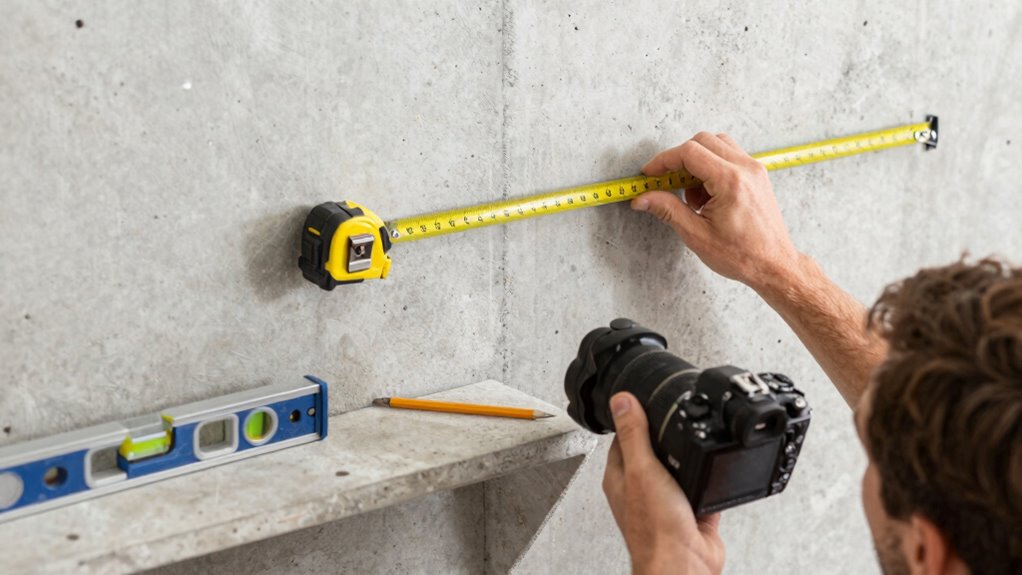
When you’re installing shelves in concrete walls, accurate measurements prevent costly mistakes and guarantee proper shelf alignment. You must account for shelf bracket thickness and adjust your marks accordingly. Measure twice, mark once, and verify all distances before making any permanent marks.
- Use a laser level to verify horizontal lines span the entire shelf length accurately.
- Mark bracket positions with a center punch to prevent drill bit wandering during hole creation.
- Measure from fixed reference points like corners or existing fixtures for consistent placement.
- Double-check all dimensions against your shelf unit specifications before finalizing any marks.
Precise measurement eliminates misaligned shelves and prevents unnecessary concrete repair work later. Your careful attention to detail now saves significant time and effort during installation.
Drill Holes Safely Without Cracking
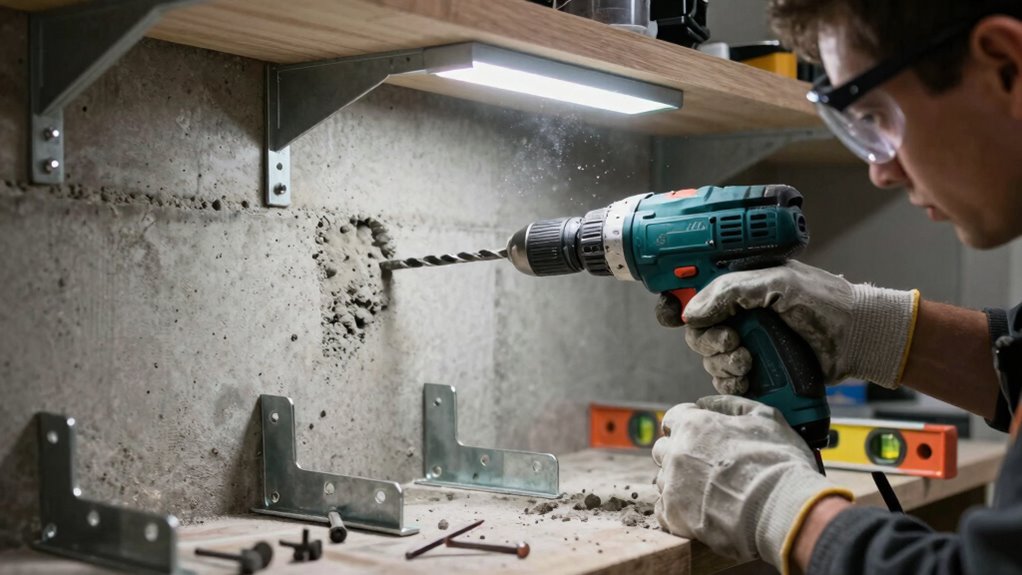
While concrete walls provide excellent support for mounted shelves, drilling holes without causing cracks requires proper technique and the right equipment. You’ll need a rotary hammer drill with masonry bits designed for concrete applications.
Mark your drilling points accurately using a pencil and level. Start drilling at a slow speed to create a pilot hole, then increase pressure gradually. Apply steady, consistent force without hammering motions that could cause micro-fractures.
Keep the drill bit perpendicular to the wall surface throughout the process. Use compressed air to remove concrete dust regularly, preventing overheating.
Maintain proper drilling depth by marking your bit with tape. Work systematically from pilot holes outward, allowing concrete to cool between holes. This approach prevents stress concentration that leads to unwanted cracking while ensuring clean, precise mounting points for your shelf brackets.
Determine Safe Shelf Weight Limits
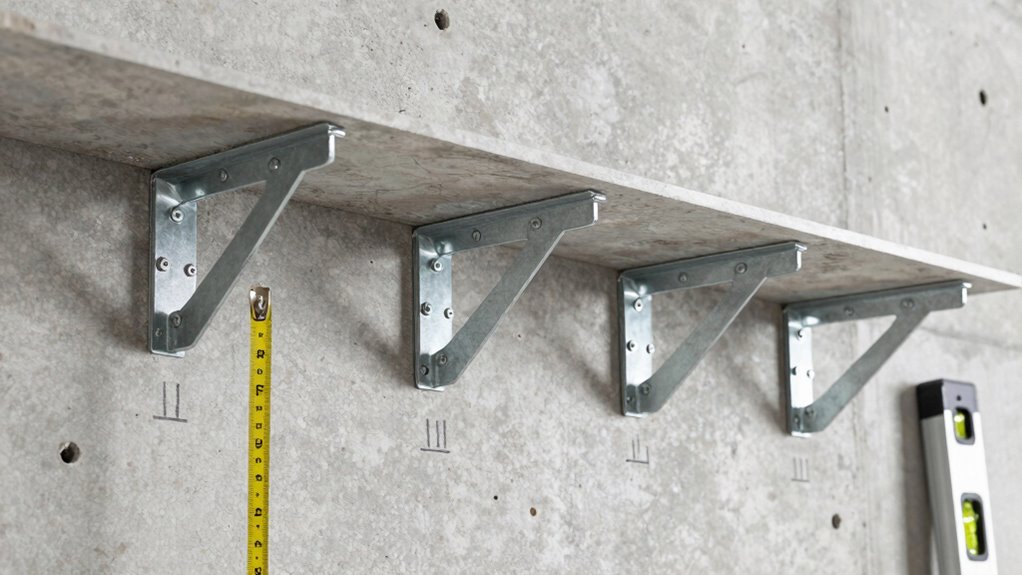
Although concrete walls can support substantial weight, you must calculate safe shelf load limits based on bracket type, anchor specifications, and concrete composition.
Don’t guess—precise calculations prevent costly failures and guarantee your installation meets safety standards.
Consider these critical factors:
- Bracket material strength ratings and span distances
- Anchor type, diameter, and embedment depth specifications
- Concrete density, compressive strength, and existing crack patterns
- Dynamic load requirements including vibration and impact forces
Your shelf’s total load capacity equals the weakest component’s rating.
Check manufacturer specifications for exact weight limits. Factor in safety margins of at least 25% above expected loads.
Lightweight hollow-core concrete requires special consideration. Solid poured concrete generally provides better support.
Always consult engineering tables for precise load calculations. Test assumptions before final installation.
Fasten Brackets Firmly for Stability
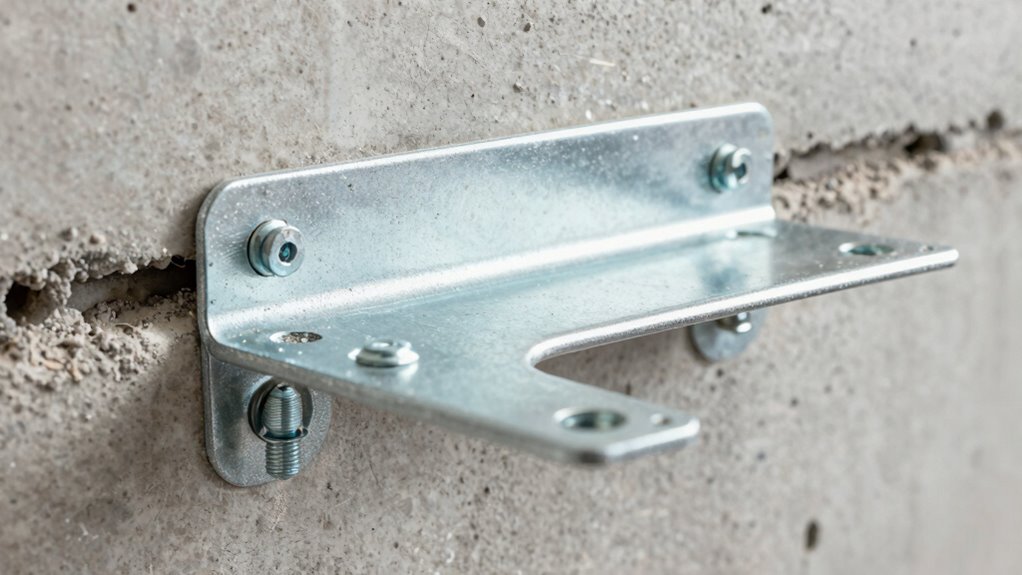
Secure your brackets with appropriate fasteners that match your calculated load requirements and concrete type. Choose concrete anchors rated for your specific weight demands – toggle bolts, sleeve anchors, or wedge anchors work best.
Drill pilot holes slightly deeper than anchor length using a hammer drill with masonry bit. Clean debris from holes thoroughly before inserting fasteners. Position brackets precisely according to your level marks, guaranteeing proper spacing.
Tighten anchors gradually while checking bracket alignment. Don’t overtighten, which can strip threads or crack concrete. Verify each connection resists lateral movement.
Test stability by applying gentle pressure. Address any wobble immediately by retightening or reinstalling loose connections. Proper bracket attachment prevents shelf failure and guarantees your installation meets safety standards while supporting intended loads effectively.
Mount Shelves Securely With Confidence
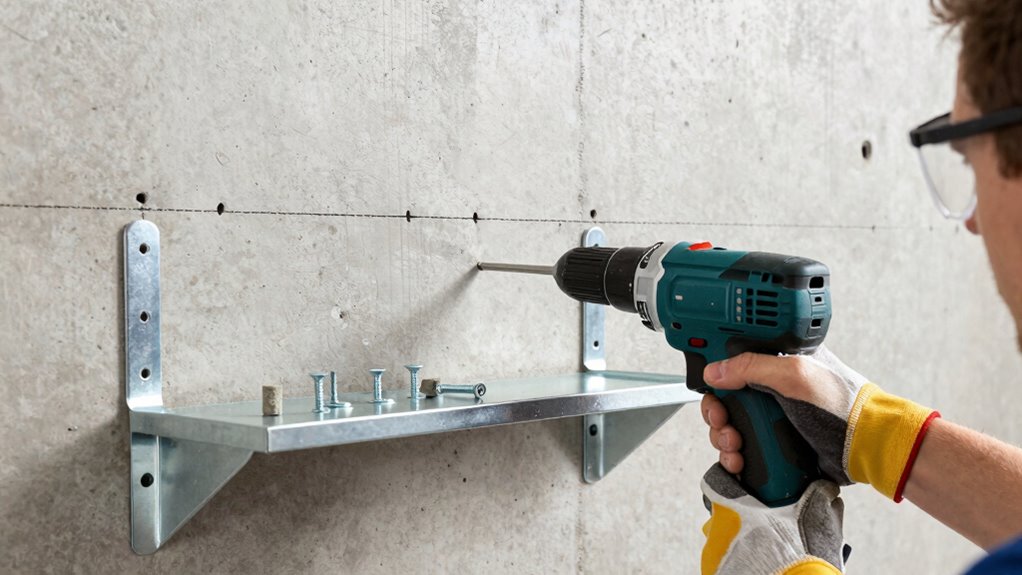
You’ll need to select mounting hardware that matches your shelf’s weight capacity and concrete wall type.
Install anchors and brackets using proper drilling techniques to guarantee maximum holding strength.
These steps ensure your shelves won’t fail under load.
Mounting Hardware Selection
When mounting shelves in concrete walls, selecting the appropriate hardware guarantees your installation remains stable under load. You need hardware specifically designed for masonry applications to ascertain proper anchoring and weight distribution.
Consider these essential hardware components:
- Concrete anchors – Choose wedge anchors or sleeve anchors rated for your shelf’s maximum load capacity.
- Mounting brackets – Select heavy-duty metal brackets with adequate screw holes for secure attachment.
- Drill bits – Use carbide-tipped masonry bits that match your anchor specifications exactly.
- Fasteners – Pick corrosion-resistant screws or bolts that meet local building code requirements.
Your hardware selection directly impacts installation success.
Don’t compromise on quality or undersize components. Proper hardware prevents costly failures and ascertains your shelves support intended loads safely.
Match hardware strength to your specific shelf design and usage requirements.
Proper Installation Techniques
Before drilling into concrete walls, verify your shelf placement aligns with structural requirements and local building codes.
You’ll need a masonry drill bit slightly smaller than your anchor diameter. Mark drilling points precisely using a level and measuring tape.
Drill holes at a consistent depth, typically 1-2 inches deeper than your anchor length. Remove dust and debris from holes using compressed air or a wire brush.
Insert anchors firmly, ensuring they sit flush against the wall surface. Attach brackets using appropriate screws, tightening gradually to prevent cracking.
Test mount stability by applying downward pressure. Adjust shelf height immediately if you notice any play or movement. Proper torque prevents future loosening.
You’re creating lasting storage solutions that integrate seamlessly with your space.
Avoid These Common Installation Mistakes
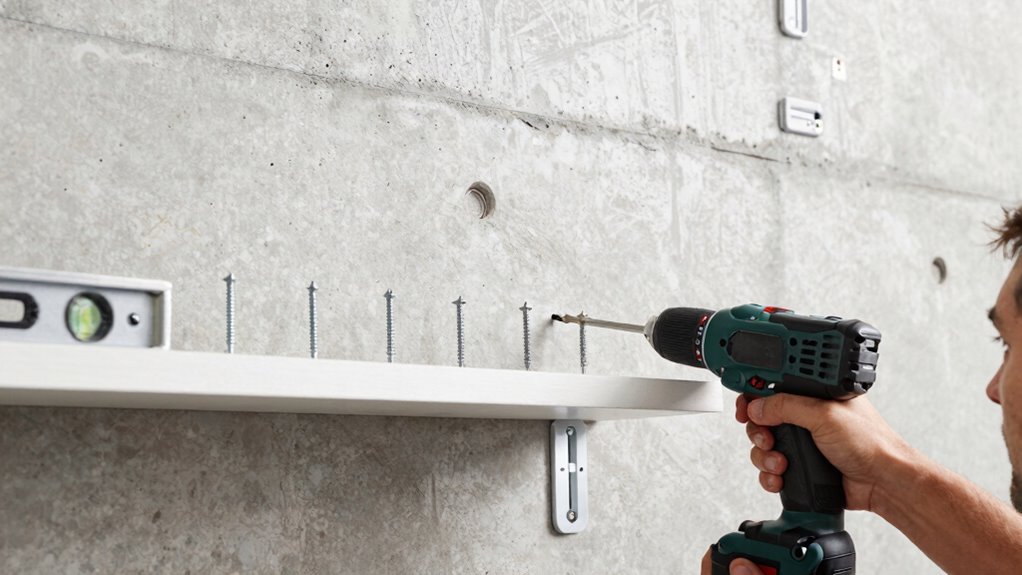
Several critical errors can compromise your shelf installation in concrete walls.
You’ll want to avoid these common mistakes that frustrate DIY enthusiasts and professionals alike.
- Skipping anchor type verification: Don’t assume standard anchors work for your concrete type. Check compression strength and choose appropriate anchors.
- Improper hole depth measurement: Measure twice before drilling. Shallow holes won’t support weight, while overly deep holes weaken structural integrity.
- Ignoring concrete composition: Avoid drilling into rebar or electrical conduits. Use a stud finder with AC detection capability.
- Over-tightening anchors: You’ll strip threads or crack surrounding concrete. Follow manufacturer’s torque specifications precisely.
These mistakes separate experienced installers from novices.
Master these fundamentals and you’ll achieve professional results every time.
Conclusion
You’ve now mastered the essential techniques for installing shelves in concrete walls. By selecting proper anchors, using precise drilling methods, and avoiding common pitfalls, you guarantee secure, long-lasting installations. Remember that concrete demands specialized approaches—measure carefully, drill accurately, and fasten brackets firmly. With these technical skills, you’ll achieve professional results while maintaining safety standards. Regular inspection keeps your shelving systems reliable over time.
