

Like a tightly sealed vault preserving precious contents, proper paint storage demands precise conditions to maintain quality. You’ll need to control temperature, humidity, and container integrity to prevent costly waste. What critical factors determine whether your paint remains usable for months or deteriorates within weeks? Understanding these essentials can save you hundreds on repurchase costs.
Why Proper Paint Storage Matters
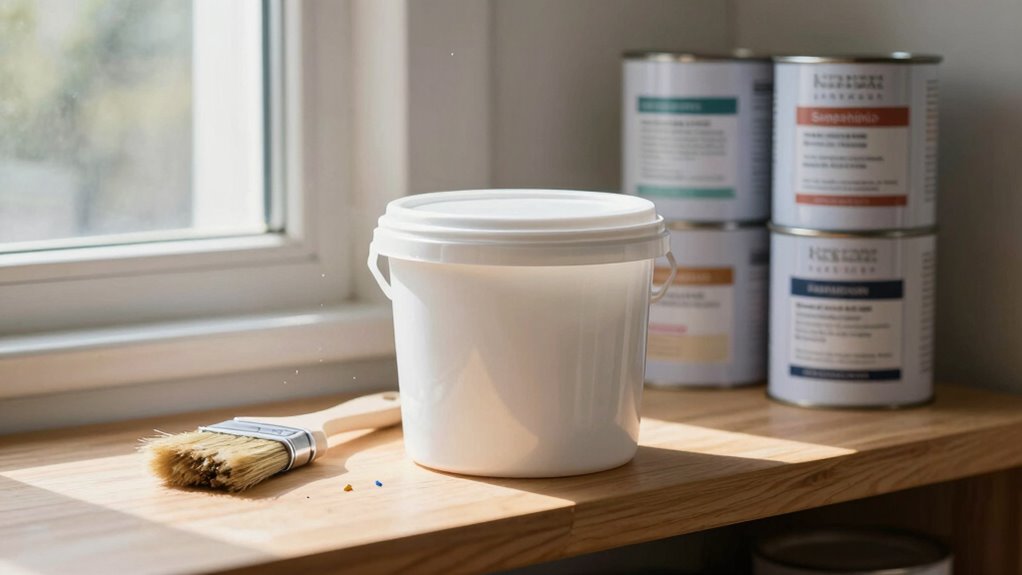
Proper paint storage prevents costly waste and maintains product quality for future projects. You need specific conditions to preserve paint integrity. Store containers in cool, dry locations between 60-80°F with minimal temperature fluctuations.
You should keep lids tightly sealed after each use, eliminating air exposure that causes skin formation. Check expiration dates regularly since latex paints last only two years while oil-based variants extend five years.
You must protect containers from direct sunlight, which degrades pigments and binders. Store upright on flat surfaces, preventing leaks and label damage.
Rotate stock using oldest cans first. You should clean tools immediately after use. Monitor storage areas for pests that compromise container seals.
Maintaining these practices guarantees your paint remains usable, reducing replacement costs while delivering consistent results every time you paint.
What Happens If You Store Paint Improperly?
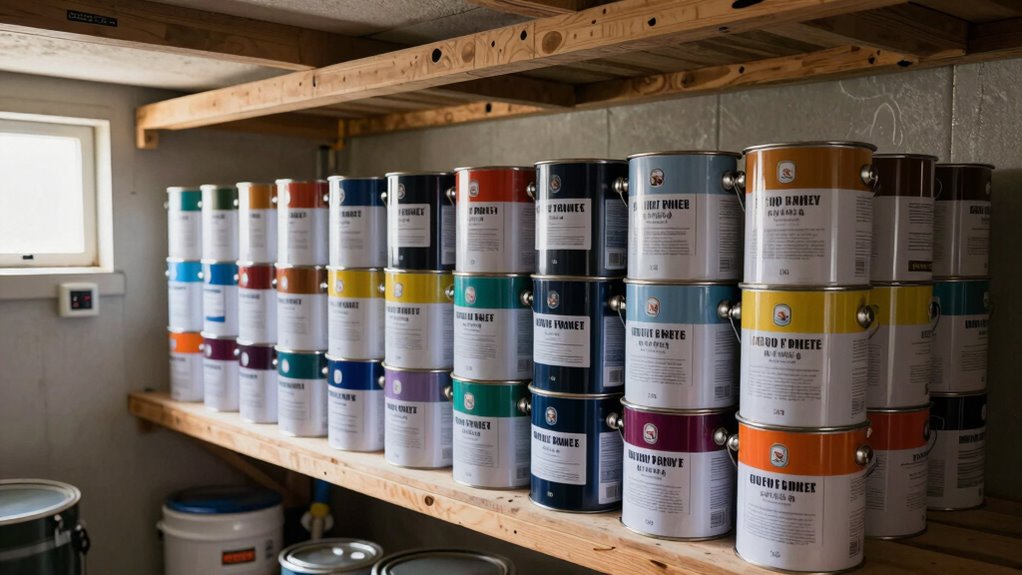
When you store paint incorrectly, you’ll notice significant quality degradation as temperature fluctuations and moisture exposure cause the paint to separate, thicken, or develop mold.
Your safety risks increase substantially when containers aren’t sealed properly or stored in inappropriate locations, creating potential fire hazards from volatile organic compounds and toxic fume accumulation.
These storage mistakes ultimately result in wasted product and dangerous conditions that require immediate remediation.
Paint Quality Degradation
Improper paint storage causes immediate and progressive degradation that compromises both the paint’s chemical structure and its practical usability.
You’ll experience separation of ingredients, where pigments settle and binders break down. Temperature fluctuations cause coagulation, making mixing impossible.
Moisture exposure leads to bacterial growth, creating foul odors and film formation. Your paint’s viscosity changes dramatically, becoming either too thick or runny.
UV light degrades pigments, causing color fading and inconsistency. Container corrosion contaminates contents with metal particles.
You’ll notice skin formation on surfaces, indicating oxidation. Chemical reactions accelerate when temperatures exceed recommended ranges.
Freezing damages emulsion stability permanently. Your paint loses adhesion properties, resulting in poor coverage and uneven application.
These changes happen faster in humid environments. You’re fundamentally wasting money on unusable product.
Proper storage prevents these costly, irreversible quality issues.
Safety Hazards Increase
Storing paint incorrectly doesn’t just ruin the product quality discussed previously—it creates serious safety risks that can harm both people and property.
You expose yourself to fire hazards when storing paint near heat sources or in direct sunlight. Volatile organic compounds evaporate faster, creating toxic fumes that cause respiratory issues. Improper sealing leads to spills and leaks, damaging floors and surfaces. You risk chemical reactions when mixing different paint types or storing incompatible materials together.
Temperature fluctuations cause containers to expand and contract, potentially bursting seals. Poor ventilation traps harmful vapors, leading to headaches, dizziness, or worse health effects.
Always store paint in cool, dry areas away from ignition sources. Keep containers tightly sealed and upright. Separate different paint types. Guarantee adequate ventilation.
These practices prevent accidents, protecting both your health and your property from preventable damage.
How Long Does Paint Last When Stored Correctly?
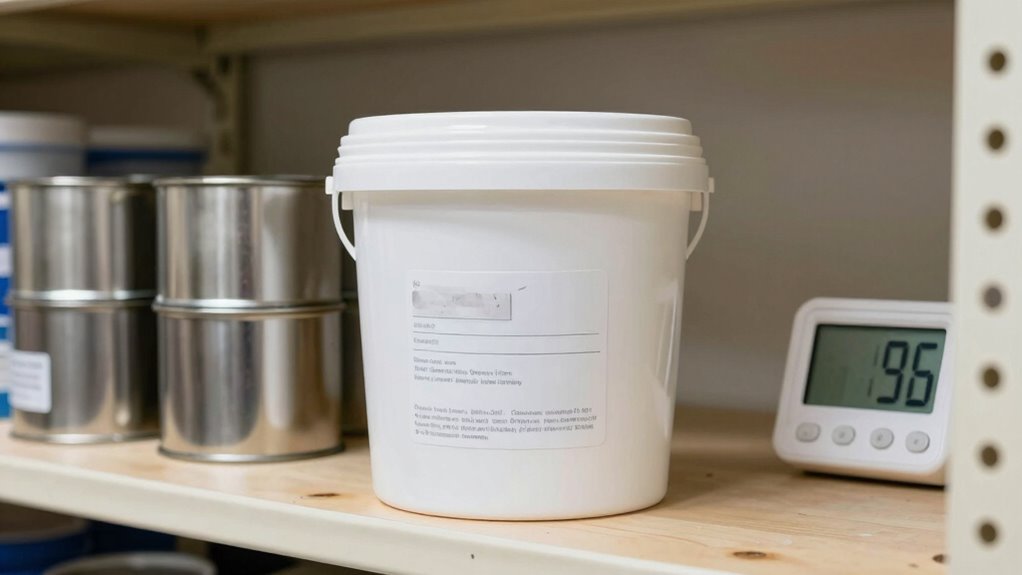
How long can you expect paint to remain usable after proper storage?
Latex paints typically last 2-3 years when stored correctly, while oil-based paints can remain viable for 3-5 years.
You’ll maximize shelf life by maintaining consistent temperatures between 60-80°F and keeping containers tightly sealed.
Check manufacturer expiration dates before use, but proper storage often extends usability beyond printed dates.
Signs of deterioration include thickening, separation, or mold growth. Stir latex paints thoroughly before application to reincorporate settled pigments.
Oil-based paints may require thinning if they’ve thickened excessively.
Don’t risk using paint that smells sour or shows visible contamination. Regularly inspect stored paint every six months, ensuring lids remain secure and containers show no rust or damage that could compromise seal integrity.
Where Should You Store Paint in Your Home?
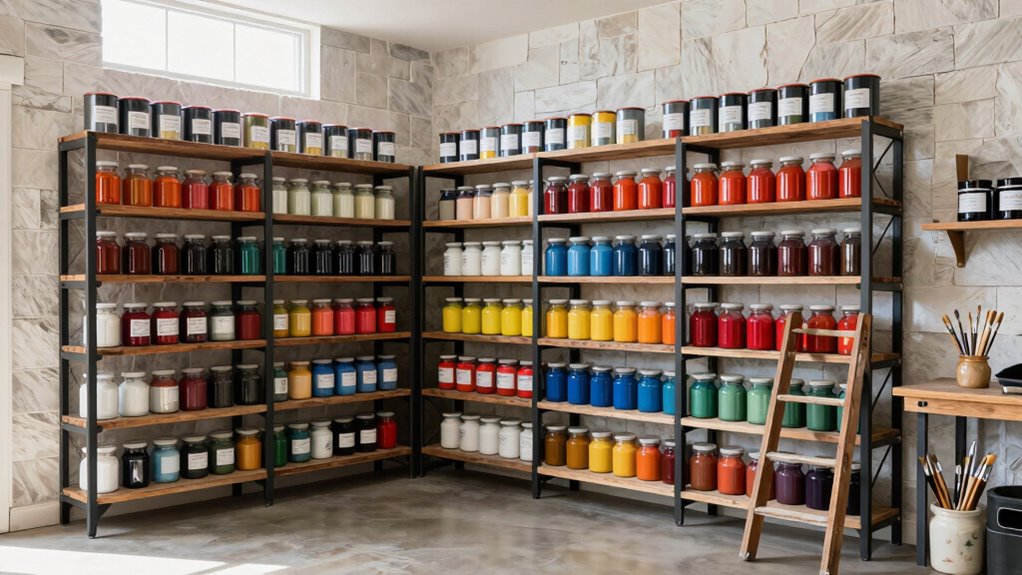
While temperature and humidity control are essential for paint storage longevity, selecting the proper location in your home requires careful consideration of several environmental factors.
You should choose an indoor space that maintains consistent temperatures between 60-80°F and humidity levels below 50%. Avoid areas with drastic temperature fluctuations like attics or garages. Interior closets, pantry spaces, or dedicated storage rooms work well if they remain climate-controlled.
Confirm your chosen location has minimal air circulation to prevent dust contamination. You must protect paint from direct sunlight, which degrades pigments and binders.
Basements often provide stable conditions but require moisture monitoring. Keep containers away from heating vents, radiators, or cold exterior walls. Your storage area should allow easy access while maintaining security from children and pets.
Is It Safe to Store Paint in a Garage or Basement?
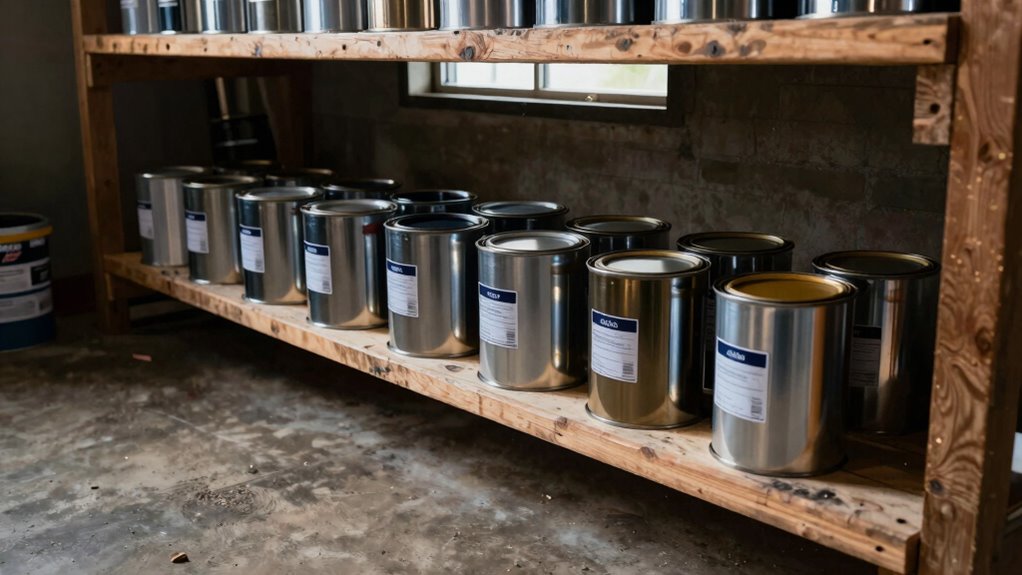
Many homeowners wonder about the safety of storing paint in common household locations like garages or basements.
You shouldn’t store paint in these areas due to temperature fluctuations and potential moisture issues. Garages expose paint to extreme heat and cold, causing chemical breakdown and separation.
Basements often harbor humidity that promotes rusting and container corrosion. Both environments lack proper ventilation, allowing fumes to accumulate dangerously.
You’ll find that these locations compromise paint quality through freeze-thaw cycles and temperature swings. Metal cans expand and contract, breaking seals and allowing air contamination.
Instead, choose climate-controlled storage areas with consistent temperatures.
You’ll preserve paint integrity longer when avoiding garages and basements entirely. Proper storage prevents waste and maintains peak performance.
What Temperature Is Best for Paint Storage?
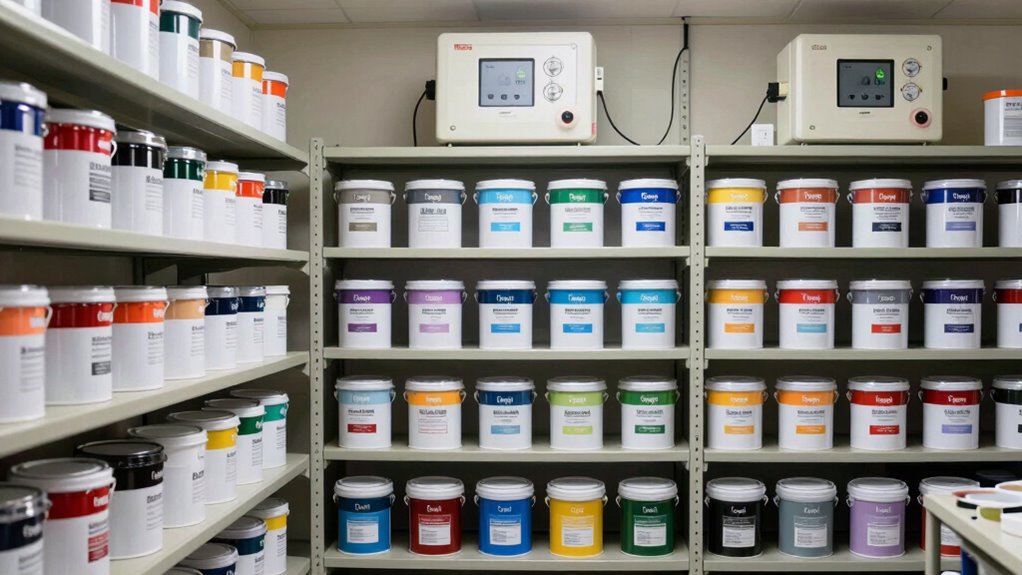
You should maintain paint storage temperatures between 50-75°F to prevent chemical separation and degradation.
Humidity levels must stay below 50% to avoid moisture contamination that compromises paint quality.
These environmental controls guarantee your stored paint remains usable and maintains its original performance characteristics.
Optimal Temperature Range
Store your paint in a location where temperatures remain consistently between 60-80°F (15-27°C) to prevent chemical degradation and maintain peak performance. Fluctuating temperatures cause paint components to expand and contract, leading to separation and reduced shelf life.
You’ll want to avoid areas prone to extreme heat or cold, such as garages or basements without climate control.
- Chemical stability: Consistent temperatures prevent binder breakdown and pigment settling that occurs when paint experiences thermal shock.
- Performance preservation: Proper storage maintains viscosity and application properties, guaranteeing professional results when you need them.
- Economic benefit: Following temperature guidelines extends paint lifespan, reducing waste and saving money on premature replacements.
Monitor storage areas regularly, especially during seasonal changes, to guarantee ideal conditions.
Humidity Control Methods
While temperature stability protects paint from chemical breakdown, controlling humidity levels prevents moisture-related contamination that compromises paint integrity.
You should maintain relative humidity between 40-60% for ideal paint storage. Excessive moisture causes paint to thicken, separate, or develop mold, while low humidity leads to premature drying and skin formation.
Use dehumidifiers or moisture absorbers like silica gel packets to reduce humidity levels. Increase humidity with humidifiers during dry periods.
Monitor moisture regularly using hygrometers placed near storage areas. Store paint away from exterior walls, basements, or attics where humidity fluctuates.
Proper ventilation prevents condensation buildup. Verify containers remain tightly sealed to prevent moisture infiltration.
You’ll preserve paint quality longer by maintaining consistent humidity levels alongside proper temperature control.
Safe Ways to Prep Paint Cans Before Storing
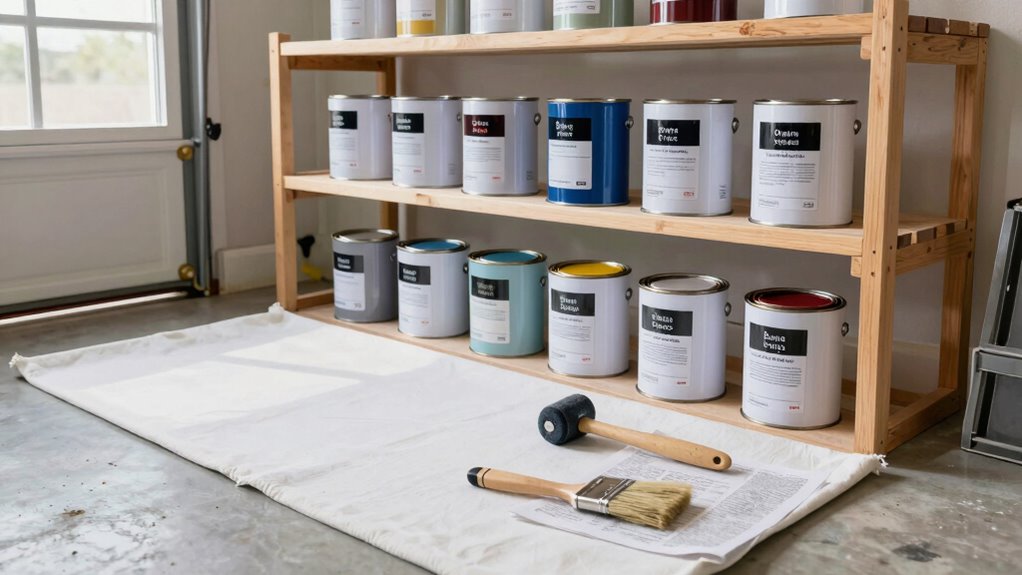
Before storing paint cans, make certain the lids are properly secured by cleaning any excess paint from the rim and sides of the container.
Use a clean cloth or paper towel to remove all debris, ensuring an airtight seal. Wipe down the entire lid surface and check for any dents or damage that might compromise storage integrity.
- Proper sealing prevents skin formation – Air exposure causes paint to develop a skin layer, ruining usability and creating waste that impacts both your project timeline and environmental responsibility.
- Clean containers maintain community standards – Well-maintained paint storage shows respect for shared spaces like garages or storage units where neighbors might access your supplies.
- Secure lids protect against hazardous spills – Preventing accidental leaks keeps your storage area safe while avoiding costly cleanup that affects your reputation among fellow DIY enthusiasts.
Should You Transfer Paint to Smaller Containers?
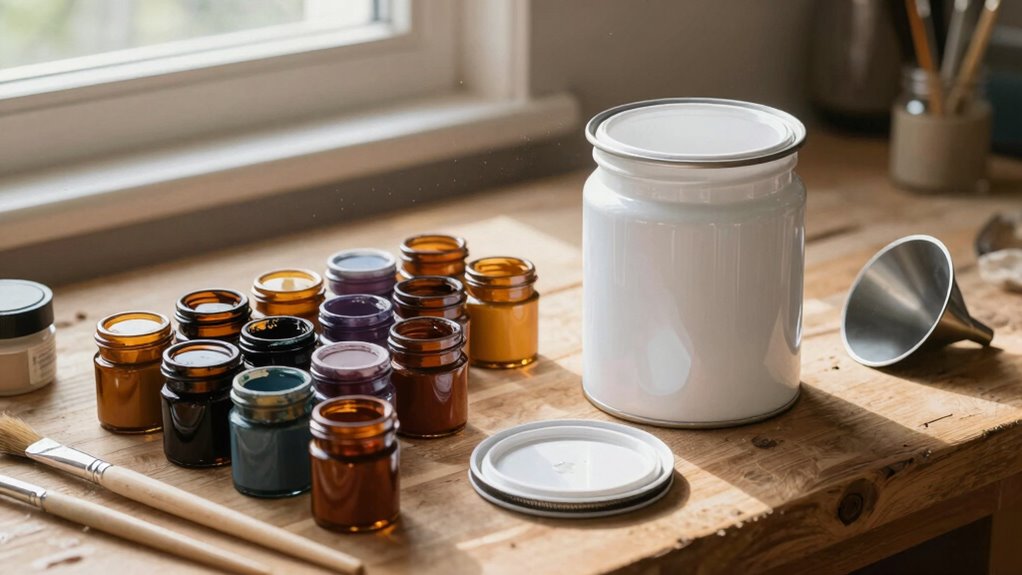
Transferring paint to smaller containers depends entirely on your specific storage needs and future usage plans.
You should consider this option when you have partially used cans exceeding six months’ storage time. Smaller containers reduce air exposure, minimizing oxidation and skin formation. Glass jars with tight-fitting lids work best for small quantities. Metal cans aren’t ideal because they rust quickly when exposed to paint chemicals.
You’ll want containers that match your typical project sizes – quart jars for touch-ups, gallon containers for larger jobs. Proper labeling becomes essential when transferring paint. Always mark color codes, brand names, and purchase dates clearly.
Temperature fluctuations affect paint quality considerably, so smaller volumes respond better to environmental changes. Your storage space limitations might also dictate container size choices. Plan according to how much paint you typically use per project cycle.
How to Seal Paint Cans for Long-Term Storage
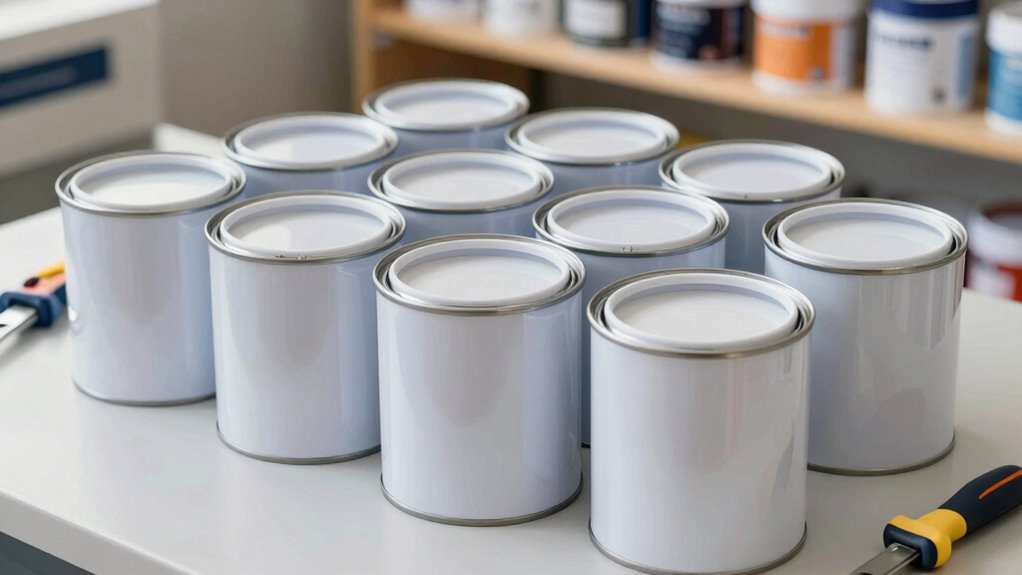
You must align the lid properly by centering it evenly over the can’s rim and pressing down firmly until you hear the seal engage.
Prevent moisture contamination by wiping the lid’s gasket clean before sealing and ensuring no paint residue interferes with the rubber seal.
These techniques maintain paint quality during extended storage periods.
Proper Lid Alignment Techniques
Proper lid alignment guarantees an airtight seal that prevents paint from drying out or becoming contaminated during storage. You must clean the can’s rim thoroughly before replacing the lid.
Position the lid squarely on the can, securing it sits flush around the entire circumference. Apply firm, even pressure while sealing.
- Precise alignment prevents air gaps that compromise paint quality
- Clean contact surfaces eliminate contaminants that cause premature drying
- Consistent pressure application secures uniform sealing across the entire lid
You should test the seal by gently tugging the lid after closing. If it moves, reposition and reapply pressure.
Store cans upside down periodically to create additional sealing security. Mastering this technique keeps your paint fresh longer.
Moisture Prevention Methods
How do you guarantee paint cans remain moisture-free during extended storage periods?
You must create an airtight seal using proper lid installation techniques. First, clean any paint residue from the can’s rim with a solvent. Position the lid correctly, assuring it sits flush against the rubber gasket.
Apply steady downward pressure while rotating the lid clockwise until it’s completely tightened. Check that no gaps exist between the lid and can body. For added protection, tap around the lid’s perimeter with a rubber mallet to eliminate microscopic air pockets.
Store cans upside down to create a reverse seal. This technique guarantees moisture doesn’t penetrate the container. Regularly inspect stored cans for signs of rust or swelling, which indicate compromised seals.
Implement these methods consistently to maintain paint quality throughout storage.
Do You Need Special Containers for Paint Storage?
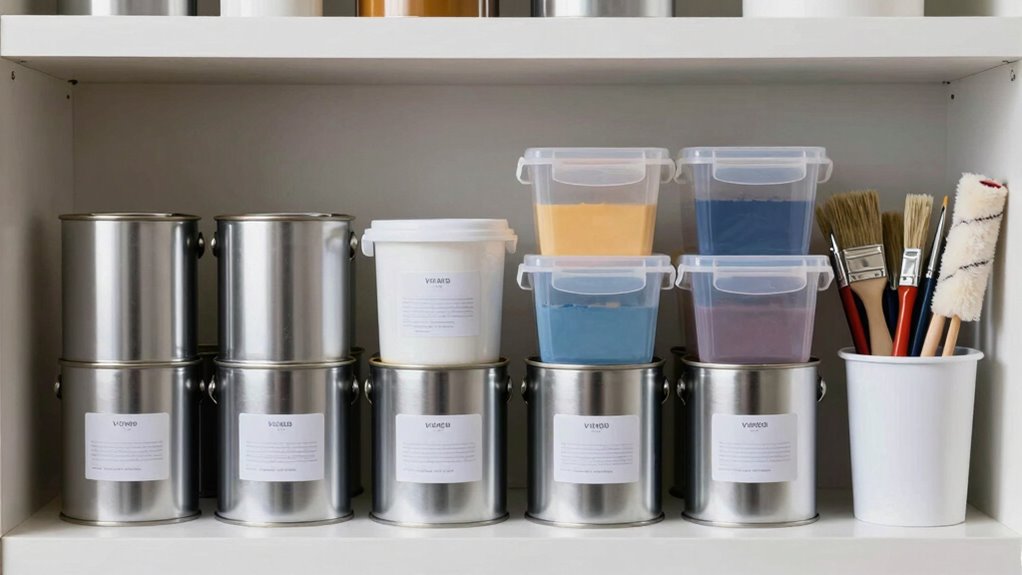
Why should you bother with special containers when storing paint? Regular household containers lack the chemical resistance and airtight seals necessary for proper paint preservation. You need containers specifically designed for paint storage to maintain quality and prevent contamination.
- Material compatibility: Specialized containers use chemically inert materials that won’t react with paint solvents, preventing degradation of both container and contents.
- Airtight sealing: Professional-grade lids create superior seals that prevent oxygen exposure, moisture ingress, and volatile organic compound emissions.
- Structural integrity: Reinforced walls and bases withstand temperature fluctuations and physical handling without cracking or leaking.
Investing in proper paint storage containers guarantees your paint remains usable for years. You’re not just buying containers; you’re protecting your investment in quality paint and joining a community of serious DIY enthusiasts who understand that proper storage equals better results.
Best Practices for Labeling Paint Storage Containers
Several critical labeling practices guarantee your stored paint remains identifiable and usable for future projects.
You should always write the paint type, color name, and purchase date directly on the container using permanent markers. Include the store location and paint code for precise matching. Don’t rely on manufacturer labels alone since they fade over time.
Create backup labels on waterproof tape as insurance. Write clearly and legibly, avoiding decorative fonts that obscure information. Position labels where they won’t be covered when stacking containers.
You must update labels whenever you mix batches or change storage locations. Color-coding systems work well for organizing multiple paint types.
Store label information digitally too, photographing container details for quick reference. These practices guarantee you’ll always know exactly what paint you have stored.
How to Store Paint After Opening
You must seal paint containers with airtight lids and store them in cool, dry locations between 50-80°F to prevent spoilage.
Proper labeling and dating of stored paint guarantees you can identify contents and track shelf life for ideal usage.
These storage methods maintain paint quality and extend usability for months after opening.
Proper Container Sealing
Once you’ve finished using paint from its original container, proper sealing becomes critical to maintaining the product’s quality and extending its shelf life. You must create an airtight seal to prevent skin formation and contamination.
- Clean the rim thoroughly before closing – any paint residue prevents proper sealing and causes leaks.
- Tap the lid firmly with a rubber mallet or hammer until completely flush – hand-tightening isn’t sufficient for long-term storage.
- Test the seal by inverting the container briefly – if paint leaks, reseal immediately.
You should hear a slight vacuum pop when opening properly sealed containers later. This indicates successful airtight storage that preserves paint integrity.
Don’t skip these steps if you want reliable paint performance during future projects.
Temperature Control Methods
While proper sealing prevents contamination and evaporation, temperature control methods become equally important for maintaining paint quality after opening. You should store paint between 60-80°F to prevent chemical breakdown.
Avoid temperature fluctuations that cause separation or thickening. Keep containers away from direct sunlight, heaters, or air conditioning units. Don’t store paint in garages or sheds where temperatures swing dramatically.
Instead, choose interior closets or storage areas with consistent room temperature. Basements work well if they remain dry and temperature-stable. You must also protect paint from freezing, which destroys emulsion properties permanently.
Check storage areas regularly for adequate ventilation and stable conditions. Metal containers conduct temperature changes faster than plastic, so monitor them closely. Maintaining proper temperature guarantees your paint remains usable for future touch-ups.
Labeling And Dating Storage
One critical step in storing opened paint involves properly labeling and dating each container for future identification. You should immediately mark each can with permanent marker, noting the paint type, color name, and exact date you opened it. This prevents confusion when you need specific paint later and helps track shelf life.
- Color coding systems help you quickly identify paint types without opening containers, saving time during projects
- Expiration tracking guarantees you use paint within ideal periods, preventing waste and poor application results
- Project documentation connects specific paint batches to completed jobs, valuable for matching future touch-ups
Store labeled containers in cool, dry locations away from temperature fluctuations. Check dates regularly and prioritize using older paint first.
Proper labeling creates organization systems that make you feel confident and prepared for any painting task.
Is It Safe to Store Paint in Extreme Weather?
Storing paint in extreme weather conditions poses significant risks to both the paint’s integrity and your safety. You shouldn’t expose paint to temperatures below freezing or above ninety degrees Fahrenheit.
Cold weather causes water-based paints to freeze, separating ingredients and destroying emulsion stability. Hot conditions accelerate chemical reactions, causing premature curing and skin formation. Both scenarios compromise pigment dispersion and binder effectiveness.
Extreme humidity levels also damage stored paint through moisture absorption or excessive drying. You’ll experience inconsistent application properties, poor adhesion, and color variations.
Container materials expand and contract with temperature fluctuations, potentially breaking seals and allowing air contamination. These conditions create hazardous situations including pressure buildup and toxic fume release.
Store paint containers indoors where you control environmental factors. Maintain consistent temperatures between fifty and eighty degrees Fahrenheit for ideal preservation. Your project success depends on proper storage conditions.
How to Tell If Stored Paint Is Still Good
After exposing paint to extreme weather conditions, you must evaluate its usability before application. Check the container’s integrity first – look for rust, dents, or compromised seals that might indicate contamination.
Shake water-based paints vigorously for 30 seconds; oil-based paints need 5 minutes of thorough mixing.
Examine the paint’s consistency after stirring. Good paint should flow smoothly without lumps or separation. Smell the paint carefully – fresh paint has a distinct chemical odor, while spoiled paint emits sour or rancid smells.
- Visual inspection reveals surface films, discoloration, or crystallization
- Texture analysis shows whether stirring eliminates clumps completely
- Olfactory testing detects off-odors indicating bacterial growth or chemical breakdown
Trust your assessment completely before committing to a project.
Signs Your Paint Has Gone Bad in Storage
When paint deteriorates during storage, several telltale signs indicate it’s no longer usable.
You’ll notice separated components that won’t mix back together, forming chunks or a cottage cheese-like texture. Bad paint often emits sour, rancid odors unlike its original chemical smell.
Mold growth appears as fuzzy spots or discoloration on the surface or container walls. Skin formation occurs when water evaporates, creating tough films you can’t remix.
You might observe crystallization, where pigment particles settle heavily at the bottom. Rust-colored stains inside metal containers signal chemical breakdown.
Frozen paint develops grainy textures that persist after thawing.
These visible and tactile changes mean your paint has lost its binding properties and won’t deliver professional results.
Trust these indicators rather than hoping for recovery.
Safe Ways to Dispose of Bad or Expired Paint
Proper disposal of deteriorated paint requires following specific protocols to protect environmental and human health. You must never pour paint down drains, onto soil, or into regular trash.
Instead, treat paint disposal as a responsible homeowner duty that protects your community.
- Solidify latex paint by mixing it with kitty litter or sawdust until it forms solid chunks, then dispose of it in regular trash
- Contact local hazardous waste facilities for proper disposal of oil-based paints, stains, and solvents that contain harmful chemicals
- Donate usable paint to community centers, schools, or neighbors who might need it for projects
You belong to a community that values safety and environmental stewardship. Following these disposal methods demonstrates your commitment to protecting shared spaces and resources for everyone’s benefit.
Conclusion
You might think storing paint properly is overkill, but improper storage wastes money and creates hazardous situations. Temperature fluctuations, humidity, and poor sealing cause paint to separate, thicken, or develop mold. Proper storage maintains chemical stability, prevents waste, and guarantees safety. Keep paint between 60-80°F in dry conditions, seal containers tightly, and inspect regularly for deterioration signs. Correct storage extends shelf life considerably while protecting your investment.
