

You might think crop rotation is only for large farms, but even small gardens benefit from strategic plant placement. Start by grouping vegetables into botanical families like nightshades, brassicas, and legumes. This prevents soil depletion and breaks pest cycles. You’ll need to track what goes where and when, because planting tomatoes in the same spot year after year will exhaust nutrients faster than you realize. Smart rotation keeps your soil productive longer.
Why Crop Rotation Matters Even in Small Gardens
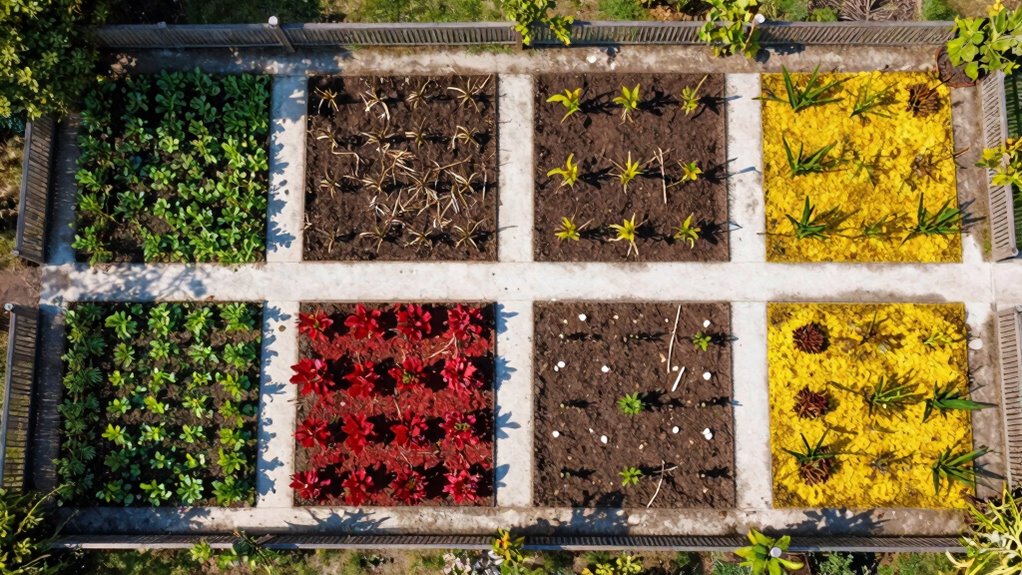
While you might think crop rotation only benefits large farms, implementing this practice in small gardens markedly improves soil health and plant productivity.
You’ll prevent nutrient depletion by alternating plant families that have different feeding requirements. Legumes actually fix nitrogen in soil, benefiting heavy feeders like tomatoes and corn that follow.
Root crops break up compacted layers, improving soil structure for subsequent plantings. Disease cycles interrupt when pathogens can’t find their preferred host plants year after year.
You’ll reduce pest populations that typically overwinter in soil near their favored crops. Even small garden beds see measurable yield increases after consistent rotation practices.
Soil microbe communities diversify when you vary root exudates and organic matter inputs. Your garden’s ecosystem strengthens through these deliberate plant placement strategies.
Group Plants by Family to Prevent Depletion
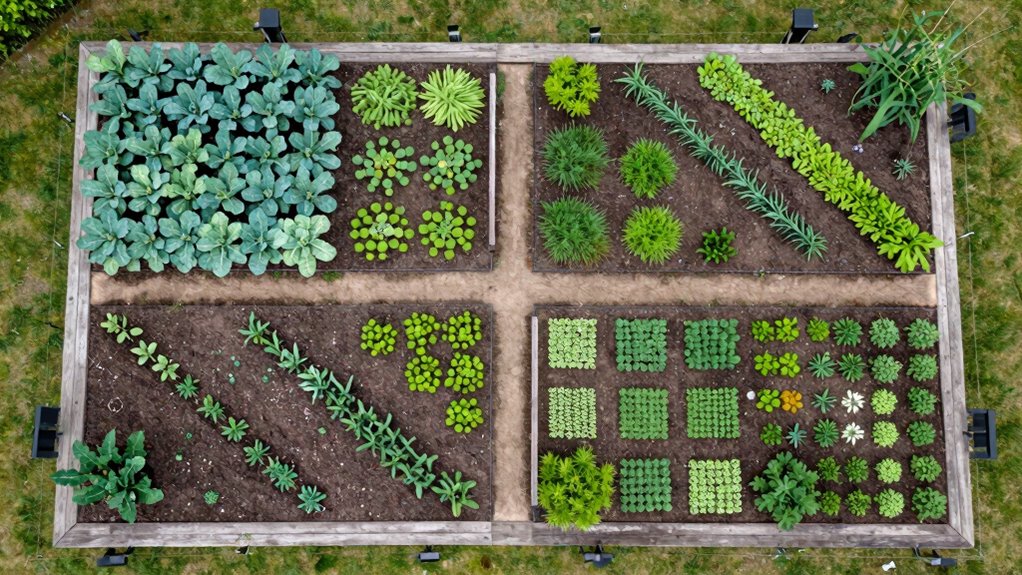
You must group plants by their botanical families because different families have distinct nutrient requirements and depletion patterns that affect soil health.
Preventing soil nutrient depletion requires understanding how legumes fix nitrogen while heavy feeders like brassicas deplete it rapidly.
You should rotate these crop families annually to maintain soil fertility and break disease cycles that target specific plant groups.
Group Plants By Family
Why should you group plants by family when planning your crop rotation strategy? You prevent cross-contamination and maintain soil health by keeping related species together.
Brassicas like cabbage, broccoli, and kale deplete similar nutrients, so rotating them as a family guarantees balanced soil recovery. Legumes including beans and peas fix nitrogen differently than heavy feeders like tomatoes and peppers.
You should track planting dates and maturation periods within each family group. Solanaceous crops require identical growing conditions and nutrient profiles.
Root vegetables like carrots, beets, and radishes share similar soil preferences and pest vulnerabilities. Keeping detailed records helps you monitor what you’ve planted where and when.
You’ll maximize garden efficiency while minimizing disease cycles that target specific plant families.
Prevent Soil Nutrient Depletion
Grouping plants by family directly supports soil nutrient management by matching crops with similar feeding patterns and nutrient demands.
You should categorize heavy feeders like tomatoes, peppers, and eggplants together since they deplete nitrogen and potassium considerably.
Root vegetables including carrots, radishes, and beets share similar phosphorus requirements.
Legumes such as beans and peas actually fix nitrogen, enriching soil for subsequent plantings.
Brassicas like cabbage, broccoli, and cauliflower are heavy nitrogen consumers.
You’ll prevent specific nutrient exhaustion by understanding these family characteristics.
Monitor soil pH changes each family creates, tracking calcium depletion from heavy fruiting crops.
Keep detailed records showing which areas hosted which families, enabling better nutrient planning.
Test soil regularly to identify deficiencies before planting.
This systematic approach guarantees prime growing conditions while maintaining soil health across multiple seasons.
Rotate Crop Families Annually
While understanding plant family characteristics helps prevent specific nutrient exhaustion, rotating crop families annually guarantees soil maintains balanced nutrient levels across multiple growing seasons.
You should group plants by their botanical families—like nightshades, brassicas, and legumes—then systematically move each family to different garden sections yearly. This practice prevents pathogens from establishing in specific areas while allowing depleted nutrients to recover naturally.
Brassicas heavily consume nitrogen, so follow them with nitrogen-fixing legumes. Nightshades deplete potassium, making subsequent brassica planting beneficial.
You’ll maximize yields and minimize soil amendments when you plan rotations carefully. Document your planting locations annually, ensuring tomatoes never return to the same spot for at least three years. Successful rotation creates sustainable growing conditions.
Plan Rotations by Season
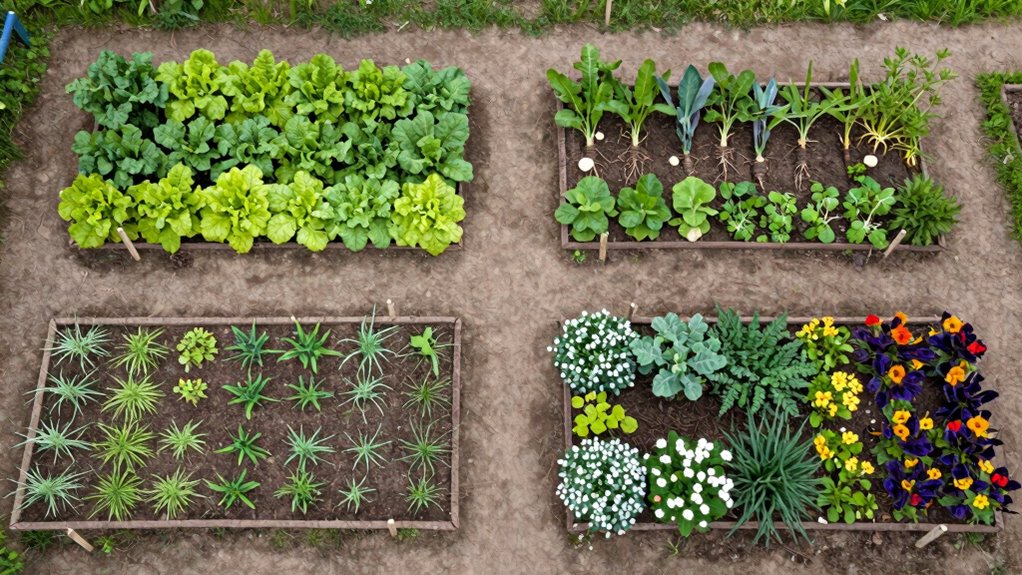
Planning crop rotations by season enhances your garden’s productivity and maintains soil health throughout the growing year. You should sequence cool-season crops like lettuce and peas in early spring, followed by warm-season tomatoes and peppers in summer.
Fall allows for another cool-season planting of brassicas and root vegetables. Winter cover crops like clover or rye restore nitrogen and organic matter.
Track your planting dates and harvest times to identify prime rotation windows. Cool-season crops typically need 45-60 days, while warm-season varieties require 60-90 days.
Succession planting every two weeks guarantees continuous harvests. Keep detailed records of what you plant where and when. This systematic approach prevents soil depletion, reduces pest buildup, and enhances your growing space efficiency throughout each season.
Rotate Crops in Containers and Raised Beds
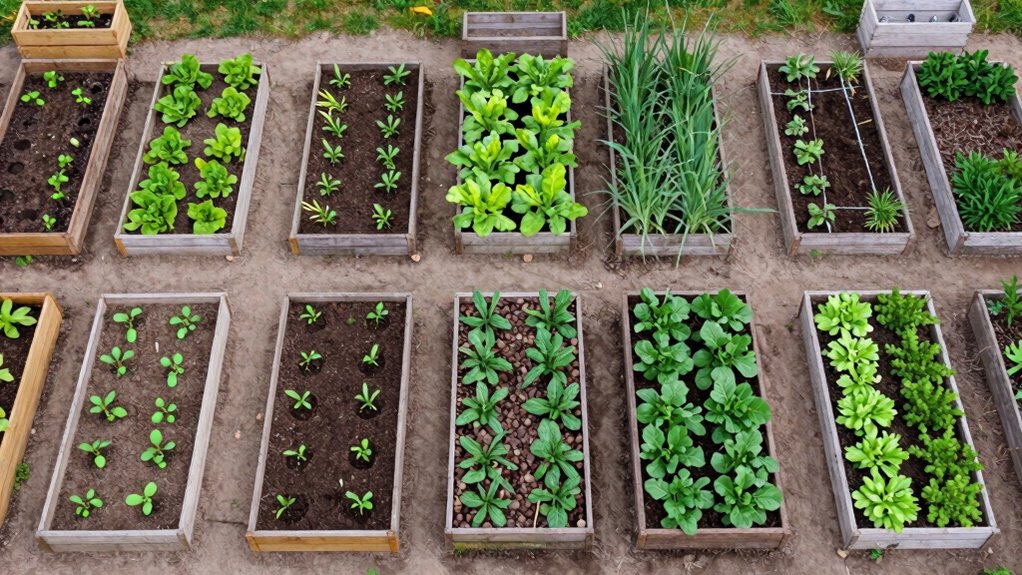
Although container and raised bed gardening presents unique challenges for crop rotation, you can maintain soil health and prevent nutrient depletion by systematically moving plant families to different locations each growing season.
You should group containers by plant families and rotate their positions annually. Heavy feeders like tomatoes and corn deplete nitrogen quickly, so follow them with legumes that fix nitrogen naturally.
Root crops including carrots and radishes work well after nitrogen-fixing plants. Brassicas demand calcium heavily; precede them with beans and peas, then replenish calcium through compost or supplements.
Maintain separate containers for distinct plant families whenever possible. Raised beds require planning pathways between sections for efficient family rotation. You must avoid replanting identical families in same spots consecutively.
Container mobility gives you flexibility impossible in ground gardens, letting you optimize sun exposure while maintaining proper rotations. Track each container’s contents carefully to execute successful seasonal changes effectively.
Track Plant Families and Harvests in a Garden Journal
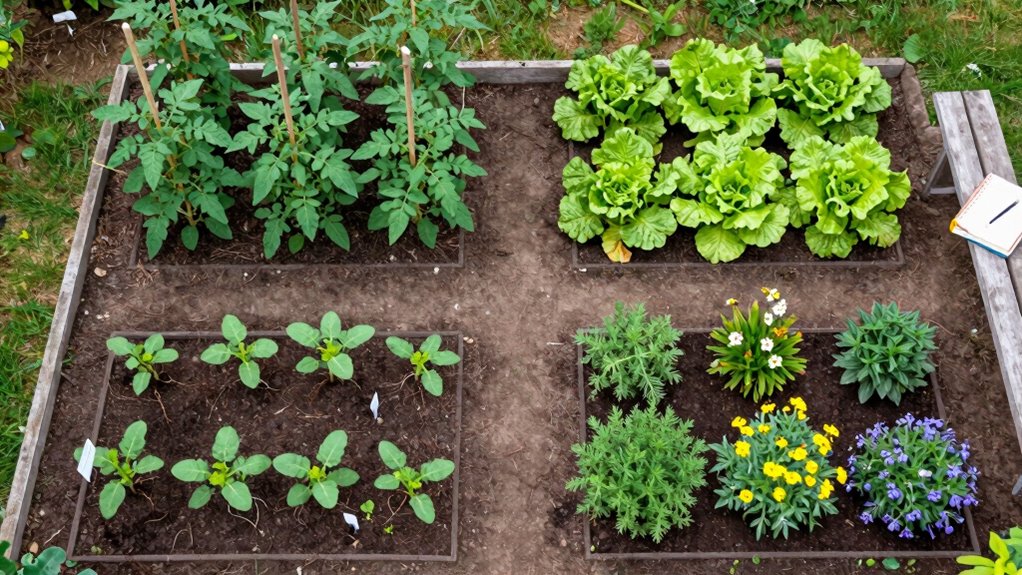
You should maintain detailed records of plant families in your garden journal to prevent consecutive plantings of related crops in the same location.
Track harvest dates meticulously to identify ideal planting schedules and avoid depleting soil nutrients from repeated plantings.
Monitor soil health indicators like pH levels and nutrient content to make informed decisions about future crop rotations and amendments.
Record Plant Families
Keeping accurate records of plant families and harvests forms the backbone of successful crop rotation in small gardens.
You must document each plant’s botanical family to prevent consecutive planting of related crops in identical locations. Create detailed entries noting Solanaceae (tomatoes, peppers), Brassicaceae (cabbage, broccoli), and Cucurbitaceae (squash, cucumbers) placements.
Record varieties, planting dates, and plot positions systematically. Use grid layouts or mapping software to visualize family distributions across seasons.
This documentation prevents soil nutrient depletion and disease buildup that occurs when related plants occupy the same ground repeatedly. Your records become invaluable references for planning subsequent growing seasons.
Detailed family tracking guarantees you maintain proper rotation intervals, typically three to four years between planting members of the same family in specific locations.
Track Harvest Dates
Building on family records, tracking harvest dates provides the temporal data necessary for effective rotation planning.
You should record exact harvest dates for each plant family in your garden journal. Note when you plant seeds, transplant seedlings, and collect mature crops. This chronological data reveals your growing season patterns and helps identify ideal planting windows. Track both spring and fall harvests separately.
Document weather conditions affecting crop development. Record storage durations for root vegetables and fruiting plants. Use harvest timelines to calculate successive planting intervals. Note which varieties perform best in your microclimate zones.
Cross-reference harvest dates with family planting records to enhance three-year rotation cycles. This detailed temporal tracking empowers you to maximize garden productivity while maintaining soil nutrient balance through strategic crop sequencing.
Monitor Soil Health
Documentation of plant families and harvest timelines forms the foundation for monitoring soil health in your garden journal.
You’ll track nutrient depletion patterns by recording which plant families occupied specific beds and when. Brassicas exhaust nitrogen, while legumes fix it, so you’ll note these relationships.
Document soil pH changes after each harvest, especially following acid-loving crops like tomatoes or potatoes. Record organic matter additions, compost applications, and mulching dates to understand soil structure improvements.
You’ll also monitor moisture retention differences between heavy feeders like corn and lighter crops like herbs. Track earthworm activity, soil compaction levels, and drainage patterns seasonally.
This detailed recordkeeping helps you predict nutrient needs, plan cover crops effectively, and maintain ideal growing conditions. Your journal becomes an essential tool for making informed rotation decisions that preserve soil health.
Pick Crops That Rotate Well in Small Gardens
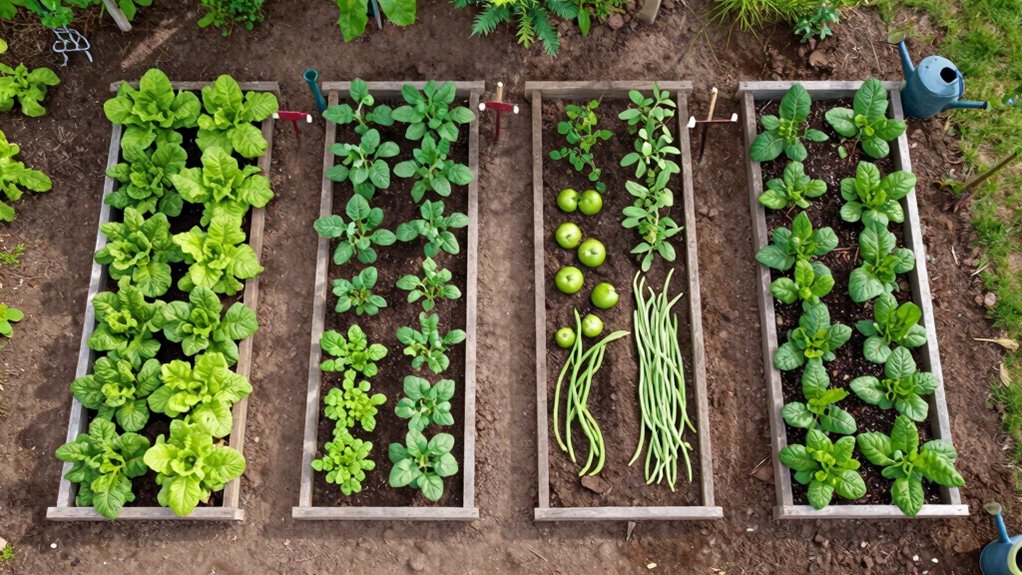
When planning your small garden rotation, you should select crops that complement each other’s nutrient needs and growth patterns.
Choose heavy feeders like tomatoes or corn for your first season, followed by light feeders such as carrots or radishes. Legumes including beans and peas fix nitrogen, making them ideal predecessors for nitrogen-demanding plants.
Root vegetables work well after leafy greens since they utilize different soil layers. Brassicas like cabbage shouldn’t follow other brassicas due to disease buildup risks.
Select varieties with varying root structures and nutrient requirements to maximize space efficiency. Plan three to four season rotations, ensuring each crop family occupies different areas annually.
This systematic approach prevents soil depletion while maintaining productive harvests throughout growing seasons.
Boost Soil Health Between Crops
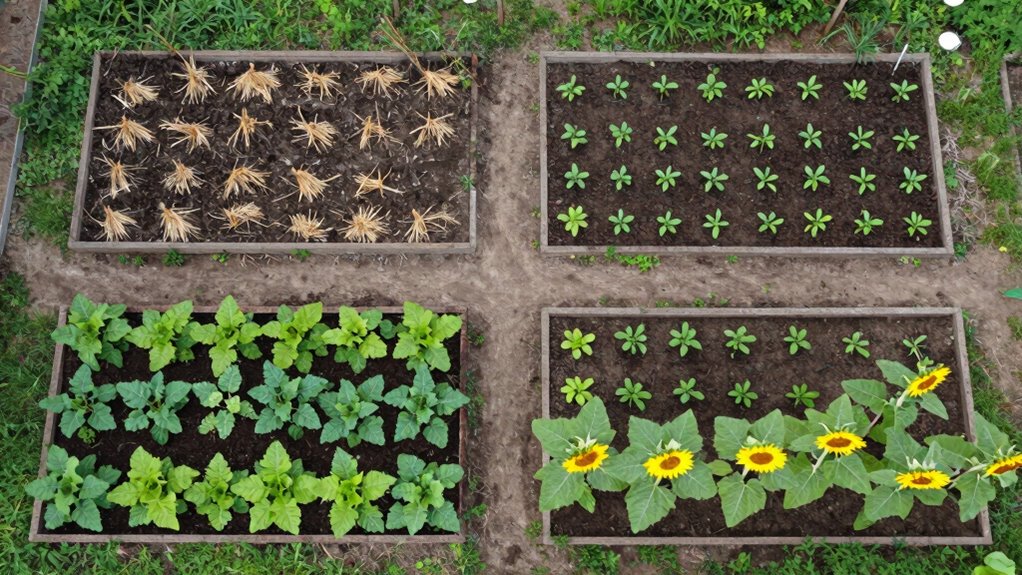
After selecting crops that rotate effectively in your small garden, you must actively enhance soil conditions between growing seasons to maintain productivity. Your soil needs specific care to recover and prepare for the next planting cycle.
- Add organic matter: Spread compost or well-aged manure across your garden beds, working it into the top six inches. This feeds beneficial microorganisms and improves soil structure.
- Plant cover crops: Sow clover, rye, or buckwheat during off-seasons. These plants protect soil from erosion, add nutrients when tilled under, and prevent weed growth.
- Test and adjust pH levels: Use a soil test kit to check acidity. Add lime to raise pH or sulfur to lower it, creating ideal conditions for your next crop rotation.
Fix Common Crop Rotation Mistakes in Small Gardens
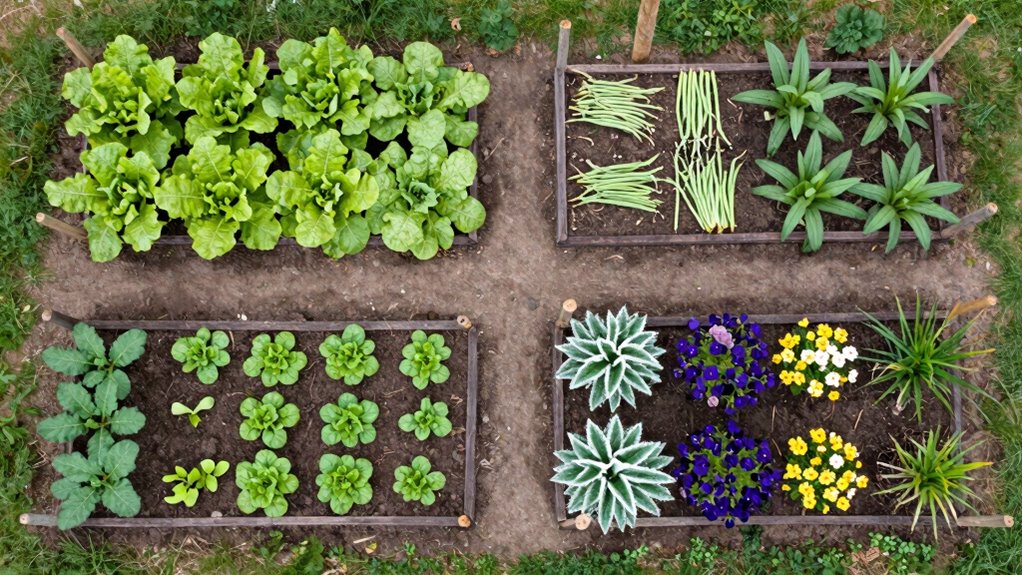
While crop rotation in small gardens can markedly boost yields and soil health, common mistakes often undermine these benefits if you don’t address them proactively.
You’re probably making the error of planting the same family crops in identical spots yearly, which depletes specific nutrients and encourages pest buildup. Don’t ignore soil testing before rotating; you’ll miss significant pH and nutrient data.
Avoid cramming incompatible plant families together—legumes followed by heavy feeders work best. You’re also likely forgetting to account for plant spacing requirements during rotation planning.
Track your garden layout meticulously using notebooks or apps. Remember that brassicas shouldn’t follow tomatoes due to similar disease susceptibilities.
Finally, don’t overlook cover cropping during off-seasons; it maintains soil structure and adds organic matter between rotations.
Conclusion
Crop rotation in small gardens requires strategic planning, not guesswork. Group plants by botanical families, alternate heavy feeders like tomatoes with nitrogen-fixing legumes, and track everything in a garden journal. Don’t rely on memory alone—ancient farmers used written records for good reason. Test soil regularly, incorporate cover crops, and avoid repeating plant families consecutively. Even compact spaces benefit from professional rotation techniques that maximize yield while maintaining soil health.
