

Like a gardener chasing the perfect harvest, you can grow lettuce year-round with the right approach. Start by selecting compact varieties like butterhead or loose-leaf types that thrive indoors. Maintain 60-70°F temperatures and provide 12-16 hours of full-spectrum light daily. Use quality potting mix and water properly, checking soil moisture regularly. Succession plant every 2-3 weeks for continuous harvests. Mastering these fundamentals will keep your lettuce crisp and productive through every season.
Can You Grow Lettuce Indoors Without a Greenhouse?
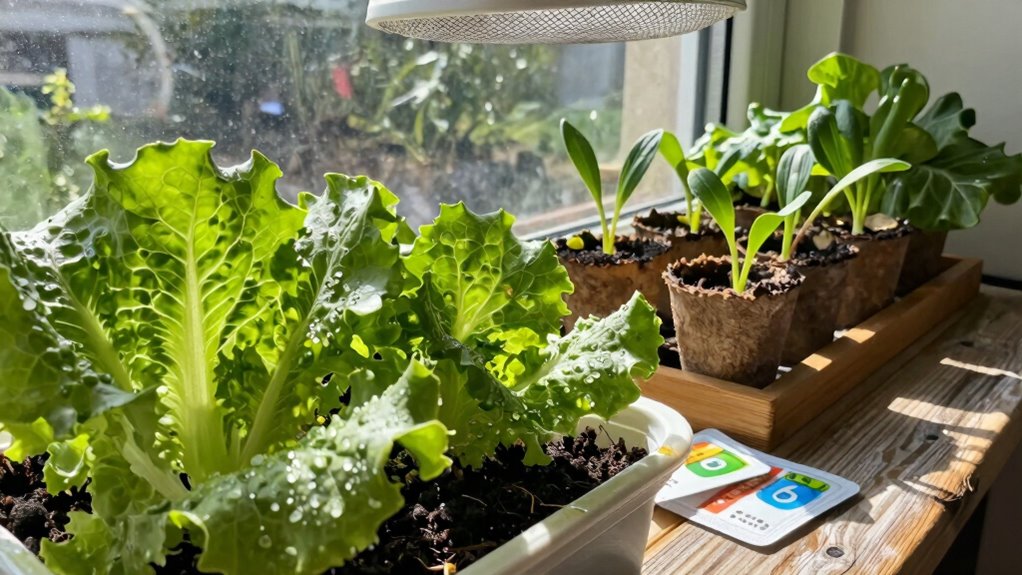
Why shouldn’t you grow lettuce indoors without a greenhouse when it’s actually quite achievable? You simply need adequate lighting, consistent temperatures, and proper humidity control. Standard LED grow lights work excellently for leafy greens like lettuce.
You’ll want to maintain temperatures between 60-70°F during the day and slightly cooler at night. Humidity levels should stay around 40-60% for ideal growth.
Choose compact varieties like butterhead or loose-leaf types that don’t require deep soil. Plant them in containers with drainage holes using quality potting mix.
Water consistently but avoid oversaturation. Harvest outer leaves regularly to encourage continuous production. Succession planting every two weeks ensures you’ll always have fresh lettuce available.
Indoor growing eliminates weather concerns while giving you complete environmental control. You’re joining countless gardeners who’ve mastered this rewarding skill.
Beginner’s Checklist: Essential Tools for Indoor or Outdoor Use
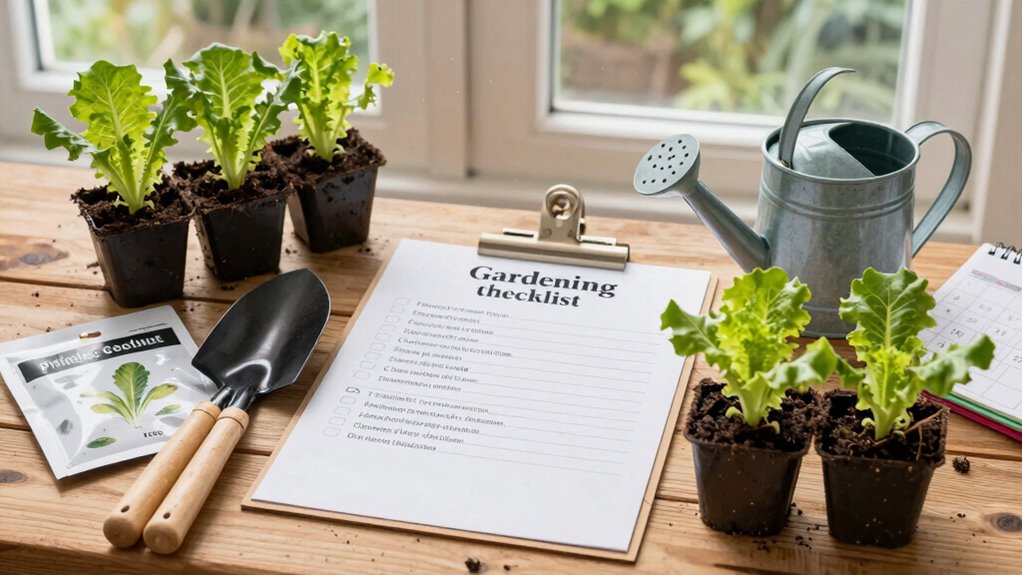
Growing lettuce successfully requires several key tools whether you’re planting indoors or outdoors.
You’ll need quality potting mix that drains well, containers with drainage holes, and a watering can with a gentle spout.
For indoor growing, supplemental grow lights help during darker months. A sharp pair of scissors makes harvesting easy without damaging plants.
Keep a spray bottle handy for misting leaves and maintaining humidity. You’ll want a small trowel for transplanting seedlings and mixing soil amendments.
pH testing strips guarantee your soil stays in the ideal range. Don’t forget plant markers to identify varieties.
A humidity dome helps seeds germinate faster. These basics equip you to grow fresh lettuce consistently, joining the community of home gardeners who enjoy year-round harvests.
Best Lettuce Varieties for Year-Round Growth
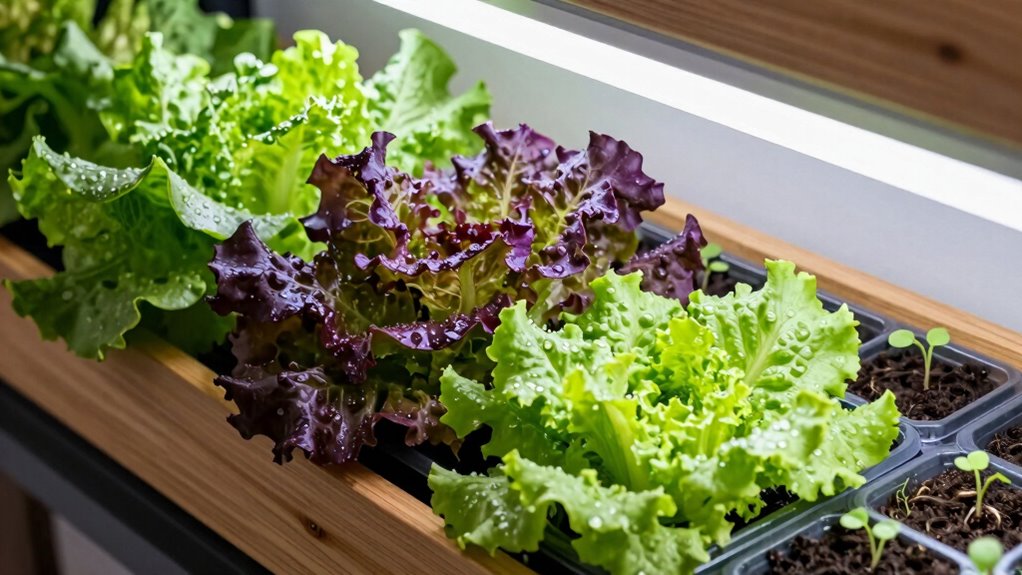
Certain lettuce varieties perform exceptionally well for continuous harvests throughout the year. You should focus on loose-leaf types like ‘Black-Seeded Simpson’ and ‘Red Sails’ since they tolerate temperature fluctuations better than heading varieties.
Butterhead lettuces, including ‘Bibb’ and ‘Boston’, offer tender textures and reliable growth in varying conditions. Romaine cultivars such as ‘Paris Island’ provide crisp leaves and extended harvest periods.
Avoid icebergs for year-round growing; they require specific conditions and longer maturity times. Choose bolt-resistant varieties if you’re growing during warmer months.
Plant succession crops every two weeks to maintain steady supplies. Mix different types to extend your harvest window and guarantee you’re never without fresh lettuce, regardless of seasonal changes.
Understanding the Right Temperature Zone for Lettuce
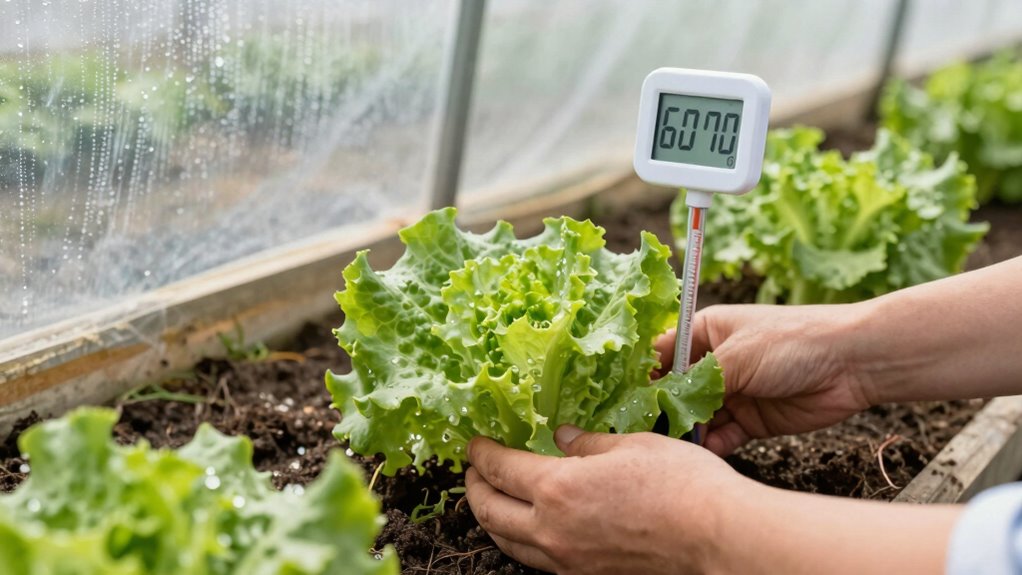
While lettuce thrives in cool conditions, you’ll achieve consistent success when you understand how temperature zones directly impact your crop’s performance.
Lettuce grows best between 45-75°F, with ideal germination occurring at 60-65°F. You’ll notice bolting and bitterness when temperatures exceed 75°F for extended periods.
Cool-season varieties handle light frost, but hard freezes damage leaves. You should monitor soil temperature closely, as warm soil above 70°F prevents proper germination.
During hot months, you’ll benefit from successive planting every two weeks to maintain harvest continuity. You’ll discover that understanding your specific zone’s temperature patterns helps you plan planting schedules effectively.
When you master temperature management, you’ll enjoy crisp, sweet lettuce throughout the growing season regardless of external weather fluctuations.
Choosing the Perfect Spot Based on Light Exposure
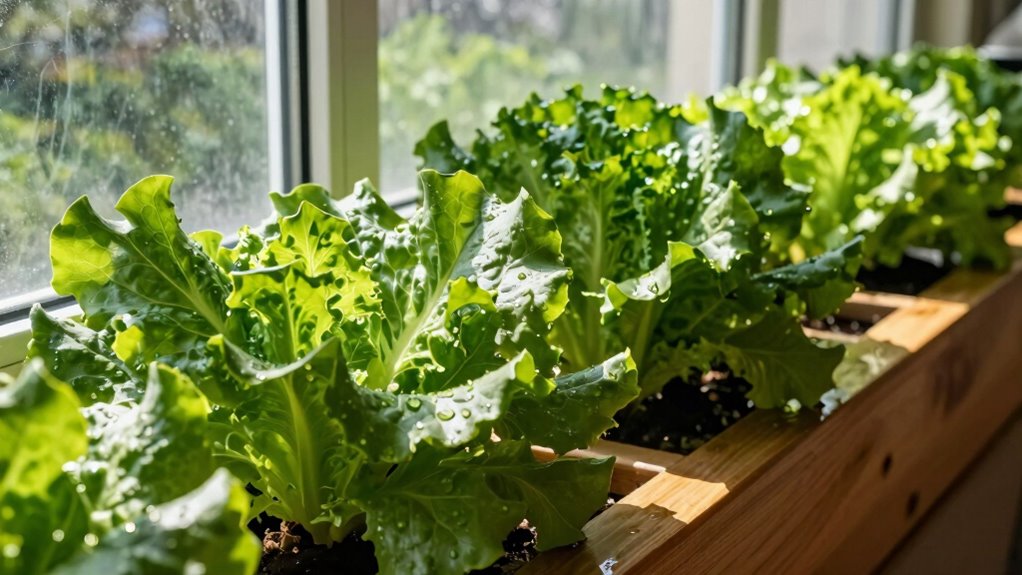
Where should you plant your lettuce to maximize growth and prevent bolting? You need 4-6 hours of direct sunlight daily, but avoid harsh afternoon sun that triggers premature flowering. Morning light works best for crisp, tender leaves.
- South-facing windowsills provide consistent light exposure for indoor growing.
- Partially shaded garden beds offer ideal conditions during hot summer months.
- Raised beds with eastern exposure capture gentle morning rays without intense heat.
- Greenhouse edges give you control over light intensity while maintaining temperature.
You’ll notice lettuce thrives in bright, indirect light rather than full sun exposure.
Too much direct sunlight stresses plants, causing them to bolt quickly. Watch your plants closely – pale leaves indicate insufficient light, while dark green coloring shows excellent conditions.
Position containers where you can easily monitor light changes throughout seasons. Your lettuce will reward you with continuous harvests when you nail the lighting requirements.
Should I Use Grow Lights Inside During Winter?
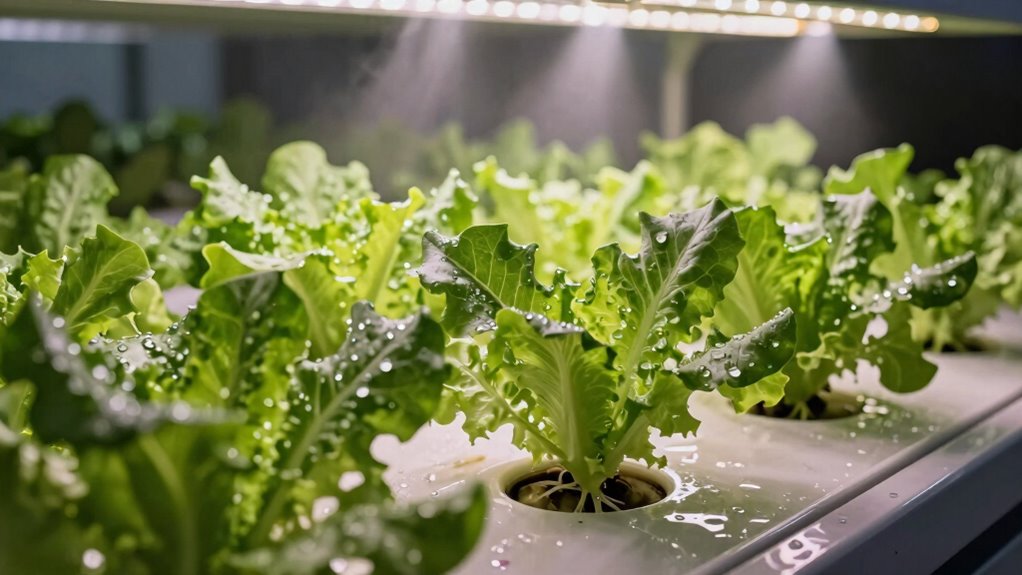
You should seriously consider grow lights when natural sunlight drops below six hours daily during winter months.
LED and fluorescent options both work well for lettuce growth, though LEDs typically consume less energy and produce less heat.
Setting up proper lighting requires matching light intensity to your growing space while ensuring adequate coverage for healthy plant development.
Benefits Of Indoor Grow Lights
Since natural sunlight becomes limited during winter months, indoor grow lights provide essential benefits for maintaining healthy lettuce plants year-round.
You’ll discover that artificial lighting systems keep your leafy greens thriving when outdoor conditions fail.
- Extended growing seasons – Lights enable continuous harvests regardless of weather outside.
- Consistent light exposure – You control duration and intensity, preventing weak, spindly growth.
- Space efficiency – Vertical setups maximize small indoor areas like apartments or basements.
- Predictable results – Controlled environments eliminate seasonal variables that frustrate gardeners.
Investing in proper indoor lighting means you’re joining a community of successful year-round growers who refuse to let winter dictate their fresh food supply.
LED Vs Fluorescent Options
Now that you understand how indoor grow lights extend your lettuce growing season, choosing between LED and fluorescent options becomes the next important decision for winter cultivation.
You’ll find LEDs cost more upfront but consume less energy and generate less heat than fluorescents. LEDs also last longer, making them ideal for continuous winter growing.
Fluorescent lights work well for small setups and cost less initially, but they’re less efficient and produce more heat.
For lettuce, you need full-spectrum lighting that mimics natural sunlight. LEDs provide better light spectrum control, while fluorescents offer adequate growth light.
Consider your budget, space constraints, and long-term goals. LEDs win for serious winter growing, but fluorescents suffice for casual indoor gardening.
Your choice depends on how much you’re willing to invest in your year-round lettuce harvest.
Lighting Setup Tips
While natural light may be limited during winter months, supplemental lighting becomes essential for successful indoor lettuce cultivation. You’ll need to provide 12-16 hours of light daily to mimic outdoor growing conditions.
- Position lights 6-12 inches above plants to guarantee adequate coverage without burning tender leaves.
- Use full-spectrum LED bulbs that deliver both red and blue wavelengths for peak growth.
- Install timer switches to maintain consistent lighting schedules and prevent overexposure.
- Monitor leaf temperature regularly to avoid heat stress from proximity lighting.
Adjust Your Setup Based On Plant Response – If You Notice Stretched Stems Or Pale Leaves, Increase Light Intensity Or Duration.
Healthy Lettuce Should Display Vibrant Green Coloration And Compact Growth Habit. Remember That Different Lettuce Varieties May Have Slightly Different Light Requirements, So Observe Your Specific Crop’s Needs Closely.
How Big Should Planting Containers Be?
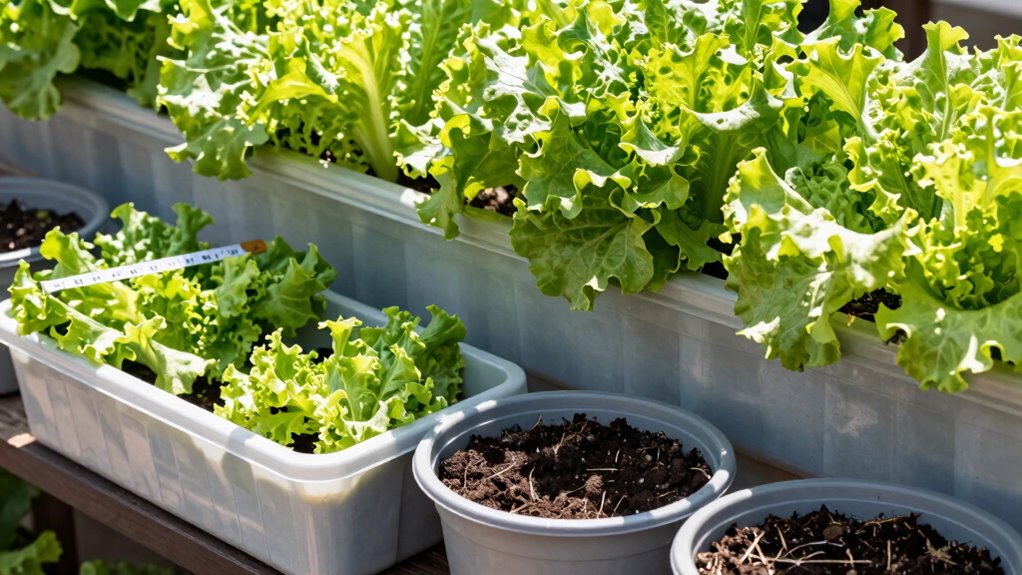
You need containers that are at least 6-8 inches deep to accommodate lettuce root systems properly.
Your containers should measure 12-18 inches wide to allow adequate space for leaf development and air circulation.
Consider spacing requirements carefully when growing multiple plants together.
Minimum Container Depth Requirements
When growing lettuce in containers, choosing the right depth guarantees healthy root development and prevents stunted growth. Shallow containers restrict root expansion, leading to bitter, undersized leaves that disappoint your harvest expectations.
- 6 inches minimum: Provides adequate space for most lettuce varieties’ root systems to establish properly.
- 8-10 inches ideal: Allows deeper-rooted varieties like romaine to thrive without constraint.
- Drainage holes essential: Prevent waterlogging while maintaining consistent moisture levels roots need.
- Container material matters: Plastic retains moisture better than terracotta, reducing watering frequency.
Lettuce roots typically spread horizontally rather than deeply, but they still need sufficient vertical space.
Root-bound plants become stressed, bolting prematurely into bitter flowering stems. Your container choice directly impacts flavor, texture, and overall success.
Invest in appropriately sized containers upfront – it’s the foundation that supports everything else you’ll do correctly.
Optimal Width For Healthy Growth
Container width plays a surprisingly important role in lettuce success, often overlooked in favor of depth considerations.
You should aim for containers at least 6-8 inches wide for most lettuce varieties. This width provides adequate space for root development and prevents overcrowding stress. Narrow containers restrict nutrient access and water retention, forcing plants to compete unnecessarily.
Wider containers also improve air circulation around plant bases, reducing disease pressure. Your lettuce needs room to spread its roots horizontally, especially as it matures.
Don’t assume shallow equals sufficient – compact containers limit growth potential considerably. Measure your container width before planting; anything less than 6 inches creates problems. Proper width supports healthier, more productive lettuce plants throughout their growth cycle.
Space Considerations For Multiple Plants
While individual lettuce plants need adequate room to develop properly, spacing becomes even more critical when growing multiple plants together. You’ll maximize your harvest while preventing competition for nutrients and water.
- Container size matters: Allocate 6-8 inches of diameter per plant for loose-leaf varieties, 8-10 inches for head lettuce.
- Root development needs: Lettuce roots spread 6-12 inches wide, so shallow but spacious containers work best.
- Air circulation requirements: Proper spacing prevents fungal diseases that thrive in crowded, humid conditions.
- Succession planting strategy: Stagger plantings every 2-3 weeks in appropriately sized containers to maintain continuous harvests.
Choose containers that accommodate mature plant sizes plus 2 inches for growth.
Rectangular planters maximize space efficiency.
Remember that overcrowded lettuce becomes bitter and bolt quickly, ruining your crop.
What Soil Mix Works Across All Seasons?
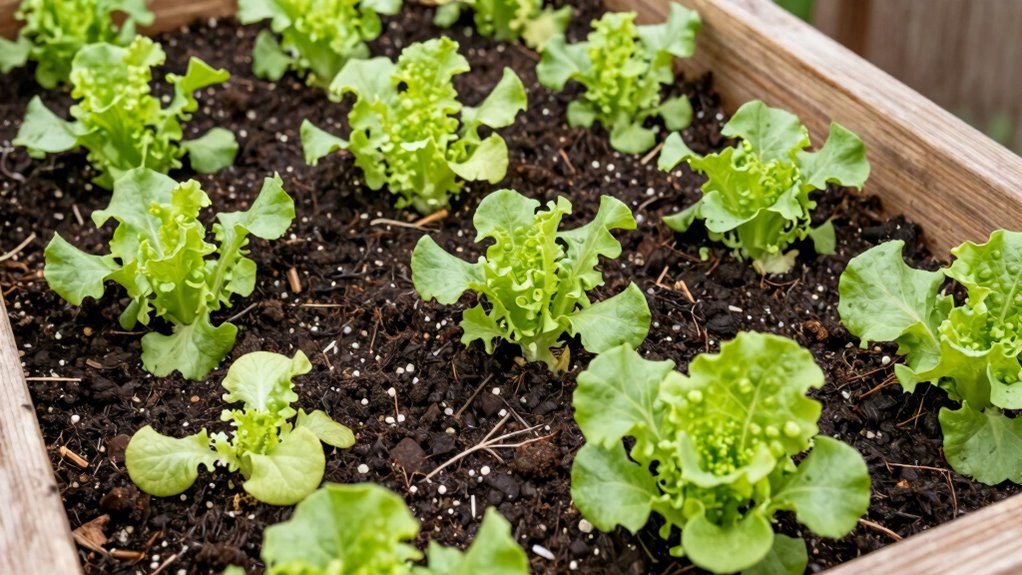
Because lettuce grows quickly and doesn’t demand heavy nutrients, you’ll want a soil mix that drains well while retaining enough moisture to support rapid leaf development throughout all seasons. Use a blend of equal parts potting soil, perlite, and compost.
This combination provides essential nutrients without overwhelming young plants. Add coconut coir or vermiculite to improve moisture retention during hot summer months. For winter growing, increase perlite slightly to prevent waterlogging in colder temperatures.
Avoid garden soil alone, which compacts easily and drains poorly. Your ideal mix should feel crumbly yet hold together when squeezed. Test different ratios in small batches first.
You’ll know you’ve got it right when seedlings emerge quickly and leaves grow thick, vibrant, and healthy regardless of season.
Water Smartly: Avoid Root Rot & Drying Out
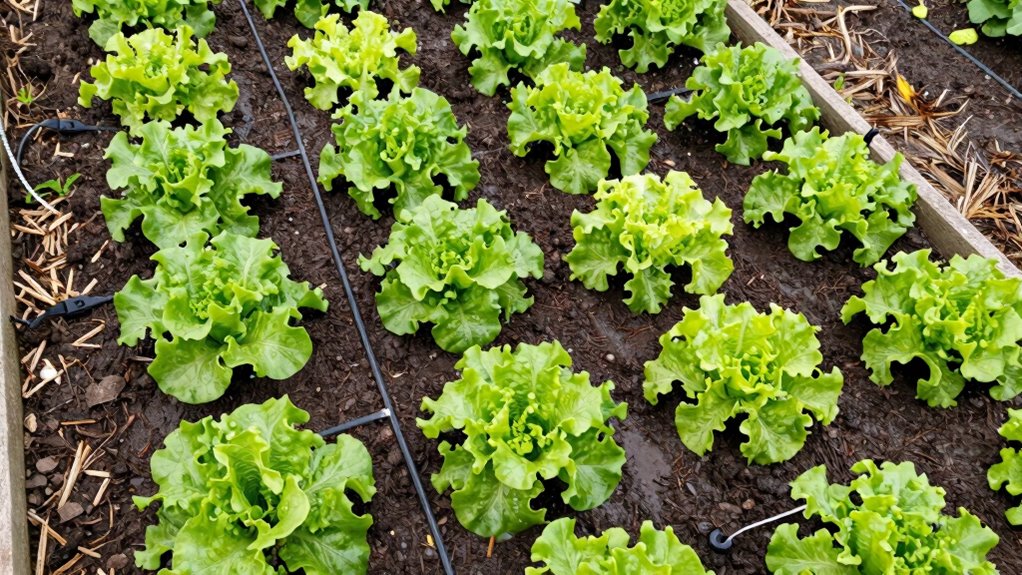
When growing lettuce year-round, you’ll want to master a watering routine that prevents both soggy roots and drought stress. Consistent moisture keeps your plants thriving while avoiding the pitfalls of overwatering.
- Check soil moisture daily by inserting your finger one inch deep; water only when dry.
- Water at soil level early morning to prevent leaf diseases and allow absorption.
- Use containers with drainage holes and excess water evacuation systems.
- Apply mulch around plants to maintain steady soil moisture and temperature.
Smart watering creates healthy root systems, prevents fungal issues, and guarantees crisp, flavorful leaves throughout all seasons.
Timing Matters: When to Plant for Steady Produce
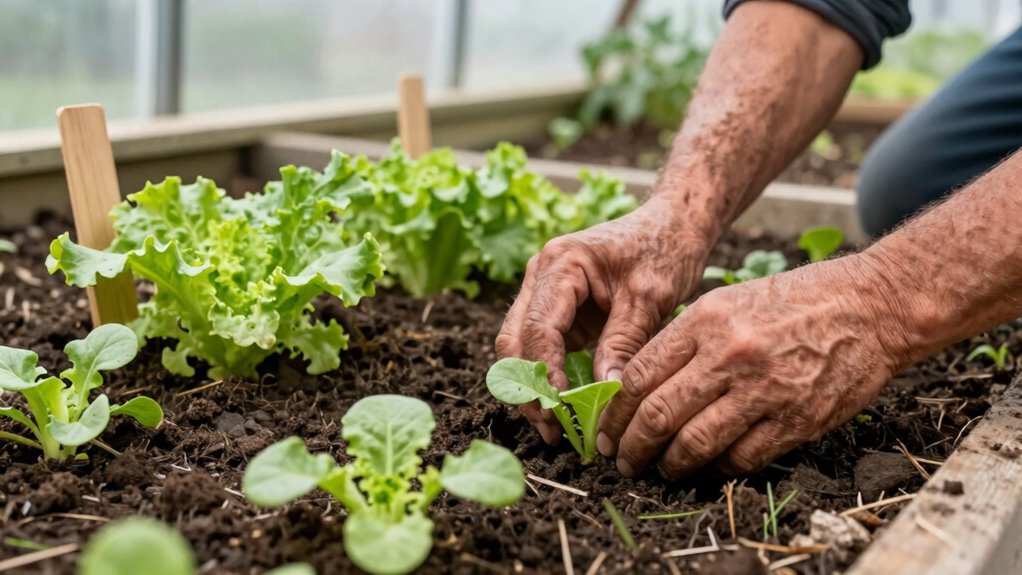
You’ll maximize your lettuce harvest by understanding when to plant for continuous production throughout the growing season.
Timing your sowings correctly guarantees you’re not left with gaps in your crop rotation or overwhelmed with too much produce at once.
Let’s explore the ideal seasons, succession timing, and harvest strategies that’ll keep your salads coming steadily.
Optimal Planting Seasons
While many gardeners assume lettuce grows best in spring, you can actually plant it throughout multiple seasons for continuous harvests. Smart timing guarantees you’ll always have fresh leaves regardless of weather fluctuations.
- Spring planting gives you rapid growth as soil warms, typically 4-6 weeks before last frost.
- Summer succession requires heat-tolerant varieties planted in shade during cooler morning hours.
- Fall crops thrive when temperatures drop, extending your growing season into cooler months.
- Winter growing works in mild climates or with cold frames, providing fresh produce even during dormant periods.
You’ll master year-round production by understanding how temperature affects germination and growth rates.
Don’t limit yourself to single-season thinking when proper timing creates abundance across all seasons.
Succession Crop Timing
Succession planting secures a steady supply of crisp lettuce leaves throughout the growing season by staggering your sowings every 2-3 weeks.
You maximize harvests by planting new seeds as previous crops mature. Start your first planting indoors 4-6 weeks before outdoor temperatures permit transplanting. Follow with outdoor sowings every 2-3 weeks thereafter.
Consider your local frost dates when planning fall plantings. Cool-season varieties handle light frost, extending your growing window.
Keep detailed planting records to track successful timing in your specific climate zone. Adjust intervals based on weather conditions and variety maturity rates.
Fast-growing loose-leaf types mature in 45-60 days, allowing more frequent plantings. Head lettuce requires 70-80 days, so space these plantings further apart.
Monitor soil temperature and moisture levels between plantings. Consistent watering guarantees uniform germination across all sowings.
Harvest Scheduling Strategies
Although timing your lettuce plantings guarantees a continuous harvest, strategic scheduling maximizes your garden’s productivity throughout the year.
You’ll discover how proper planning creates abundance while preventing gaps in your fresh produce supply.
- Stagger plantings every 2-3 weeks to assure mature lettuce rotations without overwhelming your kitchen.
- Calculate harvest dates backward from desired consumption periods to plan seed starting times accurately.
- Track growing days for each variety since loose leaf types mature faster than heading varieties requiring precise timing.
- Adjust schedules based on seasonal growth rates because lettuce bolts quicker in summer heat while winter crops need extended growing periods.
Your consistent harvest depends on understanding these fundamental scheduling principles.
Master this rhythm and you’ll belong among successful year-round gardeners who never run out of fresh lettuce.
Succession Scheduling Trick Every Month
Mastering monthly succession planting guarantees a continuous harvest of crisp, fresh lettuce throughout the growing season.
You’ll plant new seeds every two to three weeks, ensuring mature plants don’t all bolt simultaneously. Start by calculating your local growing season length and lettuce maturity dates.
Plant heat-tolerant varieties in summer months, switching to cold-hardy types as temperatures drop. Mark your planting calendar with specific dates, accounting for germination time and thinning requirements.
You’ll discover that mixing leaf types extends harvest windows since different varieties mature at varying rates.
Don’t forget to adjust spacing as seasons change – plants need more room in cooler weather. This systematic approach prevents harvest gaps while maximizing garden space efficiency throughout every growing month.
Frost Warning? Here’s How to Shield Your Seedlings
You’ll need to act fast when frost warnings hit your area.
Protect your tender seedlings by covering them with frost cloth or old blankets before temperatures drop below freezing.
These simple shielding techniques will keep your lettuce growing strong throughout the winter months.
Protecting Seedlings From Frost Damage
When frost threatens your delicate lettuce seedlings, immediate protection becomes essential for their survival.
You can’t afford to wait until morning when damage is already done. Your plants need shielding before temperatures drop below freezing.
- Cover seedlings with frost cloth or lightweight blankets before sunset, ensuring complete coverage down to soil level.
- Create mini greenhouses using plastic sheeting supported by hoops or stakes to trap warmth around your plants.
- Water soil thoroughly before freeze hits because moist earth retains heat better than dry ground overnight.
- Move potted seedlings closer together to share warmth and reduce exposure to cold air pockets.
These methods work best when you monitor weather forecasts regularly.
Don’t let frost destroy your hard work. Take action tonight.
Winter Growing Strategies
Winter growing demands proactive measures that build on frost protection basics.
You’ll need to create microclimates using cold frames, hoop houses, or row covers to extend your growing season.
Mulch heavily around plants with straw or leaves to insulate roots and retain soil moisture.
Consider planting cold-hardy lettuce varieties like ‘Winter Density’ or ‘Arctic King’ that tolerate freezing temperatures.
Water plants thoroughly before freeze warnings, as moist soil holds heat better than dry ground.
Position your garden beds near south-facing walls or structures that absorb daytime heat and release it overnight.
Don’t forget to ventilate covered areas during sunny winter days to prevent overheating.
Harvest outer leaves regularly to encourage continued growth, but leave inner leaves intact for ongoing production.
Cold Frames vs Heated Tunnels: Real Talk
While both cold frames and heated tunnels can extend your lettuce growing season, choosing between them depends on your specific climate, budget, and year-round production goals.
You need to understand their fundamental differences to make the right investment for your garden.
- Temperature control varies greatly – Cold frames rely on solar heat and trapped warmth, while heated tunnels maintain consistent temperatures regardless of outside conditions.
- Construction costs differ markedly – Cold frames cost $100-300 using basic materials, whereas heated tunnels require $500-2000+ for materials and electrical components.
- Maintenance requirements vary – Cold frames need manual venting and monitoring, while heated tunnels demand electrical connections and thermostat management.
- Growing season extension differs – Cold frames extend seasons by 2-3 months, heated tunnels can produce year-round lettuce harvests.
Troubleshooting Slow or Stunted Growth Indoors
You’ll often find that slow or stunted lettuce growth indoors stems from inadequate light exposure or overwatering.
These issues compound quickly in controlled environments where natural growing conditions don’t exist.
Let’s examine how insufficient light and excessive moisture specifically impact your indoor lettuce crops.
Insufficient Light Exposure
When growing lettuce indoors, insufficient light exposure directly causes slow growth and stunted plants because lettuce requires intense, consistent illumination to thrive.
You’ll notice leggy stems stretching toward weak light sources and pale, underdeveloped leaves.
- Identify light deficiency: Look for elongated stems, yellowing leaves, and weak growth patterns that indicate your plants aren’t receiving adequate illumination.
- Calculate light requirements: Provide 12-16 hours of direct light daily using full-spectrum LED grow lights positioned 6-12 inches above plants.
- Optimize light placement: Adjust light height and duration based on plant response, ensuring even coverage across all growing areas.
- Supplement natural light: Combine artificial lighting with south-facing windows during winter months for maximum photosynthesis.
Overwatering Issues
Overwatering causes root suffocation and nutrient uptake problems that directly lead to slow growth and stunted lettuce plants indoors.
You’re basically drowning your plants when you water too frequently. Soggy soil prevents roots from accessing oxygen, creating an environment where harmful bacteria thrive while beneficial microbes die off. This imbalance sabotages your plant’s ability to absorb crucial nutrients, even when they’re present in the soil.
Check soil moisture by inserting your finger one inch deep before watering. If it feels damp, wait another day.
Verify your containers have adequate drainage holes and excess water can escape freely. Yellowing leaves, wilting despite wet soil, and foul odors indicate overwatering problems that you must address immediately to save your crop.
Watch These 5 Early Signs of Pests Damaging Lettuce
Although lettuce appears delicate, pests can quickly devastate your crop if you don’t catch damage early.
You’ll want to inspect your plants daily for these warning signs that indicate pest problems are developing.
- Holes in leaves – Small ragged edges or circular holes signal aphids, slugs, or caterpillars feeding on your lettuce.
- Yellowing leaves – Pests like leafhoppers suck nutrients from leaves, causing them to yellow and wilt prematurely.
- Sticky residue – Honeydew left by aphids and whiteflies creates a shiny, sticky film on leaf surfaces.
- Visible insects – Small green or black bugs clustering on undersides of leaves are usually aphids ready to multiply rapidly.
Early detection saves your harvest.
Prevent Heat Stress From Making It Go to Seed Too Soon
Lettuce bolts quickly when temperatures rise, so you’ll need to take proactive steps to keep your plants cool and prevent them from going to seed prematurely.
Plant lettuce in partial shade during hot months, using taller plants or shade cloth to filter intense sunlight. Water consistently in the early morning to maintain steady soil moisture without creating heat-trapping humidity.
Mulch heavily around plants with straw or shredded leaves to insulate roots and retain coolness. Harvest outer leaves regularly to encourage new growth and reduce stress.
Consider succession planting every two weeks to guarantee continuous harvests. If temperatures exceed 75°F regularly, switch to heat-tolerant varieties like Jericho or Nevada.
Don’t let plants become root-bound, as stress accelerates bolting. Remove flower stalks immediately when spotted to redirect energy into leaf production.
Revive Wilted Leaves After Over-Watering Mishap
While maintaining consistent moisture helps prevent bolting, you might sometimes face the opposite problem when plants receive too much water.
Over-watered lettuce develops wilted, yellow leaves that feel soft and mushy. Don’t panic—your plants can recover with proper intervention.
- Stop watering immediately and let soil dry slightly between waterings
- Improve drainage by gently loosening soil around roots or adding perlite
- Remove damaged leaves to prevent disease and redirect energy to healthy growth
- Apply balanced fertilizer once plants show signs of recovery to boost nutrition
You’ll see improvement within days when you act quickly.
Your gardening community will appreciate sharing these recovery techniques.
Harvest Techniques That Encourage Continuous Leaf Growth
One key harvesting method keeps your lettuce productive throughout multiple growing cycles. Cut outer leaves at the base when they reach six inches tall, leaving the central growth point intact. This technique, called cut-and-come-again harvesting, encourages new leaf formation while maintaining plant health.
Harvest in the morning when leaves are crisp and hydrated for peak results.
Regular harvesting prevents bolting and extends your growing season considerably. Pinch off flower stalks immediately when spotted to redirect energy into leaf production. Remove yellowed or damaged leaves promptly to prevent disease spread.
Stagger plantings every two weeks to guarantee continuous harvests. Water consistently after harvesting to support rapid regrowth. Fertilize lightly every three weeks to maintain productivity.
You’ll enjoy fresh lettuce continuously when following these proven techniques.
Storing Fresh Lettuce at Home Keeps It Crisp Longer
Proper storage techniques make all the difference once you’ve harvested your crisp, homegrown lettuce.
You’ll extend freshness and maintain that perfect crunch by following these essential steps.
- Wrap lettuce in paper towels before placing in plastic bags to absorb excess moisture that causes wilting.
- Store at ideal temperature between 32-36°F in your refrigerator’s crisper drawer for maximum crispness.
- Don’t wash until ready to eat because moisture accelerates spoilage and deteriorates texture quickly.
- Use airtight containers with paper towel lining to prevent ethylene gas buildup that leads to premature aging.
These simple practices guarantee your homegrown lettuce stays fresh longer, making every harvest count.
How Long Can You Stretch Each Harvest Cycle?
Because lettuce grows quickly and tolerates cool conditions well, you can maximize your harvest frequency by understanding how environmental factors and planting techniques affect crop maturity.
You’ll typically harvest leaf lettuce every 45-60 days, while head lettuce takes 70-80 days. Cooler temperatures slow growth, extending harvest cycles to 75-90 days.
Succession planting every two weeks guarantees continuous harvests. You can stretch cycles further by choosing bolt-resistant varieties and providing shade during heat spells.
Indoor growing lets you control timing completely. Cutting outer leaves regularly encourages regrowth, giving you multiple harvests from one planting.
You’re not just growing lettuce; you’re becoming part of a community that values fresh, homegrown food year-round.
Conclusion
Like a river that never stops flowing, your lettuce garden thrives when you master the dance between light, temperature, and timing. Don’t let seasons dictate your harvest—become the conductor of this leafy orchestra. With proper succession planting and protective measures, you’ll enjoy crisp, homegrown lettuce regardless of weather outside. Your kitchen windowsill transforms into a year-round salad bar.
