

You need to understand what’s in your garden water before it touches your plants. Testing pH, minerals, and contaminants yourself is simpler than you think, but accuracy matters. Grab a kit, follow straightforward steps, and uncover what your water truly offers. Results guide you to healthier soil and better plant outcomes. Curious how your local water ranks? Let’s find out.
Why Garden Water Quality Affects Plant Health
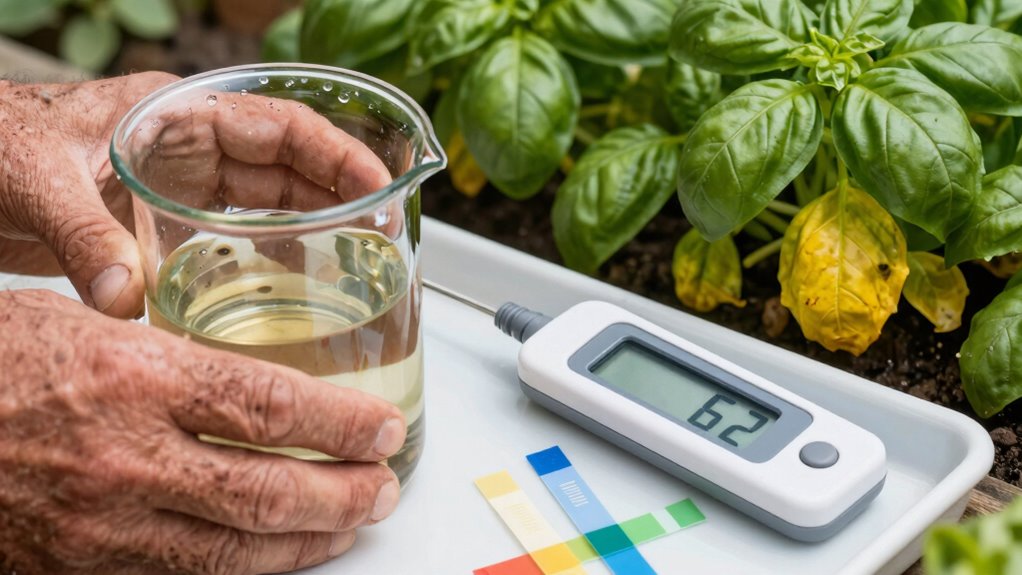
When you water your garden, you’re not just delivering moisture to your plants—your watering routine introduces a complex mixture of dissolved minerals, chemicals, and microorganisms that directly impacts plant physiology and soil chemistry.
Hard water containing high calcium and magnesium levels alters soil pH, affecting nutrient availability your plants desperately need. Chlorine and fluoride from municipal sources disrupt beneficial soil bacteria essential for root health. Salts accumulate over time, creating osmotic stress that forces plants to work harder for water absorption.
Contaminants like heavy metals interfere with cellular processes, stunting growth and reducing yields. Your plants respond immediately to water quality changes through altered leaf color, root development, and overall vigor.
Understanding these connections helps you make informed decisions about water sources and treatment methods. Poor water quality doesn’t just hurt plants—it affects your entire gardening success and the health of your soil ecosystem.
How to Check Garden Water pH at Home
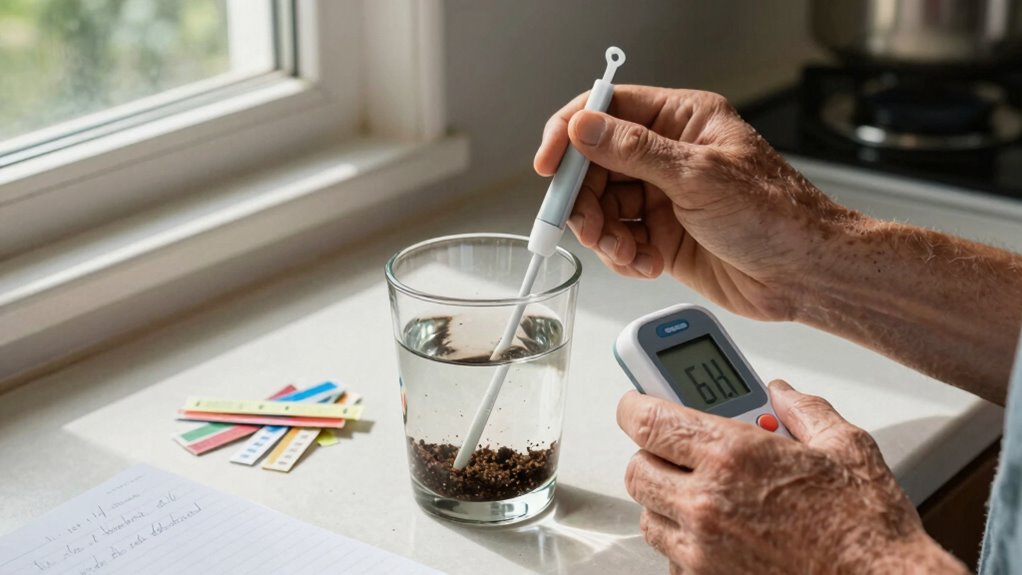
How exactly do you determine whether your garden water falls within the ideal pH range for plant health? You’ll need a pH testing kit or digital pH meter.
Collect water samples from different garden locations in clean containers. Immerse test strips or meters according to manufacturer instructions. Most plants thrive with pH between 6.0-7.0. Record readings immediately. If testing multiple sources, label each sample clearly.
Digital meters provide instant, precise measurements while strips offer cost-effective alternatives. Compare results against optimal ranges for your specific plants. Test regularly since pH fluctuates seasonally.
Rainwater typically registers slightly acidic around 5.6. Tap water varies considerably by region. Well water often maintains stable pH but requires periodic monitoring.
Understanding your water’s pH helps you adjust growing conditions effectively. Keep detailed records to track changes over time.
Test for Minerals and Hidden Contaminants
While pH testing reveals your water’s acidity levels, identifying mineral content and hidden contaminants requires more specialized analysis to guarantee your plants receive ideal nutrition.
You’ll need extensive testing kits that detect essential nutrients like nitrogen, phosphorus, and potassium, plus harmful substances such as heavy metals, pesticides, and chlorine. These contaminants can accumulate in soil over time, affecting plant health and your garden’s productivity.
Professional laboratory testing provides the most accurate results for detailed mineral profiles. Alternatively, you can use home test strips or digital meters for quick screening.
Don’t overlook testing for sodium, which can damage soil structure. Regular monitoring helps you understand what your plants actually receive beyond basic pH measurements.
Understanding Your Water Test Results
You need to interpret your water’s pH levels to determine if your soil will support healthy plant growth.
Your test results will show whether mineral content falls within acceptable ranges for gardening purposes.
These measurements directly impact nutrient availability and plant health in your garden.
Interpreting Ph Levels
When your water test reveals a pH reading, understanding what this number means for your garden requires knowing that pH measures the acidity or alkalinity of your water on a scale from 0 to 14.
A pH of 7.0 is neutral, while readings below 7.0 indicate acidity and above 7.0 indicate alkalinity.
Most plants thrive with slightly acidic to neutral water, preferring pH levels between 6.0 and 7.5.
You should interpret readings outside this range as potentially problematic for plant health.
Low pH can cause nutrient deficiencies, while high pH can make nutrients unavailable to plants.
If your water pH falls between 6.5 and 7.5, you’re likely providing ideal conditions.
Extreme readings below 5.5 or above 8.0 require corrective action before using the water on your garden.
Analyzing Mineral Content
Because mineral content directly affects plant nutrition and soil chemistry, understanding your water test results for dissolved minerals is essential for garden success.
You need to examine key nutrients like calcium, magnesium, potassium, and phosphorus levels. High concentrations can cause nutrient lockout, while insufficient amounts lead to deficiencies.
Check iron, manganese, and zinc readings too. These micronutrients support enzyme functions and chlorophyll production.
Sodium levels matter because excess sodium damages roots and interferes with water uptake.
Your test results show parts per million or milligrams per liter.
Compare values against ideal ranges: calcium (50-100 ppm), magnesium (25-50 ppm), potassium (10-50 ppm). If numbers fall outside these parameters, you must adjust your fertilization strategy.
Understanding these mineral relationships helps you make informed decisions about soil amendments and watering practices.
Fix Poor Water Quality With These Tips
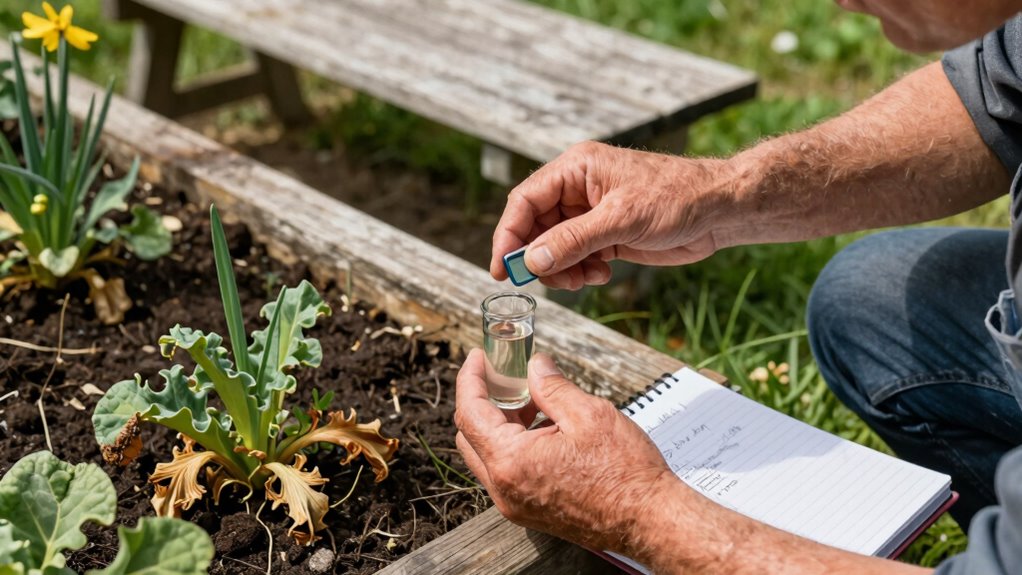
Since poor water quality can considerably impact plant health and soil composition, addressing these issues requires immediate attention and strategic intervention.
You should first identify specific contaminants through proper testing before implementing solutions. If your water contains high salt levels, install a reverse osmosis system or use rainwater collection methods.
Chlorine and chemical treatments demand activated carbon filtration systems for effective removal. For pH imbalances, you can adjust acidity using lime to raise pH or sulfur to lower it.
Consider installing water softeners if hardness minerals threaten plant uptake. Biological filtration helps eliminate harmful pathogens. Regular monitoring guarantees treatments remain effective.
You might also blend poor-quality water with cleaner sources to dilute contaminants. These targeted approaches restore water quality, protecting your garden investment and guaranteeing healthy plant development while maintaining soil integrity.
The Best Water Test Kits for Gardeners
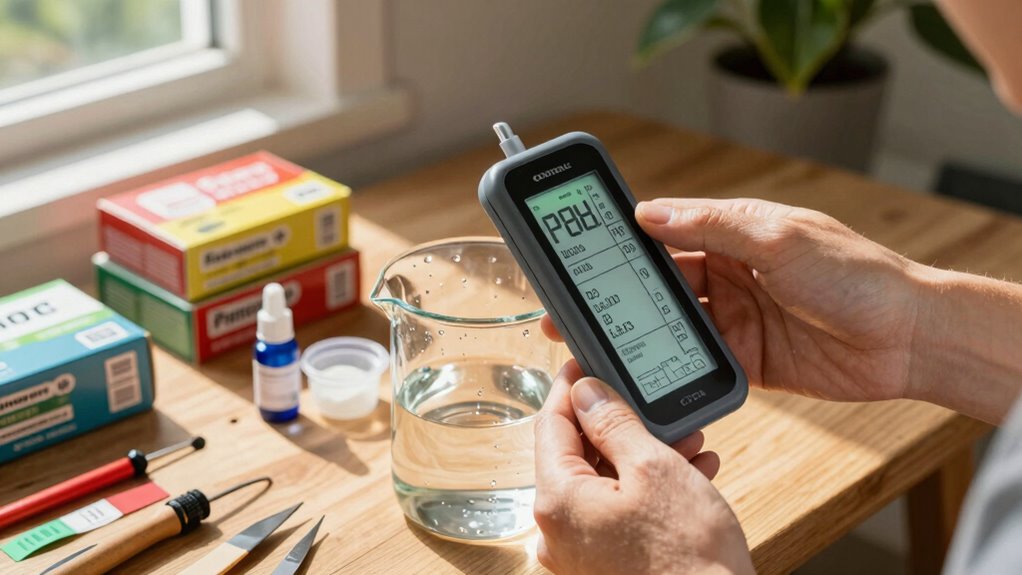
You need reliable water test kits that measure essential parameters like pH, EC, and nutrient levels to make informed gardening decisions.
Top-rated kits provide accurate results when you follow proper testing procedures and maintain equipment calibration.
These tools help you identify water quality issues before they damage your plants or compromise soil health.
Top-Rated Test Kits
Several top-rated water test kits deliver reliable results for gardeners who need accurate measurements of pH, nutrient levels, and contaminants. You should consider digital meters for instant readings, though they require regular calibration.
Test strips offer convenient spot-checking but may lack precision for critical measurements. Liquid reagent kits provide laboratory-grade accuracy when you follow protocols carefully.
Popular brands include Hanna Instruments, which offers thorough digital solutions, and Aquarium Pharmaceuticals, known for reliable freshwater testing. You’ll want kits that measure multiple parameters simultaneously to save time and guarantee consistency.
Professional gardeners trust Taylor Technologies’ extensive water analysis systems. Don’t overlook localized agricultural extension recommendations, as regional water issues vary greatly.
You should invest in quality kits that match your specific growing requirements.
Essential Testing Parameters
While selecting a water test kit, focus on parameters that directly impact plant health and growth. You need to measure pH levels first, since most plants thrive between 6.0-7.0.
Test for electrical conductivity (EC) to determine salt concentration your plants will encounter. Nitrogen, phosphorus, and potassium levels matter because they’re essential nutrients your garden needs.
Check for chlorine and chloramine if you’re using municipal water, as these chemicals can harm beneficial soil organisms. Heavy metals like lead and copper require testing if you suspect contamination.
Don’t forget dissolved oxygen levels, which affect root health. Your kit should also measure total dissolved solids (TDS) to understand overall mineral content.
These core parameters give you actionable data about your water’s suitability for gardening.
Accurate Results Guide
Finding reliable water test kits requires matching your gardening needs with accurate measurement capabilities.
You should prioritize kits that measure pH, electrical conductivity, and essential nutrients like nitrogen, phosphorus, and potassium. Digital meters offer precise readings but require calibration. Test strips provide quick results but lack accuracy for critical parameters.
For container gardening, you need portable kits that measure dissolved oxygen and alkalinity. Soil-based gardens require thorough analysis including heavy metals detection. Don’t overlook temperature measurement capabilities.
Choose kits with documented accuracy within ±0.1 pH units and ±5% nutrient variance. Professional-grade meters cost more but deliver consistent results you can trust. Look for kits that include calibration solutions and detailed instruction manuals.
Your plants deserve accurate data driving your care decisions.
When to Call a Professional Water Tester
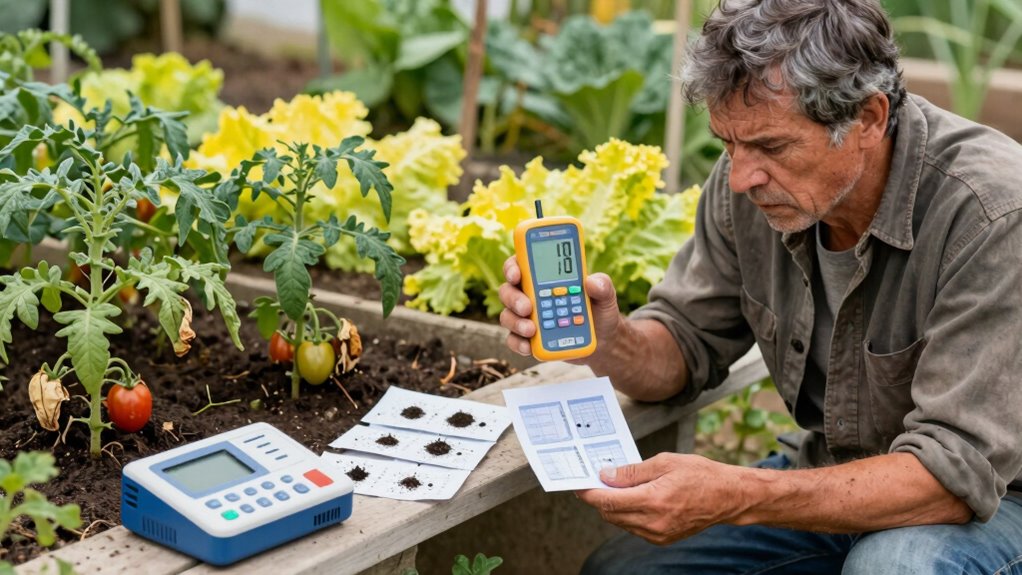
You should consider hiring a professional water tester when your home testing kits show inconsistent results or when you notice unusual changes in your garden’s plant health that correlate with water usage.
Professional testers provide accurate, thorough analysis that home kits can’t match. They identify contaminants, pH imbalances, and mineral deficiencies affecting your plants’ growth.
If you’re part of a community garden or serious about sustainable growing practices, reliable water data matters.
Professional testing reveals hidden issues like heavy metals, pesticide residues, or bacterial contamination that simple tests miss.
When your plants show signs of stress, yellowing leaves, or poor yields despite proper care, water quality might be the culprit.
Professional testers give you precise measurements and actionable recommendations.
Don’t guess when your garden’s health depends on accurate information. Invest in professional testing when home methods fall short.
Conclusion
Don’t ignore warning signs like yellowing leaves or stunted growth—they could signal hidden water quality issues. Regular testing prevents costly plant losses and guarantees your garden thrives. But what if your test results reveal contamination that’s beyond simple pH adjustment? Some problems require immediate professional intervention. Stay vigilant, test consistently, and remember that clean water is the foundation of healthy plant growth. Your garden’s success depends on it.
