

You need airtight containers, proper labeling, and controlled environment conditions to build an effective seed storage system. Start by selecting containers that prevent moisture and pest infiltration while maintaining seed viability for future planting seasons. The right storage approach extends seed lifespan greatly, but choosing inappropriate materials or locations can destroy your entire collection within months. Temperature and humidity control become critical factors that determine whether your seeds remain viable for one year or several decades.
How to Store Seeds for Long-Term Viability
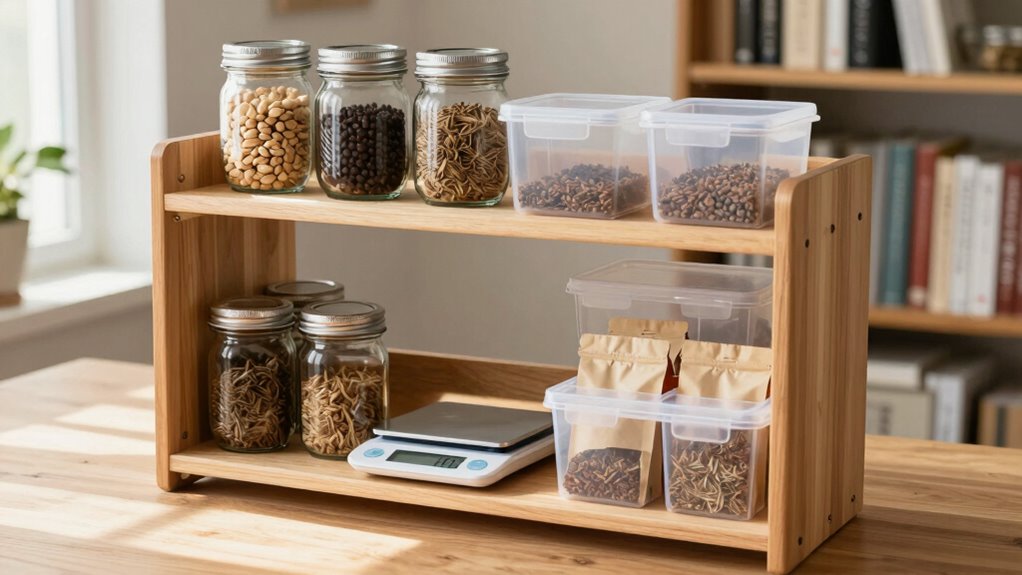
While proper seed storage requires careful attention to environmental conditions, you can maintain seed viability for decades by controlling moisture content and temperature.
You should reduce seed moisture to 5-8% before storage using desiccants or proper drying techniques. Store seeds in airtight containers with moisture barriers to prevent humidity fluctuations. Label containers clearly with seed type and storage date.
You must monitor temperature consistently, maintaining levels between 32-40°F for ideal longevity. Lower temperatures slow metabolic processes that degrade seed quality. Avoid temperature cycling that causes condensation.
You should check stored seeds periodically for moisture changes or pest infiltration. Rotate stock regularly using oldest seeds first. Proper packaging prevents oxygen exposure that accelerates deterioration.
You can extend viability considerably through systematic monitoring and environmental control rather than relying on guesswork.
What Conditions Seeds Need to Stay Viable
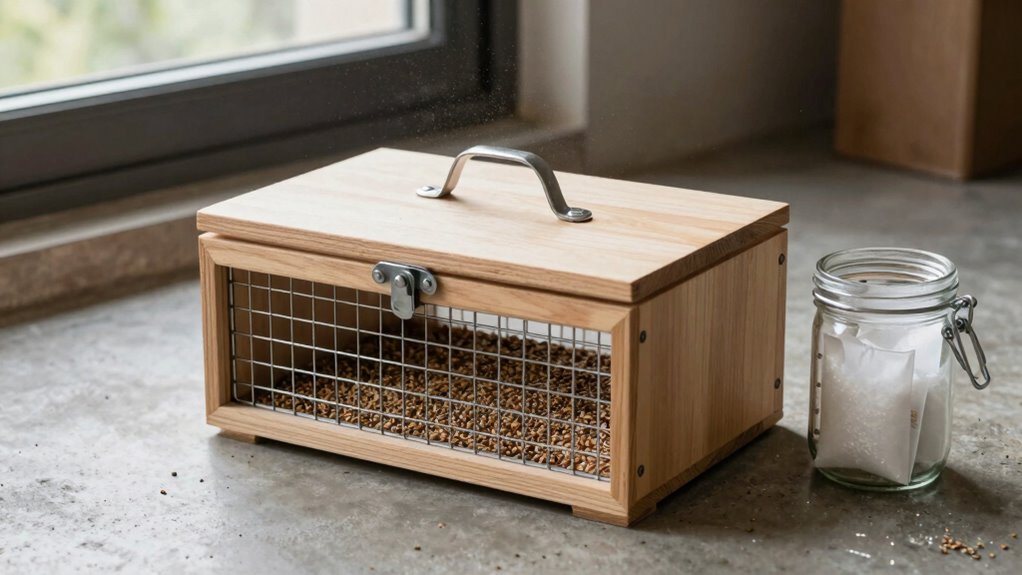
You must maintain cool temperatures between 32-41°F to prevent premature germination and enzymatic activity that degrades seed viability.
Store seeds in complete darkness to avoid photooxidation and use opaque containers or dark storage areas.
Control humidity levels below 50% relative humidity while ensuring minimal air circulation to prevent moisture buildup without causing desiccation.
Cool, Dark Environment
Seeds maintain viability best when stored in environments that minimize exposure to heat and light, which accelerate deterioration processes. You should target temperatures between 32-41°F (0-5°C) for ideal storage. Higher temperatures trigger metabolic activity that depletes seed reserves prematurely.
Light exposure, particularly UV radiation, damages cellular structures and reduces germination rates considerably. Choose storage locations away from windows, heat sources, and fluctuating temperatures. Basements, root cellars, or interior closets work well.
You’ll want to monitor temperature consistently, as fluctuations stress seed embryos. Dark environments prevent photooxidation, which breaks down essential fatty acids and proteins. Wrap seeds in opaque containers or store them in dark cabinets.
Metal containers block light completely while providing pest protection. Remember that consistent cool temperatures slow enzymatic reactions that cause seed aging, extending viability periods remarkably.
Low Humidity Levels
Humidity control proves critical for maintaining seed viability over extended storage periods. You must keep relative humidity below fifty percent to prevent moisture absorption that triggers premature germination or mold growth.
Seeds naturally contain ten to fifteen percent moisture content when properly dried. Excess humidity causes cellular damage through enzymatic reactions that degrade proteins and starches essential for germination.
Monitor storage areas with hygrometers placed away from walls and heat sources. Desiccants like silica gel or dried milk powder effectively absorb excess moisture when placed in sealed containers. Rice hulls or diatomaceous earth work as natural moisture barriers.
Check humidity levels monthly and replace desiccant materials annually. Store seeds in moisture-proof containers with tight-fitting lids. Plastic containers with sealing gaskets perform better than glass jars for long-term storage.
Metal containers conduct temperature changes that create condensation problems.
Proper Air Circulation
While maintaining low humidity prevents moisture-related damage, proper air circulation actively removes ethylene gas and metabolic byproducts that accumulate around stored seeds. You must create airflow pathways using perforated containers or breathable storage materials like paper bags or mesh sacks.
Position seeds away from walls and overcrowded areas to prevent stagnant air pockets. Install small computer fans or passive ventilation systems if storing large quantities. Monitor temperature fluctuations closely, as warm air rises and creates convection currents that redistribute moisture.
Confirm your storage area has adequate ventilation holes or install exhaust fans. Check air circulation monthly by feeling for drafts around containers. Proper ventilation extends seed viability by preventing anaerobic conditions that promote fungal growth and premature germination.
You’re creating an environment where seeds remain dormant yet healthy.
How Long Seeds Last in Storage
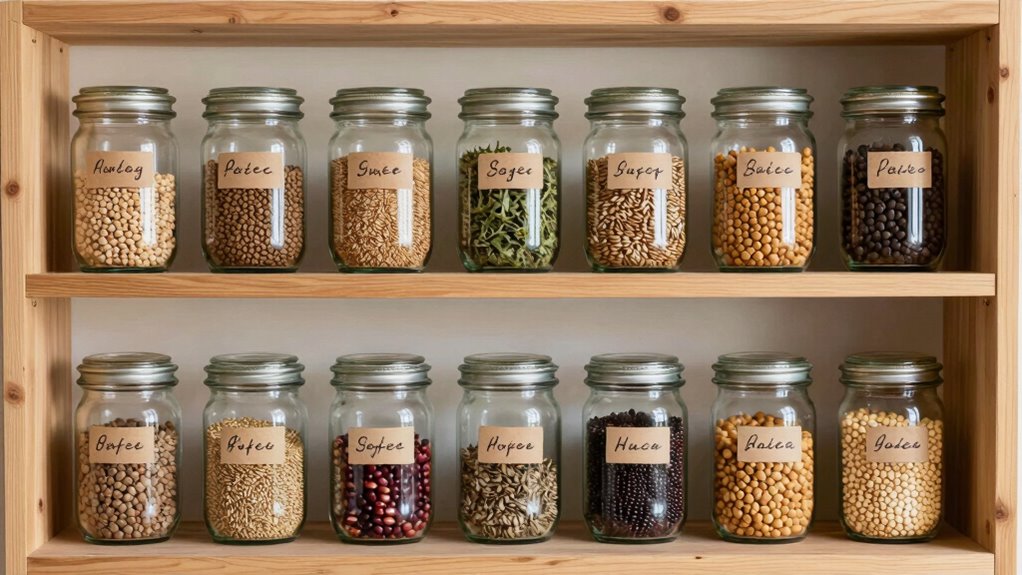
The longevity of stored seeds depends primarily on moisture content, temperature conditions, and the specific crop variety. You must understand these factors to maximize your seed storage effectiveness.
- Moisture content directly impacts seed lifespan – keep seeds below 8% moisture for ideal storage life.
- Temperature control matters greatly – cooler conditions extend viability, ideally maintaining 32-40°F.
- Crop variety determines natural longevity – some seeds like onions last 1-2 years, while beans can remain viable for 3-4 years.
- Storage container material affects seed quality – use airtight containers with moisture barriers to prevent degradation.
Different seeds have varying storage lifespans based on their genetic makeup and processing methods.
You’ll want to research specific crops in your collection. Properly stored seeds maintain higher germination rates and genetic integrity.
Understanding these principles helps you build confidence in your storage system’s effectiveness.
How to Test Seed Viability Over Time
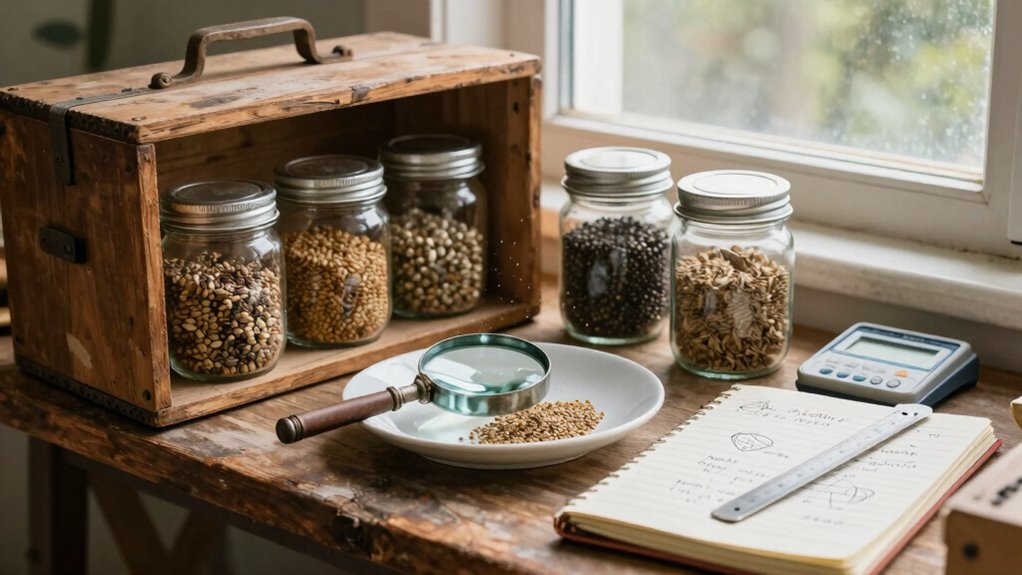
You’ll need to test seed germination rates regularly to guarantee your stored seeds remain viable.
Monitor storage conditions including temperature, humidity, and light exposure to maintain ideal preservation standards.
Track viability data over time to identify when seed replacement becomes necessary.
Testing Seed Germination Rates
When storing seeds for extended periods, monitoring their viability becomes essential for ensuring successful germination when you’re ready to plant.
Regular testing helps you identify which seeds remain viable and which need replacement.
- Paper towel method: Place ten seeds between moist paper towels in a sealed plastic bag. Keep at room temperature and check daily for germination over seven days.
- Soil tray testing: Plant ten seeds in seed-starting mix at recommended depth. Maintain consistent moisture and temperature while recording emergence rates.
- Water test separation: Submerge seeds in water for fifteen minutes. Viable seeds sink while non-viable ones float, indicating poor germination potential.
- Documentation tracking: Record germination percentages and dates in your seed inventory log. Calculate success rates by dividing sprouted seeds by total tested seeds multiplied by one hundred.
Monitoring Storage Conditions
Because seeds deteriorate gradually during storage, regular monitoring of storage conditions becomes critical for maintaining viable seed stocks over extended periods.
You should check temperature and humidity levels weekly using calibrated instruments. Ideal storage conditions maintain 32-41°F temperatures and 20-30% relative humidity.
Monitor container seals monthly for air leaks or moisture infiltration. Inspect seeds quarterly for signs of pest damage, mold, or unusual odors. Document all measurements systematically in logbooks or digital records.
Temperature fluctuations exceeding 5°F or humidity changes greater than 10% require immediate adjustment. You must address condensation issues promptly to prevent deterioration.
Regular monitoring guarantees your seed collection remains viable and ready for future planting seasons.
Tracking Viability Over Time
Regular monitoring of storage conditions forms the foundation for effective viability tracking, yet even ideal environments can’t prevent gradual seed deterioration indefinitely. You must implement systematic testing protocols to maintain seed quality assurance within your storage system.
- Conduct monthly germination tests using random samples from each seed variety to establish baseline viability rates and track deterioration patterns.
- Record quantitative data including germination percentages, seed coat integrity, and moisture content measurements in your tracking logs for trend analysis.
- Implement color-coded labeling systems that indicate testing dates, viability scores, and recommended usage priorities for efficient seed rotation.
- Schedule quarterly viability assessments using tetrazolium testing or accelerated aging methods to predict long-term storage performance and adjust environmental controls accordingly.
Choosing the Right Containers for Your Seed Storage System
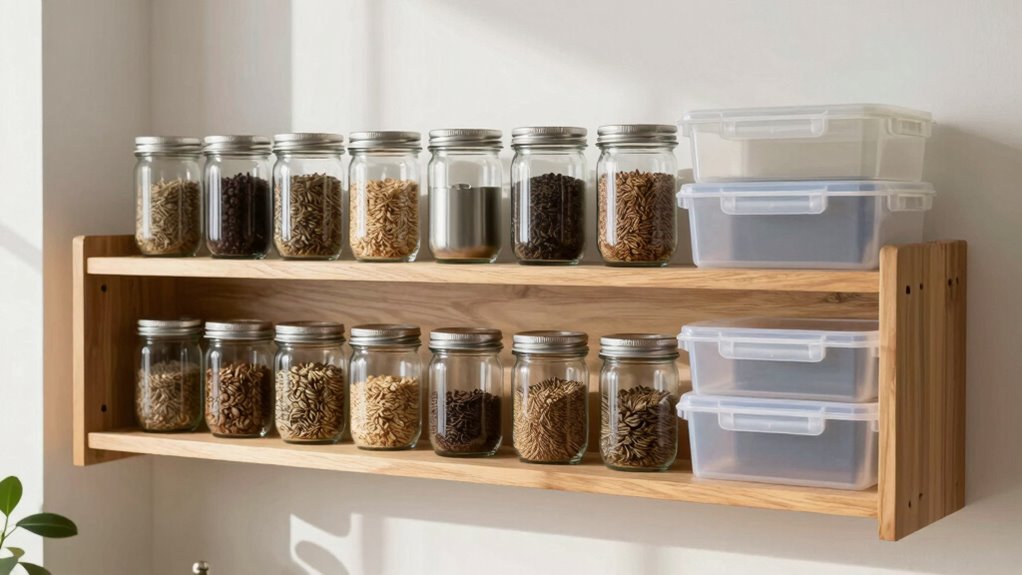
Selection of appropriate containers forms the foundation of effective seed storage system design. You must choose airtight containers that prevent moisture infiltration and maintain seed viability.
Glass jars with 密封 lids work excellently for small quantities, while food-grade plastic containers suit larger storage needs. Metal cans with proper sealing compounds provide excellent long-term protection.
Whatever container type you select, guarantee it blocks light completely and maintains consistent internal conditions. Label each container clearly with seed variety and storage date.
Consider container size carefully – smaller containers reduce air exposure when opened frequently. You should avoid containers that previously held chemicals or foods with strong odors.
Test container 密封ness by submerging in water and checking for air bubbles. Your container choice directly impacts seed longevity and germination success rates.
Keep Seeds Cool and Dry With These Tips
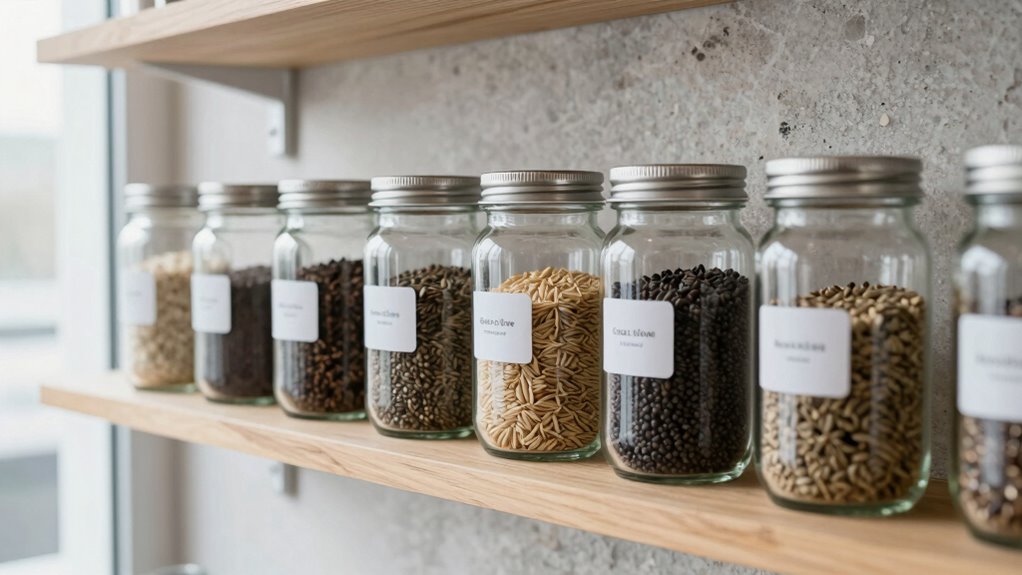
Proper container selection guarantees seeds remain viable, but maintaining ideal environmental conditions becomes equally important for long-term storage success.
You need precise temperature and humidity control to preserve seed viability.
- Temperature management requires storing seeds between 32-41°F (0-5°C) to slow metabolic processes and extend lifespan considerably.
- Relative humidity control demands keeping levels below 50% to prevent moisture absorption that triggers germination or mold growth.
- Air circulation needs adequate ventilation around containers to prevent heat buildup and maintain consistent temperatures throughout storage areas.
- Monitoring systems should include regular thermometer and hygrometer readings to verify conditions remain within ideal ranges for seed preservation.
Protect Seeds From Pests and Moisture
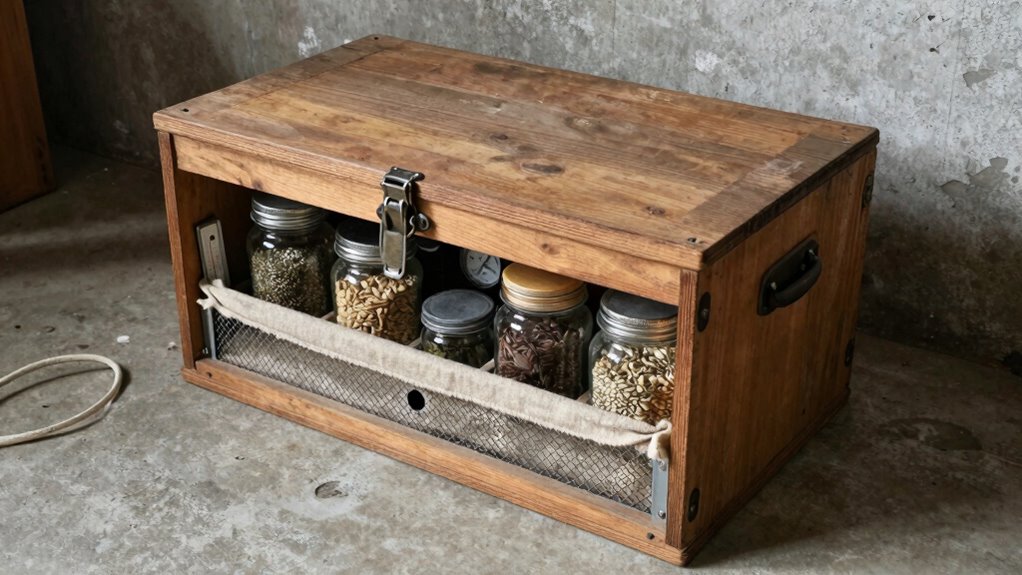
While maintaining ideal temperature and humidity conditions preserves seed viability, protecting seeds from pests and moisture requires equally rigorous attention to storage protocols.
You must use airtight containers with proper sealing mechanisms to prevent moisture infiltration. Glass jars with rubber gaskets or thick plastic containers work effectively. Always include desiccant packets inside containers to absorb excess moisture. Diatomaceous earth or silica gel maintain best humidity levels between twelve and twenty percent.
Store containers in pest-free environments away from direct contact with walls or floors. You should place bay leaves or cedar blocks near storage areas to deter insects naturally. Regular monitoring prevents infestations before they destroy your seed collection.
Check containers monthly for condensation, mold, or pest evidence. Metal containers provide superior pest protection but require moisture-absorbing materials inside. Plastic containers need thicker walls and secure lids.
Label and Organize Your Seed Collection Easily
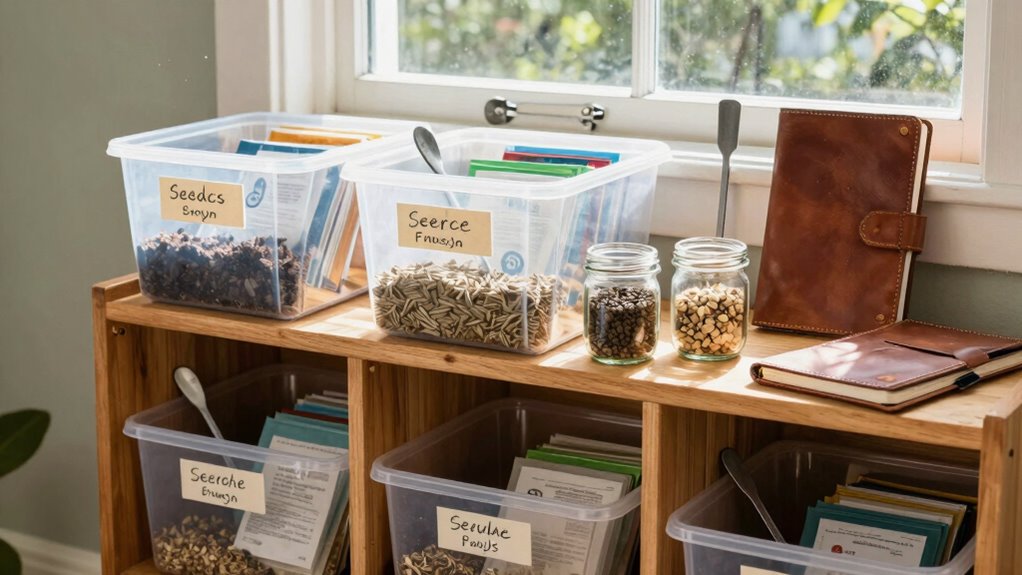
You must establish a clear labeling system using waterproof tags or markers to identify each seed variety by name, collection date, and viability period.
Organize your seeds systematically by categorizing them into groups such as vegetables, herbs, or flowers, then arrange these categories alphabetically or by planting season.
Implement storage containers with dividers or separate compartments to maintain this organization while protecting seed integrity.
Labeling Systems for Seeds
After collecting and storing your seeds, implementing an effective labeling system becomes crucial for maintaining an organized seed collection. Proper labeling prevents confusion and guarantees you can quickly identify varieties when planting season arrives.
- Permanent markers – Use waterproof, fade-resistant markers directly on seed packets or containers for clear identification.
- Color-coded labels – Assign specific colors to different plant families or growing seasons, creating visual organization systems.
- Digital tracking – Maintain spreadsheets or apps recording seed varieties, collection dates, and storage locations for thorough inventory management.
- Standardized naming – Develop consistent naming conventions including plant name, variety, and collection year for uniform identification.
These labeling methods create belonging within gardening communities where shared knowledge matters.
Organization Methods and Tips
Effective seed organization depends on implementing systematic approaches that maximize accessibility and minimize confusion.
You should categorize seeds by plant family, then alphabetically by species name. Use clear, uniform containers with standardized labeling that includes variety name, collection date, and viability period. Group frequently used seeds at eye level and seasonal varieties by planting time.
Create a detailed inventory spreadsheet tracking quantities, sources, and germination rates. Implement a color-coded system for different seed types: herbs, vegetables, flowers. Store seeds in a cool, dark environment between 32-40°F. Rotate stock regularly, using older seeds first.
Maintain consistent organization patterns so every packet has a designated location. This systematic approach guarantees you’ll quickly locate specific seeds while building a collection that feels professionally managed and personally meaningful.
Best Spots in Your Home for Seed Storage
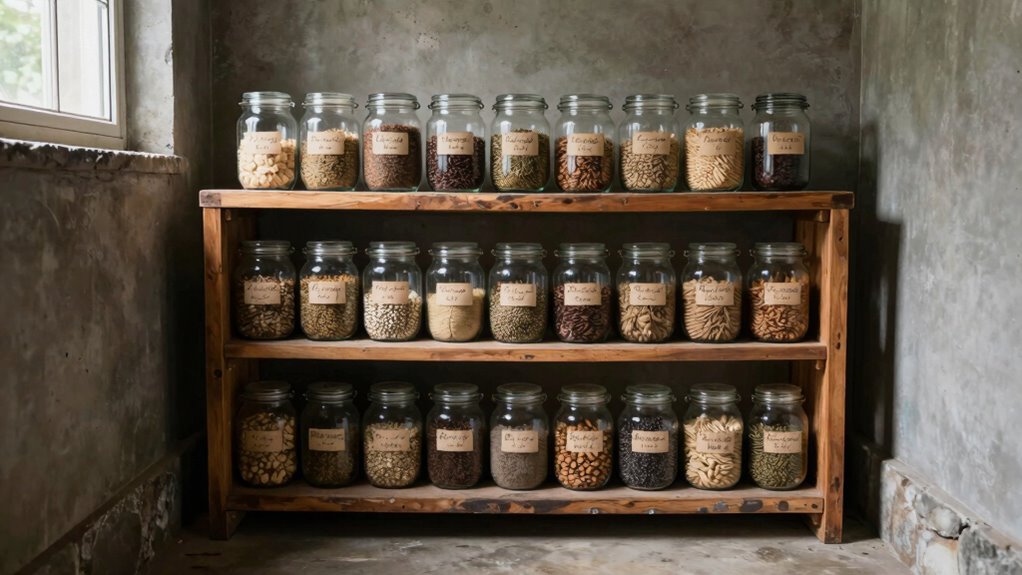
Several locations throughout your home offer ideal conditions for seed storage, each with distinct advantages depending on your specific needs.
You’ll want to choose spots that maintain consistent temperatures, low humidity, and minimal light exposure.
- Pantries or kitchen cabinets provide stable temperatures between 32-41°F (0-5°C) when away from heat sources, making them perfect for long-term storage.
- Basement shelves work well if they’re dry and temperature-controlled, offering cool, dark environments that prevent premature germination.
- Garage storage areas function effectively during cooler months, but avoid locations subject to freezing or extreme temperature fluctuations.
- Closets in interior walls create insulated spaces away from external temperature changes, particularly useful in moderate climates where heating and cooling systems maintain steady indoor conditions.
Store Different Seed Types the Right Way
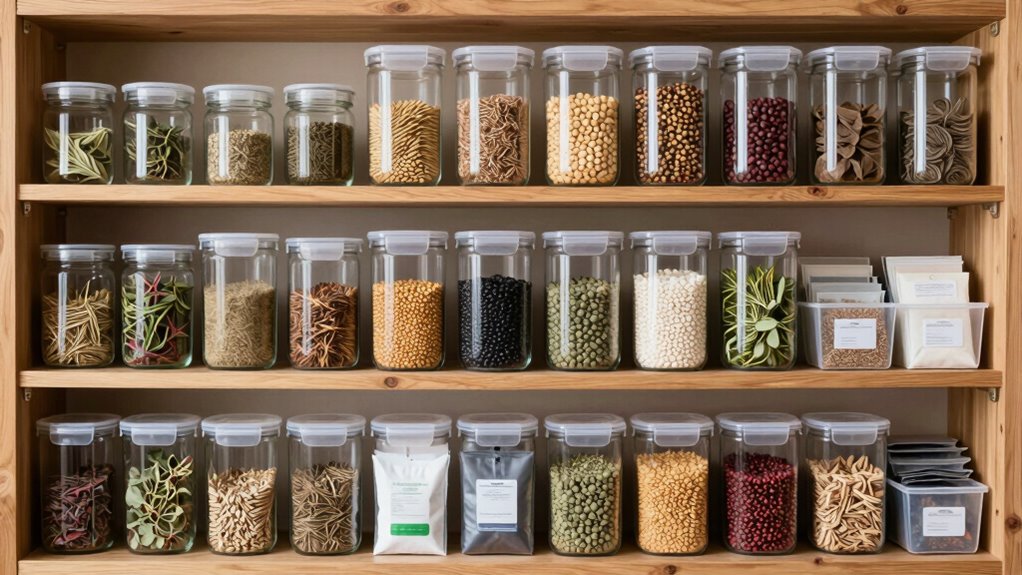
Each seed type requires specific storage conditions to maintain viability, and understanding these differences guarantees peak preservation.
You must control moisture content, temperature, and airflow differently for various seeds. Store orthodox seeds like beans and grains at 32-41°F with 10-15% relative humidity. Keep recalcitrant seeds like citrus and avocado at 60-70°F with higher moisture levels.
Place desiccant packets with dry seeds only. Label containers clearly with seed type and collection date. Use airtight glass jars for long-term storage, paper envelopes for short-term keeping.
Monitor storage areas regularly for temperature fluctuations and pest intrusion. Separate seed varieties to prevent cross-contamination. Check seed viability annually through germination testing.
Rotate stock systematically, using oldest seeds first. Maintain detailed records of storage conditions and seed performance.
When and How to Upgrade Your Seed Storage System
While your current seed storage setup may suffice for small collections, you’ll need to upgrade when inventory expansion, changing environmental conditions, or declining seed viability indicate your existing system has reached capacity limits.
Don’t wait until your storage fails completely.
- Monitor temperature fluctuations – Upgrade when consistent cooling becomes impossible or humidity levels exceed 50% regularly.
- Track inventory growth – Expand storage when you’re consistently turning away new seed varieties or cramming containers beyond recommended densities.
- Test germination rates – Invest in better equipment when viability drops below 80% across multiple seed batches.
- Assess organizational efficiency – Upgrade when retrieval time increases considerably or labeling systems become inadequate.
Plan upgrades systematically to maintain ideal seed health and collection management.
Avoid These 5 Seed Storage Mistakes That Kill Germination
Five critical mistakes in seed storage can devastate germination rates and compromise your entire collection.
First, you shouldn’t store seeds in humid environments because moisture triggers premature germination and mold growth.
Second, avoid exposing seeds to temperature fluctuations that cause condensation.
Third, don’t use paper envelopes or cardboard containers that absorb moisture.
Fourth, never store seeds near heat sources like furnaces or direct sunlight.
Fifth, avoid mixing different seed varieties in single containers, which creates cross-contamination risks.
You must maintain consistent temperatures between 32-40°F and humidity levels below fifty percent.
Use airtight glass jars with silica gel packets.
Label everything clearly with collection dates and variety names.
These systematic approaches preserve seed viability for successful future plantings.
Conclusion
You’ve mastered the essentials: airtight containers, proper labeling, cool temperatures, and humidity control. Don’t let moisture sabotage your efforts—use desiccants religiously. Remember, seeds aren’t immortal; they’re dormant soldiers waiting for your command. Test viability annually, rotate stock conscientiously, and respect each variety’s unique storage requirements. Your future garden’s success hinges on today’s systematic approach. Store wisely—your harvest depends on it.
