

Like a chef selecting the perfect ingredient, you must understand that timing determines everything when harvesting tomatoes for peak flavor. You’re about to discover why morning harvests between 6-10 AM yield superior taste, how to identify true ripeness through color and texture cues, and what handling techniques prevent flavor-destroying bruising. The difference between mediocre and exceptional tomatoes lies in these precise methods.
Recognize Ripe Tomatoes Visually and Tactically
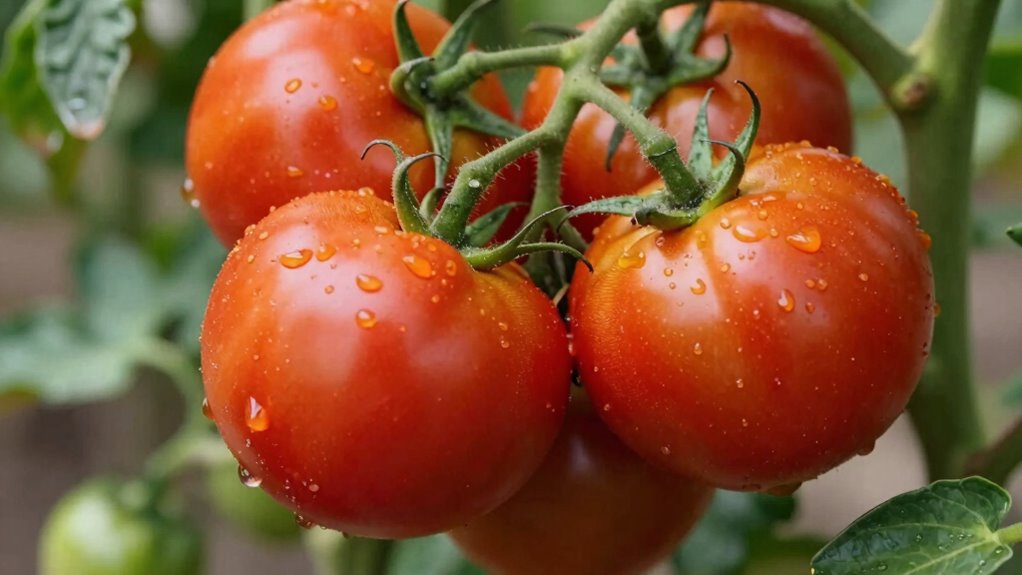
How do you determine when tomatoes reach perfect ripeness for harvesting? You examine color transformation from green to red, yellow, or orange depending on variety. Check that shoulders soften slightly while maintaining firmness.
You’ll notice the skin develops a glossy sheen rather than dull appearance. Gently squeeze fruits; ripe ones yield to pressure without feeling mushy. Observe stem area for slight separation from vine, indicating natural detachment readiness.
Mature tomatoes display uniform coloring without green patches near blossom end. You should detect subtle aroma development near stem scar. Finger test reveals proper ripeness when fruits detach easily with minimal upward pressure.
Visual cues include blossom end turning from green to color-matched hue. Tactile assessment confirms readiness through gentle compression testing. These combined sensory evaluations guarantee you harvest at ideal maturity stage.
Pick Tomatoes at Peak Flavor Timing
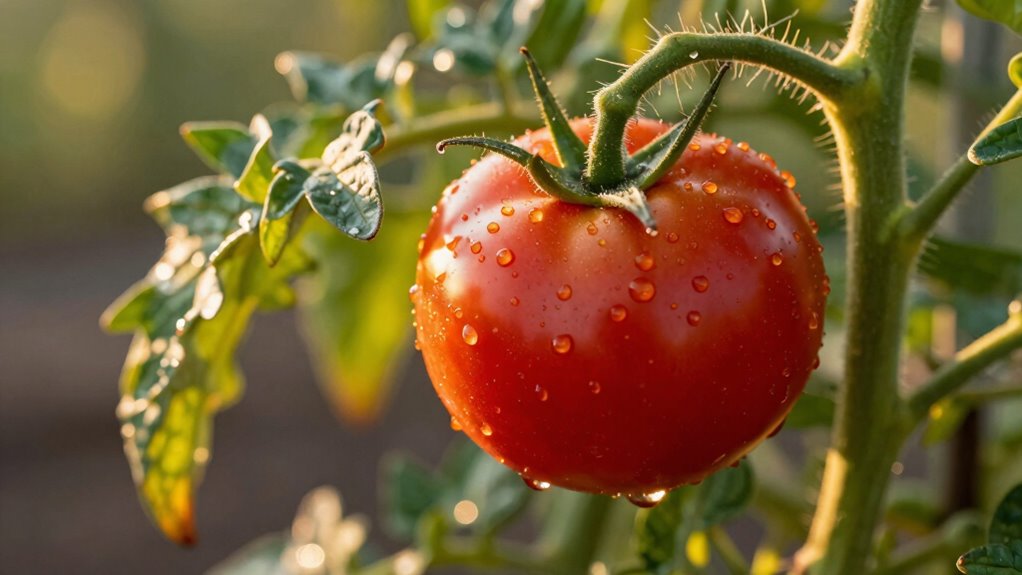
You should harvest tomatoes when they display uniform color development and slight softening at the blossom end, typically 40-50 days after flowering.
Morning picking preserves maximum flavor compounds and reduces heat stress damage, while fully colored fruits contain peak sugar concentrations and ideal lycopene levels.
Timing your harvest correctly guarantees maximum nutritional value and taste quality rather than simply convenience.
Optimal Harvest Timing
Determining the ideal harvest timing for tomatoes requires careful observation of several key indicators that signal peak flavor development. You should monitor fruit firmness daily, feeling for slight softening that indicates sugar accumulation. Check ethylene production by smelling the stem end; ripe tomatoes emit a sweet, fruity aroma.
Temperature fluctuations affect ripening speed, so harvest during cooler morning hours when possible. Tomatoes continue ripening post-harvest, but flavor peaks at vine-ripening stage four. You’ll know timing is most favorable when fruits detach easily with gentle upward pressure.
Avoid picking during extreme heat or after heavy rainfall, as these conditions compromise storage life. Mature green tomatoes won’t develop full flavor potential, while overripe fruits lose acidity balance.
Trust your senses—visual cues, tactile feedback, and aromatic compounds tell you when harvest timing maximizes flavor compounds and guarantees successful storage.
Ripe Color Indicators
Color serves as the most reliable visual indicator for determining ideal tomato harvest timing, building upon the tactile and aromatic assessments from previous evaluation methods.
You should examine fruits daily as chlorophyll breaks down and reveals underlying pigments.
- Red varieties show deep, uniform red coloration without green shoulders or patches, indicating full sugar development and paramount flavor compounds.
- Yellow and orange types display vibrant, consistent hues throughout the fruit surface, signaling peak carotenoid accumulation and sweetness levels.
- Striped or bicolor tomatoes exhibit clear, distinct color patterns with well-defined boundaries between different colored sections, demonstrating proper ripening hormone distribution.
Avoid picking tomatoes with green stem ends or pale coloration, as these lack developed flavors and won’t improve considerably post-harvest.
Morning Pick Benefits
The morning harvest window offers distinct physiological advantages for maximizing tomato flavor and shelf life.
You should pick tomatoes when dew evaporates but before heat builds, typically 6-10 AM. At this time, fruit maintains ideal water content and sugar concentration.
Plants haven’t begun transporting nutrients upward yet, so flavor compounds remain concentrated in the fruit. You’ll notice firmer tomatoes with better texture retention.
Morning picking reduces stress on the plant, allowing continued production. The cooler temperatures prevent bruising and enzymatic breakdown that occurs rapidly in warm conditions.
You’re working with nature’s rhythm when you harvest during this window. Post-harvest handling becomes easier because fruits aren’t heat-shocked.
Your tomatoes will ripen more evenly and develop deeper, more complex flavors. This timing creates belonging with traditional farming wisdom while maximizing your crop’s potential.
Early Harvest vs On-Vine Ripening: When to Choose Which
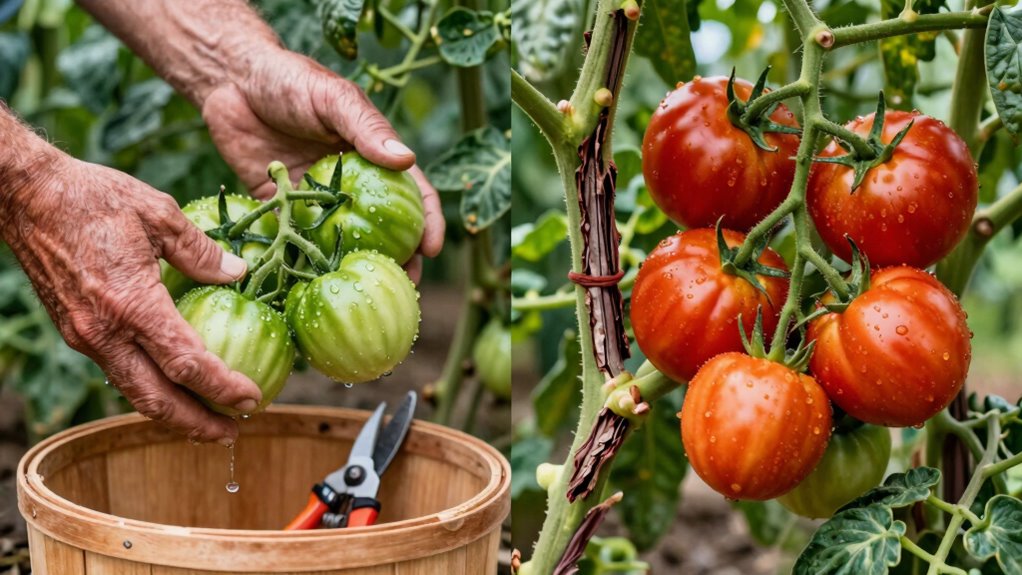
You’ll need to weigh the advantages of picking tomatoes early against letting them ripen completely on the vine.
Early harvest offers better storage potential and reduces pest damage, while on-vine ripening produces higher sugar content and ideal flavor development.
Your choice depends on your specific growing conditions and intended use of the tomatoes.
Early Harvest Benefits
While many gardeners prefer leaving tomatoes on the vine until fully ripe, harvesting them early offers distinct advantages that merit consideration.
You’ll discover that picking tomatoes at the breaker stage, when they show initial color changes, maximizes your harvest success and flavor development.
- Disease Prevention: You reduce crop loss from late-season fungal infections and bacterial diseases that thrive in humid conditions affecting ripe fruit.
- Extended Harvest Window: You gain better control over ripening timing, allowing successive harvests rather than overwhelming quantities of fully ripe tomatoes simultaneously.
- Enhanced Storage Options: You can ripen tomatoes indoors where temperature and humidity conditions optimize flavor development while protecting from pests and weather damage.
Early harvesting doesn’t compromise taste when done correctly.
On-Vine Ripening Advantages
Although early harvesting provides significant benefits, allowing tomatoes to ripen fully on the vine produces superior flavor development and nutritional content. You maximize sugar accumulation and lycopene production when fruits remain attached until reaching full maturity.
The plant continues transporting nutrients through the stem, enhancing taste compounds that develop during final ripening stages. On-vine tomatoes exhibit better texture consistency and reduced enzymatic activity that causes premature softening. You also benefit from natural ethylene gas distribution, which promotes uniform ripening throughout the fruit.
However, leaving tomatoes on the vine increases vulnerability to pests, diseases, and weather damage. Choose on-vine ripening when growing conditions remain stable and you prioritize prime flavor over extended storage life. This method works best for immediate consumption rather than long-term preservation.
How to Pick Tomatoes So They Don’t Bruise
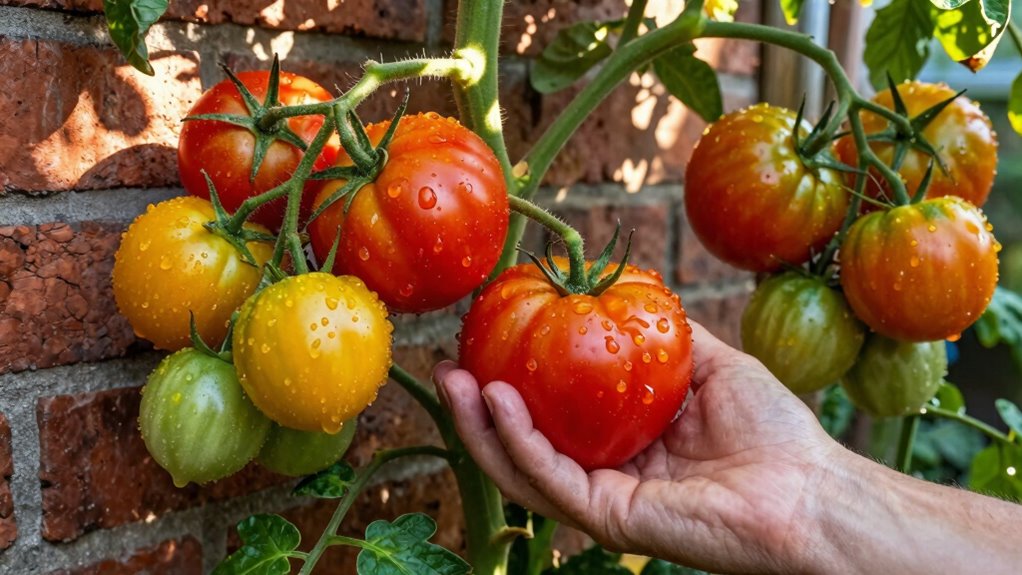
To prevent bruising during tomato harvest, grasp each fruit firmly but gently between your thumb and fingers, applying even pressure around the stem end where it connects to the vine. This technique minimizes cellular damage while maintaining fruit integrity.
- Support the fruit’s weight with your palm while gripping the stem area to distribute pressure evenly and prevent localized crushing.
- Twist slightly while pulling upward to separate the tomato cleanly from the vine, avoiding yanking motions that cause internal tissue damage.
- Inspect each tomato immediately for soft spots or existing bruises before placing them in your harvest container to prevent damaged fruits from affecting others.
Handle tomatoes as if they were delicate heirloom varieties, regardless of their actual type. Your careful technique preserves cellular structure and maintains ideal flavor development.
Gentle harvesting guarantees you’ll enjoy blemish-free tomatoes that taste as good as they look.
Store Tomatoes Properly After Harvest
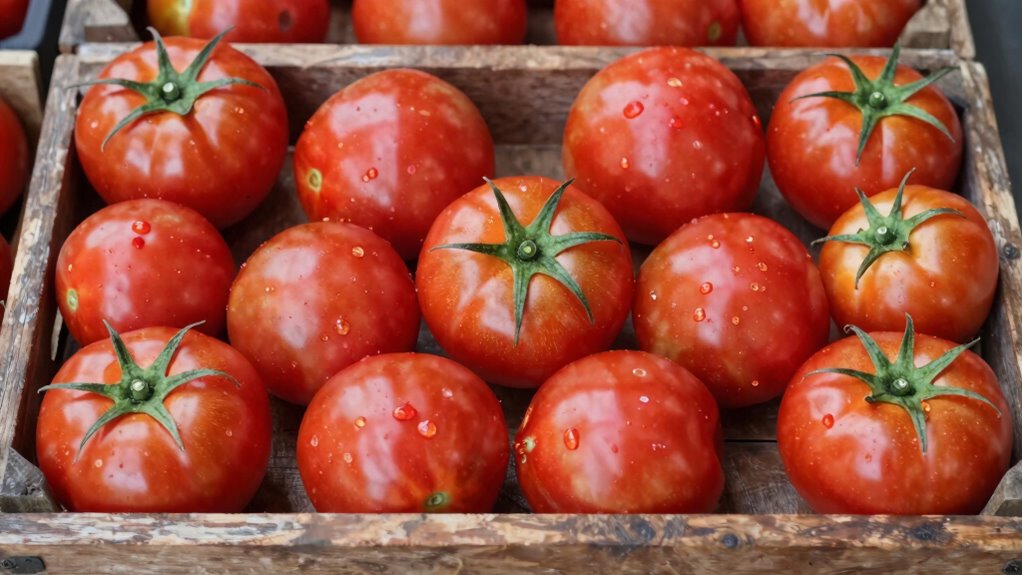
One essential step after harvesting tomatoes is proper storage to maintain their quality and extend shelf life. You should store ripe tomatoes at room temperature, away from direct sunlight, ideally between 55-70°F.
Don’t refrigerate them immediately after picking, as cold temperatures destroy their cell structure and compromise flavor development. Place tomatoes stem-side down on a flat surface to prevent moisture loss and reduce spoilage risk.
Guarantee good air circulation around each fruit to avoid ethylene gas buildup that accelerates ripening. Check stored tomatoes daily and remove any showing soft spots or signs of decay immediately.
You’ll maximize flavor retention and eating quality by maintaining prime storage conditions. Proper storage prevents unnecessary waste while preserving the garden-fresh taste you’ve worked hard to achieve. Your tomatoes will reward you with superior flavor when you store them correctly.
Rescue Underripe Tomatoes With These Tips
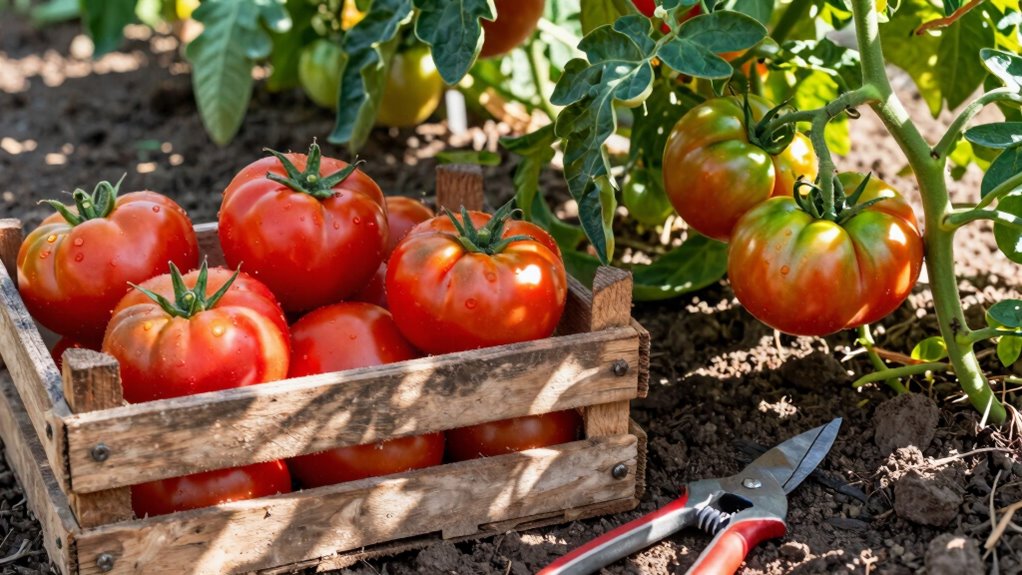
While underripe tomatoes might seem like a gardening disappointment, you can successfully salvage them with proper techniques that redirect their natural ripening process.
1. Ethylene exposure: Place underripe tomatoes in a paper bag with ripe bananas or apples. These fruits release ethylene gas, which triggers enzymatic changes that convert starches to sugars, accelerating ripening within 3-5 days.
2. Temperature control: Store tomatoes at 65-70°F (18-21°C). Avoid refrigeration, which breaks down cell walls and compromises flavor compounds.
Warm temperatures activate lycopene and carotenoid production, enhancing color and taste development.
3. Humidity management: Maintain 85-90% relative humidity using damp paper towels in sealed containers.
Proper moisture levels prevent shriveling while enabling enzymatic activity that softens cell walls and develops characteristic tomato flavor.
Avoid These Harvest Mistakes That Kill Flavor
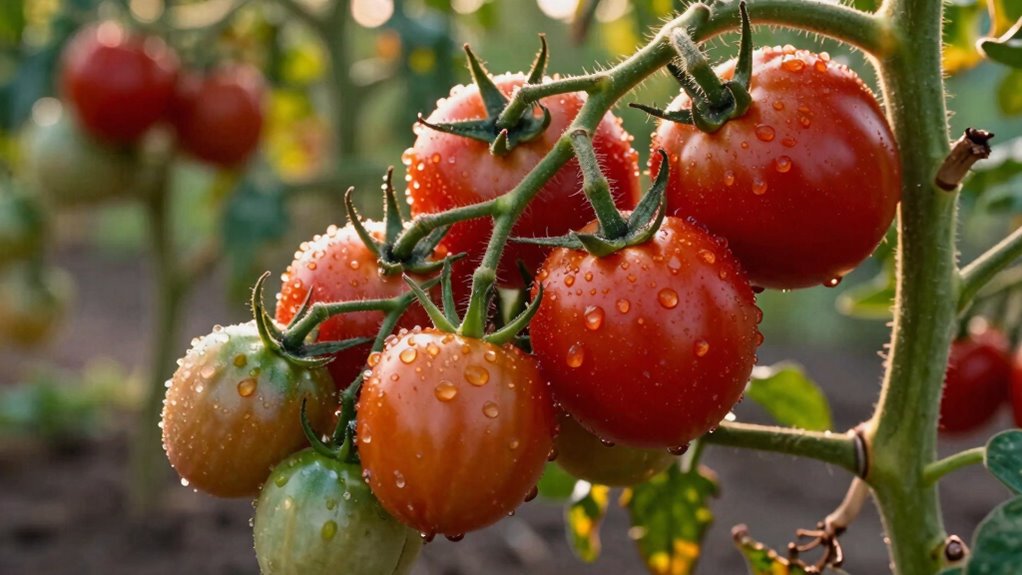
Harvesting tomatoes at the wrong time or using improper techniques can devastate their flavor profile, even when the fruits appear visually ripe. You shouldn’t pick tomatoes when they’re still hard and green, as they won’t develop their full sugar content.
Don’t harvest during hot midday hours when fruits are stressed and dehydrated. Avoid pulling or twisting stems roughly, which damages the plant’s vascular system and reduces future production.
Don’t wash tomatoes immediately after picking, as excess moisture promotes bacterial growth and flavor loss. Never store ripe tomatoes in refrigerators below fifty degrees Fahrenheit, because cold temperatures destroy enzymatic activity responsible for flavor development.
You shouldn’t harvest tomatoes with damaged skin or bruises, as these areas become entry points for pathogens that spread rapidly. Instead, pick gently, handle carefully, and store properly.
Extend Your Tomato Harvest Season Easily
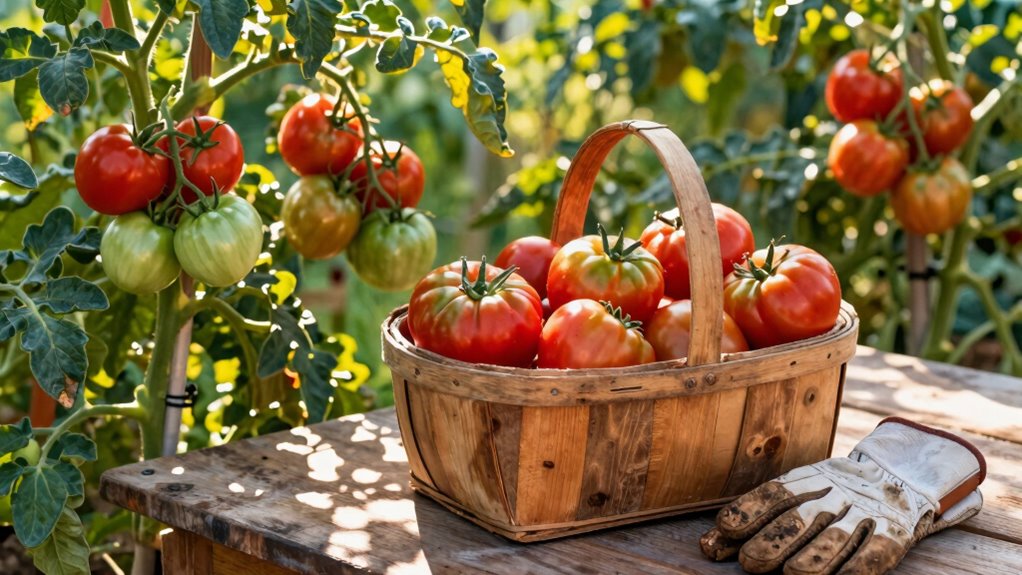
You can greatly prolong your tomato harvest by implementing strategic cultivation practices that enhance plant health and fruit development. These methods maximize your growing season while maintaining peak flavor profiles.
- Pruning and sucker removal – Pinch off suckers weekly and remove lower leaves to direct energy toward fruit production. This prevents fungal diseases and accelerates ripening of existing tomatoes.
- Succession planting – Sow new seedlings every two weeks through mid-summer. This staggered approach guarantees continuous harvests as earlier plants decline, keeping your餐桌 supplied.
- Season extension techniques – Use row covers, cloches, or greenhouse structures to protect plants from early frost. Mulching heavily retains soil warmth and moisture, essential for late-season fruit development.
These practices create optimal conditions for maximum yield and extended harvest periods.
Conclusion
Harvest tomatoes when they’re fully ripe, not green. Pick them gently in the morning when sugar levels peak. Store at room temperature, never refrigerate. Handle carefully to prevent bruising. Your perfect tomato should feel like a ripe peach—soft but not mushy. Avoid common mistakes like picking too early or storing improperly. Follow these precise methods and your tomatoes will taste like summer sunshine captured in fruit.
