

You need to assess your landscape’s specific requirements before selecting an irrigation timer. Consider soil type, plant needs, and local climate conditions that affect watering frequency. Smart timers automatically adjust schedules using weather data, while basic models require manual programming. Multi-zone systems accommodate varying water requirements across different areas. Your budget, installation skills, and preferred brands like Rain Bird or Hunter will determine the final choice. What specific features matter most for your setup?
What Kind of Irrigation Timer Suits Your Lawn?
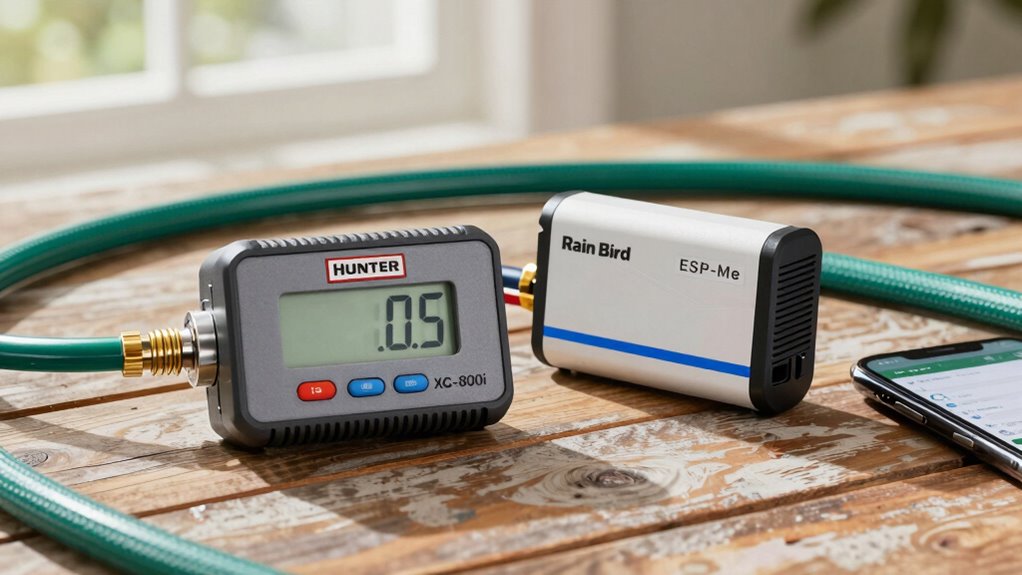
How do you determine which irrigation timer will deliver best performance for your specific lawn requirements?
You must evaluate your grass type, soil composition, and local climate conditions. Cool-season grasses like fescue require different watering patterns than warm-season varieties such as Bermuda or Zoysia.
Sandy soils drain quickly, demanding frequent short cycles, while clay soils need less frequent but deeper watering sessions. Your timer should match these variables precisely.
Look for programmable features that accommodate seasonal adjustments and weather-responsive capabilities that prevent overwatering during rainfall. Smart timers integrate with local weather data, automatically modifying schedules based on temperature, humidity, and precipitation forecasts.
Consider your lawn’s establishment phase versus mature maintenance needs. New installations require more frequent irrigation to develop root systems, while established lawns benefit from deeper, infrequent watering that promotes drought resistance and healthy root growth.
Does Your System Need Multi-Zone Support?
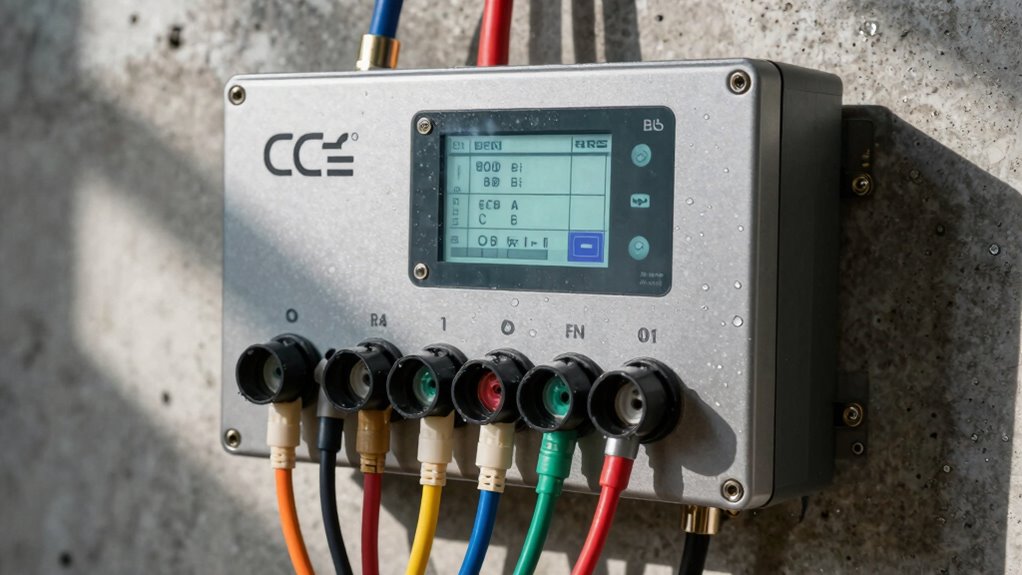
Most residential irrigation systems require multi-zone support to accommodate varying landscape conditions and plant requirements.
You’ll need multiple zones if your property has different soil types, sun exposure levels, or plant species with distinct watering needs. Multi-zone timers let you customize watering schedules for each area independently.
Check your existing system’s valve configuration to determine current zone count. Typically, you’ll find one valve per zone controlling specific sprinkler heads or drip lines. If you’re expanding your irrigation system, plan for additional zones during installation.
Properties with uniform landscaping might function adequately with single-zone timers.
However, most homeowners discover that multi-zone capability provides essential flexibility for prime plant health and water efficiency across diverse landscape conditions.
Smart vs. Basic: Which Timer Makes Sense?
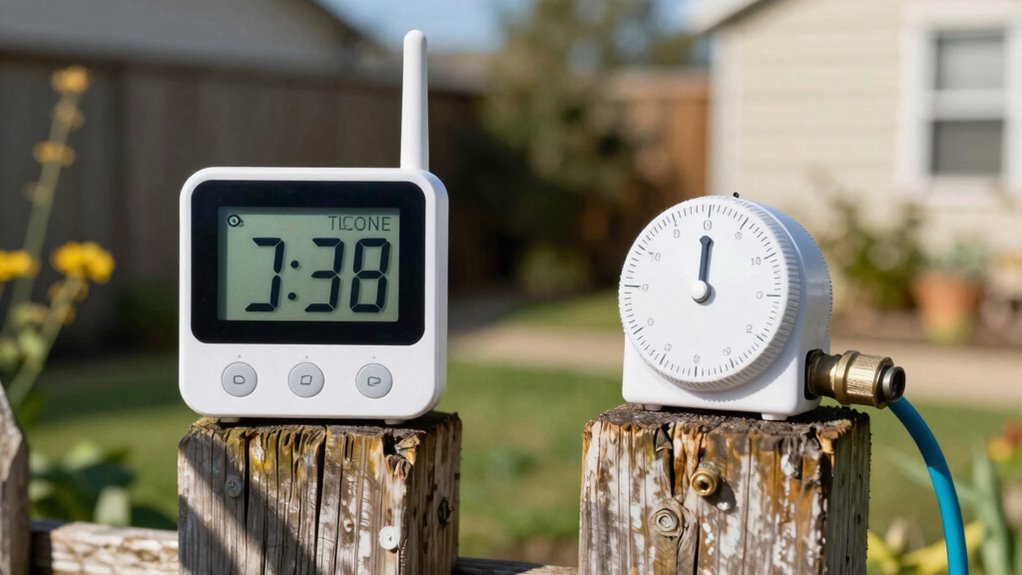
You should evaluate whether smart timer benefits like weather-based scheduling and remote monitoring justify their higher cost compared to basic timers.
Basic timers limit you to fixed schedules and manual adjustments, which can waste water and increase maintenance.
Smart timers provide automated optimization through sensor integration and app control, but you’ll pay more upfront and need compatible infrastructure.
Smart Timer Benefits
Smart irrigation timers offer distinct advantages over basic models through their ability to integrate weather data, soil conditions, and plant requirements into automated watering schedules.
You’ll appreciate how these systems use real-time meteorological information to adjust watering frequency and duration automatically. They prevent overwatering during rainy periods while ensuring adequate moisture during drought conditions.
Smart timers connect to soil moisture sensors, detecting when plants actually need water rather than following rigid programming. You can monitor and control your irrigation system remotely through smartphone apps, receiving alerts about system performance and water usage.
These timers often include zone-specific programming, allowing different areas of your landscape to receive customized care based on their unique needs.
Basic Timer Limitations
While smart timers provide adaptive irrigation management, basic timers rely on fixed scheduling that can’t respond to changing environmental conditions. You set specific start times and durations, but these remain constant regardless of rainfall, temperature fluctuations, or seasonal variations.
Your system will continue watering during downpours or freezing conditions, potentially drowning plants or causing damage. Basic timers lack soil moisture sensors, weather monitoring, or evapotranspiration calculations that optimize water usage.
You can’t remotely adjust settings when away from home. These limitations mean you waste water, increase utility costs, and risk plant health through over or under-watering.
Basic timers offer simplicity but sacrifice efficiency and adaptability that modern irrigation demands.
Essential Features Based on Your Setup Type
How should irrigation timers differ based on various setup configurations? Timer selection depends entirely on your specific irrigation system type, whether it’s drip irrigation, sprinkler systems, or mixed setups.
You’ll need multiple stations for sprinkler systems, while drip irrigation often requires longer watering durations at lower pressure. Mixed setups demand timers with programmable zones that accommodate different watering requirements simultaneously.
Don’t overlook voltage compatibility between your timer and existing solenoid valves. Your timer must support the correct amperage draw for reliable operation.
Consider whether you need manual override capabilities for seasonal adjustments. Smart timers offer weather-based programming that automatically adapts to environmental conditions.
Battery backup becomes essential for maintaining schedules during power outages. Your chosen timer should integrate seamlessly with your system’s existing infrastructure while providing the flexibility necessary for future modifications.
What’s Your Maximum Budget for a Timer?
You’ll want to establish your maximum budget before evaluating irrigation timers, as this constraint directly impacts which features and capabilities you can afford.
Affordable timer options typically offer basic programmable functions and manual controls, while mid-range timers include advanced scheduling, weather sensor compatibility, and smartphone integration.
High-end timers provide professional-grade features like flow monitoring, leak detection, and extensive zone control that justify their premium pricing.
Affordable Timer Options
Several affordable irrigation timers exist within budgets ranging from $20 to $100, offering basic programmable features without premium price tags.
You’ll find mechanical and digital models that handle essential watering schedules effectively. These timers typically support 2-4 programmed cycles daily, accommodating small to medium-sized systems.
Look for models with manual override capabilities and battery backup functionality. Basic timers often feature simple dial interfaces rather than complex touchscreens. You should expect reliable performance for standard residential applications.
Brands like Orbit, Rain Bird, and Toro provide solid entry-level options. These devices usually support 1-3 zones maximum. While they lack advanced moisture sensing, they deliver consistent timing accuracy.
You’ll sacrifice smart home integration and weather-based adjustments. However, these timers provide dependable scheduling for basic irrigation needs.
Consider your specific zone requirements and programming complexity before purchasing.
Mid-Range Timer Features
While affordable timers handle basic irrigation scheduling adequately, mid-range options between $100 and $300 offer enhanced features that justify the increased investment for more complex watering needs.
You’ll discover these timers provide sophisticated programming capabilities that transform your irrigation system into a precision watering solution.
- Advanced Weather Response – You integrate local weather data that automatically adjusts watering schedules, preventing waste during rain while ensuring plants receive adequate moisture during drought conditions.
- Zone-Specific Programming – You customize individual zone settings with different watering times and frequencies, accommodating various plant types and soil conditions throughout your landscape.
- Smart Connectivity Features – You remotely monitor and control your irrigation system through smartphone apps, receiving alerts and making real-time adjustments from anywhere.
High-End Timer Benefits
High-end irrigation timers deliver professional-grade features that maximize efficiency and customization for demanding landscapes.
You’ll gain access to advanced programming options including multiple start times, seasonal adjustments, and zone-specific watering schedules.
These timers integrate weather sensors and smart technology that automatically modify irrigation based on real-time conditions.
You’re looking at robust construction materials like commercial-grade plastics and metal components that withstand harsh environments.
Professional landscapers rely on features like master valve control, rain delay functions, and detailed logging capabilities.
Your investment buys reliability and precise water management that reduces waste while promoting healthier plant growth.
Consider whether your landscape complexity and watering demands justify the higher cost.
Serious gardeners and commercial applications benefit most from these sophisticated systems.
Will It Adjust to Rain and Heat?
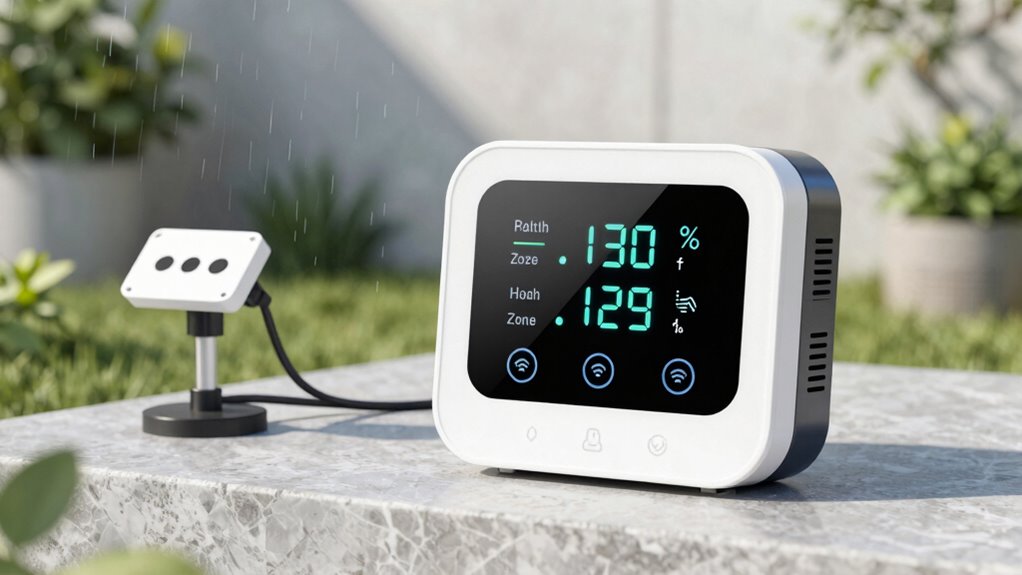
How well does your irrigation timer respond to changing weather conditions? Your system’s adaptability determines water efficiency and plant health during extreme weather.
- Smart sensors automatically detect rainfall – Your timer should pause watering when moisture levels are adequate, preventing wasteful oversaturation that neighbors won’t appreciate.
- Temperature compensation adjusts cycle duration – You need programmable settings that extend watering during heat waves while reducing frequency during cooler periods.
- Weather-based algorithms predict irrigation needs – Advanced timers integrate local weather data to optimize watering schedules, ensuring your landscape thrives while conserving resources.
Look for timers with rain sensors, temperature monitoring, and weather intelligence.
These features prevent water waste, reduce maintenance, and demonstrate environmental responsibility. Your irrigation system should adapt intelligently to weather patterns, not operate rigidly regardless of conditions.
Can You Handle Installation Yourself?
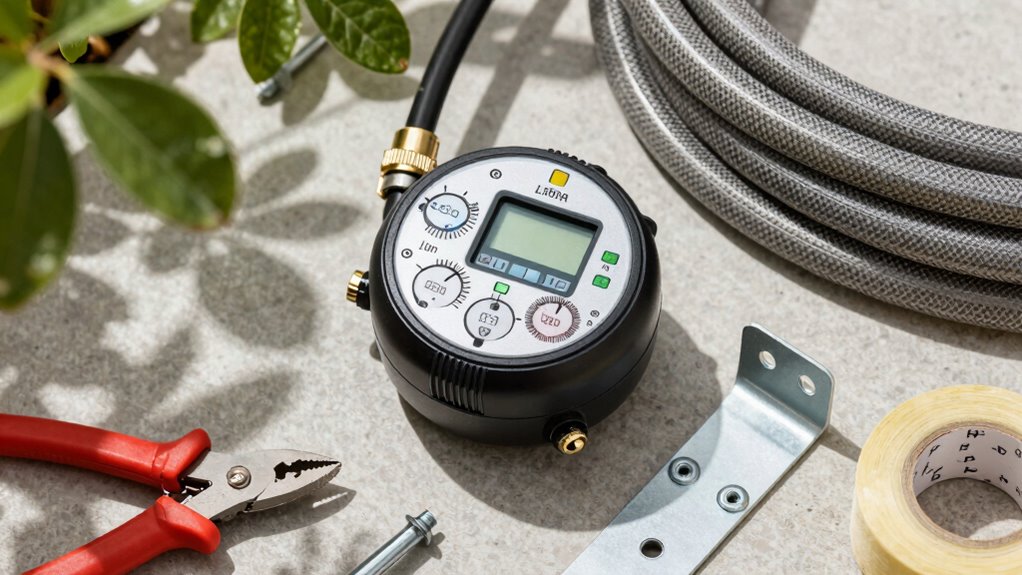
Before you commit to a specific irrigation timer, assess whether you can handle the installation yourself. Most timers require connecting to your existing water line and electrical system. You’ll need basic tools like wire strippers, screwdrivers, and possibly a drill.
Smart timers often demand WiFi setup and app configuration. If you’re comfortable with outdoor electrical work and following technical manuals, DIY installation saves money. However, complex systems with multiple zones or existing timer replacements might require professional help.
Check if your chosen timer includes detailed installation guides and customer support. Some brands offer video tutorials and phone assistance.
Don’t overlook local building codes requiring permits or licensed electricians. Your comfort level with plumbing connections, wire management, and troubleshooting determines whether you should hire a professional installer.
Which Brands Offer Long-Term Reliability?
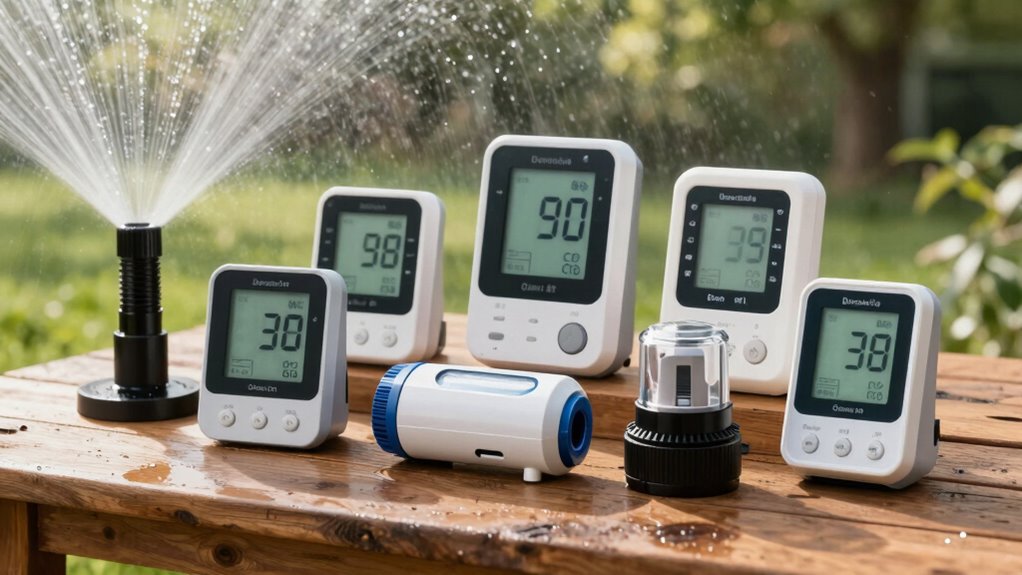
Once you’ve determined whether you can manage the installation process yourself, you’ll want to focus on selecting a timer from a manufacturer known for producing reliable, long-lasting products.
Your irrigation system’s performance depends on consistent, durable components that won’t fail during critical growing seasons.
Consider these trusted brands that deliver proven reliability:
- Rain Bird – Offers commercial-grade timers with exceptional durability and precise watering control that serious gardeners trust for decades.
- Hunter – Provides robust irrigation controllers backed by thorough warranties and consistent performance in demanding conditions.
- Toro – Delivers professional-quality timers engineered for longevity with advanced features that adapt to your specific watering needs.
These manufacturers maintain rigorous quality standards and offer extensive customer support.
You’ll find their products widely recommended by landscape professionals and master gardeners who demand dependable irrigation solutions.
Choose brands that stand behind their products with solid warranties and readily available replacement parts.
Your investment protects both your landscape and your peace of mind.
Conclusion
You’ve evaluated your landscape’s unique requirements, from soil composition to plant species. Smart timers offer weather-responsive automation, but basic models suffice for simple setups. Multi-zone capability matters when different areas need varied watering schedules. Brand reputation affects long-term performance—Rain Bird, Hunter, and Toro deliver proven reliability. Installation complexity varies; some systems require professional setup. Your budget determines feature access, but investing in quality prevents costly water waste and system failures downstream.
