

Like Icarus flying too close to the sun, your greenhouse can quickly become a furnace without proper heat management. You’ll need to master ventilation, shading, and thermal regulation to protect your plants from devastating heat stress. Recognizing the warning signs early and implementing strategic cooling solutions will determine whether your crops survive or succumb to summer’s relentless intensity. The difference between success and failure lies in your preparation.
What Causes Greenhouse Overheating in Summer?
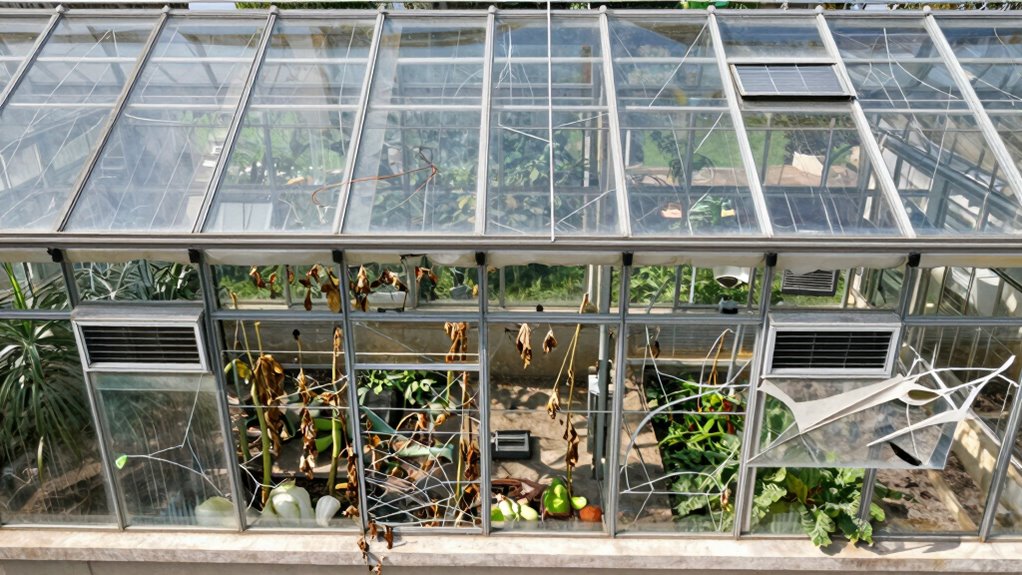
Greenhouse overheating during summer months stems primarily from excessive solar radiation and inadequate ventilation systems.
You face solar heat gain when ultraviolet rays penetrate transparent coverings, elevating internal temperatures beyond ideal growing conditions.
Your ventilation system must actively exhaust hot air while drawing in cooler outside air. Without sufficient airflow, heat accumulates rapidly. Poorly designed or malfunctioning exhaust fans create stagnant air pockets.
You should monitor thermal mass effects from concrete floors and metal structures that absorb daytime heat. Inadequate shading compounds overheating issues. Thermal curtains or shade cloths reduce solar load.
Your location’s microclimate affects overheating potential. South-facing structures receive intense afternoon sun.
You must understand these contributing factors to implement effective cooling strategies. Recognizing root causes helps you select appropriate ventilation equipment.
Recognize Signs of Heat Stress in Plants
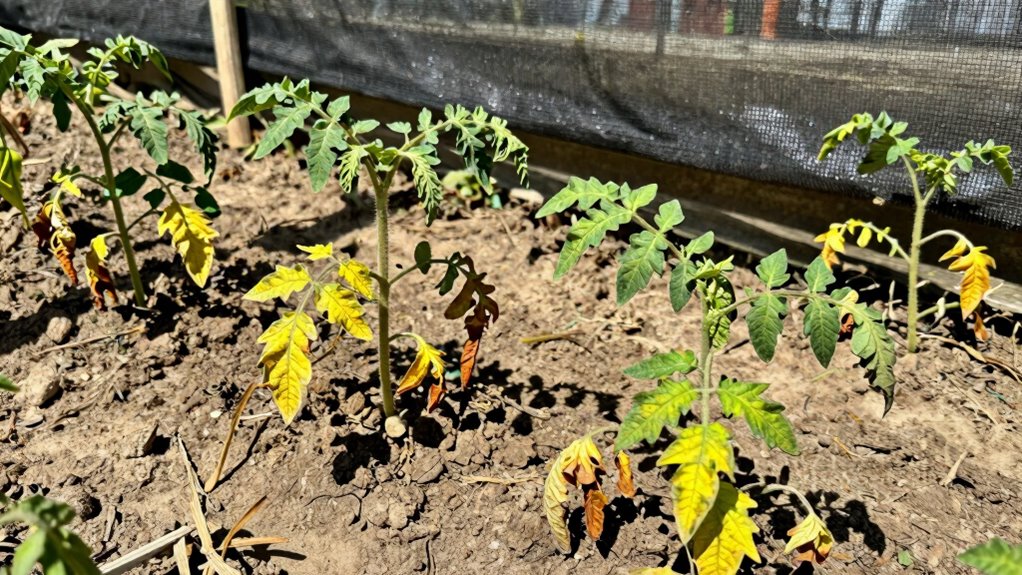
Having identified the primary causes of greenhouse overheating, you must now learn to recognize how excessive temperatures affect your plants.
Heat stress manifests through distinct physiological symptoms you should monitor closely. Leaves wilt rapidly despite adequate watering, indicating cellular damage from high temperatures. You’ll notice leaves curling inward or developing necrotic margins, particularly on tender new growth.
Stems may become soft and weak, compromising structural integrity. Flowering plants often abort buds prematurely, while fruit development halts entirely. Plants exhibit stunted growth patterns and chlorosis, especially between leaf veins.
You should also watch for leaf scorching along edges and tips, appearing as brown, desiccated tissue. Root damage occurs silently below soil level, reducing nutrient uptake capacity.
Early recognition prevents irreversible damage and maintains your greenhouse productivity throughout hot weather periods.
Start With Proper Ventilation Setup
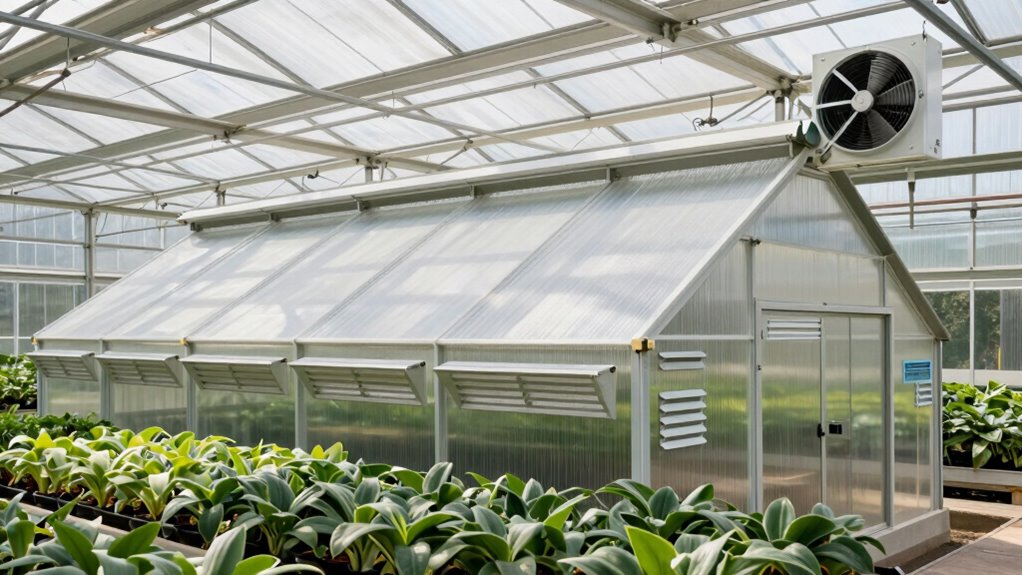
While proper ventilation serves as the foundation for effective greenhouse climate control, you must establish a well-optimized airflow system before temperatures rise to dangerous levels. You should install both passive and active ventilation components, including roof vents, side vents, and exhaust fans.
Position intake vents near the floor and exhaust ports at the roof peak to maximize convection currents. Calculate your greenhouse’s cubic footage to determine adequate fan capacity, aiming for complete air exchange every minute. Install thermostatically controlled fans that activate at predetermined temperatures.
Confirm vent openings provide sufficient cross-ventilation throughout the entire structure. You must also consider natural wind patterns when positioning your greenhouse. Proper ventilation prevents heat buildup, reduces humidity, and maintains ideal growing conditions.
This foundational setup becomes your first line of defense against overheating. Without adequate airflow, even other cooling methods will prove ineffective.
Choose the Best Shade Cloth for Your Needs
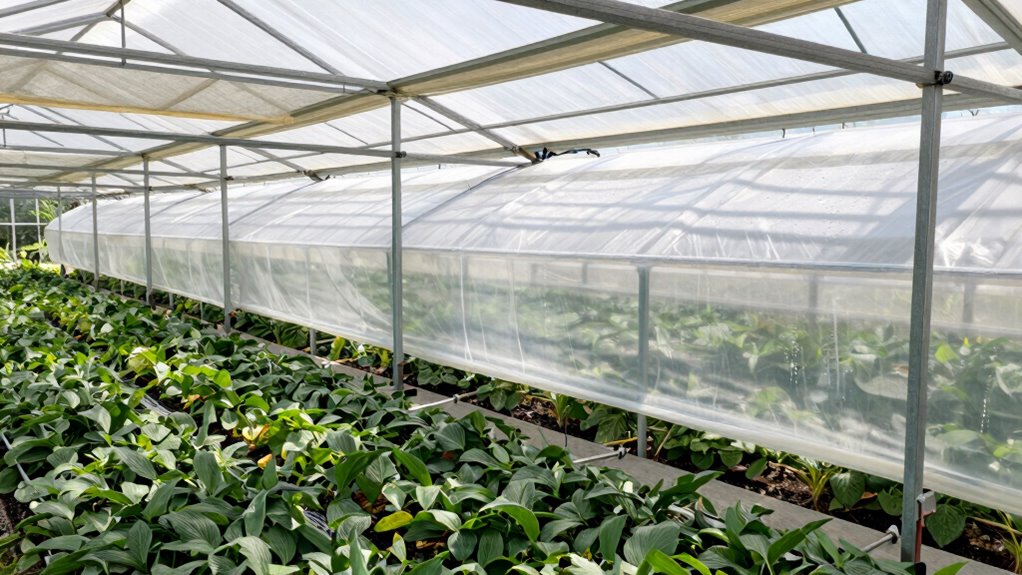
Although proper ventilation forms the backbone of greenhouse climate control, selecting the appropriate shade cloth becomes equally critical for maintaining ideal growing conditions during extreme heat.
You’ll want to evaluate shade density percentages ranging from 30% to 70%, depending on your specific crops and local climate intensity. Lightweight polyethylene fabrics offer excellent durability while maintaining airflow, whereas knitted shade cloths provide superior water permeability.
Darker colored materials absorb more heat but block greater light intensity. You should measure your greenhouse dimensions precisely before purchasing, ensuring adequate coverage with minimal gaps.
Look for UV-stabilized options that won’t degrade rapidly under constant sun exposure. Examine retractable systems for flexible light control throughout changing seasons.
Proper installation requires securing all edges firmly to prevent flapping damage. Don’t overlook reflective properties that can redirect light while reducing heat buildup effectively.
Install Fans for Better Airflow
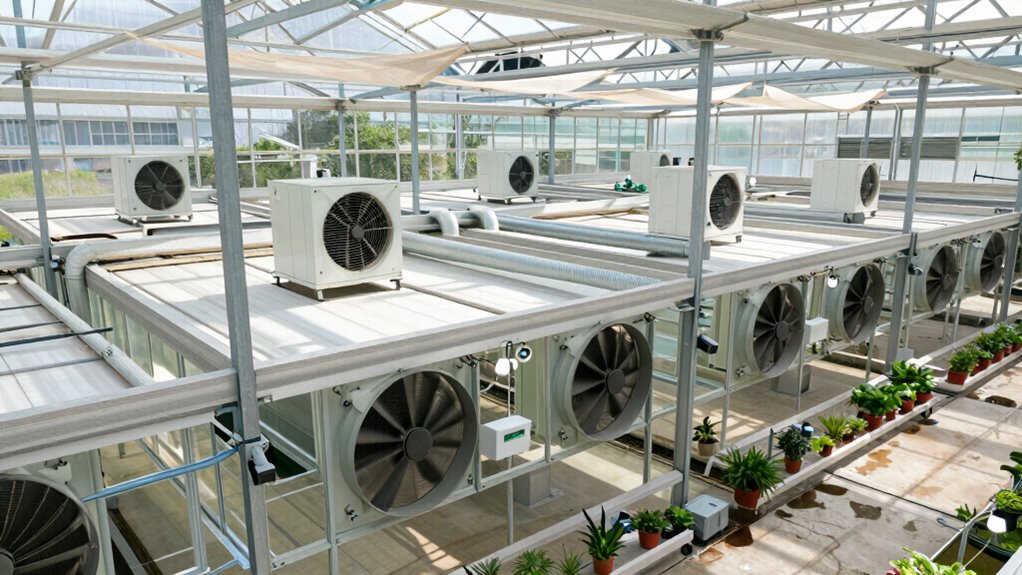
When temperatures soar, installing fans becomes essential for maintaining ideal airflow throughout your greenhouse environment. You must select appropriate fan types and placement strategies to maximize effectiveness while minimizing energy consumption.
Consider these critical factors:
- Air circulation patterns – You’ll create negative pressure that draws hot air out while pulling cooler air in through vents.
- Plant health benefits – You’re preventing heat stress, reducing disease risks, and promoting stronger stem development through gentle air movement.
- Energy efficiency gains – You’ll reduce cooling costs by up to 30% when combining strategic fan placement with proper venting.
You should install exhaust fans at the highest point opposite intake vents. Ceiling-mounted circulation fans help distribute air evenly. Confirm adequate CFM ratings match your greenhouse volume.
You’re not just moving air; you’re creating a controlled environment that supports ideal plant growth and reduces thermal buildup effectively.
Set Up Evaporative Coolers Inside
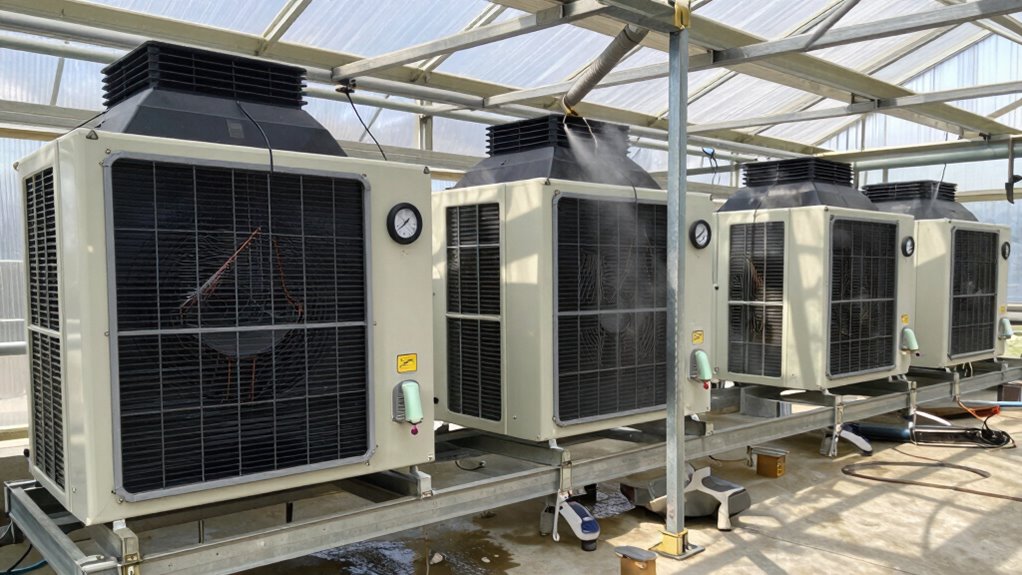
Evaporative cooling systems provide an efficient solution for reducing greenhouse temperatures beyond what fans alone can achieve. You should install pad-and-fan systems or misting units that utilize water evaporation to create cooling effects.
These systems work by drawing hot air through wetted cooling pads or releasing fine water droplets that evaporate rapidly. You’ll need to position units strategically to maximize airflow distribution throughout your growing space.
Guarantee adequate water supply and drainage systems are in place. Monitor humidity levels closely, as excessive moisture can promote fungal diseases.
You should maintain proper spacing between plants to allow air circulation around cooling zones. Regular cleaning prevents mineral buildup and maintains system efficiency.
Set timers to operate units during peak heat periods. You’ll achieve ideal results when combining evaporative cooling with ventilation strategies.
Use Thermal Mass to Stabilize Temperatures
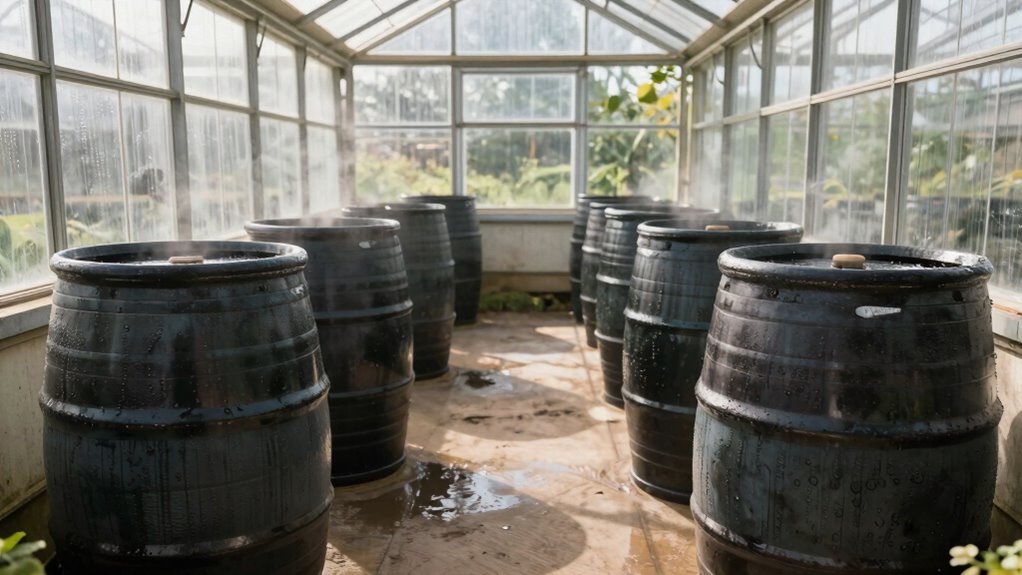
You should position water barrels strategically throughout your greenhouse to absorb excess heat during peak temperature hours.
Stone walls and concrete floors work as thermal mass systems that retain coolness from nighttime temperatures and release it gradually during hot days.
These materials stabilize your greenhouse environment by creating a buffer against rapid temperature fluctuations.
Water Barrels for Heat Absorption
Water barrels function as thermal mass systems that absorb excess heat during daytime hours and gradually release it during cooler nighttime periods, helping to stabilize greenhouse temperatures.
You’ll maximize efficiency by positioning barrels strategically where they receive direct sunlight during peak hours.
- Security: You’ll feel protected knowing your plants won’t experience dangerous temperature spikes
- Control: You’re actively managing your growing environment instead of hoping for the best
- Confidence: You’ll sleep better at night knowing your investment stays protected
Dark-colored barrels work best since they absorb more solar energy. Confirm containers are food-grade and clean before use.
Position them near walls or walkways for maximum heat absorption. You should monitor barrel temperatures regularly and adjust placement based on your specific microclimate conditions for ideal performance.
Stone Walls Retain Coolness
Stone walls function as highly effective thermal mass systems that absorb and store coolness during nighttime hours, then gradually release it throughout the day to counteract rising temperatures.
You should maximize this natural cooling mechanism by constructing thick stone walls around your greenhouse perimeter. Dense materials like limestone, sandstone, or concrete blocks work best because they possess high specific heat capacities.
Position these walls where they receive maximum nighttime sky exposure to enhance radiative cooling. The thermal lag effect guarantees stored coolness releases slowly, maintaining stable internal temperatures. You’ll notice significant temperature differentials between daytime highs and nighttime lows when properly implemented.
Stone walls integrate seamlessly with existing greenhouse structures while providing passive climate control. This time-tested approach reduces reliance on mechanical cooling systems and creates microclimates where plants thrive.
You’re harnessing ancient thermal regulation principles that have sustained agricultural practices for centuries.
Concrete Floors Moderate Temperature
While stone walls provide excellent perimeter cooling, concrete floors serve as equally important thermal mass systems that stabilize greenhouse temperatures from below. You’ll maximize cooling efficiency by understanding how concrete absorbs and releases heat energy.
- Absorption: Concrete soaks up excess heat during peak afternoon hours, preventing temperature spikes that stress your plants.
- Storage: Thick concrete slabs store thermal energy throughout the day, acting as underground heat sinks.
- Release: Overnight, concrete gradually releases stored coolness, maintaining stable temperatures when external conditions drop.
You should install 4-inch minimum concrete floors with proper curing time. Dark-colored concrete absorbs more heat initially, so consider lighter shades for immediate cooling benefits.
Guarantee your concrete extends beyond plant zones to maximize thermal mass coverage. Properly installed concrete floors become your greenhouse’s foundation for consistent climate control.
Insulate for Hot Weather Protection
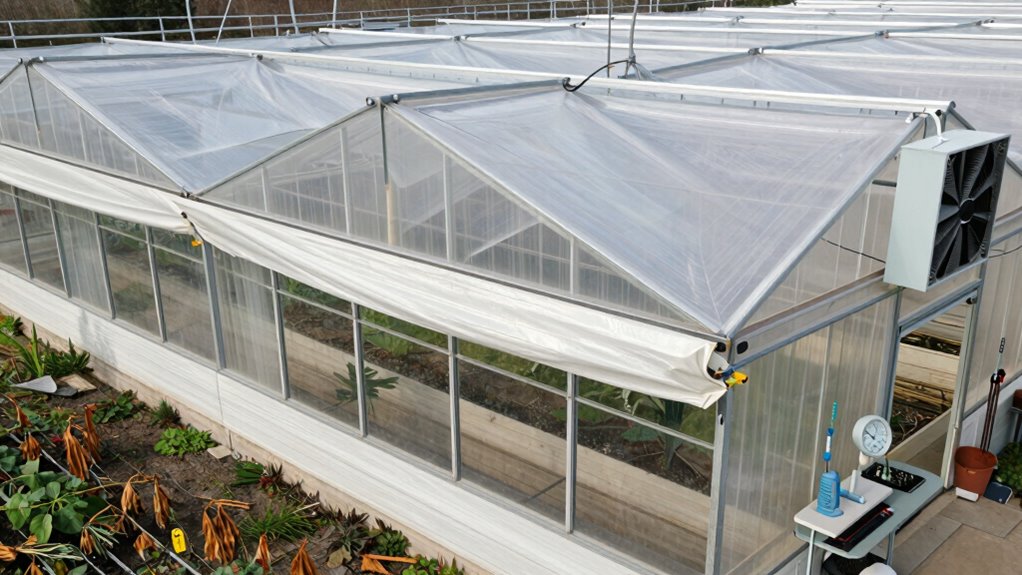
You must install reflective barriers on your greenhouse walls and roof to deflect solar radiation and prevent heat absorption.
Your ventilation system requires optimization through strategic fan placement and automated controls to maintain airflow patterns that reduce internal temperatures.
You should apply shade cloth with appropriate density ratings to block excess sunlight while preserving adequate light transmission for plant growth.
Reflective Barrier Installation
Installing reflective barriers beneath your greenhouse roof or walls creates an essential thermal break that greatly reduces heat transfer during extreme temperatures.
You’ll considerably lower internal temperatures while protecting your plants from heat stress damage.
- Immediate relief: Your crops stop wilting within hours of installation, transforming your greenhouse from a hostile environment into a nurturing sanctuary.
- Dramatic energy savings: Watch your cooling costs plummet as radiant heat bounces away instead of penetrating your growing space.
- Plant productivity surge: Experience flowering and fruiting cycles returning to normal patterns as thermal stress disappears.
Choose aluminum foil-faced bubble wrap or specialized reflective films for maximum effectiveness.
Install barriers with reflective sides facing inward toward your plants.
Secure materials tightly using staples or adhesive tape, ensuring no gaps exist where heat can penetrate through unprotected areas.
Ventilation System Optimization
Reflective barriers significantly reduce radiant heat infiltration, yet without proper ventilation system adjustment, trapped hot air will continue elevating internal temperatures.
You must install exhaust fans strategically opposite intake vents to create cross-ventilation flow. Position intake vents low near the ground and exhaust fans high near the roof peak for maximum air circulation.
Thermostatically controlled fans automatically respond to temperature fluctuations, maintaining consistent conditions. Consider installing oscillating fans inside to enhance air movement and prevent stagnant pockets.
Roof vents and ridge openings provide natural convection pathways for hot air escape. Verify vent openings comprise at least twenty percent of total floor area.
Manual roll-up sidewalls offer adjustable ventilation control. You should regularly clean fan blades and check motor functionality.
Proper ventilation system adjustment prevents heat stress, maintains plant health, and reduces energy costs while creating ideal growing conditions.
Shade Cloth Application
Several types of shade cloth materials offer effective heat protection for greenhouse operations during extreme temperatures.
You’ll want to select the proper shade percentage based on your specific crop requirements and local climate conditions.
- Aluminum shade cloth reflects solar radiation while maintaining airflow, creating cooler growing conditions that protect your seedlings from scorching.
- Black knitted polyethylene absorbs heat during peak sun hours then releases it gradually, preventing sudden temperature spikes that stress your plants.
- White reflective materials bounce sunlight away while diffusing light evenly throughout your greenhouse space.
Install shade cloth systems with proper tensioning and secure fastening points.
You’re not just buying material—you’re investing in your greenhouse community’s success and protecting your harvest from devastating heat damage.
Adjust Watering Schedule for Heatwaves
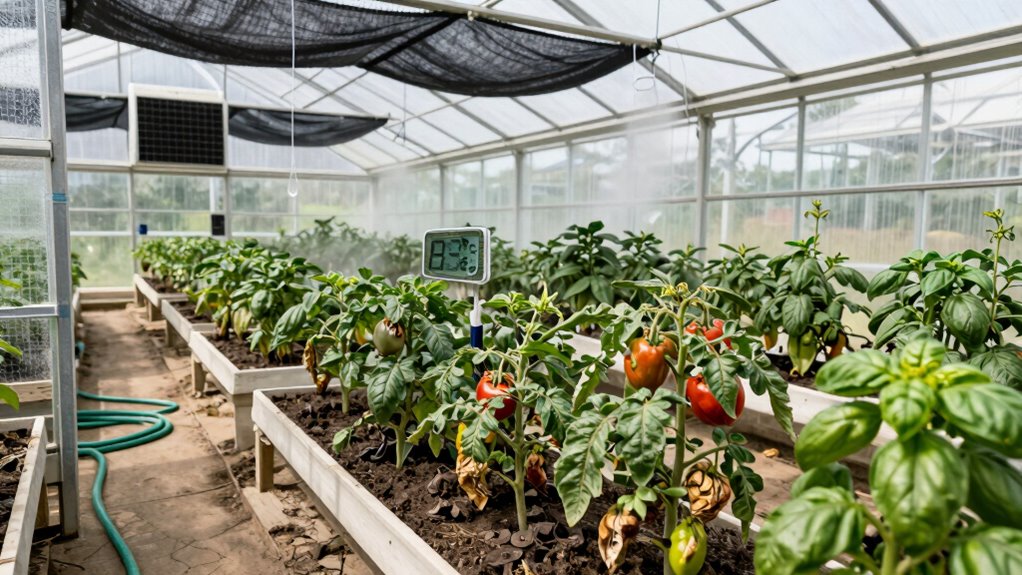
While maintaining consistent moisture levels becomes increasingly challenging during extreme heat, you’ll need to adjust your watering schedule to prevent plant stress and potential crop failure.
Increase watering frequency to twice daily, preferably early morning and late evening when evaporation rates are lowest. Monitor soil moisture using a digital meter, targeting 60-70% saturation levels. You should reduce water volume per session to prevent runoff and root zone oversaturation.
Implement drip irrigation systems for precise delivery directly to root zones. Check for wilting signs like leaf curling or yellowing edges, which indicate immediate hydration needs. Adjust pH levels between 6.0-7.0 for ideal nutrient uptake during heat stress.
You’ll also need to increase humidity through misting systems or evaporative coolers. Document daily watering times and plant responses to fine-tune your approach. Remember that container plants require more frequent monitoring than ground-planted specimens during heatwaves.
Protect Seedlings From Scorching Sun
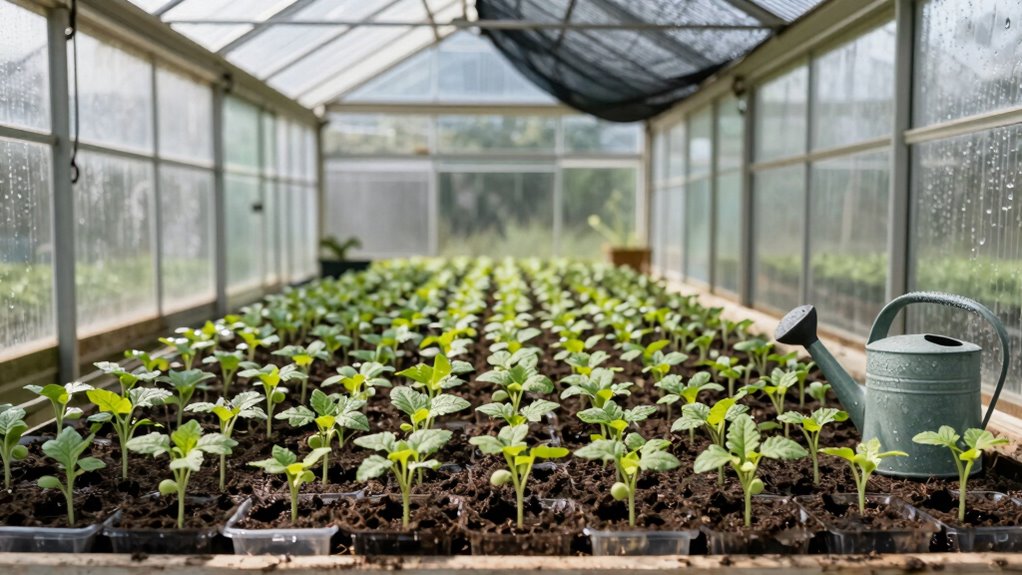
You must install shade cloth with 30-50% density above seedling trays to reduce solar radiation exposure during peak afternoon hours.
Adjust your watering schedule to provide supplemental irrigation in early morning and late evening when temperatures drop below 90°F.
Optimize ventilation by positioning exhaust fans at the roof peak and intake vents near the floor to create cross-ventilation that removes hot air and draws in cooler ambient temperatures.
Shade Cloth Installation Methods
Installing shade cloth properly protects seedlings from scorching sun exposure that can cause irreversible heat damage. You must choose between internal or external installation methods based on your greenhouse structure and climate conditions.
Selecting the right shade cloth density depends on your specific crops and local solar intensity levels. Lightweight fabrics ranging from 30-50% shade provide ideal protection while maintaining adequate light penetration for healthy plant development.
- Proper tensioning prevents cloth flapping that damages delicate seedlings.
- Secure anchoring eliminates gaps where intense sunlight penetrates unprotected areas.
- Strategic placement guarantees uniform coverage without blocking essential ventilation paths.
You should install shade cloth using grommets, clips, or cable systems depending on your greenhouse framework. Always measure twice before cutting fabric to avoid costly mistakes that compromise plant protection.
Watering Schedule Adjustments
Since seedlings are particularly vulnerable to dehydration during peak sunlight hours, adjusting your watering schedule becomes critical for preventing heat stress and maintaining ideal growing conditions.
You should water seedlings early morning before 10 AM or late evening after 6 PM when temperatures drop. Avoid midday watering which causes rapid evaporation and leaf burn.
Monitor soil moisture levels daily using a moisture meter rather than relying on visual assessment. Young plants need consistent moisture but never waterlogged conditions.
Increase watering frequency to twice daily during extreme heat waves, ensuring proper drainage prevents root rot. Use room temperature water to avoid shocking delicate root systems.
Mulch around seedlings helps retain soil moisture between watering sessions. Adjust irrigation timers automatically based on temperature readings.
Check for wilted leaves which indicate immediate water requirements. Your watering strategy directly impacts seedling survival rates during hot weather conditions.
Ventilation System Optimization
Effective ventilation system optimization requires careful coordination with your adjusted watering schedule to prevent seedlings from suffering heat damage during intense solar exposure.
You must strategically position exhaust fans and intake vents to create cross-ventilation that moves hot air upward and out while drawing cooler air from below.
- Automatic vent openers respond to temperature changes instantly, preventing devastating heat buildup when you’re away
- Thermostatically controlled fans kick in precisely when needed, protecting your vulnerable seedlings from sudden temperature spikes
- Roll-up side curtains provide flexible airflow adjustment, letting you fine-tune conditions as afternoon sun intensifies
You should monitor air circulation patterns continuously, adjusting fan speeds and vent positions based on real-time temperature readings.
Proper ventilation prevents leaf scorching and root damage.
Apply Whitewash to Reflect Excess Light
Whitewash application becomes essential when greenhouse temperatures exceed perfect growing conditions.
You’ll need to apply a 50-70% solution to external glazing surfaces, reducing light transmission by up to 40%. Use a low-pressure sprayer or roller for even coverage, focusing on south-facing panels where solar exposure peaks. Apply during early morning hours when temperatures remain manageable.
Standard whitewash contains titanium dioxide and clay binders that reflect harmful UV rays while maintaining adequate light penetration for photosynthesis.
Reapplication every 6-8 weeks guarantees consistent protection throughout extended heat periods. Avoid over-application, which can reduce light levels below ideal thresholds. Test small sections first to verify compatibility with your glazing material.
Proper whitewashing prevents heat stress, leaf scorch, and premature plant decline while maintaining productive growing environments.
Keep Humidity Levels Balanced
You must monitor air circulation constantly to prevent humidity from spiking during hot weather.
Control your watering schedule carefully to avoid over-saturation that leads to excessive moisture buildup.
Use shade cloth strategically to reduce temperature and maintain ideal humidity levels between 50-70%.
Monitor Air Circulation
While maintaining proper air circulation proves crucial for humidity control, inadequate ventilation quickly leads to dangerous moisture buildup that compromises plant health. You must actively monitor airflow patterns throughout your greenhouse structure.
- You’ll feel relieved when fresh air continuously displaces stale, humid pockets
- You’ll experience frustration when standing water and condensation create fungal breeding grounds
- You’ll gain confidence knowing proper ventilation prevents catastrophic crop losses
Install exhaust fans strategically opposite intake vents to create cross-ventilation.
Position circulation fans to eliminate dead air zones where humidity accumulates. Check that all vents open fully during peak heat hours. Monitor temperature differentials between greenhouse sections. Adjust fan speeds based on external weather conditions.
Clean fan blades and vents regularly to maintain peak performance. You belong among successful greenhouse operators who understand that precise air movement directly impacts plant health and yield quality.
Control Watering Schedule
Effective ventilation alone can’t prevent humidity-related issues if your watering practices create excessive moisture buildup. You must carefully time your irrigation to coincide with peak ventilation periods, typically early morning or late evening when temperatures drop.
Water deeply but less frequently to encourage root development while minimizing surface evaporation. Monitor your soil moisture levels using a hygrometer, aiming for 60-70% humidity during daylight hours. Avoid overhead watering systems that increase air moisture unnecessarily.
Instead, use drip irrigation or soaker hoses that deliver water directly to root zones. Check your plants’ leaves regularly for condensation signs, which indicate humidity imbalance. Adjust your watering frequency based on plant species requirements and external weather conditions.
Remember that overwatering creates fungal problems while underwatering stresses plants. You belong among serious growers who understand that precise watering schedules separate thriving greenhouse crops from disappointing failures.
Use Shade Cloth Wisely
Although shade cloth installation seems straightforward, improper application creates humidity traps that devastate plant health during peak summer months.
You must position shade cloth with adequate ventilation gaps to prevent moisture buildup. Poor placement suffocates plants faster than direct sunlight.
- Frustration builds when you watch prized seedlings wilt from trapped heat behind improperly installed shade cloth
- Relief floods through you when properly spaced shade cloth allows ideal air circulation while filtering harsh rays
- Pride swells as you master the perfect balance between light reduction and humidity control
Calculate your greenhouse’s specific shade requirements based on plant types and local climate conditions.
Monitor humidity levels continuously and adjust cloth positioning accordingly.
Switch to Heat-Tolerant Plant Varieties
One key strategy for maintaining your greenhouse during extreme heat involves selecting plant varieties specifically bred for thermal resistance.
You should prioritize cultivars with enhanced heat tolerance, such as ‘Solar Flare’ tomatoes or ‘Heatwave’ peppers, which maintain productivity above 90°F.
These varieties possess superior transpiration efficiency and cellular heat-shock proteins that protect essential enzymes.
Research indicates that heat-tolerant strains can withstand temperatures up to 105°F while continuing normal metabolic processes.
You’ll want to shift gradually, starting with warm-season crops like okra, eggplant, and southern peas that naturally thrive in high temperatures.
Consult seed catalogs for “heat-set” varieties that fruit reliably despite thermal stress.
Your regional agricultural extension office can recommend proven performers for your specific climate zone and growing conditions.
Upgrade Structure for Long-Term Cooling
While passive cooling methods provide temporary relief, upgrading your greenhouse structure guarantees sustainable temperature management during extended heat periods.
You need permanent solutions that create lasting comfort for your plants and peace of mind for you.
Consider these essential structural improvements:
- Install evaporative cooling systems with high-efficiency wet pads that drop temperatures by 10-15°F while maintaining ideal humidity levels.
- Upgrade to double-layer polycarbonate panels with UV protection that reduce heat gain by 30% compared to single-layer materials.
- Add automated roof vents with thermostatic controls that respond immediately to temperature spikes without manual intervention.
These modifications transform your growing environment into a precision-controlled sanctuary.
You’ll experience dramatically reduced plant stress, improved yields, and consistent growing conditions that make you proud of your cultivation skills.
Your greenhouse becomes a reflection of smart investment and expert planning.
Track Climate With Simple Monitoring Tools
Everyone needs reliable data to make informed decisions about their greenhouse environment. You should install digital thermometers and hygrometers at multiple locations to track temperature and humidity variations. Place sensors near vents, doors, and plant canopy levels where microclimates develop.
Check readings twice daily during peak growing seasons. Document measurements in a simple logbook or spreadsheet. You’ll identify patterns showing when temperatures spike and which areas need attention.
Wireless monitoring systems send real-time alerts to your phone when thresholds are exceeded. Don’t rely on guesswork – precise data drives effective cooling strategies. Calibrate instruments monthly for accuracy.
Compare indoor conditions against outdoor weather reports. You’re not alone in this – thousands of growers depend on these same monitoring practices. Your plants respond to exact conditions, not approximations. Track dew point levels alongside temperature readings.
Get Fast Relief on Extreme Heat Days
When temperatures soar beyond 95°F, your greenhouse requires immediate cooling intervention to prevent crop damage and structural stress. You must act swiftly to protect your investment and guarantee plant survival during these critical moments.
- Deploy emergency shade cloths immediately – don’t wait for plants to show heat stress signs.
- Activate misting systems strategically – target hot spots where temperature differences exceed 10°F.
- Ventilate aggressively – open all available vents and activate exhaust fans at maximum capacity.
Your quick response determines whether your crops survive or fail. Monitor thermometers placed at plant level, not just ambient air.
Water plants thoroughly before peak heat arrives, guaranteeing soil moisture penetrates six inches deep. Spray reflective coatings on glass surfaces exposed to direct sunlight.
These emergency measures buy you time until temperatures drop naturally, preserving both your harvest and greenhouse integrity through extreme heat events.
Stay Ahead With Preventative Maintenance
Because proactive measures prevent catastrophic failures, you should implement systematic maintenance protocols before hot weather arrives rather than react to emergencies.
You’ll want to inspect all ventilation systems, including fans, louvers, and evaporative coolers, ensuring they operate at peak efficiency. Check thermostat sensors and automated controls for accuracy. Clean or replace cooling pads, verify water flow rates, and test backup systems.
Examine shading materials for damage and reapply coatings as needed. Inspect irrigation timers and drip lines for clogs or leaks. Service exhaust fans monthly, checking belts, bearings, and electrical connections. Verify that all vents open fully and close tightly.
Keep emergency supplies like extra fans, thermostats, and repair materials readily available. You’re not just maintaining equipment; you’re protecting your entire growing operation from devastating heat stress damage.
Conclusion
So you think you’ve mastered greenhouse cooling? Think again. While you’ve tackled ventilation, shading, and monitoring, extreme heat still threatens your crops. Don’t let months of careful planning crumble in one scorching week. Stay vigilant with preventative maintenance, because when temperatures soar, only consistent, proactive measures separate thriving plants from heat-stressed casualties. Your greenhouse demands constant attention—not occasional fixes.
