

You need garden shears that match your specific pruning tasks. Don’t grab the first pair you see—blade type, handle design, and steel quality directly impact performance. Bypass blades work best for live growth, while anvil types suit dead wood. Ergonomic handles prevent fatigue during extended use. Consider cutting capacity versus control for precision work. Quality shears should sharpen easily and resist corrosion. What factors matter most for your gardening needs?
Know What You’re Pruning
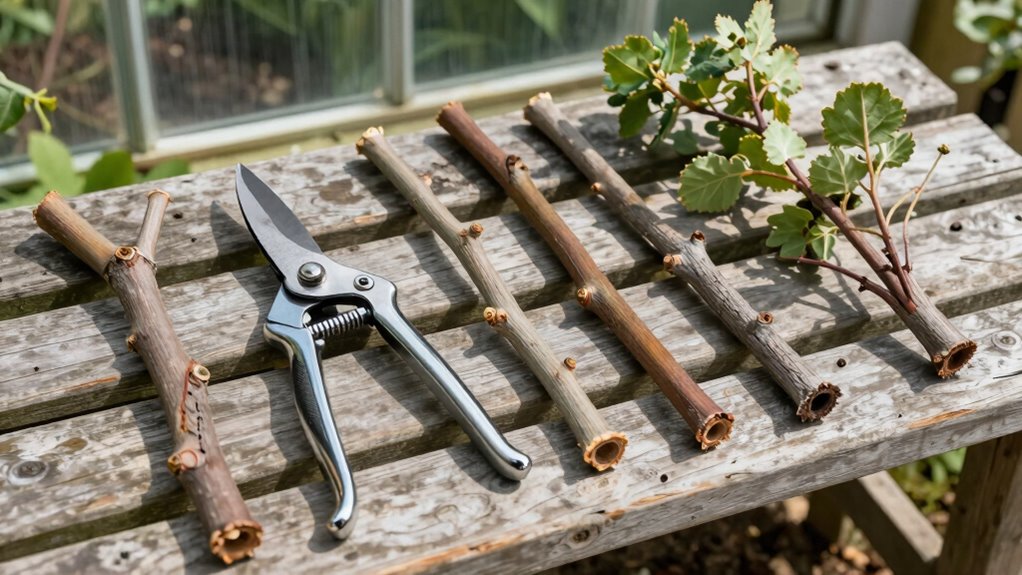
Different plants require different pruning approaches, so you’ll want to identify your specific pruning needs before selecting garden shears.
Woody stems demand sharp, clean cuts to prevent crushing, while soft herbs need gentle handling to avoid bruising. You should examine your plants’ growth patterns, stem thickness, and bark sensitivity.
Hardwood shrubs like roses need bypass pruners with narrow blades for precise cuts. Delicate perennials require fine-tip snippers. Vine crops benefit from long-handled loppers.
Assess whether you’re doing light trimming, heavy cutting, or detailed shaping. Consider plant health factors like disease susceptibility and healing capacity.
Your pruning goals determine tool selection. Regular maintenance pruning differs from rejuvenation cutting. Understanding these distinctions helps you choose appropriately sized blades and handle types for peak performance and plant welfare.
Match Blade to Plant Type
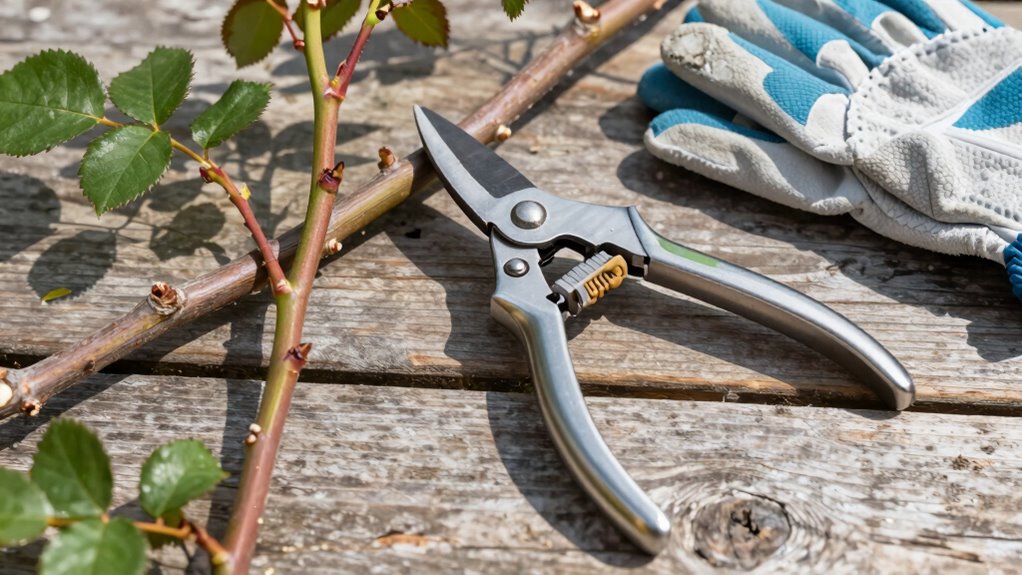
Your choice of blade type directly impacts cutting efficiency and plant recovery.
Straight blades work best for clean cuts on soft stems and delicate plants like herbs and flowers.
You should use bypass blades for living wood up to three-quarters of an inch diameter, as they slice cleanly without crushing tissue.
Anvil blades crush slightly but excel at cutting dead wood and tougher stems quickly.
Serrated edges tackle thick, woody stems and fibrous plants effectively.
Micro-serrated blades handle waxy or tough-leaved plants without slipping.
Consider blade material too – carbon steel holds sharp edges longer but rusts, while stainless steel resists corrosion but needs more frequent sharpening.
Match your blade choice to specific plant characteristics for ideal results.
Handle Comfort Matters
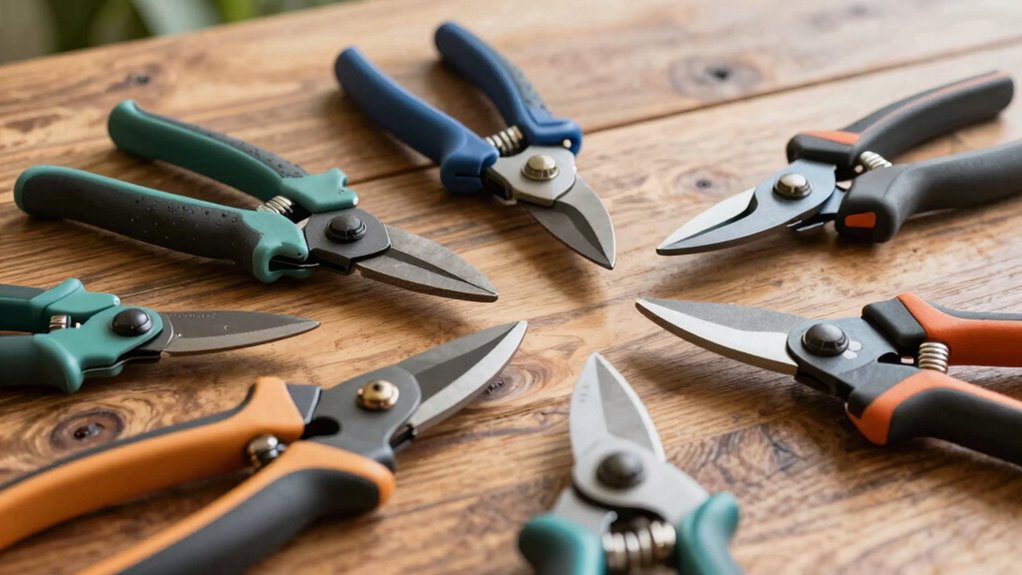
Comfortable handles prevent fatigue and improve control during extended pruning sessions. You should look for ergonomic designs that fit naturally in your hand, reducing strain on muscles and joints.
Soft-grip materials like rubber or thermoplastic elastomers provide better traction than bare metal or hard plastic. Consider handle diameter – too thick causes cramping, too thin creates pressure points.
Textured surfaces prevent slipping when hands are wet or dirty. Contoured grips follow natural hand shape, distributing force evenly. You’ll work longer and more efficiently with well-designed handles.
Test shears by gripping them firmly and squeezing several times. Notice if hot spots develop or if your hand feels cramped. Quality handles make every cut feel precise and controlled.
Your comfort directly impacts your pruning performance and enjoyment.
Capacity vs. Control
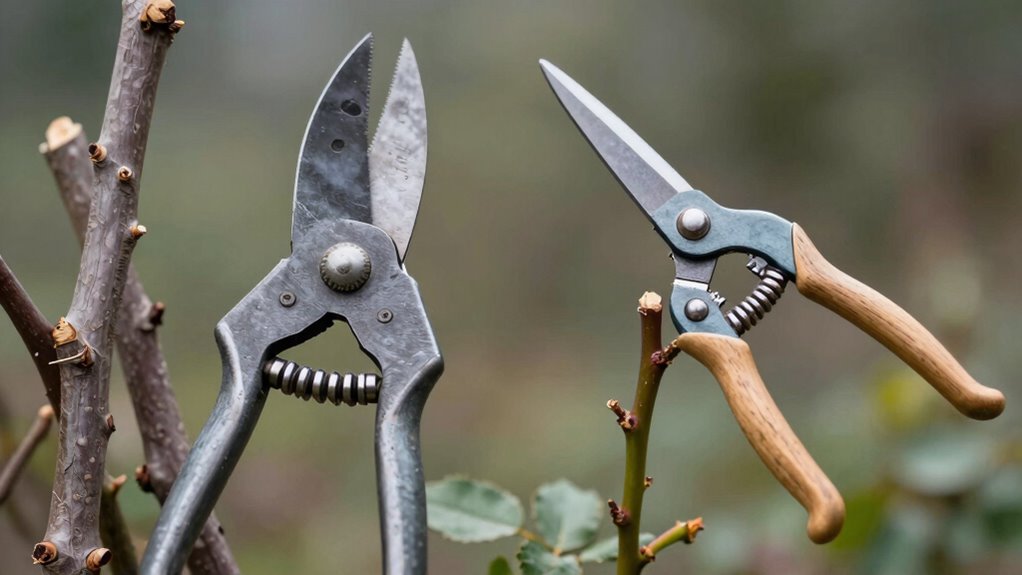
Well-designed handles that reduce fatigue and improve grip naturally lead to better performance when evaluating shears for pruning tasks.
You’ll need to balance cutting capacity against precision control for different garden jobs.
- Blade length determines cutting capacity – Longer blades handle thicker branches but reduce maneuverability in tight spaces.
- Handle design affects control – Ergonomic grips and finger placement let you make precise cuts while maintaining power for heavier pruning.
- Weight distribution impacts both – Shears with balanced weight between blades and handles deliver consistent performance without sacrificing accuracy.
You belong in your garden making clean, confident cuts.
Choose shears that match your specific pruning needs rather than opting for maximum capacity alone.
Bypass vs. Anvil Shears Explained
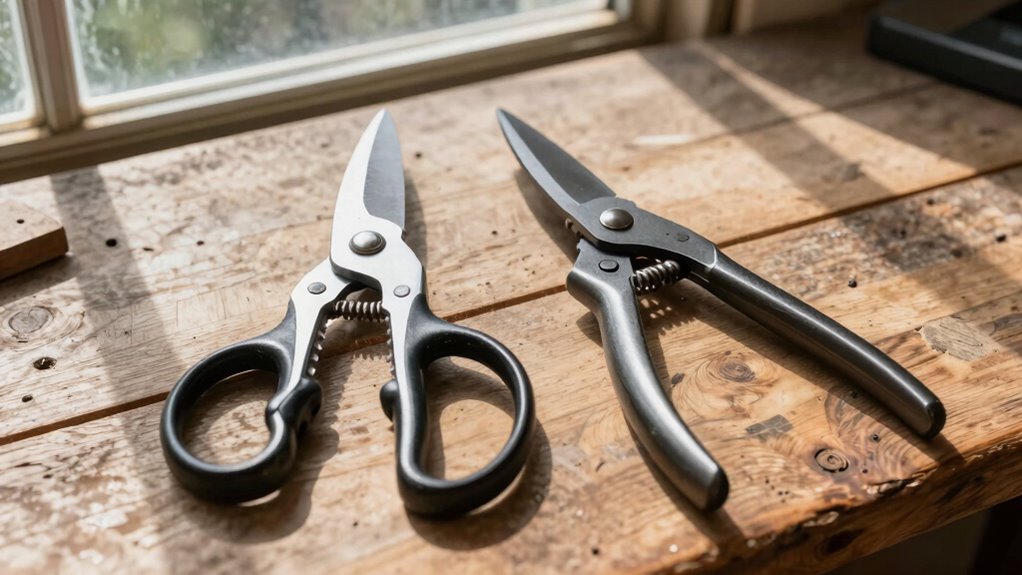
While both bypass and anvil shears serve essential pruning functions, understanding their distinct cutting mechanisms helps you select the right tool for specific plant materials.
Bypass shears feature two curved blades that slide past each other like scissors, creating clean cuts ideal for live growth and delicate stems. You’ll want these for precise pruning jobs.
Anvil shears use a single sharp blade that crushes against a flat surface, making them better suited for cutting dead wood and thicker branches where clean cuts matter less.
Your choice depends on what you’re pruning regularly. Consider your garden’s specific needs before deciding which mechanism works best for you.
Ease of Sharpening & Cleaning
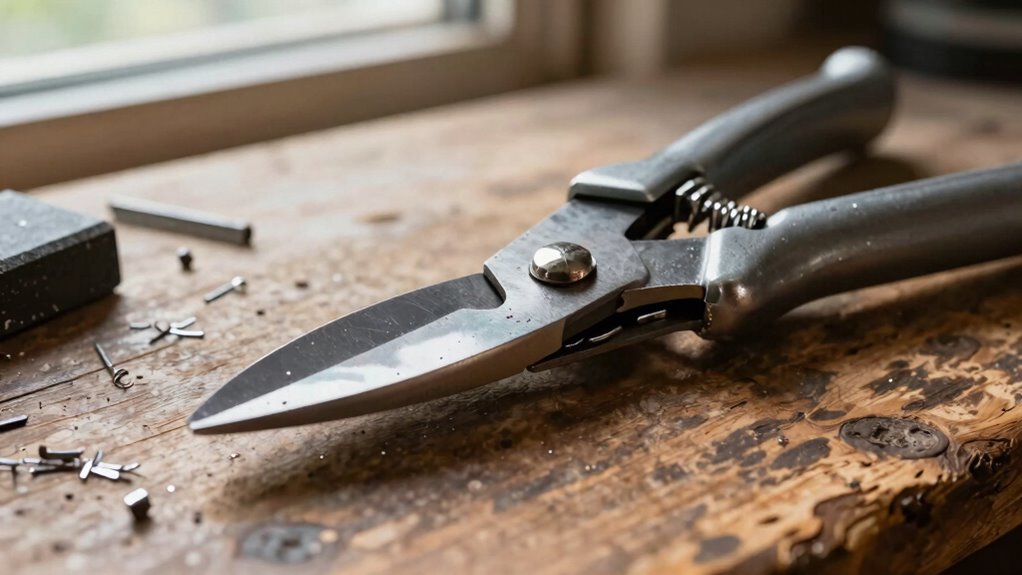
Having selected between bypass and anvil mechanisms, you’ll find that maintaining sharp edges and clean blades directly impacts your shears’ performance and longevity. Regular maintenance prevents sap buildup and rust formation that deteriorates cutting efficiency.
- Blade accessibility – Look for shears with removable pivot pins or adjustable tension systems that allow complete blade separation for thorough cleaning and precise sharpening angles.
- Material composition – Choose stainless steel or high-carbon steel blades that resist corrosion and maintain edge retention, reducing sharpening frequency while ensuring clean cuts through tough stems.
- Handle design – Opt for ergonomic handles with smooth surfaces and minimal crevices where debris accumulates, making post-use cleaning quick and preventing bacterial growth that compromises plant health.
Test Before You Buy
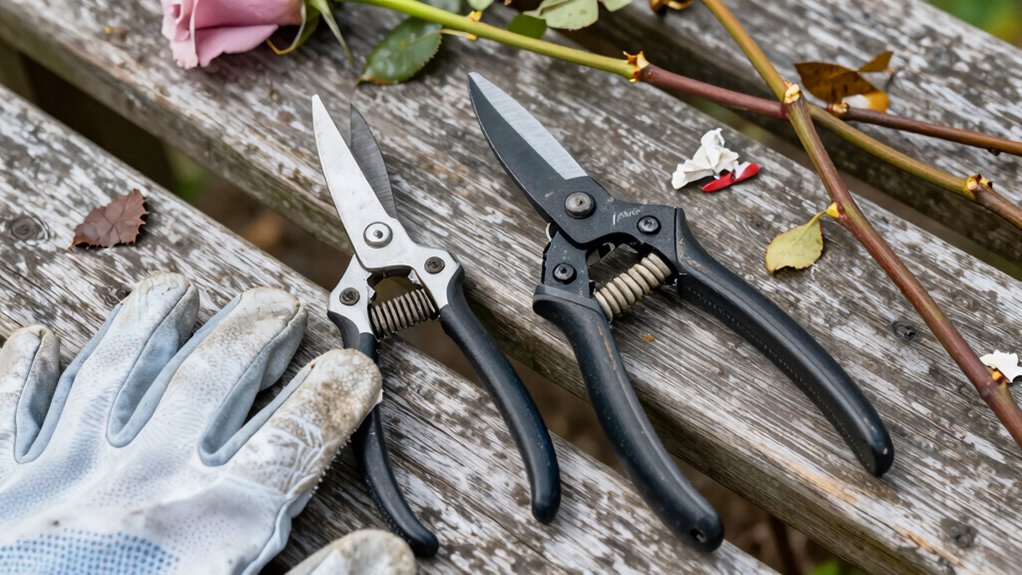
You should always grip the handles firmly to evaluate ergonomic fit and guarantee your fingers don’t slip during extended pruning sessions.
Test the blade’s cutting edge by slicing through a small branch or thick stem to verify it cleanly severs without crushing or tearing plant material.
These hands-on assessments reveal potential discomfort or performance issues that won’t surface until you’re actually using the shears in your garden.
Handle Comfort Test
Everyone should grip the handles firmly before purchasing garden shears to guarantee proper fit and comfort during extended use. Poor handle ergonomics cause hand fatigue and reduce cutting efficiency.
When testing handle comfort, consider these three critical factors:
- Grip Diameter: Your fingers should wrap comfortably around handles without straining. Too thick or thin causes blisters and reduces control during pruning sessions.
- Handle Material Texture: Rubber or textured grips provide better traction than smooth plastic. You’ll maintain secure handling even when hands are slightly damp from garden moisture.
- Finger Placement Zones: Properly designed handles include natural resting spots for your fingers, reducing muscle tension during repetitive cutting tasks.
Test shears by simulating actual pruning motions. Handles should feel secure and comfortable after several minutes of continuous use.
Blade Sharpness Check
How do you determine if garden shears will cut efficiently through stems and branches? You must test blade sharpness before purchasing.
Hold the shears firmly and cut through a fresh flower stem or thin branch. The blades should slice cleanly without crushing or tearing. Dull blades will bend stems or require excessive force.
Check both cutting edges by running your finger carefully along the blade surface – you should feel the sharp beveled edge. Test the entire blade length, not just the tip. Properly sharpened shears make clean cuts at any point along the blade.
If cutting feels ragged or requires pressure, the shears won’t perform well in your garden tasks.
Where to Find Quality Tools
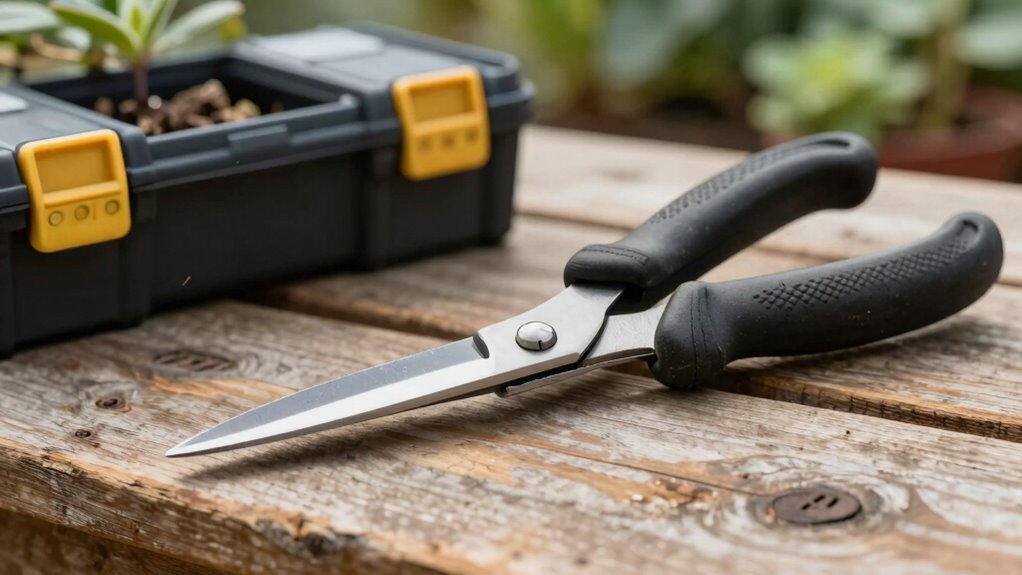
Where should you look for reliable garden shears that won’t fail mid-cut? Your search should focus on reputable sources that specialize in professional-grade tools. Don’t settle for convenience stores or discount retailers when your garden’s health depends on precision cutting.
- Specialty garden centers stock tools from established manufacturers like Fiskars, ARS, and Felco. These retailers understand horticultural needs and carry products designed for specific cutting tasks.
- Professional landscaping supply stores offer commercial-grade shears used by industry experts. You’ll find tools with superior blade steel, ergonomic handles, and replaceable parts that justify their higher cost through longevity.
- Authorized dealer networks provide genuine products with full warranties and replacement services. These sources guarantee you’re not buying counterfeit tools that might compromise your pruning results or safety.
Set Your Smart Tool Budget
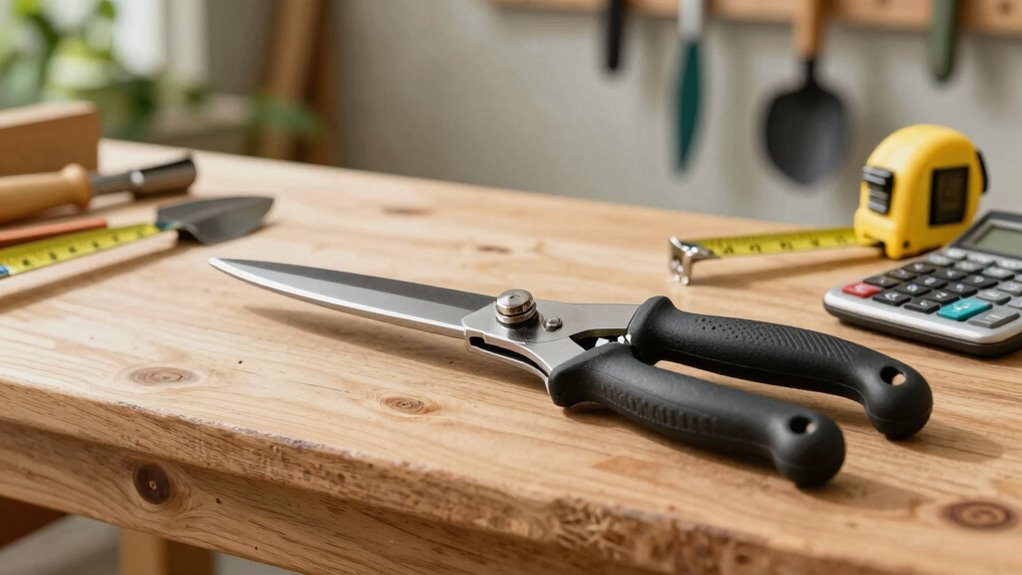
While you might be tempted to choose the cheapest shears available, investing in quality tools that match your specific pruning needs and usage frequency will save you money over time.
Determine your annual pruning workload and select shears accordingly. Heavy-duty bypass shears cost $25-50 but handle frequent use better than $15 models.
Consider your gardening experience level when budgeting. Professional-grade shears from brands like Fiskars or ARS offer superior blade retention and ergonomic designs.
Don’t overlook replacement blade costs when comparing initial prices. Quality shears should last five to ten years with proper maintenance.
Factor in sharpening services or DIY sharpening tools into your long-term budget. Your tool investment reflects your commitment to serious gardening.
Smart buyers allocate 2-3% of their garden equipment budget annually for tool replacement and upgrades, ensuring they always have reliable cutting equipment.
Conclusion
You’ve learned the key factors for choosing garden shears. Now apply this knowledge practically. Consider Sarah, a rose gardener who switched from anvil to bypass shears. Her precision cuts healed faster, reducing plant stress. Don’t overlook handle ergonomics—comfort directly impacts performance. Quality steel guarantees longevity. Match blade type to your specific pruning needs, test tools before purchasing, and invest in durable construction. Your garden’s health depends on proper tool selection.
