

You probably don’t give much thought to your garden gloves until they’re already falling apart. But what if you could double their lifespan with just a few simple habits? The difference between gloves that crumble after a few months and ones that last years comes down to how you treat them after each use. Let’s look at the straightforward steps that actually keep your gloves functional and intact.
Choose the Best Garden Gloves for Durability
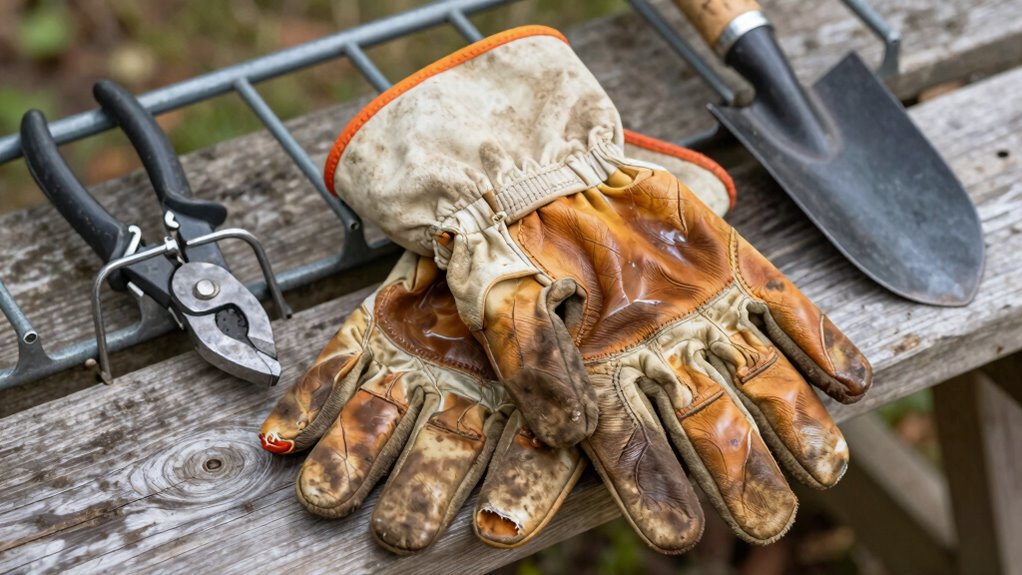
When selecting garden gloves for maximum durability, you’ll want to focus on materials and construction that can withstand regular wear and tear.
Look for gloves made from reinforced leather or heavy-duty synthetic materials like nitrile or neoprene. These materials resist punctures and abrasions better than thin fabrics.
Check stitching quality carefully – reinforced seams and double-stitched fingers prevent premature tearing. Avoid gloves with glued components that can separate during use.
Consider length too; longer cuffs protect more of your arm but may catch on thorns. Palm reinforcements are essential for tool handling.
You’ll find that investing in quality construction upfront saves money over time. Cheap gloves tear easily and leave you exposed to cuts and chemicals.
Choose gloves that feel sturdy in your hands and trust your instincts about build quality.
Clean Your Gloves After Every Use
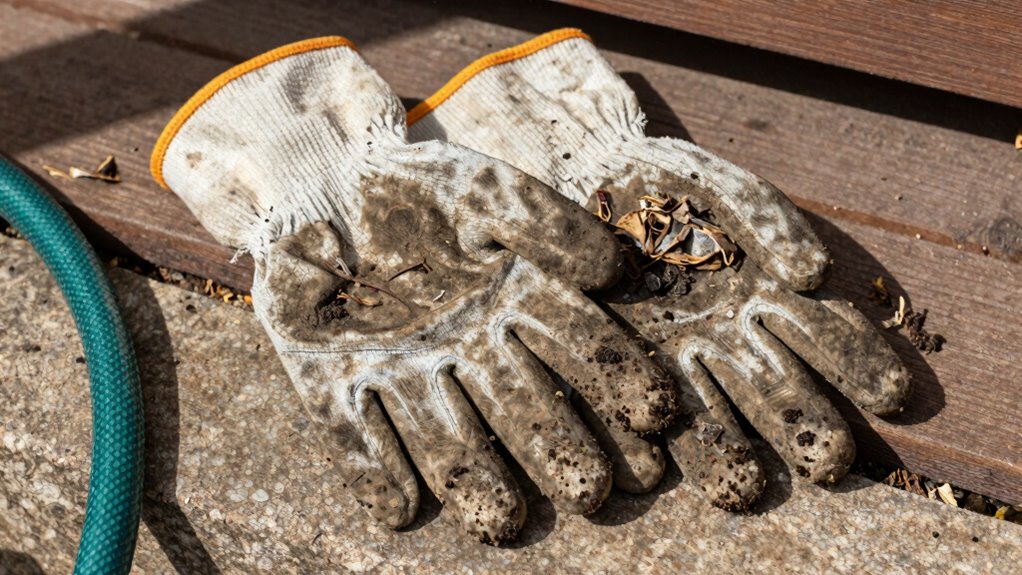
Once you’ve selected durable garden gloves, maintaining them properly guarantees they’ll last through many seasons of use.
Cleaning your gloves after every use prevents dirt buildup and extends their lifespan considerably.
- Rinse immediately – Hose off loose soil and debris right after gardening to prevent caked-on dirt.
- Use mild soap – Apply gentle detergent with a soft brush to remove stubborn stains and bacteria.
- Scrub carefully – Focus on palms and fingers where most wear occurs, but avoid harsh scrubbing that damages fabric.
- Air dry completely – Let gloves dry naturally away from direct heat sources.
Regular cleaning prevents odors, maintains flexibility, and keeps your investment working effectively season after season.
Store Them the Right Way to Last Longer
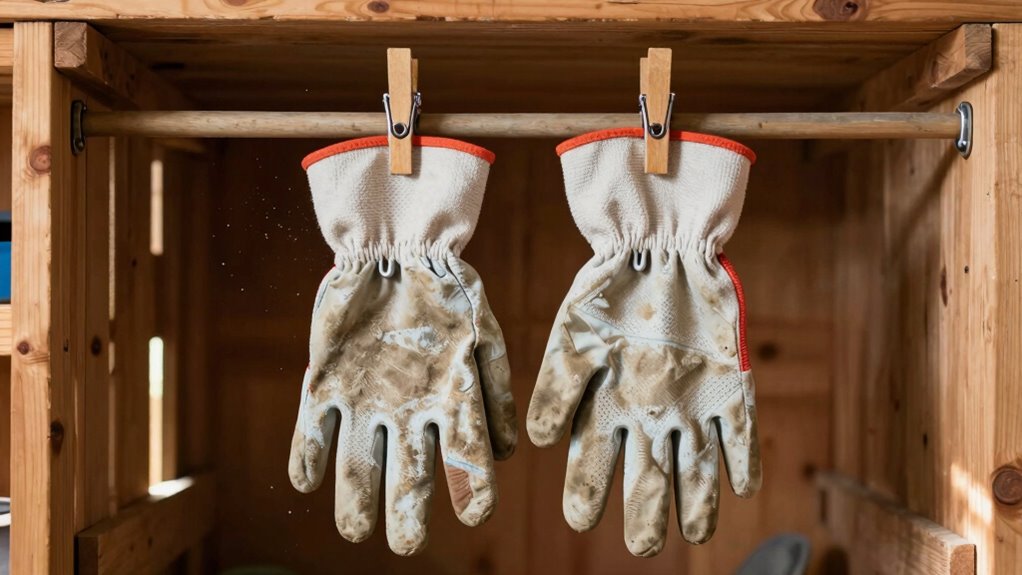
Proper storage plays an essential role in extending your garden gloves’ lifespan, so don’t overlook this simple yet crucial step. You should always air-dry gloves completely before storing them. Moisture trapped inside creates mold and mildew that destroys materials quickly.
Store gloves in a cool, dry place away from direct sunlight, which degrades rubber and fabric. Hang them on hooks or lay them flat rather than cramming into drawers where they crease and weaken. Keep them separate from tools that might puncture or tear them.
If you’ve invested in quality gloves, treat them right by giving them their own dedicated storage space. Your gloves will maintain their shape, flexibility, and protective qualities much longer when you store them properly after each use.
Repair Wear Before It Becomes Permanent
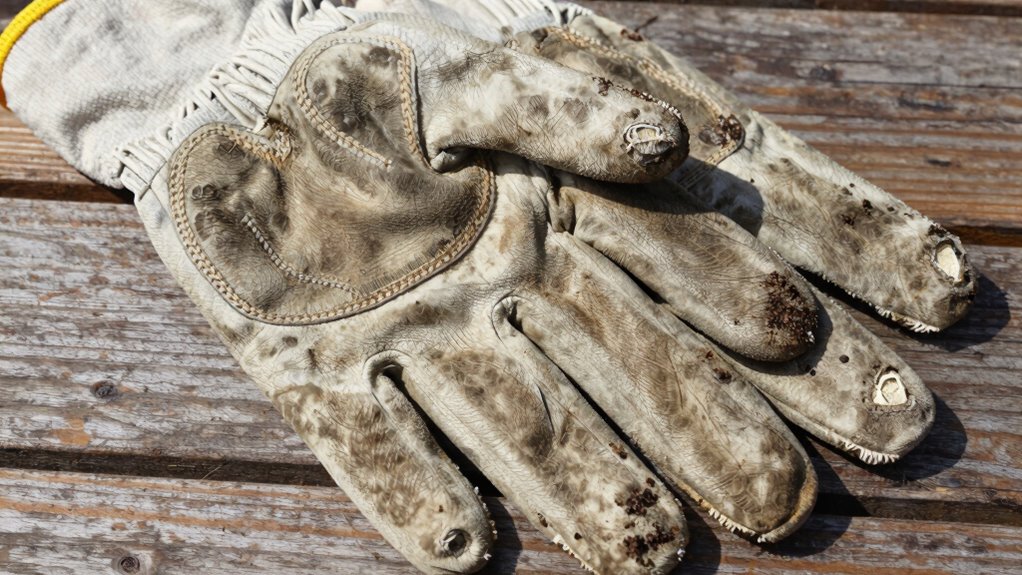
Small tears and worn spots on garden gloves can quickly become major failures if you don’t address them promptly.
Don’t wait until your gloves are beyond saving – tackle minor damage immediately to maintain their protective function.
- Inspect gloves regularly after each use, looking for small holes or thinning fabric before they expand.
- Patch tiny tears immediately with fabric glue or waterproof tape to prevent further tearing during work.
- Reinforce worn fingertips by applying extra material or patches where you grip tools most frequently.
- Replace damaged elastic bands promptly since loose cuffs compromise glove effectiveness and comfort.
Taking these simple steps keeps your gloves functional longer while maintaining the protection you need for comfortable, productive gardening sessions.
Rotate Between Multiple Pairs Regularly
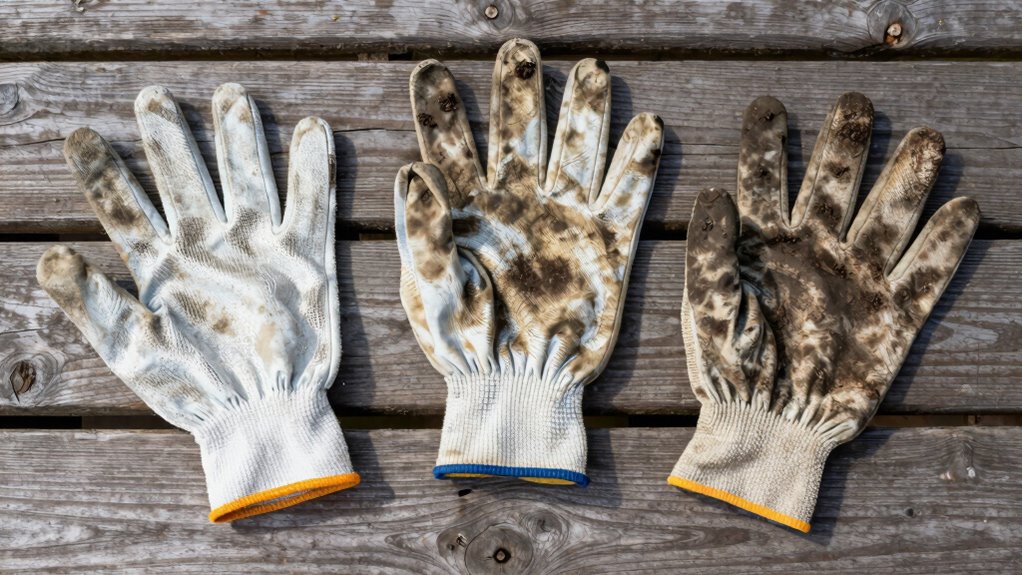
Rotating between multiple pairs of garden gloves extends their lifespan considerably by allowing each pair to dry completely and recover between uses. You should own at least two pairs so one can air dry while you wear the other. This prevents moisture buildup that causes material breakdown and odor.
After each gardening session, let your gloves dry thoroughly before wearing them again. Store them in a well-ventilated area away from direct sunlight. When you rotate pairs regularly, you’ll notice they maintain their shape, elasticity, and protective qualities longer.
Leather gloves especially benefit from this practice since they need time to recondition naturally. Don’t underestimate how proper rotation prevents premature wear and keeps your investment working effectively season after season.
Conclusion
To keep your garden gloves in top shape, choose durable materials from the start. Clean them after every use with mild soap, then store in cool, dry places away from sunlight. Don’t let small tears become major problems—fix them quickly. Rotate between multiple pairs to give each adequate drying time. These simple habits prevent premature wear, saving you money while keeping your hands protected season after season.
