

You should inspect each tool after use, checking for wear, damage, or contamination. Clean tools thoroughly with appropriate degreasers to prevent buildup that compromises performance. Apply proper lubricants to moving parts regularly. Store everything in a climate-controlled environment to prevent rust and deterioration. Establish weekly inspection routines to catch minor issues before they become major problems. Your tools will last longer and perform better when you follow systematic maintenance protocols.
Maintain Your Tools to Save Time and Money
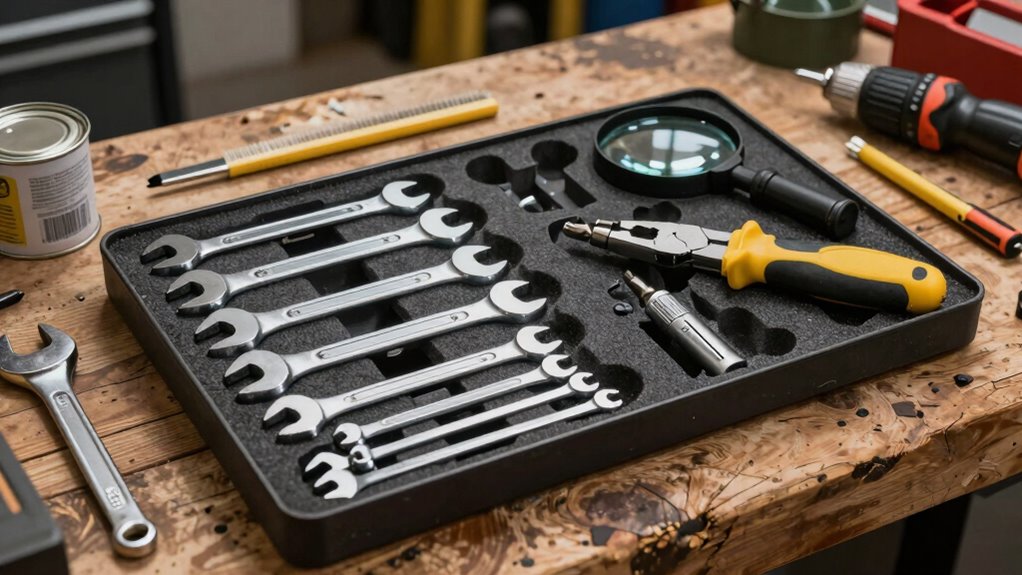
When you properly maintain your tools, you prevent costly replacements and avoid time-consuming repairs that could sideline your projects.
You should inspect each tool after use, checking for wear patterns, loose components, or structural damage.
Store tools in designated spaces where they won’t bang against each other. Keep cutting tools sharpened to manufacturer specifications using proper grinding angles.
Lubricate moving parts according to schedules, using recommended grease types and weights. Tighten loose bolts before storage, but avoid over-tightening threads.
Replace worn handles immediately rather than risking injury or further damage. Check battery-powered tools regularly, ensuring terminals remain clean and connections secure.
Document maintenance activities systematically so you track each tool’s service history.
Following these protocols consistently means you’ll spend less money replacing tools while keeping your collection operating at peak performance levels everyone relies on.
Clean and Degrease Tools Regularly
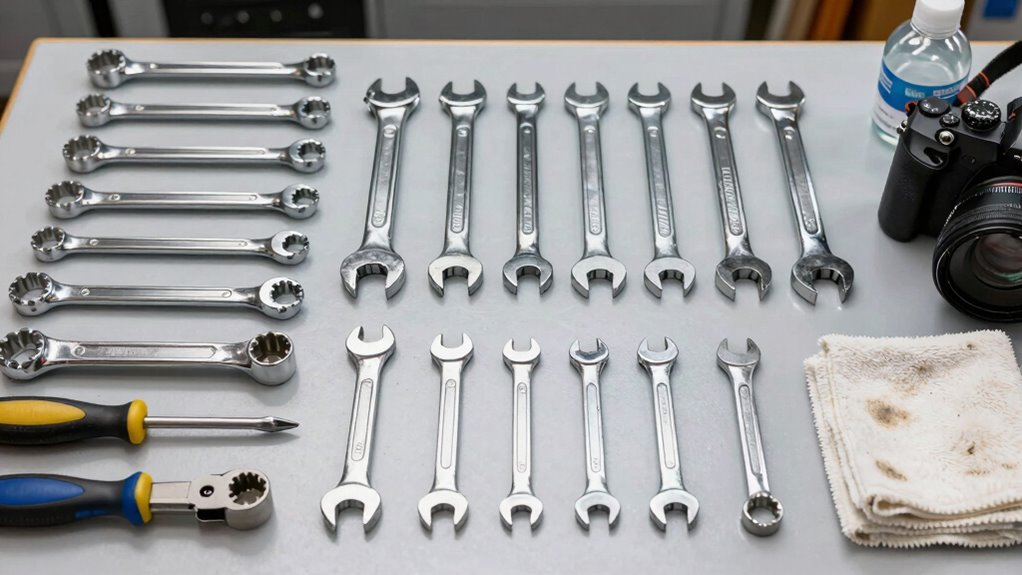
You should clean your tools after each use to prevent buildup that makes removal harder over time.
Apply degreasing solvents systematically, working from least to most contaminated areas while using appropriate brushes and cloths.
Regular maintenance prevents corrosion and guarantees your tools function properly when you need them.
Proper Cleaning Techniques
Grease and debris accumulation on tools requires immediate attention since these contaminants accelerate wear and compromise performance.
You need systematic cleaning approaches to maintain tool integrity and extend lifespan.
- Disassemble tools completely before cleaning to reach all surfaces. Remove screws, detachable components, and protective covers to access hidden areas where contaminants accumulate.
- Use appropriate cleaning solvents for different materials. Apply mineral spirits for metal surfaces, isopropyl alcohol for electronics, and mild detergent solutions for plastic components.
- Implement proper drying techniques after cleaning. Use compressed air to remove moisture from crevices, allow natural air drying for delicate parts, and apply rust inhibitors immediately after drying metal surfaces.
Regular implementation of these techniques guarantees your tools remain reliable and perform efficiently throughout their service life.
Essential Degreasing Methods
Effective degreasing removes built-up lubricants and contaminants that cleaning alone can’t address.
You should use solvent-based degreasers for heavy grease accumulation on wrenches, sockets, and other metal tools. Apply degreaser liberally, let it dwell for specified contact time, then scrub with stiff brushes. Rinse thoroughly with clean water afterward.
For lighter applications, spray degreasers work efficiently on precision instruments.
You’ll want to degrease tools monthly or after heavy usage. Always wear gloves and work in ventilated areas. Dispose of contaminated rags properly.
Solvent alternatives like citrus-based cleaners offer effective results with reduced environmental impact.
You should test degreasers on small areas first to verify compatibility with your specific tools.
Choose the Right Oil and Lubricants for Each Tool
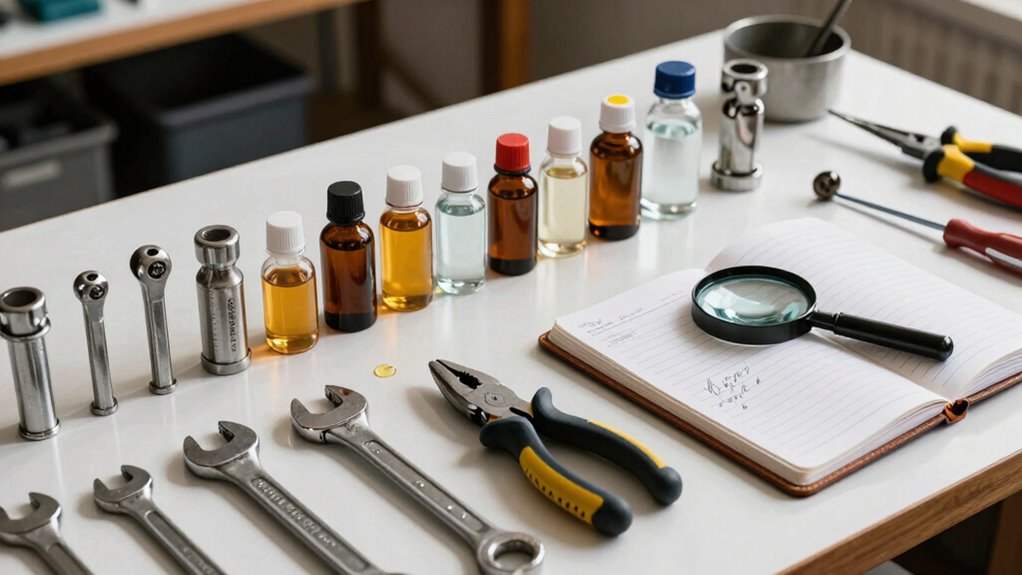
Selecting appropriate lubricants for your tools requires understanding that different mechanisms demand specific oil viscosities and additive formulations. You must match the right lubricant to each tool’s operating conditions and material composition.
- Motorized tools need synthetic oils with anti-wear additives that withstand high temperatures and rotational stress effectively.
- Hand tools with hinges or pivots perform best with lightweight machine oils that penetrate small clearances and prevent galling between metal surfaces.
- Pneumatic tools require lubricants specifically designed for air-powered mechanisms, often featuring rust inhibitors and viscosity stabilizers.
Always consult your tool’s manufacturer specifications before applying any lubricant. Using incorrect oils creates more problems than it solves, potentially damaging precision components and voiding warranties.
Your tool collection deserves proper lubrication maintenance.
Inspect Tools for Wear, Damage, or Rust Weekly
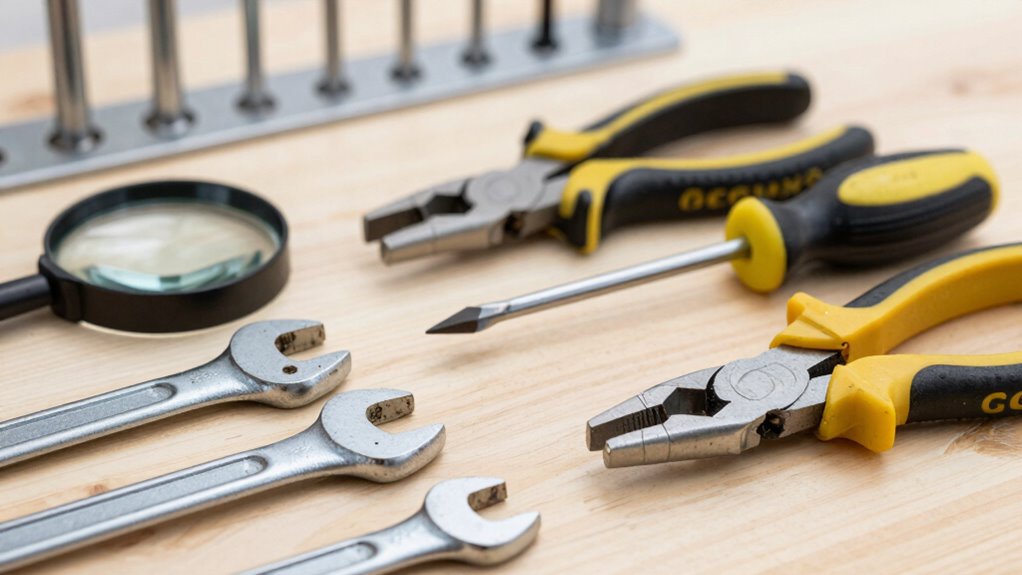
You should examine each tool’s cutting edges for dullness or nicks that compromise performance.
Clean debris from all surfaces and dry thoroughly to prevent moisture buildup.
This weekly routine prevents minor issues from becoming major problems.
Check For Sharp Edges
Why should you inspect your tools weekly for wear, damage, or rust? Regular inspection prevents costly replacements and guarantees safety during use.
- Examine cutting edges under bright light, looking for nicks, dull spots, or deformations that compromise performance.
- Check serrated edges and blades for missing teeth or excessive wear that reduces cutting efficiency.
- Inspect sharpened surfaces for corrosion, pitting, or scratches that indicate improper storage or usage conditions.
You’ll develop confidence knowing your tools remain reliable when you need them most. Sharp tools reduce user fatigue and deliver better results.
Make inspection part of your routine maintenance schedule. Your tools depend on you to catch problems early before they become serious issues requiring expensive repairs or replacements.
Clean And Dry Thoroughly
Remove debris, moisture, and contaminants from tools immediately after use to prevent corrosion and deterioration. Use a clean cloth or brush to wipe away dirt, oil, and metal shavings. Pay special attention to crevices and joints where moisture accumulates.
Dry tools completely with a lint-free towel, ensuring no water spots remain.
Apply penetrating oil to metal surfaces weekly, creating a protective barrier against moisture. Store tools in climate-controlled environments when possible.
Check for pitting, cracks, or surface rust during cleaning. Address minor corrosion immediately with fine steel wool or sandpaper. Clean handles and grips thoroughly, removing grease and buildup that harbor moisture.
Proper cleaning extends tool lifespan considerably.
Sharpen Cutting Tools for Peak Performance
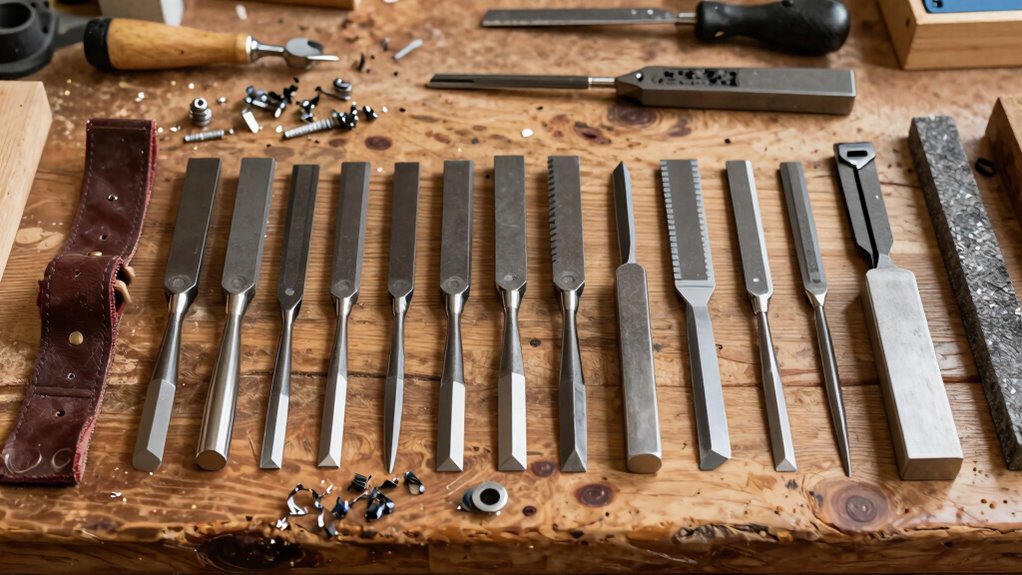
Sharpening cutting tools requires maintaining specific angles and consistent pressure to restore ideal edge geometry.
You’ll achieve superior results by following a systematic approach that guarantees your tools perform at their peak.
- Select the right sharpening medium – Use whetstones, honing rods, or diamond plates appropriate for your tool’s steel type and current edge condition.
- Maintain consistent angles – Keep steady pressure while moving the blade across the stone at 15-20 degrees for most kitchen knives, adjusting based on your tool’s original bevel.
- Follow proper technique sequence – Start with coarser grits to establish the edge, then progress to finer grits for polishing and refining the cutting surface.
Regular sharpening prevents dulling and maintains cutting efficiency.
Store Tools Safely to Avoid Damage
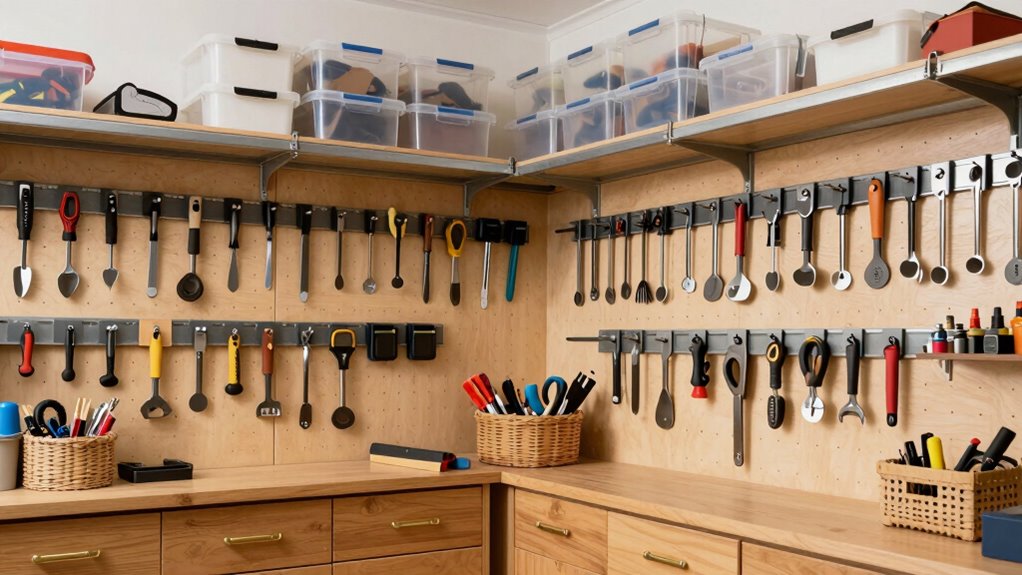
Proper tool storage prevents damage and extends equipment lifespan through systematic organization and protective measures.
You should categorize tools by type and size, using designated compartments or pegboards to prevent contact between dissimilar metals. Store cutting tools with blade guards or in sheaths to protect edges and prevent accidents.
Keep tools in climate-controlled environments, avoiding fluctuating temperatures and excessive humidity that cause corrosion. Use moisture-absorbing materials like silica gel packets in storage containers.
Hang tools with proper mounting hardware rather than overcrowding drawers. Separate heavy tools from delicate ones to prevent crushing damage.
Regularly inspect storage areas for pests, moisture, or structural issues. Maintain consistent storage protocols so every tool has designated placement.
Clean tools thoroughly before storage, removing debris and applying protective coatings where necessary.
Spot and Replace Worn Tool Components Before They Fail
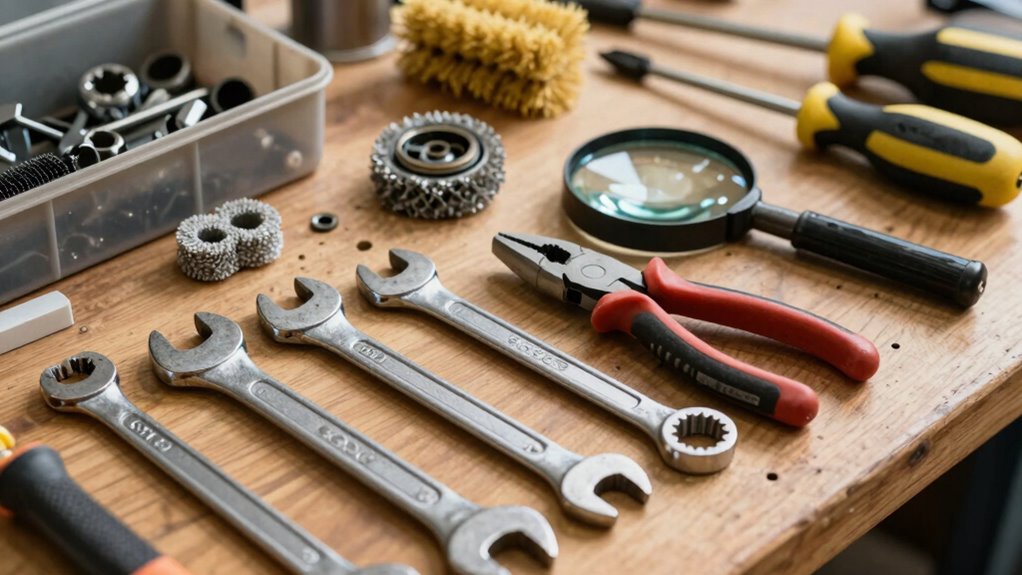
Regular inspection of your tools complements proper storage by identifying components that show signs of wear before they compromise performance or safety. You should systematically examine each tool’s critical elements to prevent unexpected failures.
- Check cutting edges and blades for nicks, dullness, or deformation that affects precision work.
- Inspect handles, grips, and fasteners for cracks, looseness, or material degradation compromising stability.
- Examine electrical connections, cords, and switches for fraying, corrosion, or intermittent operation.
Replacing worn components promptly maintains tool reliability and prevents costly accidents. Don’t wait for complete failure – small issues compound quickly.
You belong among serious craftsmen who understand that preventive maintenance separates professionals from amateurs. Your tools deserve attention because they’re an investment in your craft’s quality and your personal safety standards.
Set Up a Weekly Tool Care Habit
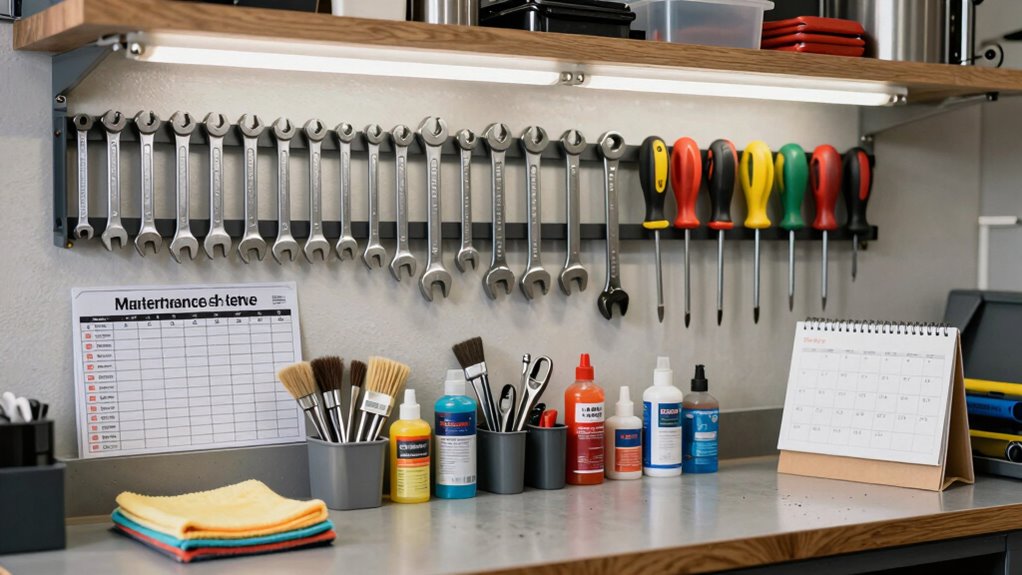
A weekly tool care routine prevents minor wear from becoming major problems that compromise your work quality and safety. You should dedicate thirty minutes every Friday to inspecting your entire tool collection systematically.
Start by cleaning each tool with appropriate solvents and wire brushes to remove debris and corrosion. Check handles, blades, and mechanical components for cracks or excessive wear.
Sharpen cutting tools using proper stones or grinders. Apply lubricants to moving parts and store everything in designated locations.
Document any issues you discover so you can address them before they worsen. This systematic approach guarantees your tools remain reliable and perform consistently, keeping you productive and safe while building confidence in your craft.
Conclusion
You’ve learned the essential steps for maintaining your tool collection. Now put them into practice systematically. Clean, lubricate, and inspect tools weekly. Store them properly and address wear immediately. A machinist who follows these protocols consistently extends tool life by 300%, saving thousands in replacement costs annually. Don’t wait for failure—maintain proactively. Your tools’ performance and longevity depend on your systematic approach to regular maintenance.
