

You’re about to tackle one of woodworking’s most critical decisions: selecting the right finish for your furniture. Don’t let this choice overwhelm you—understanding your wood’s characteristics, the environment it’ll face, and how people will interact with it will guide you toward the perfect solution. Let’s break down these essential factors so you can make an informed decision that protects and enhances your piece for years to come.
What Kind of Wood Are You Working With?
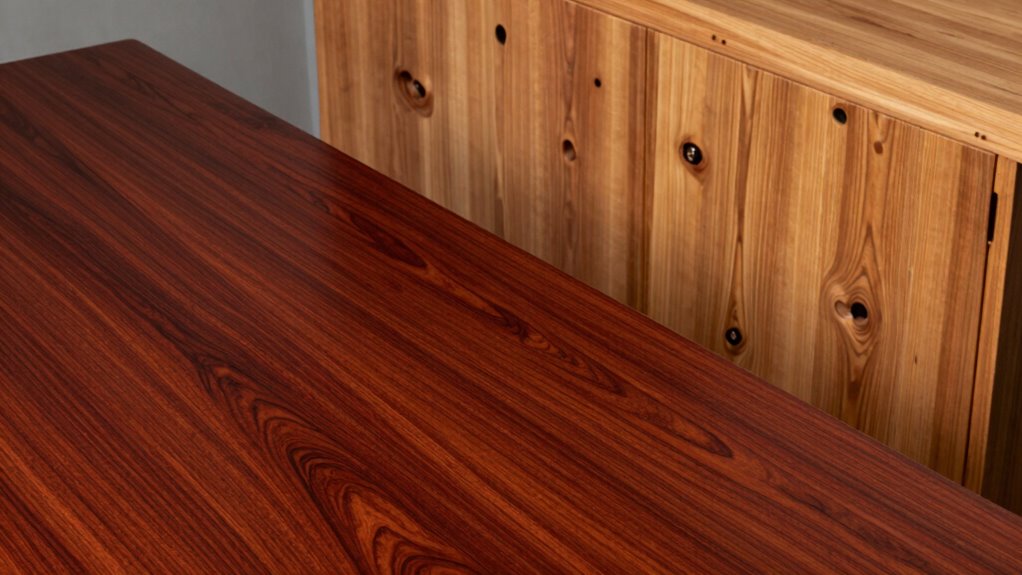
When you’re selecting a wood finish, identifying your wood species becomes essential because different woods react uniquely to various finishing products.
You’ll discover that hardwoods like oak, maple, and cherry demand different approaches than softwoods such as pine or cedar. Dense woods often require sanding techniques that open pores for better penetration.
You should test finishes on scrap pieces first, observing how each wood absorbs stains and topcoats. Exotic woods might contain oils that repel certain finishes, while domestic species like walnut naturally enhance oil-based products.
Your wood’s grain pattern and density directly influence sheen levels and durability. Understanding these characteristics helps you belong among skilled woodworkers who achieve professional results through proper species-specific finishing techniques.
Where Will the Finished Piece Live?
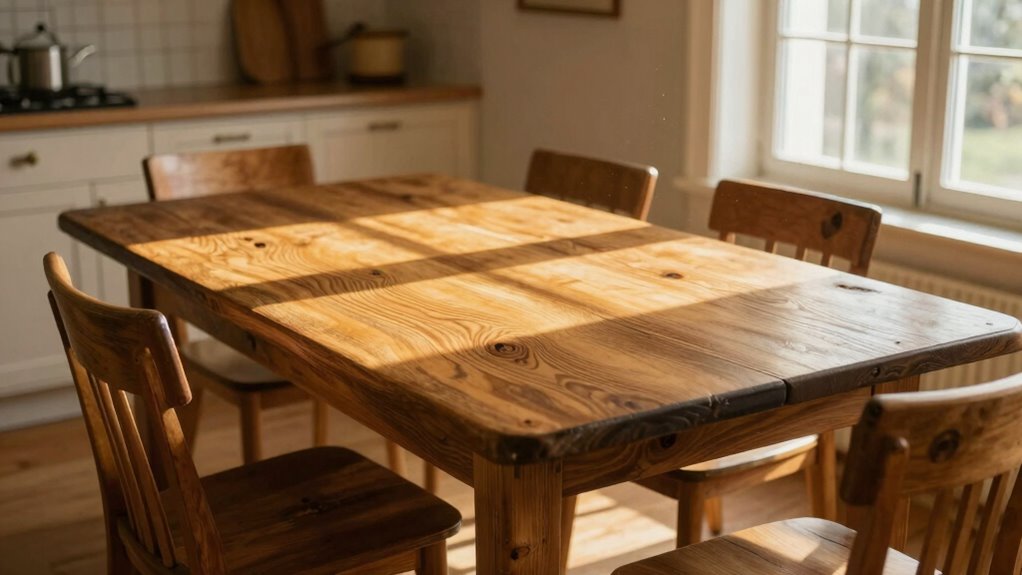
The environment where your finished furniture will reside directly impacts which wood finish performs best over time.
High-humidity areas like bathrooms or kitchens demand moisture-resistant finishes such as polyurethane or marine varnish to prevent warping and finish failure.
Direct sunlight exposure requires UV-resistant coatings like spar urethane to avoid fading and degradation.
Climate-controlled indoor spaces offer more flexibility, but you should still consider temperature fluctuations.
Outdoor furniture needs weatherproof finishes like exterior-grade polyurethane or specialized marine coatings.
Dry environments can cause finishes to crack, so choose flexible options like tung oil.
Basements require moisture-barrier finishes due to potential dampness.
Your local climate zone, room conditions, and seasonal variations all influence finish longevity.
Match your finish choice to these environmental factors for peak performance.
How Will People Use the Furniture?
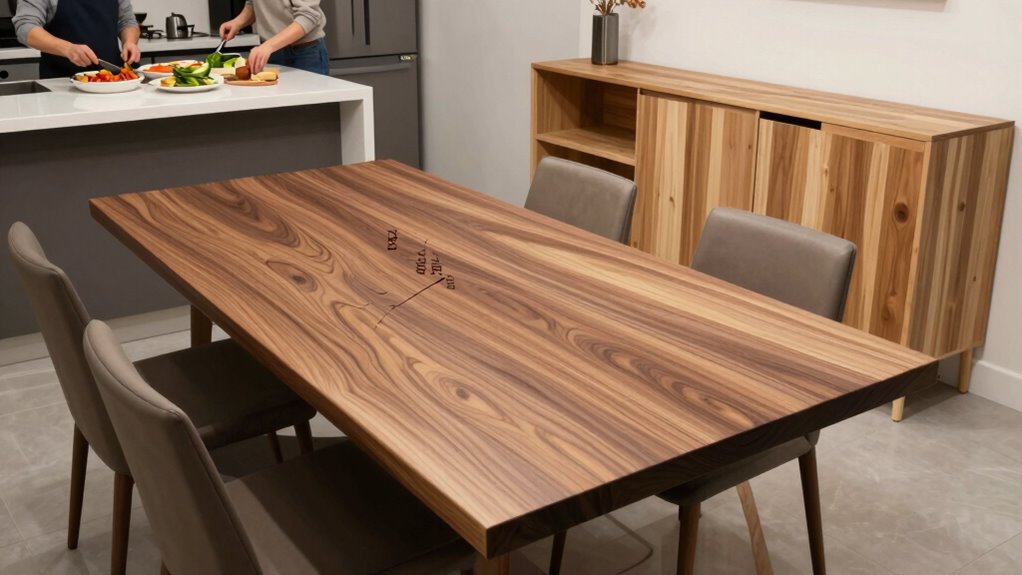
How heavily will people use your furniture? High-traffic pieces like dining tables and coffee tables need durable finishes that resist scratches, stains, and wear. You’ll want catalyzed lacquers or conversion varnishes for maximum protection.
Low-use items like display cabinets can handle softer finishes like shellac or wax.
Consider who’ll interact with your piece daily. Children and pets create different demands than adult-only spaces. Office furniture faces constant handling, requiring industrial-grade finishes.
Bedroom pieces see moderate use, allowing for more aesthetic flexibility.
Your lifestyle directly impacts finish longevity. Frequent entertaining means choosing finishes that handle repeated cleaning and minor abuse.
Casual households can opt for finishes prioritizing appearance over durability. Match your finish choice to actual usage patterns for lasting satisfaction.
What Level of Gloss Do You Prefer?
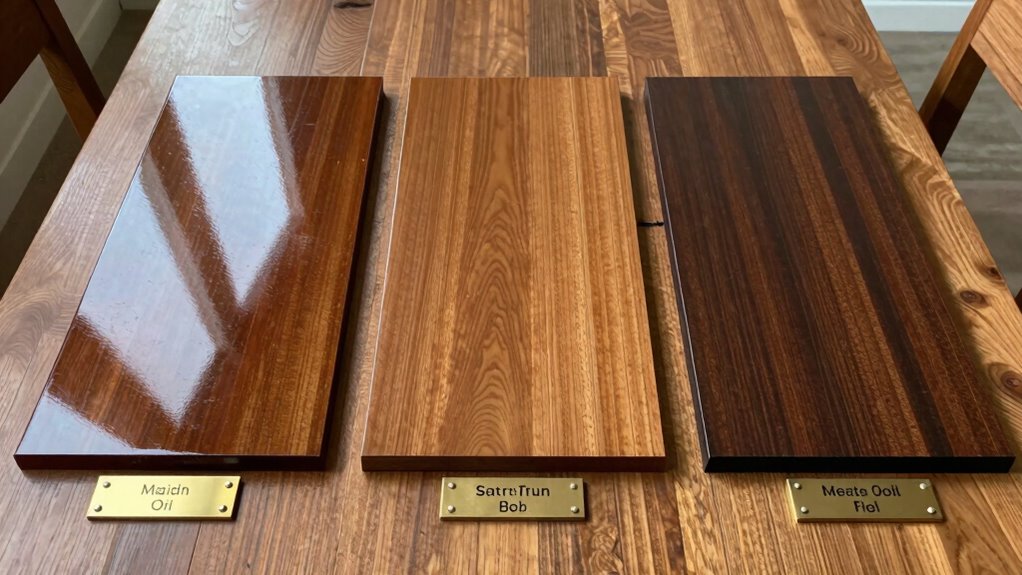
You’ll need to contemplate whether you want the reflective properties of high gloss finishes that showcase every detail in the wood grain, or if you prefer the subtle elegance of satin sheen that reduces fingerprints and scratches while maintaining moderate light reflection.
Your choice between these options affects both the visual impact and long-term maintenance of your furniture’s appearance.
Matte surfaces offer the most forgiving finish for high-traffic areas since they effectively hide minor imperfections and wear patterns that would be immediately visible on glossy surfaces.
High Gloss Finish Options
Several high gloss finish options deliver mirror-like reflections that showcase wood grain while providing maximum durability.
You’ll want to contemplate polyurethane, which offers exceptional hardness and chemical resistance. Lacquer provides quick drying times and self-leveling properties that create smooth surfaces. Conversion varnish delivers industrial-strength protection perfect for high-traffic areas. Catalyzed finishes combine resin and hardener for unbeatable durability.
These finishes require careful surface preparation and controlled application environments. You’ll need to sand between coats and maintain dust-free conditions during curing. High gloss finishes show every imperfection, so your technique matters.
They’re ideal for formal dining tables, cabinetry, and pieces where you want maximum impact. Each option demands specific handling procedures and drying times. Your choice depends on desired longevity, application skills, and maintenance preferences.
Satin Sheen Characteristics
Satin finishes offer a middle ground between high gloss and flat sheens, providing subtle elegance without the maintenance demands of ultra-reflective surfaces.
You’ll appreciate how satin’s 30-50% light reflectance softens wood grain while hiding minor surface imperfections better than gloss finishes. This sheen level works particularly well in living spaces where you want sophistication without glare from windows or lighting.
Satin finishes typically contain flattening agents like silica or wax that scatter light, creating that characteristic velvety appearance. You can apply satin over most wood types, though it shows best on furniture with moderate to heavy grain patterns.
Cleaning requires gentle wiping rather than intensive polishing, making it practical for everyday use. Consider satin when you need durability meeting refined aesthetics in your wood finishing projects.
Matte Surface Appeal
While satin finishes provide subtle elegance, matte surfaces deliver an even more understated aesthetic that appeals to those who prefer minimal reflectance.
You’ll notice matte finishes contain higher pigment concentrations and flattening agents like silica or talc that scatter light effectively. These formulations create velvety textures without mirror-like properties, making them ideal for contemporary spaces seeking sophisticated restraint.
Matte finishes excel in low-light environments where glare becomes problematic. You’ll find they hide surface imperfections better than glossy alternatives, though they require more maintenance due to their porous nature.
Popular matte options include tung oil, shellac, and specialized polyurethane formulations. Application demands careful technique since uneven coats show prominently.
Consider your lifestyle carefully—matte surfaces show fingerprints and require frequent cleaning, but they provide the sophisticated, modern appearance you’re seeking.
Do You Want to See or Conceal the Wood’s Natural Look?
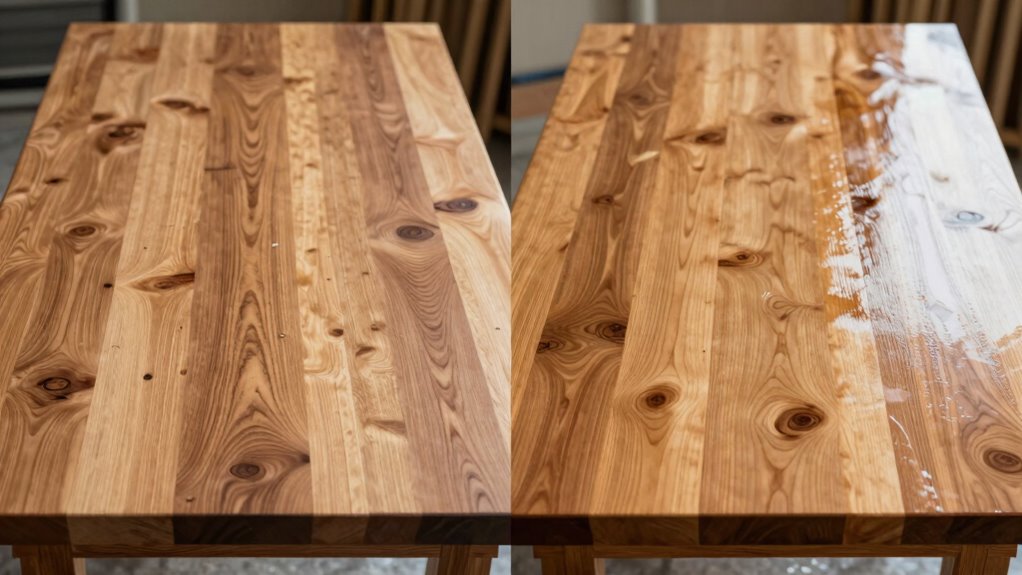
You’ll need to decide whether you want to showcase the wood’s natural grain patterns and color variations or mask them with opaque finishes.
Clear finishes like lacquer or Danish oil will enhance the wood’s inherent beauty by allowing its natural characteristics to show through, while pigmented stains and paint can effectively hide surface imperfections and inconsistencies.
Your choice between revealing or concealing the wood’s natural look will fundamentally determine your finishing approach and final aesthetic outcome.
Enhancing Wood’s Natural Beauty
When selecting a wood finish, deciding whether to highlight or obscure the natural grain patterns fundamentally shapes your approach to the entire project.
You enhance wood’s inherent beauty by choosing clear finishes like shellac, lacquer, or oil-based varnish that penetrate deeply while maintaining transparency. These finishes amplify the wood’s natural color variations and grain characteristics without masking them.
Apply thin, even coats with fine-grit sanding between applications for peak clarity. Water-based finishes tend to raise grain more aggressively, requiring additional sanding preparation. Oil finishes like tung or linseed oil saturate the wood fibers, bringing out rich, warm tones. Wipe off excess oil thoroughly to prevent sticky surfaces.
Test finishes on scrap pieces first, as different wood species react uniquely. Dense hardwoods often require pre-conditioning for even absorption.
Your choice directly impacts the final appearance, so select finishes that complement the wood’s natural characteristics rather than competing with them.
Hiding Imperfections Strategically
How do you determine whether concealing wood’s natural characteristics serves your project better than showcasing them? Consider your furniture’s intended use and aesthetic goals.
Sometimes imperfections detract from design vision, requiring strategic coverage.
You should evaluate these key factors:
- Scratches and dents need filling compounds before applying opaque finishes like paint or heavily pigmented stains.
- Color variations disappear under solid finishes, but require complete coverage for uniform results.
- Open grain patterns benefit from wood filler application before finishing to create smooth surfaces.
- Knot holes and mineral streaks often necessitate targeted concealment using specialized wood dyes or complete opaque coverage.
Your choice depends on whether you want viewers focusing on wood’s character or your furniture’s form.
Master finishers know imperfection concealment requires layering techniques, not just surface coverage.
You’re not hiding flaws—you’re directing attention where it belongs.
Do You Need a Finish That Stands Up to Wear?
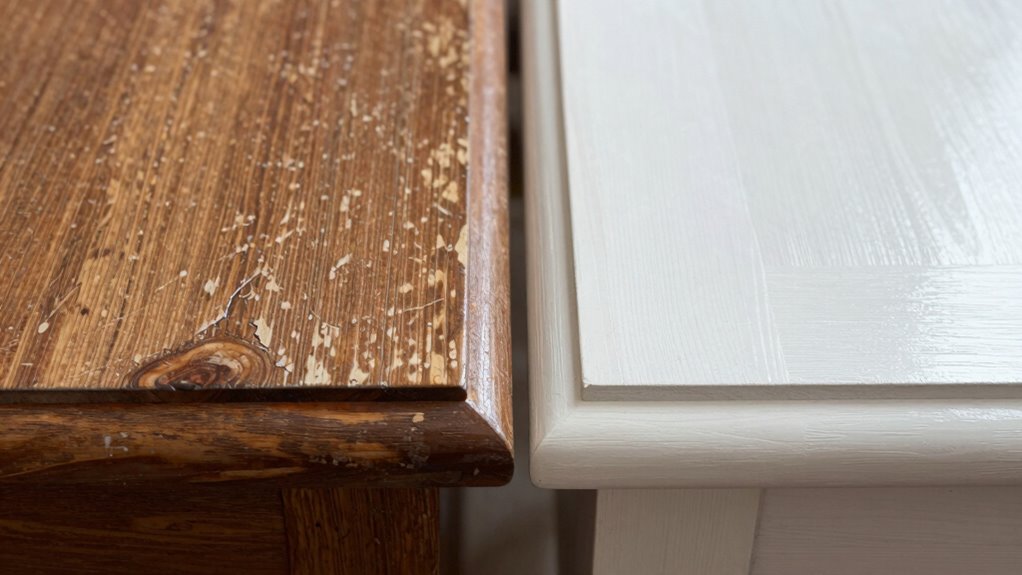
If your furniture will face heavy use, selecting a durable finish becomes critical rather than optional. You need finishes that resist scratches, moisture, and daily wear.
Polyurethane offers excellent protection for high-traffic areas, creating a hard shell that stands up to constant use. Marine varnish works exceptionally well for pieces exposed to humidity or temperature changes.
Don’t overlook conversion varnish if you’re refinishing commercial furniture or pieces that need maximum durability.
Your lifestyle determines finish requirements. Kitchen tables demand different protection levels than display cabinets.
Consider catalyzed finishes for maximum longevity, though they require more expertise. Water-based finishes provide good protection while remaining food-safe.
Oil-based alternatives offer traditional appeal with moderate durability. Test finish hardness using fingernail tests before making final decisions.
Remember that multiple thin coats typically outperform single thick applications.
Should It Dry Fast or Take Its Time?
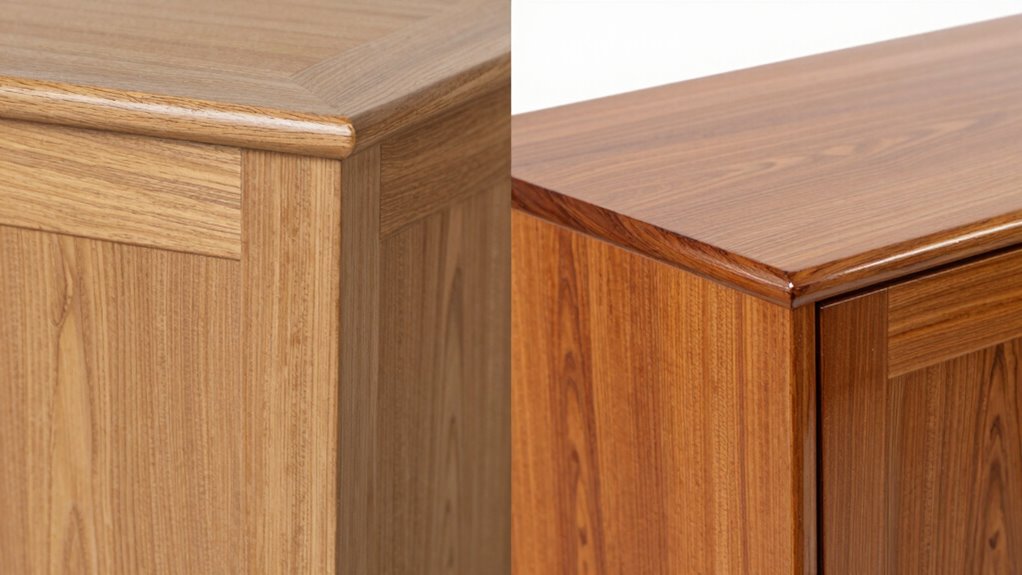
While you’re weighing durability options, consider how quickly your chosen finish needs to dry since this affects both application ease and project timeline. Fast-drying finishes like shellac or lacquer let you apply multiple coats within hours, perfect for weekend projects where time matters.
Slow-drying oils such as tung or linseed give you working time for smooth application but require patience.
- Fast-dry finishes: Enable quick recoating, reduce dust accumulation, ideal for high-traffic areas
- Slow-dry finishes: Provide superior flow-out, easier wet-on-wet blending, better for beginners
- Temperature sensitivity: Some finishes dry faster in heat, others slow down considerably
- Curing vs. drying: Drying time differs from full chemical cure time, affecting when you can use furniture
Your project schedule and skill level should guide this decision.
Do You Need a Food-Safe Option?
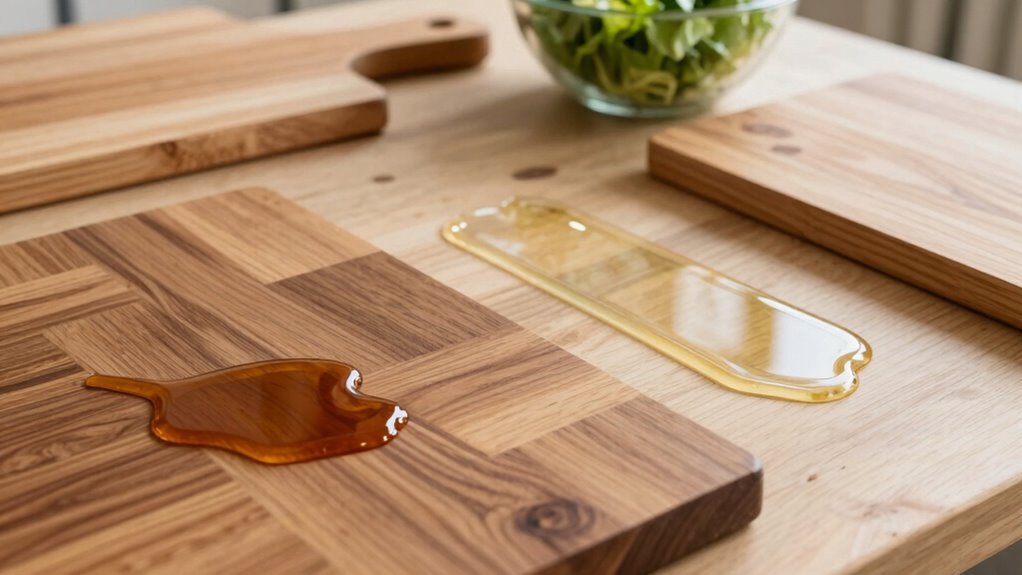
Food safety becomes a primary concern when your finished piece will contact food or beverages directly. You need finishes explicitly labeled as food-safe, not just non-toxic. These products meet FDA regulations for indirect food contact surfaces.
Check manufacturer specifications carefully – terms like “food-grade” or “FDA compliant” matter technically. Common food-safe options include pure tung oil, shellac, and specific polyurethane formulations designed for cutting boards or countertops. Avoid finishes containing heavy metals, formaldehyde, or petroleum distillates.
Your project’s end use determines necessity. Kitchen tabletops, butcher blocks, and bar surfaces require food-safe protection. Dining room tables mightn’t need this level of safety unless they’ll regularly hold food directly.
Research product data sheets thoroughly before purchasing. Don’t assume all “natural” finishes qualify as food-safe. Certification matters technically. Your family’s health depends on proper finish selection, so verify compatibility with intended use rather than guessing.
Which Application Tools Do You Have Access To?
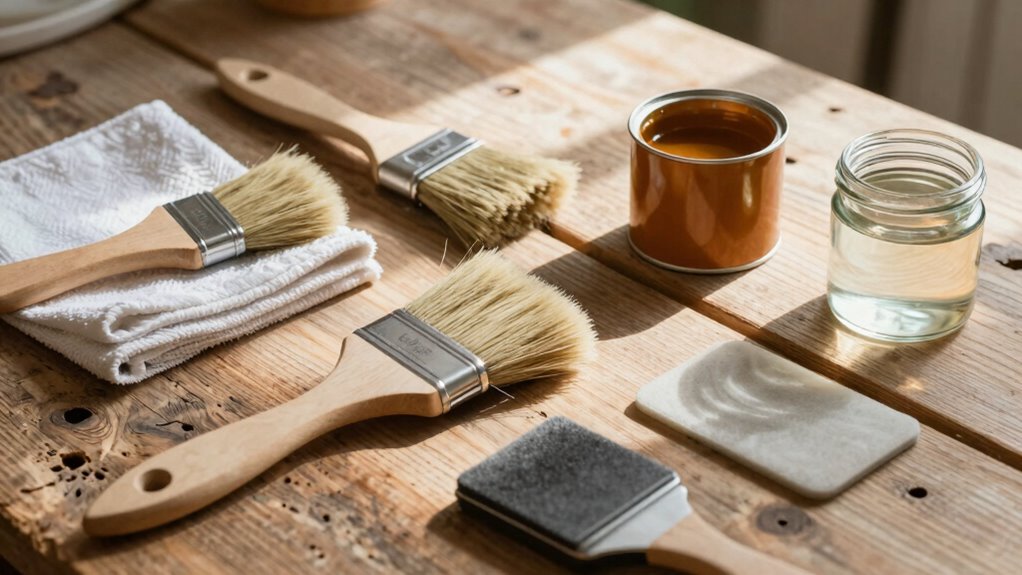
What application tools do you have available, and how will they affect your finish choice? Your tool selection directly impacts which finishes work best for your project. Brushes, rags, and spray equipment each demand specific finish viscosities and formulations.
- Brushes require thicker finishes that won’t drip, making oil-based polyurethane your best bet.
- Rags work perfectly with thin, wipe-on finishes like Danish oil or shellac.
- Spray guns need reduced viscosity finishes, so you’ll thin lacquers or use spray-can formulations.
- Foam applicators handle water-based finishes beautifully without leaving brush marks.
Choose tools that match your skill level and project requirements. Professional results come from pairing the right finish with appropriate application equipment.
Can You Apply Several Thin Layers?
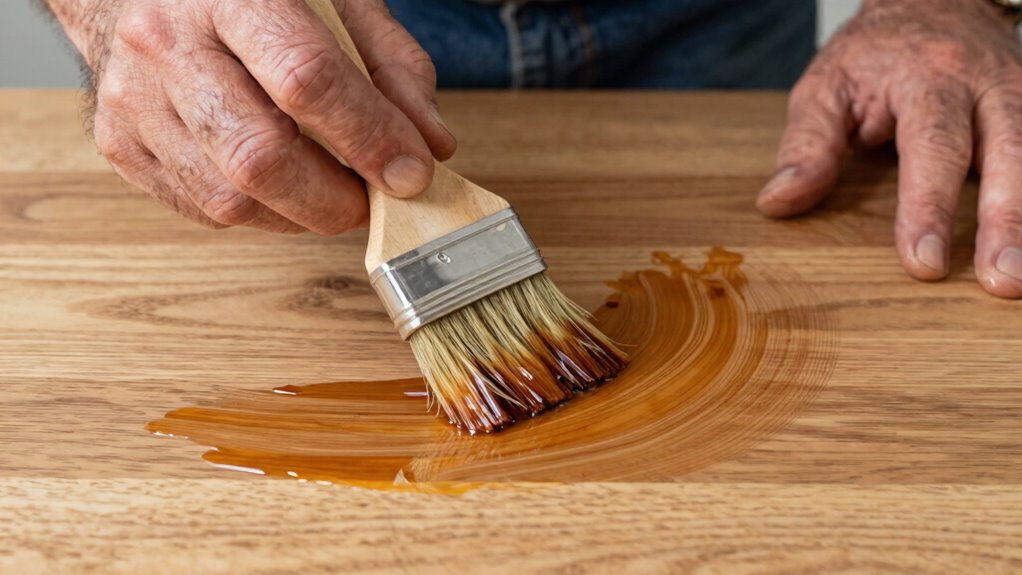
How many coats can you realistically apply, and why does this matter for your finish selection? You should aim for three to four thin coats maximum, depending on your skill level and drying conditions.
Multiple thin layers create smoother finishes than single thick applications, reducing drips and brush marks that scream amateur. Your chosen finish must support this approach—some products self-level poorly and show every imperfection.
Water-based finishes typically allow faster recoating, while oil-based alternatives require longer cure times between applications. Don’t rush; sanding between coats with fine-grit paper guarantees proper adhesion.
Shellac and lacquer demand quicker application sequences due to their fast-drying nature. Polyurethane offers more working time but requires patience.
Your available drying space and environmental conditions directly impact how many coats you can successfully apply. Choose finishes matching your realistic application capabilities.
Does the Finish Need UV Protection?
You’ll want to evaluate your furniture’s sunlight exposure carefully, since UV rays can rapidly degrade finishes and cause wood to gray or discolor within months.
Your choice of UV-resistant finish options directly impacts long-term color preservation, with spar varnishes and marine-grade finishes offering superior protection compared to standard polyurethane.
Consider whether your pieces will sit in direct window light or protected interior spaces, as this exposure assessment determines whether you need basic UV inhibitors or specialized protective formulations.
UV-Resistant Finish Options
UV protection becomes critical when your furniture faces direct sunlight exposure, and selecting the right finish can mean the difference between maintaining rich color tones and watching your wood fade to dull gray within months.
You need finishes that actively block harmful UV rays while preserving wood’s natural beauty.
Don’t guess which products actually work – here are proven UV-resistant options:
- Polyurethane with UV additives – Contains benzophenone or benzotriazole compounds that absorb UV radiation before it degrades wood fibers
- Conversion varnish – Industrial-grade finish forming thick, UV-blocking film layers perfect for high-sun areas
- Waterborne acrylic finishes – Modern formulations include superior UV stabilizers without yellowing issues
- Marine spar varnish – Specifically engineered for harsh UV exposure, contains phenolic resins resisting both water and sun damage
Each option provides different protection levels depending on your specific furniture needs.
Sunlight Exposure Assessment
While furniture placement and sun exposure patterns directly determine whether UV protection is necessary, many woodworkers overlook this critical evaluation before selecting finishes. You must examine your piece’s intended location carefully.
South-facing windows create intense UV exposure, while north-facing areas receive minimal direct sunlight. Consider seasonal sun angle changes and nearby reflective surfaces that might intensify exposure.
Furniture positioned near large windows, especially those receiving direct sunlight for several hours daily, absolutely requires UV-resistant finishes. Conversely, pieces in interior rooms with limited natural light exposure don’t need extensive UV protection.
Don’t forget about artificial lighting sources that emit UV rays. Analyzing these factors accurately guarantees you choose finishes that match your furniture’s actual environmental conditions, preventing premature degradation and costly refinishing projects down the road.
Long-Term Color Preservation
How do you guarantee your furniture maintains its rich coloration years after installation? You need finishes with built-in UV protection that shield wood from destructive ultraviolet rays. Without proper protection, your furniture will fade, gray, and lose its aesthetic appeal prematurely.
Consider these critical factors for long-term color preservation:
- UV-blocking additives embed protective compounds directly into the finish film
- Pigmented finishes contain titanium dioxide and other light-stable colorants
- Regular reapplication schedules maintain protective barriers before degradation occurs
- Quality film formation guarantees continuous coverage without pinholes or thin spots
You’re not just protecting wood; you’re preserving your investment and maintaining that proud ownership feeling.
Don’t let sun exposure compromise your furniture’s beauty. Choose finishes specifically formulated with UV protection, and you’ll enjoy lasting color retention that keeps your pieces looking showroom-fresh for decades.
How Will You Care for It Over Time?
Finishing furniture properly means selecting a protective coating that matches your long-term maintenance expectations and cleaning routine.
You’ll need to take into account how often you’re willing to reapply protective treatments based on your furniture’s usage patterns. High-traffic pieces require more durable finishes like polyurethane or conversion varnish that withstand frequent cleaning. If you prefer minimal upkeep, avoid shellac or lacquer finishes that need regular rejuvenation.
Evaluate your cleaning preferences carefully. Some finishes handle harsh chemicals better than others. Wipe-on finishes like tung oil require periodic revamping, while catalyzed finishes offer years of protection with simple dusting.
Your choice should align with your actual maintenance habits, not idealized expectations. Reflect on how much time you realistically want to spend caring for your furniture’s finish over its entire lifespan.
Problems to Avoid When Applying Finishes
Even with the right finish selected for your maintenance preferences, application mistakes can compromise both appearance and longevity.
You’ll encounter issues when you rush the process or skip proper preparation steps.
- Skipping sanding between coats creates uneven surfaces that trap dirt and moisture, leading to premature finish failure.
- Applying coats too thick causes drips, runs, and extended drying times that weaken adhesion.
- Ignoring temperature and humidity during application results in cloudy finishes and poor curing.
- Using dirty brushes or contaminated tools introduces particles that create visible imperfections.
These problems plague both beginners and experienced woodworkers when they become complacent.
You’ve invested time selecting the perfect finish, so don’t let application shortcuts undermine your project’s success.
Conclusion
You’ll make better finishing decisions when you understand that 80% of furniture failures stem from mismatched finishes and environmental conditions. Don’t let your hardwoods suffer from inadequate protection or your softwoods crack under UV exposure. Match your finish to the wood species, usage patterns, and environmental stressors. Apply multiple thin coats for durability, and always consider long-term maintenance requirements before making your final choice.
