

You’re just starting your DIY journey, and coincidentally, choosing the right tools now can prevent serious injuries later. Don’t let excitement blind you to basic safety requirements. Many beginners rush into projects without proper equipment, leading to accidents that could have been easily avoided. What essential safety features should you actually look for?
Why Beginner Safety Matters More Than Advanced Features
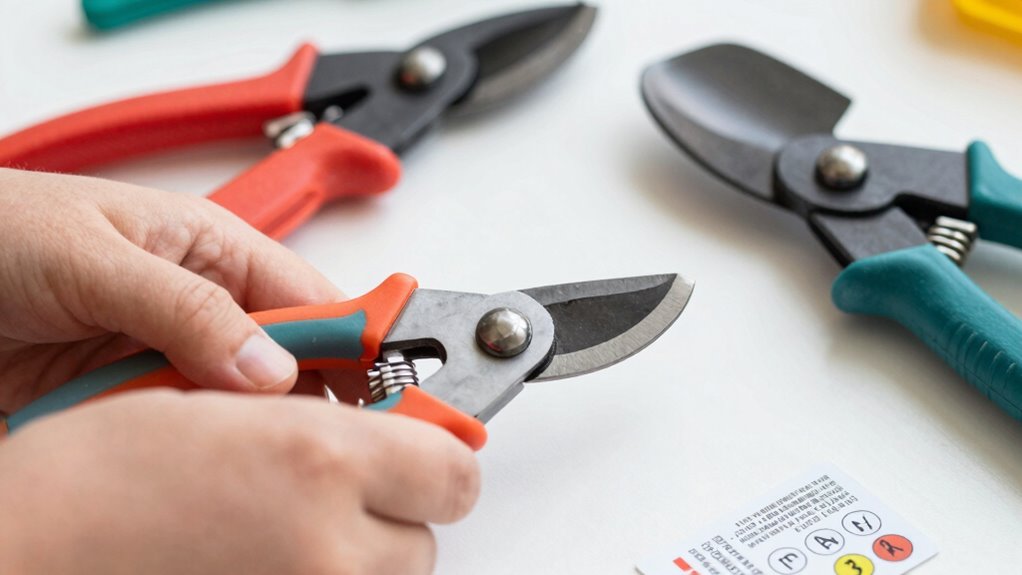
When you’re just starting out with any tool, prioritizing safety over advanced capabilities can save you from costly mistakes and potential injuries.
You might feel tempted to grab the most powerful or feature-rich options, but resist that urge. Your lack of experience makes basic safety features non-negotiable. Advanced functions won’t help you if you’re nursing a preventable injury.
Manufacturers design professional-grade tools assuming user expertise. As a beginner, you don’t have that foundation yet.
Stick to tools with built-in safety mechanisms, ergonomic handles, and straightforward operation. These choices protect both your body and your confidence.
Start Here: Essential Safe Tools for New DIYers
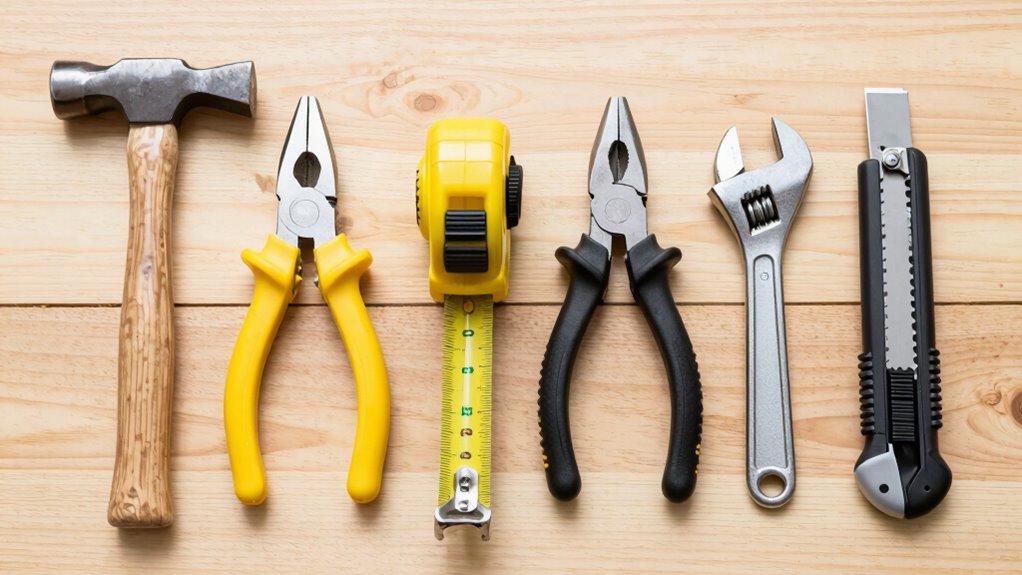
Having established why safety takes precedence over advanced features, you’re ready to explore which tools actually deliver on that promise.
As a new DIYer, you need reliable equipment that won’t compromise your wellbeing while building confidence in your skills.
Start with these fundamental tools that every beginner should own:
- Cordless drill-driver: This versatile tool handles most basic fastening and drilling tasks safely.
- Combination pliers: Essential for gripping, bending, and cutting wire without slipping.
- Utility knife with safety blade: Perfect for precise cutting while protecting your fingers.
These tools form your foundation for tackling projects safely.
They’re straightforward to use, widely applicable, and won’t intimidate you as you develop your abilities.
You’ll find yourself reaching for these essentials repeatedly as you grow more comfortable with DIY work.
Look for These Design Features in Beginner Power Tools
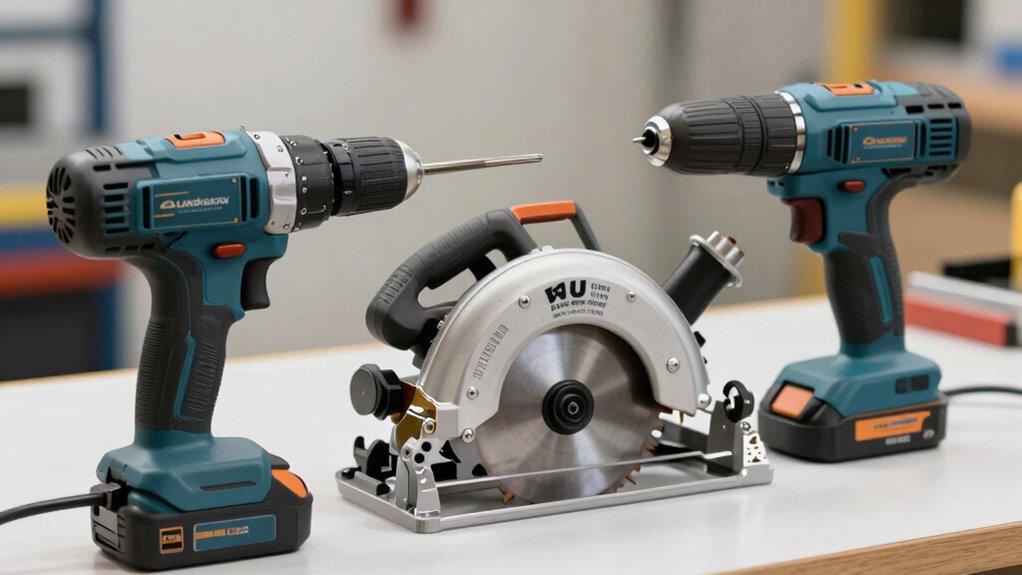
You should prioritize power tools with built-in safety mechanisms that prevent accidental starts and provide protection during use.
Look for models with ergonomic handles that fit comfortably in your hand and reduce fatigue during extended projects.
Check for clear power indicators that let you know when the tool is active and help prevent dangerous surprises.
Safety Features First
While selecting power tools as a beginner, prioritize models with built-in safety mechanisms that prevent accidents before they happen.
You’ll want tools that protect you automatically, not ones that require constant vigilance.
Look for these essential safety features:
- Electric brake systems that stop blade rotation instantly when you release the trigger
- Blade guards that adjust automatically and stay in place during cuts
- Overload protection that prevents motor burnout and potential kickback situations
These features work silently in the background, giving you confidence while you learn.
Don’t settle for tools lacking these protections simply because they’re cheaper.
Your safety matters more than saving a few dollars.
Invest in tools that have your back from day one, and you’ll join the community of woodworkers who prioritize smart craftsmanship over risky shortcuts.
Easy-Grip Handles
Power tools with poor handle design can turn a simple project into a struggle for control. You’ll fight against slipping, fatigue, and awkward positioning that makes even basic tasks frustrating.
Look for tools with soft-grip materials that mold to your hand’s natural shape. These handles should feel secure whether your palms are dry or slightly sweaty.
Ergonomic designs reduce strain during extended use, preventing the hand fatigue that sidelines many beginners. Choose tools with textured surfaces that provide tactile feedback without causing discomfort.
Handles should fit comfortably in your grip, allowing precise control without excessive force. Wrist-friendly angles prevent painful strain while maintaining tool effectiveness.
These features aren’t luxuries—they’re necessities that build your confidence and safety from day one.
Clear Power Indicators
How do you know when your tool is ready to use or dangerously overheated? Clear power indicators eliminate guesswork and keep you safe. You want tools that communicate their status effectively.
Look for these essential power indicator features:
- LED status lights that show when power is active, preventing accidental startup
- Temperature warning indicators that alert you before overheating becomes dangerous
- Power level displays that let you monitor performance and avoid overloading
These visual cues help you feel confident and in control. You’re not just buying tools—you’re investing in your safety and success.
Reliable power indicators mean you can focus on your project instead of worrying about equipment failure. Don’t compromise on this vital safety feature when selecting your first power tools.
Top Safety Features Every Beginner Should Check Before Buying
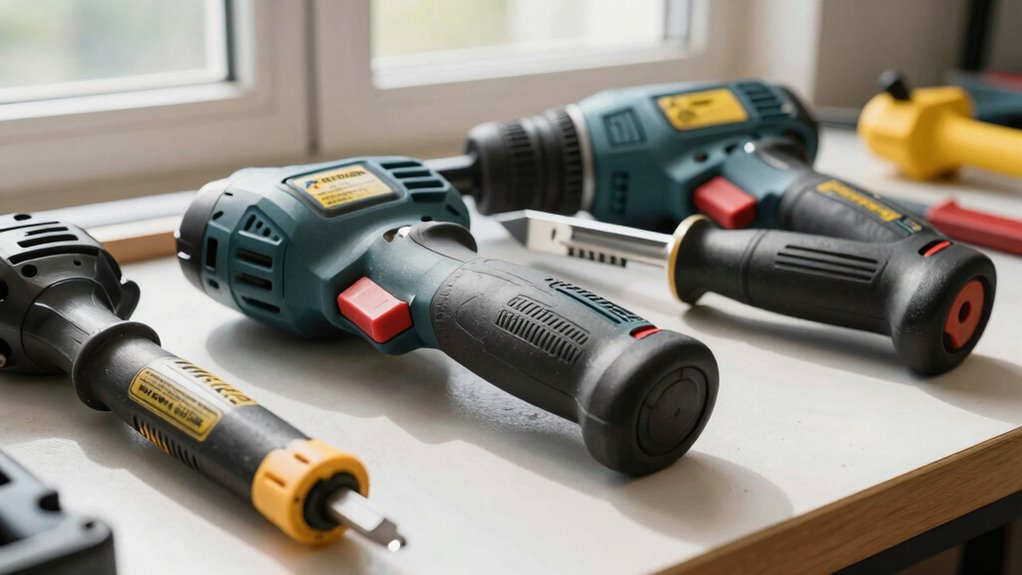
What should you look for when evaluating safety features on beginner tools? You need to prioritize essential protections that prevent accidents and build confidence.
Look for automatic shut-off mechanisms that prevent overheating and unexpected startup. Check for ergonomic handles with non-slip grips that reduce hand fatigue and maintain control.
Confirm tools have proper guards and shields that protect you from moving parts. Seek out overload protection that prevents motor damage and electrical hazards.
Verify that safety switches require deliberate activation rather than accidental contact. You should also examine whether tools include safety interlocks that prevent operation when components aren’t properly secured.
These features create a safety net that lets you focus on learning rather than worrying about accidents.
How to Test Tools for Safety Before First Use
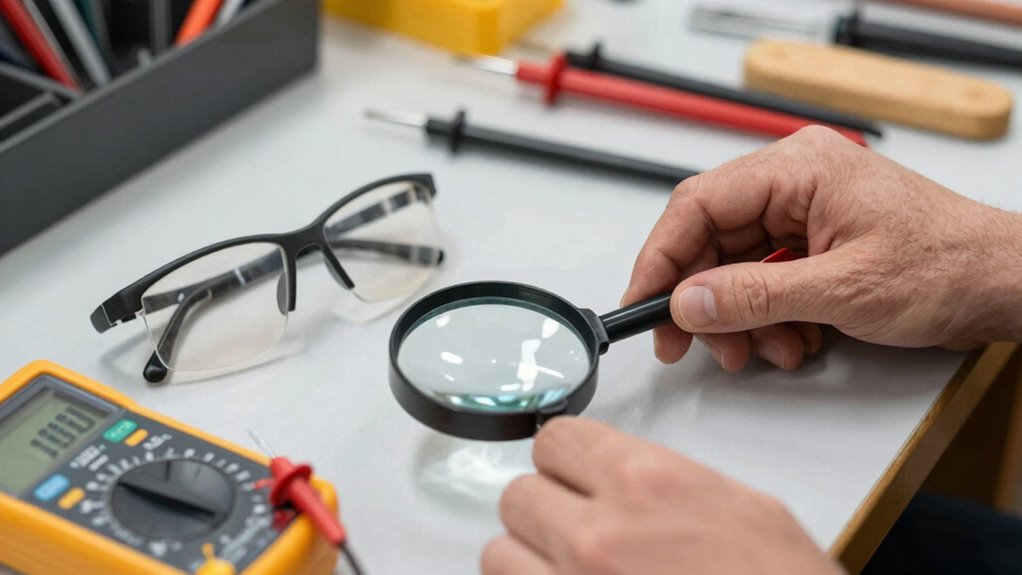
Before using any new tool, you should verify its safety mechanisms work properly. Test each feature systematically to confirm everything functions as intended.
- Check guards and shields – Make sure protective covers move smoothly and stay in place during operation.
- Test emergency stops – Verify power switches shut off immediately when activated.
- Inspect cords and housings – Look for cracks, fraying, or damaged components that could fail.
You belong in this DIY community, but only if you take safety seriously. Don’t skip these tests. Your tools should respond instantly to your commands while protecting you from harm.
Spend five minutes testing rather than risking injury. Proper tool testing becomes second nature quickly, making every project safer and more enjoyable for everyone involved.
Avoid These Tool Design Mistakes as a New DIYer
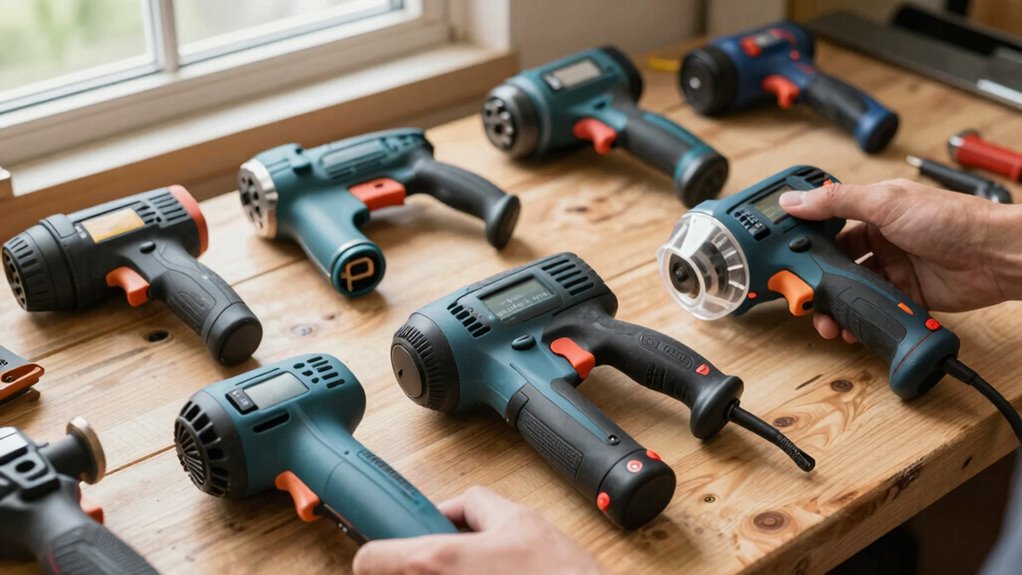
You should immediately recognize poor ergonomic design that causes hand fatigue or awkward positioning.
Flimsy construction materials can fail during use, creating dangerous situations that compromise your safety.
Confusing safety features might prevent you from using tools correctly, leading to accidents you could easily avoid.
Poor Ergonomic Design
Poor ergonomic design in tools can quickly turn a simple DIY project into a painful experience, so you should recognize these common mistakes before they cause discomfort or injury.
When tools don’t fit your hand properly or force awkward positioning, you’re setting yourself up for strain and potential injury.
Look out for these ergonomic red flags:
- Handles that are too thick or thin for comfortable grip
- Tools requiring excessive force that strain your wrist and arm
- Poor weight distribution causing awkward balancing acts
Choosing tools with comfortable, well-proportioned handles and balanced weight distribution makes your DIY journey safer and more enjoyable.
Don’t let poor design discourage your newfound hobby.
Flimsy Construction Materials
Many tools marketed to beginners suffer from flimsy construction that compromises both safety and performance.
You’ll notice cheap plastic handles that crack under pressure, thin metal components that bend easily, and poorly assembled parts that come loose during use. These materials fail when you need them most, creating dangerous situations.
Don’t fall for flashy marketing that prioritizes appearance over durability. Steel beats plastic for critical components. Solid construction prevents accidents caused by tool failure.
Check handle materials, metal thickness, and assembly quality before purchasing.
Invest in tools built to last because flimsy construction isn’t just frustrating—it’s hazardous. Your safety depends on reliable equipment that won’t break when you’re deep in a project.
Quality construction prevents injuries and guarantees consistent results every time you work.
Confusing Safety Features
Several power tools aimed at beginners come with safety features that actually increase your risk of injury through confusing design.
You might think you’re protected, but unclear safety mechanisms can create dangerous situations instead.
- Overcomplicated lock-on buttons that require specific sequences to activate, making you fumble during critical moments
- Ambiguous safety switches positioned too close to operation controls, causing accidental activation when you’re focused on your project
- Poorly labeled emergency stops that blend into the tool’s design, leaving you searching for them when seconds matter
Don’t let confusing safety features discourage you from DIY projects.
Choose tools with intuitive, clearly marked safety controls that enhance your confidence and protect your craft.
Conclusion
You’ll discover that the same safety features protecting you also make tools easier to use. That’s no coincidence—manufacturers design these safeguards to prevent accidents while boosting confidence. When you prioritize safety first, you’re actually choosing tools that work better for beginners. Smart shopping means looking for automatic shut-offs, ergonomic handles, and clear power indicators. These features don’t just protect you; they make learning faster and more enjoyable.
