

You don’t need a greenhouse to grow fresh produce year-round. You can start small with basic equipment and expand as you gain confidence. Choose between deep water culture or wick systems – both work well for beginners. Consider your space constraints, lighting conditions, and crop preferences before making any purchases. Ready to discover which setup fits your home environment best?
Understand the Basics of Hydroponics
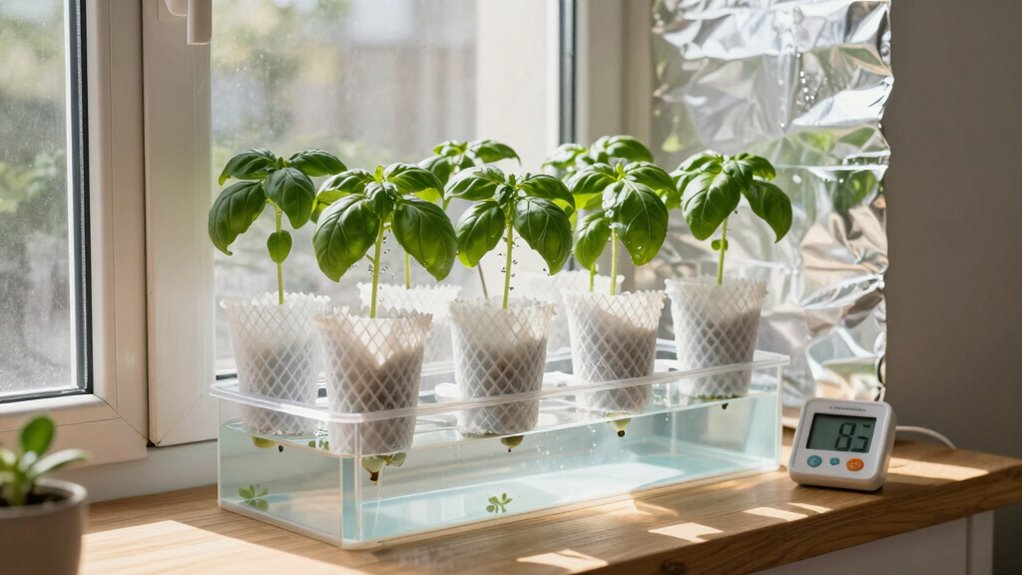
Hydroponics systems grow plants without soil by delivering nutrients directly to root zones through water-based solutions.
You’re not alone if this sounds intimidating at first.
These systems work because plants actually absorb nutrients dissolved in water, not from dirt itself. Your roots need oxygen, water, and specific minerals to thrive. Hydroponics provides exactly that mixture in controlled amounts.
You’ll discover that plants often grow faster and produce better yields compared to traditional gardening.
The key components include a growing medium, nutrient solution, water pump, and proper lighting. Understanding these basics gives you confidence as you join the hydroponic community.
You’re learning the foundation that connects you with countless other indoor gardeners who’ve found success through precise nutrient management.
Choose an Easy Indoor Hydroponic Setup
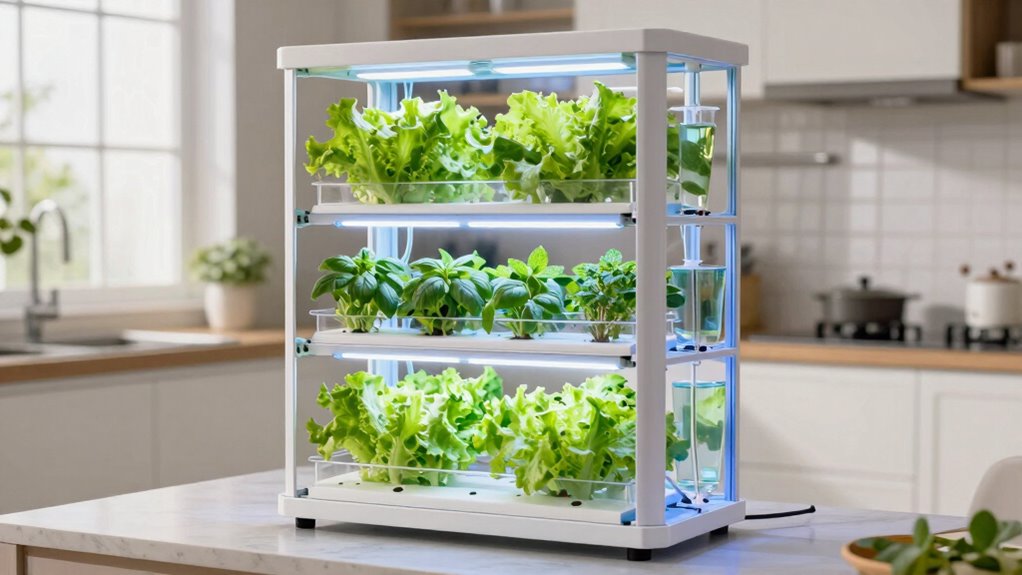
Now that you understand how hydroponics works, you can start choosing a simple indoor system that fits your space and experience level.
Beginners should consider deep water culture or wick systems because they’re straightforward and forgiving. These setups don’t require complex plumbing or expensive equipment. Look for systems with built-in grow lights if your space lacks natural sunlight.
Consider your available room – compact countertop units work well for small apartments. Confirm the system accommodates the plants you want to grow. Check reviews and choose reputable brands that offer good customer support.
Don’t overlook expandability; start small but plan for growth. Your local hydroponic store can provide valuable guidance.
Stock Up on Must-Have Supplies
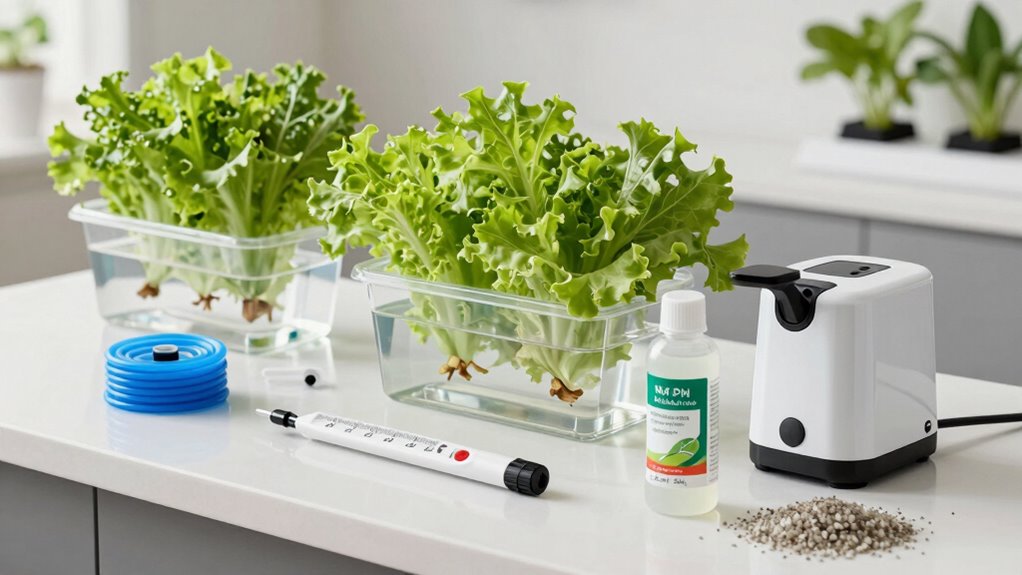
You’ll need several essential supplies before setting up your indoor hydroponic system.
Start with a growing medium like perlite, coconut coir, or rockwool cubes that’ll support your plants’ roots.
Purchase pH testing strips or a digital meter to monitor nutrient solution acidity levels.
You’ll need hydroponic nutrients containing nitrogen, phosphorus, and potassium.
A water pump guarantees proper circulation, while an air pump and air stone oxygenate your nutrient solution.
Grow lights are vital – LED or fluorescent options work well for indoor spaces.
Don’t forget net pots to hold your plants, tubing for water flow, and a reservoir container.
Timer switches help automate lighting schedules.
Measuring tools like graduated cylinders guarantee accurate nutrient mixing.
These supplies form your foundation for successful soil-free gardening.
Grow These Simple Indoor Plants
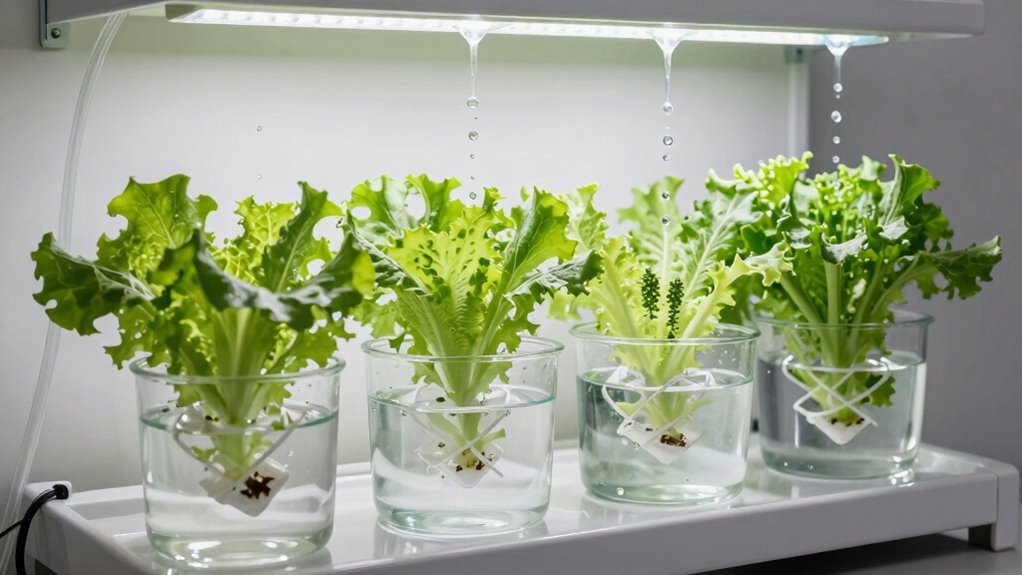
While hydroponic systems can support a wide variety of plants, beginners should start with crops that adapt easily to indoor growing conditions.
Leafy greens like lettuce, spinach, and kale thrive in hydroponic setups and provide quick harvests. Herbs such as basil, mint, and cilantro grow vigorously and add fresh flavor to meals. Microgreens offer fast results, ready in just one to two weeks.
These plants don’t require complex nutrient schedules or specialized equipment. They’re forgiving if you make mistakes, making them perfect for building confidence. Start with these reliable crops to experience early success.
You’ll gain valuable experience monitoring growth patterns, adjusting water levels, and understanding plant needs. This foundation prepares you for more challenging varieties later.
Growing these straightforward plants connects you to the rewarding world of hydroponics without overwhelming complexity.
Maintain a Healthy Hydroponic Garden
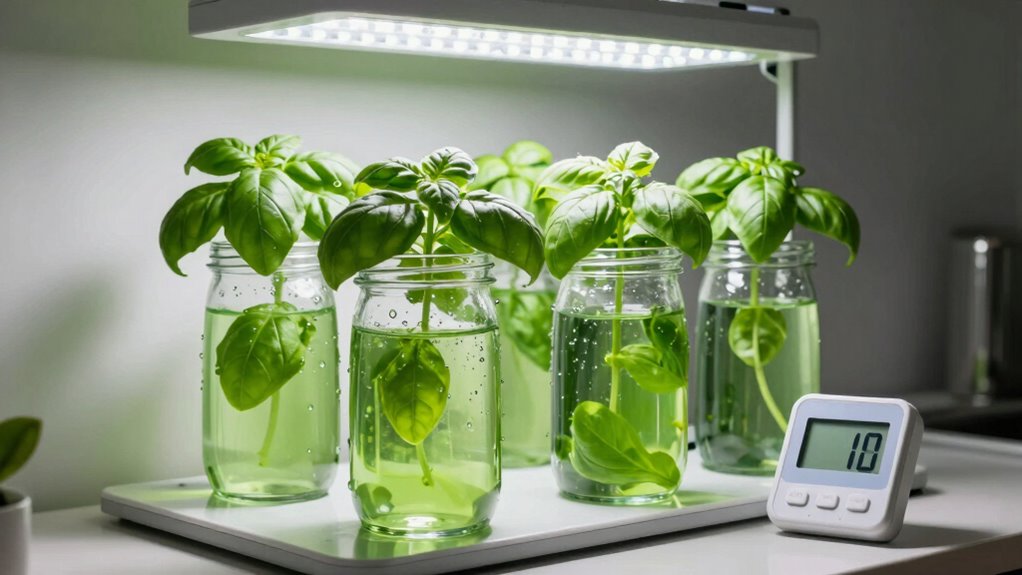
Maintaining a healthy hydroponic garden requires consistent attention to several critical factors that directly impact plant energy and productivity.
You must monitor pH levels between 5.5 and 6.5 regularly, as fluctuations stress roots and hinder nutrient uptake. Check electrical conductivity daily to guarantee proper nutrient concentration.
Clean your system weekly to prevent algae growth and bacterial infections that devastate plant health. Prune dead leaves immediately and trim overgrown roots that block water flow.
Watch for pests like spider mites and aphids that spread quickly in indoor environments. Maintain peak temperature between 65-75°F and humidity around 40-60%.
Test your water quality monthly for harmful minerals. Replace nutrient solutions every two weeks maximum.
Document everything – successful gardeners track pH readings, feeding schedules, and plant responses.
Your plants depend on your consistent care routine.
Conclusion
You’d think hydroponic gardening would be rocket science, but somehow growing plants without soil turns out to be easier than keeping your regular houseplants alive. Who knew that skipping the dirt would actually make everything simpler? Start small, follow the basics, and watch your leafy greens thrive while your neighbors struggle with overwatered pots. Irony aside, you’ll be harvesting fresh herbs year-round.
