

You can picture your plant’s roots drowning in a waterlogged soil mix, gasping for air beneath the surface. Don’t let this become reality. Overwatering silently kills more houseplants than neglect ever could. You’ll discover exactly how to avoid this common mistake while keeping your green companions thriving.
How to Tell If You’re Overwatering Your Houseplants
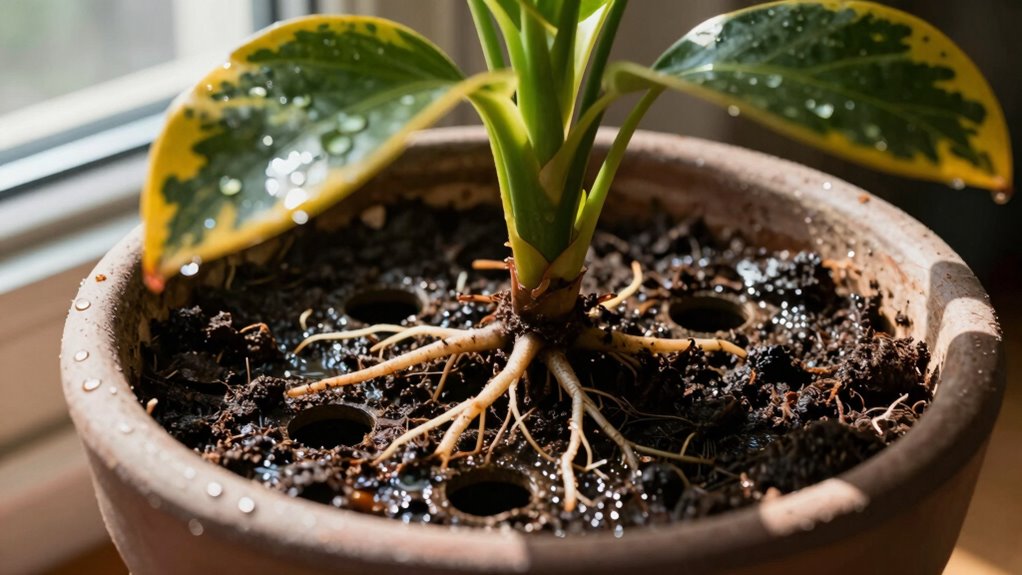
When you notice your houseplants’ leaves turning yellow or brown while the soil remains consistently wet, you’re likely witnessing the early signs of overwatering. Your plants’ roots become waterlogged, preventing oxygen absorption and causing cellular damage.
Check for soft, mushy stems and wilting despite moist soil conditions. Examine the pot’s drainage holes for water accumulation or soggy saucers. Healthy roots appear white or light-colored; brown, black, or slimy roots indicate root rot. You might detect a foul, musty odor emanating from the soil surface.
Leaf drop, particularly yellowed leaves, signals stress from excessive moisture. Stunted growth and lackluster foliage also suggest overwatering issues.
Monitor your watering schedule closely, ensuring soil dries appropriately between waterings.
7 Signs Your Plant Needs Less Water (and Fast)
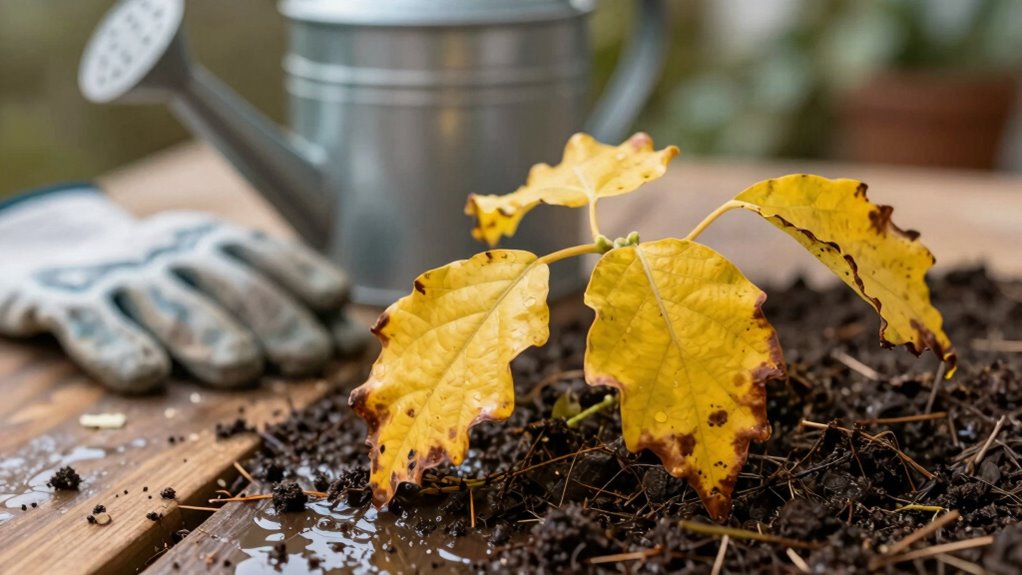
Yellowing leaves often signal that your plant’s roots can’t absorb nutrients properly due to waterlogged conditions. You’ll notice leaves turning yellow from the bottom up, indicating root stress.
Wilting despite wet soil means roots are drowning and rotting. Mushy, brown roots signal severe overwatering damage. Your plant’s growth slows dramatically when roots struggle to function.
Leaves may develop dark spots or edges that turn black. You might detect a foul, musty odor from the soil, indicating anaerobic conditions promoting harmful bacteria.
Stems become soft and easily punctured. New growth appears weak and spindly.
Catch these warning signs early – your plant depends on you recognizing when it’s getting too much water. Act quickly to save your plant’s root system before irreversible damage occurs.
Check Soil Moisture the Right Way Every Time
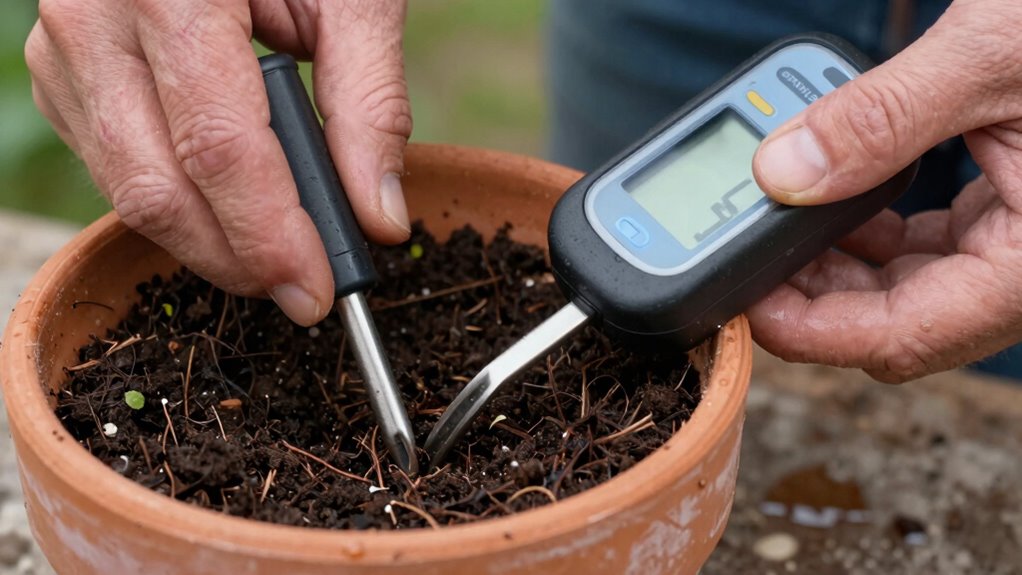
How do you accurately determine your plant’s hydration needs without guesswork? You need to test soil moisture correctly every time.
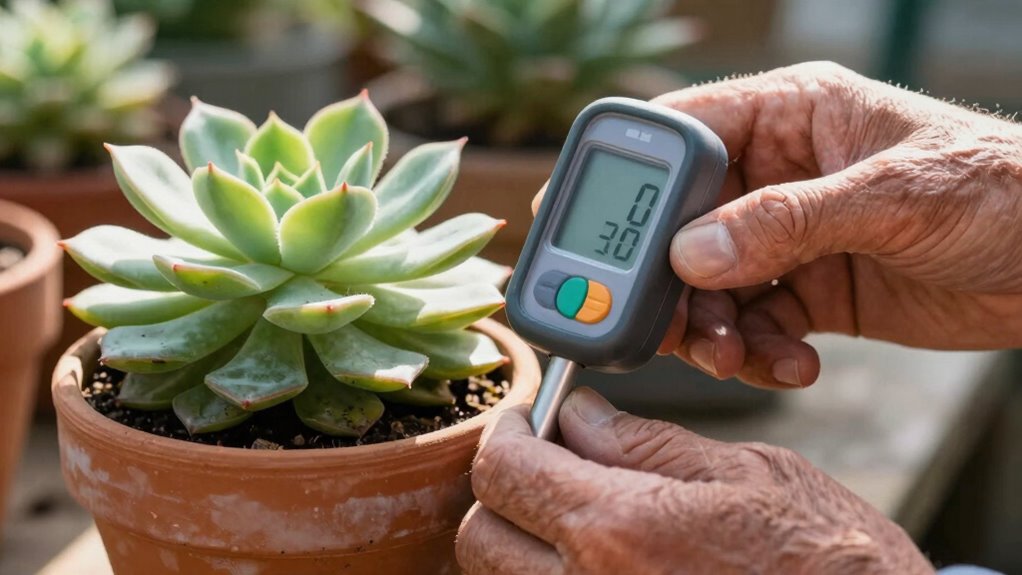
Stick your finger two inches into the soil near the root zone. If soil feels dry at this depth, your plant needs water. For more precision, use a moisture meter inserted halfway between the pot’s edge and center.
Check multiple spots since moisture distribution varies. Avoid testing surface soil only, which dries faster than deeper layers. Test when you’re unsure rather than following rigid schedules.
Soil type affects moisture retention, so adjust your testing frequency accordingly. Clay soils hold water longer than sandy mixes.
You’ll develop intuition through consistent monitoring, becoming part of the knowledgeable plant care community who understands their plants’ actual needs instead of guessing.
Why Pot Size and Drainage Holes Matter for Watering
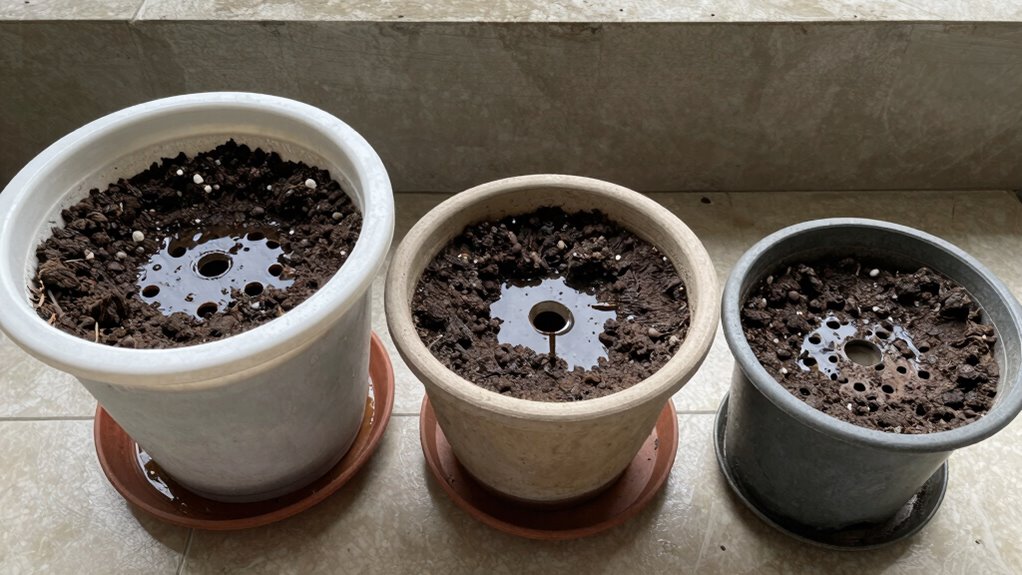
While you mightn’t realize it, pot size and drainage holes directly control how water moves through your plant’s soil and affects root health.
Small pots dry out quickly, while large pots retain excess moisture that suffocates roots. Without drainage holes, water accumulates at the bottom, creating anaerobic conditions that promote root rot. You need holes to allow excess water to escape and air to circulate through the soil.
Root-bound plants in undersized pots struggle to absorb water properly, leading to stress. Choose pots proportional to your plant’s root system and always guarantee adequate drainage holes. This prevents waterlogging and maintains healthy root function.
Proper pot selection directly impacts your plant’s ability to thrive.
How to Improve Soil Drainage for Indoor Plants
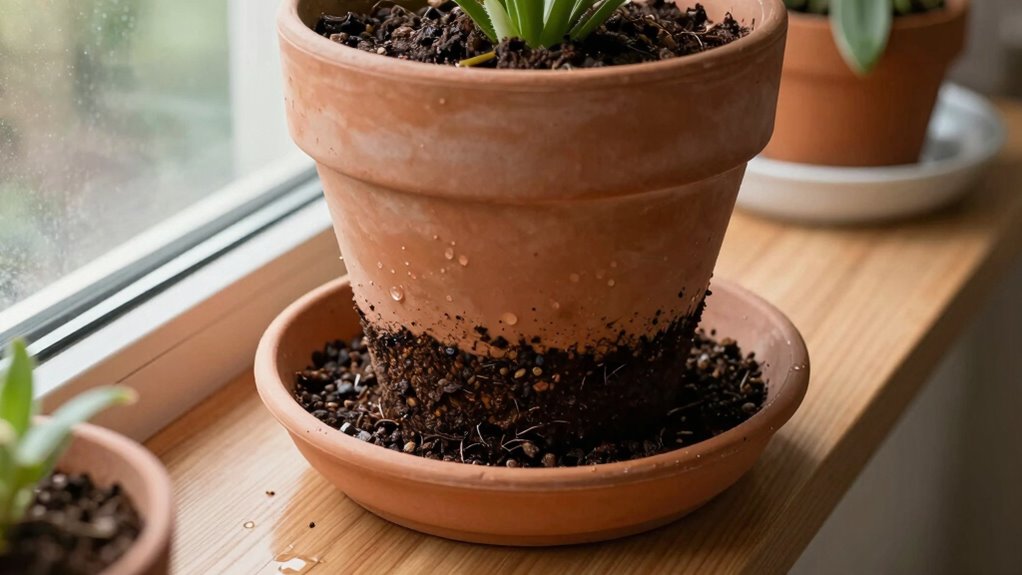
Poor soil drainage creates waterlogged conditions that deprive plant roots of oxygen and promote harmful bacterial growth.
You need to address drainage issues before they damage your plants’ root systems.
Here are five effective methods to improve soil drainage:
- Mix perlite or coarse sand into your potting soil to create air pockets.
- Add organic matter like compost to break up dense soil particles.
- Use orchid bark or pumice to increase soil porosity and water flow.
- Repot plants into well-draining commercial potting mixes designed for indoor use.
- Create a drainage layer with gravel or broken pottery at container bottoms.
These adjustments help excess water move through soil efficiently, preventing root suffocation and bacterial infections that threaten your plants’ health and your gardening success.
How to Revive a Dying Overwatered Plant
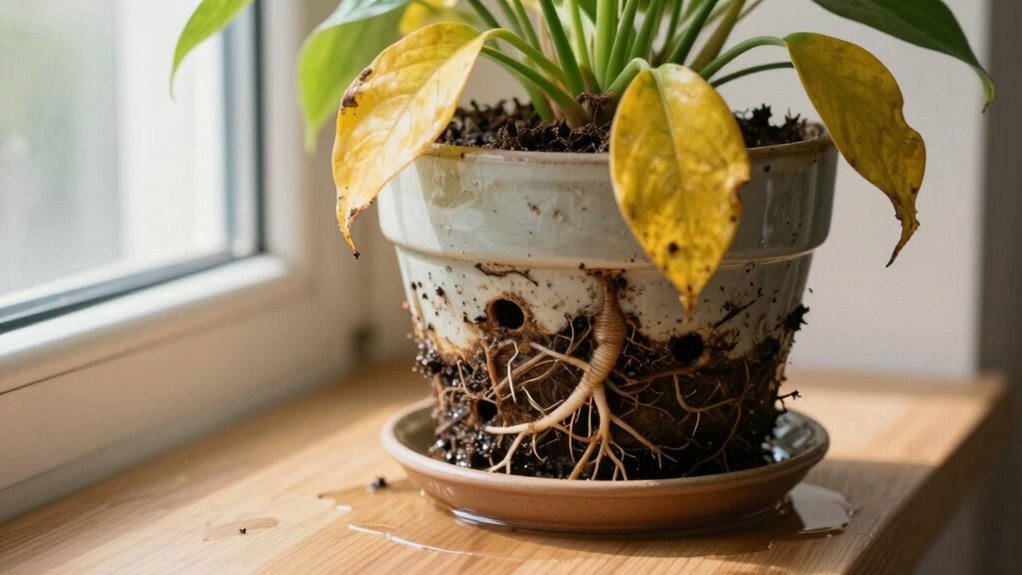
You must first recognize the telltale signs of overwatering, including yellowing leaves, root rot, and waterlogged soil that remains soggy days after irrigation.
Once you’ve identified these symptoms, immediately reduce your watering frequency and allow the soil to dry out between watering sessions.
These adjustments will help restore proper moisture balance and prevent further damage to your plant’s root system.
Identify Overwatering Symptoms
When your plant’s roots sit in waterlogged soil for extended periods, they begin to suffocate and decay, which triggers a cascade of visible symptoms that indicate overwatering.
You’ll notice these warning signs before irreversible damage occurs.
- Yellowing leaves that feel soft and limp, often starting with lower foliage
- Brown, mushy roots instead of firm, white healthy ones when you inspect the root zone
- Wilting despite soggy soil conditions, confusing you into adding more water
- Fungal growth like white or gray mold appearing on soil surface or leaves
- Leaf drop where healthy leaves suddenly fall off without apparent cause
These symptoms create stress that weakens your plant’s immune system, making it susceptible to pests and diseases.
Recognizing these signs early gives you the power to rescue your beloved green companion before it’s too late.
Adjust Watering Schedule
How often should you water your plants? Every plant species has specific hydration needs based on their native environment and root structure. Check soil moisture by inserting your finger two inches deep – water only when dry.
Consider pot size, drainage holes, and seasonal growth patterns. During active growing seasons, plants typically need more frequent watering than dormant periods.
Establish a consistent schedule while remaining flexible to environmental conditions. Morning watering prevents fungal growth better than evening applications. Use room-temperature water and guarantee excess drains completely.
Monitor your plants’ response – yellowing leaves or soggy soil indicate overwatering. Adjust frequency based on potting mix type, humidity levels, and air circulation.
Remember that underwatering recovery is easier than overwatering damage, so err on the side of less frequent watering until you understand each plant’s specific requirements.
Adjust Watering by Season (and Skip the Calendar)
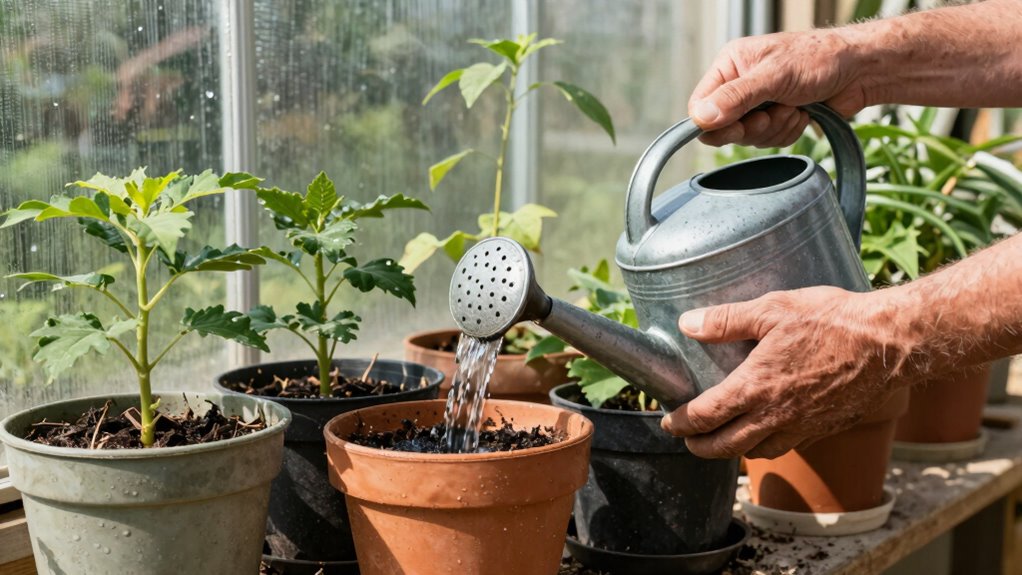
Most plants require different amounts of water throughout the year due to seasonal changes in temperature, humidity, and daylight hours.
You need to observe your plants’ actual needs rather than following rigid calendar schedules.
- Watch soil moisture levels change with seasonal temperature fluctuations
- Notice how humidity affects water retention in plant tissues during different seasons
- Observe daylight hour variations that influence photosynthesis rates and water uptake
- Check potting mix drying patterns as seasons shift from summer heat to winter coolness
- Monitor plant growth cycles that naturally adjust water requirements throughout the year
Your plants will show you when they need water through soil dryness, leaf texture, and overall appearance.
Trust these natural indicators instead of arbitrary watering dates.
Water Indoor Plants Like a Pro: Expert Techniques
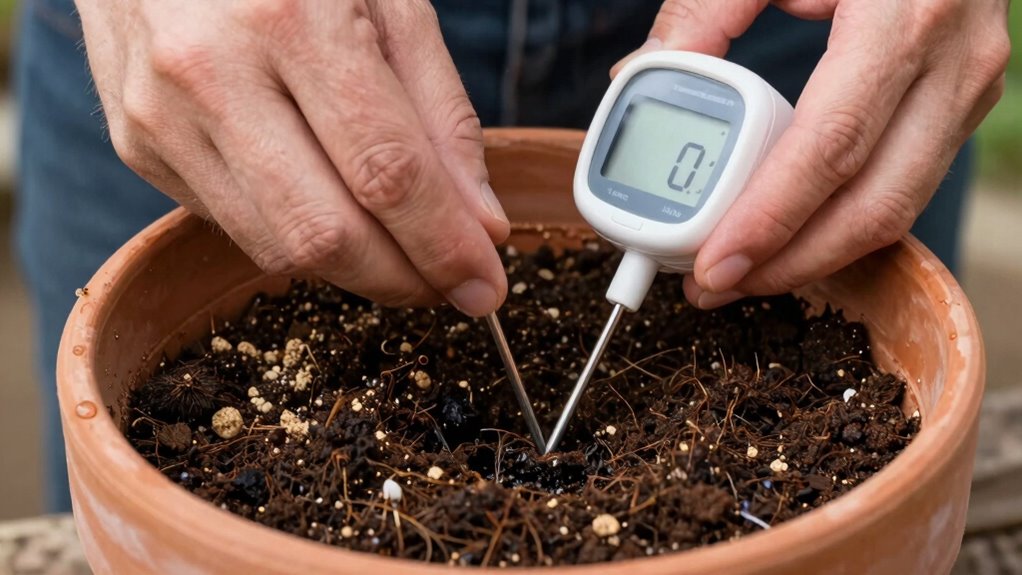
You should monitor soil moisture levels before watering indoor plants, using either a moisture meter or the finger test method.
Most houseplants require watering when the top inch of soil feels dry, but you must adjust frequency based on plant species, pot size, and environmental conditions.
Consistent monitoring prevents both overwatering and underwatering while promoting ideal root health.
Watering Frequency Guidelines
When should you water your indoor plants? You need to understand that watering frequency depends on multiple environmental factors working together.
Don’t follow rigid schedules blindly.
- Check plant species requirements first – succulents need infrequent watering while tropicals prefer consistent moisture
- Consider pot size and material – smaller pots dry faster than larger ones, clay absorbs moisture quicker than plastic
- Evaluate room temperature and humidity levels – higher temperatures increase evaporation rates considerably
- Account for seasonal changes – plants typically need less water during winter dormancy periods
- Observe plant signals like leaf color and soil surface appearance before deciding to water
Your plants will thrive when you respond to their actual needs rather than guessing.
Soil Moisture Monitoring Techniques
Accurate soil moisture assessment prevents both underwatering and overwatering scenarios that can stress or kill indoor plants.
You should use your finger to test soil depth up to your second knuckle, feeling for dryness or moisture retention. Digital moisture meters provide precise readings by measuring electrical resistance in soil substrates.
Weight-based assessment works by lifting pots; lighter containers indicate drier soil conditions. Moisture indicator stakes change color based on hydration levels, offering visual confirmation.
Clay pots show moisture levels through their porous surfaces better than plastic containers. You must check multiple soil locations since moisture distribution varies throughout container depths.
Group plants with similar water requirements together for efficient monitoring. Regular assessment prevents root rot while maintaining ideal hydration for healthy root development and nutrient uptake.
Build a Personalized Watering Plan That Works
Creating a personalized watering plan requires understanding your specific plant species, their individual moisture needs, and how environmental factors affect their hydration requirements.
You’ll develop better intuition when you recognize that each plant has unique preferences based on their native habitats and physiological characteristics.
- Research your plant’s natural environment to understand its evolved watering patterns
- Group plants with similar moisture requirements together for efficient care routines
- Adjust frequency based on seasonal changes, temperature fluctuations, and humidity levels
- Create a simple tracking system using calendar reminders or plant care apps
- Observe your plants daily for stress signals like wilting, yellowing, or crispy edges
Your watering schedule should adapt as conditions change throughout the year.
Don’t follow generic timelines blindly – your plants depend on you recognizing their specific needs.
Conclusion
Don’t let your plants drown in good intentions. Test soil moisture like a scientist, not a calendar follower. Choose pots that breathe and soil that drains like a sieve. Watch leaves for distress signals—yellow flags warning of waterlogged roots. Adjust your watering rhythm like a conductor orchestrating seasons. Your plants will thank you with vibrant growth instead of soggy silence. Prevention beats resurrection every time.
