

You can greatly improve your soil’s water retention by incorporating 2-4 inches of organic matter like compost into the top 6-8 inches. This creates essential pore spaces while enhancing soil structure. Mulching regularly reduces evaporation and stabilizes temperature fluctuations. Compacted areas need assessment and aeration to guarantee proper water infiltration and root penetration. These foundational steps set the stage for more advanced techniques that can transform your soil’s moisture-holding capacity.
Understand Why Soil Holds Water
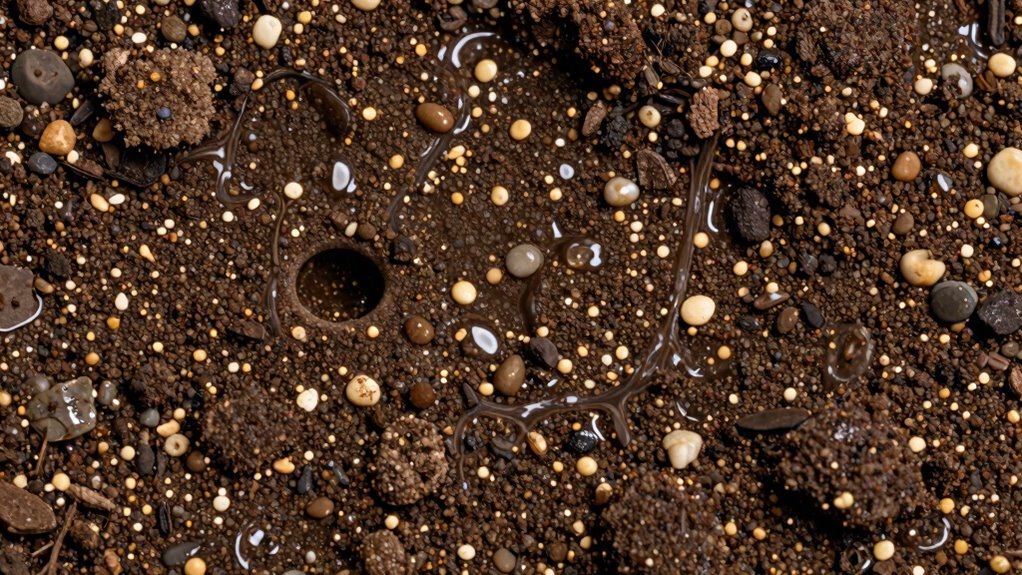
Soil’s water-holding capacity depends on its physical structure and chemical properties working together to create storage and retention mechanisms.
You need to understand how particle size distribution affects pore spaces where water resides. Clay particles create tiny pores that hold water tightly through capillary forces, while sandy soils have larger pores that drain quickly.
Organic matter increases water retention by creating additional pore space and improving soil aggregation. You’ll find that soil texture, bulk density, and porosity directly influence how much water your soil can store.
Chemical properties like cation exchange capacity help retain water molecules through electrostatic attraction.
Understanding these mechanisms lets you make informed decisions about soil amendments. You’re not just guessing anymore—you’re applying scientific principles that create lasting improvements in your soil’s water-holding capabilities through targeted modifications.
Measure Your Soil’s Moisture Ability Easily
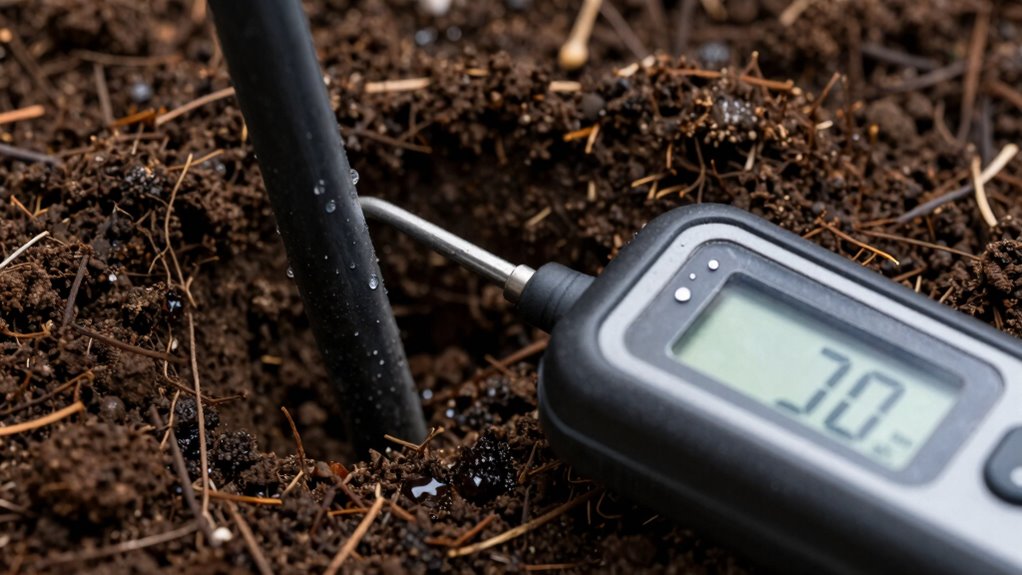
How do you accurately assess your soil’s water retention capabilities without expensive equipment or complex laboratory procedures?
You can perform a simple field test using readily available tools. Take a soil sample from your root zone, saturate it completely, then let it drain for twenty-four hours.
Weigh the sample immediately after drainage, then oven-dry it completely and weigh it again. Calculate moisture content by subtracting dry weight from wet weight.
Alternatively, use a soil moisture meter for quick readings. Perform multiple tests across different areas to account for variability.
Document your results systematically. This hands-on approach gives you precise data about your soil’s water-holding capacity, helping you make informed decisions about irrigation scheduling and soil management practices.
Boost Retention With Organic Matter
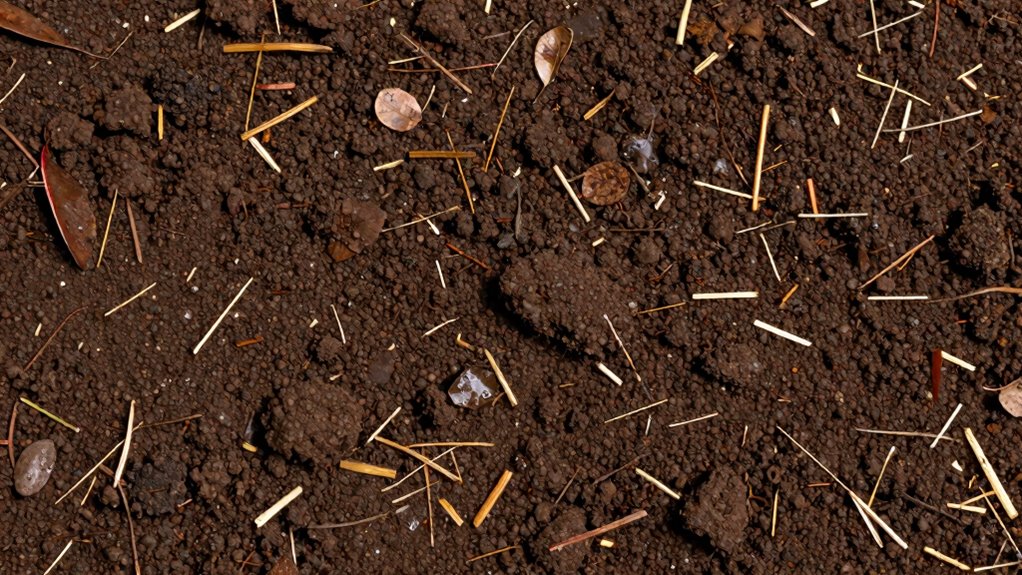
You’ll markedly enhance your soil’s water-holding capacity by incorporating organic matter through systematic compost application, strategic mulching of garden beds, and deliberate cover crop establishment.
These amendments increase soil porosity while creating stable aggregates that retain moisture longer after rainfall or irrigation events. Each method contributes distinct benefits: compost adds decomposed organic material that binds soil particles, mulch reduces evaporation from the soil surface, and cover crops’ root systems create channels that improve water infiltration and storage capacity.
Add Compost Regularly
Add compost regularly to boost your soil’s water retention capacity through increased organic matter content. You should apply 2-3 inches of finished compost annually, working it into the top 6-8 inches of soil.
Compost’s humus particles create microscopic pores that hold water molecules through capillary action. These organic compounds also improve soil structure by binding particles into stable aggregates, preventing compaction that reduces infiltration rates.
You’ll notice how readily water penetrates treated areas compared to compacted zones. The organic matter acts like a sponge, slowly releasing moisture to plant roots while reducing runoff. Regular applications maintain consistent soil moisture levels throughout growing seasons.
You become part of sustainable gardening practices that enhance soil biology and chemistry simultaneously. Test your soil annually to monitor organic matter percentages, aiming for 5-10% for ideal water retention.
Mulch Garden Beds
Mulching garden beds represents the next logical step after incorporating compost, as it maintains and builds upon the improved soil structure you’ve established.
You should apply 2-4 inches of organic mulch like wood chips, straw, or shredded leaves across your beds. This layer reduces evaporation by up to 70% while regulating soil temperature.
As mulch decomposes, it adds organic matter that enhances water-holding capacity. You’ll notice reduced irrigation needs and more consistent soil moisture levels.
Apply mulch in late spring after soil warms, keeping it away from plant stems to prevent rot. Replenish annually as decomposition occurs.
Organic mulches feed soil organisms, improving aggregation and porosity. You’re creating a moisture-retentive environment that supports beneficial microbial activity essential for healthy plant growth.
Plant Cover Crops
When cover crops decompose, they markedly boost soil organic matter content while improving water retention through enhanced soil structure. You’ll notice significant improvements in your soil’s water-holding capacity within one growing season.
- Legumes like crimson clover and winter peas fix nitrogen while adding organic matter that increases water infiltration rates by up to 50%.
- Grasses such as winter rye develop extensive root systems that create channels for water movement and prevent soil compaction.
- Brassicas including radishes break up compacted layers with deep taproots, improving drainage while adding substantial biomass.
- Mixtures combining multiple species maximize benefits through diverse root structures and varying decomposition rates, ensuring consistent organic matter input throughout the year.
Lock In Moisture Using Mulch Layers
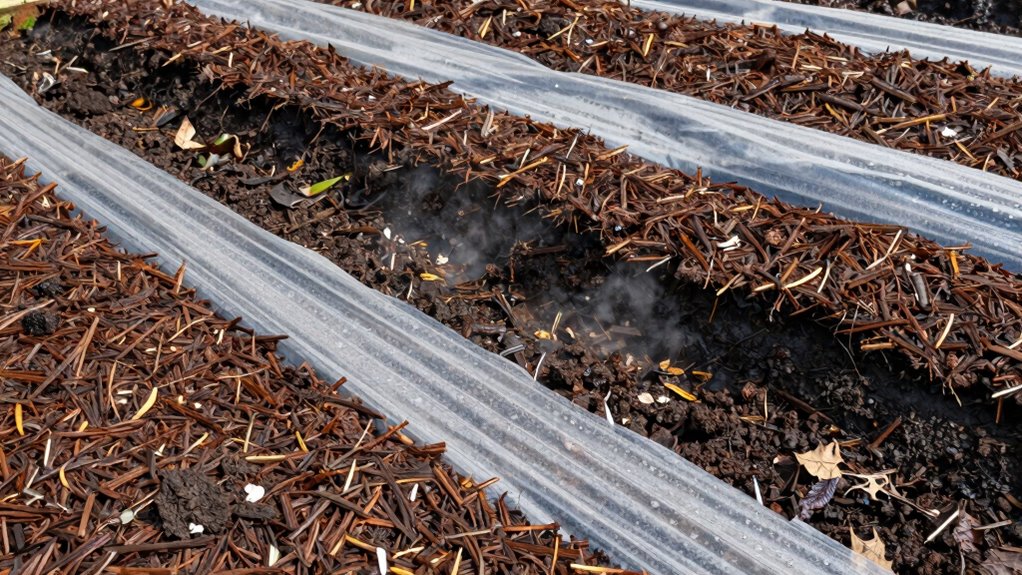
A single layer of organic mulch can reduce soil water evaporation by up to 70% while maintaining consistent moisture levels throughout your garden beds.
You should apply 2-4 inches of mulch directly over the soil surface, guaranteeing complete coverage without piling against plant stems. Organic materials like shredded bark, straw, or leaf mold create protective barriers that shield soil from direct sunlight and wind exposure.
Mulch layers function by reducing surface temperature fluctuations and preventing rapid moisture loss through evaporation. You’ll discover that properly applied mulch also suppresses weed competition while gradually decomposing to improve soil structure.
Avoid synthetic mulches which don’t provide soil enrichment benefits. Regular monitoring guarantees ideal thickness maintains effective moisture retention properties throughout growing seasons.
Loosen Tight Soil With Compost + Air
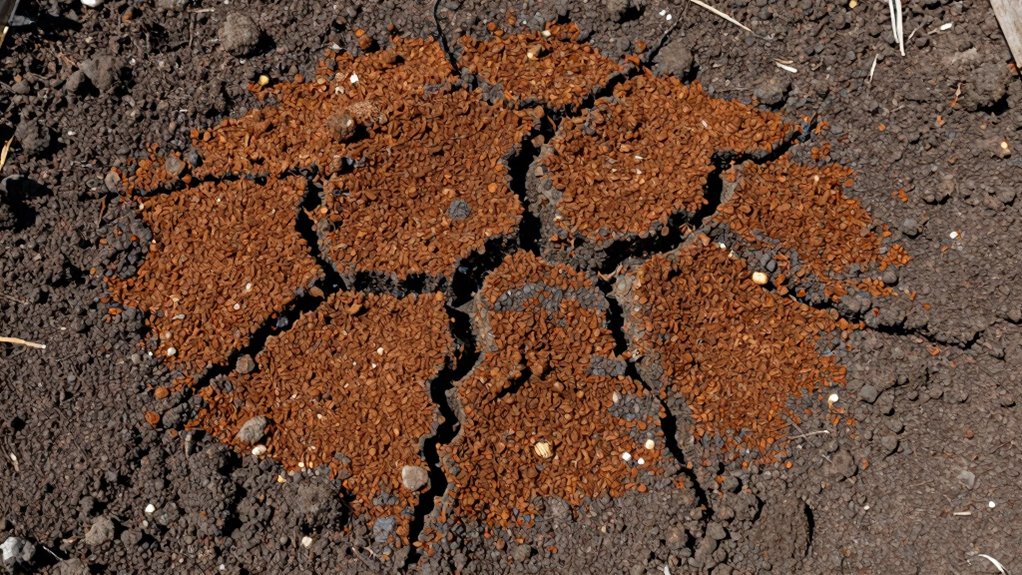
You’ll need to break up compacted soil layers first, as tightly packed earth prevents water from penetrating deeply into root zones.
Adding compost introduces organic matter that creates air pockets and improves soil aggregation, allowing water to infiltrate more effectively.
This process transforms dense, water-repellent soil into a well-structured growing medium that retains moisture while maintaining proper drainage.
Loosen Compacted Earth
Compacted soil severely restricts water infiltration and root penetration, creating a barrier that prevents ideal moisture retention throughout your growing area.
You must break up dense layers to restore proper soil structure and water-holding capacity.
- Use a garden fork or tiller to work 6-8 inches deep, breaking apart hardpan layers that prevent water movement and root expansion.
- Create drainage pathways by poking holes every 6 inches, allowing water to penetrate deeper rather than running off compacted surfaces.
- Lift and separate soil clumps during cultivation, aerating tight spaces where water typically pools instead of distributing evenly.
- Work soil when moist but not saturated, ensuring maximum effectiveness since dry earth resists breaking apart properly.
Add Organic Matter
Organic matter serves as the foundation for improved soil structure and water retention capacity.
You should incorporate compost, decomposed leaves, or well-aged manure into tight, compacted areas. These materials create pore spaces that allow air circulation while retaining moisture.
When you work organic matter into soil, you’re fundamentally creating a sponge-like matrix that holds water longer. The decomposing process releases nutrients that support beneficial microorganisms. These microbes further break down organic materials, continuously improving soil’s water-holding ability.
You’ll notice immediate differences in soil workability and moisture levels. Regular additions of organic matter maintain long-term soil health. Plan to add compost annually, working it into the top six inches. This practice guarantees consistent water retention improvements throughout growing seasons.
Improve Soil Structure
Adding compost to tight soil transforms its physical properties by creating a more porous, aerated structure that enhances water infiltration and retention.
You’ll notice immediate improvements in soil workability and drainage.
- Blend compost thoroughly – Work 2-4 inches of finished compost into the top 6-8 inches of compacted soil using a garden fork or tiller.
- Create air pockets – Avoid compacting wet soil during mixing, as this destroys newly formed pore spaces essential for root penetration.
- Test soil texture – Squeeze a handful after amendments; it should crumble easily rather than forming a tight ball.
- Maintain structure – Add fresh compost annually to prevent re-compaction and sustain improved water-holding capacity throughout growing seasons.
Match Soil Improvements to Sand or Clay
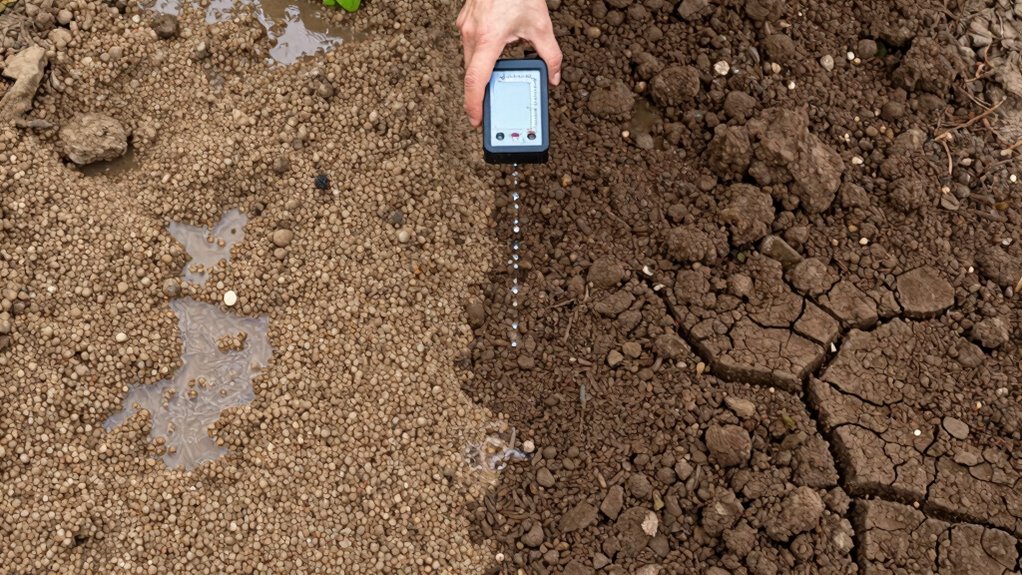
While identifying your soil type forms the foundation for effective water retention strategies, matching specific soil amendments to sandy or clay soils requires different approaches.
You should add organic matter like compost or well-aged manure to sandy soils to increase water-holding capacity. Clay soils need coarse materials such as perlite or coarse sand to improve drainage and prevent waterlogging.
Apply gypsum to clay soils to break up compacted layers and enhance infiltration. For sandy soils, incorporate water-retentive polymers or hydrogels that absorb and slowly release moisture.
Mulching works effectively for both types, reducing evaporation while maintaining soil temperature. You must test your soil’s pH and adjust accordingly, as extreme pH levels limit nutrient availability and water uptake.
Timing matters: amend sandy soils before planting season, while clay soils respond better to fall applications.
Set Up Drip Watering for Even Coverage
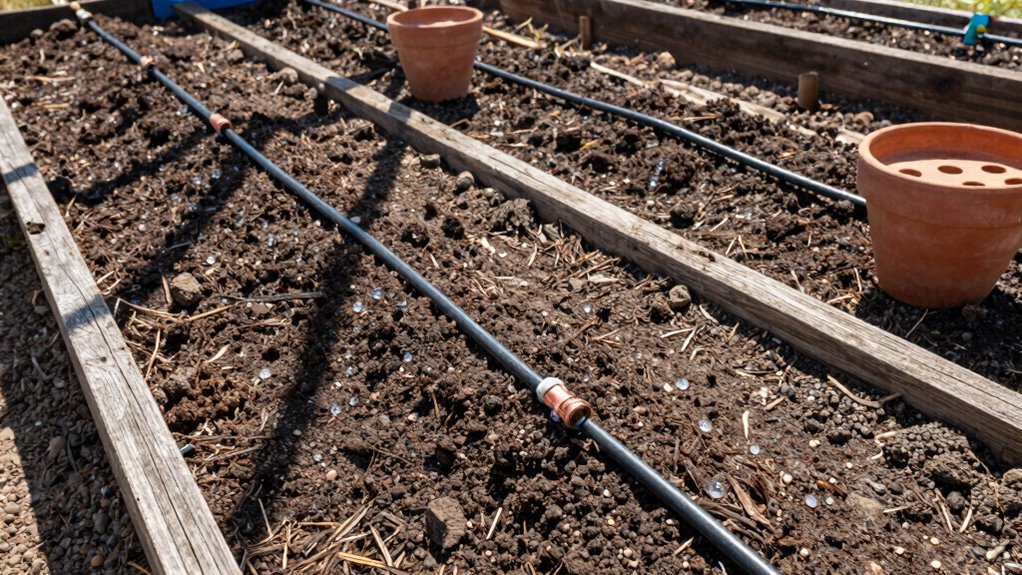
Proper soil amendment creates the foundation for effective water management, but distributing that moisture evenly requires a targeted irrigation approach.
You’ll maximize water retention by installing drip irrigation systems that deliver precise amounts directly to root zones.
- Calculate emitter spacing based on soil type and plant water requirements to guarantee uniform distribution
- Install pressure regulators to maintain consistent flow rates throughout your drip lines
- Position emitters 6-12 inches apart for sandy soils, 12-18 inches for loam, and 18-24 inches for clay soils
- Monitor system performance regularly by checking soil moisture levels at various distances from emitters
This systematic approach guarantees every plant receives adequate hydration while minimizing water waste and runoff.
Grow Cover Plants to Trap Water Longer
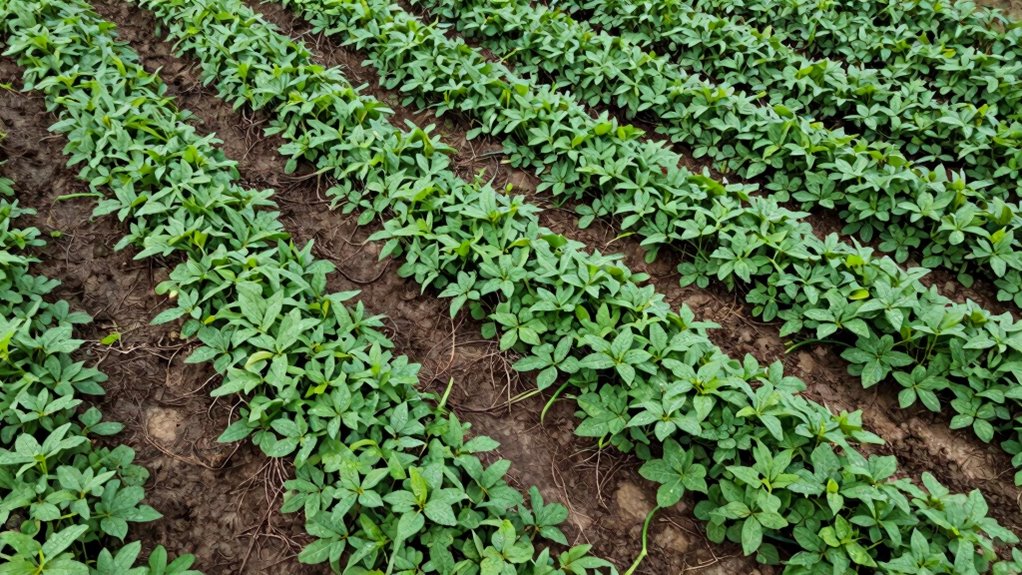
Cover crops like clover, rye, and buckwheat create a living mulch that greatly extends soil moisture retention by shielding the ground from direct sun exposure and reducing evaporation rates by up to 70%.
You’ll find that these plants establish dense root networks which improve soil structure and increase water-holding capacity. Their canopy intercepts rainfall, preventing soil compaction while allowing moisture penetration.
Leguminous covers like clover additionally fix nitrogen, enhancing soil fertility alongside moisture management.
You should plant cover crops during off-seasons or between main crop rotations. Establish them when soil temperatures reach 50°F for peak germination.
These plants don’t compete with your primary vegetation since you terminate them before planting seasons. Their decomposing biomass adds organic matter, creating stable soil aggregates that retain moisture longer.
You’re building a sustainable system that maintains soil health while maximizing water efficiency.
Stop Digging Too Deep: It Hurts Moisture
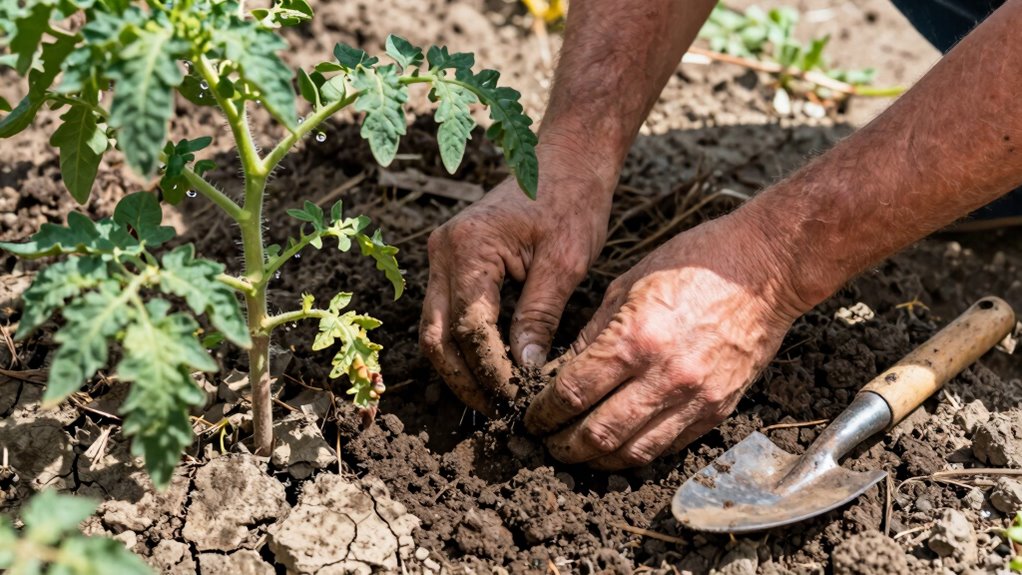
Deep tillage practices severely damage soil’s natural water retention mechanisms by disrupting beneficial microorganisms and breaking apart stable soil aggregates that took years to form.
You destroy the intricate pore networks that store moisture when you dig too deep.
- Shallow cultivation preserves soil structure and maintains capillary action that draws water upward.
- Beneficial fungi networks remain intact, enhancing water transport throughout root zones.
- Soil compaction decreases considerably when you limit digging depth to six inches maximum.
- Organic matter decomposition accelerates naturally without deep disruption to microbial communities.
Surface cultivation techniques protect the soil’s hydraulic conductivity while maintaining ideal moisture levels for plant uptake and storage.
Track What Works to Keep Soil Balanced
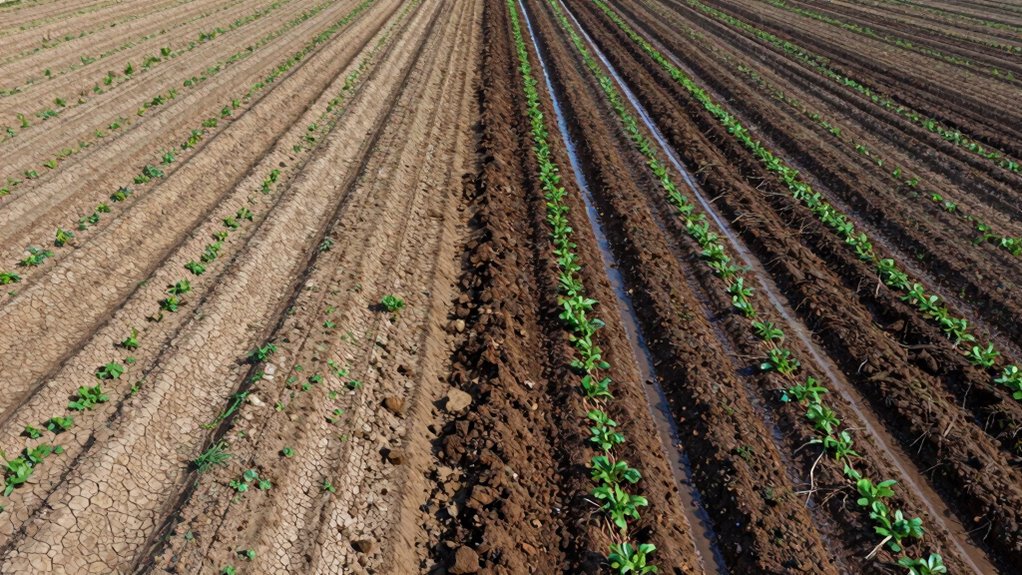
You should monitor soil moisture levels regularly using a moisture meter or manual testing methods to determine when water retention needs adjustment.
Test drainage and absorption rates by observing how quickly water penetrates and moves through different soil zones after irrigation events.
Adjust organic matter, compost, or other amendments based on these measurements to maintain ideal soil structure and water-holding capacity.
Monitor Soil Moisture Levels
How often should you measure soil moisture to maintain ideal growing conditions? You need consistent monitoring to prevent overwatering or drought stress that damages root systems.
- Check moisture levels every 2-3 days during active growing seasons when plants demand maximum water uptake.
- Use a soil moisture meter or dig 2-inch deep holes to test dryness with your fingers.
- Measure at different locations throughout your growing area since drainage variations exist.
- Record measurements in a journal noting weather patterns and irrigation schedules.
Consistent monitoring helps you understand your soil’s retention capacity. You’ll notice patterns in how quickly moisture evaporates and when replenishment becomes necessary.
This data lets you adjust watering frequency and amount precisely. Regular testing prevents costly mistakes like root rot from overwatering or plant stress from dehydration.
Your plants respond better when you maintain ideal moisture balance through informed decisions based on actual soil conditions rather than guesswork.
Test Drainage And Absorption
Why does soil drainage and absorption matter for maintaining ideal growing conditions? You need to understand how water moves through your soil to prevent waterlogging or drought stress.
Test drainage by digging a twelve-inch hole, filling it with water, then measuring how long it takes to drain completely. Ideal drainage occurs within eight to twelve hours.
Check absorption rates by observing how quickly surface water penetrates soil after irrigation. Poor drainage indicates compacted layers or excessive clay content, while rapid drainage suggests sandy soil needing organic matter.
You should conduct these tests in multiple locations since soil conditions vary across your growing area, giving you belonging within the community of informed growers.
Adjust Amendments Regularly
Regular soil testing reveals nutrient levels and pH fluctuations that occur over time, making consistent amendment adjustments necessary for prime plant health.
You’ll need to track these changes systematically to maintain ideal growing conditions.
- Monitor organic matter content quarterly through visual assessment and simple decomposition tests to determine when additional compost or mulch applications become necessary.
- Adjust pH levels based on seasonal variations and crop requirements, using lime for acidic conditions or sulfur for alkaline soils between growing seasons.
- Modify nutrient ratios according to plant uptake patterns and leaching rates, particularly after heavy rainfall or irrigation cycles deplete essential minerals.
- Evaluate soil structure changes monthly during active growing periods, adding specific amendments like perlite for drainage or clay particles for water-holding capacity when problems emerge.
Conclusion
You’ve learned the key strategies to boost soil water retention. Now don’t bury the lead: implementing these techniques consistently will pay dividends in moisture management. Organic matter incorporation, strategic mulching, and proper irrigation create lasting improvements. Regular monitoring guarantees your soil maintains ideal water-holding capacity for healthy plant growth.
