

Picture your garden soil as a bustling underground city where countless microorganisms work tirelessly to support plant life. You can boost this hidden ecosystem naturally without relying on synthetic inputs that often do more harm than good. By understanding how to feed and protect beneficial soil organisms through composting, mulching, and smart planting strategies, you’ll create a self-sustaining environment that grows healthier crops year after year. What simple changes could transform your soil’s performance starting today?
Why Natural Soil Fertility Beats Synthetic Fixes
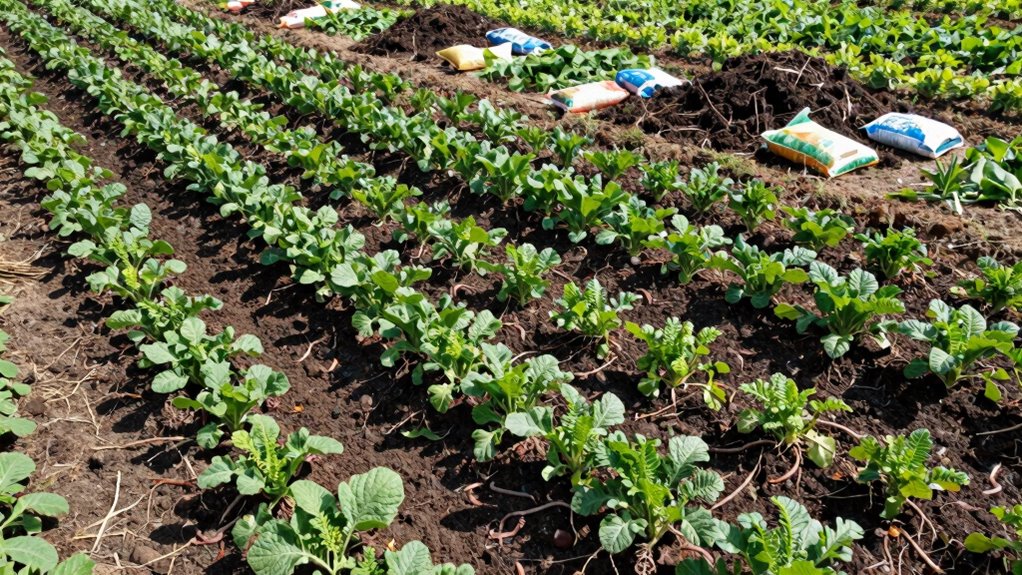
While synthetic fertilizers may seem like a quick solution for boosting soil productivity, natural soil fertility methods offer superior long-term benefits that synthetic alternatives can’t match.
You build soil structure and water retention through organic matter decomposition, creating stable nutrient cycles. Synthetic options provide immediate nutrient spikes but degrade soil microbiology and cause nutrient leaching.
You foster beneficial microbial communities when using compost, cover crops, and natural amendments. These microorganisms break down organic materials, making nutrients available gradually.
Your soil’s pH balance improves naturally through organic practices, preventing nutrient lockup common with synthetic applications. Earthworm populations increase, creating better soil aeration and nutrient distribution.
You reduce dependency on external inputs while building resilient soil ecosystems. Natural methods also eliminate chemical runoff risks that harm waterways.
Your garden becomes part of a sustainable cycle that regenerates rather than depletes soil health over time.
Test Soil Health With DIY Methods
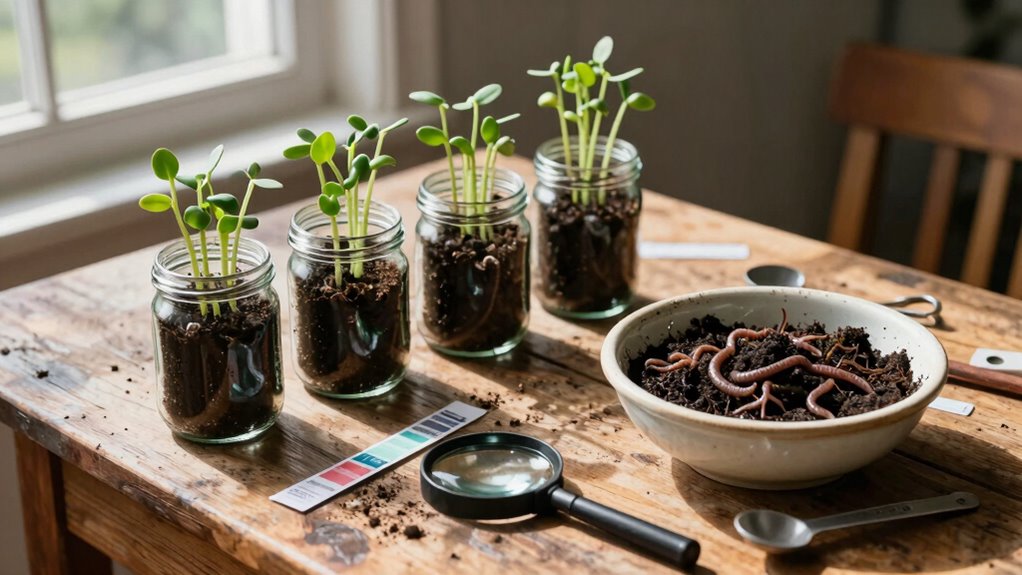
You can assess your soil’s pH levels using simple household items like vinegar and baking soda to determine acidity or alkalinity.
Testing nutrient content doesn’t require expensive equipment when you use plant indicators or basic soil test kits available at garden centers.
Monitoring drainage quality helps you understand how well your soil retains moisture while preventing waterlogging that damages plant roots.
Check PH Levels At Home
Testing your soil’s pH levels at home provides essential information about nutrient availability and plant health. You can use simple DIY methods like pH test strips or digital meters for accurate readings.
Collect soil samples from multiple locations, mix them thoroughly, and moisten with distilled water. Insert your testing tool into the mixture and wait for results.
Most plants thrive in slightly acidic to neutral soil, pH 6.0-7.0. If your soil tests too acidic, add lime to raise pH levels. For alkaline soil, incorporate sulfur or organic matter to lower pH.
Regular pH monitoring helps you understand your soil’s changing conditions. You’ll know when amendments are working and can adjust your gardening practices accordingly. This knowledge empowers you to create ideal growing conditions for your plants.
Test Nutrient Content Easily
Having checked your soil’s pH levels, you can now assess its nutrient content through simple at-home tests. You’ll discover what your soil lacks and needs immediately.
- Nitrogen deficiency makes your plants look pale and stunted – you’ll feel frustrated watching them struggle.
- Phosphorus shortage causes purple or dark green leaves – you’ll worry about root development.
- Potassium insufficiency creates yellow leaf edges – you’ll panic about plant survival.
- Micronutrient absence triggers various deficiency symptoms – you’ll realize something’s missing.
Use homemade tests like the jar method: fill a mason jar with soil, add hydrogen peroxide, and observe fizzing action. More fizz indicates better microbial activity.
You can also perform a smell test – healthy soil should have an earthy aroma.
These quick assessments reveal your soil’s fertility status without expensive laboratory testing, helping you belong to the informed gardener community.
Monitor Soil Drainage Quality
One simple method reveals how well your soil drains excess water. Dig a hole twelve inches deep and fill it with water. Time how long it takes to drain completely. Well-draining soil should empty within two to four hours.
Slow drainage indicates compacted or clay-heavy conditions that prevent proper aeration and nutrient uptake.
You’ll want to test multiple locations since drainage varies across your growing area. Poor drainage creates waterlogged conditions that suffocate beneficial microorganisms and plant roots. This leads to nutrient deficiencies and reduced soil fertility.
Improve drainage by adding organic matter like compost or aged manure. These amendments increase porosity and create air pockets essential for healthy soil biology.
Boost Soil Nutrients By Adding Compost
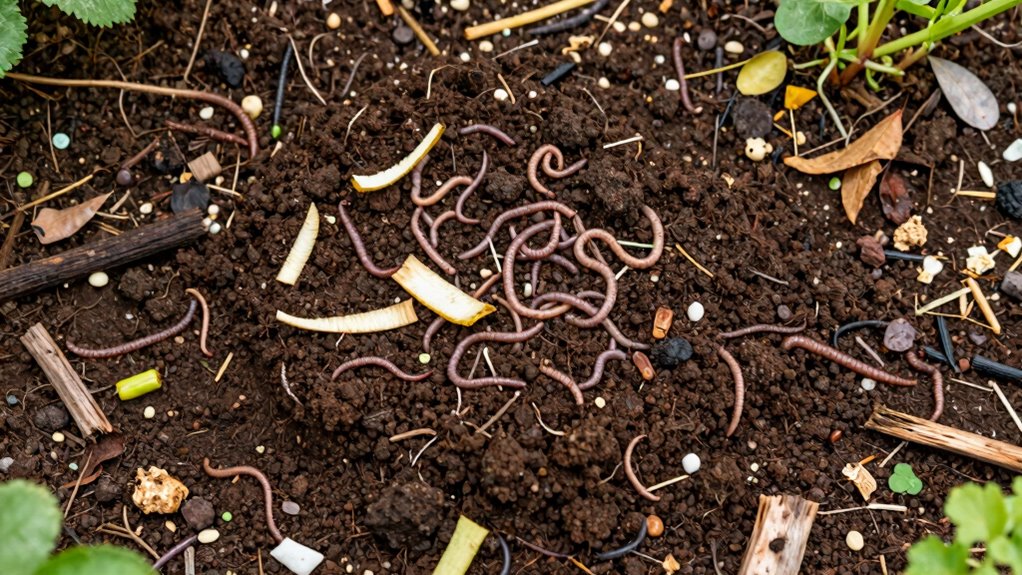
When you add compost to soil, you’re introducing a diverse community of beneficial microorganisms that break down organic matter and release essential nutrients plants need for healthy growth.
These microbes transform kitchen scraps and yard waste into plant-available nitrogen, phosphorus, and potassium.
- You’re creating living soil that supports robust plant root systems and disease resistance
- You’re reducing dependency on synthetic fertilizers while building long-term soil health
- You’re participating in nature’s cycle by returning organic matter where it belongs
- You’re joining countless gardeners who’ve successfully transformed poor soil into productive growing medium
Apply 2-4 inches of finished compost annually. Work it into the top 6-8 inches of soil before planting season begins for maximum nutrient availability.
Use Mulch To Retain Moisture and Nourish Microbes
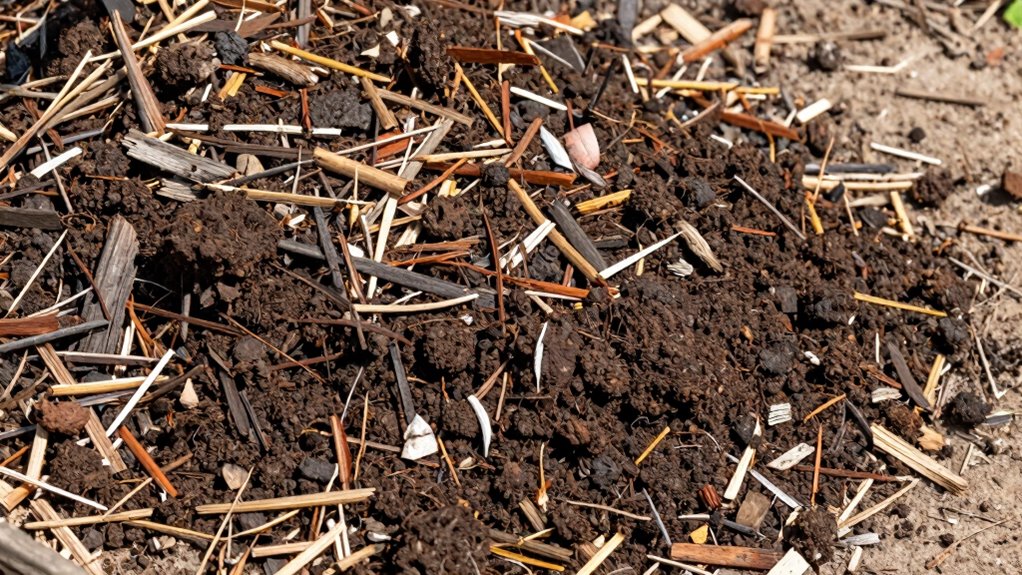
Mulch serves as a protective barrier that maintains soil moisture while feeding the microbial community essential for nutrient cycling.
You should apply organic mulch like straw, leaves, or wood chips around plants to create favorable conditions. These materials decompose slowly, releasing nutrients and carbon compounds that microbes need for growth.
You’ll notice improved water retention as mulch reduces evaporation by up to 70%. The shaded environment beneath mulch layers supports beneficial bacteria and fungi that break down organic matter.
You’re creating a habitat where earthworms and other organisms thrive, further enhancing soil structure.
Apply 2-4 inches of mulch annually, keeping it away from plant stems. You’ll see better moisture retention, reduced watering needs, and increased microbial activity that makes nutrients available to your plants naturally.
Enrich Soil Using Cover Crops and Legumes
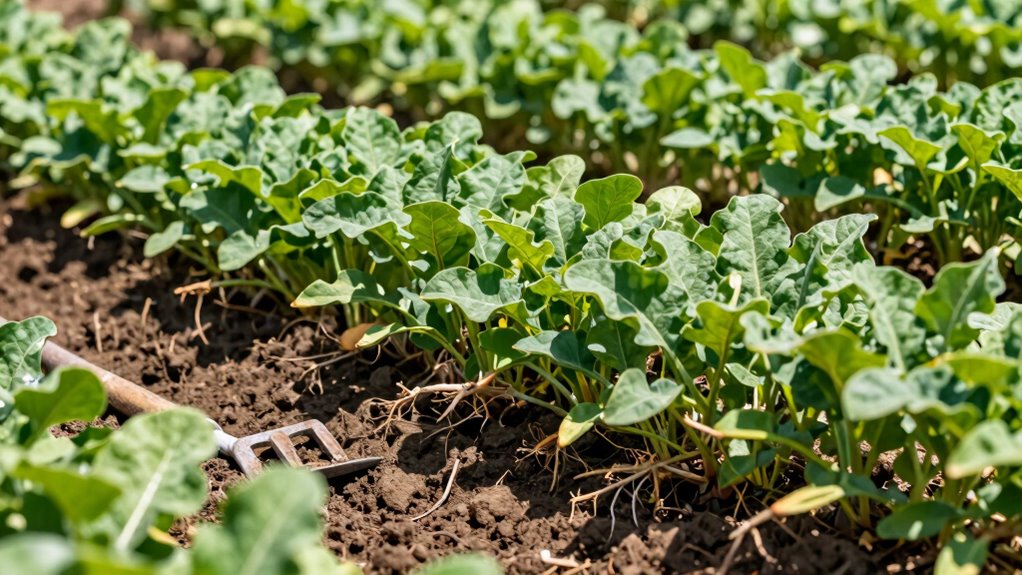
You should consider cover crops as nature’s fertilizer, protecting soil from erosion while adding organic matter that feeds beneficial microorganisms.
Legumes like clover, vetch, and field peas fix atmospheric nitrogen directly into the soil through their root nodules, reducing your need for synthetic fertilizers.
These plants work together to build soil structure and nutrient content when you incorporate them into your crop rotation plan.
Benefits Of Cover Crops
Cover crops considerably enhance soil fertility by adding organic matter, preventing erosion, and improving soil structure while you’re not growing your main crops. These beneficial plants create a living soil cover that protects and nourishes your growing space.
- You’ll discover richer, more fertile soil after just one season of cover cropping.
- Your garden becomes a thriving ecosystem where beneficial organisms flourish naturally.
- You’re actively preventing nutrient loss instead of watching valuable topsoil wash away.
- You’ll feel confident knowing your soil building strategy actually works for long-term sustainability.
Cover crops break up compacted layers, add biomass when decomposed, and create natural mulch.
You’re not just improving soil chemistry—you’re rebuilding your land’s foundation.
These plants suppress weeds while you’re away, reducing future workload.
Your soil food web strengthens considerably. Earthworms return. Microbial activity increases.
You’re participating in nature’s own soil-building process, creating belonging within the natural growing cycle that sustains productive gardens year after year.
Best Legumes For Nitrogen Fixation
Legumes enrich soil fertility through their unique ability to fix atmospheric nitrogen, making these plants invaluable for sustainable gardening practices.
You should consider planting crimson clover, which fixes 100-150 pounds of nitrogen per acre annually. Hairy vetch delivers similar results while tolerating cold climates effectively.
Field peas and Austrian winter peas work excellently in rotation systems, producing substantial biomass. Soybeans contribute markedly when incorporated properly into crop planning.
Alfalfa maintains long-term nitrogen benefits through deep root systems spanning multiple seasons.
You’ll maximize results by inoculating seeds with appropriate rhizobia bacteria before planting. Remember that proper termination timing guarantees ideal nitrogen release for subsequent crops.
These legumes create belonging within sustainable agriculture communities through proven soil enhancement techniques.
Rotate Crops For Balanced Soil Nutrition
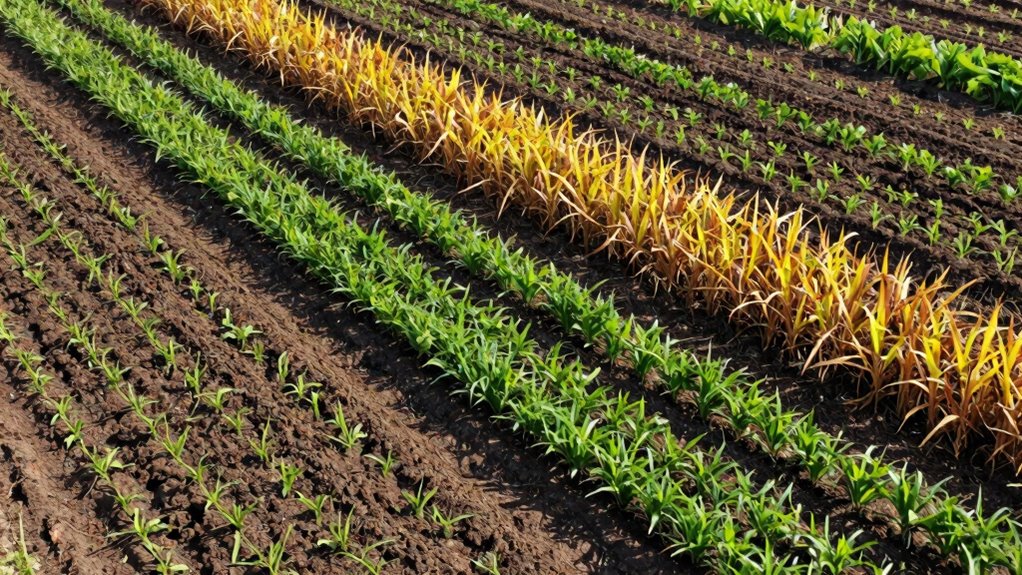
Crop rotation prevents soil nutrient depletion by systematically alternating plant families that have different nutritional demands and contributions.
You’ll maintain soil health while maximizing yields through strategic planning.
- Break disease cycles that devastate monoculture plantings
- Restore essential minerals naturally without expensive amendments
- Build soil structure through diverse root systems
- Create sustainable abundance for future harvests
Plan rotations by grouping heavy feeders like tomatoes with light feeders such as carrots.
Follow nitrogen-hungry crops with moderate-demand plants.
Keep detailed records of your planting zones.
Rotate brassicas away from previous brassica locations.
You’re not just gardening—you’re stewarding living soil ecosystems that support thriving communities.
Your garden becomes a model of ecological balance.
Grow Nitrogen-Fixing Plants Like Beans and Peas
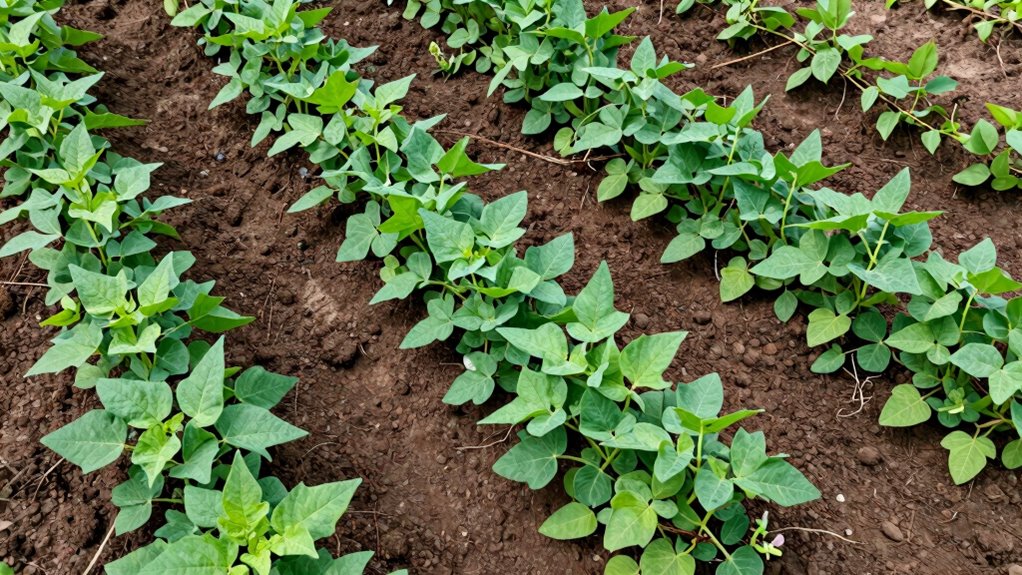
You should plant nitrogen-fixing crops like beans and peas because they naturally convert atmospheric nitrogen into soil-available forms through their root nodule bacteria.
These legumes enrich your soil with essential nitrogen while you grow your food, eliminating the need for synthetic fertilizers.
You’ll improve soil fertility organically by incorporating these plants into your crop rotation system.
Nitrogen-Fixing Plant Benefits
Several plants naturally enrich soil nitrogen levels through symbiotic relationships with rhizobia bacteria in their root nodules.
You’re not just growing food – you’re building community with microscopic partners that transform atmospheric nitrogen into plant-available compounds.
Growing nitrogen-fixing crops brings satisfaction knowing you’re improving soil health:
- You reduce dependency on synthetic fertilizers while saving money
- You create sustainable garden ecosystems that support beneficial organisms
- You contribute to environmental stewardship through natural nutrient cycling
- You gain confidence watching your soil structure and fertility improve seasonally
These plants don’t just feed themselves – they nourish future crops too.
Root systems release nitrogen compounds even after harvest, leaving residual benefits for neighboring plants.
You’re participating in nature’s time-tested method of soil enrichment.
Legumes become your allies in creating self-sustaining garden environments where biology does the heavy lifting naturally.
Natural Soil Enrichment Methods
Beans and peas serve as powerful tools for boosting soil nitrogen while producing valuable harvests.
You should plant legumes like soybeans, clover, or vetch to naturally fertilize your garden beds. These plants form symbiotic relationships with rhizobia bacteria in their root nodules, converting atmospheric nitrogen into forms your soil can use.
Don’t skip inoculating seeds with appropriate bacterial strains for maximum nitrogen fixation. You’ll notice improved soil fertility within one growing season.
Rotate legume crops annually to prevent nutrient depletion and disease buildup.
After harvest, chop and drop plant residue directly into soil rather than removing it. This green manure technique adds organic matter while releasing stored nitrogen slowly.
You’re fundamentally creating a self-sustaining fertilizer system that reduces dependency on synthetic inputs while building community with natural processes.
Boost Soil Biology With Natural Amendments
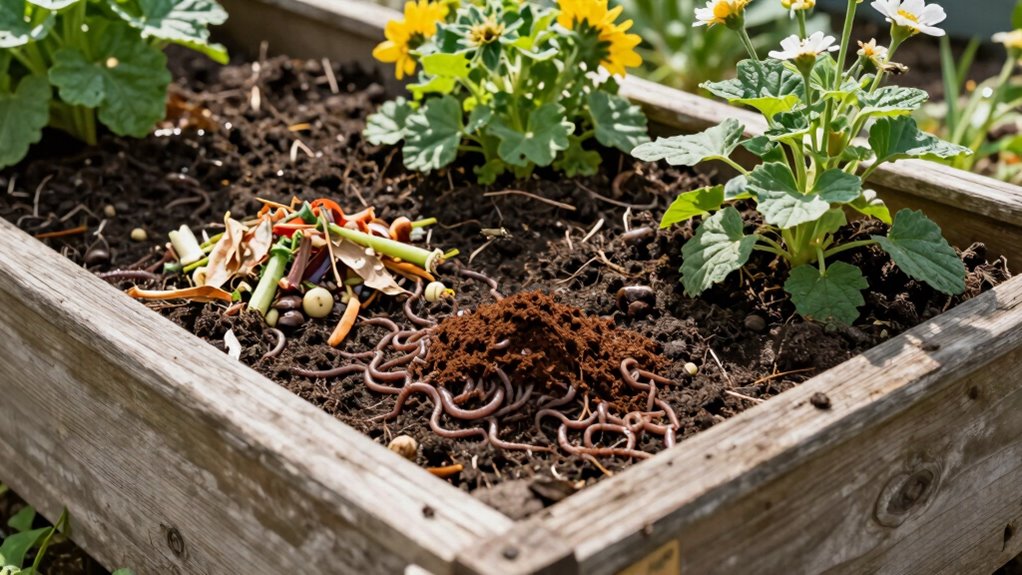
While organic matter serves as the foundation for healthy soil ecosystems, natural amendments like compost, aged manure, and biochar introduce diverse microbial communities that enhance nutrient cycling and soil structure.
You’ll transform your soil’s biological activity by incorporating these powerful amendments.
- Compost breathes life into dead soil, creating the vibrant ecosystem every gardener craves
- Aged manure delivers beneficial bacteria that make nutrients instantly available to your plants
- Biochar acts as a microscopic hotel, providing permanent housing for soil microbes
- Kelp meal introduces trace minerals and growth hormones that supercharge microbial populations
These amendments work synergistically, building soil biology that supports robust plant health.
You’re not just feeding plants; you’re nurturing the entire soil food web that creates belonging between earth and garden.
Adjust Soil pH With Lime or Sulfur Naturally
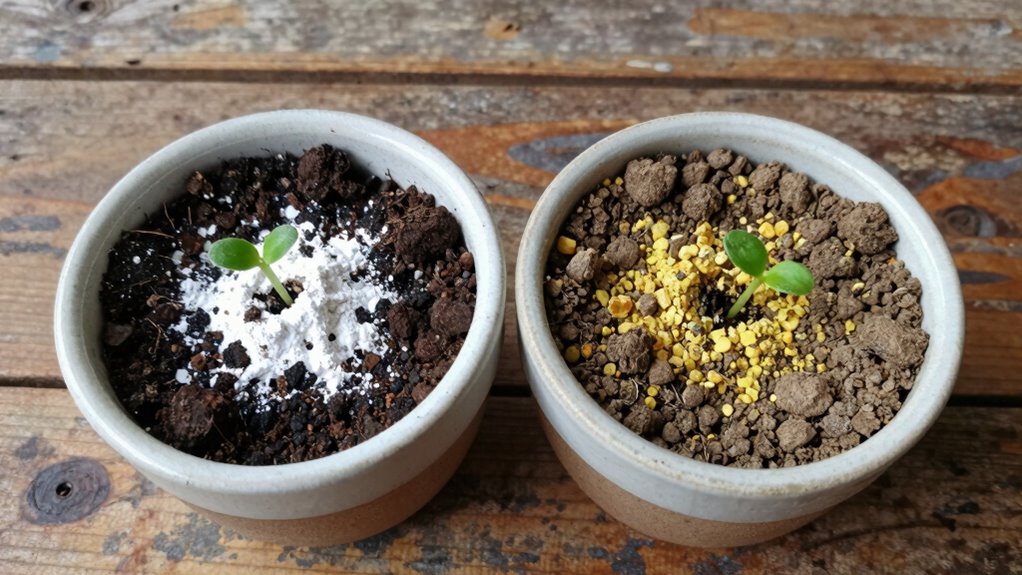
You should test your soil’s pH levels before making any adjustments, since most plants thrive in slightly acidic to neutral conditions between 6.0 and 7.0.
If your soil tests too acidic, you’ll need to apply lime to raise the pH and make it more alkaline.
When your soil pH falls below ideal levels, sulfur applications will help lower the alkalinity and create better growing conditions.
Test Soil PH Levels
Testing your soil’s pH levels is essential because nutrient availability depends on proper acidity balance. You need accurate measurements to determine whether your soil leans acidic or alkaline.
Don’t guess about your soil’s pH – test it properly using these methods:
- Purchase a reliable soil pH tester or testing kit from your local garden center
- Collect samples from multiple locations in your garden for accurate results
- Test at different depths since pH varies throughout soil layers
- Record your findings to track changes over time
Most plants thrive in slightly acidic to neutral soil, typically pH 6.0-7.0.
If your soil pH falls outside this range, you’ll struggle to grow healthy plants regardless of other soil amendments you apply.
Testing gives you the knowledge needed to make informed decisions about improving your soil’s fertility naturally.
Apply Lime For Alkaline
When your soil tests too acidic, applying lime raises the pH to create more favorable growing conditions. You should test your soil first to determine exact pH levels and deficiency severity.
Agricultural lime, dolomitic lime, or wood ash effectively neutralize acidity by adding calcium and magnesium. Apply lime based on soil test recommendations, typically ranging from 50 to 100 pounds per 1,000 square feet.
Incorporate lime into the top six inches of soil several months before planting. Sandy soils require less lime while clay soils need more due to higher buffering capacity. Wait at least three months after liming before planting sensitive crops.
Re-test soil annually to maintain ideal pH levels between 6.0 and 7.0 for most vegetables and flowers.
Add Sulfur For Acidic
While lime effectively raises soil pH for acidic conditions, sulfur serves the opposite purpose by lowering pH in alkaline soils.
You’ll need to test your soil first to determine if sulfur application is necessary. Elemental sulfur works slowly but provides long-lasting results when soil bacteria convert it to sulfuric acid.
- Feel the satisfaction of watching your acid-loving plants thrive
- Experience the pride of creating ideal growing conditions naturally
- Enjoy the relief of fixing nutrient deficiencies without chemicals
- Share the joy of successful gardening with your community
Apply sulfur at rates between 1-5 pounds per 100 square feet depending on your soil test results.
Incorporate it into the top 6 inches of soil several months before planting.
Water thoroughly after application to activate the pH-lowering process.
Protect Soil Structure By Avoiding Tilling
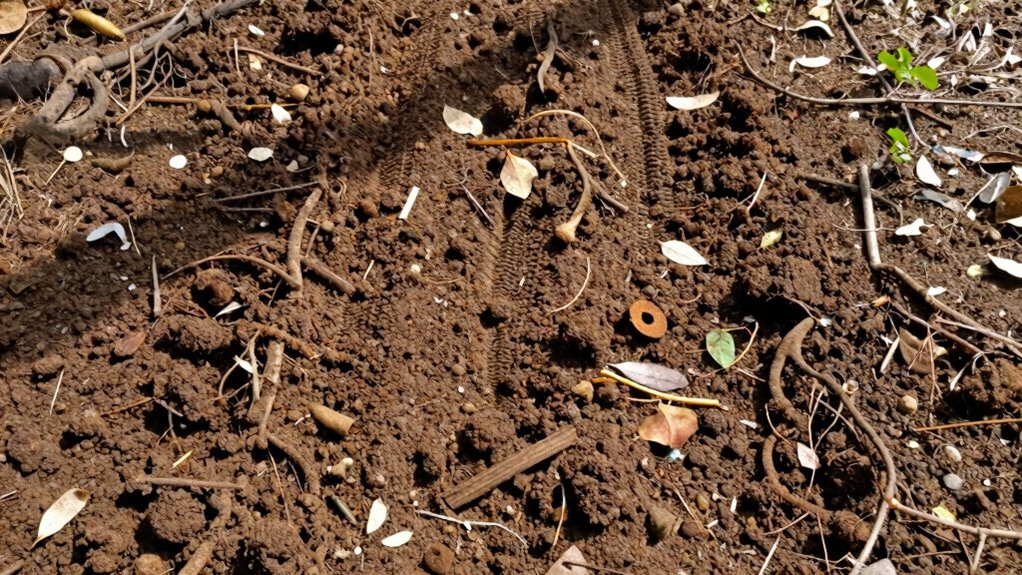
Tilling disrupts the natural soil structure that plants and beneficial microorganisms have spent years establishing.
You destroy the delicate pore spaces and capillary networks that facilitate water infiltration and root penetration. Soil compaction increases while aggregate stability decreases, creating conditions that hinder plant growth.
Instead, adopt no-till practices that preserve existing soil architecture. You can plant directly into residue from previous crops, maintaining continuous ground cover.
This approach reduces erosion, retains moisture, and sustains the microbial communities essential for nutrient cycling.
When you avoid tilling, organic matter decomposition occurs naturally, gradually releasing nutrients your plants need.
The soil’s biological activity remains undisturbed, supporting the complex ecosystem that healthy plants depend on for peak growth and productivity.
Attract Earthworms To Enhance Soil Quality
Building on no-till practices that preserve soil structure, you can further enhance soil quality by actively encouraging earthworm populations.
These beneficial creatures create nutrient-rich castings while aerating your soil through their tunneling activity.
You’ll want to create welcoming conditions that make your garden feel like home for earthworms:
- Add organic matter like compost and mulch to provide food sources they crave
- Maintain consistent moisture levels since worms need damp environments to breathe
- Avoid chemical pesticides and synthetic fertilizers that disrupt their sensitive ecosystem
- Create shaded areas with ground cover where worms can escape harsh sunlight
Earthworms greatly improve soil fertility by breaking down organic material into plant-available nutrients.
Their burrowing action enhances water infiltration and root penetration while creating stable soil aggregates.
You’re fundamentally inviting nature’s best soil engineers to work for free in your garden.
Use Eggshells and Coffee Grounds As Free Fertilizer
Since eggshells and coffee grounds are readily available kitchen waste products, you can easily transform them into valuable soil amendments that provide essential nutrients without additional cost.
Eggshells supply calcium carbonate, improving soil pH and structure. Crush shells finely before adding to prevent attracting pests.
Coffee grounds offer nitrogen, phosphorus, and potassium while enhancing soil drainage. Apply grounds directly around plants or mix into compost.
Both materials decompose slowly, creating long-term nutrient release. You’ll improve soil fertility while reducing household waste. Simply collect, dry, and incorporate these organic materials into your garden beds.
This sustainable approach feeds beneficial microorganisms and earthworms while building soil structure. Your garden thrives naturally when you utilize these free, nutrient-rich amendments consistently throughout growing seasons.
Build Healthy Soil With No-Dig Gardening
While you might assume that turning over soil is necessary for garden preparation, no-dig gardening proves otherwise by letting natural processes build soil structure from the top down. You layer organic matter directly on soil surface, mimicking forest floor decomposition.
- Relief washes over you when you realize you can skip backbreaking digging.
- Excitement builds as worms and beneficial microbes thrive in undisturbed soil.
- Pride swells watching rich, dark humus develop naturally season after season.
- Belonging emerges as you join thousands using this sustainable method.
You simply add compost, mulch, and organic amendments yearly.
Earthworms tunnel through layers, creating natural aeration.
Soil organisms flourish without disruption.
Root systems develop stronger penetration through loose, living soil.
Your garden becomes self-sustaining ecosystem requiring minimal intervention while producing abundant harvests.
Avoid These Habits That Harm Soil Life
Although you mightn’t realize it, common gardening practices can devastate the underground ecosystem that keeps your soil productive.
Tilling destroys beneficial fungal networks and disrupts earthworm tunnels that aerate soil naturally. Overwatering suffocates microbes by eliminating air pockets essential for their survival.
Chemical fertilizers and pesticides kill beneficial bacteria and insects that break down organic matter into nutrients plants absorb. Walking on garden beds compacts soil, crushing the spaces where roots and organisms breathe.
Using synthetic mulches prevents natural decomposition processes that feed soil life. These practices eliminate the very organisms that create fertile, self-sustaining soil.
You’re undermining the complex web of life that makes gardening successful. Instead, protect soil inhabitants by avoiding these destructive habits and letting natural processes flourish undisturbed.
Maintain Rich Soil With Minimal Work
When you stop disrupting soil’s natural processes, fertility improves with minimal effort.
Your soil ecosystem thrives when you let beneficial microorganisms, earthworms, and fungi do their work undisturbed.
You’ll discover how satisfying it feels when you embrace these simple practices:
- Leave soil undisturbed – No more excessive tilling that destroys microbial networks you’ve worked hard to build.
- Keep soil covered – Mulch protects and feeds your soil while you sleep, creating that secure feeling of nature working for you.
- Plant diverse crops – Different roots feed different microbes, giving you confidence that you’re supporting complex soil life.
- Add organic matter annually – Compost and leaf litter provide steady nutrition, helping you feel connected to natural cycles.
These methods require less physical work while building soil health.
You’re not just gardening—you’re participating in something larger than yourself.
Conclusion
You’ve learned the secrets to naturally rich soil. By composting kitchen scraps, using cover crops, and avoiding harmful practices, you’re planting the seeds for long-term garden success. Your soil’s microbial ecosystem will thank you with bountiful harvests. Remember: healthy soil isn’t just dirt—it’s a living, breathing foundation that feeds your plants naturally. Keep nurturing it, and it’ll keep nourishing you.
