

You can manage garden pests effectively without resorting to chemical treatments. Start by understanding where pests typically hide and breed, then implement targeted strategies like introducing beneficial insects, creating physical barriers, and using natural sprays. These methods work by disrupting pest life cycles and habitat preferences. Each approach offers specific advantages depending on your garden’s unique conditions and pest pressures.
Choose Natural Over Chemical Pest Control
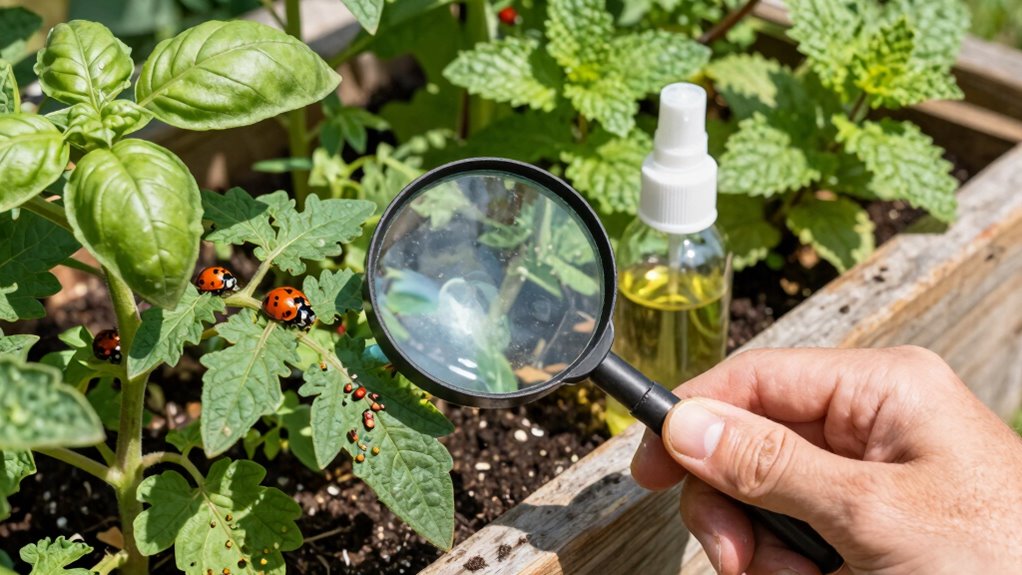
One effective approach to pest management involves selecting natural methods over chemical alternatives.
You’ll find that beneficial insects like ladybugs and lacewings actively prey on aphids and mites, creating balanced ecosystems. Neem oil disrupts pest reproduction cycles while remaining safe for beneficial species. Companion planting works through chemical signals plants release, deterring specific pests naturally.
You should consider diatomaceous earth, which damages soft-bodied insects’ exoskeletons through microscopic sharp edges. Garlic and chili sprays create barriers pests avoid due to their strong odors.
These methods preserve soil microbiology while building resistance in your garden ecosystem. Natural controls require patience, but they establish sustainable pest population levels rather than complete eradication.
You’re participating in environmentally responsible gardening practices that protect groundwater and beneficial organisms while maintaining productive yields through biological balance.
Identify Where Garden Pests Hide
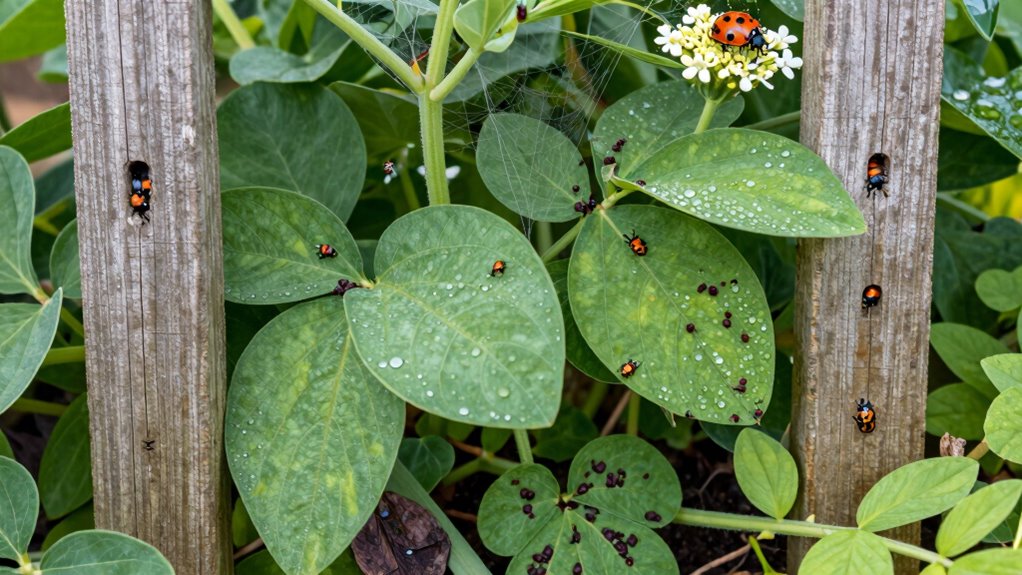
You must first locate common hiding spots like undersides of leaves, soil crevices, and garden debris where pests shelter during daylight hours.
Natural predators including ladybugs, lacewings, and ground beetles actively seek these concealed areas to hunt their prey.
Physical barriers such as copper tape, diatomaceous earth, and mesh screens effectively block pests from accessing these protected hiding places.
Common Hiding Spots
Garden pests seek shelter in specific microhabitats that provide protection from predators and environmental stressors.
You’ll find aphids clustering on leaf undersides, particularly near veins where they access nutrient-rich sap.
Spider mites create webbing colonies on plant stems and leaf junctions.
Cutworms burrow just beneath soil surface, hiding during daylight hours.
Slugs and snails prefer dark, moist areas like under mulch, rocks, or dense foliage.
Caterpillars often conceal themselves on leaf bottoms or within plant crevices.
Whiteflies gather on leaf undersides, especially in dense canopy areas.
Root maggots tunnel directly into soil around plant bases.
You should check these common hiding spots regularly because early detection prevents population explosions.
These pests favor locations that maintain humidity while offering physical protection, making thorough inspection of these microenvironments essential for effective non-chemical control strategies.
Natural Predators
Predatory insects and arthropods occupy many of the same microhabitats where pest species shelter, creating intricate ecological relationships within garden ecosystems.
You’ll find these beneficial creatures hiding in similar locations you’ve identified for pests.
- Ground-dwelling predators like rove beetles and centipedes lurk beneath mulch, leaf litter, and soil crevices where cutworms and grubs hide during daylight hours.
- Spider species inhabit dense vegetation, woodpiles, and structure corners, positioning themselves where aphids and other small pests gather.
- Predatory wasps and hoverfly larvae seek sheltered spots on plant stems and undersides of leaves, targeting caterpillar and aphid colonies.
Understanding these predator-prey dynamics helps you recognize why certain garden areas harbor both pests and their natural enemies simultaneously.
Physical Barriers
Physical barriers create effective pest management by exploiting the shelter-seeking behaviors of garden insects.
You’ll discover that pests frequently hide beneath mulch, stones, and garden debris where they find moisture and protection. Row covers prevent flying insects from reaching your crops while allowing air circulation.
Copper strips deter slugs and snails that hide in dark, damp areas during daylight. You should install barriers before pest populations establish themselves.
Check underneath planters, along foundations, and around water sources where insects congregate. Diatomaceous earth creates microscopic barriers that insects can’t cross.
Floating row covers work best when secured tightly around edges. You’ll notice immediate results when you remove pest hiding spots. Regular inspection reveals where pests shelter during different seasons.
Barrier methods require consistent maintenance but provide chemical-free protection that you can trust.
Release Beneficial Predators Against Bugs
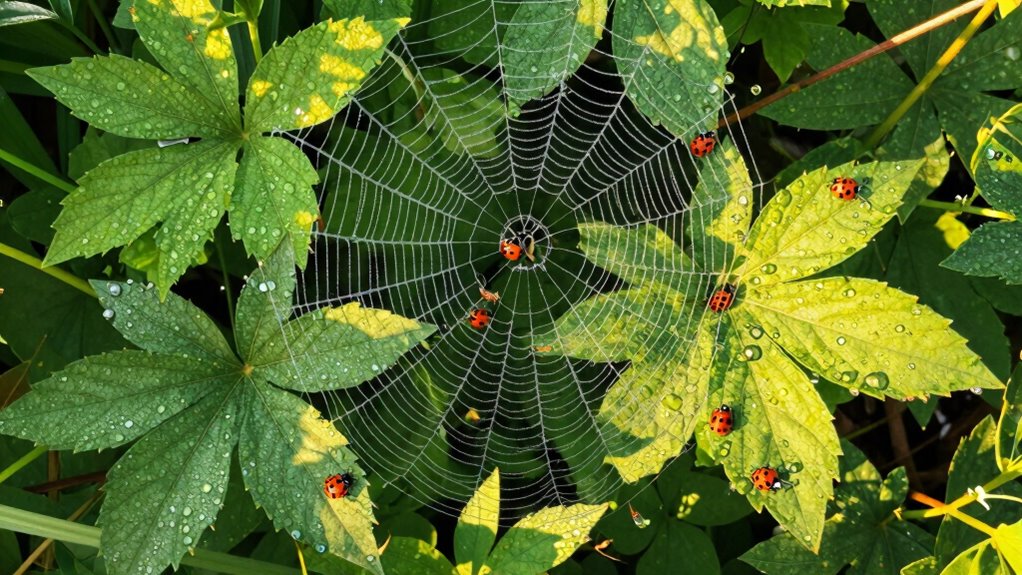
You can effectively manage pest populations by introducing natural predators like ladybugs, lacewings, and parasitic wasps that specifically target harmful insects.
These beneficial organisms establish sustainable control systems where they actively hunt and consume pest species, reducing the need for chemical interventions.
Selecting appropriate predator species requires matching their hunting behaviors to your specific pest problems while ensuring environmental conditions support their survival and reproduction.
Natural Predator Release Methods
Ladybugs, lacewings, and parasitic wasps serve as nature’s pest control agents when released into gardens and agricultural settings.
You’ll find these beneficial insects target aphids, mites, and other destructive pests while leaving your plants unharmed.
When implementing natural predator release methods, consider these key strategies:
- Timing matters: Release predators during early morning or evening when temperatures are cooler and prey populations peak.
- Habitat preparation: Plant diverse flowering species that provide nectar and pollen sources to sustain predator populations between pest outbreaks.
- Species selection: Match specific predator species to your target pests – ladybugs consume aphids while parasitic wasps control caterpillars.
You’re joining countless gardeners who’ve successfully reduced chemical dependence through biological control methods that work with natural ecosystems rather than against them.
Beneficial Insect Control Strategies
Beneficial predators offer a targeted approach to pest management that extends beyond simple release methods. You must understand predator-prey dynamics to maximize effectiveness.
Ladybugs, lacewings, and parasitic wasps actively hunt specific pests while leaving beneficial insects unharmed. These natural enemies establish sustainable populations when you provide appropriate habitat and timing.
You should research each predator’s life cycle, feeding preferences, and environmental requirements before implementation. Proper identification of target pests guarantees you select effective biological controls.
Monitoring predator establishment through regular scouting confirms successful integration. You can enhance control by combining multiple beneficial species with complementary hunting strategies.
Environmental factors like temperature, humidity, and plant diversity greatly impact predator performance. Strategic planning creates thriving beneficial insect communities that maintain long-term pest suppression while supporting ecological balance in your growing system.
Build Barriers That Keep Pests Out
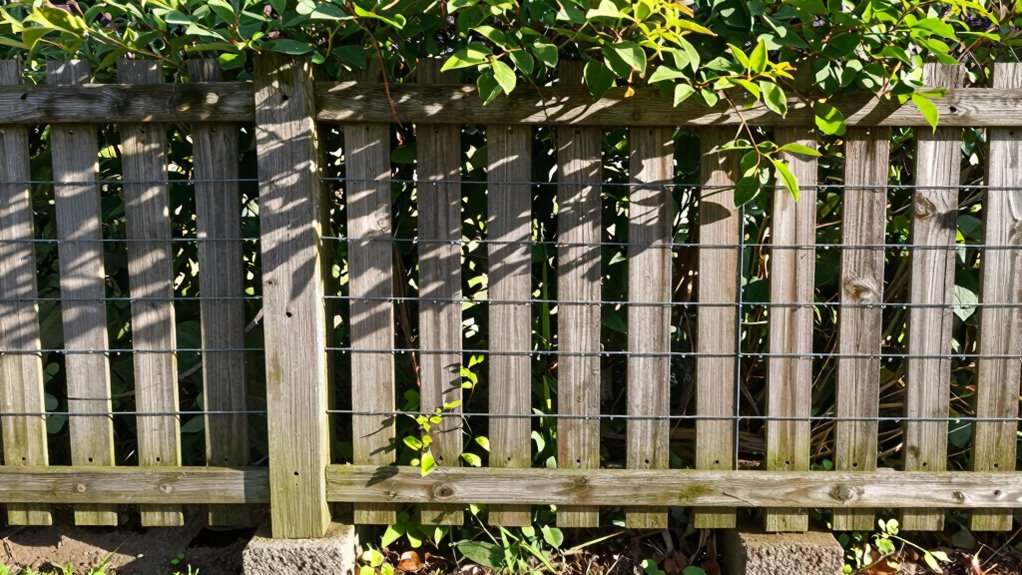
Installing physical barriers represents one of the most effective non-chemical approaches for preventing pest infiltration.
You create immediate protection by blocking entry points where pests typically access your space.
Consider these barrier methods:
- Seal cracks and gaps around windows, doors, and foundations using caulk or weatherstripping to eliminate insect entry routes.
- Install fine mesh screens over vents, chimneys, and openings to prevent flying insects while maintaining airflow.
- Use door sweeps and thresholds to close gaps under doors where crawling pests enter.
These barriers work continuously without requiring maintenance or reapplication.
You strengthen your pest defense system permanently while avoiding chemical exposure.
Physical barriers provide reliable, long-term solutions that complement other non-chemical pest management strategies effectively.
Make DIY Natural Spray Recipes
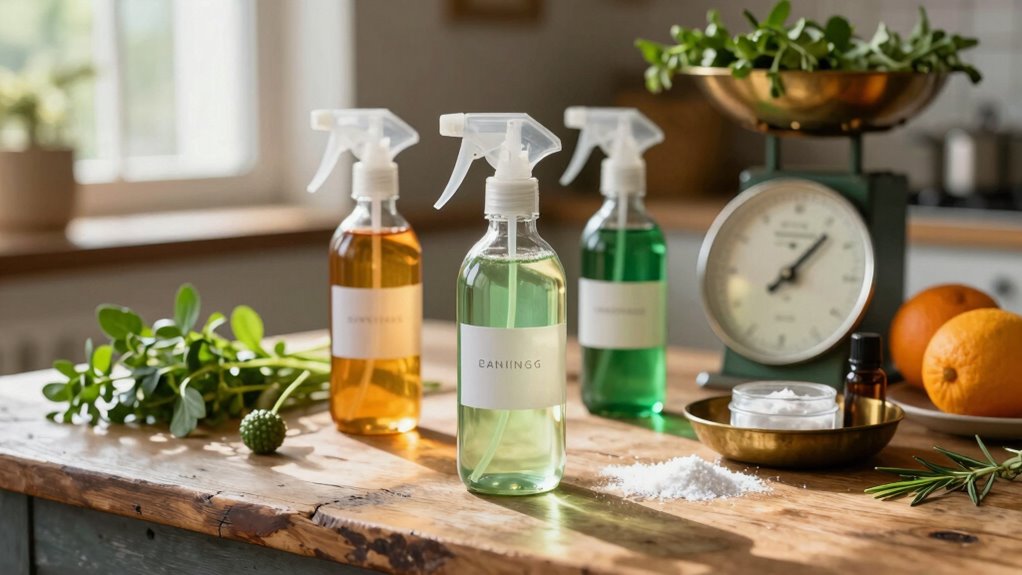
When you’re dealing with persistent pests that breach your barriers, creating effective natural spray solutions allows you to target specific problem areas without resorting to synthetic chemicals.
You can formulate potent sprays using common household ingredients like neem oil, which disrupts insect hormone systems, or garlic powder that repels soft-bodied pests. Mix one tablespoon neem oil with quart water and few drops dish soap for aphid control.
Essential oils like peppermint or eucalyptus work effectively against ants and spiders. Combine ten drops essential oil with water in spray bottle.
Test solutions on small plant sections first to prevent damage. Apply sprays during cooler morning hours when beneficial insects are less active. Reapply after rainfall or every three days for continued effectiveness.
Grow Plants That Repel Harmful Bugs
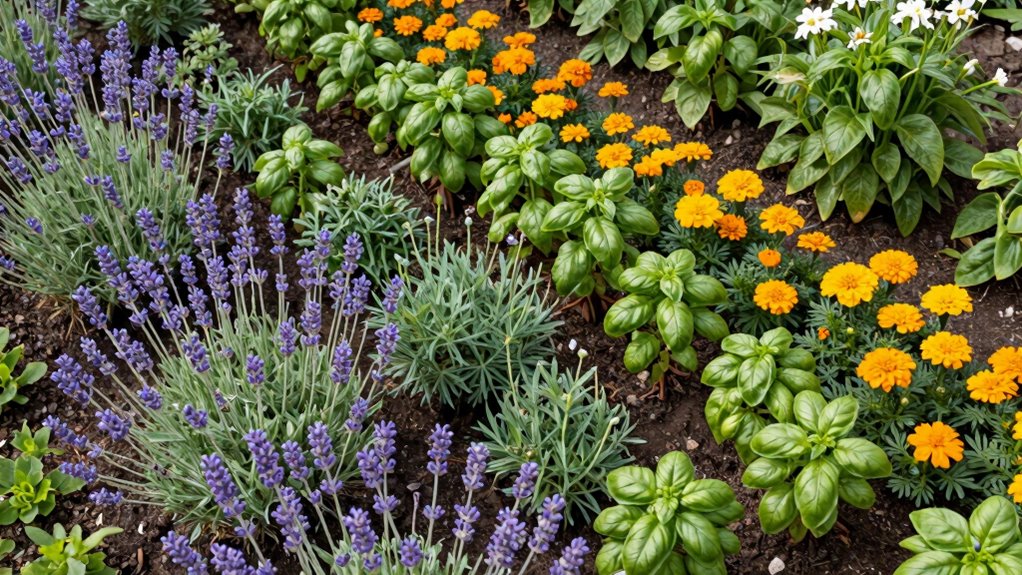
While you’re planning your garden layout, consider incorporating companion plants that naturally deter harmful insects through their aromatic compounds and chemical secretions.
These botanical allies release volatile oils and alkaloids that disrupt pest feeding patterns and reproduction cycles. You’ll want to strategically position these protective plants throughout your growing space:
- Marigolds produce thiophenes that repel nematodes, aphids, and whiteflies while attracting beneficial predators.
- Basil emits eugenol and linalool compounds that discourage flies, mosquitoes, and spider mites from settling nearby.
- Nasturtiums release mustard oils that deter squash bugs, cucumber beetles, and Colorado potato beetles.
These companion planting strategies create natural pest management systems.
You’re not just growing food; you’re cultivating ecosystems where beneficial chemistry protects your harvest. This approach builds community among gardeners who value sustainable practices.
Sprinkle Diatomaceous Earth Safely
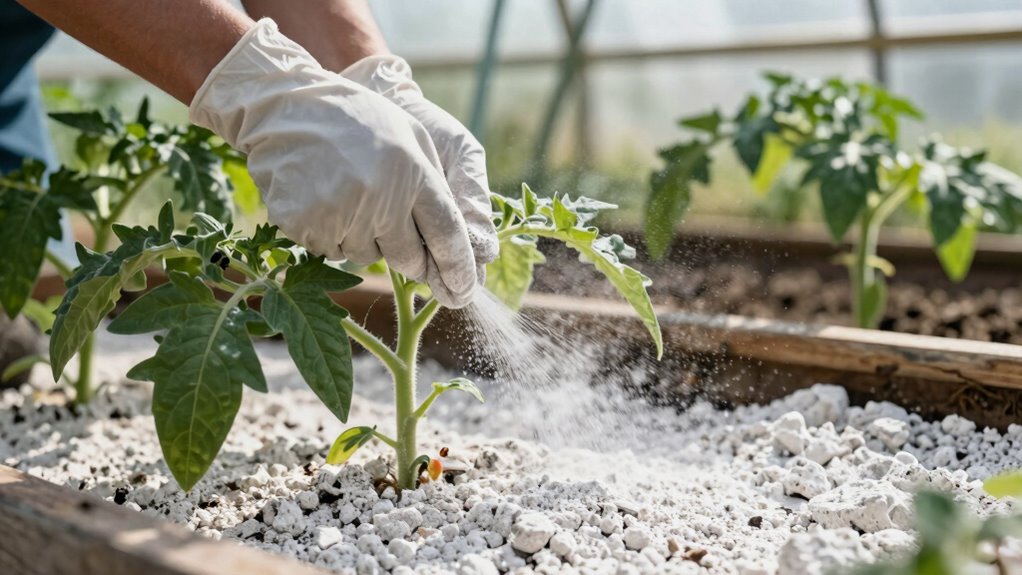
Diatomaceous earth offers another effective method for controlling soft-bodied insects like aphids, slugs, and caterpillars without relying on synthetic pesticides.
You should apply this naturally occurring sedimentary rock powder during dry conditions when pests are most active. Wear protective gloves and a dust mask while sprinkling it around plant bases and garden pathways where insects travel.
Focus on areas where crawling insects hide, like under leaves and near soil surfaces. Reapply after rainfall or heavy watering, as moisture reduces effectiveness.
You’ll notice damaged exoskeletons and dehydration affecting treated pests within days. Keep applications light but thorough, avoiding windy days that scatter particles.
Store unused portions in sealed containers away from moisture.
This硅藻土 method works best when combined with other organic pest management strategies you’re already implementing.
Trap Rodents Without Harming Them
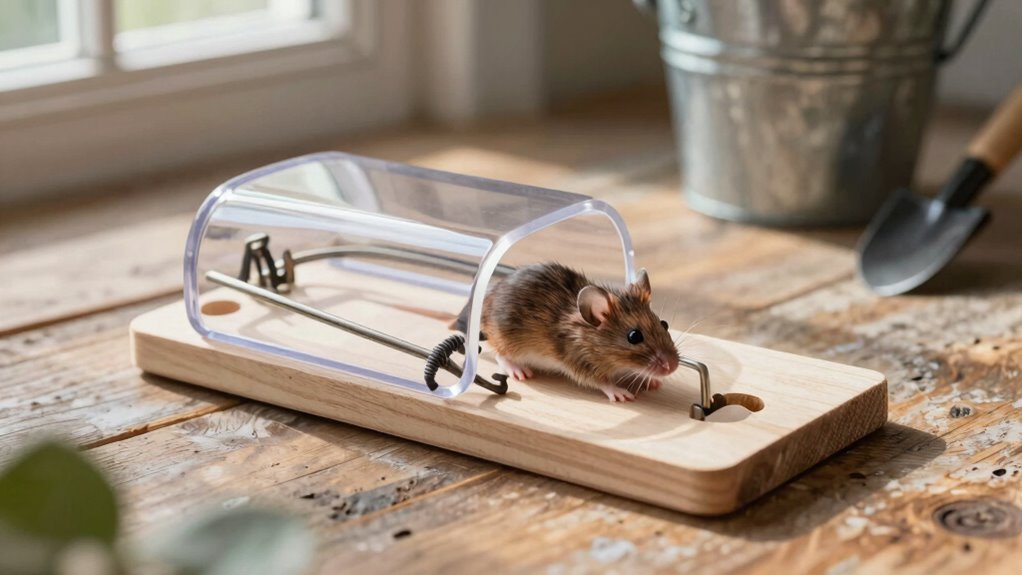
Because rodents can cause significant damage to crops and stored foods, implementing humane trapping methods proves essential for effective pest management.
You’ll want to choose traps that capture rodents alive rather than killing them. Live traps work by luring rodents into enclosed spaces where they can’t escape.
- Use peanut butter or dried fruit as bait to attract rodents effectively
- Check traps daily to minimize stress on captured animals and maintain trap effectiveness
- Release rodents at least two miles away from your property to prevent immediate return
Position traps along walls or near burrow entrances where rodents commonly travel.
You should wear gloves when handling traps and always release captured rodents promptly. These methods control pest populations while maintaining ethical treatment standards that communities increasingly expect.
Keep Indoor Spaces Spotless
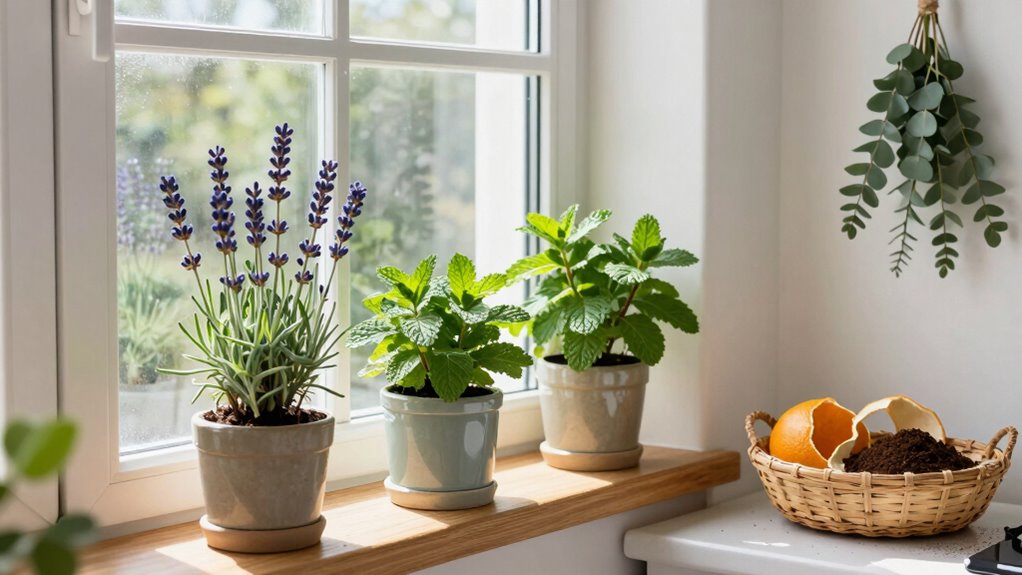
You must clean surfaces regularly to remove food residues and attractants that draw pests into your living spaces.
Eliminate food sources by storing items in sealed containers and maintaining proper sanitation practices throughout your home.
Seal entry points like cracks and gaps where pests can infiltrate, creating a physical barrier that prevents infestations from establishing.
Clean Surfaces Regularly
While maintaining indoor hygiene seems straightforward, regular surface cleaning plays a critical role in disrupting pest life cycles and eliminating attractants that draw unwanted insects and rodents into living spaces.
You must understand that pests rely on residual organic matter for survival, making clean surfaces your first line of defense.
- Countertops and floors require daily wiping to remove invisible food particles that attract ants and cockroaches.
- Appliances need regular cleaning underneath and behind them, where crumbs and moisture create ideal pest harborage areas.
- Baseboards and corners should be vacuumed weekly to eliminate spider webs and insect egg clusters.
Regular cleaning removes pheromone trails that guide pests to your home. You’re not just cleaning for aesthetics—you’re actively denying pests the resources they need to establish colonies.
Consistent surface maintenance creates an environment where pests can’t thrive, protecting your living space naturally.
Eliminate Food Sources
Eliminate accessible food sources to deprive pests of essential nutrients required for survival and reproduction.
You must store all food items in sealed containers made of glass, metal, or heavy-duty plastic. Clean crumbs immediately from floors, counters, and tables using vacuuming or damp wiping methods.
Dispose of garbage frequently in covered bins. Check expiration dates regularly and remove spoiled items promptly. Wipe down cabinet interiors monthly to eliminate residual food particles.
Store pet food in airtight containers and remove uneaten portions after thirty minutes. Clean up spilled liquids immediately.
You should vacuum carpets and upholstery weekly to remove food debris. Maintain refrigerator temperatures below forty degrees Fahrenheit.
Regularly inspect pantries for signs of infestation. Successful pest prevention requires consistent elimination of potential food sources throughout your living space.
Seal Entry Points
Because pests can enter through surprisingly small openings, sealing entry points becomes essential for effective pest prevention. You must identify and block these entryways to maintain pest-free indoor spaces.
Focus on these critical areas:
- Door and window gaps larger than 1/4 inch allow rodents and insects to enter
- Cracks in foundation walls, especially around utility pipes and vents
- Openings around plumbing fixtures, electrical outlets, and cable entries
Use caulk, weatherstripping, or expandable foam to seal gaps permanently.
Steel wool works well for larger openings that require removable access. Regular inspection reveals new cracks that develop from settling or temperature changes.
This proactive approach eliminates pest highways into your living space while reducing energy costs. You’re taking control of your environment, creating healthier indoor air quality for everyone inside.
Try Essential Oil-Based Repellents
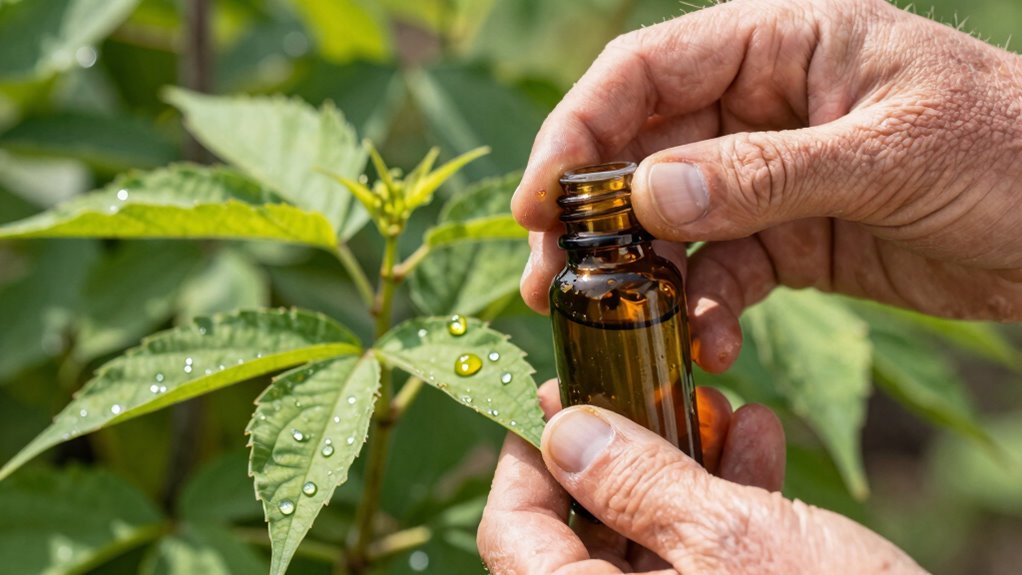
Essential oils derived from plants like peppermint, eucalyptus, and citronella can effectively repel common household pests when applied correctly. You should dilute these concentrated oils with water or carrier oils before spraying them around entry points, windowsills, and baseboards.
Peppermint oil disrupts ants’ scent trails, while eucalyptus oil repels spiders and mosquitoes. Citronella works well against flies and fleas. Apply these solutions weekly or after rain for consistent results.
Test small areas first to verify surfaces won’t be damaged. You can also place cotton balls soaked in these oils near problem areas. Remember that essential oils evaporate quickly, so reapplication is necessary.
Store oils properly in dark glass bottles away from heat and light sources.
Plant Raised Beds to Block Soil Pests
Raised beds create a physical barrier that prevents soil-dwelling pests from reaching plant roots and underground portions.
You’ll find that elevating your garden disrupts pest life cycles and reduces damage considerably.
Constructing raised beds requires attention to these key elements:
- Height matters – Build beds at least 6 inches high to effectively block most soil pests
- Solid barriers work best – Use materials like untreated wood or concrete blocks without gaps larger than 0.5 inches
- Fresh soil choice – Fill beds with clean, pest-free soil to prevent introducing new problems
You’ll notice improved plant health and reduced pest pressure when implementing this method correctly.
The elevated growing environment also promotes better drainage and soil temperature regulation.
Invite Birds to Eat Pest Insects
You can effectively reduce pest insect populations by creating bird-friendly garden environments that attract natural predators.
Installing nesting boxes, birdbaths, and native berry-producing plants encourages birds to establish territories where they’ll consume thousands of harmful insects annually.
This biological control method reduces crop damage while maintaining ecological balance without introducing synthetic pesticides.
Bird-Friendly Garden Design
While designing bird-friendly gardens requires careful plant selection, strategic landscaping can considerably reduce pest populations through natural predation. You’ll attract insect-eating birds by creating diverse habitats that provide food, water, and shelter throughout seasons.
- Native plant diversity supports local bird species while offering berries, seeds, and nectar that sustain adult birds feeding on garden pests.
- Water features like birdbaths or small fountains attract birds daily, encouraging them to linger and hunt insects more actively.
- Layered vegetation including groundcovers, shrubs, and trees creates hunting territories where birds naturally forage for aphids, caterpillars, and beetles.
Birds consume thousands of insects annually, making them valuable allies in pest management. You’re not just gardening—you’re participating in ecological balance that benefits entire communities.
Natural Pest Control Methods
Natural pest control methods leverage ecological relationships to manage garden pests effectively without chemical interventions.
You create balanced ecosystems when you invite birds to consume harmful insects. Birds actively hunt caterpillars, beetles, aphids, and other destructive pests throughout daylight hours. Different species target specific pest populations – chickadees eat moth larvae, while wrens consume spider mites.
You maximize pest control by providing diverse bird habitats including nesting sites, water sources, and native plants. Install bird feeders, birdbaths, and shelter structures to attract permanent avian residents. Native plant species support local bird populations better than exotic varieties.
You reduce garden damage considerably when birds establish territories nearby. Multiple bird species create extensive pest management through natural predation cycles. This biological control method eliminates pesticide residue while supporting biodiversity.
You become part of nature’s pest management system rather than relying on synthetic chemicals. Bird populations indicate ecosystem health and environmental quality in your garden space.
Coat Plants With Neem Oil for Defense
Because neem oil disrupts insect feeding and reproductive cycles, coating plants with this organic compound provides effective protection against numerous pest species.
You’ll find this botanical insecticide particularly valuable for managing aphids, whiteflies, and spider mites.
When applying neem oil, you should:
- Mix 2 tablespoons per gallon of water for ideal concentration
- Apply during early morning or evening to prevent leaf burn
- Reapply every 7-14 days or after heavy rainfall
Neem oil works by interfering with insect hormone systems, making it harder for pests to grow and reproduce.
You’re joining countless gardeners who’ve successfully used this ancient remedy. The active compound azadirachtin creates a protective barrier that pests can’t overcome through simple contact.
Your plants absorb this defense mechanism, becoming self-protecting against future infestations. Regular application guarantees continuous protection while maintaining your garden’s natural ecosystem balance.
Catch Flying Bugs With Sticky Traps
Yellow sticky traps provide an effective monitoring and control method for flying insect pests in your garden.
You’ll attract aphids, whiteflies, fungus gnats, and other winged insects to these bright yellow cards coated with non-toxic adhesive.
Position traps vertically near affected plants, maintaining visibility while avoiding direct sunlight that degrades stickiness.
Check traps weekly, replacing when covered with insects or debris.
You’re actually participating in integrated pest management by using these tools. Regular monitoring helps you identify pest populations before they explode.
Multiple small traps work better than one large trap.
Don’t place traps near beneficial insects’ habitats. You’ll reduce pesticide reliance while gaining valuable pest intelligence about your garden’s ecosystem health.
Feed Soil to Discourage Pest Breeding
Healthy soil ecosystems can greatly reduce pest breeding opportunities in your garden. When you nourish soil with organic matter, beneficial microorganisms outcompete pest larvae for resources. You create conditions where natural predators thrive, controlling harmful insect populations before they establish.
- Add compost regularly – Beneficial nematodes and bacteria in finished compost attack pest eggs and larvae directly.
- Incorporate mulch layers – Mulch harbors predatory insects that feed on soil-dwelling pests while maintaining moisture.
- Plant cover crops – Dense root systems release compounds that repel pest species while attracting beneficial soil organisms.
Feeding your soil creates complex food webs where pests struggle to reproduce.
You’re not just gardening—you’re participating in natural systems that have controlled pest populations for millennia.
This approach works because it addresses root causes rather than symptoms.
Grow Companions to Protect Crops
Companion planting offers a strategic approach to pest management by leveraging plant relationships that either repel harmful insects or attract beneficial predators.
You should interplant marigolds with tomatoes to deter nematodes, or grow basil alongside peppers to repel aphids.
Plants like nasturtiums act as trap crops, drawing pests away from valuable vegetables. You’ll find that aromatic herbs including rosemary, thyme, and oregano create natural barriers against various crawling insects.
Legumes such as beans and peas fix nitrogen while attracting predatory insects.
You must consider plant spacing and growth habits to maximize protective effects.
Companion plants also improve biodiversity, creating habitats for birds and beneficial insects that consume pest species.
This method reduces reliance on chemical treatments while building resilient garden ecosystems through natural plant interactions and ecological balance.
Spot Warning Signs Before Damage Spreads
While companion planting creates natural defenses against pests, you must also monitor your garden regularly to catch infestations before they escalate.
Early detection prevents minor issues from becoming major problems that compromise your entire harvest.
You should inspect plants weekly, looking for these critical signs:
- Leaf discoloration patterns – Yellowing, browning, or spotting indicates pest feeding or disease transmission
- Unusual holes or chew marks – Irregular leaf damage signals chewing insects like caterpillars or beetles
- Sticky residue or sooty mold – Honeydew secretions attract ants and promote fungal growth
Scientific monitoring involves checking plant undersides, stems, and soil surfaces where pests hide.
You’ll develop expertise recognizing normal plant appearance versus warning signs.
Regular observation builds your confidence and strengthens your connection to the garden ecosystem.
Prevention through vigilance creates belonging within the natural growing community.
Conclusion
You’ve learned that chemical-free pest control isn’t just effective—it’s essential for sustainable gardening. By implementing these natural strategies, you’re not merely eliminating pests; you’re cultivating a thriving ecosystem where beneficial insects and healthy plants work together like a well-orchestrated symphony. Your garden becomes a self-regulating community that naturally resists pest outbreaks while promoting biodiversity and soil health.
