

You might assume that electrical overload only happens in older homes, but even newer constructions can experience dangerous circuit strain. When too many devices draw power from a single source, heat builds rapidly within wires and connections. This isn’t just an inconvenience—it’s a serious fire hazard that develops silently behind walls. Before you plug in that space heater or microwave oven, consider how much capacity your circuits actually have left.
What Is Electrical Overload and Why It’s Dangerous
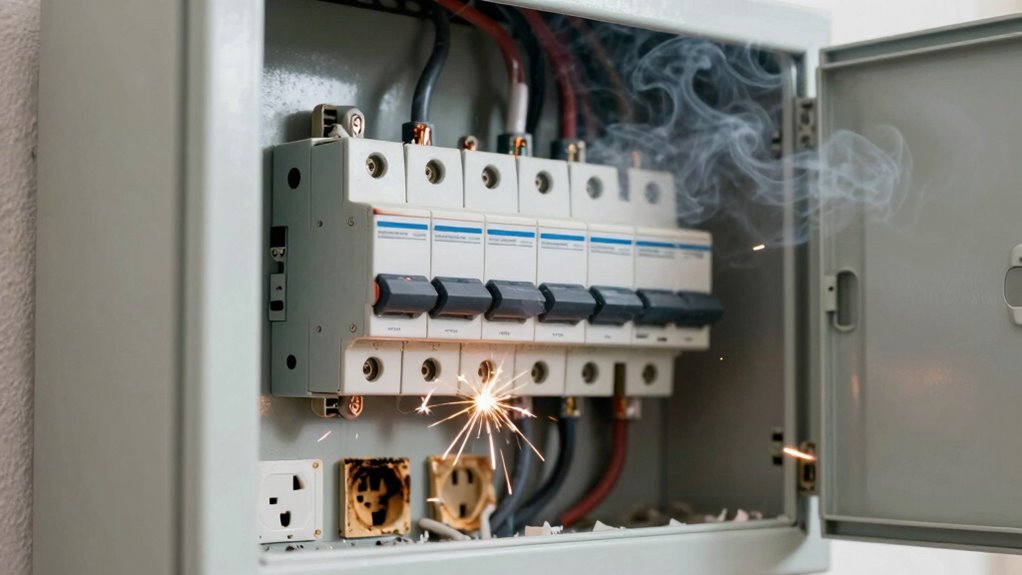
When electrical circuits draw more current than they can safely handle, an electrical overload occurs that can lead to dangerous situations. You’re dealing with excessive electrical current flowing through wiring that wasn’t designed for such demands. This creates heat buildup within circuit components and wiring insulation.
Your home’s electrical system wasn’t built to sustain these elevated temperatures safely. Overloads happen when you connect too many appliances to single circuits or use high-powered devices simultaneously. The excess current exceeds safe amperage ratings, causing wires and connections to overheat dangerously.
You risk electrical fires, equipment damage, and potentially fatal shocks. Circuit breakers trip to prevent these hazards, but they can’t protect against every scenario. Understanding electrical load limits protects your family and property from preventable disasters.
Look For These Early Warning Signs of Overload
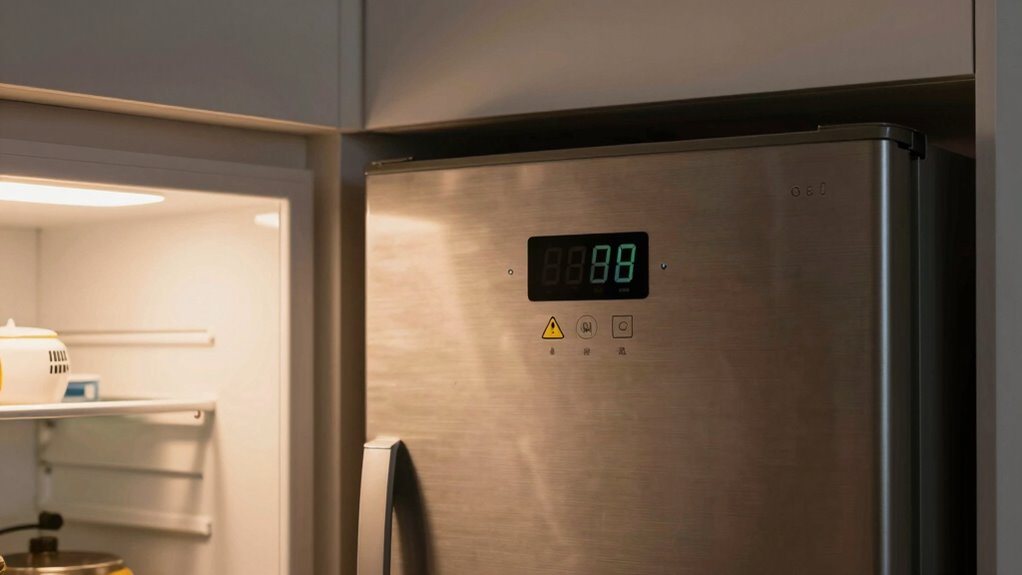
Several key indicators signal that your electrical system is approaching or exceeding its capacity. You should recognize these warning signs immediately to prevent potential hazards.
- Flickering or dimming lights when appliances turn on indicate voltage drops from overloaded circuits.
- Warm or discolored outlets suggest excessive current flow causing dangerous heat buildup.
- Frequently tripping breakers or blown fuses show circuits struggling with excessive demand.
- Burning smells near outlets, switches, or electrical panels require immediate attention.
- Buzzing sounds from outlets, switches, or your electrical panel signal loose connections or overloading.
These symptoms shouldn’t be ignored. Your family’s safety depends on recognizing these electrical distress signals quickly.
When you notice multiple signs simultaneously, contact a qualified electrician immediately rather than risking fire or electrocution.
Inspect Your Breaker Box for Hot Spots and Wear
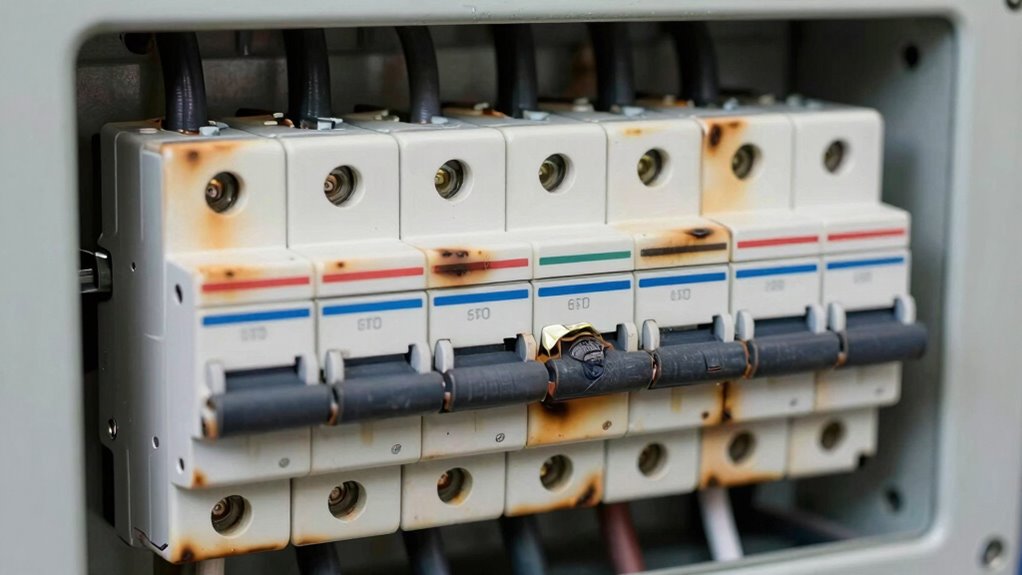
Although your breaker box may seem like a simple electrical component, it serves as the central hub where overloaded circuits reveal themselves through telltale signs of stress.
You should regularly inspect for hot spots by feeling switch positions and surrounding areas with your hand while maintaining a safe distance. Notice any warm temperatures, discoloration, or melting around breakers and wiring connections. Check for flickering indicator lights or switches that feel loose when toggled. Smell for burning odors near the panel.
Examine wire nuts and connections for corrosion or fraying. Look for rust, moisture, or physical damage to the box itself. Document any unusual findings immediately.
Don’t ignore these warning signs. Hot spots indicate excessive current flow through compromised connections, creating fire hazards that demand prompt professional attention before they escalate into dangerous situations.
Identify High-Drain Appliances Pulling Too Much Power
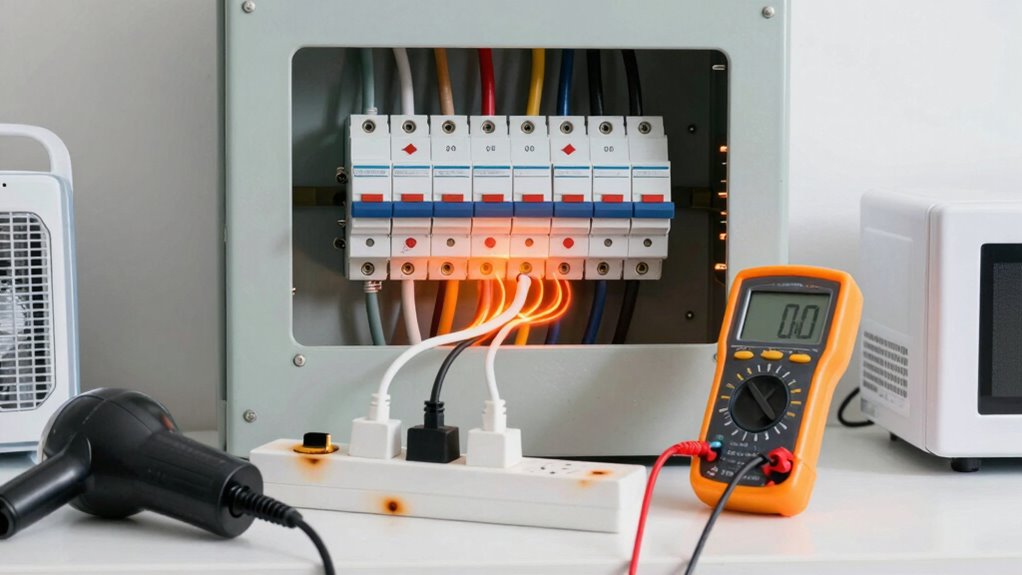
You must identify which appliances consume excessive power by monitoring their energy usage patterns and recognizing warning signs like frequent circuit breaker trips.
High-drain devices such as air conditioners, electric heaters, and microwave ovens require careful attention to prevent electrical overload conditions.
Check your power consumption regularly and maintain a list of energy-intensive appliances to avoid dangerous electrical situations.
High-Drain Appliances To Monitor
Major appliances demand significant electrical current during operation and can overload circuits when multiple high-drain devices run simultaneously.
You should monitor these appliances carefully to prevent dangerous electrical situations in your home.
Keep track of these high-drain appliances:
- Air conditioners and heat pumps
- Electric water heaters
- Clothes dryers
- Electric ranges and ovens
- Space heaters
These devices draw substantial amperage, often exceeding 15-20 amps per circuit. Running several simultaneously strains your electrical system.
You’ll notice circuit breakers tripping or outlets feeling warm when overload occurs. Monitor your electrical panel for frequently tripped breakers.
Consider upgrading circuits or redistributing appliance usage across different circuits. Always prioritize electrical safety over convenience.
Power-Hungry Devices List
Understanding which appliances consume the most electricity helps you identify potential overload risks before they become hazardous.
Air conditioners pull 3,000-5,000 watts during startup, while space heaters demand 1,500 watts continuously. Electric dryers require 3,000-6,000 watts, and water heaters operate at 4,500-5,500 watts when heating.
Microwave ovens draw 700-1,500 watts, and electric stoves consume 2,000-5,000 watts per burner. Refrigerators use 300-800 watts but cycle frequently. Washing machines require 2,000-3,000 watts during operation.
You must calculate total wattage on shared circuits. Adding these loads together quickly exceeds safe circuit capacity. Multiple high-drain devices shouldn’t operate simultaneously on single circuits.
Check appliance nameplates for exact wattage ratings. This prevents dangerous overheating situations.
Energy Consumption Warning Signs
Warning signs of excessive energy consumption appear when circuits struggle under electrical demand.
You should recognize these indicators before they escalate into dangerous situations.
- Frequently tripped circuit breakers signal overloaded circuits that can’t handle connected appliances.
- Dimming or flickering lights occur when high-draw devices spike power demand.
- Warm electrical outlets or switch plates indicate excessive current flow through wiring.
- Burning odors near electrical panels suggest overheating components requiring immediate attention.
- Unusual appliance noises like humming or clicking warn of internal electrical stress.
These symptoms shouldn’t be ignored.
Your family’s safety depends on recognizing these electrical stress indicators.
When you notice multiple signs simultaneously, immediately unplug non-essential devices and contact qualified electricians.
Don’t risk fire hazards or electrical damage.
Taking prompt action protects everyone in your home while preventing costly repairs.
Stop Overloading a Single Outlet With Multiple Devices
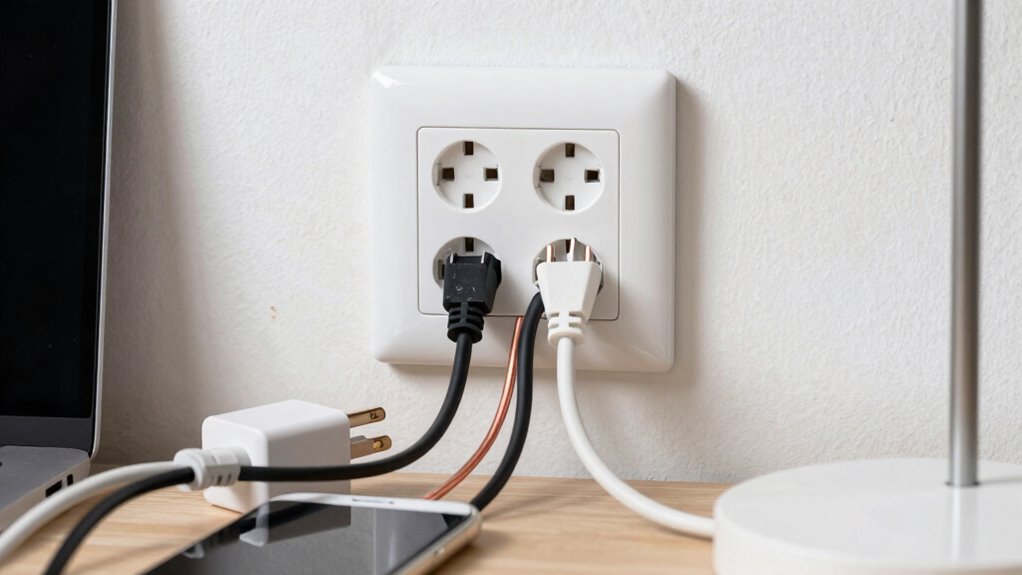
You shouldn’t overload a single outlet with multiple high-drain devices simultaneously.
Use surge protectors wisely to distribute electrical load across multiple outlets rather than plugging everything into one.
Monitor your outlet usage regularly to prevent overheating and potential fire hazards.
Use Surge Protectors Wisely
When multiple high-wattage devices draw power from a single outlet through daisy-chained surge protectors, you risk exceeding the circuit’s maximum amperage rating.
This dangerous practice can cause overheating, electrical fires, and equipment damage. You need to understand proper surge protector usage to protect your home and family.
- Plug surge protectors directly into wall outlets, never into other surge protectors
- Check your circuit breaker’s amperage rating before connecting multiple devices
- Use surge protectors with built-in overload protection features
- Avoid connecting heating appliances, microwaves, or hair dryers to surge protectors
- Choose surge protectors with sufficient joule ratings for your electronic devices
Smart surge protector usage prevents electrical hazards while keeping your valuable electronics safe from power spikes.
Monitor Outlet Usage Regularly
Regular monitoring of outlet usage prevents dangerous electrical overloads that can compromise your home’s safety. You should check each outlet monthly for signs of overheating, discoloration, or warm surfaces.
Avoid plugging multiple high-wattage devices into single outlets simultaneously. Focus on distributing electrical loads evenly throughout your home’s circuit system.
Pay attention to outlets powering space heaters, computers, or kitchen appliances. These devices draw significant current and shouldn’t share outlets with other heavy-duty equipment.
Use a multimeter to test outlet voltage if you suspect problems. Listen for buzzing sounds or notice burning odors near outlets.
Create a mental map of your home’s electrical layout. Know which outlets share circuits and their individual capacity limits.
Document older outlets that may need replacement. Your vigilance protects not just your property but everyone living there.
Use Power Strips Safely to Manage Load
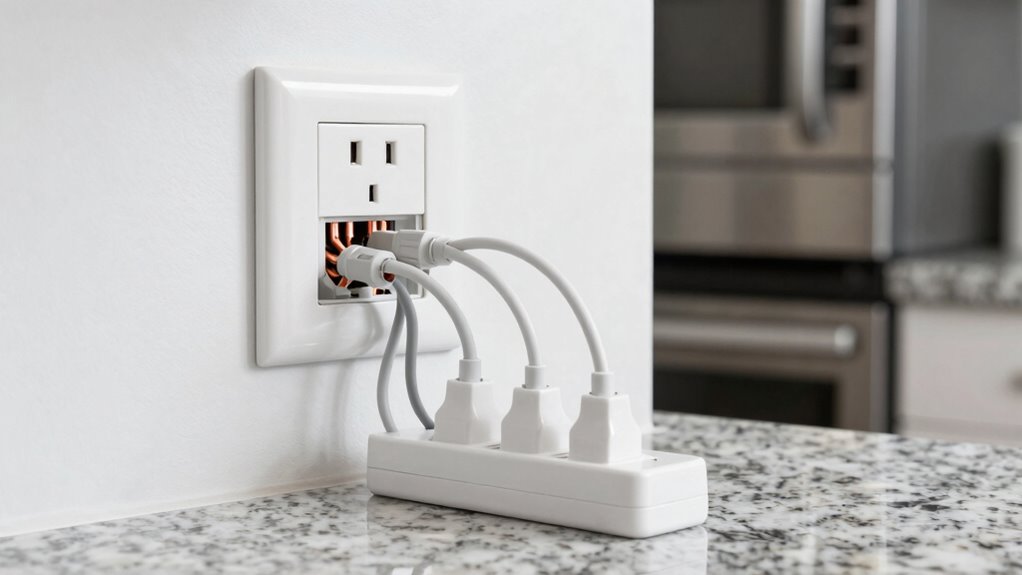
Power strips offer a practical solution for extending electrical outlets, but improper use can create hazardous overload conditions. You must understand proper power strip management to prevent dangerous electrical situations in your home.
- Choose surge-protected strips with built-in circuit breakers that automatically shut off during overload conditions.
- Calculate total wattage of connected devices before plugging them in to avoid exceeding the strip’s capacity.
- Avoid daisy-chaining multiple power strips together, which multiplies electrical load and fire risk.
- Keep strips uncovered and away from water sources while ensuring adequate ventilation around them.
- Replace damaged strips immediately when you notice frayed wires, loose connections, or malfunctioning outlets.
These practices protect your home’s electrical system while keeping your family safe from potential fire hazards.
Upgrade Aging Wiring to Prevent Fire Risks
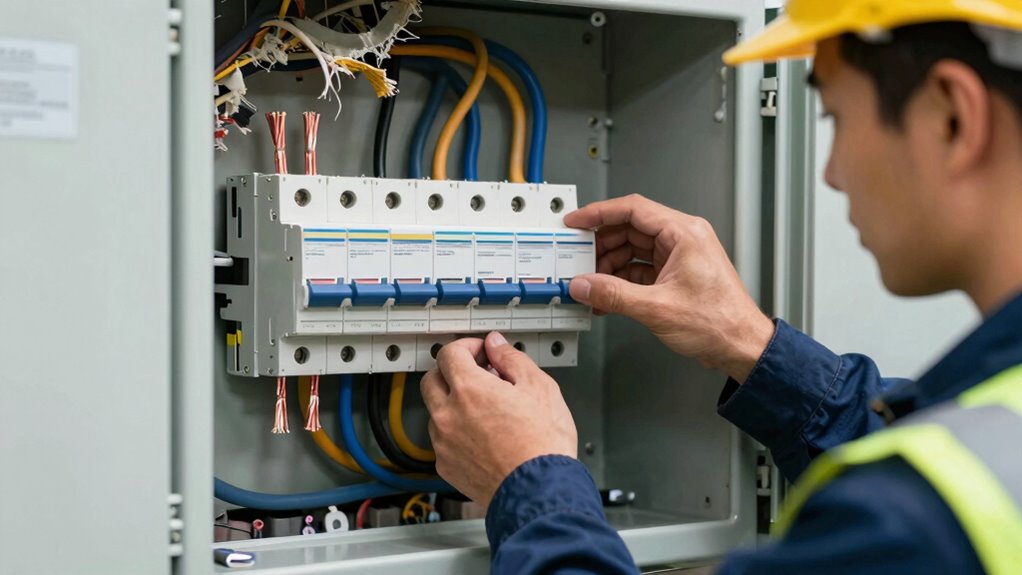
Outdated electrical wiring poses significant fire hazards that power strips alone can’t address, making system upgrades necessary for long-term safety.
You should inspect your home’s electrical panel, outlets, and wiring for signs of deterioration like fraying, discoloration, or overheating.
Older homes often contain aluminum wiring or knob-and-tube systems that fail to meet modern electrical demands. These materials degrade over time, creating resistance points that generate excessive heat.
You must hire licensed electricians to evaluate your system’s capacity and recommend appropriate upgrades. Replace deteriorated wiring, install ground fault circuit interrupters, and guarantee your electrical panel can handle your home’s power requirements.
Don’t wait for warning signs like flickering lights or burning smells. Proactive wiring upgrades protect your family and property while preventing costly electrical fires.
Regular maintenance keeps your electrical system functioning safely.
Understand 15-Amp vs. 20-Amp Circuits
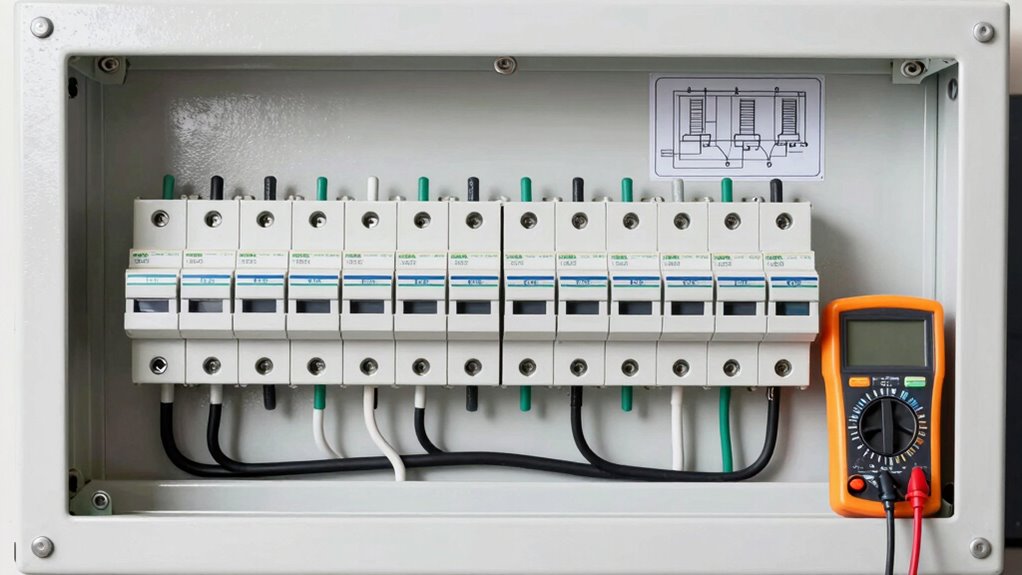
Understanding the difference between 15-amp and 20-amp circuits prevents dangerous electrical overload situations in your home. You need to match your electrical demands with appropriate circuit capacity.
- 15-amp circuits handle standard household lighting and small electronics safely.
- 20-amp circuits power heavy-duty appliances like microwaves, space heaters, and power tools.
- Wire gauge matters: 14-gauge wire pairs with 15-amp circuits; 12-gauge wire matches 20-amp circuits.
- Receptacle design: 15-amp outlets have two vertical slots; 20-amp outlets feature one horizontal slot.
- Breaker protection: Each circuit requires matching amp-rated breakers for proper overload protection.
You protect your family by ensuring correct circuit assignments.
Don’t guess—check your breaker panel labels and consult electricians when unsure about circuit capacities.
Don’t Let One Circuit Carry All the Load
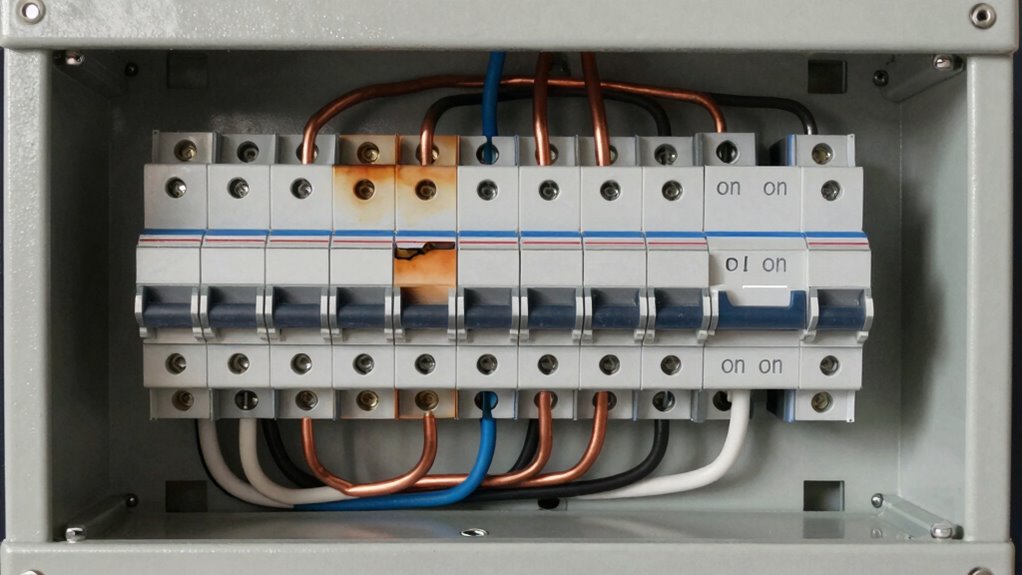
When you overload a single circuit by plugging too many high-wattage appliances into outlets on the same breaker, you create a serious fire hazard that threatens your home’s electrical system.
Your circuit breaker exists to protect against excessive current flow, but constantly tripping indicates an overloaded circuit.
Distribute your electrical load evenly across multiple circuits instead of concentrating everything on one breaker.
High-wattage appliances like space heaters, microwaves, and hair dryers demand dedicated circuits.
Check your electrical panel regularly for signs of overheating or frequent breaker trips.
Remember that your home’s electrical capacity isn’t unlimited.
Respect these limits by spreading appliance usage throughout your house. This prevents dangerous overheating and protects expensive electrical components from premature failure while keeping your family safe.
Make a Household Electrical Safety Checklist
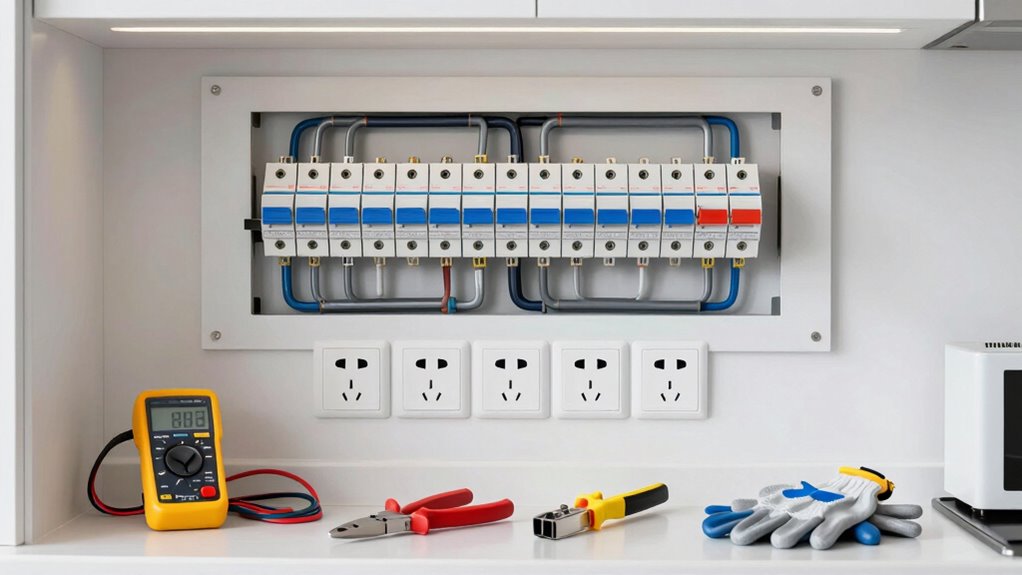
Creating a thorough electrical safety checklist builds on the principle of distributing electrical loads across multiple circuits.
You should regularly inspect your home’s electrical systems to prevent dangerous overloads and maintain safe power distribution.
Use this checklist to protect your family and property:
- Check that outlets aren’t overloaded with multiple adapters or high-wattage devices
- Verify circuit breakers aren’t frequently tripping or feeling warm to touch
- Inspect electrical cords for fraying, damage, or loose connections
- Ascertain GFCI outlets in bathrooms and kitchens reset properly
- Confirm light fixtures don’t exceed recommended wattage limits
You’re responsible for maintaining these critical safety measures.
Regular inspections prevent electrical fires and equipment damage. Don’t wait for warning signs.
Flickering Lights May Signal Circuit Strain
Why do your lights flicker unexpectedly? You’re experiencing voltage fluctuations caused by overloaded circuits.
When too many appliances draw power simultaneously, electrical demand exceeds safe capacity. Your home’s wiring system responds by reducing voltage delivery, causing lights to dim or flicker. This warning sign indicates circuits are operating beyond recommended limits.
Don’t ignore these symptoms. Continued strain can damage appliances, create fire hazards, and compromise electrical panel integrity. You need immediate action.
Identify which circuit powers the affected lights. Notice patterns – do flickers occur when specific appliances activate? Document these observations carefully.
Your safety depends on recognizing these electrical stress signals before they escalate into dangerous situations requiring professional intervention.
How to Reset a Tripped Breaker: And Why It Keeps Happening
How exactly do you restore power after a breaker trips, and what does it mean when it happens repeatedly? You need to locate your electrical panel and find the switch in the “off” position. Flip it completely to “off,” then back to “on.”
When breakers trip repeatedly, you’re dealing with an underlying issue that won’t disappear.
- Immediate reset – Switch must be fully off before turning on
- Overloaded circuits – Too many devices drawing power simultaneously
- Faulty wiring – Damaged connections cause repeated tripping
- Aging breakers – Components wear out and become unreliable
- Ground fault issues – Moisture or electrical shorts trigger safety mechanisms
Don’t ignore persistent tripping. Your home’s electrical system is trying to protect you from potential fire hazards. Address the root cause promptly.
Plan Ahead for Peak Seasonal Power Demand
While your home’s electrical system handles routine daily demands, seasonal peaks can push circuits beyond their limits. You should identify high-demand appliances like air conditioners, space heaters, and holiday lighting that strain your electrical panel simultaneously.
Check your circuit breaker panel’s amperage rating and compare it to your appliances’ power requirements. Distribute heavy electrical loads across multiple circuits rather than concentrating them on single breakers.
Consider upgrading your electrical panel if you frequently experience breaker trips during peak seasons. Monitor your energy usage patterns and schedule high-consumption activities during off-peak hours when possible.
Keep emergency electrician contact information readily available. You’ll prevent dangerous overheating, electrical fires, and costly system damage by proactively managing seasonal power demands.
Replace Damaged or Warm Outlet Covers Promptly
You should immediately replace any outlet covers that feel warm to the touch or show visible damage like cracks, discoloration, or loose components.
These defective covers can’t adequately protect against electrical hazards and may allow moisture or debris to compromise the outlet’s integrity.
Always verify new outlet covers are properly installed with secure screws and tight fits to maintain electrical safety standards.
Identify Faulty Outlet Covers
When outlet covers feel warm to the touch or show visible damage like cracks, discoloration, or scorch marks, they indicate potential electrical hazards that require immediate attention. You should regularly inspect all outlet covers throughout your home to prevent dangerous situations.
- Check for loose fitting covers that wiggle or move when touched
- Look for dark spots or burn marks around outlet edges
- Feel covers with back of hand for abnormal heat buildup
- Inspect for visible cracks, chips, or broken plastic components
- Examine outlets where plugs feel loose or require force to insert
Faulty outlet covers compromise your home’s electrical safety system. Don’t ignore these warning signs. Replace damaged covers immediately with proper grounding outlets.
Your family’s safety depends on addressing these issues promptly before they escalate into serious electrical fires or shock hazards.
Prevent Electrical Hazards
Because damaged or warm outlet covers pose immediate electrical hazards, replacing them promptly prevents potential fires and electrical shocks. You should inspect all outlet covers monthly for cracks, discoloration, or heat damage.
Warm covers indicate overheating connections that demand immediate attention. Don’t ignore loose-fitting covers that allow dust accumulation or expose live electrical components. Replace any defective covers with proper outlet cover plates that fit snugly. Choose covers rated for your specific outlet type and amperage requirements.
Keep spare covers on hand for quick replacements. Test outlet temperature regularly by gently touching covers with your hand. If you detect warmth, shut off power immediately and contact a qualified electrician.
Your family’s safety depends on addressing these hazards before they escalate into dangerous situations.
Ensure Proper Installation
Proper installation of outlet covers prevents electrical hazards that can lead to fires or shocks.
You must replace damaged or warm outlet covers immediately to maintain electrical safety in your home.
Don’t ignore these warning signs:
- Cracked or broken cover plates
- Outlet covers that feel warm to touch
- Loose fitting outlet covers
- Discoloration around outlet edges
- Outlet covers that spark when plugged in
You should test outlet covers monthly by feeling their temperature and checking for physical damage.
Warm covers indicate overloaded circuits or faulty wiring connections.
Replace outlet covers with proper fitting ones that match your outlet configuration.
Always turn off power at the circuit breaker before removing old covers.
Faulty installation creates resistance that generates heat, potentially igniting nearby materials.
Your family’s safety depends on maintaining proper electrical connections throughout your home’s outlets.
Install GFCI Outlets in Bathrooms and Garages
Ground Fault Circuit Interrupter (GFCI) outlets are essential safety devices that should be installed in bathrooms and garages where moisture and electrical equipment create hazardous conditions.
You must understand that GFCIs monitor electrical current flow and instantly shut off power when detecting ground faults, preventing electrocution.
Install GFCIs within six feet of water sources in bathrooms and near all garage outlets.
Test these devices monthly by pressing the test button until you hear a click, then reset them.
Don’t ignore faulty outlets or skip regular testing. Replace any GFCI that won’t reset or fails testing immediately.
You’re responsible for protecting your family’s safety through proper installation and maintenance of these critical safety devices in moisture-prone areas.
Keep Heat Sources Away From Electrical Panels
When positioning electrical panels, you must maintain adequate clearance from heat sources like furnaces, water heaters, and direct sunlight. Excessive heat damages electrical components and increases fire risks.
Keep these critical distances in mind:
- Maintain minimum 3 feet clearance from furnaces and boilers
- Position panels at least 2 feet from water heaters
- Avoid installing panels in direct sunlight or near windows
- Guarantee 18 inches clearance from heating vents and registers
- Locate panels away from laundry rooms with high heat appliances
Heat causes electrical components to expand, potentially loosening connections and creating hazardous arcing.
You should regularly inspect panel surroundings for heat source changes. Proper panel placement protects your home’s electrical system and prevents dangerous overheating situations that could lead to electrical fires.
Test Smoke Alarms After Any Electrical Work
You must verify your smoke alarms function correctly after completing any electrical work.
Check battery levels monthly and test each alarm’s functionality to guarantee proper operation.
Schedule annual professional testing to maintain system reliability and prevent false alarms.
Check Battery Levels Regularly
Because smoke alarms depend on consistent power to function properly, checking battery levels regularly becomes crucial after any electrical work that might affect your home’s circuits.
Electrical disturbances can drain batteries faster than normal, compromising your safety system’s reliability.
You should maintain a monthly battery testing schedule using these fundamental practices:
- Test each alarm’s battery indicator light monthly
- Replace weak batteries immediately, don’t wait for complete failure
- Keep spare batteries accessible near your electrical panel
- Document battery replacement dates to track performance patterns
- Use high-quality alkaline batteries rated for smoke detector use
Regular battery maintenance guarantees your smoke alarms respond correctly during emergencies.
Don’t overlook this simple but essential safety task after electrical work.
Verify Alarm Functionality Properly
After completing any electrical work in your home, test each smoke alarm’s functionality to verify proper operation.
Press and hold the test button for ten seconds until the alarm sounds clearly. If you don’t hear a loud, distinct beep, check wiring connections immediately.
Replace batteries if alarms use battery backup systems. Verify interconnected alarms communicate properly by testing one unit and confirming others respond simultaneously.
Check both ionization and photoelectric sensors according to manufacturer specifications. Document test results and dates for future reference.
Don’t assume recent electrical upgrades automatically restore alarm functionality. Circuit modifications can disrupt power supply or damage sensitive detection components.
Test monthly regardless of recent work. Trust your family’s safety to properly functioning alarms.
Replace units older than ten years even after successful testing. Maintain electrical safety standards consistently throughout your household.
Schedule Professional Testing Annually
Annual professional testing guarantees smoke alarm systems maintain peak performance and comply with current safety standards. You should schedule certified electricians to inspect your entire electrical system yearly, ensuring all components function correctly and safely.
- Test all smoke detectors’ sensitivity levels and replace batteries as needed
- Verify wiring connections remain secure and haven’t degraded over time
- Check circuit breaker panels for signs of overheating or damage
- Inspect electrical outlets and switches for proper grounding
- Review home’s overall electrical load capacity and identify potential overload risks
Professional testing identifies hidden issues before they become hazardous.
You’ll receive detailed reports outlining system performance and recommended improvements.
Don’t wait for warning signs – electrical problems often develop silently. Regular maintenance prevents costly repairs and protects your family’s safety while ensuring your home meets insurance requirements.
Don’t Ignore Frequent Tripped Breakers
When circuit breakers trip frequently, you shouldn’t dismiss these incidents as minor inconveniences.
These interruptions signal underlying electrical problems demanding immediate attention. Your home’s electrical system operates within specific capacity limits, and repeated breaker trips indicate you’re exceeding safe thresholds. Ignoring these warnings increases fire risk and potential electrical damage throughout your property.
Each trip occurs because circuits detect excessive current flow, protecting wiring from overheating.
You must identify what’s drawing too much power. Check for overloaded outlets, faulty appliances, or inadequate circuit distribution. Monitor which devices run simultaneously and notice patterns preceding trips.
Document when breakers activate and what equipment operates at those moments. This information helps pinpoint problematic circuits or appliances requiring attention.
Don’t reset breakers repeatedly without addressing root causes. Frequent tripping indicates your electrical system needs evaluation.
Call a Licensed Electrician for Major Fixes
You must recognize serious electrical problems like flickering lights, burning smells, or warm outlets that indicate potential fire hazards.
Licensed electricians apply proper installation techniques including correct wire gauging, secure connections, and appropriate circuit protection measures.
They verify compliance with National Electrical Code standards and local safety regulations to prevent overload conditions that could damage your home’s electrical system.
Identify Serious Electrical Problems
Certain electrical warning signs demand immediate professional attention rather than DIY troubleshooting.
You shouldn’t ignore these critical indicators that signal potentially dangerous electrical hazards requiring licensed electrician intervention.
- Burning smells without visible source – electrical components overheating
- Flickering lights during normal usage – unstable voltage or loose connections
- Hot outlets or switch plates – excessive current flow or poor wiring contacts
- Frequent circuit breaker trips – overloaded circuits or ground fault issues
- Buzzing or crackling sounds from electrical panels – arcing or failing components
These symptoms indicate serious electrical problems that exceed basic homeowner capabilities.
You must prioritize safety over convenience when encountering these warning signs.
Professional electricians possess proper training, tools, and certifications to diagnose complex electrical issues accurately.
Don’t risk electrical fires, equipment damage, or personal injury attempting repairs beyond your expertise level.
Ensure Proper Installation Techniques
Proper electrical installation techniques are fundamental to maintaining safe, code-compliant home electrical systems.
You must guarantee all connections are tight and properly secured to prevent arcing and overheating. Use appropriate wire nuts, electrical tape, and connectors rated for your specific applications.
Never overload circuits by connecting too many devices to single outlets or junction boxes. Install GFCI outlets in bathrooms, kitchens, and outdoor areas to prevent electrical shock.
Replace outdated electrical panels and damaged wiring immediately. You should always turn off power at the main breaker before working on any electrical components.
Test circuits with proper meters to verify de-energization. Keep electrical boxes accessible and properly covered.
Label all circuits clearly for emergency identification.
Verify Safety Compliance Standards
While homeowners can handle minor electrical tasks, verifying safety compliance standards requires professional expertise that only licensed electricians possess. You shouldn’t risk compromising your home’s electrical safety by attempting complex compliance checks yourself.
Licensed electricians bring essential knowledge about:
- National Electrical Code requirements and local amendments
- Proper grounding and bonding techniques for your specific setup
- Load calculations to prevent circuit overloads
- Permit requirements and inspection protocols
- Advanced testing equipment for accurate safety assessments
Electricians understand how to verify that your electrical system meets current safety standards. They can identify hidden compliance issues that untrained homeowners might miss.
Professional verification protects your family and property while ensuring insurance coverage remains valid. Don’t gamble with electrical safety—call a licensed electrician for major fixes and compliance verification. Your home’s electrical system deserves professional attention.
Set Monthly Reminders to Check Home Circuits
Because electrical circuits degrade over time through repeated use and environmental factors, you should establish a systematic approach to monthly circuit inspections.
Set calendar reminders on your phone or computer to guarantee consistent monitoring. During each inspection, check circuit breaker panels for signs of overheating, discoloration, or unusual warmth.
Test GFCI outlets monthly by pressing the test button – they should trip immediately. Examine wiring connections for loose terminals or frayed insulation. Verify that circuit loads remain within safe operating parameters, typically 80% of maximum capacity.
Document your findings and address any issues promptly. Don’t skip these inspections, even when life gets busy. Your family’s safety depends on maintaining electrical system integrity through regular preventive maintenance schedules.
Conclusion
Electrical overload causes approximately 50,000 home fires annually. You must distribute loads evenly across circuits, monitor outlet temperatures, and avoid daisy-chaining surge protectors. Install GFCI outlets near water sources and never ignore frequently tripping breakers. Regular monthly inspections of your electrical panel identify hot spots early. When in doubt, always consult licensed electricians for repairs. Your family’s safety depends on proper electrical maintenance and immediate attention to warning signs.
