

You need to match your extension cord’s gauge to your tool’s amperage draw. For tools under 10 amps, use 16-gauge wire. Heavier tools demand thicker conductors – 14-gauge or even 12-gauge for high-demand applications. Don’t overlook voltage drop concerns with longer runs. The wrong cord can overheat, damage your tool, or create serious safety hazards. Pick the incorrect gauge and you’re asking for trouble. What happens next when your cord can’t handle the load?
Why Extension Cord Ratings Matter for Power Tools
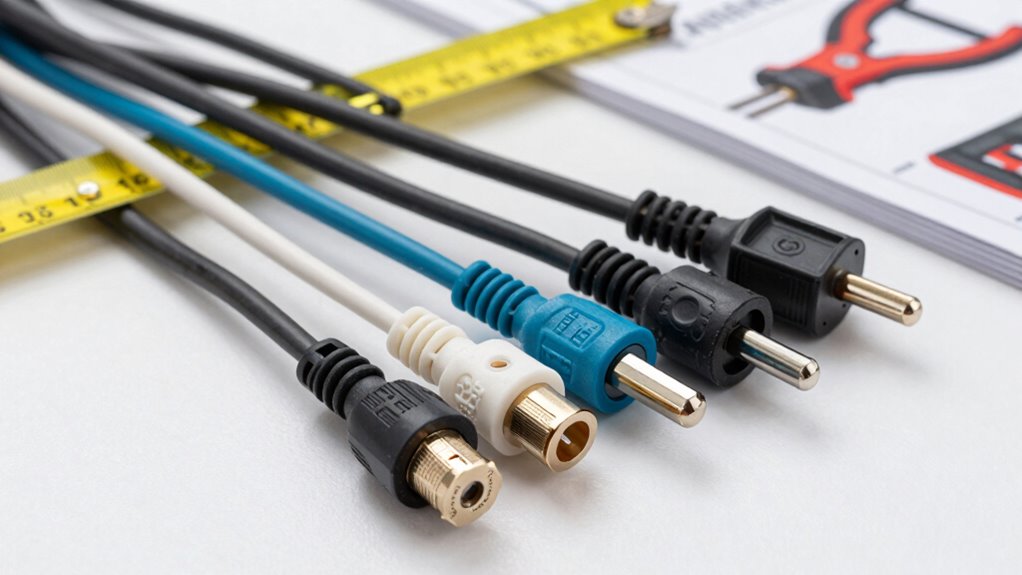
When you’re selecting an extension cord for power tools, understanding cord ratings prevents equipment damage and guarantees workplace safety.
You must recognize that improper cord selection creates voltage drops, overheating, and potential fire hazards. Cord ratings indicate maximum current capacity, ensuring your tools receive adequate power without electrical stress.
You’ll find ratings printed on cord jackets, specifying ampacity and voltage limits. These numbers aren’t suggestions—they’re safety thresholds you can’t exceed.
Your power tools demand consistent voltage delivery, and undersized cords compromise performance while risking electrical fires. Professional-grade cords feature thicker conductors and superior insulation, handling higher amperage demands safely.
You belong in environments where equipment operates reliably, which demands respecting cord ratings. Always match cord capacity to your tool’s electrical requirements, never assuming higher ratings equal better performance.
Your safety depends on proper cord selection.
How to Match Cord Gauge to Your Tool’s Amperage
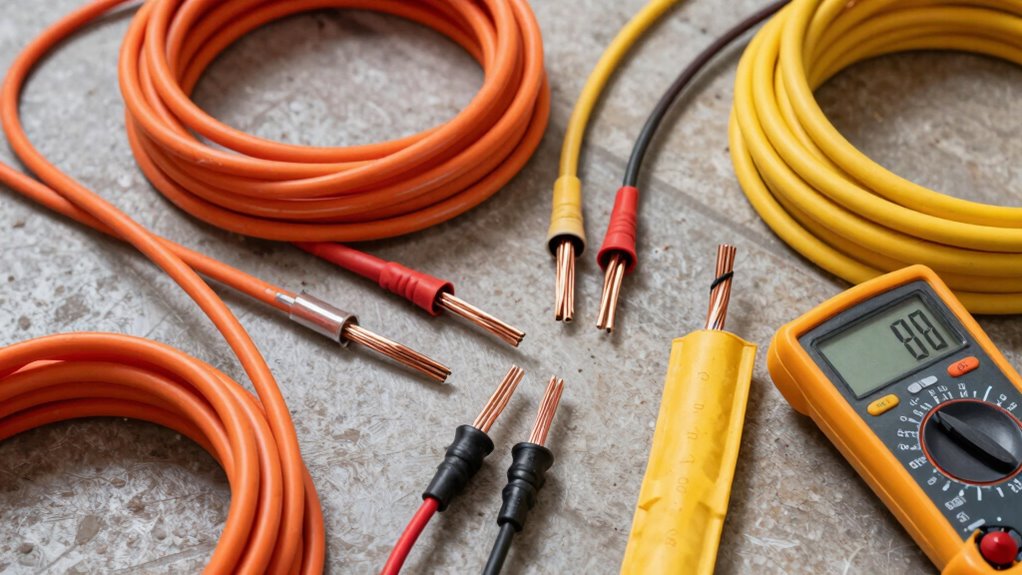
You must match your extension cord’s gauge to your tool’s amperage draw to prevent overheating and voltage drop.
Check your tool’s nameplate for amp requirements and select a cord with appropriate wire gauge thickness.
Proper gauge selection guarantees safe operation and prevents electrical hazards.
Understanding Amperage Requirements
Amperage requirements dictate which extension cord gauge you’ll need for safe operation. You must check your power tool’s nameplate or manual for exact amperage ratings. Most tools list both running amperage and startup amperage, which can be considerably higher.
Don’t guess these numbers – inaccurate calculations cause voltage drops, overheating, and potential fire hazards. Your cord must handle peak amperage demands without exceeding 80% capacity.
Heavy-duty tools like table saws or air compressors draw substantial current, requiring thicker gauge wires. Light-duty tools such as drills or sanders need less robust cords.
Always account for cord length – longer runs increase resistance and voltage drop. Match your tool’s amperage to appropriate cord specifications. This prevents dangerous situations and guarantees peak tool performance.
Selecting Proper Gauge Wire
Wire gauge directly affects your extension cord’s current-carrying capacity, making proper selection essential for safe power tool operation.
You must match the wire gauge to your tool’s amperage requirements to prevent overheating and potential fire hazards. Thicker wires (lower gauge numbers) handle higher amperage loads effectively.
For instance, 16-gauge cords suit light-duty tools under 10 amps, while 14-gauge handles up to 15 amps comfortably. Heavy-duty applications demanding 20+ amps require 12-gauge or thicker wiring.
Don’t guess—check your tool’s nameplate for exact amperage specifications. Using undersized cords forces excessive current through inadequate conductors, creating dangerous heat buildup.
Always select the correct gauge before connecting power tools to guarantee reliable performance and workplace safety standards compliance.
Preventing Voltage Drop Issues
When matching cord gauge to your tool’s amperage requirements, voltage drop becomes a critical safety factor that directly impacts both tool performance and electrical system integrity.
You must select thicker wire gauges for higher amperage tools to minimize resistance and prevent dangerous voltage drops. Calculate your tool’s amperage draw and match it to appropriate gauge recommendations – 16-gauge handles up to 10 amps, 14-gauge manages 10-15 amps, and 12-gauge supports 15-20 amps.
Longer cord runs demand thicker gauges to compensate for increased resistance. Don’t overlook voltage drop charts specific to your cord length and tool requirements.
You’re not just protecting your investment – you’re ensuring safe operation and preventing potential electrical hazards that could harm you or damage equipment.
How Extension Cord Length Impacts Voltage and Efficiency
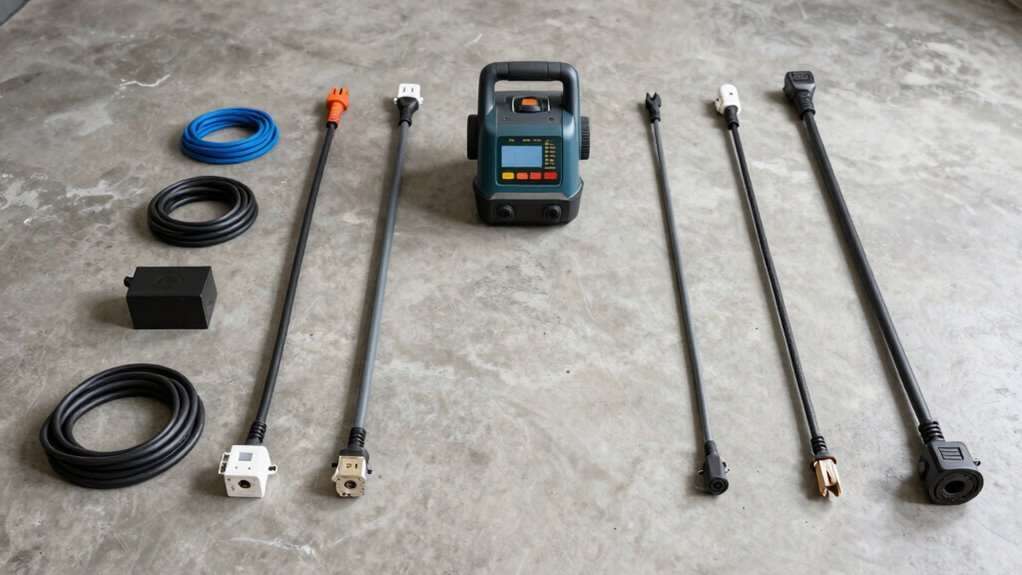
You must understand how extension cord length directly affects voltage delivery to your power tools.
Longer cords create increased resistance, which causes measurable voltage drop and reduces the electrical current reaching your equipment.
This power loss can lead to tool performance degradation and potential safety hazards if you don’t select the appropriate cord length for your specific application.
Voltage Drop Over Distance
Because extension cord length directly affects electrical performance, understanding voltage drop becomes essential for maintaining power tool efficiency and safety.
You should recognize that longer cords create higher resistance, causing voltage to decrease as electricity travels further from its source. This drop reduces your tool’s power output and can lead to overheating or motor damage.
You must calculate voltage drop by considering cord length, gauge, and load requirements. Thicker wires (lower gauge numbers) reduce resistance over distance.
You shouldn’t ignore voltage drop calculations when selecting extension cords for jobsite applications. Proper cord selection prevents equipment malfunction and potential safety hazards.
You’re responsible for matching cord specifications to your power tool’s voltage and amperage needs while accounting for distance requirements.
Power Loss In Longer Cords
Longer extension cords considerably reduce voltage delivery to your power tools, creating efficiency losses that compromise both performance and safety.
You need to understand how cord length directly impacts your tool’s operation.
- Voltage drop increases proportionally with cord length, reducing motor efficiency
- Longer cords generate more heat, accelerating insulation degradation
- Power tools may draw excessive current trying to compensate for voltage loss
- Thin gauge wires in long cords create higher resistance paths
- Cord damage becomes more likely with extended lengths and frequent movement
You should always select the shortest cord length that meets your workspace requirements.
When longer reach is necessary, choose thicker gauge wires to minimize power loss.
Your tools will perform better, last longer, and operate safer with properly sized extension cords.
Choosing Between 125V and 250V Extension Cords
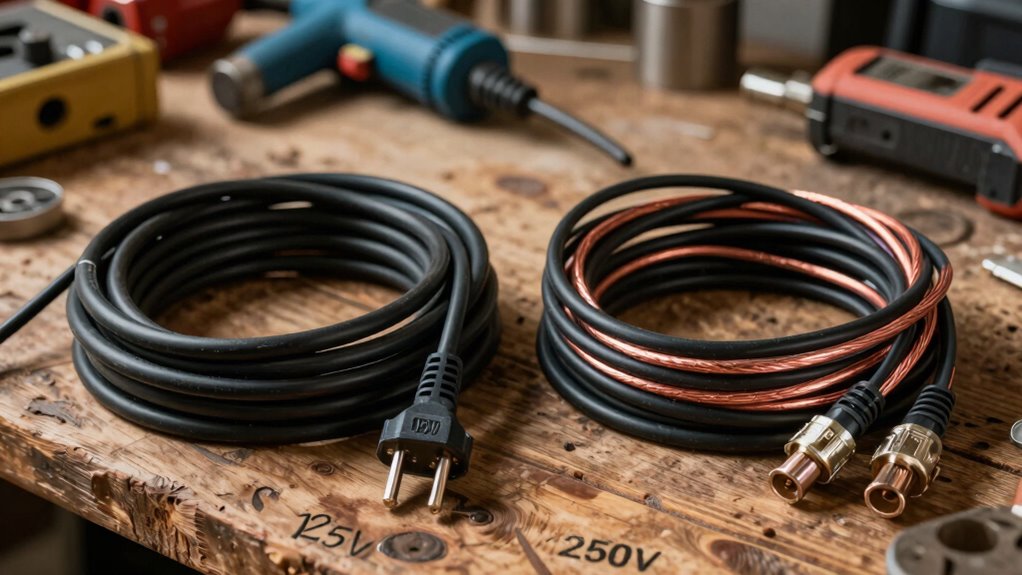
When selecting extension cords for power tools, understanding voltage requirements becomes essential for both performance and safety. You must match your tool’s voltage rating exactly.
Using a 125V cord with a 250V tool creates insufficient power delivery, potentially damaging your equipment. Conversely, a 250V cord works safely with 125V tools due to its higher voltage capacity.
Check your power tool’s nameplate for required voltage. Most household tools operate on 125V, while larger industrial equipment often requires 250V. Don’t guess based on plug configuration alone.
Voltage mismatch causes overheating, reduced tool lifespan, and potential electrical hazards. Your safety depends on proper voltage selection.
Always verify compatibility before connecting power tools to extension cords.
When to Use 3-Prong vs. 4-Prong Extension Cords
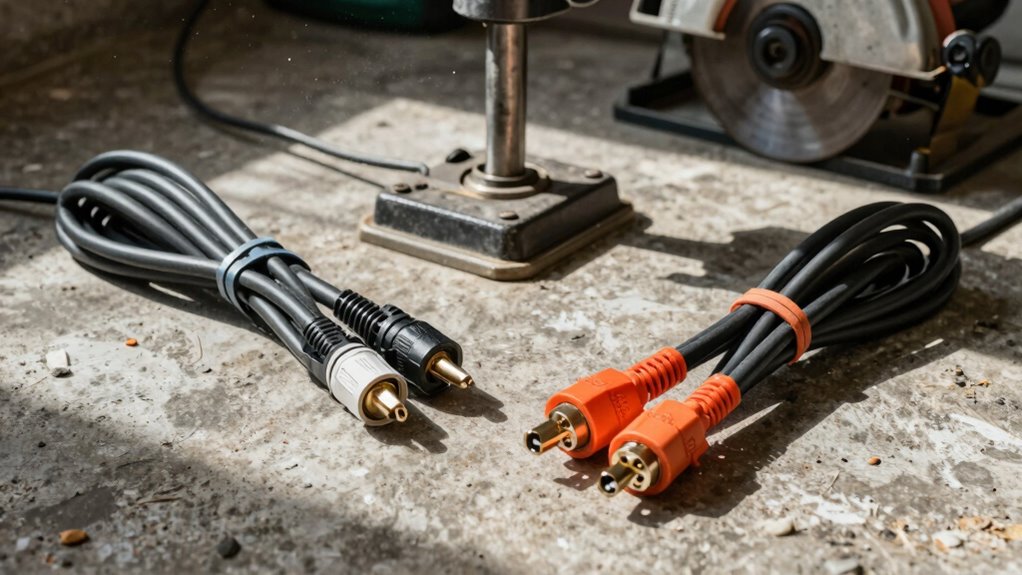
Why should you care about the difference between 3-prong and 4-prong extension cords?
You need to match your tool’s plug configuration exactly to avoid safety hazards and equipment damage.
- Three-prong cords work with standard outlets and tools that don’t require grounding, but you shouldn’t use them with grounded equipment.
- Four-prong cords provide grounding protection for power tools that need it, preventing electrical shock hazards.
- Check your tool’s plug before purchasing – mismatched connections won’t work safely.
- Grounding matters because it protects you from electrical faults and equipment malfunction.
- Never force connections – if plugs don’t fit, you need the correct cord type.
You belong in the group that operates power tools safely by choosing the right extension cord configuration every time.
Indoor vs. Outdoor Extension Cord Insulation, Explained
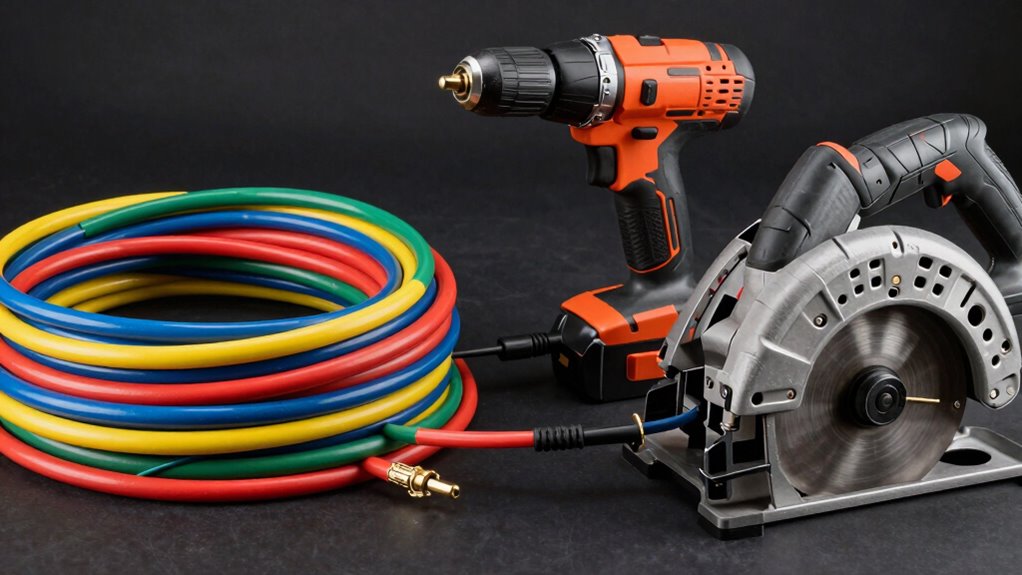
Although you might assume that all extension cords serve the same basic function, understanding the critical differences in insulation between indoor and outdoor-rated cords can prevent equipment failure and serious safety hazards.
You need to recognize that indoor cords use thermoplastic insulation rated for dry locations only. Outdoor cords feature thermoplastic elastomer or rubber insulation designed for weather resistance. These materials prevent cracking, brittleness, and electrical faults when exposed to moisture, UV rays, or temperature extremes.
You can’t safely use indoor cords outside because they lack proper insulation protection. Check your cord’s jacket rating before each use. Look for “S” or “SJ” designations indicating outdoor suitability.
Your safety depends on using the correct insulation type for your environment. Always match cord ratings to actual working conditions.
Is Daisychaining Extension Cords Ever Safe?
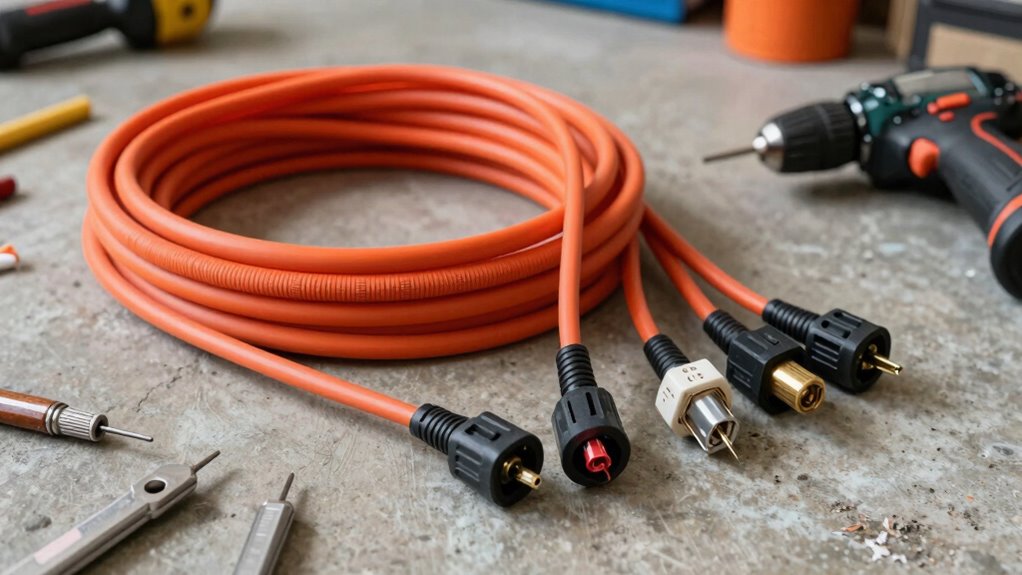
You must understand that connecting multiple extension cords together creates serious electrical hazards regardless of their insulation type. This practice increases resistance and heat buildup while reducing voltage delivery to your tools.
- Voltage drop multiplies with each connection point
- Heat concentrates at plug interfaces during operation
- Grounding paths become compromised through multiple joints
- Cord capacity ratings don’t account for串联 connections
- Moisture infiltration accelerates at junction points
These risks exist even when using high-quality cords. Professional electricians avoid daisy-chaining because it violates electrical code standards. Your safety depends on proper cord selection rather than connecting multiple cords together.
Choose one appropriately rated extension cord for your specific power tool requirements.
Signs Your Extension Cord Can’t Handle the Load
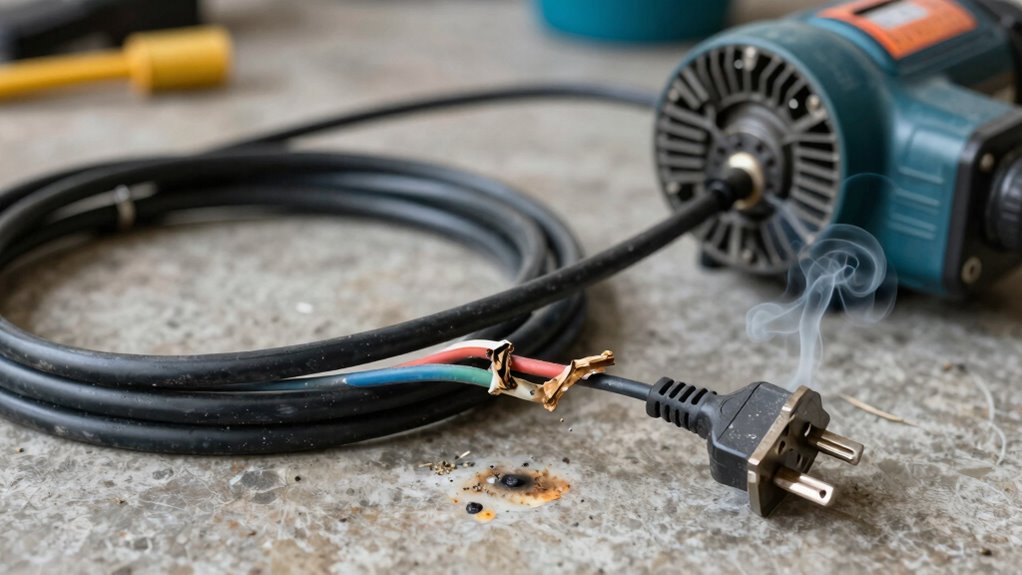
You should immediately recognize warning signs like dimming lights, circuit breaker trips, or buzzing sounds that indicate your extension cord is overloaded.
Heat buildup along the cord’s length or at connection points signals excessive current flow that can lead to insulation damage.
These indicators require you to disconnect the load immediately and select a cord with appropriate gauge rating for your power tool’s amperage requirements.
Warning Signs Of Overloading
When an extension cord can’t handle the electrical load you’re demanding, several critical warning signs will alert you to potential hazards.
You must recognize these indicators immediately to prevent equipment damage or electrical fires.
- Dimming or flickering lights when power tools start up
- Intermittent power cuts that cause tools to suddenly stop working
- Audible buzzing or crackling sounds from the cord or outlets
- Tripped circuit breakers occurring frequently during tool operation
- Unusual vibrations or physical movement in the cord during use
These symptoms indicate your cord’s electrical capacity falls short of your tools’ power requirements.
Don’t ignore these warnings.
Heat Buildup Indicators
Heat buildup in extension cords occurs because excessive electrical current generates more thermal energy than the cord’s insulation and conductors can safely dissipate.
You should immediately recognize warning signs like warm or hot outer jacket temperatures, which indicate dangerous overheating conditions. Notice if your cord feels unusually warm during normal tool operation – this signals inadequate ampacity for your power tool’s demands.
You might also detect burning odors emanating from the cord or observe melted or discolored plug connections.
These thermal warning signs mean your extension cord can’t handle the electrical load safely. Don’t ignore these critical indicators because continued use can cause insulation degradation, electrical fires, or complete cord failure.
You must act quickly by stopping use and selecting a properly rated extension cord.
How Temperature Affects Cord Performance and Safety
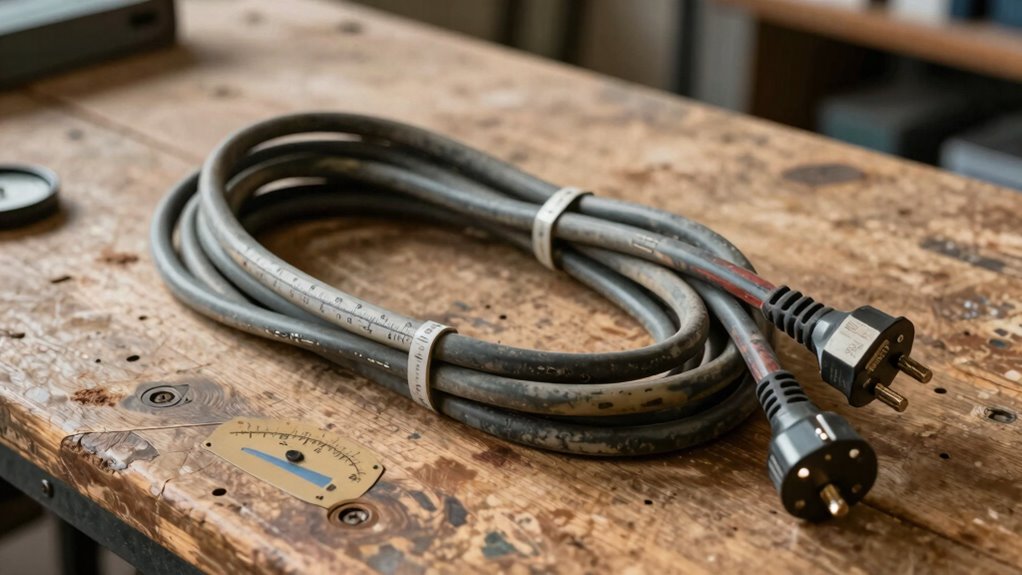
While operating power tools in extreme temperatures, electrical cords can experience significant performance degradation that compromises both efficiency and safety. You must understand how thermal conditions affect your equipment to prevent dangerous situations.
Temperature impacts cord performance through several mechanisms:
- High ambient temperatures accelerate insulation aging and increase resistance.
- Cold weather makes conductors brittle, raising breakage risk during flexing.
- Thermal cycling causes conductor strand fatigue and loose connections.
- Excessive heat buildup triggers insulation melting and electrical failures.
- Temperature extremes compromise jacket integrity, exposing live wires.
You should monitor cord temperature regularly, especially during extended use. Feel along the cord’s length for hot spots, which indicate excessive current flow or poor connections.
When you detect abnormal heating, immediately disconnect power and inspect connections. Operating in appropriate temperature ranges promotes superior performance and prevents hazardous conditions that could compromise your safety or equipment integrity.
Best Materials for Durable, Flexible Extension Cords
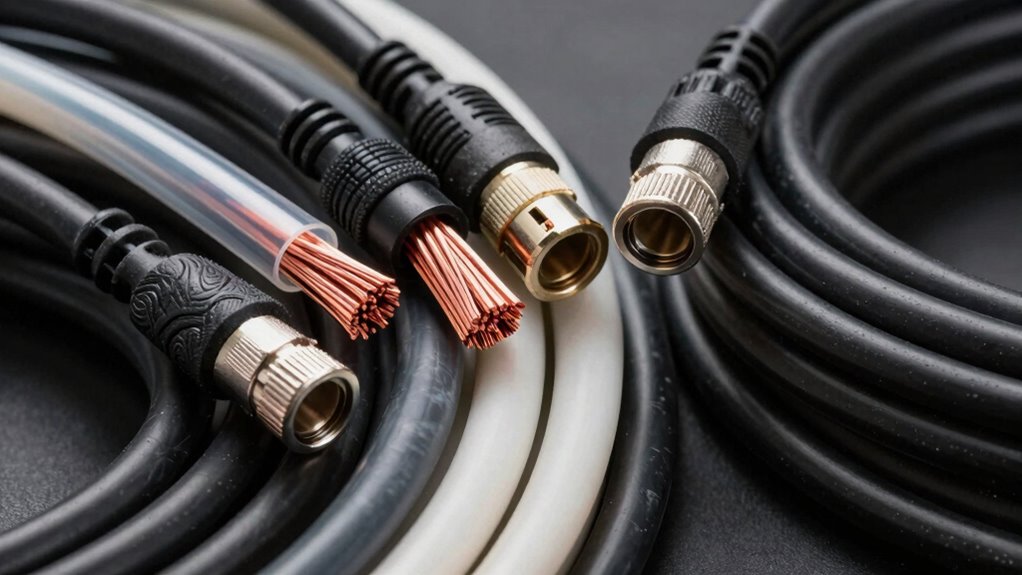
Because you’re working with power tools that demand reliable performance, choosing extension cords with superior materials directly impacts both safety and longevity.
You’ll want copper conductors for maximum conductivity and minimal heat buildup. Pure copper offers better performance than copper-clad aluminum, though the latter is more affordable.
Insulation materials matter too – thermoplastic elastomers (TPE) provide excellent flexibility across temperature ranges while resisting abrasion and chemicals. Vinyl insulation works adequately but can become brittle in cold conditions.
For outdoor use, you need UV-resistant jackets that won’t degrade under sunlight exposure. Look for cords with reinforced strain relief at connection points. These prevent internal wire breakage from repeated bending stress.
Quality materials cost more initially but prevent costly tool downtime and potential electrical hazards that cheaper alternatives create.
Extension Cord Buying Guide for Heavy-Duty Tools
When you’re selecting extension cords for heavy-duty power tools, prioritize cords rated for your tool’s amperage and voltage requirements to prevent overheating and electrical failures. Match the cord’s gauge to your tool’s power draw and intended length.
- Check amperage ratings – Verify cord handles 125% of tool’s maximum current draw
- Verify voltage compatibility – Match 120V or 240V tools to correct voltage cords
- Select proper gauge – Use 12AWG minimum for 15-amp tools, 10AWG for 20-amp loads
- Inspect plug types – Confirm locking or straight plugs fit your receptacles securely
- Examine cord jacket – Look for durable outer insulation resisting cuts and abrasions
Your safety depends on proper cord selection matching tool specifications exactly.
ST, SJ, or SO? Choosing the Right Jacket Type
You need to understand jacket type differences to select the right extension cord for your power tools.
ST jackets offer superior durability for harsh conditions, while SJ jackets provide excellent flexibility for frequent movement.
SO jackets deliver weather resistance when you’re working outdoors or in wet environments.
St Jacket Durability
While ST, SJ, and SO jacket types all serve different environments, choosing the right one depends on your specific power tool applications and worksite conditions.
You need to match jacket durability to your work environment to prevent failures and accidents.
Consider these factors when evaluating jacket durability:
- Temperature resistance – ST jackets handle -50°F to 104°F, while SO jackets withstand -40°F to 194°F
- Oil and chemical exposure – SO jackets provide superior resistance to automotive fluids and solvents
- Mechanical abuse – Thicker SJ and SO jackets better resist cuts, abrasions, and crushing
- UV degradation – Some jackets include UV inhibitors for outdoor use
- Flex life – Higher-quality compounds maintain flexibility through repeated bending cycles
Match your worksite hazards to jacket specifications for ideal performance.
Sj Flexibility Benefits
SJ jacket flexibility makes it ideal for applications requiring frequent movement and tight bend radius performance.
You’ll find SJ cords excel in confined spaces where maneuverability matters most. The thermoplastic elastomer construction provides superior flexibility compared to ST jackets, reducing fatigue during repeated bending cycles.
When working in tight quarters, SJ cords maintain their integrity without kinking or cracking. You should choose SJ when mobility and flexibility are priorities over maximum durability.
These cords work exceptionally well with handheld power tools that require constant repositioning. The enhanced flexibility also reduces user fatigue during extended use periods.
For applications involving frequent cord movement and tight storage spaces, SJ jacketing delivers the performance you need.
So Weather Resistance
Each jacket type offers distinct weather resistance properties that directly impact performance and safety in outdoor applications. You need to match the jacket rating to your working conditions.
- ST-rated cords provide basic moisture resistance for dry locations only
- SJ jackets offer improved water resistance suitable for light outdoor use
- SO jackets deliver superior weather protection for harsh outdoor environments
- Temperature ratings vary: ST handles 32°F minimum, while SO tolerates -40°F
- UV resistance differs greatly between jacket types
You belong in the professional category when you select SO-rated extension cords for demanding outdoor power tool applications.
Don’t compromise safety with inadequate weather protection. Match your cord’s jacket rating to actual working conditions. Your equipment and safety depend on proper jacket selection. Choose wisely.
Preventing Voltage Drop in Your Extension Cord Setup
Voltage drop occurs when electrical current travels through an extension cord, reducing the power delivered to your tools. You must select the correct gauge wire to minimize this loss. Thicker wires (lower gauge numbers) handle higher amperage loads better.
Calculate your tool’s amperage requirements and match them to appropriate cord gauge. Shorter cords reduce voltage drop considerably. Don’t daisy-chain multiple extension cords together. Use heavy-duty cords rated for your specific power tools.
Check manufacturer specifications for minimum wire gauge requirements. Poor voltage regulation causes tools to underperform and overheat. You’ll notice reduced motor speed and torque when voltage drop becomes excessive.
Quality extension cords maintain consistent power delivery. Always choose cords with adequate ampacity ratings. Your tools depend on stable electrical connections for peak performance and longevity.
Trusted Brands and Retailers for Extension Cords
When you’re selecting extension cords for power tools, choosing reputable brands and retailers assures you get products that meet safety standards and perform reliably under load. You deserve equipment that won’t fail during critical projects.
- Brand reputation matters because established manufacturers invest in rigorous testing and quality control processes.
- Certifications from UL, ETL, or similar organizations guarantee cords meet electrical safety standards.
- Retailer return policies protect your investment if products fail or don’t meet specifications.
- Warranty coverage demonstrates manufacturer confidence in their products.
- Customer reviews from actual users provide real-world performance data.
Stick with brands like Southwire, General Electric, or Bosch that prioritize safety ratings and proper gauge sizing.
Buy from authorized dealers who stock genuine products, not counterfeit imports. Your tools and safety depend on these choices.
How Much to Spend on a Quality Extension Cord?
Several factors determine how much you should invest in a quality extension cord for power tools. Your tool’s amperage rating directly affects pricing, with heavier-duty cords costing more but preventing voltage drop.
Shorter lengths cost less than longer runs, so measure your workspace accurately. Look for 14-gauge minimum for light tools, 12-gauge for heavy-duty applications. Copper conductors cost more but deliver superior performance versus cheaper aluminum alternatives.
Safety-rated cords with proper insulation and strain relief justify higher prices through reduced risk. Professional-grade construction features like reinforced plugs and weather-resistant coatings add costs but extend lifespan notably.
Don’t sacrifice safety for savings; electrical failures can cause serious injury or property damage.
Budget $25-40 for basic indoor cords, $50-100 for professional outdoor versions. Your safety and tool performance depend on proper investment.
Conclusion
Don’t let your extension cord become the weakest link in your power tool setup. Like a marathon runner needing proper fuel, your tools require the right amperage-rated cord to perform safely. Match gauge to amperage, consider length carefully, and choose quality materials. Remember, cutting corners on extension cords can create dangerous situations. Invest in proper gauge wiring, certified brands, and appropriate voltage ratings. Your safety and tool performance depend on getting these electrical fundamentals right from the start.
