

You might think manual aeration is too labor-intensive to be worth your time, but proper technique makes it surprisingly efficient. Before you start pushing that aerator across your lawn, you’ll need to understand the critical preparation steps that most people skip. Get ready to discover the strategic approach that transforms this seemingly simple tool into your lawn’s best friend.
When Should You Aerate Your Lawn
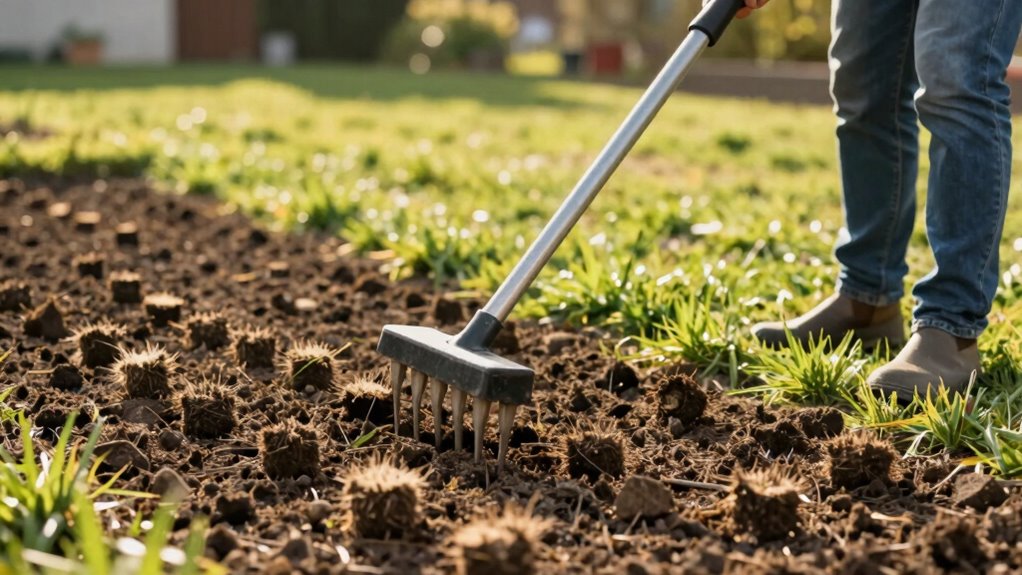
While you mightn’t realize it, your lawn’s health depends greatly on proper soil conditions, which is why understanding when to aerate becomes essential for maintaining a vibrant yard.
You should aerate your lawn during peak growing seasons when grass recovers quickly. For cool-season grasses, early spring or fall works best. Warm-season varieties respond well to late spring aeration.
Avoid aerating during extreme heat or drought conditions when grass struggles to recover. You’ll notice ideal results when soil moisture levels are moderate, not waterlogged or bone dry.
Plan your aeration schedule around your specific grass type and local climate patterns. Most lawns benefit from annual aeration, though heavily trafficked areas might need twice-yearly treatment.
Timing directly impacts your lawn’s ability to absorb nutrients, water, and oxygen effectively.
How to Tell If Your Soil Is Compacted
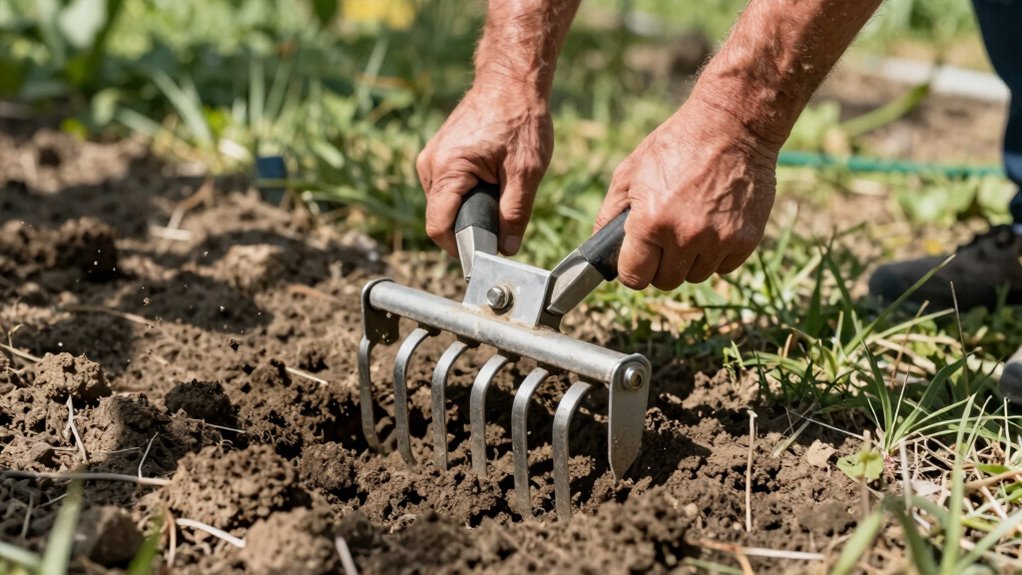
How do you know when your soil has become compacted and needs aeration?
You’ll notice water pooling on the surface instead of absorbing properly. Grass roots struggle to penetrate the hardpan, creating shallow root systems that can’t access essential nutrients.
Walk across your lawn and feel if it’s unusually firm or bouncy underfoot. Compacted soil often appears thin, with sparse grass growth and bare patches.
Pay attention to color changes—yellow or brown spots indicate stressed grass due to poor soil conditions.
Test penetration by pushing a screwdriver or pencil into the ground; if it won’t easily penetrate six inches, compaction exists.
Check existing holes or core samples for dense, brick-like soil structure rather than loose, crumbly texture that healthy soil should exhibit.
What Is a Manual Lawn Aerator?
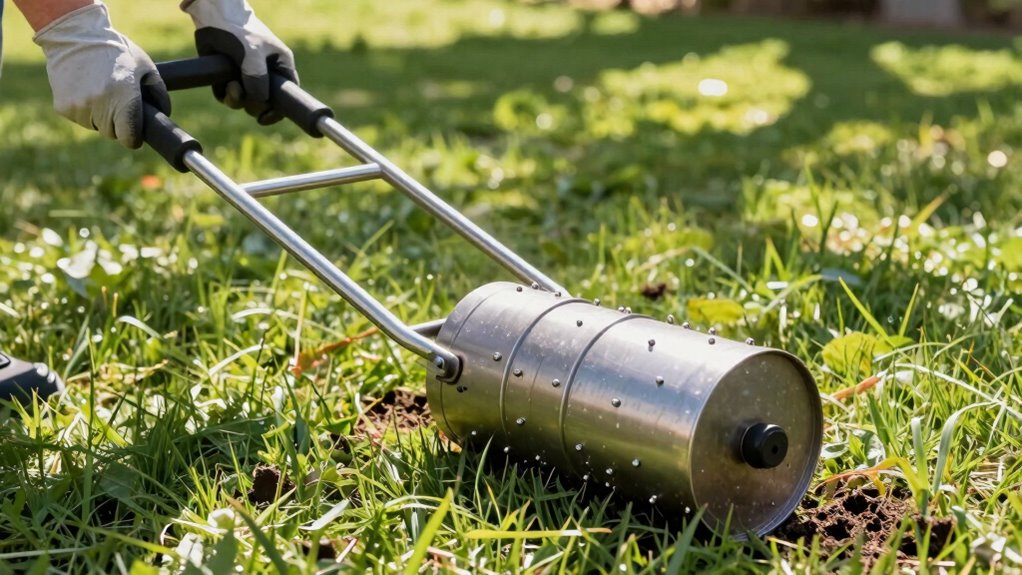
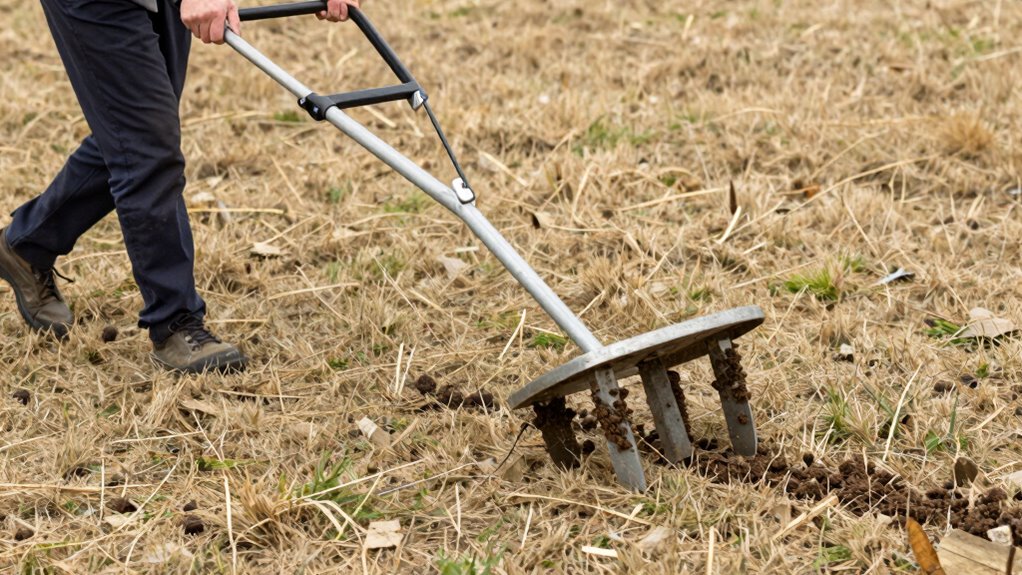
A manual lawn aerator is a handheld or walk-behind tool designed to create small holes in your lawn to alleviate soil compaction.
You’ll find two main types: spike aerators that puncture holes and core aerators that remove small soil plugs. These tools help your grass access oxygen, water, and nutrients by breaking through compacted soil layers.
You’ll appreciate how manual aerators give you complete control over the process. Unlike mechanical options, you can target specific problem areas and work at your own pace. The physical effort required creates a stronger connection between you and your lawn care routine.
Manual aerators are perfect for small to medium-sized yards where you want to maintain hands-on involvement in achieving healthier grass growth.
Prepare Your Yard Before Aeration
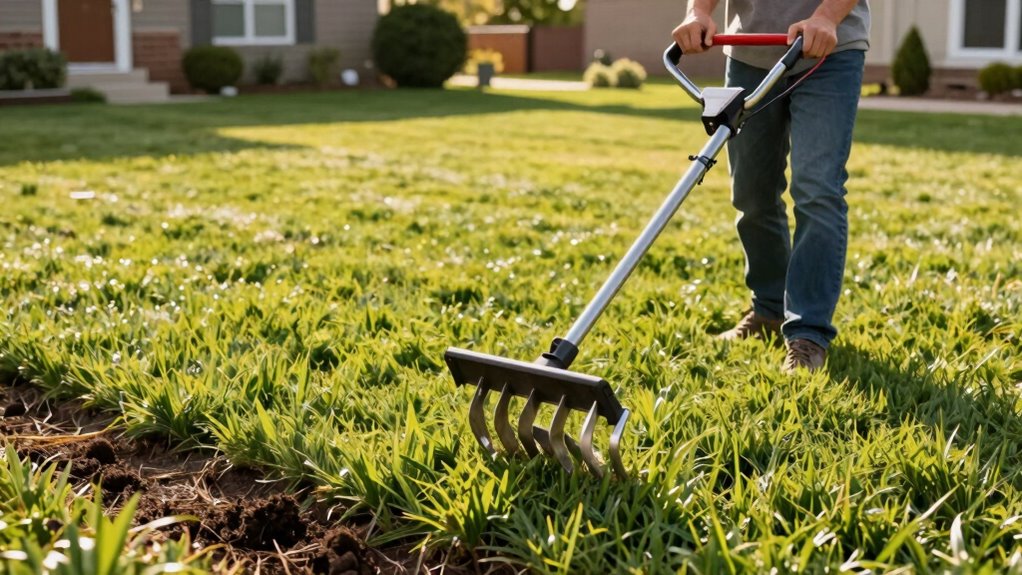
Why should you bother preparing your yard before aeration? Proper preparation guarantees excellent results and prevents equipment damage.
You’ll want to mow your lawn shorter than usual, ideally setting your mower one notch lower than normal height. Remove all debris, toys, stones, and sticks from the area. Mark sprinkler heads, underground utilities, and any hidden obstacles with flags or paint.
Water your lawn lightly two days before aeration, allowing soil to soften without becoming muddy. Avoid heavy watering that creates soggy conditions. Check weather forecasts and plan for dry, firm ground conditions.
This preparation creates ideal working conditions, protects your investment, and maximizes aeration effectiveness while guaranteeing your manual aerator operates smoothly throughout the process.
Why Soil Prep Matters
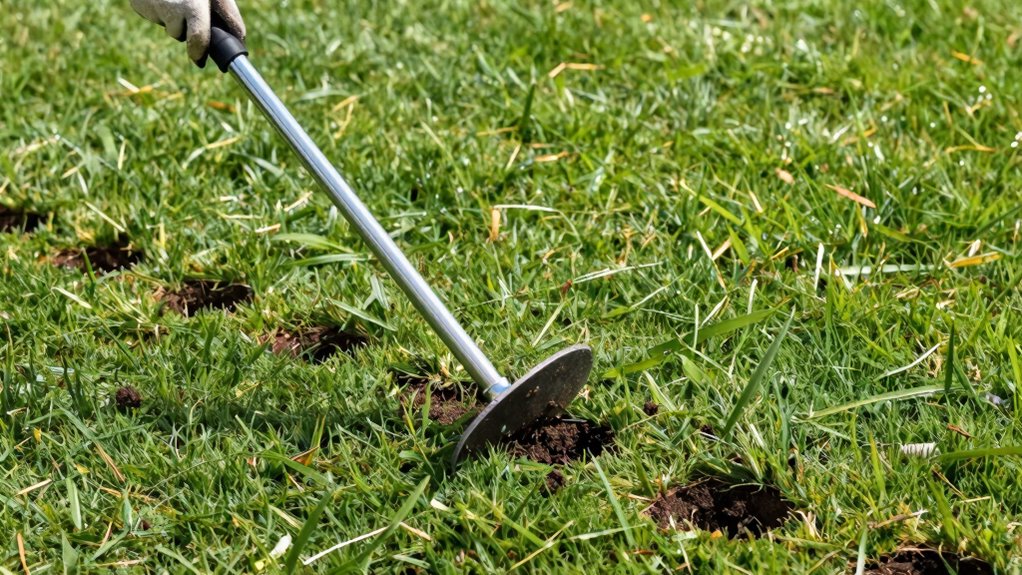
While you might be enthusiastic to start aeration immediately, taking time to properly prepare your soil guarantees peak benefits from the entire process.
You need to understand that compacted soil prevents water, air, and nutrients from reaching grassroots effectively. Proper preparation breaks up this compaction, allowing your lawn to breathe and absorb essential elements.
You should remove debris, thatch, and weeds beforehand, creating favorable conditions for aeration tools to penetrate deeply.
Soil moisture matters too – you want it damp but not waterlogged for ideal results.
When you prepare correctly, you’re not just completing a task; you’re investing in your lawn’s long-term health and your neighborhood’s curb appeal. Smart preparation equals successful outcomes.
Master the Proper Aeration Technique
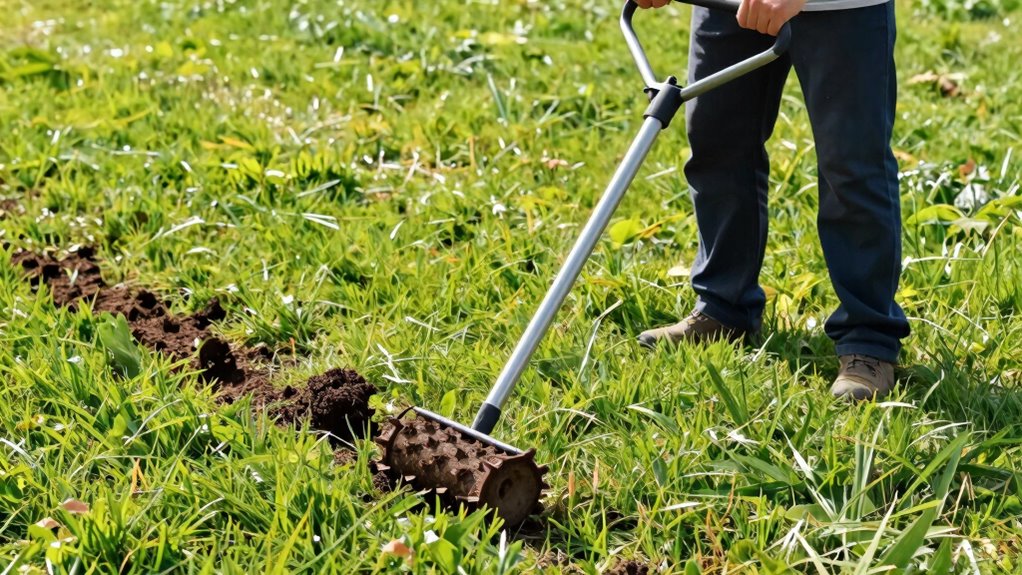
Now that your soil is properly prepared, you’re ready to execute the aeration process with precision. Position your manual aerator at the edge of your lawn and work systematically across the area.
Apply steady, even pressure as you push the tool into the ground, guaranteeing full penetration without forcing excessively. Space each insertion according to your aerator’s width to maintain consistent coverage.
Work in straight lines, overlapping slightly to avoid missed spots. Keep your movements smooth and controlled, allowing the tool’s weight to assist penetration.
Monitor your depth regularly, adjusting pressure as needed. Move at a steady pace that maintains quality penetration without rushing.
This methodical approach guarantees uniform aeration while preventing turf damage and maximizes the effectiveness of your manual aeration effort.
Deal With Compacted Spots With Your Manual Aerator
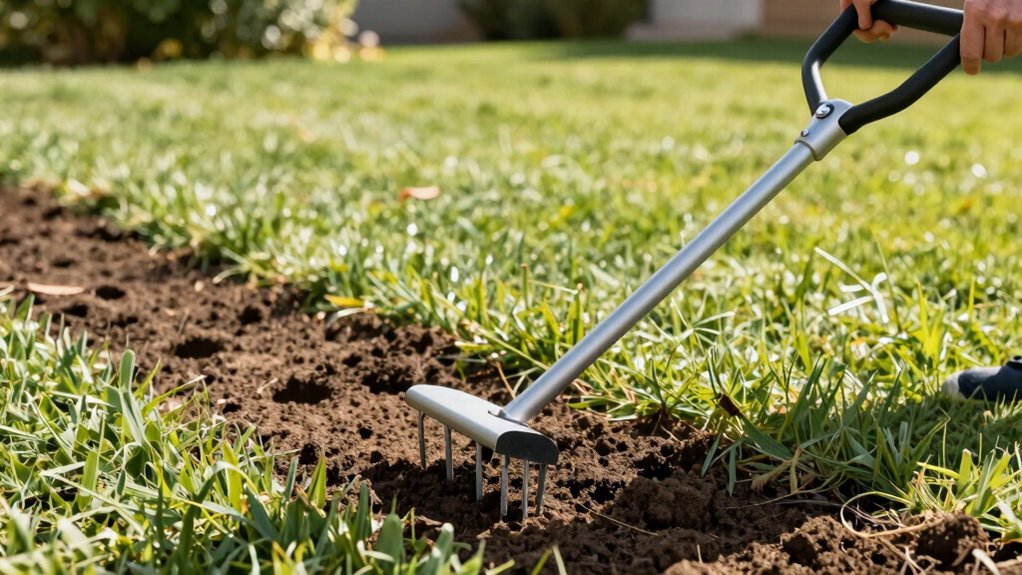
When dealing with heavily compacted areas, you’ll need to modify your approach to achieve effective aeration. Don’t rush through these problem spots like regular turf – they require extra attention and strategic planning.
- Feel the resistance as your aerator struggles through concrete-hard soil, knowing your lawn’s health hangs in the balance.
- See the difference when those stubborn patches finally give way, revealing the compacted layers you’ve been fighting against.
- Experience the satisfaction of conquering the most challenging areas that other lawn owners avoid.
- Witness your lawn’s transformation as these previously lifeless zones begin their journey back to health.
Focus your efforts on these trouble areas by making multiple passes in different directions.
Apply consistent pressure and work systematically across each compacted section until you achieve proper soil penetration and core removal.
Fertilize and Water After Aerating
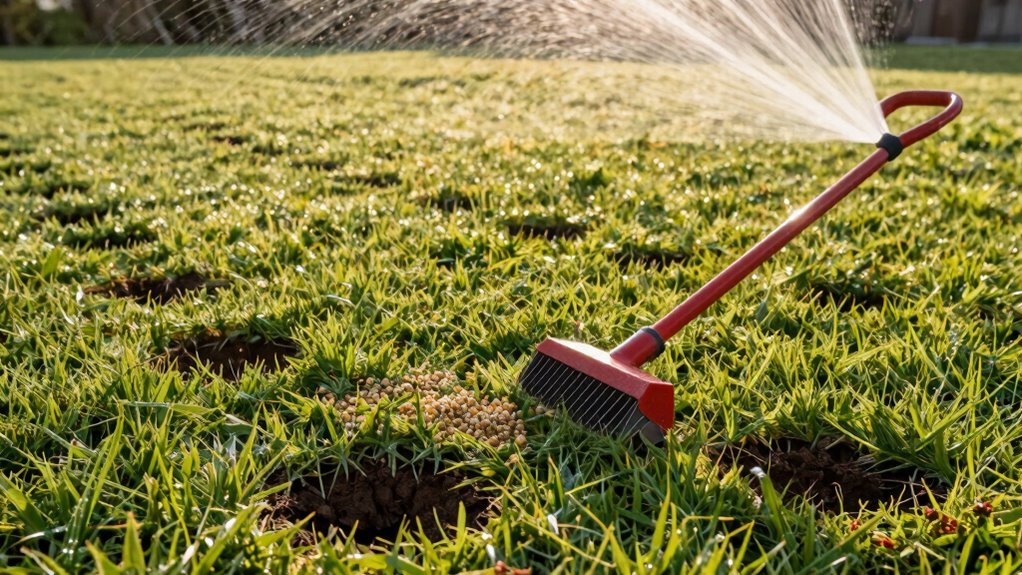
After you’ve finished aerating your lawn, it’s time to take advantage of the improved soil conditions by applying fertilizer and water to promote ideal grass recovery and growth.
You should immediately fertilize since the newly created holes allow direct nutrient access to grassroots. Choose a slow-release fertilizer that matches your grass type and local growing conditions.
Water deeply but avoid over-saturation that might wash away applied fertilizer. Your lawn needs consistent moisture to help nutrients penetrate soil cores effectively.
Apply fertilizer evenly using a spreader, then water thoroughly to activate nutrients. This strategic timing maximizes aeration benefits while supporting robust root development.
Proper post-aeration care guarantees your lawn recovers quickly and thrives throughout the growing season.
What NOT to Do When Aerating Your Lawn
While manual aeration creates beneficial soil conditions, you shouldn’t attempt this process during inappropriate weather conditions or on stressed grass. Timing matters greatly for successful aeration outcomes.
- Don’t aerate during drought conditions – you’ll damage already vulnerable grass roots when they need protection most.
- Avoid compacting wet soil – you create messy, ineffective holes that won’t benefit your lawn’s health.
- Don’t skip proper preparation – you’ll waste effort and potentially harm your grass without pre-watering.
- Never aerate newly seeded areas – you’ll destroy young seedlings before they establish strong root systems.
Your lawn deserves strategic care.
These mistakes cost time, money, and create frustration.
You’re part of a community that values proper lawn maintenance – avoid these common pitfalls that separate amateur gardeners from lawn care experts.
Smart aeration practices build the foundation for a thriving, envy-inducing yard.
Conclusion
You’ve learned the key techniques for effective manual aeration. Remember that properly aerated lawns show 40% better grass growth compared to untreated areas. This simple investment in your lawn’s health pays dividends through improved root development, water absorption, and nutrient uptake. Follow these methods consistently, and you’ll achieve professional results while avoiding common mistakes that waste time and energy.
