

You know how a firefighter’s hose can knock a person off their feet? A pressure washer’s 3,000+ PSI stream can cause serious injury in an instant. Before you squeeze that trigger, you need to understand what you’re working with. Don’t become another emergency room statistic – learn the critical safety steps that separate cautious operators from painful mistakes. What’s the first thing you should check?
Know the Risks Before You Spray
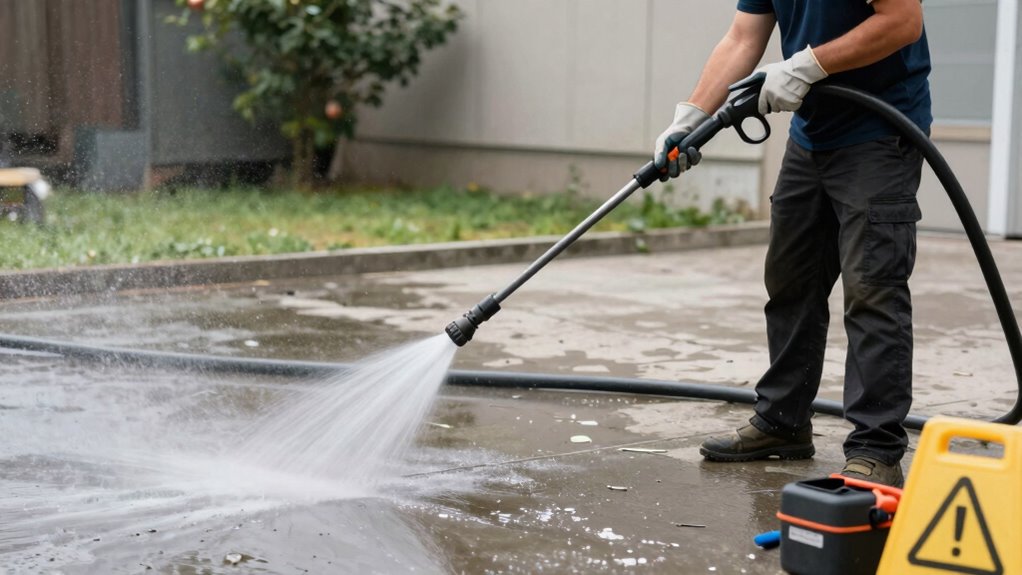
Before you squeeze the trigger on a pressure washer, you should understand that these machines can cause serious injury if mishandled.
You’re dealing with water pressure that can exceed 3,000 PSI, powerful enough to cut through skin, wood, and even concrete. The high-velocity stream can strip paint, damage surfaces, and cause severe lacerations if it hits you or someone nearby.
Don’t let the familiar appearance fool you—this isn’t a garden hose. You must respect the force you’re controlling.
Always check your nozzle settings before starting, keep hands and feet away from the spray path, and never point the wand at people, pets, or electrical outlets.
Understanding these risks isn’t fear-mongering; it’s smart preparation that keeps you and your crew safe.
Wear Eye Protection and Steel-Toed Boots
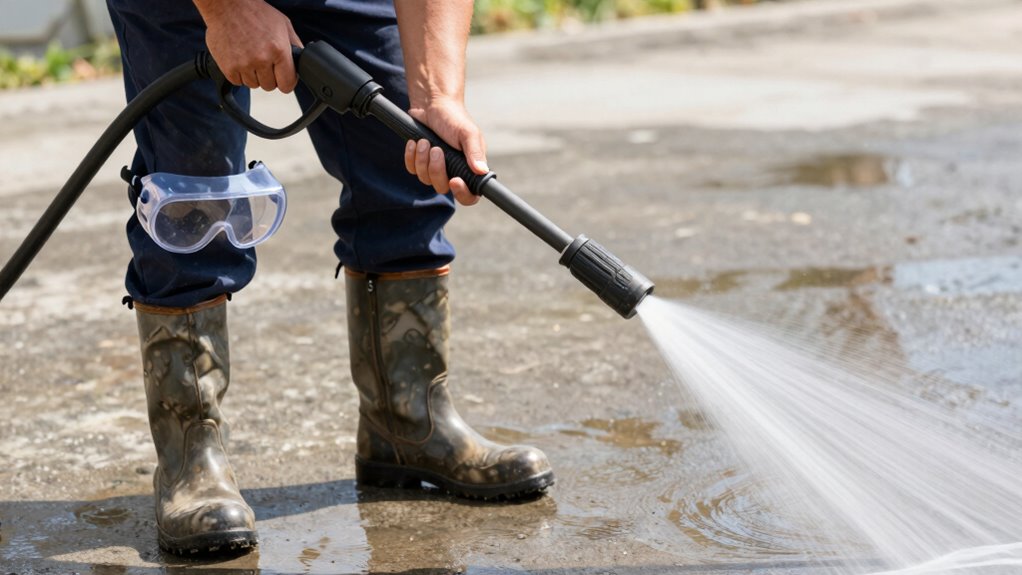
Your safety gear is non-negotiable when operating a pressure washer, and eye protection plus steel-toed boots are fundamental pieces you can’t skip.
Debris, chemicals, and high-pressure water can cause serious injuries without proper protection.
- Choose safety goggles or glasses that seal tightly around your eyes to prevent splashes from reaching you during operation.
- Wear steel-toed boots whenever you’re working because falling objects, accidental drops, or hose whipping can crush unprotected feet.
- Confirm your eye protection meets ANSI Z87.1 standards for impact resistance against flying particles and chemical exposure.
- Select steel-toed footwear that’s also slip-resistant to maintain stability on wet surfaces while handling heavy equipment safely.
Check Oil, Fuel, and Power Connections First
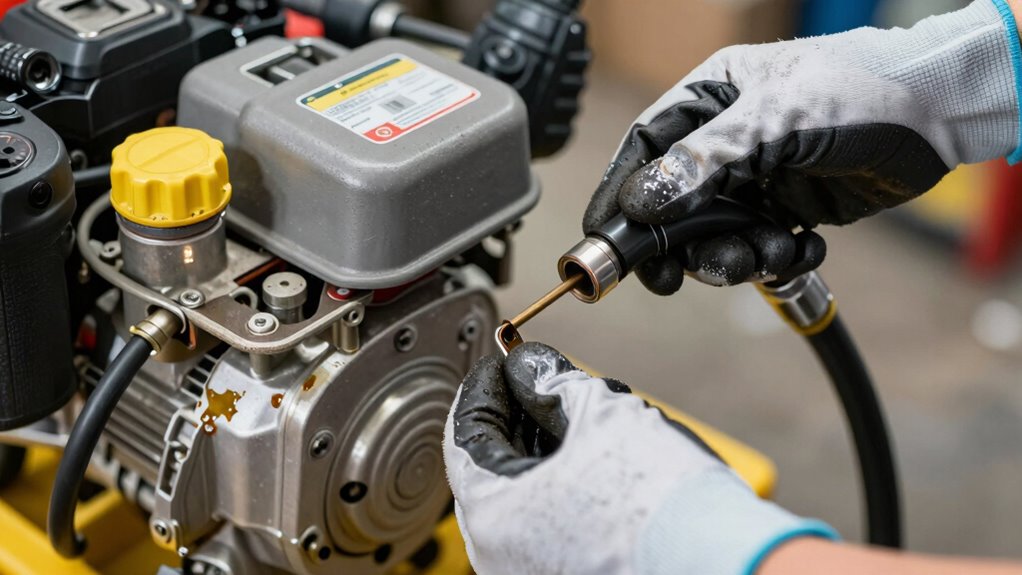
Three critical checks keep your pressure washer running safely and prevent costly breakdowns.
First, check the oil level using the dipstick and top it off if needed. Low oil causes engine damage and overheating.
Second, inspect fuel connections for leaks or cracks before starting. Gasoline leaks create fire hazards and performance issues.
Third, examine all power connections including the spark plug wire and electrical cords. Loose connections cause misfires and unsafe operation.
You should perform these checks every time before use. Don’t skip this routine even when you’re in a hurry. Proper maintenance keeps you part of the safe user community.
These simple inspections protect your investment and prevent dangerous malfunctions that could injure you or others nearby.
Never Aim the Nozzle at Skin or Pets
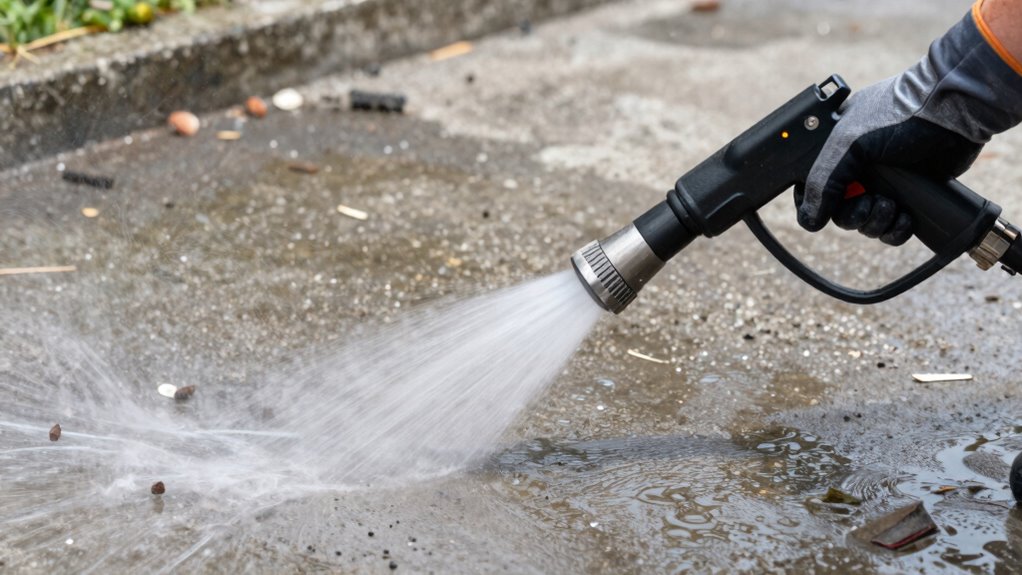
One critical safety rule you must never ignore is keeping the nozzle pointed away from skin and pets. The extreme water pressure can cause severe injuries instantly.
- Keep pets indoors or in a separate area when operating the pressure washer.
- Never test the spray on your hand or body.
- Maintain a safe distance of at least three feet from any living beings.
- Always spray away from people, animals, and yourself.
You’re part of a responsible community that values safety. These precautions protect everyone around you.
Remember that even brief exposure to high-pressure water can penetrate skin and cause permanent damage. Your awareness keeps families safe.
Hold the Spray Gun With Both Hands Firmly
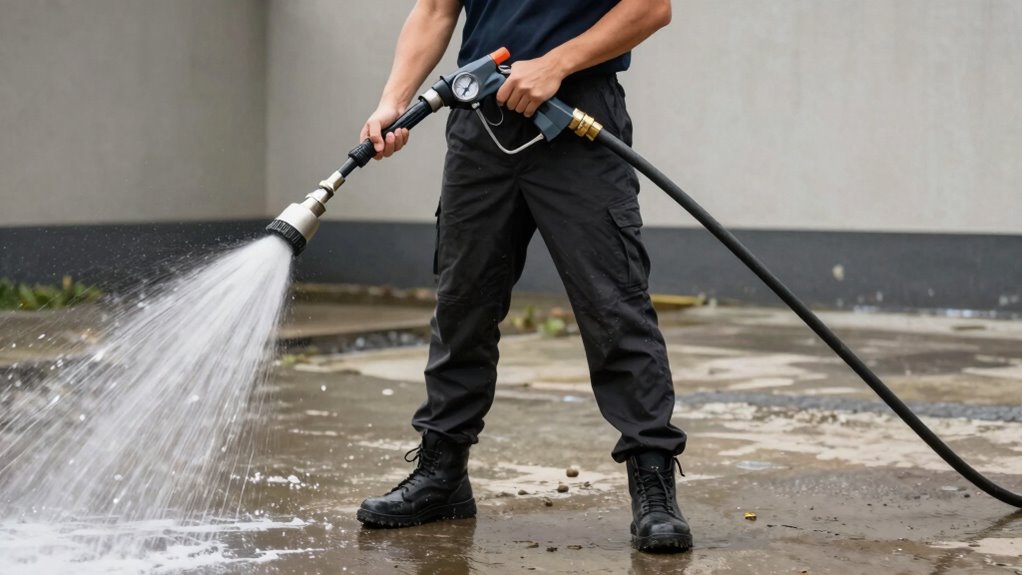
Grip the spray gun firmly with both hands to maintain complete control over the powerful water stream. Your dominant hand should wrap around the handle while your other hand supports the trigger mechanism.
This two-handed grip prevents sudden movements that could cause injury or damage. Keep your elbows slightly bent and stance stable with feet shoulder-width apart.
The high-pressure water can easily push the nozzle upward or sideways if you’re not prepared. Never attempt to operate the spray gun with one hand, even for quick tasks. Your grip should be secure but not tense enough to cause fatigue.
Position your body perpendicular to the cleaning surface for maximum balance. Remember that wet surfaces become slippery, so maintain proper footing while holding the equipment.
This fundamental technique guarantees you stay safe and get the job done properly.
Adjust Water Pressure for Each Surface
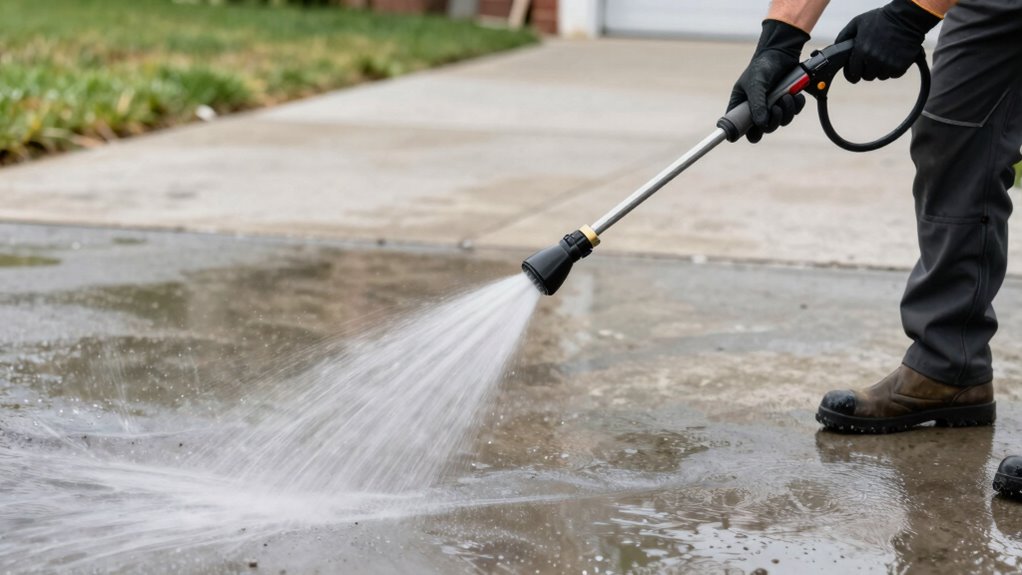
When working with different surfaces, you must adjust the water pressure to match the material’s tolerance level.
Too much pressure damages delicate surfaces while too little won’t clean effectively.
- Start with lower PSI settings for wood decks, vinyl siding, and painted surfaces – typically 1,000 to 1,500 PSI works best.
- Increase pressure gradually when cleaning concrete, brick, or stone surfaces that require 2,000 to 3,000 PSI for ideal results.
- Test your pressure setting on an inconspicuous area first to verify you won’t cause damage or discoloration.
- Always read manufacturer recommendations for specific surfaces and adjust accordingly.
Use Soap Attachments Only on Compatible Models
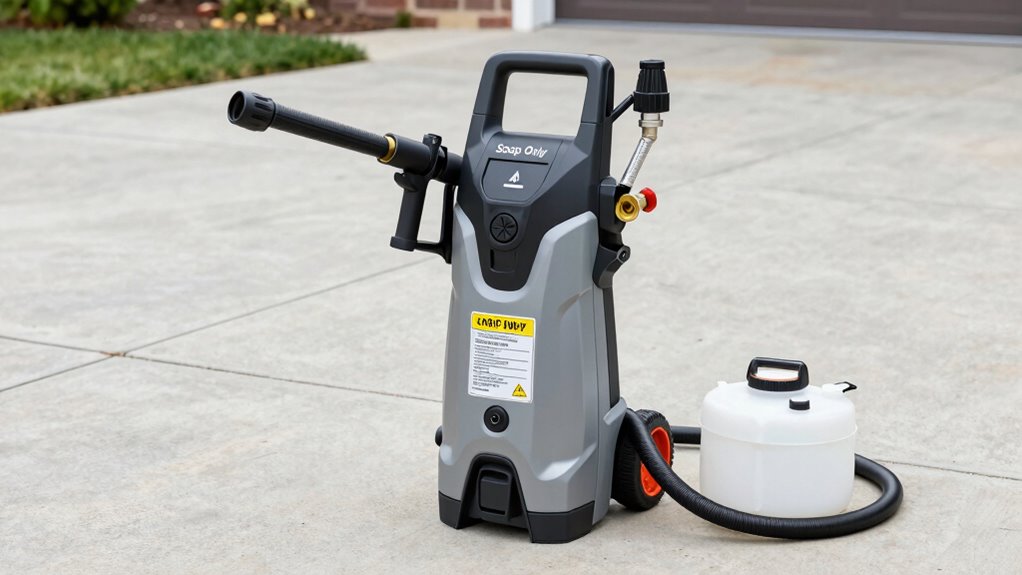
You must verify your pressure washer model compatibility before attaching any soap dispensing systems.
Only use soap types specifically recommended for your unit to prevent damage and maintain warranty coverage.
Strictly follow manufacturer guidelines to avoid creating dangerous chemical reactions or equipment failures.
Check Model Compatibility First
Why risk damaging your pressure washer or creating unsafe operating conditions? You wouldn’t use random parts on your car, so don’t treat your pressure washer recklessly.
Take these steps before attaching soap systems:
- Check your user manual specifically for soap compatibility warnings and approved attachment types.
- Verify your model number matches the soap attachment’s recommended equipment list.
- Guarantee your pressure washer’s PSI rating aligns with soap system requirements.
- Confirm all connection points and fittings are designed to work together seamlessly.
Skipping these checks might seem harmless, but incompatible attachments can cause dangerous pressure buildups, leaks, or equipment failure.
You’re part of a community that values safety and proper maintenance. Don’t let rushed decisions compromise your equipment or put you at risk.
Use Only Recommended Soap Types
Because pressure washers operate at extreme PSI levels, using anything other than manufacturer-recommended soap types creates unnecessary risks.
You should only use soap attachments on models specifically designed for chemical applications. Generic soaps can’t simply attach soap systems without verifying compatibility, because doing so requires matching your pressure washer’s specifications with approved soap types and attachment mechanisms.
Check your model’s specific soap compatibility before making any purchases. Manufacturers design these systems for specific pressure ratings and chemical formulations. That’s why your equipment’s manual lists approved soap types rather than universal compatibility claims.
Soap manufacturers don’t universally match every pressure washer’s chemical tolerance and attachment design. Skipping this verification stage risks equipment damage and creates unsafe operating conditions that compromise both performance and safety standards.
Follow Manufacturer Guidelines Strictly
Following manufacturer guidelines strictly isn’t just recommended—it’s mandatory for safe pressure washer operation. You must respect these specifications to prevent equipment failure and personal injury.
- Check your model’s compatibility before attaching any soap dispenser.
- Verify pressure ratings match your unit’s specifications exactly.
- Use only manufacturer-approved attachments and accessories.
- Never force incompatible parts together, regardless of convenience.
Using soap attachments on incompatible models creates dangerous pressure imbalances.
You risk damaging internal components, causing leaks, or experiencing sudden equipment failure.
These mistakes aren’t just costly—they’re potentially deadly. Your safety depends on following these guidelines precisely.
Don’t assume similar-looking parts are interchangeable.
Read your manual thoroughly before connecting any accessories.
When you follow manufacturer instructions strictly, you’re protecting yourself, your equipment, and those around you.
Don’t Spray Near Electrical Outlets or Wiring
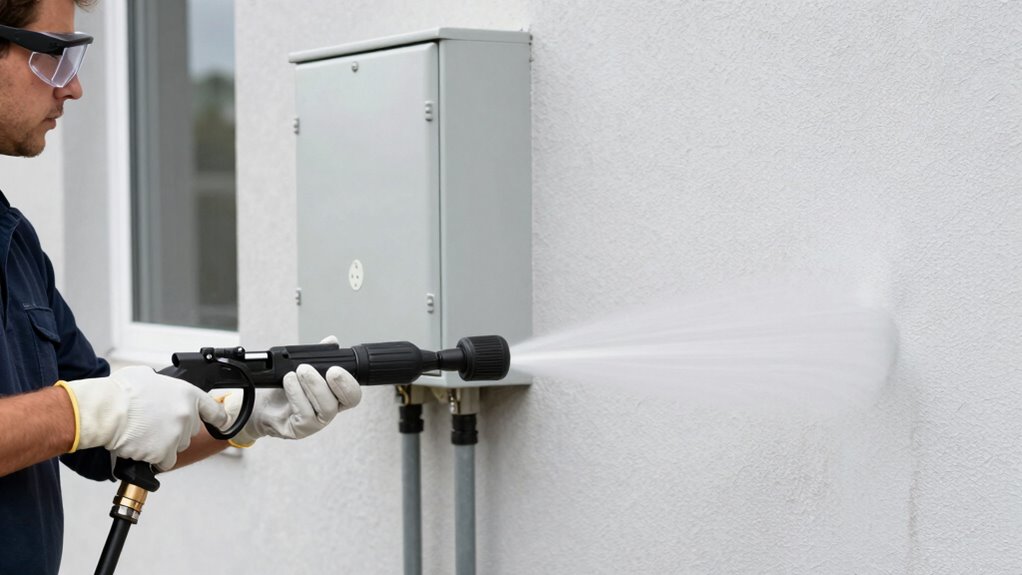
When you’re operating a pressure washer, keep electrical outlets and wiring well away from your spray path since water and electricity create a dangerous combination that can lead to serious injury or death.
You must inspect your work area thoroughly before starting, identifying all potential electrical hazards including outdoor outlets, junction boxes, and overhead power lines.
Never spray upward toward electrical components or allow water to pool near outlets.
Maintain minimum distances of at least ten feet from electrical fixtures when possible.
If you’re unsure about an area’s electrical safety, turn off power at the breaker panel before beginning work.
Your safety depends on respecting these boundaries consistently every time you use the equipment.
React Fast If You Accidentally Get Sprayed
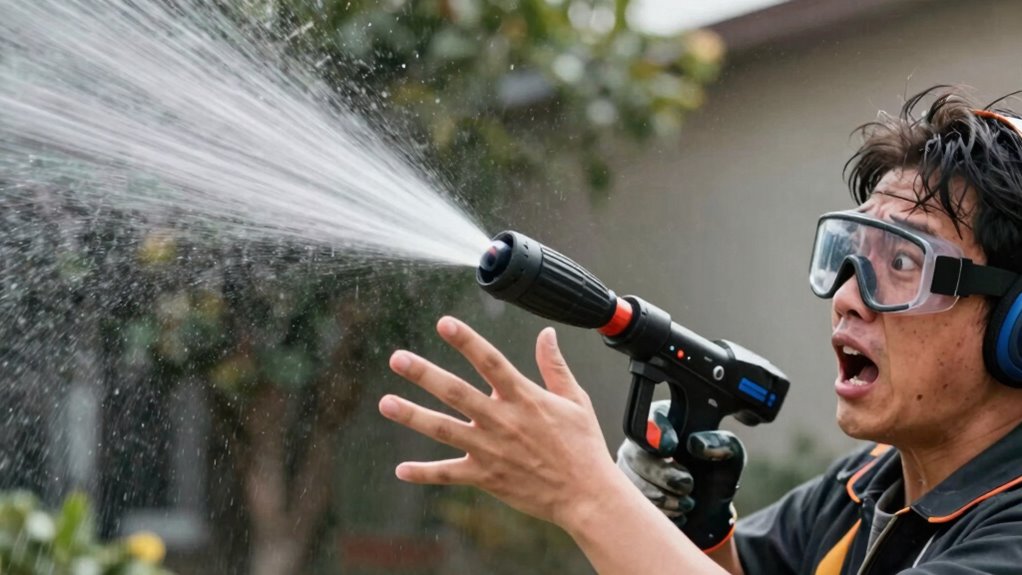
Although pressure washer accidents can happen despite careful planning, you must react immediately if water or chemicals spray onto your skin or eyes. Quick action prevents serious injury and minimizes damage.
- Shut off the machine instantly – Your first move should be stopping the pressure washer completely before addressing injuries.
- Flush affected areas thoroughly – Rinse skin or eyes with clean water for at least fifteen minutes to remove chemicals or debris.
- Remove contaminated clothing – Take off any wet or sprayed garments immediately to prevent further exposure.
- Seek medical attention when necessary – Don’t hesitate getting professional help for chemical burns, eye injuries, or deep cuts. Your safety matters more than pride.
Clear Debris to Prevent Slip-and-Fall Accidents
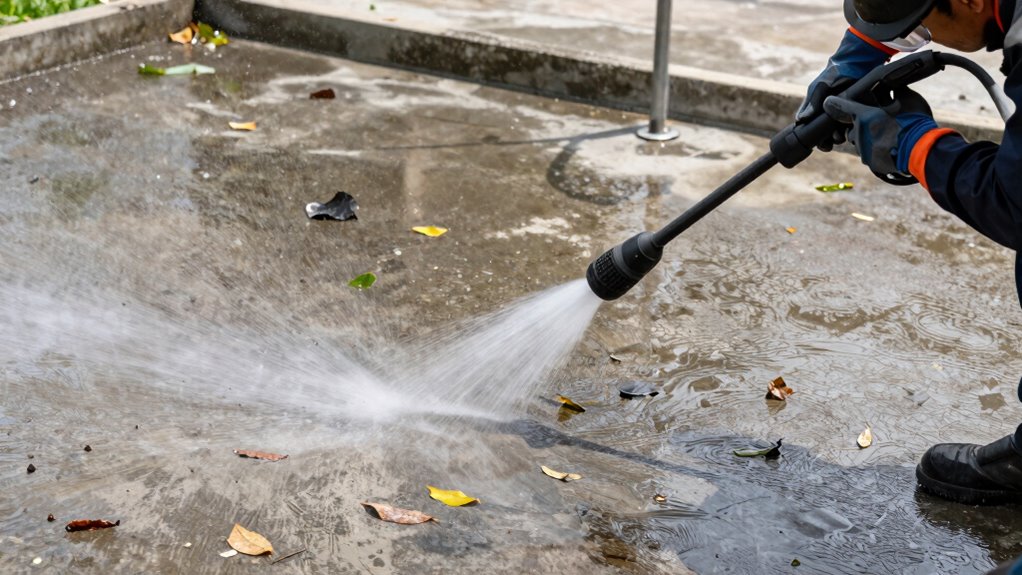
You should remove loose debris from surfaces before pressure washing to prevent it from becoming a hazardous slipping hazard.
Clear wet surfaces immediately after cleaning to eliminate standing water that can cause serious falls.
Store your cleaning tools properly to avoid creating additional trip hazards in your work area.
Remove Loose Debris First
Before you even think about pulling the trigger on your pressure washer, make sure you’ve cleared away any loose debris from the work area. This critical step prevents dangerous slip-and-fall accidents that can ruin your cleaning project.
- Sweep away leaves, twigs, and dirt from your designated cleaning zone
- Remove loose gravel, stones, or other projectiles that could become airborne
- Clear any standing water or mud that might create slippery conditions
- Check for and eliminate tripping hazards like hoses, tools, or equipment
Taking these precautions shows you’re part of the responsible cleaning community. You’re not just blasting away dirt—you’re creating a safe environment for yourself and others.
Don’t skip this essential preparation step. Your safety matters, and so does belonging to a group that prioritizes proper technique over shortcuts. Clean smart, clean safely.
Clear Wet Surfaces Immediately
While you’re pressure washing, water and debris create slippery conditions that demand immediate attention.
Don’t wait until you’re finished to address wet surfaces – tackle them promptly. Grab a squeegee or mop to remove standing water as you work. Clear away loose gravel, leaves, and other debris that accumulate during cleaning. These materials turn into hazardous obstacles when mixed with high-pressure water spray.
Pay special attention to walkways, stairs, and areas where foot traffic occurs. Wet concrete, tile, and metal surfaces become extremely treacherous. You’re not just protecting yourself – you’re preventing accidents for family members, neighbors, or coworkers who might walk through the area.
Make clearing wet surfaces an ongoing priority throughout your cleaning session.
Store Cleaning Tools Properly
Proper tool storage prevents dangerous debris accumulation that turns your workspace into a slip-and-fall hazard.
When you’re done pressure washing, don’t just toss tools aside. Take time to organize your equipment properly.
- Clean and dry all surfaces before storing tools to prevent moisture buildup and bacterial growth.
- Use designated storage areas with proper shelving or hooks to keep items off the floor.
- Inspect tools regularly for damage or wear that could create additional hazards during storage.
- Establish a routine cleanup process that includes sweeping floors and removing any debris immediately.
Your safety matters, and so does your team’s.
Create habits that protect everyone who uses this space. Don’t underestimate how proper storage impacts overall workplace safety.
Make organization part of your daily routine.
You’re not just cleaning up – you’re preventing accidents.
Smart storage saves lives and keeps your work environment professional.
Don’t Override Safety Locks or Mod Trigger Guns
Never override safety locks or modify trigger guns on your pressure washer. These mechanisms exist for your protection, not to inconvenience you.
Safety locks prevent accidental triggering, which can cause serious injury or damage. When you bypass these features, you’re not just risking your own safety—you’re potentially endangering others nearby.
Modifying trigger guns might seem like a way to increase convenience, but it compromises the equipment’s integrity. Manufacturers design these components to specific safety standards. Altering them voids warranties and creates unpredictable operation.
You belong to a community of responsible users who understand that safety isn’t optional. Every time you respect these safety features, you’re protecting yourself and demonstrating care for fellow users.
Keep your pressure washer in its original, safe configuration.
Keep the Pump Oil Full and Hoses Intact
Because pressure washer pumps rely on oil to lubricate internal components and prevent overheating, you must regularly check and maintain adequate oil levels. Running a pump dry destroys seals and causes expensive repairs.
- Check oil levels before each use and top off as needed with manufacturer-recommended oil type
- Inspect hoses for cuts, abrasions, or bulging that could burst under pressure
- Replace worn O-rings and connectors immediately when you notice leaks
- Store hoses properly coiled and away from sharp objects or extreme temperatures
You’re part of a community that values safety and equipment longevity.
These simple maintenance steps prevent dangerous failures and keep your pressure washer running smoothly for years.
Don’t skip these checks – your safety and investment depend on it.
Turn Off and Cool Down Before Storing
After you’ve finished cleaning, always turn off the pressure washer and let it cool down completely before putting it away. Hot engines and pumps can cause burns or damage internal components if stored immediately.
You should disconnect the water supply and run the engine for thirty seconds without water to clear any remaining pressure. This prevents water hammer effects that could harm the pump.
Wait at least ten minutes before touching metal surfaces. Check that all water has drained from hoses and connections.
Store your pressure washer in a dry, covered area away from extreme temperatures. Proper cooling extends equipment life and keeps you safe.
Never rush this step – your machine and your safety depend on it.
Avoid Damage on Delicate Surfaces Like Glass
You’ll need to switch to a wider spray pattern and keep the nozzle at least 12 inches away from glass surfaces to prevent cracking or etching.
Start with the lowest pressure setting that still effectively cleans, and always test on a small inconspicuous area first.
Remember that glass can shatter unexpectedly under high pressure, so maintain constant awareness of your distance and angle.
Choose Appropriate Nozzle Settings
When working with delicate surfaces like glass, always select a wider spray pattern or lower pressure setting to prevent accidental damage.
You’ll want to make smart nozzle choices that protect your surfaces while still getting the job done effectively.
- Start with the widest spray angle – Use 40-degree nozzles for maximum coverage and minimal concentrated pressure on sensitive glass surfaces.
- Choose lower pressure ratings – Opt for 1,500 to 2,000 PSI settings instead of maximum pressure that can etch or crack glass.
- Test spray patterns first – Always preview your nozzle’s impact on scrap material before hitting actual glass surfaces.
- Adjust as needed – You can always increase pressure slightly if cleaning proves insufficient, but starting too aggressive causes irreversible damage.
Maintain Safe Distance From Glass
Stand back at least 12 inches from glass surfaces while operating your pressure washer, because maintaining proper distance prevents accidental damage that can occur even with appropriate nozzle settings.
Glass panes, windows, and mirrors can crack or shatter unexpectedly when hit directly with high-pressure streams. You should angle your spray away from these delicate surfaces entirely.
If cleaning near glass is necessary, reduce pressure considerably and keep the nozzle pointed downward. Remember that reflected spray can also cause damage indirectly.
Your safety matters, and protecting property prevents costly repairs. Keep yourself and others safe by respecting these boundaries. Glass damage isn’t worth the risk, so maintain distance and stay vigilant.
Unplug and Drain Hoses After Every Use
Always disconnect the power cord and relieve pressure from all hoses immediately after finishing your pressure washing session. This critical step prevents accidents and extends your equipment’s lifespan while keeping you safe.
- Turn off the machine and unplug it from the electrical outlet before touching any components.
- Release trapped pressure by squeezing the trigger gun until water stops flowing completely.
- Disconnect both ends of every hose and coil them properly to prevent kinks and damage.
- Store all connections in a dry location away from moisture and potential tripping hazards.
These simple actions protect you from electrical shocks, unexpected startups, and hydraulic injuries.
You’re part of a community that values safety protocols. Make these practices automatic. Your family and fellow users count on responsible operation.
Don’t skip these essential steps – they’re non-negotiable for everyone’s protection.
Keep Kids and Pets Indoors or Away
After securing your pressure washer and storing components properly, you must also consider who else might be affected by your cleaning activities.
Keep children and pets indoors or at a safe distance while operating your pressure washer. The high-pressure water stream can cause serious injuries if it contacts skin or eyes.
Flying debris from cleaning surfaces creates additional hazards that unsuspecting family members or animals shouldn’t face. You’re responsible for creating a safe zone around your work area.
Close windows and doors near your cleaning site. Post someone to watch for wandering pets or curious kids. Don’t assume they’ll stay away – actively guarantee their safety.
Your pressure washer’s power demands respect, and protecting loved ones from potential harm should always be your priority.
Stop These Mistakes Before They Injure You
While you’re setting up your pressure washer, remember that improper handling can turn this powerful tool into a dangerous weapon.
Don’t let common mistakes compromise your safety or damage your property.
- Never point the spray wand at yourself, others, or delicate surfaces like windows or siding.
- Don’t use the highest pressure setting unnecessarily – start low and increase only when needed.
- Avoid using extension ladders or unstable platforms while operating the machine.
- Never force the trigger grip or leave the unit running unattended.
These simple precautions prevent serious injuries and equipment damage.
Your safety matters, and following these guidelines shows you respect both yourself and your tools.
Stay alert, stay protected.
Stay Safe and Get the Job Done Faster
You’ve already taken the right step by avoiding dangerous practices, so now it’s time to focus on working efficiently without sacrificing safety.
Start by choosing the correct nozzle for your surface – lighter tasks need lower pressure. Keep your stance stable with feet shoulder-width apart, and maintain a firm grip on the wand.
Work in systematic sections, moving the spray in overlapping passes. Don’t rush through corners or edges where buildup concentrates.
Take regular breaks to prevent fatigue, which leads to accidents. Keep bystanders at least ten feet away, and never point the spray at yourself or others.
Conclusion
You’ve learned the essential safety measures for pressure washing. Remember: always wear proper gear, check equipment first, and never aim at people or pets. Hold the nozzle firmly with both hands and keep children away. Shut off and drain the machine after use. Pressure washers cause over 6,000 emergency room visits annually due to improper use. Stay alert, follow these guidelines, and you’ll complete your cleaning tasks safely and efficiently every time.
