

You’ve invested in beautiful outdoor wood furniture, but without proper protection, weather exposure will quickly degrade even the finest materials. Moisture, UV rays, and temperature fluctuations cause wood to crack, warp, and rot over time. While teak and cedar offer natural resistance, all outdoor furniture requires regular maintenance including cleaning, sealing, and inspection. Smart preparation and timely repairs can extend your furniture’s lifespan considerably. What specific steps should you take to safeguard your investment?
What Causes Wood Furniture to Fail Outdoors?
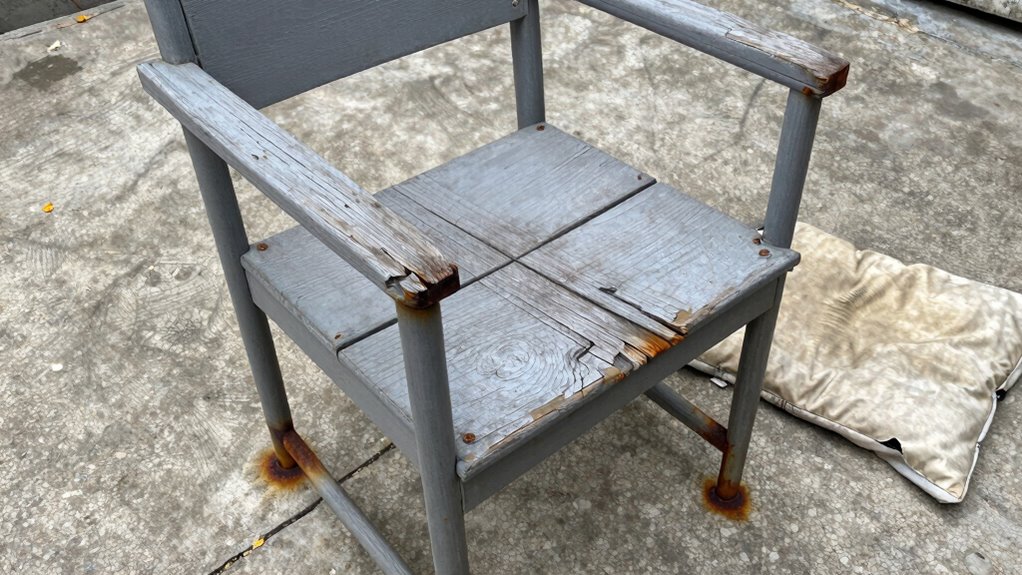
When wood furniture sits outside, several environmental factors work together to cause deterioration. UV radiation breaks down lignin, weakening cellular structure and causing surface cracking.
Moisture absorption leads to wood expansion, while drying creates contraction, resulting in stress fractures. Temperature fluctuations accelerate this expansion-contraction cycle, compromising joints and finishes.
Oxygen facilitates oxidative degradation, while airborne pollutants create acidic compounds that attack wood fibers. Microbial growth, including fungi and bacteria, thrives in humid conditions, causing rot and discoloration.
Salt exposure from coastal environments or road spray accelerates corrosion of metal hardware and degrades wood polymers.
You’ll notice these factors rarely act alone; they synergistically amplify damage. Understanding these mechanisms helps you recognize early warning signs and implement targeted protection strategies before costly repairs become necessary.
Best Types of Wood for Long-Lasting Outdoor Use
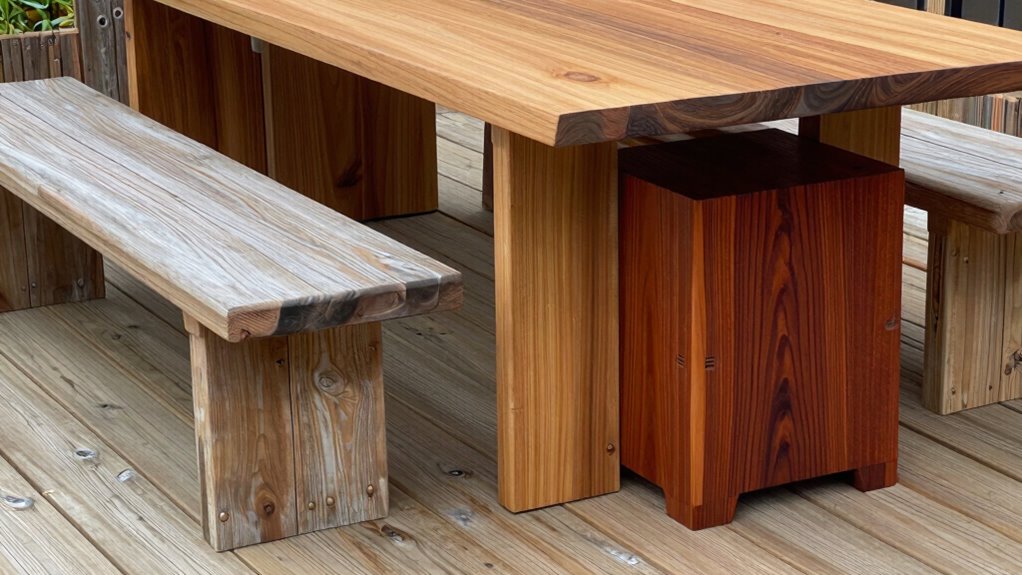
You’ll want to understand that teak and cedar naturally resist decay due to their high oil content and tight grain structure, making them premium choices for outdoor applications.
Pressure-treated pine offers excellent durability at a lower cost, with chemical preservatives that protect against insects and rot.
Each wood type requires specific maintenance protocols to maximize longevity in outdoor environments.
Teak And Cedar Wood Properties
Teak and cedar stand out as premium choices for outdoor furniture due to their exceptional natural resistance properties.
You’ll appreciate teak’s high oil content and tight grain structure that repels moisture while preventing warping and cracking. Its natural silica content creates a protective barrier against UV damage and fungal decay.
Cedar’s aromatic oils provide built-in insect resistance and weather protection. You’ll find western red cedar particularly durable, with natural tannins that resist rot and decay.
Both woods contain extractives that protect against moisture absorption, making them dimensionally stable in varying weather conditions.
You don’t need chemical treatments because these woods inherently withstand outdoor elements. Their cellular structure minimizes swelling and shrinking cycles that damage lesser woods.
You’ll discover these premium materials maintain structural integrity longer than alternatives, justifying their higher initial investment through reduced replacement costs.
Pressure-Treated Pine Benefits
While teak and cedar offer premium natural resistance, pressure-treated pine provides an economical alternative that doesn’t compromise on durability for outdoor applications.
You’ll appreciate how this wood undergoes chemical treatment under high pressure, forcing preservatives deep into the cellular structure. The result is enhanced rot resistance and protection against termites, fungi, and moisture damage.
Pressure-treated pine maintains structural integrity longer than untreated woods, making it ideal for outdoor furniture exposed to harsh weather conditions. You’ll find it readily available and cost-effective compared to exotic hardwoods.
The treatment process creates a barrier that prevents decay organisms from penetrating the wood fibers. Unlike surface treatments that wear away quickly, pressure-treated pine’s protection extends throughout the wood’s core, ensuring consistent performance and extended furniture lifespan.
How to Prepare Wood Furniture for Protection
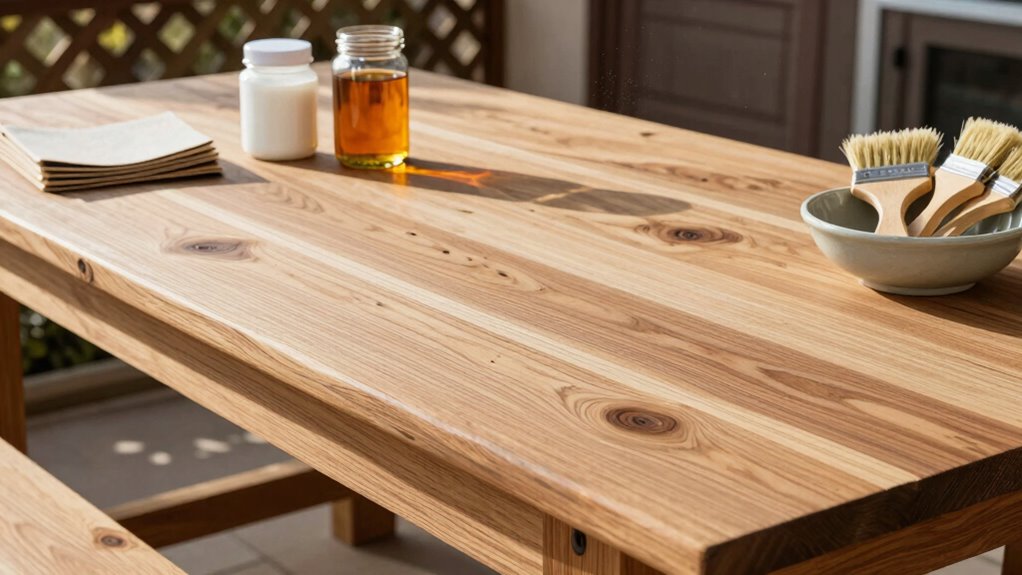
You must thoroughly clean wood surfaces using appropriate solvents and abrasives to remove contaminants, dirt, and degraded material that compromise finish adhesion.
Apply sanding techniques with progressively finer grits to achieve smooth, even surfaces that promote ideal protective coating performance.
These preparation steps guarantee your chosen protective finish bonds properly and provides maximum durability against outdoor weathering conditions.
Clean Wood Surface
One essential step before applying any protective finish to outdoor wood furniture involves thoroughly cleaning the wood surface to remove dirt, grime, and weathered material.
You must eliminate all contaminants that prevent proper adhesion and protection.
- Remove loose material – Use a stiff-bristled brush or scraper to eliminate weathered wood fibers, old finish remnants, and surface debris that compromise new protective coatings.
- Clean with appropriate solutions – Apply wood cleaner or diluted bleach solution to remove mildew, algae, and deep-seated grime. Scrub vigorously and allow proper dwell time for maximum effectiveness.
- Rinse and dry completely – Flush surfaces with clean water multiple times to remove all cleaning residues.
Allow wood to dry for 48-72 hours, ensuring moisture content drops below 15% before proceeding.
Apply Protective Finish
After thoroughly cleaning the wood surface and allowing it to dry completely, you’re ready to apply protective finishes that will shield your outdoor furniture from moisture, UV damage, and weathering.
Choose between oil-based or water-based sealers, stains, or paints depending on your desired aesthetic and protection level. Apply thin, even coats using a high-quality brush or cloth, following wood grain direction.
Allow each coat to dry according to manufacturer specifications before applying subsequent layers. Sand lightly between coats for smooth finishes. Don’t skip primer application on bare wood surfaces. Apply at least two coats for adequate protection.
Consider annual reapplication to maintain ideal weather resistance and preserve your investment.
Top-Rated Sealers for Outdoor Wood Furniture
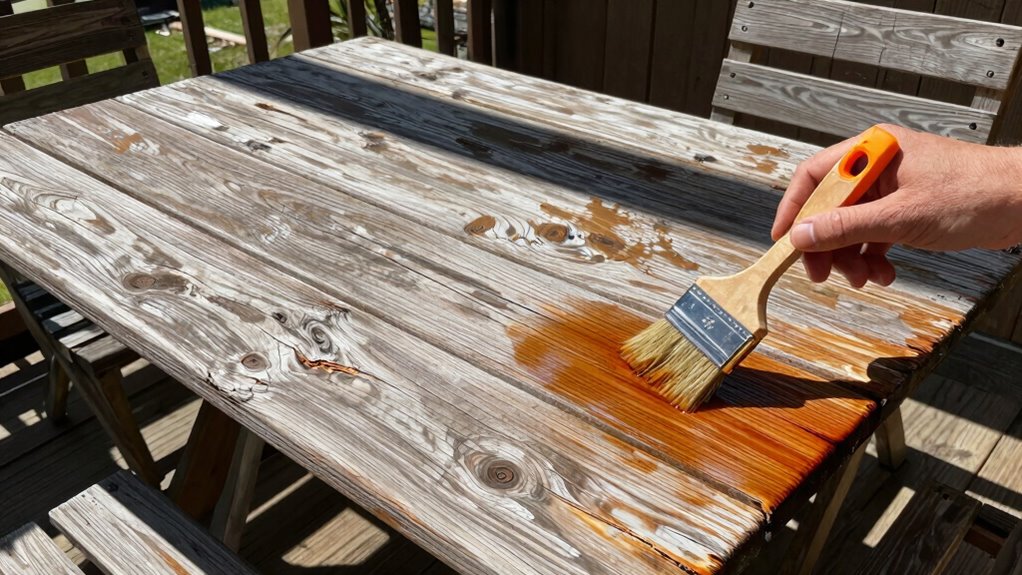
While numerous sealers claim outdoor protection, only a select few deliver exceptional durability against weather exposure. You need proven products that withstand UV rays, moisture, and temperature fluctuations without compromising your furniture’s integrity.
- Marine-grade spar urethane provides superior water resistance and maintains flexibility across seasonal changes, making it ideal for high-moisture environments.
- Aluminum oxide-infused polyurethane offers enhanced scratch resistance and UV protection, creating a durable barrier that won’t peel or crack under intense sunlight exposure.
- Tung oil-based sealers penetrate deep into wood fibers, providing natural moisture repellency while allowing the material to breathe, preventing trapped moisture buildup.
These top-rated options guarantee your outdoor wood furniture maintains its beauty and structural integrity season after season.
When to Reapply Sealer Based on Wood Type
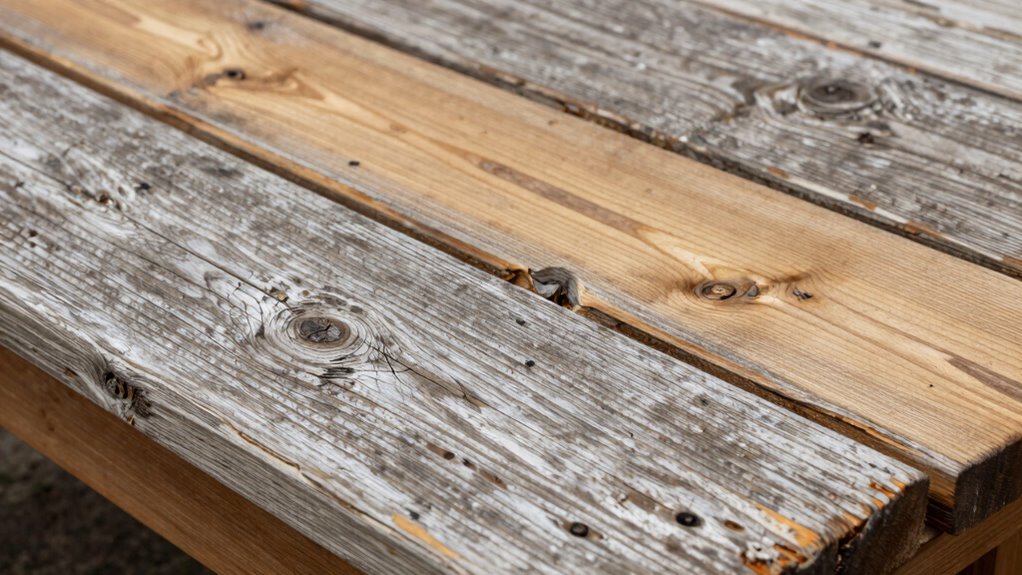
You’ll need to reapply sealer every 12-18 months for softwood furniture like pine and cedar, as these porous materials absorb moisture quickly and deteriorate faster under UV exposure.
Hardwood furniture made from teak, mahogany, or oak requires resealing every 2-3 years due to their tighter grain structure and natural oil content that provides inherent weather resistance.
Your maintenance schedule should account for these material differences to prevent costly repairs and extend furniture lifespan.
Softwood Furniture Maintenance
Softwoods like pine, cedar, and fir require more frequent sealer reapplication than hardwoods due to their porous cellular structure and lower density.
You’ll need to stay vigilant about maintenance schedules to protect your investment properly.
- Pine furniture demands annual sealer inspection and reapplication every 12-18 months because its open grain structure absorbs moisture rapidly, causing swelling and warping without adequate protection.
- Cedar pieces need semi-annual evaluation with resealing every 18-24 months; its natural oils provide some weather resistance, but UV exposure degrades the wood’s surface protection over time.
- Fir wood requires reapplication every 15-20 months; its straight grain pattern makes it susceptible to cracking when exposed to temperature fluctuations and moisture cycles.
Don’t wait for visible damage to appear.
Hardwood Sealing Frequency
Because hardwoods possess denser grain structures than softwoods, their sealing requirements differ markedly based on species-specific characteristics that affect moisture absorption and UV resistance.
You should reapply sealer annually for most hardwood furniture, but dense species like teak and mahogany require reapplication every two to three years.
Monitor your furniture’s finish regularly, checking for water absorption or color fading as indicators.
Redwood and cedar need sealing every eighteen months due to their moderate density.
Examine high-wear areas like chair seats and table edges more frequently, as these zones deteriorate faster.
Don’t wait for obvious weathering signs; preventive maintenance preserves your investment.
Apply sealers during dry seasons when wood moisture content is lowest, ensuring prime penetration and adhesion for maximum protection.
Boost Color & Durability With Outdoor Wood Stains
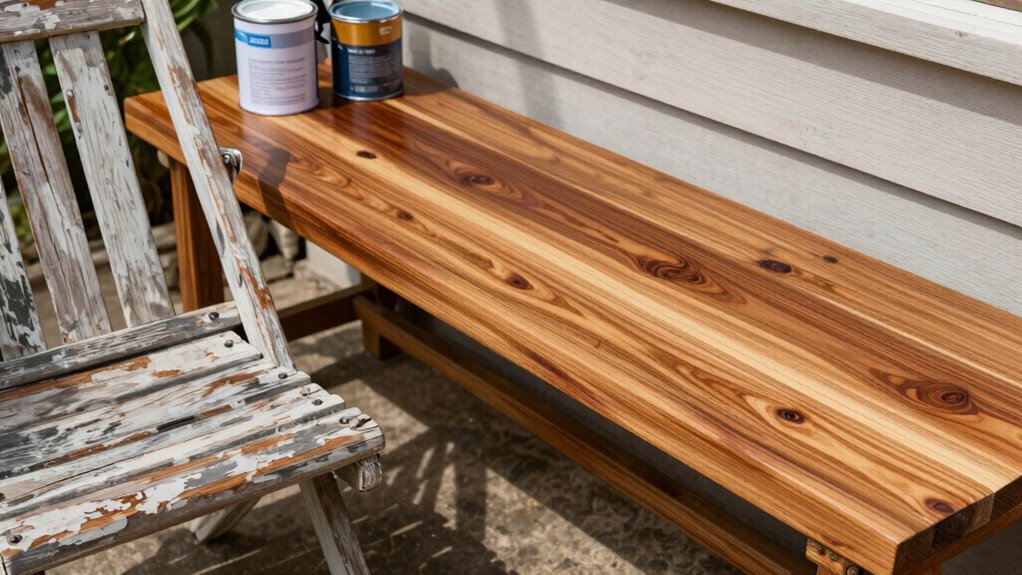
One effective method for enhancing both the appearance and longevity of outdoor wood furniture involves applying high-quality outdoor wood stains that penetrate deep into the grain structure.
These specialized formulations contain UV inhibitors and weather-resistant compounds that protect against sun damage while enriching natural wood tones.
- Select semi-transparent stains containing synthetic resins and pigments that bond molecularly with wood fibers, creating protective barriers against moisture absorption and UV degradation.
- Apply thin, even coats using synthetic brushes or HVLP sprayers, allowing each layer to penetrate completely before adding subsequent applications for ideal color saturation and protection.
- Maintain stained surfaces annually by cleaning with mild detergent solutions and reapplying fresh stain to high-wear areas where UV exposure has diminished protective properties.
Quality outdoor stains transform weathered furniture into vibrant, long-lasting pieces that resist environmental damage.
Waterproofing Methods That Stand Up to Rain
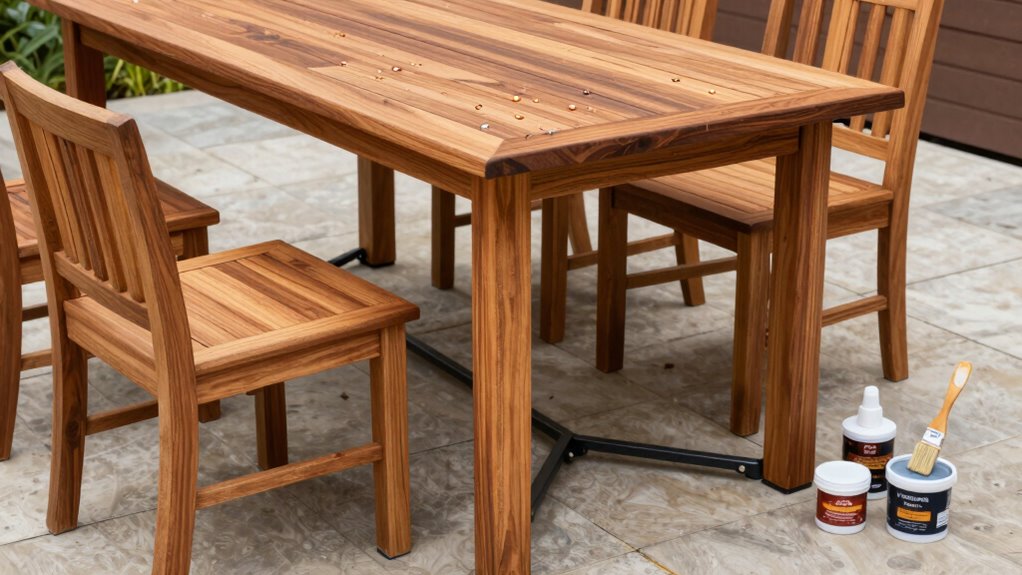
While outdoor wood furniture stains provide excellent UV protection and aesthetic enhancement, they don’t always deliver sufficient waterproofing against persistent rainfall and moisture exposure.
You need dedicated water-repellent sealers containing siloxanes or fluoropolymers that penetrate deep into wood fibers. These create hydrophobic barriers preventing water absorption.
Apply spar urethane or marine-grade varnish in thin, even coats during dry conditions. Don’t forget end grain treatment—moisture enters most aggressively through cut wood surfaces.
Consider penetrating oils like teak or linseed oil that swell wood cells, reducing porosity. Reapply every six months or after heavy weather exposure.
Test water beading annually; if droplets absorb quickly, resealing is necessary. Quality marine sealers resist salt spray and temperature fluctuations better than standard products.
Stop UV Rays From Ruining Your Furniture
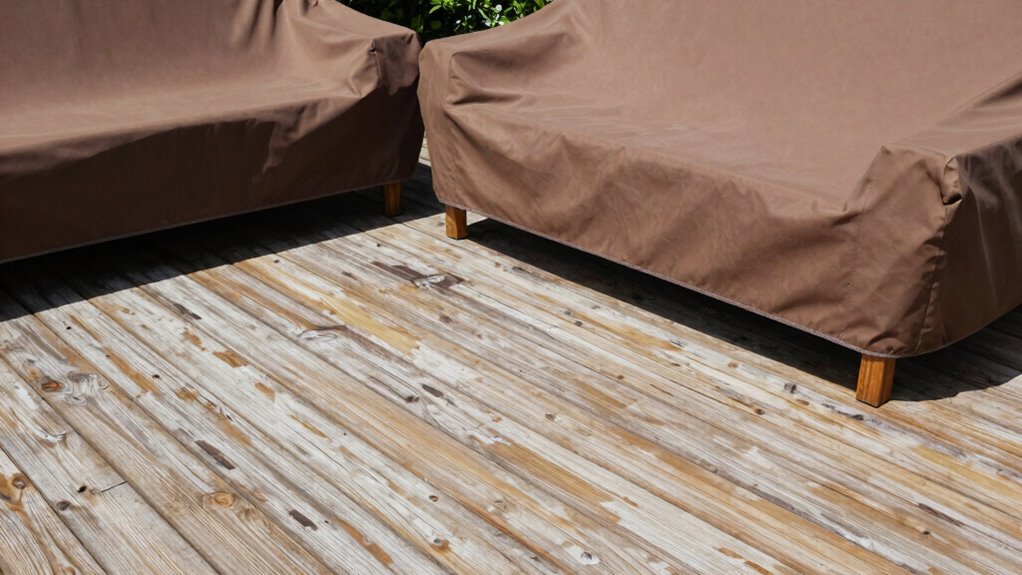
Although outdoor wood furniture stains provide some UV protection, they don’t offer sufficient defense against the sun’s damaging rays that can cause wood to fade, crack, and deteriorate over time.
You need specialized UV-blocking treatments that penetrate deep into wood fibers.
- Apply UV-resistant sealers containing titanium dioxide or zinc oxide nanoparticles that create a protective barrier while maintaining wood’s natural appearance and texture.
- Use semi-transparent deck stains with synthetic resins that absorb harmful UV wavelengths before they damage lignin bonds within your furniture’s cellular structure.
- Reapply protective coatings annually because UV degradation breaks down surface treatments, requiring regular maintenance to preserve both aesthetic appeal and structural integrity.
These methods guarantee your outdoor furniture maintains its beauty and durability.
Why Use Oil-Based Treatments on Wood?
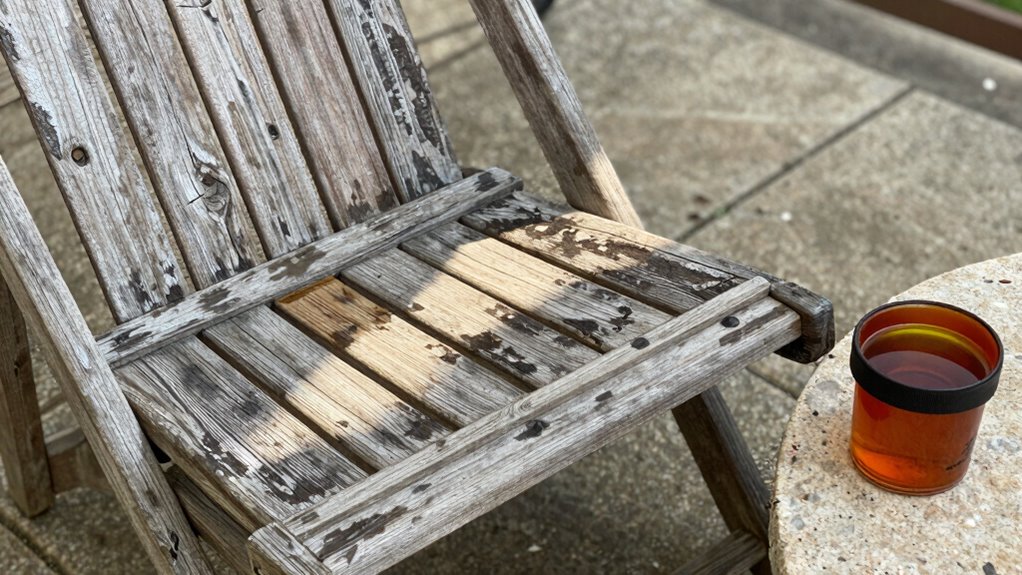
You should consider oil-based treatments because they provide enhanced water resistance that penetrates deep into wood fibers, creating a protective barrier against moisture damage.
These formulations offer superior penetration depth compared to water-based alternatives, ensuring protection reaches the wood’s core structure where decay often begins.
Your outdoor furniture will maintain long-lasting protection as oil-based treatments resist UV degradation and weathering better than competing products.
Enhanced Water Resistance
Oil-based treatments penetrate deep into wood fibers, creating a hydrophobic barrier that repels water molecules more effectively than water-based alternatives. You’ll achieve superior moisture protection that lasts longer outdoors.
- Molecular Bonding: Oil-based formulas create permanent chemical bonds with wood cellulose, forming an integrated water-repelling layer that won’t easily wash away like surface coatings.
- Swelling Reduction: These treatments minimize wood expansion and contraction cycles by stabilizing cellular structure, preventing cracking and warping from moisture fluctuations.
- UV Resistance: Oil-based protectants contain UV inhibitors that work synergistically with water repellency, shielding wood from sun damage while maintaining dimensional stability.
Your outdoor furniture deserves protection that works with wood’s natural properties rather than against them.
Superior Penetration Depth
Penetration depth determines treatment effectiveness in outdoor wood protection. You need treatments that reach deep into wood fibers, not just sit on surface layers.
Oil-based treatments excel because oils have lower viscosity than water-based alternatives, allowing them to flow deeper into cellular structures. You’re working against weather damage that attacks wood from multiple angles, so superficial protection fails quickly.
Deep penetration creates a protective barrier throughout the wood matrix, not just on top. You’ll find that oil molecules are smaller than water-based compounds, enabling better absorption into lignin and cellulose.
This molecular advantage means treatments reach vulnerable inner layers where moisture typically causes splitting and warping. You want complete saturation, not partial coverage that leaves interior wood exposed.
Oil-based treatments provide this extensive protection by reaching where water and UV damage start their destructive work.
Long-Lasting Protection
Building on the superior penetration capabilities of oil-based treatments, their longevity sets them apart as the preferred choice for outdoor wood protection.
You’ll appreciate how these treatments form lasting bonds within wood fibers, resisting weather damage for years.
- Deep molecular integration – Oil-based compounds渗透 into cellular structures, creating permanent protective barriers that water-based alternatives can’t match.
- UV resistance properties – These treatments contain additives that prevent sun damage, maintaining wood’s structural integrity and appearance through seasonal changes.
- Moisture regulation – Oil-based formulas allow wood to breathe while blocking harmful moisture absorption, preventing warping, splitting, and rot.
Your outdoor furniture deserves protection that works with wood’s natural properties, not against them.
Oil-based treatments become part of the wood, ensuring your investment remains beautiful and functional for decades.
Cover Furniture During Storms and Cold Snaps
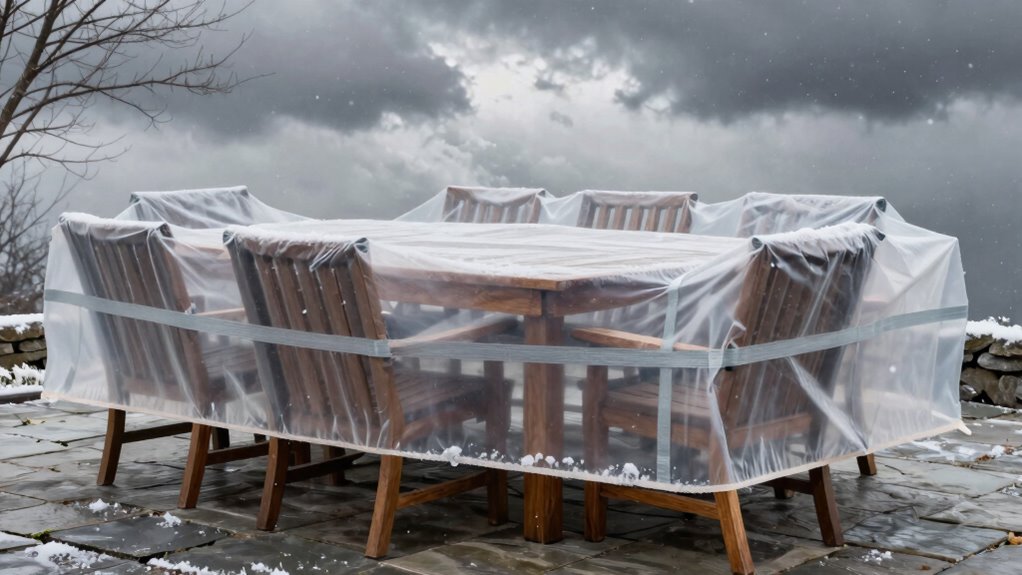
When severe weather threatens your outdoor wood furniture, you should act quickly to shield it from potential damage. Don’t wait until the last minute – monitor weather forecasts and prepare coverings at least 24 hours before storms arrive.
Secure tarps or protective sheets tightly using bungee cords or rope, ensuring no loose edges flap in wind. Pay special attention to joints and hardware that expand contract with temperature changes. Cold snaps particularly stress wood fibers, causing cracks and warping.
You’ll want to cover furniture completely, trapping warm air underneath while blocking moisture penetration. Anchor covers firmly to prevent blowing off during high winds.
Stackable furniture should be separated and covered individually for maximum protection. Remember that wet covers trap moisture against wood surfaces.
Act decisively – your furniture’s longevity depends on consistent protective measures during harsh weather conditions. Smart preparation prevents costly repairs later.
Choose the Right Outdoor Covers for Furniture
Selecting appropriate outdoor covers for your wood furniture requires understanding several critical factors that directly impact protection effectiveness. You need covers that breathe while blocking moisture, UV rays, and debris effectively.
- Material composition matters considerably – choose breathable polyester or polyethylene covers with UV inhibitors that prevent fabric degradation while allowing moisture vapor transmission to avoid trapped condensation.
- Proper fit guarantees prime protection – measure your furniture dimensions carefully and select covers with adjustable drawstrings or elastic hems that create snug seals without restricting airflow around wood surfaces.
- Weather resistance ratings should match your climate – look for covers rated for your specific precipitation levels, wind conditions, and temperature ranges to verify durability throughout varying seasonal weather patterns.
Store Wood Furniture Safely in Winter Months
Proper winter storage of outdoor wood furniture requires immediate action before freezing temperatures arrive, as moisture trapped in wood pores can expand and cause irreversible cracking damage.
You should disassemble furniture completely, removing cushions, hardware, and fabric components. Clean each piece thoroughly with appropriate wood cleaners, allowing complete air drying before storage.
Store furniture in climate-controlled environments like basements or garages, maintaining consistent temperatures between fifty and seventy degrees Fahrenheit. Use proper support structures like wooden blocks or padding beneath pieces to prevent ground contact and moisture absorption.
Stack similar items carefully, inserting protective barriers between surfaces to avoid scratching. Cover everything with breathable materials rather than plastic, which traps moisture.
Label stored items clearly for easy identification during spring retrieval. Check storage areas regularly for temperature fluctuations.
Keep Mold, Mildew, and Rot Away From Wood
Because outdoor wood furniture faces constant exposure to moisture and humidity, you must implement proactive strategies to prevent mold, mildew, and rot from compromising the wood’s structural integrity. These biological threats thrive in damp conditions and can quickly destroy your investment.
- Apply protective sealers annually – Use high-quality marine-grade sealers or water-repellent preservatives that contain fungicides. These create barriers against moisture absorption while preventing fungal growth penetration into wood fibers.
- Ensure proper drainage and airflow – Position furniture away from areas where water pools. Use adjustable feet or risers to promote air circulation underneath pieces, preventing trapped moisture that encourages decay organisms.
- Clean regularly with appropriate solutions – Remove organic debris, dirt, and surface contaminants using wood-specific cleaners containing mildewcides. This eliminates spore sources before they establish colonies that compromise wood stability and appearance.
Spot These Signs of Weather Damage Early
When you neglect regular inspection of your outdoor wood furniture, weather damage can progress from minor cosmetic issues to severe structural problems that require costly repairs or replacement.
You should examine surfaces for grayish discoloration, which indicates UV degradation has broken down wood fibers. Check for raised grain patterns that feel rough under your fingers. Look closely at joints and corners where moisture infiltration causes swelling. Notice any areas that appear darker or stained, signaling water penetration.
Early detection prevents expensive restoration work later. Don’t overlook checking hardware connections regularly. Your furniture’s longevity depends on catching these warning signs before they escalate into major deterioration requiring professional intervention or complete replacement.
Fix Common Rust, Cracks, and Warping Issues
How do you address the most prevalent structural issues that compromise outdoor wood furniture’s integrity? You must act quickly to prevent minor problems from becoming major failures.
1. Remove rust immediately using a wire brush or sandpaper to eliminate all corrosion spots.
Apply rust converter or primer before recoating metal hardware to prevent recurrence.
2. Seal cracks promptly with exterior wood filler or epoxy.
Clean debris from裂缝, apply filler slightly overhanging edges, then sand smooth once cured.
This prevents water infiltration that causes further deterioration.
3. Correct warping through strategic moisture control.
Sand cupped boards flat, then apply moisture barriers evenly.
Use clamps during drying cycles to maintain proper alignment.
Refinish entire surfaces uniformly to prevent future distortion.
These repairs restore structural soundness while extending furniture lifespan considerably.
Compare Teak and Cedar for Durability
While both teak and cedar offer excellent durability for outdoor wood furniture, teak’s natural oil content and tight grain structure make it more resistant to moisture damage than cedar’s softer composition.
You’ll find teak contains high levels of silica and natural oils that create superior water resistance, while cedar relies primarily on its aromatic oils for protection. Teak’s dense fibers prevent swelling and shrinking cycles that cause cracking, whereas cedar’s open pores make it more susceptible to weathering.
However, you shouldn’t dismiss cedar entirely – it still provides good longevity with proper maintenance. Cedar’s affordability makes it accessible for budget-conscious consumers who want reliable outdoor performance.
Both woods require regular cleaning and occasional refinishing to maintain their protective properties and aesthetic appeal throughout varying seasonal conditions.
Get Maximum Protection Without Spending Much
Although premium wood treatments can deliver exceptional protection for outdoor furniture, you don’t need to invest heavily to achieve substantial durability against the elements.
Smart preparation and strategic product selection maximize your protection while minimizing costs.
1. Apply linseed oil annually – This traditional treatment penetrates deep into wood fibers, creating a protective barrier against moisture infiltration.
You’ll achieve professional-grade results for pennies compared to synthetic alternatives.
2. Use marine-grade spar urethane – Originally designed for boat applications, this affordable coating withstands UV exposure and water damage exceptionally well.
Multiple thin coats provide superior protection over expensive single-coat solutions.
3. Implement proper storage techniques – Invest in weatherproof covers and elevate furniture off ground surfaces.
These simple practices prevent 80% of weather-related damage while costing virtually nothing compared to reactive repairs.
Conclusion
You’ll destroy your outdoor wood furniture within months if you ignore these critical protection strategies. Don’t make the rookie mistake of skipping regular maintenance—it’s absolutely essential. Proper sealing, timely reapplication, and immediate damage repair will save you thousands compared to replacing completely ruined pieces. Your furniture’s lifespan depends entirely on your commitment to these technical preservation methods.
