

Like a seed that splits stone to find sunlight, you’ll need strategies to grow vegetables where heat dominates. Choosing heat-tolerant varieties becomes essential when temperatures soar consistently above 90°F. You should consider okra, eggplant, and specific tomato cultivars bred for high temperatures. But variety selection is only your first step—soil preparation, watering techniques, and harvest timing await exploration.
Choose Heat-Tolerant Vegetable Varieties
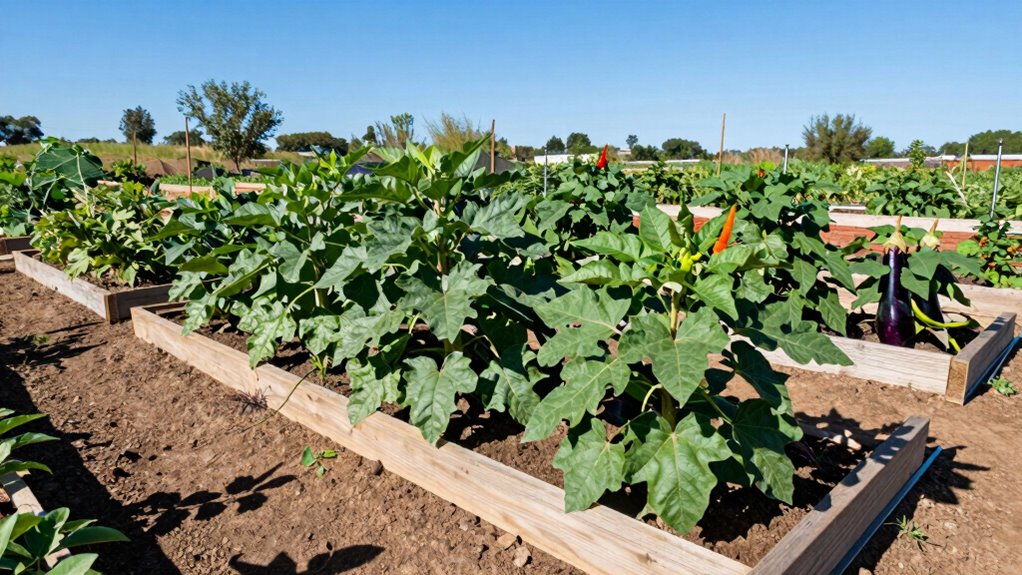
When selecting vegetable varieties for hot climates, you should prioritize heat-tolerant cultivars that maintain productivity under extreme temperatures.
Choose okra, eggplant, and southern peas that thrive in temperatures exceeding ninety-five degrees Fahrenheit. These varieties possess physiological adaptations like waxy leaf coatings and deep root systems that reduce water loss.
Select determinate tomato varieties bred for intense heat, such as Solar Fire or Heatmaster, which set fruit despite high temperatures.
Peppers like Cayenne and Serrano handle scorching conditions better than sweet varieties.
Leafy greens including amaranth and Malabar spinach survive when regular lettuce bolts.
Research cultivars developed specifically for your region’s climate zone. Local agricultural extensions often recommend varieties proven successful in nearby gardens.
You’ll achieve better yields and reduce watering stress when you match plants to your environment’s natural conditions.
Time Planting Around Regional Weather Patterns
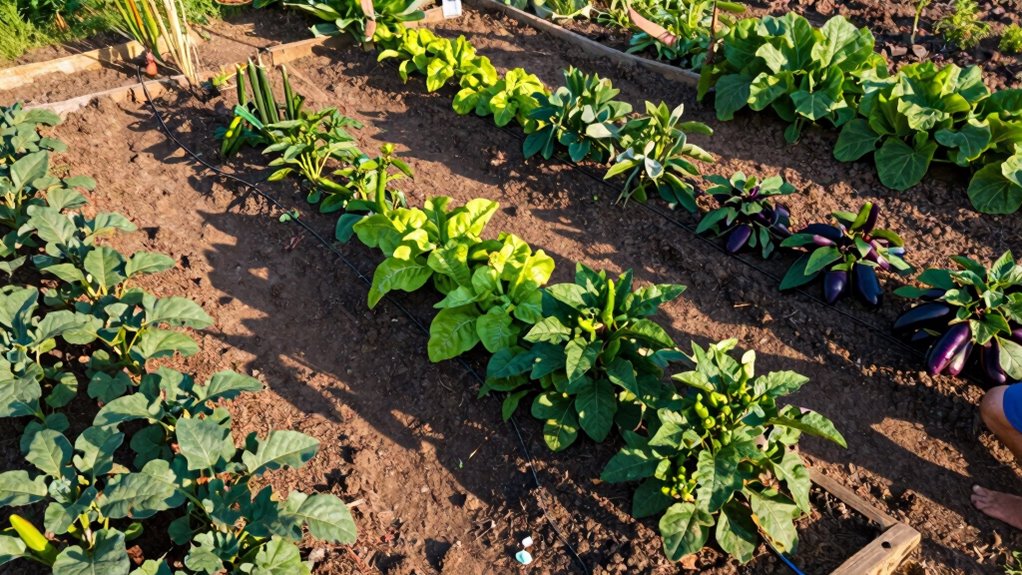
While understanding your region’s microclimate helps enhance planting schedules, you should plant vegetables according to seasonal temperature fluctuations to maximize growth periods and avoid heat stress.
Monitor local weather data and identify your area’s coolest growing windows. Plant heat-sensitive crops like lettuce and peas during mild spring or fall periods.
Schedule warm-season vegetables like tomatoes and peppers after frost danger passes but before extreme heat arrives. Track average high temperatures and plan accordingly.
In desert regions, plant early spring or late summer for prime growth. Coastal areas allow extended growing seasons due to temperature moderation.
Mountain regions require earlier planting before summer heat intensifies. Use succession planting to maintain harvests throughout favorable periods.
Pay attention to first frost dates and plan harvests before cold damage occurs. Timing maximizes yields while minimizing heat-related stress on plants.
Prep Soil for High Heat and Water Efficiency
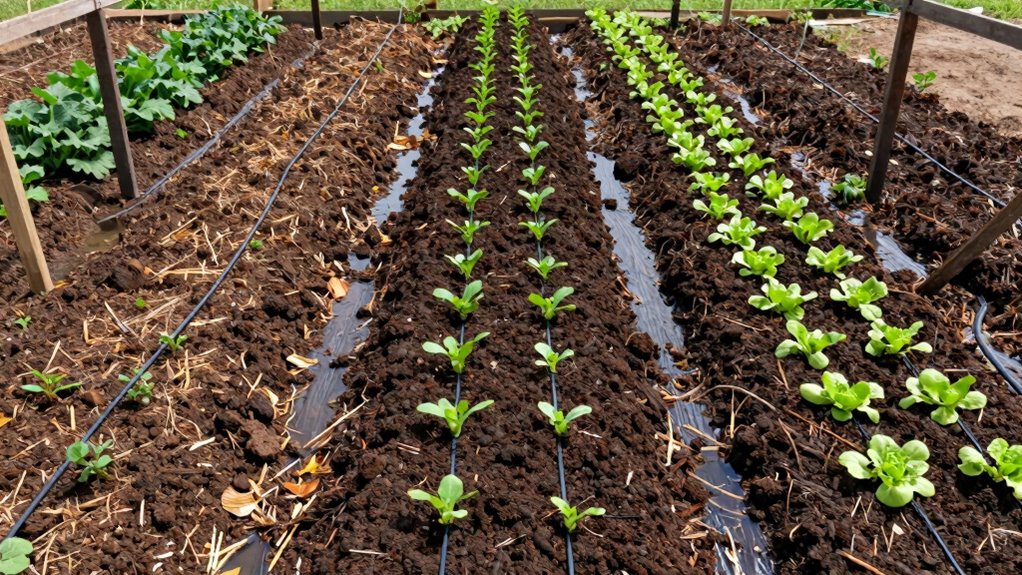
Since high temperatures accelerate moisture evaporation and stress plant root systems, you must prepare soil that retains water efficiently while maintaining proper drainage.
Start by testing your soil’s pH and nutrient levels, then amend with organic compost to improve water-holding capacity. Incorporate perlite or coarse sand into clay soils to prevent waterlogging, which causes root rot in extreme heat.
Create raised beds using heat-resistant materials like stone or concrete blocks, ensuring at least twelve inches of loose, well-aerated soil depth. Mix in water-retaining polymers or coconut coir fibers to boost moisture storage.
Apply mulch immediately after planting, keeping it three inches thick around vegetable bases. Dark-colored mulches absorb heat, so choose lighter materials.
Install drip irrigation systems at root zones rather than overhead sprinklers.
These preparations create ideal growing conditions where plants access consistent moisture despite soaring temperatures.
Build Shade Structures to Protect Seedlings
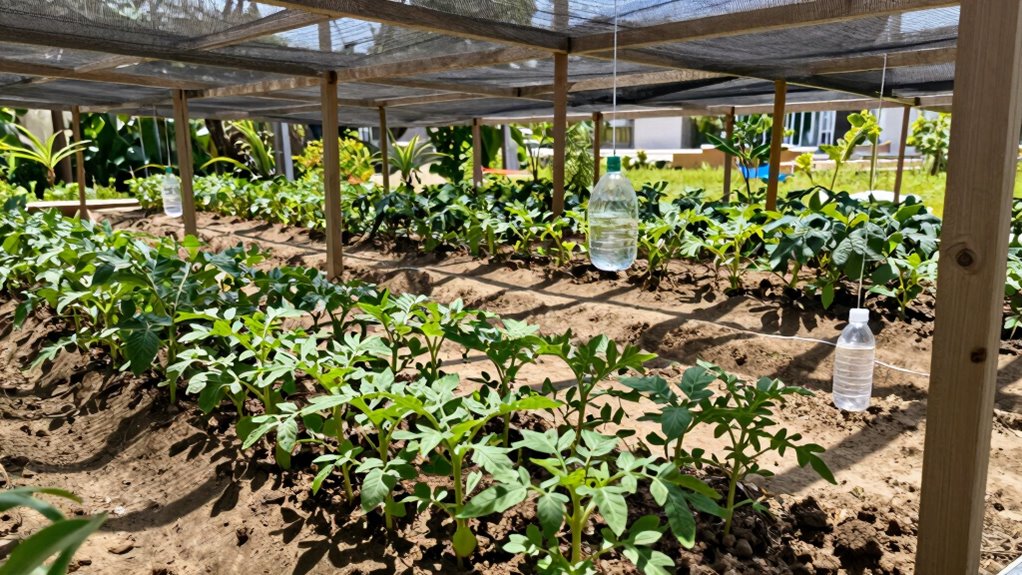
Although intense sunlight can quickly damage tender seedlings in hot climates, you must construct shade structures that reduce solar exposure while maintaining adequate light penetration.
Use 30-50% shade cloth stretched over hoops or frames positioned 18-24 inches above plants. Install structures on adjustable supports so you can modify height as seedlings grow.
Orient shade cloth east-west to maximize morning light while blocking harsh afternoon sun. Secure edges with clips or weights to prevent wind damage.
Monitor seedling growth daily, adjusting shade coverage as plants develop stronger stems. Consider using temporary structures during peak heat periods, removing them gradually as plants acclimate.
Proper ventilation beneath shade cloth prevents excessive humidity buildup that attracts pests and diseases.
Water Vegetables Deeply During Hot Spells
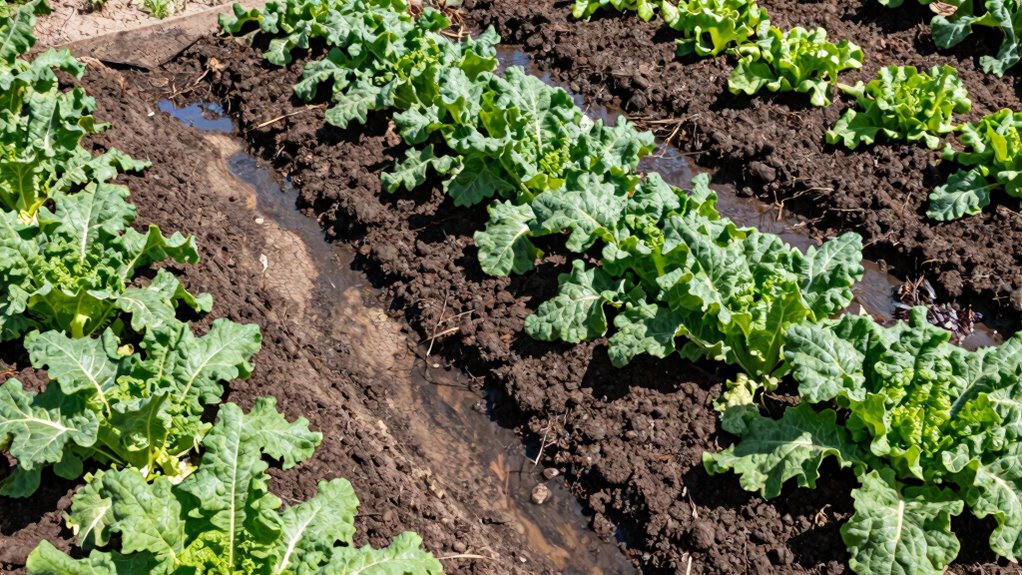
When temperatures soar above 90°F, you’ll need to water vegetables more deeply and frequently to maintain healthy root systems.
Hot weather increases evapotranspiration rates, causing soil moisture to deplete rapidly. You should water at soil level rather than overhead to minimize leaf burn and disease. Aim for 1-2 inches weekly, delivered in deep, infrequent sessions that penetrate 6-8 inches into soil.
Early morning watering works best because it reduces evaporation losses. Check soil moisture by inserting your finger 2 inches deep – water when dry.
Container vegetables need daily watering during extreme heat. Focus on consistent moisture rather than overwatering, which can cause root rot.
Your plants will show stress through wilting leaves if you don’t adjust your watering schedule accordingly.
Use Mulch for Root Cooling and Moisture Lock
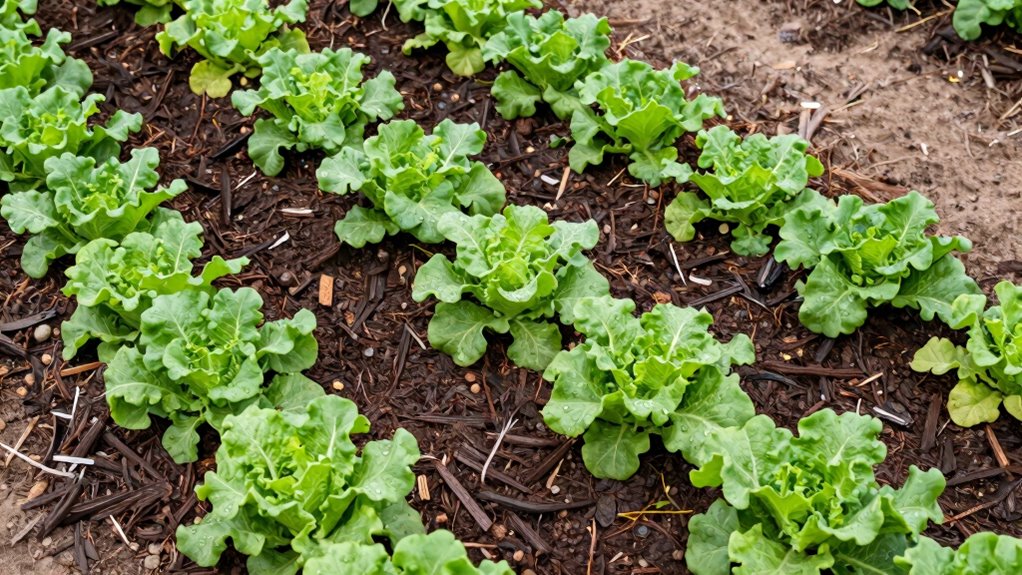
You should apply organic mulch like straw, wood chips, or shredded leaves around your vegetable plants to create a protective barrier that reduces soil temperature by up to 10°F while preventing rapid moisture evaporation.
These mulch materials decompose slowly, adding nutrients to the soil while maintaining consistent moisture levels that promote healthy root development.
Inorganic options like landscape fabric or gravel provide similar cooling effects but don’t contribute organic matter to improve soil structure over time.
Mulch Types for Heat Protection
Several mulch types effectively protect vegetable roots from extreme heat while maintaining soil moisture in hot climates. Organic mulches like straw, wood chips, and shredded leaves create insulating barriers that reduce soil temperature by up to 10°F.
You should apply 3-4 inches of coarse materials around plants, keeping mulch away from stems to prevent rot. Inorganic options include landscape fabric and gravel, which reflect sunlight and provide long-term heat protection.
Living mulches such as low-growing herbs protect soil while adding nutrients. Black plastic mulch absorbs heat initially but releases cooling moisture underneath. Choose lighter-colored organic mulches for maximum heat reflection.
Apply mulch after soil warms in spring, maintaining consistent coverage throughout summer. You’ll reduce water evaporation while keeping root zones cool and productive.
Moisture Retention Benefits
Because mulch creates a protective barrier between soil and atmosphere, it markedly reduces water evaporation while maintaining consistent moisture levels around plant roots.
You’ll discover that organic materials like straw, wood chips, or compost create microclimates where soil temperatures drop considerably. These layers prevent direct sunlight from baking your garden bed, keeping root zones cooler during scorching days.
Mulch acts as insulation, trapping humidity beneath its surface while blocking drying winds. Your plants benefit from reduced water stress since moisture remains available longer. You should apply three to four inches厚度 for ideal results.
Dark-colored mulches absorb heat, so choose lighter materials in extremely hot regions. Regular applications guarantee continuous protection throughout growing seasons.
Grow Vegetables in Raised Beds for Better Heat Control
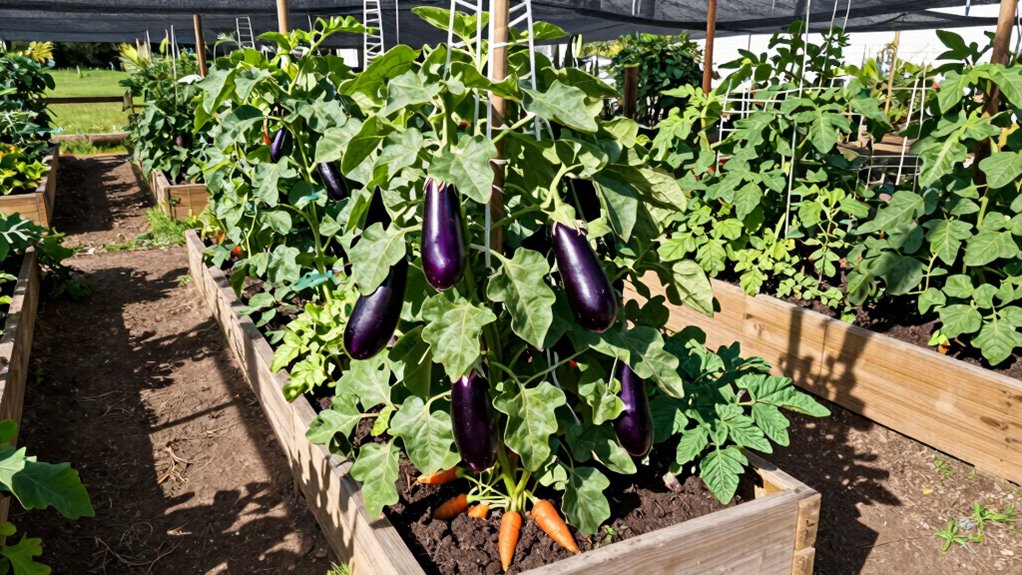
Why not maximize your vegetable garden’s potential by growing crops in raised beds? You gain superior heat control while creating ideal growing conditions. Raised beds allow you to manage soil temperature more effectively than traditional ground planting.
- Soil depth control: You determine exact soil volume, enabling better moisture retention and root zone temperature regulation.
- Improved drainage: Excess heat and water escape efficiently, preventing root damage during extreme temperatures.
- Microclimate creation: Beds warm up faster in mornings but cool down quicker than ground soil, extending growing seasons.
- Easier maintenance: You reduce bending stress while accessing plants, making daily care simpler and more enjoyable.
Construct beds using heat-resistant materials like cedar or composite lumber. Fill with lightweight potting mixes that drain well yet retain adequate moisture.
Position beds strategically to maximize shade benefits during peak afternoon heat while ensuring morning sun exposure.
Add Flavorful Herbs That Thrive in Hot Climates
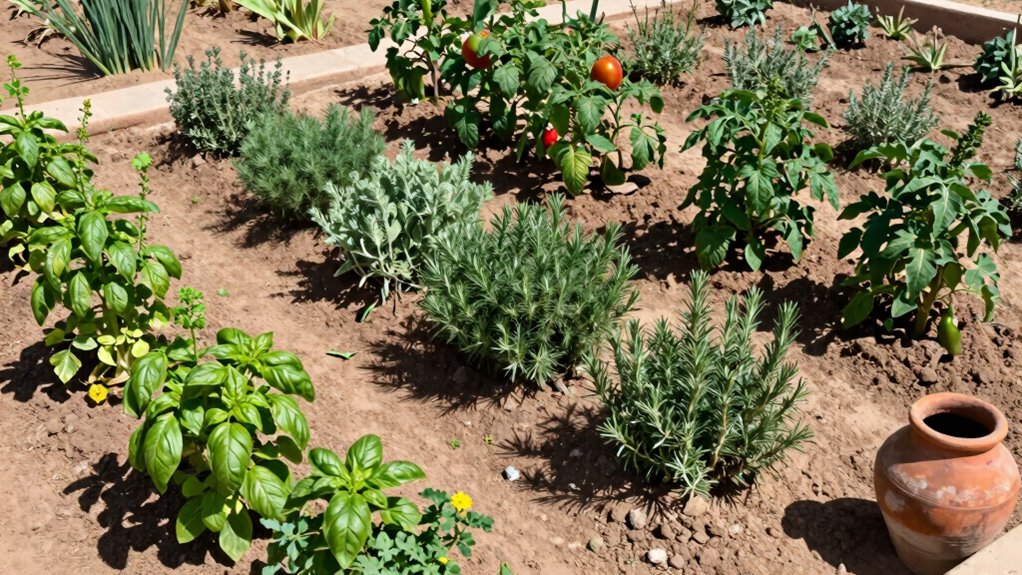
You should select heat-tolerant herb varieties like rosemary, thyme, and oregano that naturally withstand high temperatures without bolting or losing flavor compounds.
These herbs require consistent moisture and benefit from mulch applications that keep root zones cool while preventing rapid soil moisture evaporation.
Regular harvesting encourages new growth and maintains essential oil concentrations that give herbs their characteristic flavors.
Choose Heat-Tolerant Herb Varieties
While many herbs struggle in extreme heat, several varieties actually thrive in high temperatures and can add exceptional flavor to your hot-climate vegetable garden.
You’ll want to select herbs that have evolved in Mediterranean or desert climates, as these naturally withstand intense heat and low moisture conditions.
Choose these proven heat-tolerant varieties for maximum flavor production:
- Rosemary – Its woody stems and narrow leaves reduce water loss while concentrating essential oils.
- Thyme – Low-growing perennial that tolerates drought and releases aromatic compounds in heat.
- Oregano – Actually produces more flavorful oils when stressed by high temperatures.
- Sage – Deep root system accesses moisture while silvery leaves reflect intense sunlight.
These herbs don’t just survive heat – they excel in it.
Their concentrated flavors intensify during hot weather, making your harvest more potent than cooler climate-grown counterparts.
Plant them strategically throughout your vegetable beds for natural pest deterrence and culinary enhancement.
Provide Adequate Water And Mulch
Although heat-tolerant herbs can withstand extreme temperatures, they still require consistent moisture and protective mulching to maximize their flavor potential and survival rates.
You should water deeply but infrequently, targeting root zones rather than foliage to prevent disease. Apply 2-4 inches of organic mulch like straw, wood chips, or compost around your herbs to retain soil moisture and regulate temperature.
Mulch also suppresses weeds that compete for nutrients and water. Consider drip irrigation systems for efficient water delivery.
Mediterranean herbs like rosemary, thyme, and oregano particularly benefit from mulching.
Monitor soil moisture regularly using your finger or moisture meter. Adjust watering frequency based on rainfall, temperature fluctuations, and plant growth stages.
Proper hydration guarantees essential oil production, giving herbs their characteristic intense flavors.
Harvest Regularly For Best Flavor
Regular harvesting encourages continuous leaf production and prevents herbs from diverting energy into flowering and seeding. When plants bolt to seed, leaf flavor compounds decrease substantially while bitterness increases. You should pinch off flower buds immediately when spotted.
Maintain peak flavor by harvesting herbs frequently, ideally in morning hours when essential oils concentrate. Cut stems just above leaf nodes to promote branching.
- Basil: Pinch tops regularly, remove flowers instantly.
- Cilantro: Harvest outer leaves continuously, succession plant every two weeks.
- Oregano: Trim stems frequently, prevent flowering for stronger taste.
- Parsley: Cut outer stalks first, allow center growth continuation.
Consistent picking maintains tender textures and prevents woody stem development. Your daily harvest routine guarantees maximum culinary impact.
Control Common Garden Pests Using Companion Plants and Barriers
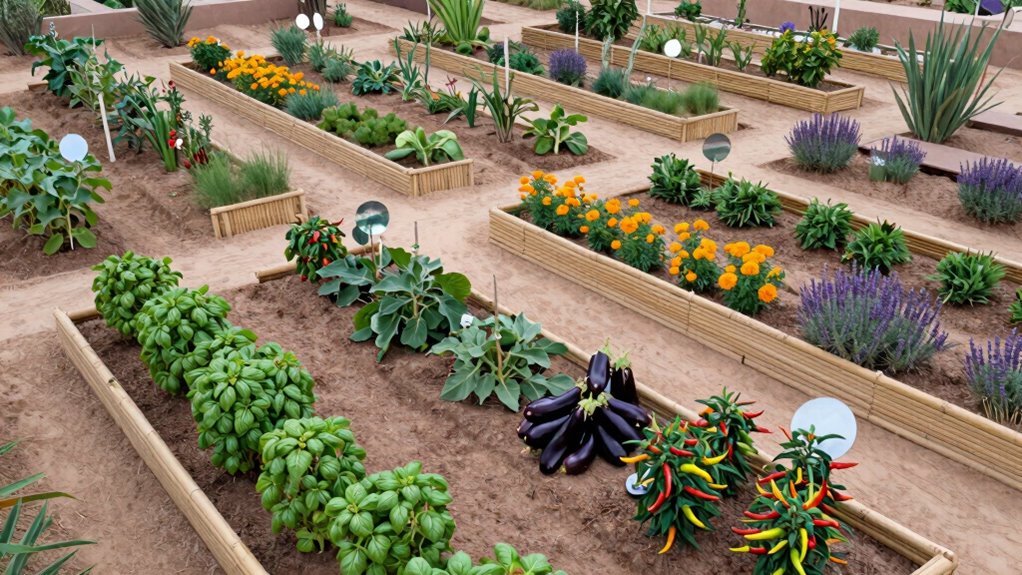
Companion planting and physical barriers offer effective pest control solutions that reduce reliance on chemical interventions.
You should interplant marigolds, basil, and nasturtiums among vegetables to repel aphids, whiteflies, and squash bugs naturally. These plants release compounds that mask vegetable scents and attract beneficial insects like ladybugs.
Install floating row covers over young plants to prevent flying insects from laying eggs. Use copper tape around container edges to deter slugs and snails. Place cardboard collars around seedling stems to protect against cutworms.
You’ll find that combining these methods creates a protective ecosystem where pests struggle to establish themselves while beneficial insects thrive. This approach keeps your vegetable garden productive without toxic residues.
Harvest Early to Preserve Peak Flavor and Texture
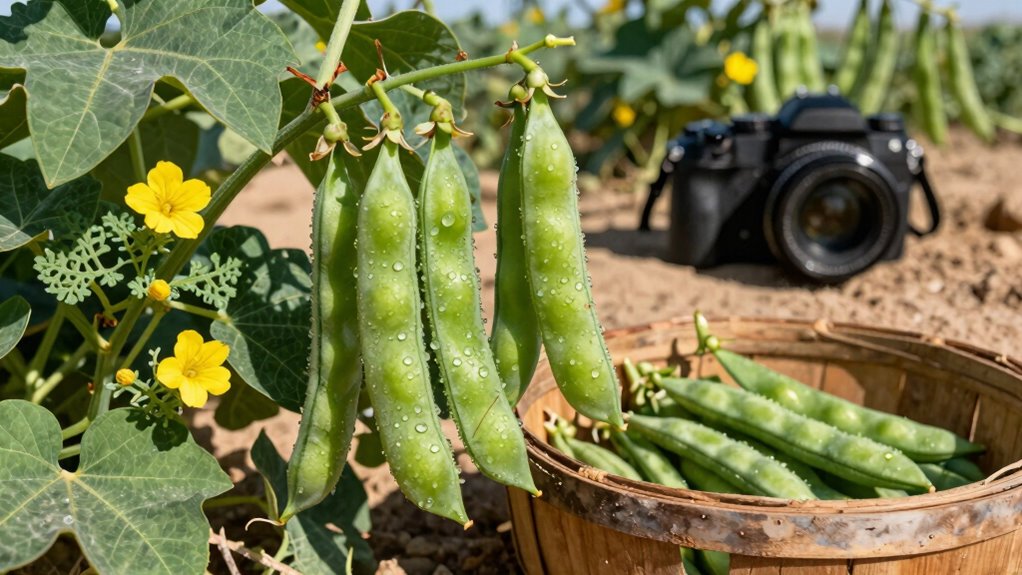
When temperatures soar, vegetables mature more quickly and can become bitter or woody if left on the plant too long.
You need to monitor your garden daily during heat waves, checking for signs of overripeness. Harvesting early preserves prime flavor compounds and prevents toughening of cell walls.
- Leafy greens lose sweetness and develop sharp bitterness within hours of overmaturing.
- Zucchini and summer squash become tough and seedy when larger than six inches.
- Tomatoes develop cracks and mealy texture if left past peak ripeness.
- Peppers turn bitter and develop thin walls when exposed to excessive heat.
Check plants mid-morning when dew has dried but temperatures haven’t peaked.
Use sharp pruners to avoid damaging tender stems during harvesting.
Rotate Crops After Summer Harvest Season
While you might be keen to replant immediately after harvesting your summer vegetables, rotating your crops each season prevents soil depletion and breaks disease cycles that can devastate future plantings.
You should plan your rotation by moving plant families to different locations every year. Legumes like beans and peas fix nitrogen in soil, so follow them with heavy feeders like tomatoes or peppers.
Brassicas deplete nitrogen, making them ideal predecessors for nitrogen-fixing crops. Keep detailed records of what you plant where, noting soil amendments and yields. You’ll notice patterns emerging that help predict efficient planting sequences.
Root vegetables improve soil structure through their deep growth habits. Nightshades benefit from well-draining areas previously occupied by shallow-rooted herbs.
This systematic approach builds soil health while reducing pest pressure naturally. Your garden becomes more productive annually when you commit to proper crop rotation practices.
Collect Rainwater Efficiently for Dry Periods
You should install rain barrels near your vegetable garden to capture seasonal precipitation, positioning them on elevated platforms for gravity-fed irrigation during dry spells.
Your containers need proper filtration systems and overflow mechanisms to prevent waterlogging while maximizing storage efficiency. These collected reserves become essential for maintaining consistent soil moisture when drought conditions threaten your harvest.
Rain Barrel Installation Tips
Since water scarcity becomes critical during extended dry periods, installing a rain barrel system provides an efficient method for collecting and storing precipitation for irrigation. You’ll maximize water collection by positioning barrels strategically under downspouts where roof runoff naturally flows.
- Choose food-grade barrels with secure lids to prevent debris accumulation and mosquito breeding while maintaining water quality for your vegetable garden.
- Install overflow spigots near the barrel’s top to redirect excess water away from your foundation during heavy rainfall events.
- Connect multiple barrels in series using linking kits to increase total storage capacity without occupying more space.
- Add fine mesh filters at barrel inlets to block leaves and particulates that clog spigots and contaminate stored water.
Position spigots six inches above the base for ideal water pressure during irrigation.
Drought-Resistant Garden Strategies
Although drought conditions demand careful water management, collecting rainwater efficiently guarantees your vegetable garden remains productive during dry periods.
You should install gutters with downspouts directing water into storage containers. Choose food-grade barrels with tight-fitting lids to prevent contamination and mosquito breeding. Position collection points where runoff naturally flows from rooftops.
Install first-flush diverters to eliminate initial dirty water containing debris and bird droppings. Use mesh filters to remove finer particles before storage. Connect multiple barrels with overflow systems to handle heavy rainfall.
Place containers on elevated platforms for gravity-fed irrigation. You’ll maximize water retention by covering storage units and using dark-colored barrels that won’t promote algae growth while keeping water cool.
Recognize Heat Stress Symptoms in Your Plants
Plants display several distinct physiological responses when exposed to excessive heat stress.
You’ll notice these warning signs before irreversible damage occurs, helping you take corrective action promptly.
- Leaf scorching appears as brown, crispy edges on leaves, indicating cellular dehydration and protein denaturation.
- Wilting happens when plant tissues lose turgor pressure, causing stems and leaves to droop despite adequate soil moisture.
- Chlorosis shows up as yellowing between leaf veins, signaling disrupted photosynthesis and nutrient transport.
- Flower drop occurs when blossoms abort prematurely, reducing fruit set and harvest yields.
Recognizing these symptoms early means you’re already mastering hot climate gardening.
Your plants depend on your quick identification skills to implement protective measures like shade cloth, strategic watering, or temporary relocation.
Conclusion
You’ve now mastered the essential techniques for thriving vegetable gardens in scorching conditions. By selecting heat-resistant varieties, timing plantings with weather patterns, and implementing water-efficient practices, you’re already ahead of ancient Roman farmers who struggled with similar challenges. Protect your crops with strategic shading, monitor for stress symptoms, and rotate wisely. These time-tested methods guarantee bountiful harvests even when temperatures soar. Your garden’s success depends on consistent application of these scientific principles.
