

It’s remarkable how often gardeners overlook the critical role that container selection plays in plant health. You might not realize that choosing the wrong pot material or size can stunt growth or cause root rot within weeks. When you’re selecting containers, consider that clay pots breathe better than plastic but dry out faster, while plastic retains moisture longer but may restrict oxygen flow. Your plant’s root system needs adequate space – typically 2-3 inches beyond the current root ball for ideal growth. Drainage holes aren’t optional; they’re essential for preventing waterlogged soil that kills beneficial microorganisms. Would you prefer to learn which specific features make certain pots more durable?
What Makes a Good Plant Pot for Your Garden?
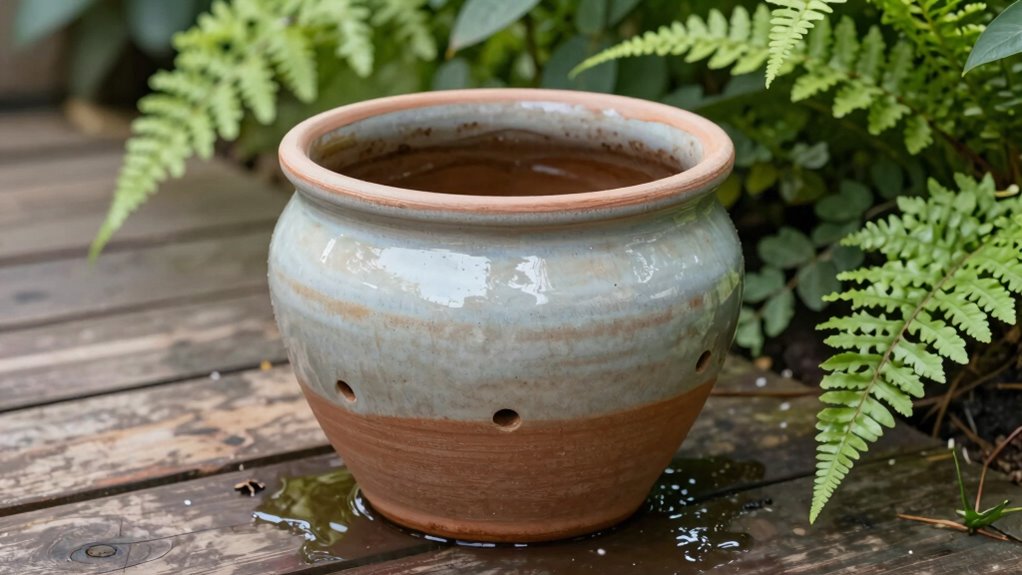
When selecting plant pots for your garden, you should prioritize materials and design features that promote healthy plant growth while withstanding environmental conditions.
Clay pots breathe well, preventing root rot, but drain quickly and may crack in freezing temperatures.
Plastic containers retain moisture longer and resist weather damage, though they lack clay’s breathability.
Fabric pots provide excellent aeration and prevent circling roots, but dry out faster than other options.
Good drainage holes prevent waterlogging, which causes root diseases.
Saucers beneath pots catch excess water while allowing proper drainage.
Light-colored pots reflect heat, protecting roots from temperature fluctuations.
Dark containers absorb heat, potentially damaging delicate root systems.
Choose pots with adequate depth for your plants’ root structures.
Consider weight and mobility for easy rearrangement.
Select materials matching your climate zone’s specific challenges and your maintenance preferences.
How to Choose the Right Size Pot for Your Plants
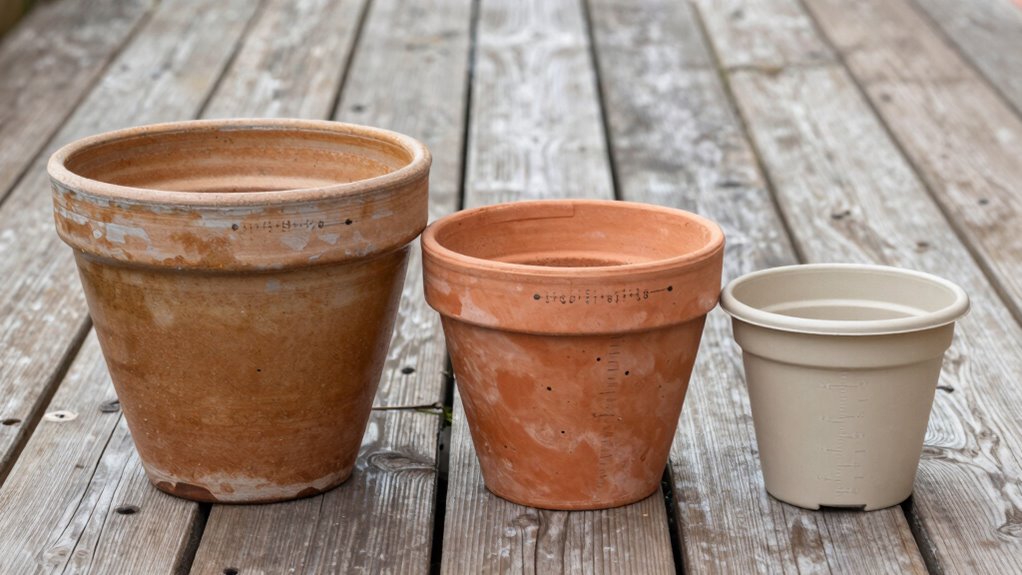
Selecting the appropriate pot size directly affects your plants’ root development and overall health. You should choose containers that accommodate your plant’s mature root system while allowing 2-3 inches of growth space. Small herbs need 6-8 inch pots, while tomatoes require 12-14 inch containers. Root-bound plants become stressed and fail to thrive.
Consider your plant’s growth habit and water requirements when selecting pot dimensions. Shallow-rooted plants like lettuce need wider, shallower pots, while deep-rooted varieties require taller containers. You’ll prevent overwatering by matching pot size to your plant’s needs.
Check your plant’s root system annually and repot when roots fill 70-80% of the container space. This facilitates ideal nutrient uptake and prevents stunted growth.
What Materials Make the Best Long-Lasting Garden Pots?
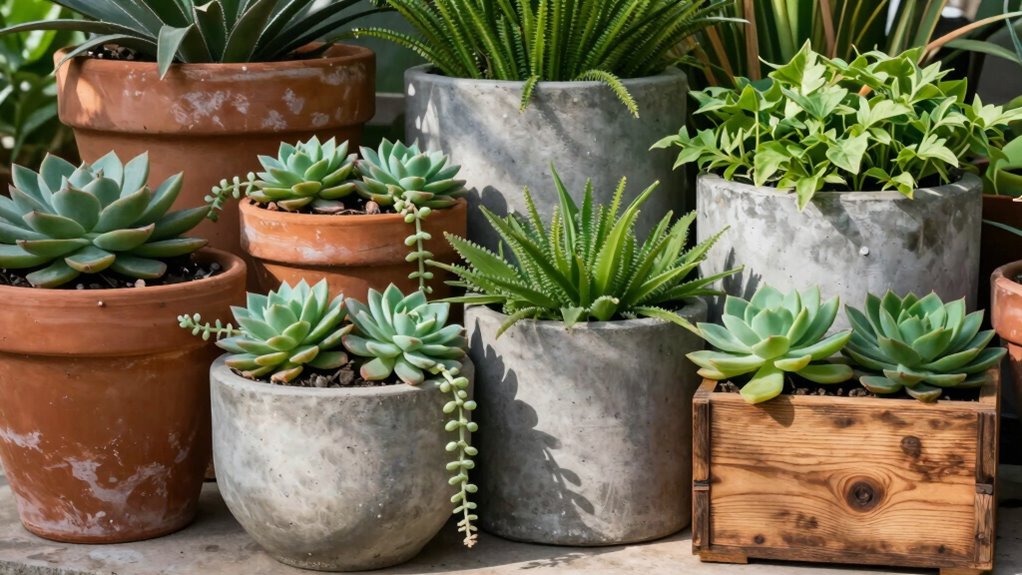
While plastic and ceramic pots dominate the market, understanding which materials guarantee longevity requires examining their structural properties and environmental resistance.
You should consider concrete, fiberglass, and high-density polyethylene for maximum durability. Concrete pots withstand weather extremes but add significant weight. Fiberglass offers lightweight strength and UV resistance without cracking. High-density polyethylene handles freezing temperatures better than standard plastic.
You’ll want to avoid thin-walled containers that deteriorate quickly. Metal pots look attractive but rust over time unless properly coated. Terracotta breathes well but breaks easily when frozen.
Your choice depends on climate conditions and mobility needs. Select materials that match your garden’s specific environmental challenges.
Where to Place Your Pots for Best Growth and Sunlight
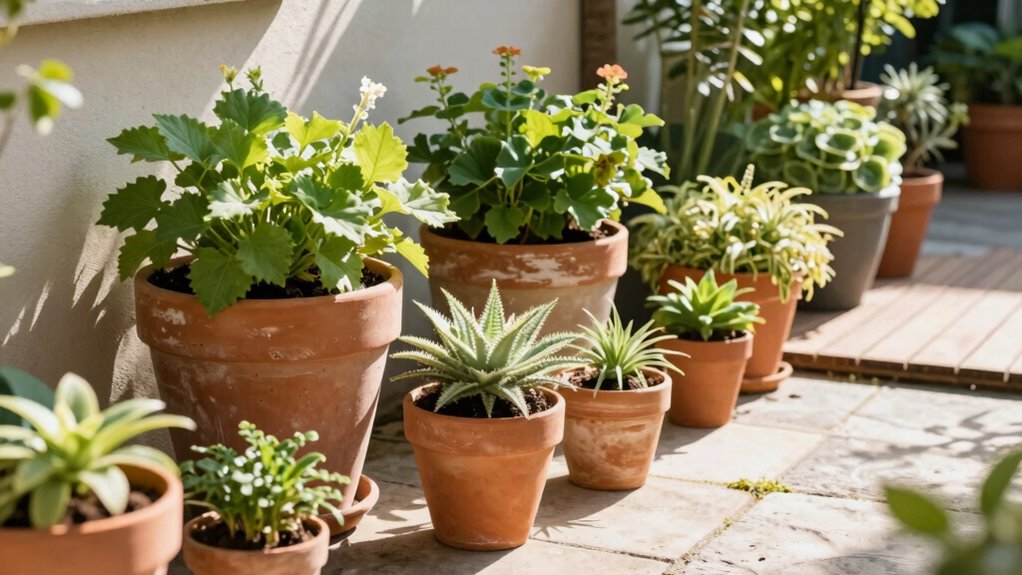
Because different plants have varying light requirements, you’ll need to strategically position your pots to maximize growth potential.
Observe your garden’s light patterns throughout the day, noting where direct sunlight hits for at least six hours. Place sun-loving plants like tomatoes and peppers in these bright spots.
Move partial shade lovers such as lettuce and herbs to areas receiving morning sun with afternoon shade. Position shade-tolerant plants like ferns and hostas in locations protected from intense midday sun.
Consider seasonal sun angle changes when planning placement. Use south-facing areas for maximum sun exposure, while north-facing spots work better for shade plants.
Don’t forget that buildings and trees create shadows that shift throughout the year.
Why Proper Drainage Matters in Container Gardening
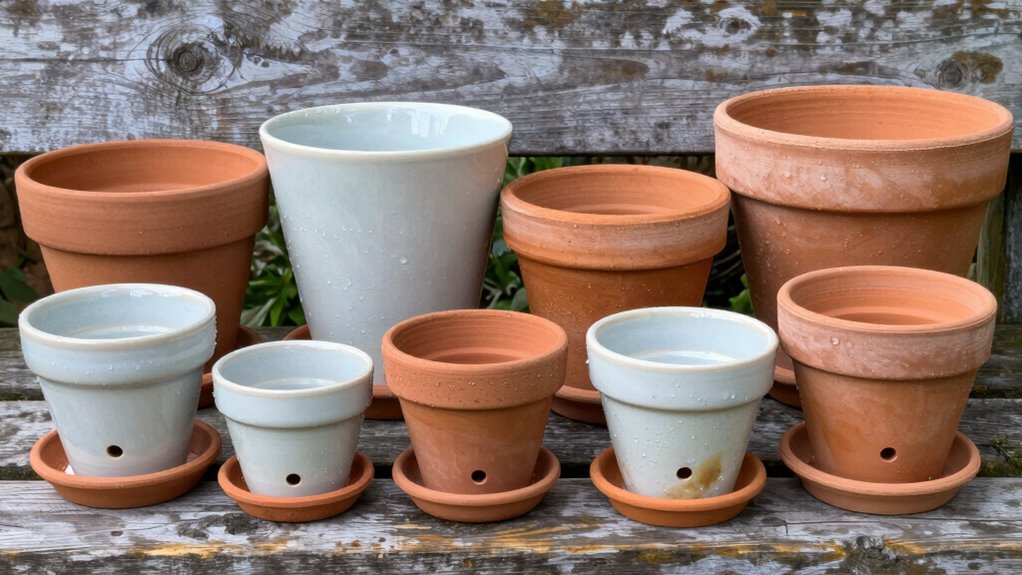
Proper drainage prevents waterlogged soil that can quickly kill your plants by depriving roots of oxygen. When excess water sits around roots, it creates anaerobic conditions where harmful bacteria thrive while beneficial microbes die off.
You’ll notice yellowing leaves, wilting, and root rot as telltale signs of poor drainage.
Healthy roots need both water and air pockets in soil mixtures. Drainage holes allow excess moisture to escape while preventing dangerous salt buildup from fertilizers. Without proper outflow, toxic minerals concentrate and burn delicate root systems.
Choose containers with multiple drainage holes rather than hoping one hole suffices. Small pots need proportionally more drainage holes than large planters.
Always empty saucers beneath pots within 24 hours after watering stops.
How to Pick Planters That Match Your Garden Style
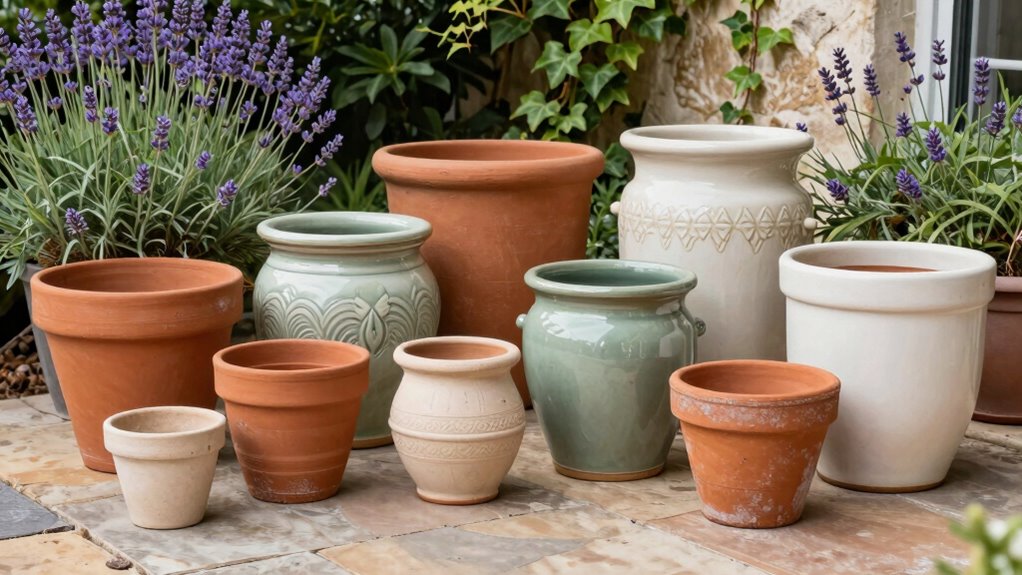
You should select planters that complement your garden’s aesthetic by matching container styles to existing themes, whether modern, rustic, or traditional.
Your choice of pot materials directly affects plant health and visual harmony, so consider how ceramic, wood, or metal containers interact with your specific plant varieties.
Container size selection determines root development and growth potential, making proper measurement essential for ideal plant performance.
Matching Planter Styles To Garden Themes
While selecting planters that complement your garden’s aesthetic may seem straightforward, matching container styles to specific garden themes requires careful evaluation of both functional and visual elements.
You should analyze your garden’s dominant characteristics before choosing containers. Formal gardens demand structured, geometric planters in materials like concrete or metal. Cottage gardens embrace rustic, irregular containers that appear naturally weathered. Modern landscapes call for clean-lined pots in neutral colors. Mediterranean themes work best with terracotta or stone vessels.
You’ll want to take into account scale relationships between planters and surrounding plants. Container height, width, and proportion must harmonize with your existing design elements.
Don’t overlook how planter placement affects overall visual flow. Your containers should enhance, not compete with, established garden themes. Matching textures and colors creates cohesive design statements.
Choosing Pot Materials That Complement Plants
Matching planter styles to your garden theme sets the foundation for a cohesive outdoor space, but the material selection determines how well your containers will support plant health and integrate visually over time.
You should consider how different materials affect moisture retention and temperature regulation. Terracotta pots breathe well, preventing root rot but requiring more frequent watering. Plastic containers retain moisture longer, ideal for drought-prone areas. Metal planters conduct heat, potentially stressing roots during summer.
Wood offers natural insulation while ceramic provides decorative versatility. Stone and concrete create permanent, substantial displays.
Your plant selection should guide material choice—succulents thrive in porous terracotta while tropicals prefer moisture-retentive plastic. Choose materials that complement both your plants’ needs and your garden’s aesthetic vision.
Selecting Container Sizes For Optimal Growth
Although container size directly impacts root development and nutrient availability, selecting appropriately sized planters requires understanding both current plant dimensions and future growth patterns.
You’ll want to match your container’s volume to your plant’s mature root system capacity.
- Root space requirements: Calculate minimum pot sizes based on plant type; herbs need 6-8 inches while tomatoes require 18-24 inches depth
- Growth rate considerations: Fast-growing annuals need larger containers initially compared to slow-perennials that can start smaller
- Drainage space allocation: Reserve 2-3 inches at container bottom for proper water drainage and root aeration
- Companion planting compatibility: Coordinate pot sizes when grouping plants with similar water and space needs together
- Seasonal change planning: Select containers that accommodate plants’ peak seasonal growth phases effectively
Choosing Between Lightweight and Heavy-Duty Planters
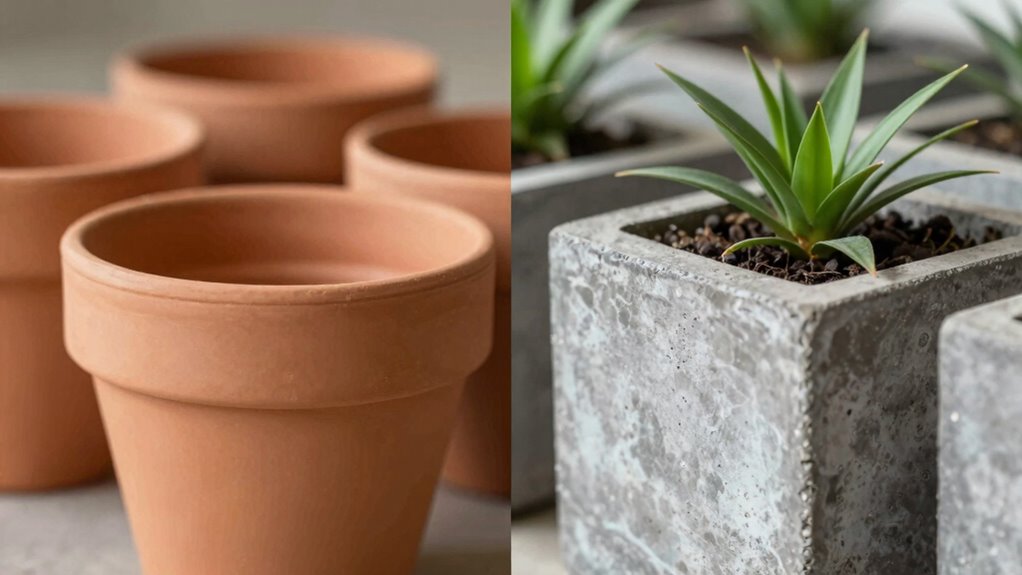
When selecting planters for your garden, you’ll need to decide between lightweight options that offer easy mobility and heavy-duty containers that provide superior durability and stability.
Lightweight planters made from plastic or fiberglass weigh less than ten pounds empty, making them ideal for balconies or areas where you frequently rearrange plants. However, they may tip over in strong winds.
Heavy-duty planters constructed from concrete, stone, or thick ceramic provide excellent stability for tall plants and trees, resisting wind damage effectively. These containers often weigh thirty pounds or more, ensuring your garden stays secure during storms.
Consider your specific gardening needs, space limitations, and plant types when making this important decision for your outdoor sanctuary.
Which Features Help Pots Resist Wear and Tear?
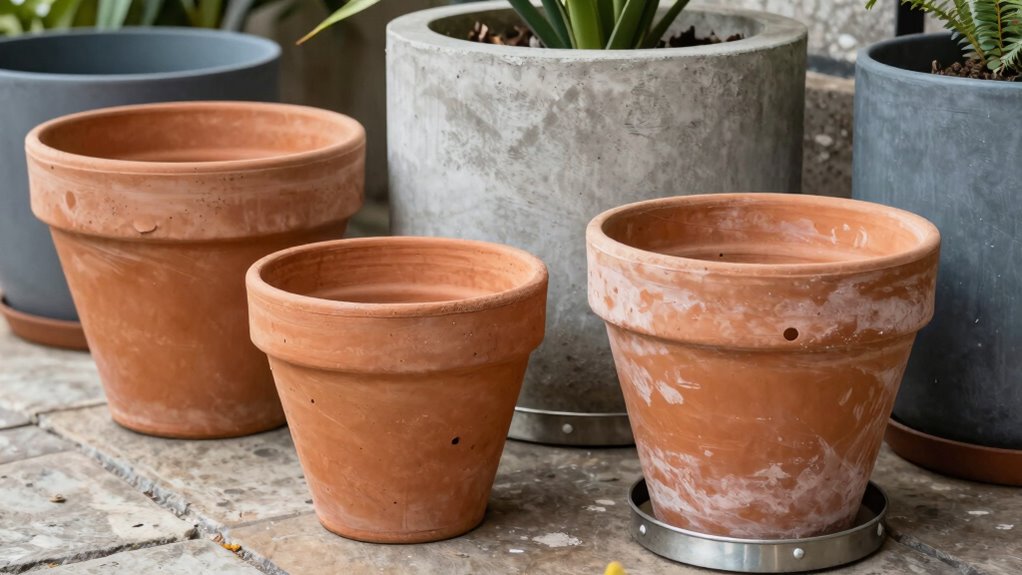
Having considered the balance between portability and stability in plant containers, you’ll want to examine what makes certain pots more durable over time.
Material composition directly impacts longevity, with UV-resistant polymers and weather-treated metals outperforming standard materials.
You should evaluate these key durability factors:
- UV-stabilized resins prevent cracking and fading from sun exposure
- Reinforced corners and joints reduce structural failure points
- Drainage system integration prevents water damage and root rot
- Thick wall construction resists cracking from temperature fluctuations
- Non-porous surfaces minimize algae growth and material degradation
These features work synergistically, creating pots that maintain structural integrity through seasonal changes.
You’ll notice that pots incorporating multiple durability elements typically last years longer than basic containers.
Smart material selection prevents premature replacement costs.
Are Self-Watering Pots Right for Your Needs?
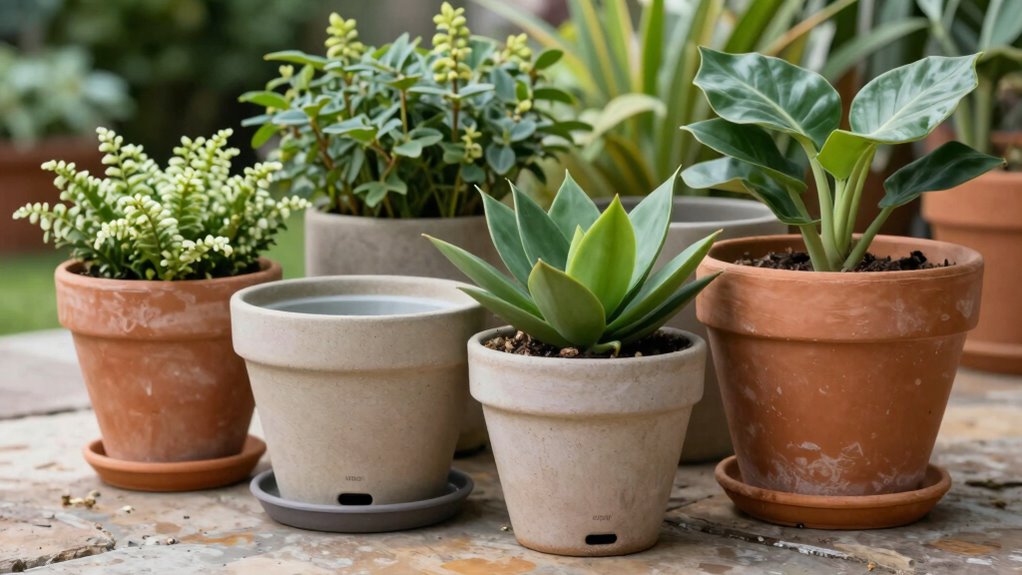
Why should you consider self-watering pots for your garden?
These containers use reservoir systems that automatically deliver water to plant roots through capillary action, reducing your maintenance workload considerably. You’ll find them ideal if you travel frequently or struggle with consistent watering schedules.
The built-in water storage prevents both underwatering and overwatering, common issues that stress plants. However, you shouldn’t use them for succulents or plants requiring dry soil periods between waterings.
Clay and ceramic self-watering pots offer better moisture regulation than plastic ones. You’ll need to monitor reservoir levels regularly and clean the systems monthly to prevent algae growth.
These pots work best for vegetables, herbs, and moisture-loving flowering plants in your garden setup.
Can DIY or Recycled Containers Grow Healthy Plants?
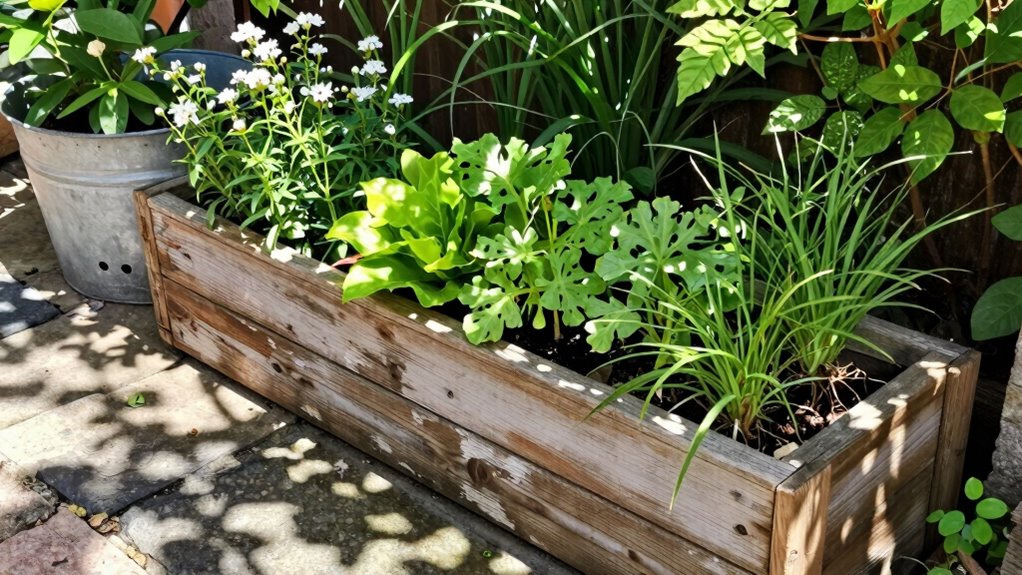
Many gardeners overlook the potential of homemade containers, but nearly any vessel can support thriving plants with proper preparation.
You’ll achieve success by guaranteeing adequate drainage, using appropriate soil mixes, and selecting suitable materials that won’t leach harmful chemicals.
- Drainage holes – Drill multiple holes in bottoms to prevent waterlogging
- Food-safe materials – Avoid treated woods or metals that might contaminate soil
- Proper depth – Guarantee containers accommodate root systems adequately
- Breathable surfaces – Choose materials allowing air circulation around roots
- Stable bases – Select vessels that won’t tip over easily
Recycled containers perform equally well when you prepare them correctly.
Plastic bottles, wooden crates, and metal buckets transform into productive planters through thoughtful modification.
You’re not limited by budget when creativity guides your container selection.
How to Match Pots to Different Types of Plants
You must select pot dimensions that accommodate your plant’s mature root system while allowing adequate space for healthy growth patterns.
Your container’s drainage capabilities directly impact root zone oxygen levels and water retention, making proper hole placement essential for preventing pathogen buildup.
These fundamental matching principles guarantee ideal growing conditions regardless of whether you’re cultivating succulents, vegetables, or flowering perennials.
Matching Pot Size to Plant Growth
When selecting containers for your plants, matching pot size to root development and growth patterns guarantees ideal plant health and prevents common cultivation problems.
You need to understand how different plants expand underground to choose appropriately sized containers.
- Herbs and seedlings need 6-8 inch pots for adequate root establishment.
- Medium perennials require 10-12 inch containers to accommodate expanding root systems.
- Large shrubs demand 15-20 inch pots for proper root development.
- Vegetables with taproots like carrots need deeper, narrower containers at least 12 inches deep.
- Shallow-rooted plants such as lettuce thrive in wider, shallower pots 8-10 inches deep.
Choosing correctly sized pots guarantees your plants develop strong root systems while preventing nutrient depletion and water stress.
Selecting Drainage for Root Health
Proper drainage directly impacts root health and prevents the waterlogging that leads to root rot and nutrient deficiencies. You must match drainage holes to your plant’s specific needs.
Succulents and cacti require multiple large drainage holes since they’re susceptible to overwatering. Herbs and vegetables need moderate drainage with several medium-sized holes to maintain consistent moisture. Tropical plants benefit from pots with fewer, smaller holes to retain humidity.
Clay pots naturally wick moisture, reducing drainage hole requirements. Plastic pots retain water longer, so you’ll need more drainage holes. Always place saucers underneath to catch excess water, but empty them within twenty-four hours.
Consider adding a layer of gravel or broken pottery pieces at the pot’s bottom to improve drainage. Test your pot’s drainage by watering thoroughly and observing how quickly excess water escapes.
Conclusion
You’ve discovered that pot material affects soil moisture and root health. Clay breathes but dries quickly; plastic retains water longer. Container size determines root expansion potential. Drainage holes prevent fatal waterlogging. Self-watering systems work for consistent hydration. Match pot type to plant needs: succulents require porous containers, while thirsty plants benefit from moisture-retentive materials. Your garden’s success depends on these scientific principles. Choose wisely.
