

You notice your favorite pair of pruners developing reddish spots after leaving them in the garage all winter. Don’t let this become your story – preventing rust on garden tools requires consistent attention to moisture and proper storage. By following a few straightforward maintenance steps, you can extend your tools’ lifespan considerably. Let’s explore the essential practices that keep your investment protected year after year.
How to Keep Garden Tools From Rusting
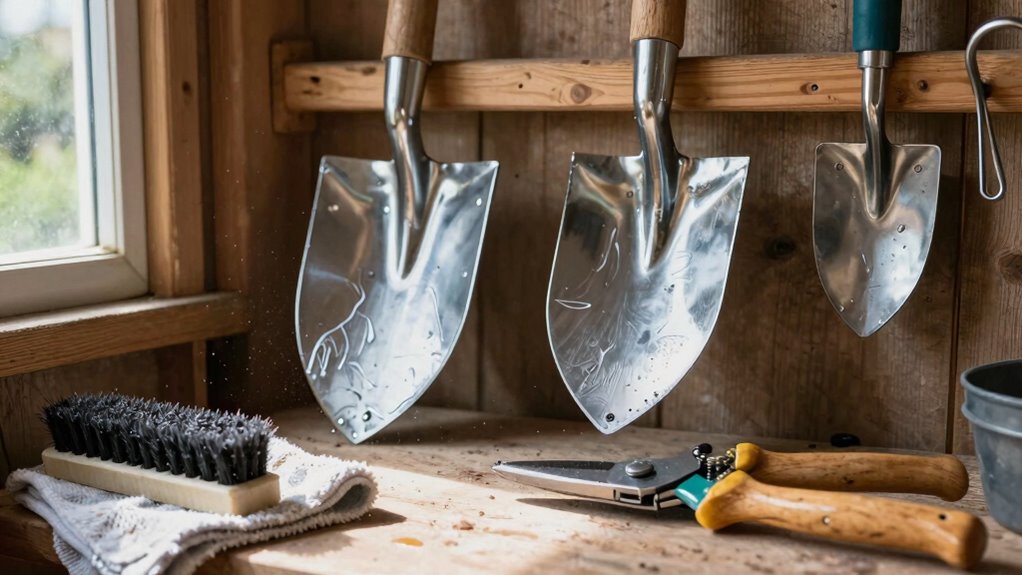
While you’re using garden tools regularly, preventing rust requires consistent maintenance and proper storage habits.
You should always dry tools completely after use, removing moisture that causes corrosion. Store your tools in a dry location like a garage or shed, away from humidity and rain. Consider hanging tools on pegboards or hooks to keep them off damp surfaces.
Apply a light coat of oil to metal surfaces periodically, creating a protective barrier against moisture. Invest in quality tool storage containers or cabinets if space allows.
Check your tools monthly for early signs of rust spots. Address any discoloration immediately before it spreads.
You’ll extend tool life considerably when you make prevention part of your regular gardening routine. Proper storage isn’t optional—it’s essential.
Clean Metal Surfaces After Every Use
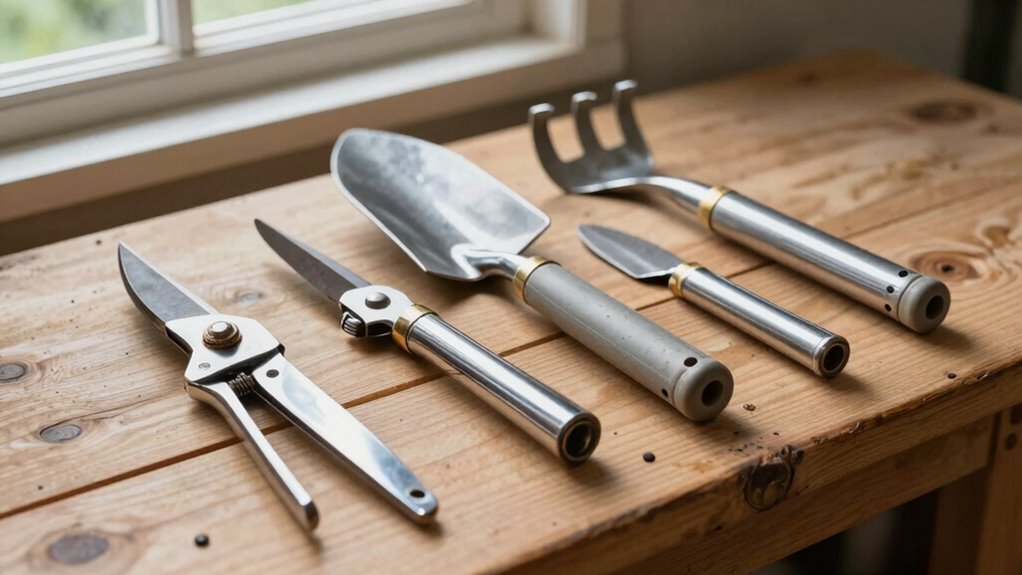
Cleaning metal surfaces after every use builds directly on your regular maintenance routine and forms the foundation of rust prevention. You should wipe down all metal parts immediately after use to remove moisture, dirt, and plant debris.
Use a clean cloth or paper towel to thoroughly dry surfaces. Pay special attention to blades, hinges, and joints where water collects easily. Remove stubborn dirt with a wire brush or steel wool. Clean sap and sticky residue with rubbing alcohol or mineral spirits.
This simple habit protects your investment and keeps tools functioning smoothly. Every time you neglect this step, you invite rust to establish itself.
Make cleaning part of your gardening ritual – your future self and fellow gardeners will thank you for maintaining quality tools that last decades.
Always Dry Tools Before Putting Them Away
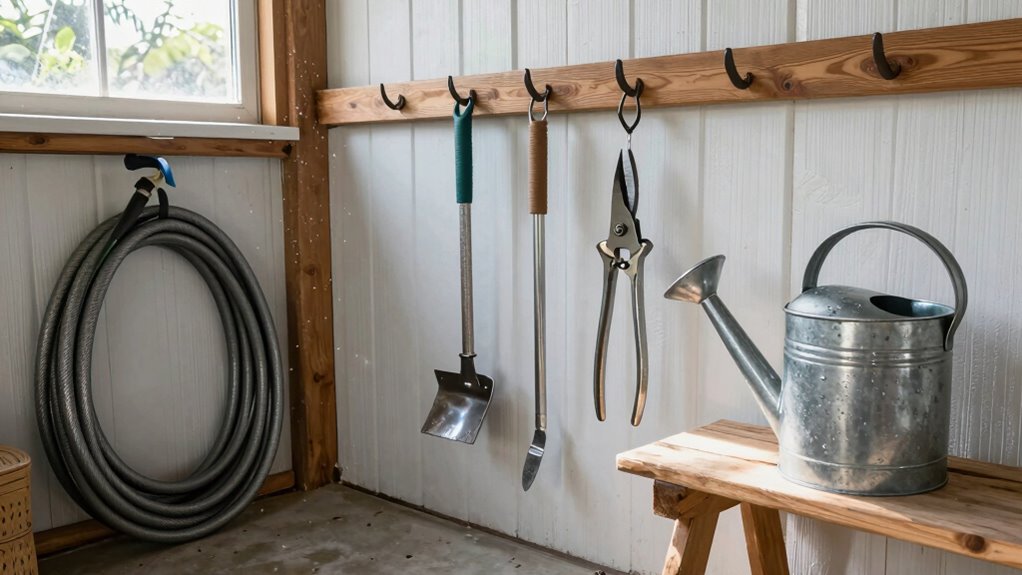
Every gardener who wants to prevent rust must make drying tools a non-negotiable step before storage. You should always wipe down metal surfaces with a clean cloth immediately after use.
Don’t leave moisture sitting on your tools overnight – it’s an invitation to rust. Pay special attention to crevices where water pools easily. Shake off excess moisture and hang tools in a well-ventilated area until completely dry.
Feel metal surfaces to verify no dampness remains before storage. Store tools in dry locations away from humidity. Make this simple habit part of your cleanup routine. Your tools will last longer and maintain their value.
Prevention saves money and gives you reliable equipment season after season. Keep your collection rust-free through consistent drying practices.
Use Protective Oil or Wax After Cleaning
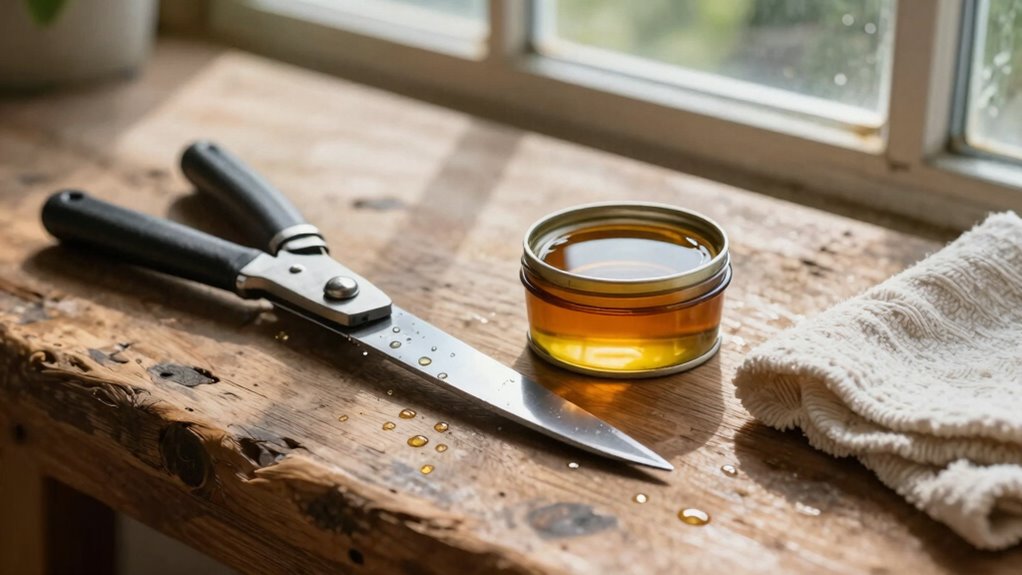
Once you’ve dried your tools completely, applying protective oil or wax creates another barrier against moisture and oxidation.
You should use mineral oil, boiled linseed oil, or specialized tool wax for maximum protection. Apply a thin, even coat to all metal surfaces using a clean cloth or brush.
Pay special attention to blades, hinges, and any areas where water might collect. Don’t over-apply – excess oil attracts dirt and debris. Wipe away any surplus after coating.
This protective layer prevents direct contact between metal and humid air. Regular oiling becomes part of your tool maintenance routine, helping your gardening community maintain quality equipment longer.
Make this simple step part of your post-cleaning habit. Your tools will stay sharper, cleaner, and rust-free when you consistently add this protective barrier after every use.
Store Tools in a Dry, Covered Location
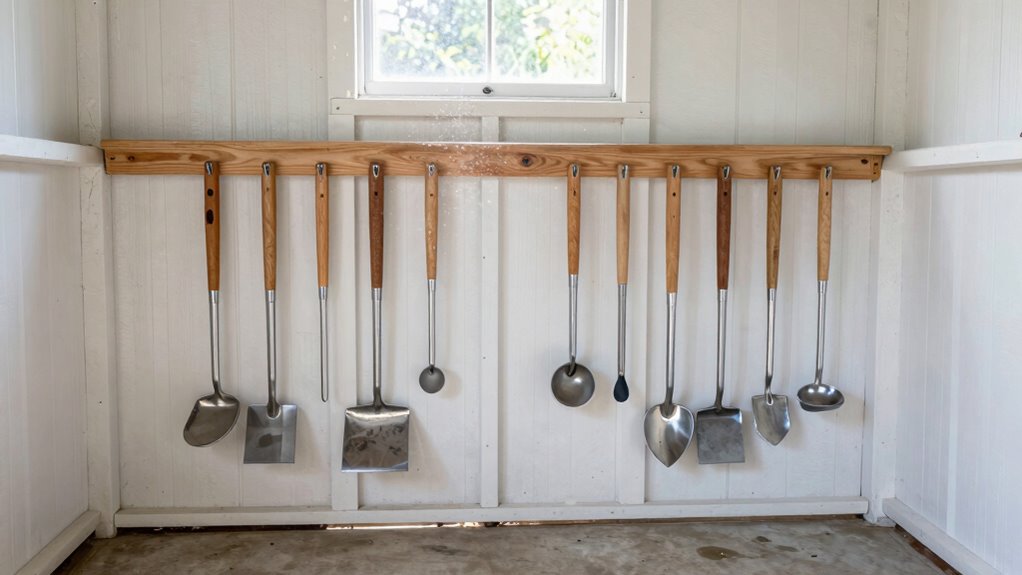
One key step in preventing rust is storing your tools properly after each use. You should always keep them in a dry, covered location away from moisture and humidity. A garden shed, garage, or covered tool rack works perfectly for this purpose.
Make certain your storage area has good ventilation to prevent trapped moisture. Don’t leave tools outside or in damp basements where condensation can form. Hang tools on hooks or store them in a tool chest to keep them off the ground.
If you’re storing metal tools together, place a cloth between them to avoid scratching. Always make sure your storage space stays dry year-round. Check that your shed or garage door seals properly to keep out rain and humidity.
Proper storage prevents rust before it starts.
Check for Early Signs of Tool Corrosion
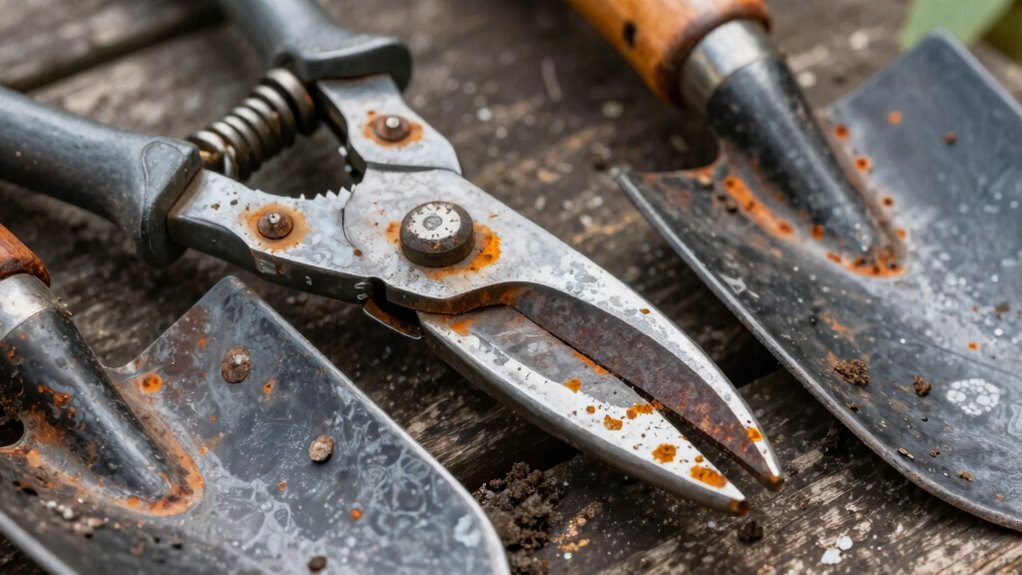
Even with proper storage, you should regularly inspect your garden tools for early corrosion signs. Look for reddish-brown spots, flaking paint, or dull patches on metal surfaces. Check handles for cracks or moisture trapped underneath. Examine hinges, bolts, and moving parts where water collects. Run your fingers along edges to feel for roughness or pitting. Early detection prevents minor issues from becoming major problems.
Make inspection part of your seasonal garden routine. After each use, quickly scan tools while cleaning them. Pay special attention to areas that contact soil or water frequently. Look for white powdery deposits or dark stains indicating moisture damage.
Check wooden handles for swelling or soft spots. Metal edges should remain bright and smooth. Regular checks help you catch problems before they spread, keeping your tools functioning properly and extending their lifespan considerably.
Remove Light Rust With Sandpaper or Steel Wool
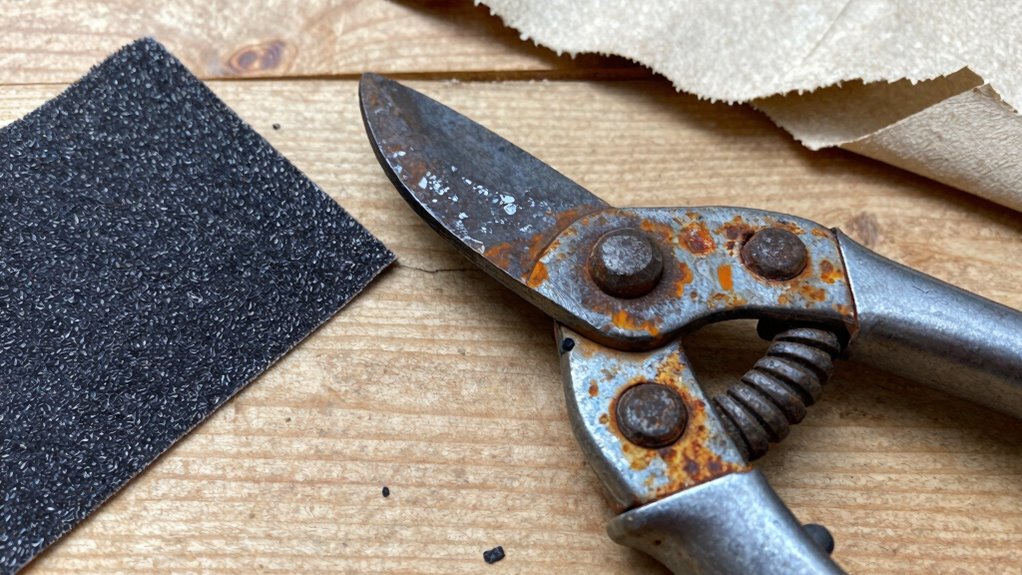
Several simple techniques can effectively remove light rust from garden tools before it causes permanent damage. You should act quickly when you spot those early orange spots.
Grab fine-grit sandpaper or steel wool and gently rub the affected areas. Work in the direction of the metal grain to avoid scratches. For stubborn patches, use slightly coarser grits. Keep your motions consistent and thorough. Remove all visible rust particles and debris. Clean the entire surface, not just the rusty spots.
Wipe away any remaining dust with a dry cloth. This preventive approach stops corrosion from spreading deeper into the metal. Regular removal of light rust maintains your tools’ effectiveness and extends their lifespan considerably.
Don’t let small rust spots become major problems. Take pride in keeping your gardening equipment in top condition. Your plants will thank you for using clean, rust-free tools. Prevention through early intervention works better than waiting for heavy corrosion.
Apply Long-Term Rust Protection Regularly
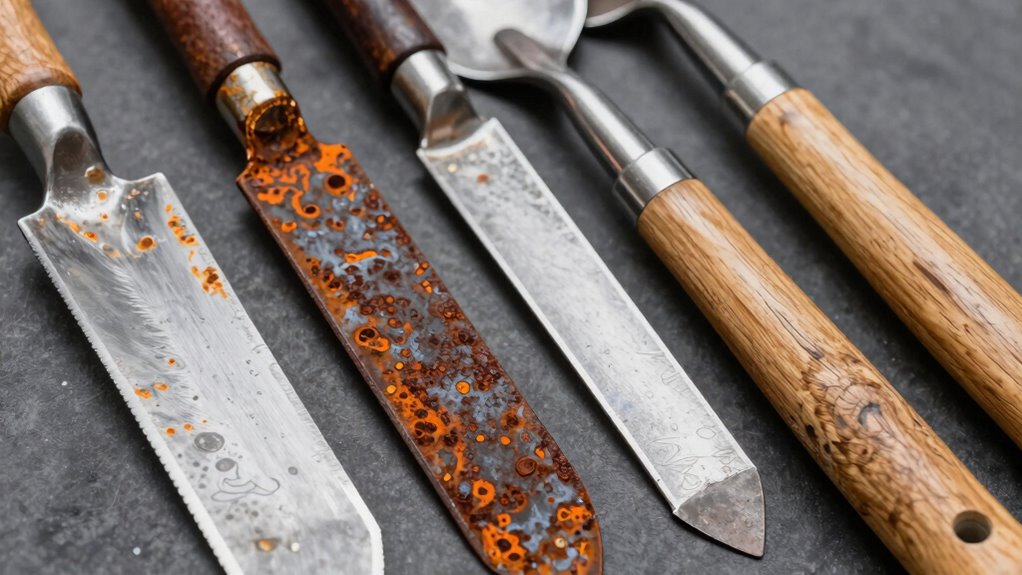
A protective coating applied regularly keeps garden tools rust-free for years.
You should wipe down tools after each use, removing moisture and debris. Apply a thin layer of oil or specialized rust inhibitor monthly during active gardening seasons.
Consider using paste wax on metal surfaces twice yearly for added protection. Don’t forget to coat tools before long-term storage.
Regular maintenance prevents oxidation that leads to costly replacements. Your neighbors probably coat their tools religiously – join them.
Check your shovel, rake, and pruners monthly for early rust signs. Touch up any bare metal spots immediately with protective coating.
Prevention works better than repair. Make tool maintenance part of your regular gardening routine.
Your tools will last decades with proper coating schedule. Consistent care keeps your investment protected while ensuring reliable performance season after season.
Keep Wooden Handles Sealed and Dry
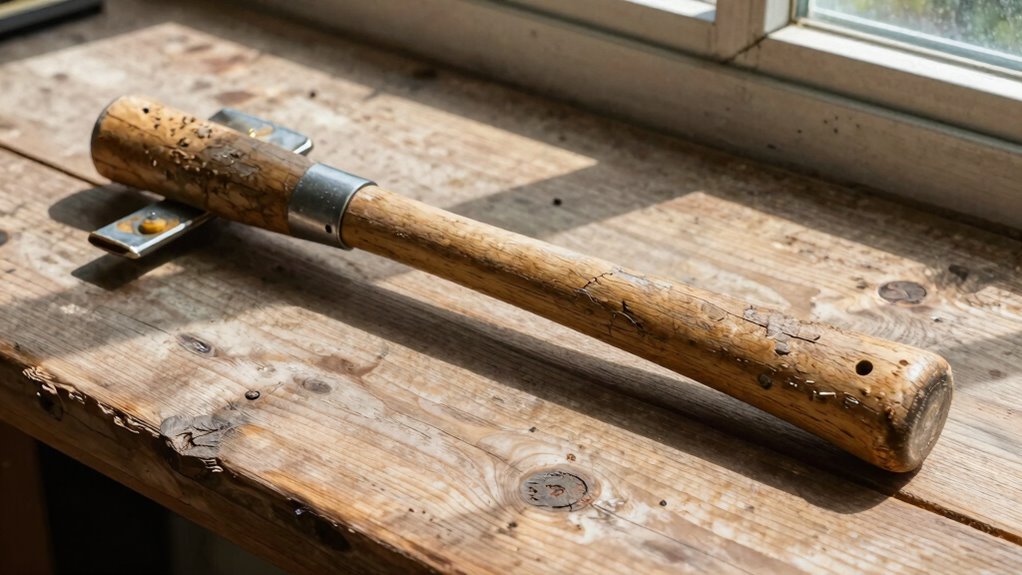
While you’re protecting metal surfaces from rust, don’t overlook wooden handles that also need regular care.
You should keep wooden handles sealed with linseed oil or specialized wood sealers annually. Apply thin coats and let them penetrate deeply.
Store tools in dry locations away from moisture and humidity. Wipe down handles after each use, removing dirt and sweat that cause wood to deteriorate.
Check for cracks or splinters regularly. Sand smooth any rough spots immediately. Replace damaged handles promptly to prevent injuries.
Properly maintained wooden handles last decades. You’re not just preserving tools; you’re maintaining reliable gardening companions that connect you to countless growing seasons ahead.
Build a Simple Weekly Tool Maintenance Habit
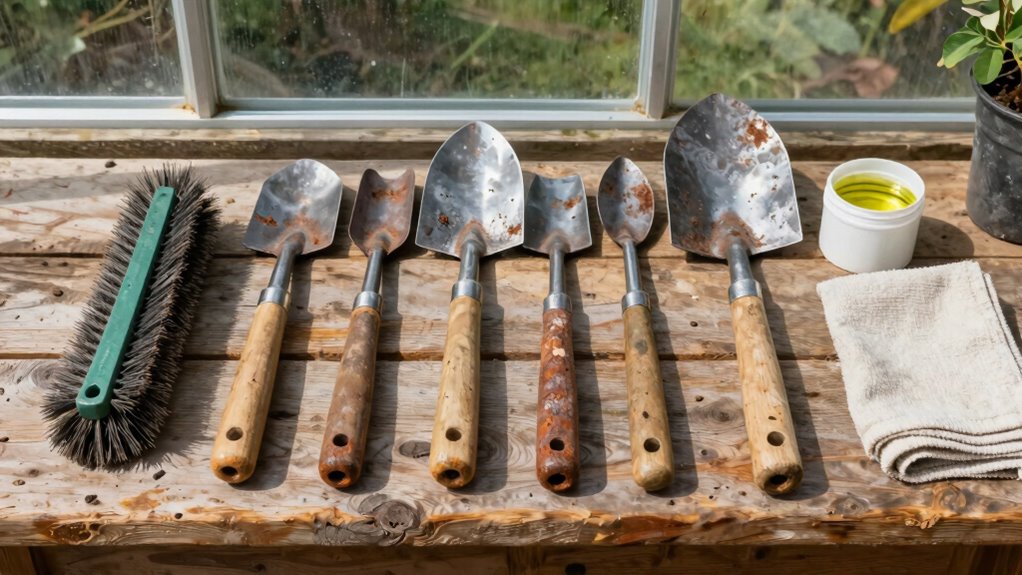
You should clean your tools after each use to remove dirt and moisture that cause rust.
Apply protective coatings like oil or wax weekly to create a barrier against corrosion.
Store your tools in a dry place away from humidity and temperature fluctuations.
Clean Tools After Use
Clean your garden tools thoroughly after each use to prevent rust and extend their lifespan. Remove dirt, sap, and debris immediately using a wire brush or steel wool. Pay special attention to blades and hinges where moisture collects.
Rinse tools with water if needed, but dry them completely afterward. Wipe down metal surfaces with a clean cloth to remove moisture and prevent oxidation. Store tools in a dry location away from humidity.
Make this cleaning routine part of your weekly gardening habit. Check tools regularly for signs of wear or damage. Sharp tools work better and last longer, so maintain their edges properly.
Your tools are investments worth protecting through consistent care.
Apply Protective Coatings Weekly
Apply a protective coating to your garden tools every week as part of your regular maintenance routine. This simple habit prevents rust before it starts.
Use linseed oil, wax, or specialized tool coatings. Wipe down clean tools with a cloth soaked in your chosen protectant. Pay special attention to metal surfaces and sharp edges where moisture collects. Don’t forget handles if they’re metal.
Weekly coating creates a barrier against humidity and water damage. Make this task part of your Sunday gardening ritual. Your tools will stay sharper longer, work better, and last decades with consistent protection.
Skipping weeks invites rust that’s hard to remove. Include this step in your tool care routine. Your future self will thank you for maintaining tools that stay reliable season after season.
Store Tools Properly
Proper storage works hand-in-hand with weekly protective coatings to keep your garden tools rust-free. You should always dry tools completely before storing them. Hang tools on hooks or store them in a dry shed away from moisture.
Use wooden handles when possible since they’re less prone to rust than metal. Store tools separately to prevent scratches that can lead to rust spots. Check your storage area regularly for leaks or humidity buildup.
Consider using moisture-absorbing packets in your tool storage area. Don’t throw tools in piles where they’ll trap moisture between surfaces. Invest in a simple tool rack or pegboard system.
This prevents tools from touching each other and the ground. Make storage part of your weekly maintenance routine.
Conclusion
Who knew that preventing rust could be so simple? You’re probably thinking it’s obvious, but here’s the twist: most people skip these basics and then wonder why their tools corrode. Don’t be that person. Clean, dry, oil, and store properly every single time. Build that weekly habit before rust builds its own. Your future self will thank you for this small investment in tool longevity. Prevention truly is better than cure.
