

You’re stuck with warped boards and uneven joints because you’re using the wrong clamps. Choosing the right clamp isn’t just about grabbing whatever’s in your toolbox. Your project’s success depends on matching clamp type to wood size, pressure requirements, and joint complexity. Keep making mistakes, or discover which clamps actually deliver consistent results.
What Kind of Clamp Fits Your Build?
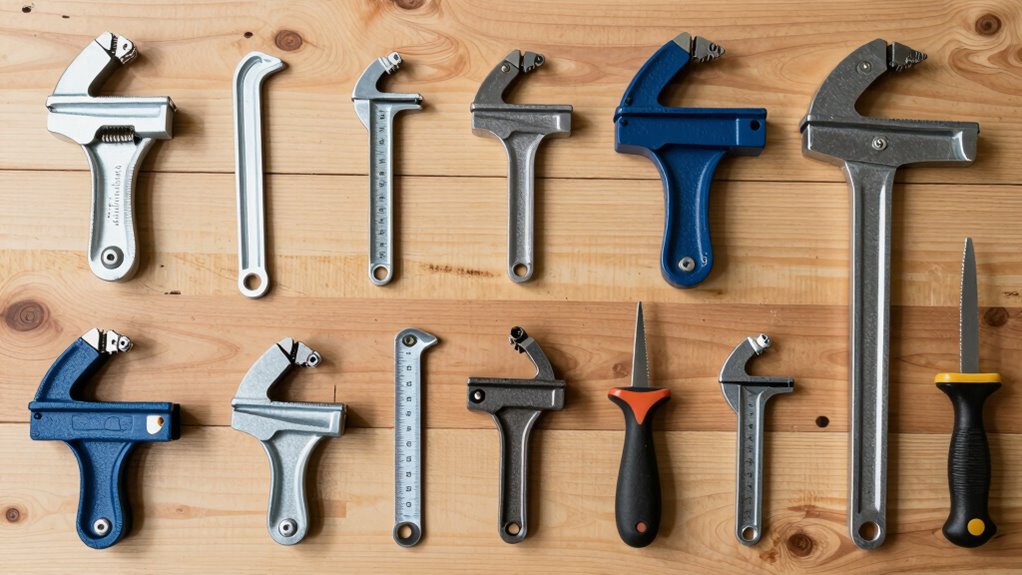
What kind of clamp fits your build? You need to match the clamp type to your project’s specific requirements.
Bar clamps work best for long joints and panel glue-ups. F-style clamps excel at reaching into tight spaces and awkward angles. Pipe clamps handle wide panels when you need serious reach. C-clamps suit small projects and detail work perfectly.
Consider your workspace too – bench dogs and vices might eliminate needing extra clamps entirely. Don’t overlook spring clamps for holding small pieces during assembly.
Think about material thickness and joint types you typically encounter. Your regular projects should guide your clamp selection. Having the right clamp makes every build feel more professional and controlled.
Match tool capabilities to project demands consistently.
What Clamping Force Do Your Projects Need?
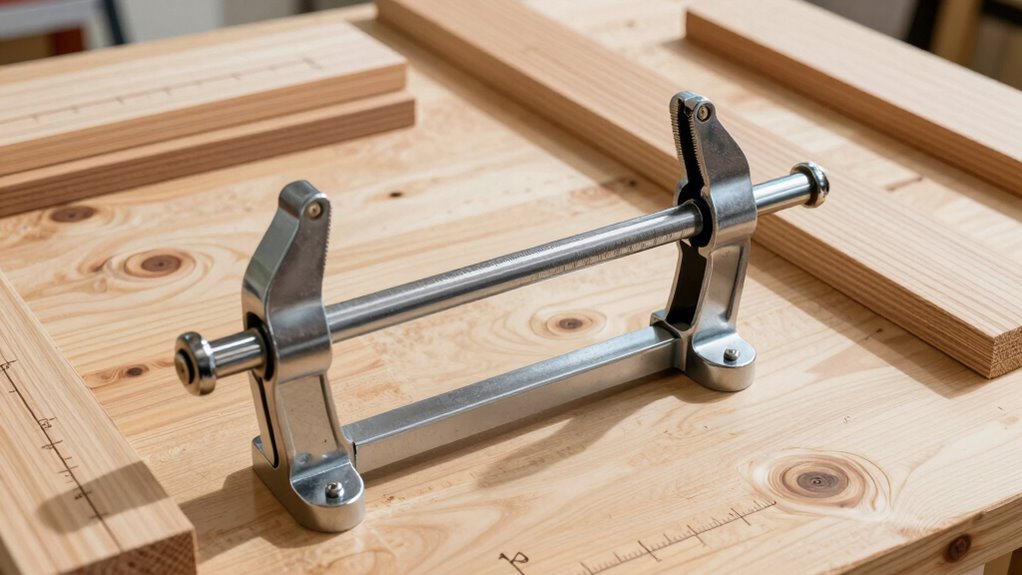
You need to match your clamping force to your wood type because softwoods require less pressure than hardwoods.
Calculate the ideal pressure by considering your project’s joint strength and wood density. These factors determine whether you’ll need light-duty or heavy-duty clamps for successful woodworking results.
Understanding Wood Type Requirements
When working with different wood types, understanding their unique properties helps you determine the appropriate clamping force for your projects.
Softwoods like pine and cedar require less pressure since they’re more flexible and forgiving. Hardwoods such as oak and maple need more clamping force due to their density and tendency to resist movement. Exotic woods often demand careful pressure control to prevent damage.
You should consider wood grain direction too. Straight-grained woods handle pressure better than irregular grains.
Check moisture content because green wood moves more than kiln-dried material. Dense hardwoods might need stronger clamps, while softer species work well with lighter pressure.
Always test your clamping setup before committing to glue.
Calculating Optimal Pressure Settings
How do you determine the right amount of pressure for your woodworking projects? Start by considering your wood’s thickness and joint type. Thick hardwoods need more pressure than thin softwoods.
For edge joints, apply 150-200 PSI. Face joints require 100-150 PSI. Glue-up projects need enough pressure to create tight seams without crushing the wood fibers.
Test your clamps on scrap wood first. You’ll develop a feel for proper pressure through practice. Too much force causes wood to bend or split. Too little pressure creates gaps.
Remember that different wood species react differently to pressure. Dense woods like oak need more clamping force than pine or cedar. Your projects will turn out better when you apply the correct pressure consistently.
Which Jaw Material Protects Wood Best?
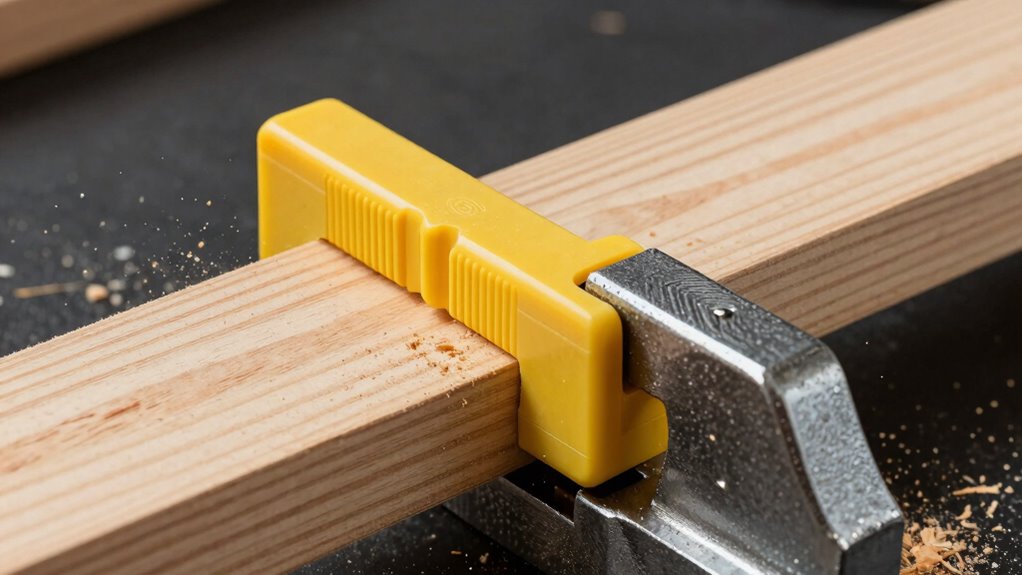
Why do some clamp jaw materials leave unsightly marks on your carefully prepared wood surfaces? Hard metals like steel dig into wood fibers, creating permanent dents and scratches that ruin your project’s finish.
You need jaw materials that protect your work while maintaining grip strength.
Soft jaw materials win every time. Aluminum jaws are lightweight yet strong, won’t mar wood surfaces, and resist corrosion.
Plastic jaws work well for delicate projects but may not provide enough grip for heavy-duty clamping.
Rubber-coated jaws offer excellent protection and grip, though they wear out faster.
Wooden jaw pads represent the traditional choice, protecting surfaces while providing solid contact. They’re easily replaceable when worn.
For maximum protection, look for clamps with removable jaw pads made from softer materials. These protect your investment and guarantee clean, professional results every time.
What Clamp Design Handles Irregular Shapes?
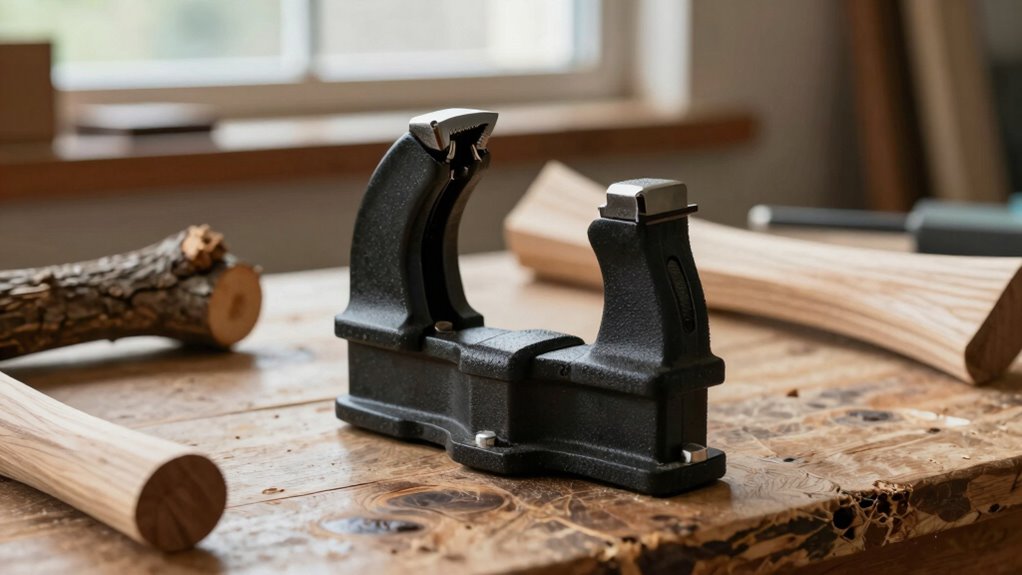
What clamp design handles irregular shapes most effectively?
You’ll want clamps that adapt to varying contours and angles without compromising grip strength.
Here are three designs that excel with irregular workpieces:
- Bar clamps with adjustable jaws let you position the clamping surface at different angles, accommodating angled joints and uneven surfaces.
- C-clamps with rotating heads provide 360-degree adjustment, allowing you to apply pressure from multiple directions on odd-shaped components.
- Spring clamps with flexible pads conform to curved or angled surfaces while maintaining consistent pressure across irregular contact points.
These designs prevent wood damage while ensuring secure hold on complex joints.
You’ll find them indispensable when working with reclaimed lumber, curved pieces, or compound angle assemblies.
What Are the Best Clamps for Gluing Projects?
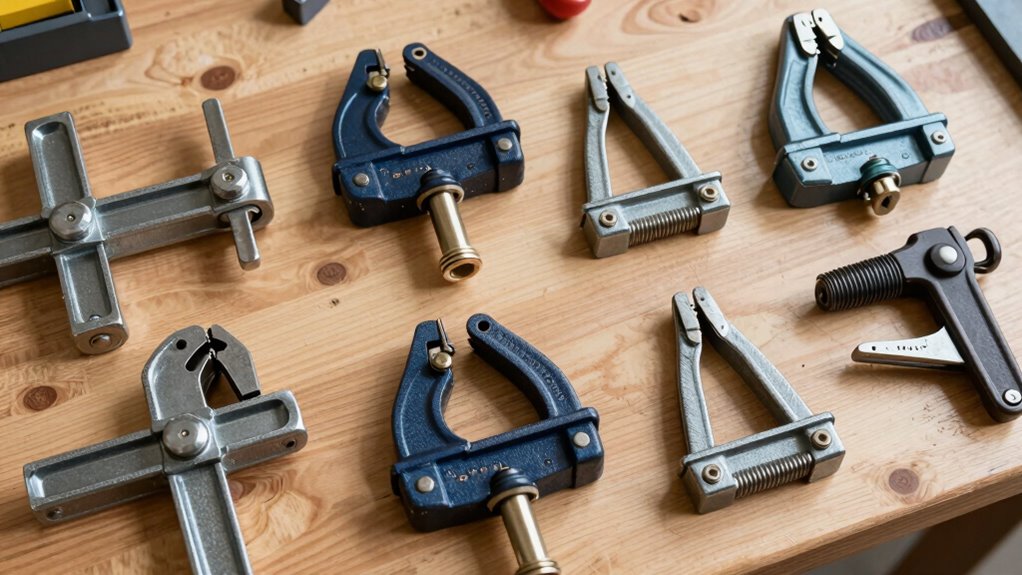
You’ll want to choose clamps that provide even pressure across your glue joints without crushing the wood.
Bar clamps and pipe clamps work well for long joints, while C-clamps and parallel jaw clamps handle smaller projects effectively.
Setting the right pressure guarantees strong glue bonds without creating gaps or warping your workpiece.
Best Clamp Types for Wood Gluing
When gluing wood projects, having the right clamps makes all the difference in achieving strong, clean joints. You need clamps that provide even pressure distribution and won’t damage your workpiece surfaces.
- Bar clamps offer excellent linear pressure for edge gluing panels and long joints. Their rigid frame prevents bowing while applying consistent force across the entire glue line.
- C-clamps work perfectly for small projects and tight spaces. You can easily adjust pressure and reach awkward angles that larger clamps can’t access.
- Spring clamps are ideal for lightweight pieces and quick assembly tasks. They’re perfect when you need hands-free operation or temporary holding while glue sets up.
Proper Clamp Pressure Settings
Applying the right amount of pressure with your clamps can make or break your wood joints. You need enough force to hold pieces firmly together without crushing the wood fibers.
Start with moderate pressure and gradually increase until glue seeps out evenly from joint surfaces. Too much pressure squeezes out excess glue, creating weak bonds. Too little pressure leaves gaps that compromise joint strength.
Test your clamp pressure on scrap wood first. Feel for solid contact without deformation. Parallel clamping surfaces distribute pressure evenly across workpieces. Use cauls or padding blocks to prevent marring delicate surfaces.
Remember that different wood species require varying pressure levels. Hardwoods need more clamping force than softwoods. Monitor joints during curing time and adjust pressure as needed for ideal results.
Should You Use Bar Clamps or C-Clamps?
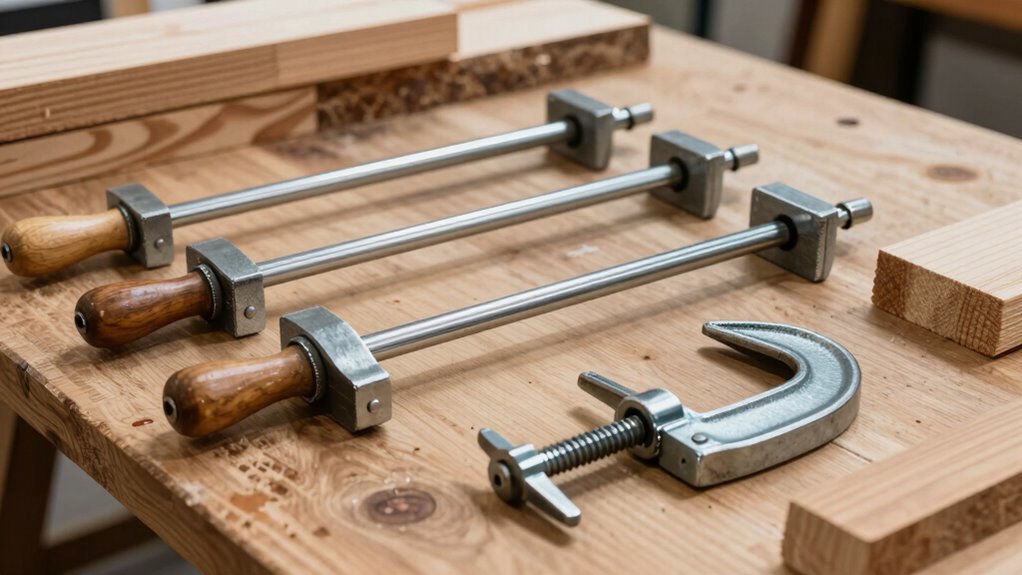
Bar clamps and C-clamps each serve distinct purposes in woodworking, so understanding their differences helps you choose the right tool for your specific project needs.
You’ll want to match the clamp type to your project requirements.
1. Bar clamps excel at edge gluing and long joints, providing even pressure across wide surfaces.
Their parallel jaws maintain consistent spacing while you work.
2. C-clamps offer superior accessibility for tight spaces and irregular shapes.
You can position them at various angles, making them versatile for complex assemblies.
3. Consider your workspace – bar clamps need more room for their extended reach, while C-clamps work better in compact areas.
Which Clamps Offer Fast Setup and Adjustment?
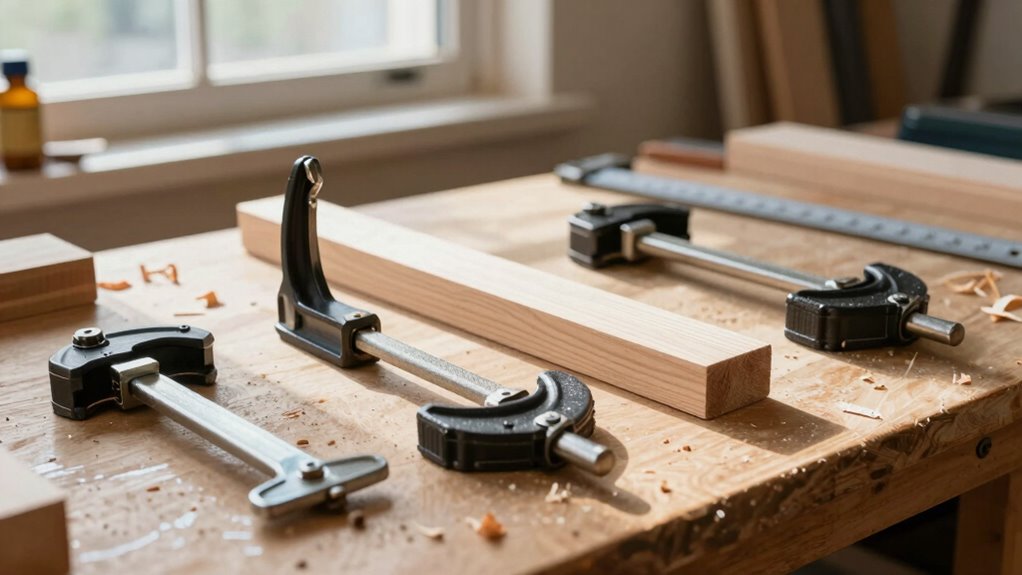
How quickly can you get your project assembled and glued? Quick-release bar clamps are your best bet for fast setup. You simply squeeze the trigger and slide the clamp into position.
Parallel jaw clamps with quick-adjust mechanisms work similarly. F-style clamps with ratcheting systems let you tighten rapidly without endless turning. Spring clamps are instant – just squeeze and release.
These options eliminate time-consuming adjustments. You’ll spend less time fighting with clamps and more time creating. Quick-setup clamps boost your productivity considerably.
When you need to clamp multiple joints simultaneously, speed matters. Don’t let slow clamps bottleneck your workflow. Invest in clamps that match your pace.
Your projects will thank you for choosing tools that work as hard as you do. Fast clamps mean faster completion times.
Do You Need Strong Clamps for Tight Corners?
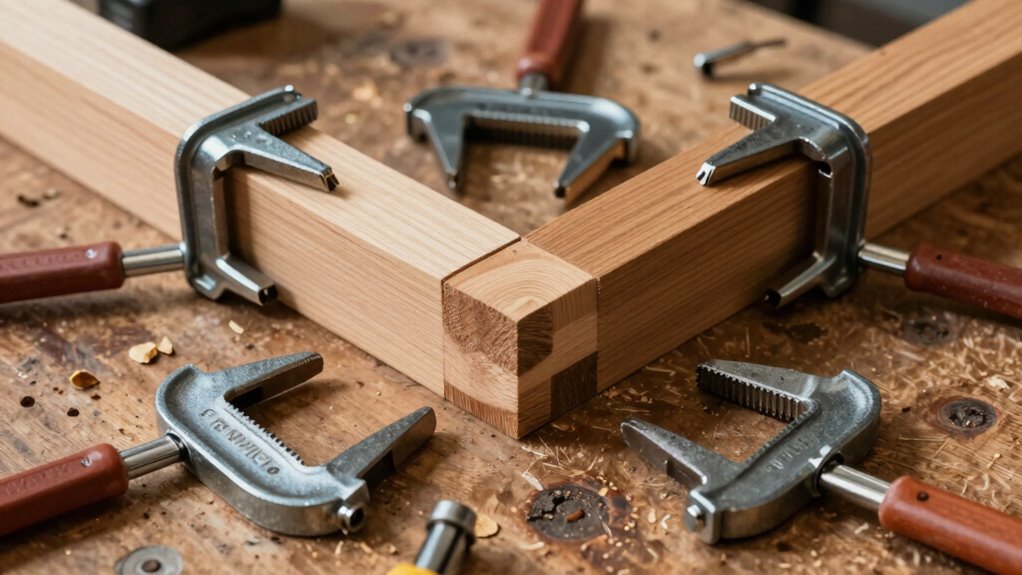
While quick-release clamps help you work faster, tight corners demand clamps with serious gripping power.
You need clamps that won’t slip when joining cabinet corners or frame joints.
- Bar clamps provide exceptional pressure for right-angle joints, making them ideal for cabinetmaking projects where precision matters.
- Corner clamps feature adjustable jaws that conform to your workpiece, delivering even pressure distribution across irregular surfaces.
- Spring clamps work well for small tight spaces, but larger projects require heavier-duty options with greater jaw capacity.
Don’t compromise on clamp strength for critical corner joints.
Your project’s structural integrity depends on reliable clamping pressure.
Match your clamp choice to the joint’s requirements and your woodworking goals.
Strong clamps prevent gaps, guarantee glue penetration, and create professional results that last.
Choose wisely for clean, tight corners every time.
Are Your Clamps Strong Enough for Large Jobs?
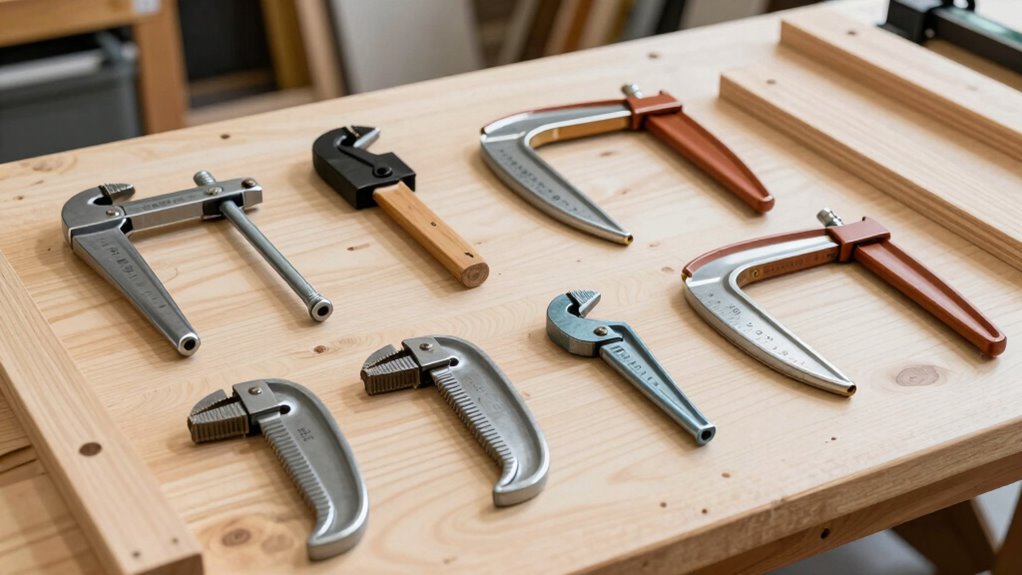
When you’re tackling large woodworking projects, you’ll quickly realize that standard clamps mightn’t cut it.
Heavy-duty clamps become essential when joining thick stock or applying maximum pressure across wide surfaces. You need clamps that won’t flex or bend under stress.
Don’t guess about clamp strength—check the manufacturer’s specifications. Look for clamps rated for your project’s demands.
Pipe clamps and bar clamps excel at large jobs because they distribute pressure evenly. F-style clamps work well for medium-duty applications.
Consider your project’s glue-up requirements. Large panels need consistent pressure across their entire surface. Weak clamps create gaps and poor joints.
Invest in quality clamps that match your project scale. Your woodworking community will appreciate professional-quality results.
What Size & Reach Work With Your Bench?
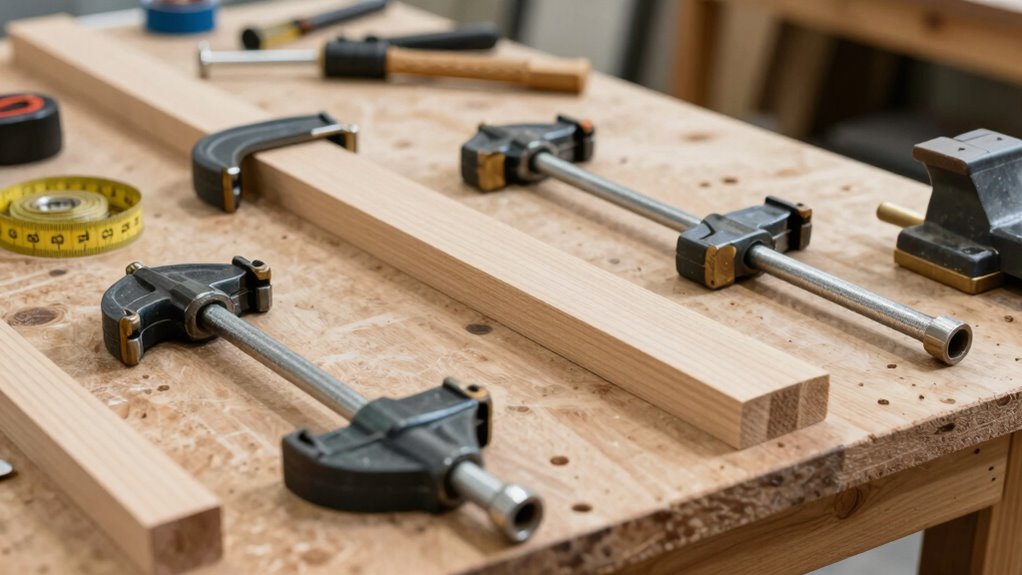
You need to contemplate your bench space carefully when selecting clamps.
Your clamps’ reach should match your bench’s dimensions without extending too far beyond the work surface.
Measure your bench area and identify any reach limitations that could affect your clamping options.
Bench Space Requirements
How much room do you actually need for effective clamping on your workbench? Your bench space directly impacts which clamps work best for your projects.
Consider these key requirements:
- Minimum bench width: You need at least 24 inches of clamping surface to handle most woodworking tasks comfortably. Narrower benches limit your clamp options considerably.
- Overhang considerations: Confirm your bench has adequate overhang space (6-8 inches minimum) to accommodate larger clamps and prevent workpiece interference during clamping.
- Clear workspace: Maintain 12 inches of unobstructed space around your clamping area for maneuvering and positioning workpieces effectively.
Measure your bench dimensions before purchasing clamps.
Your workspace size determines whether you can use small C-clamps or need heavy-duty bar clamps for proper hold-down pressure.
Clamp Reach Limitations
Several factors determine which clamps work best with your bench setup. Your bench’s height and width directly impact clamp reach requirements. Measure your bench dimensions before purchasing clamps.
Standard clamps typically span 6-8 inches, but deeper benches need longer reach capabilities. Consider bench dog holes and their spacing when selecting clamp types. Pipe clamps work well for wide benches, while C-clamps suit narrower setups better.
Test clamp jaws fully open to guarantee they accommodate your thickest materials. Don’t forget clearance needed below your work surface. Bar clamps offer excellent reach but require adequate bench length.
Verify clamp capacity matches your typical project sizes. Your existing tools and workflow should influence reach decisions. Choose clamps that complement your bench’s specific dimensions and layout effectively.
F-Clamps vs. Trigger Clamps: Which Work Better?
When deciding between F-clamps and trigger clamps for your woodworking projects, you’ll want to weigh both speed and precision. Each type serves different needs in your workshop.
- Speed and ease: Trigger clamps win here. You can quickly squeeze the handle and release with one hand, making them perfect for fast setups and repetitive tasks.
- Holding power: F-clamps provide superior clamping force. Their screw mechanism delivers consistent, strong pressure that won’t loosen during glue-ups or extended work sessions.
- Versatility: Consider your typical projects. F-clamps handle heavy-duty joinery better, while trigger clamps excel at quick fixes, assembly work, and situations where you need rapid adjustment.
Choose based on your most common woodworking scenarios.
Why Clamps Fail: and How to Prevent It
Clamps fail for predictable reasons, and you can avoid most breakdowns with proper care and attention.
Over-tightening causes thread damage and jaw misalignment, so stop when you feel resistance. Rust occurs when you neglect cleaning and storage, especially in humid conditions.
Regularly wipe down clamps after use and store them in dry spaces. Worn padding creates slipping issues, so replace tape or rubber grips promptly.
Drop damage affects internal mechanisms, requiring careful handling during transport. Cheap materials fatigue quickly under stress, making quality investments worthwhile.
Check screws and bolts periodically for looseness.
You belong in the workshop when you understand prevention beats replacement every time.
Conclusion
Don’t let clamp choice overwhelm you—matching the right clamp to your project is simpler than it seems. Focus on your project’s specific needs: size, wood type, and clamping pressure. Pick bar clamps for large glue-ups, F-clamps for heavy joinery, and C-clamps for precision work. Consider jaw protection to prevent wood damage. Your projects will thank you for the proper setup.
