

You probably think maintaining a small lawn requires constant effort, but it doesn’t have to be overwhelming. By choosing the right grass type for your climate and preparing your soil properly, you’ll set yourself up for success from the start. The key is establishing a consistent routine that works with your lawn’s natural growth patterns rather than against them. Let’s explore how you can keep your grass healthy without spending every weekend chained to your mower.
Choose the Best Grass for Your Climate
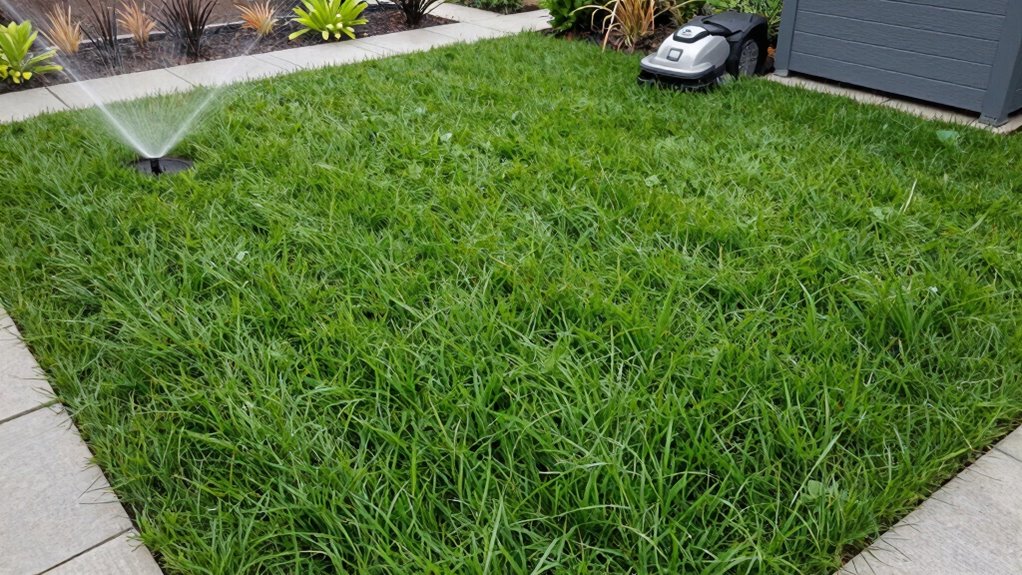
When you’re selecting grass for your small lawn, you’ll want to evaluate your local climate conditions carefully.
Consider whether your area experiences hot summers, cold winters, or moderate temperatures year-round. Cool-season grasses like fescue and ryegrass thrive in northern regions with freezing winters. Warm-season varieties such as Bermuda and Zoysia perform better in southern climates with intense heat.
You should also examine your lawn’s sunlight exposure and water availability. Some grasses require full sun while others tolerate shade better.
Annual rainfall and irrigation access determine drought-resistant varieties that’ll survive dry periods. Soil type matters too – certain grasses prefer sandy conditions while others need clay or loam.
Research your USDA hardiness zone to identify recommended grass types.
Local nurseries and extension offices provide valuable insights about varieties that succeed in your specific area. Choose grass that matches your climate’s natural rainfall patterns and temperature extremes.
Prep Soil for Stronger Root Growth
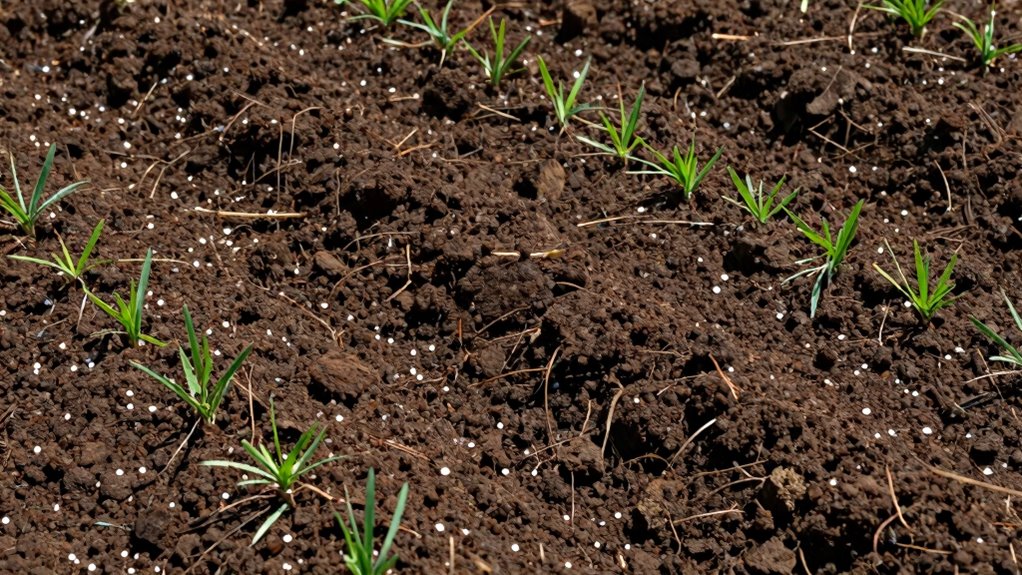
Proper soil preparation forms the foundation of a healthy lawn that’ll thrive for years.
You’ll want to test your soil’s pH level first, aiming for 6.0 to 7.0 for most grass types. Remove existing weeds and debris, then loosen the top 6-8 inches with a garden fork or tiller.
Add organic matter like compost or well-rotted manure to improve soil structure and nutrient content. Sandy soils need more organic material, while clay soils benefit from coarse sand and compost mixing.
Rake the area smooth, removing stones and clumps. Consider applying a starter fertilizer with phosphorus to encourage root development.
Level high spots and fill low areas. Your goal is creating loose, fertile soil that drains well but retains moisture.
This preparation guarantees your grass establishes deep, vigorous roots that’ll make you proud.
Water Deep but Not Too Often
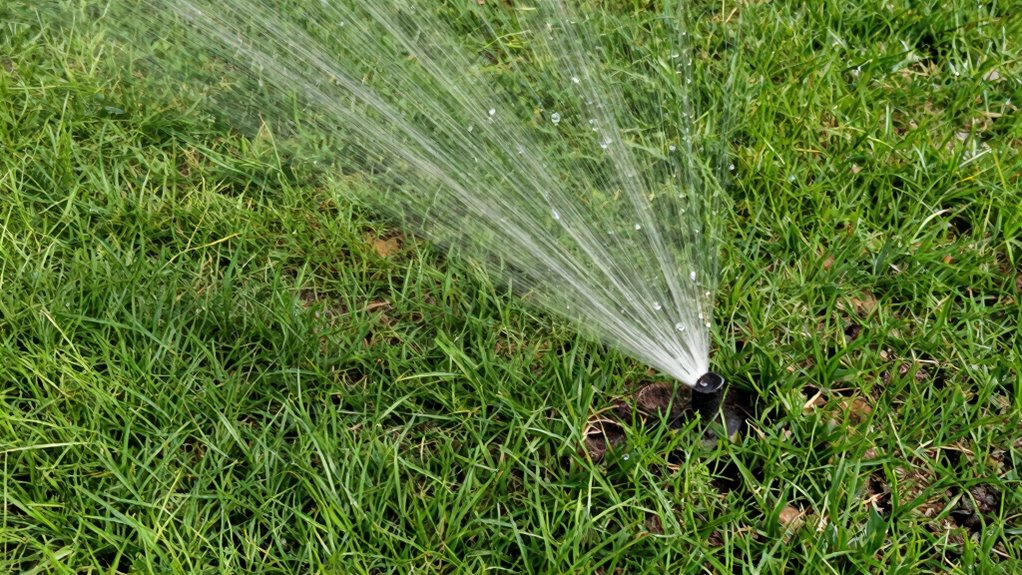
While establishing your watering routine, you’ll want to encourage deep root growth by watering less frequently but more thoroughly. Deep watering forces roots to grow downward seeking moisture, creating a stronger, more drought-resistant lawn.
You should aim to soak the soil to a depth of six to eight inches during each watering session. This typically requires about one to two inches of water, depending on your soil type. Clay soils need less frequent watering than sandy soils, which drain quickly.
Water early in the morning to minimize evaporation and allow grass blades to dry before evening. Avoid light, frequent sprinklings that promote shallow rooting and make your lawn dependent on constant moisture.
Instead, let the top inch of soil dry out between waterings to encourage deeper root penetration and healthier grass growth.
Mow at the Right Height and Time
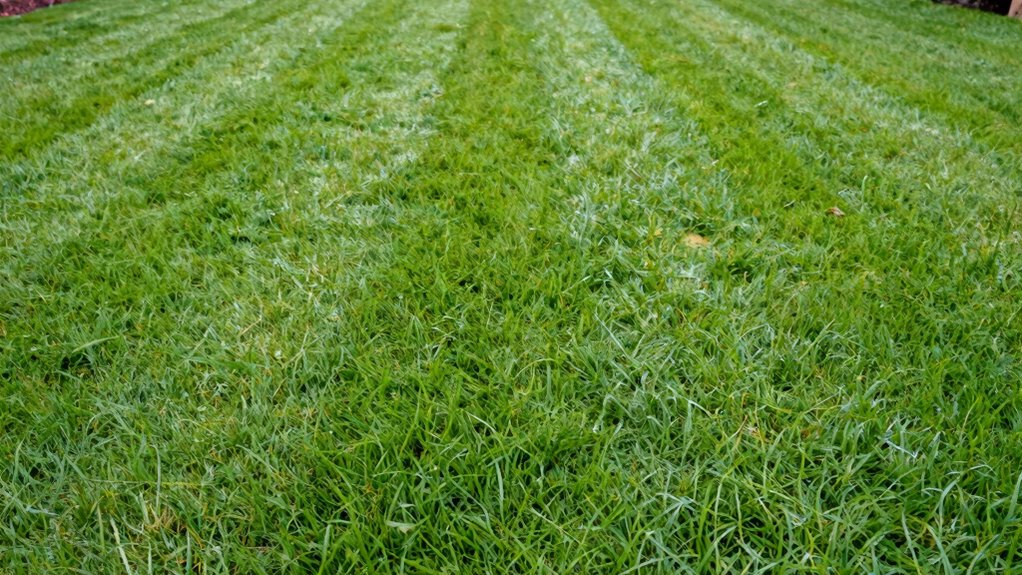
Just as deep watering schedules strengthen your lawn’s root system, mowing practices considerably impact your grass’s overall health and resilience.
You’ll achieve better results when you follow proper mowing techniques consistently.
Keep these essential mowing principles in mind:
- Set blade height between 2.5 to 3 inches for most grass types to encourage deeper root growth
- Mow during cooler morning hours to reduce stress on grass and prevent moisture loss
- Remove no more than one-third of grass height per cutting session to avoid shocking your lawn
- Maintain sharp mower blades for clean cuts that heal quickly and prevent disease entry
You’ll notice your lawn responds positively within weeks when you implement these practices regularly.
Boost Grass Health With Smart Fertilizing
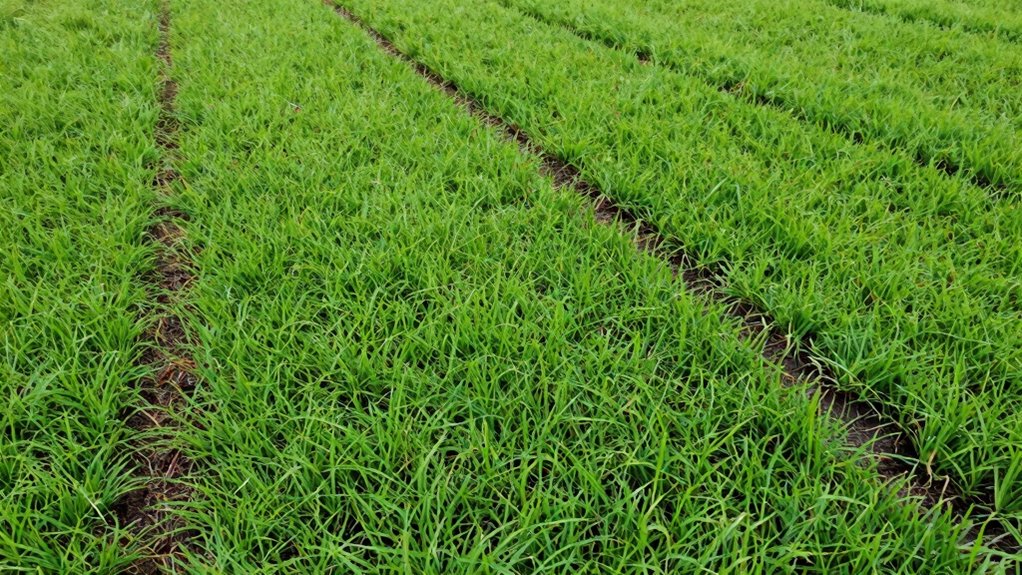
You should choose the right fertilizer type based on your grass species and soil conditions to maximize nutrient uptake.
Apply fertilizer seasonally according to your lawn’s growth patterns, typically in spring and fall for cool-season grasses.
These strategic applications will strengthen root development and enhance your lawn’s natural resistance to pests and diseases.
Choose Right Fertilizer Type
Selecting the appropriate fertilizer type requires understanding your grass’s specific nutritional needs throughout the growing season.
You’ll want to choose products that match your lawn’s unique requirements for ideal health and growth.
Consider these key factors when selecting fertilizer:
- NPK ratios – Look for balanced formulations like 10-10-10 or specialized ratios based on soil test results.
- Organic vs. synthetic options – Organic fertilizers release nutrients slowly while synthetic versions provide immediate feeding.
- Slow-release formulas – These prevent nutrient burn and reduce application frequency throughout growing periods.
- Specialized blends – Choose fertilizers designed for your specific grass type, whether cool-season or warm-season varieties.
You should always read labels carefully and match NPK values to your lawn’s actual needs rather than following generic recommendations.
Apply Fertilizer Seasonally
While understanding your grass type and soil conditions helps determine which fertilizer to use, timing your applications correctly throughout the growing season is equally vital for maintaining a healthy lawn.
You should apply fertilizer during peak growing periods when grass actively absorbs nutrients. For cool-season grasses, fertilize in early spring and fall. Warm-season varieties need feeding in late spring and summer.
Avoid fertilizing during extreme heat or drought conditions. You’ll achieve best results by splitting applications into smaller doses rather than applying large amounts once. This approach prevents nutrient runoff and guarantees steady grass growth.
Monitor your lawn’s color and density to determine if additional feeding is necessary. Proper seasonal timing creates lush, resilient turf that thrives year-round.
Stop Weeds Before They Take Hold
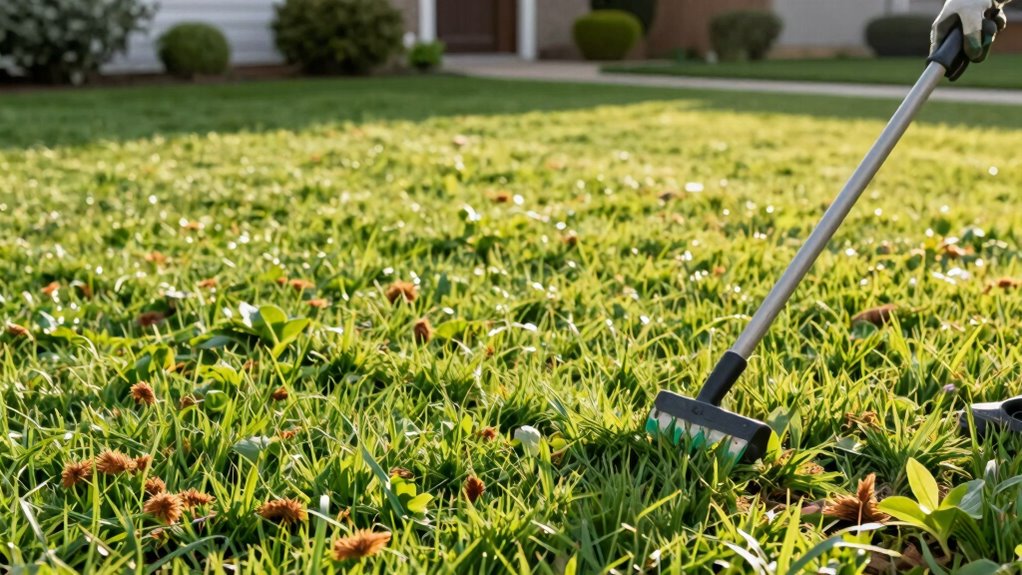
You should focus on preventing weeds before they establish deep root systems, as early intervention saves significant time and effort.
Monitor your lawn regularly for small weed seedlings and remove them immediately by hand or with targeted herbicides.
These preventive measures and prompt removal techniques will keep your small lawn looking pristine without extensive chemical treatments later.
Preventive Weed Control Methods
Preventing weeds from establishing themselves in your lawn requires proactive measures that target weed seeds and young seedlings before they can take root.
You’ll want to stay ahead of weed problems rather than reacting after they’ve spread.
- Apply pre-emergent herbicides in early spring before weed seeds germinate
- Maintain proper mowing height to create dense grass that naturally crowds out weeds
- Water deeply but infrequently to encourage strong grass roots while stressing shallow weed seedlings
- Overseed thin areas annually to fill gaps where weeds typically establish
These preventive steps create an environment where your grass thrives while weeds struggle to gain a foothold.
Consistency matters more than perfection when implementing these methods.
Early Detection And Removal
One effective approach to controlling weeds involves catching them early, when they’re most vulnerable and easier to manage.
You should walk your lawn weekly, scanning for unfamiliar plants that don’t belong. Young weeds pull out effortlessly by hand or with a small tool, unlike mature ones that develop deep root systems.
Focus on areas where weeds typically appear: along sidewalks, near garden beds, and spots with thin grass coverage.
Don’t wait until you see flowers or seeds forming, as this indicates the weed has already established itself.
Remove weeds immediately when you spot them, ensuring you get the entire root system.
Regular early detection prevents minor weed problems from becoming major infestations that threaten your lawn’s health and appearance.
Aerate and Overseed Your Small Lawn
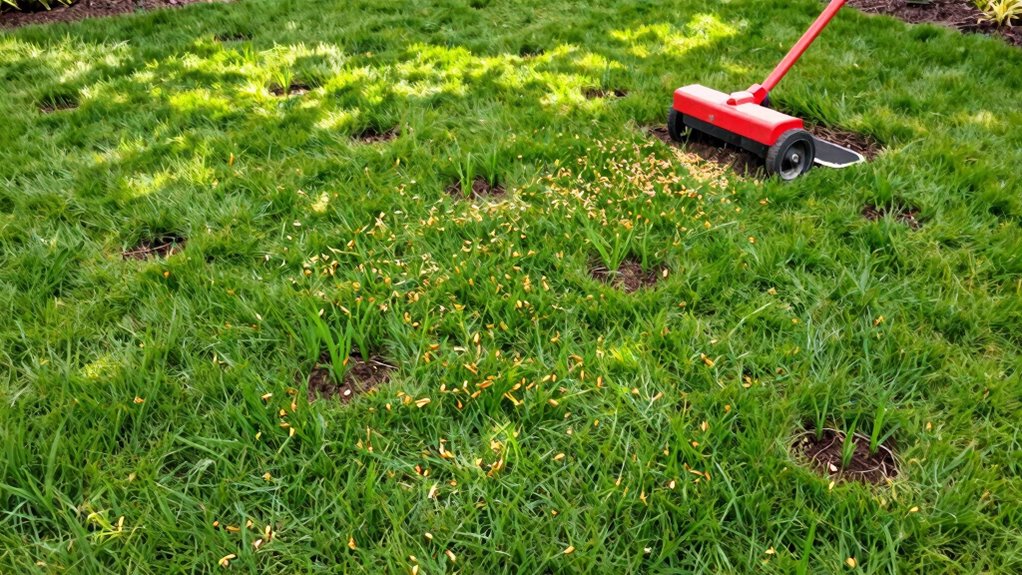
Aerating and overseeding your small lawn revitalizes thin or bare patches while improving overall grass health.
You’ll create stronger root systems and thicker grass coverage through this essential maintenance process.
- Choose the right timing – Spring or early fall works best for cool-season grasses when soil moisture is adequate.
- Rent a core aerator – Remove small soil plugs every few inches to create seeding channels for new grass.
- Select quality seed mix – Pick varieties that match your existing lawn type and growing conditions specifically.
- Spread seed evenly – Use a broadcast spreader at half-seeding rates in two perpendicular passes for uniform coverage.
Water lightly but frequently after seeding until new grass establishes.
You’ll see significant improvement in lawn density and color within six weeks when done correctly.
Spot and Treat Common Lawn Problems Early
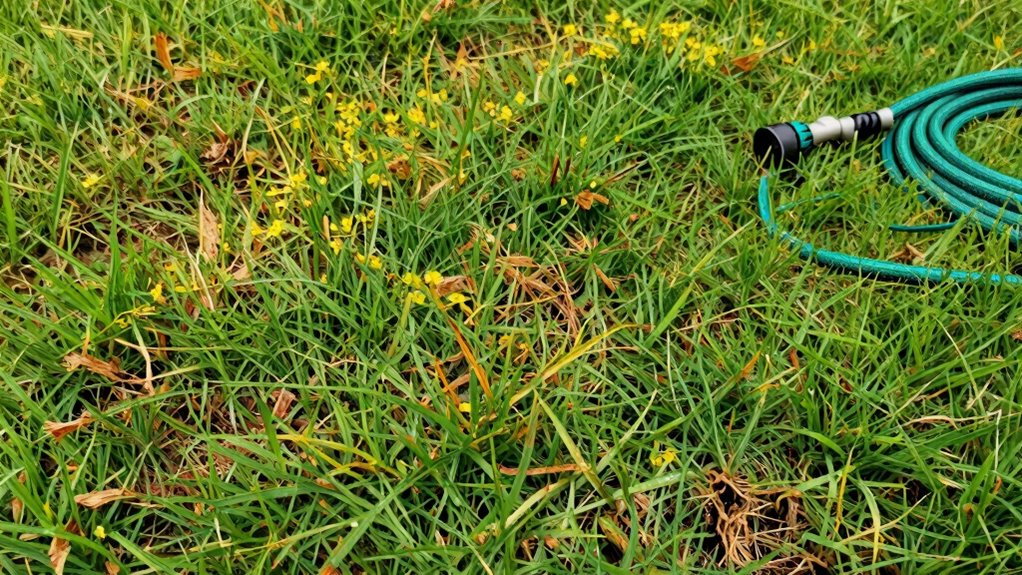
You should regularly inspect your lawn for discolored patches, thinning grass, or unusual growth patterns to identify problem areas quickly.
Once you spot these issues, apply targeted treatments like fungicides, insect control, or nutrient supplements promptly to address the specific concern.
Taking immediate action prevents these problems from spreading to healthy sections of your lawn and maintains your grass’s overall vigor.
Identify Problem Areas Quickly
When you notice discoloration, thinning grass, or unusual growth patterns, act quickly to diagnose and address lawn problems before they spread.
Early detection prevents minor issues from becoming major headaches that require extensive treatment.
Walk your lawn weekly during growing seasons, paying close attention to these common trouble spots:
- Brown patches indicating fungal infections or drought stress
- Weedy invasions where crabgrass or dandelions crowd healthy grass
- Compacted soil areas where water pools or grass appears stunted
- Insect damage zones showing chewed blades or scattered bare patches
Regular inspection helps you catch problems while they’re still manageable.
Don’t wait until entire sections look sickly.
Your lawn’s health depends on your ability to spot warning signs early and take immediate action before conditions worsen.
Apply Targeted Treatments Promptly
Address lawn problems immediately by spotting and treating common issues before they spread. You should identify bare patches, weed clusters, or discolored spots early.
Apply targeted treatments like overseeding thin areas or spot-spraying weeds selectively. Don’t wait until problems become obvious to neighbors – tackle issues while they’re still manageable.
Use appropriate fungicides for fungal infections or insecticides for pest damage. Water affected areas adequately after treatment. You’ll save time, money, and effort by acting quickly.
Early intervention prevents minor problems from becoming major headaches. Regular monitoring helps you catch issues before they escalate. Your lawn will respond better to prompt, specific treatments rather than broad, reactive measures.
Stay vigilant and address concerns immediately.
Prevent Issues From Spreading
While maintaining a small lawn requires vigilance, preventing common issues from spreading demands immediate attention to emerging problems.
You must act quickly when you notice anything unusual to protect your lawn’s health and appearance.
- Brown patches – Address fungal infections immediately with targeted fungicides before they expand
- Weed clusters – Remove invasive plants manually or treat with selective herbicides while spots remain small
- Bare soil areas – Reseed thinning sections promptly to prevent crabgrass and other unwanted vegetation from taking hold
- Discolored stripes – Investigate watering or nutrient deficiencies early to avoid widespread damage
Regular inspection walks help you catch problems before they multiply.
Don’t wait until next mowing session when issues become obvious.
Early intervention saves time, money, and keeps your lawn looking pristine.
Your neighbors will notice your consistent care and healthy grass.
Use the Right Tools for Easy Maintenance
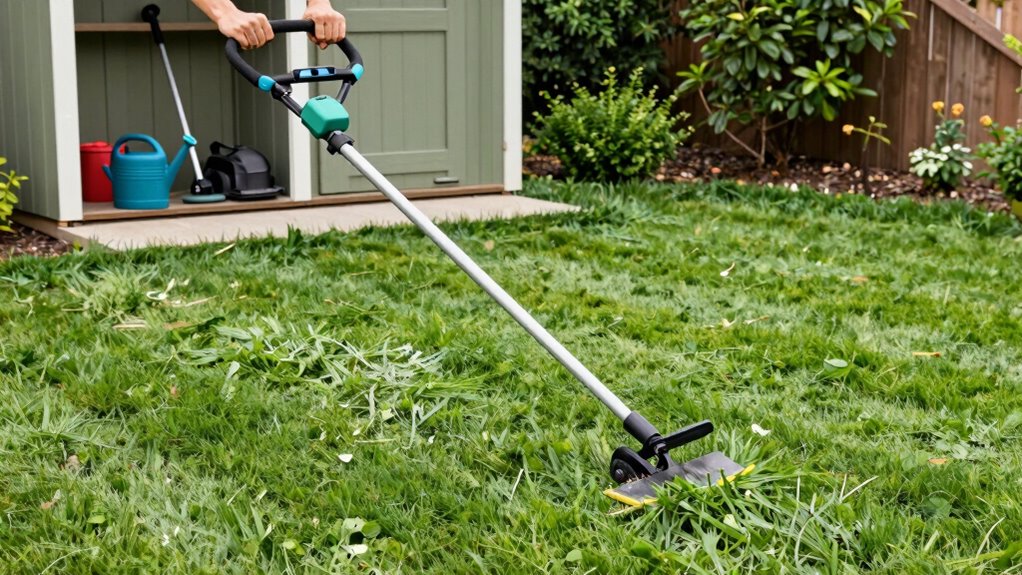
Having the proper equipment makes lawn maintenance considerably more efficient and less time-consuming. You should invest in a sharp mower blade for clean cuts that prevent grass stress.
A handheld trimmer helps you reach tight spaces around fences and obstacles. Choose a leaf blower or rake based on your debris needs. A quality fertilizer spreader guarantees even distribution.
Don’t overlook basic hand tools like a trowel for spot repairs. Select tools that match your lawn’s specific conditions and your physical capabilities.
Quality equipment might cost more initially, but it reduces effort and delivers better results. You’ll find maintenance tasks transform from dreaded chores into manageable activities when you’re properly equipped.
Set Up a Weekly Lawn Care Routine
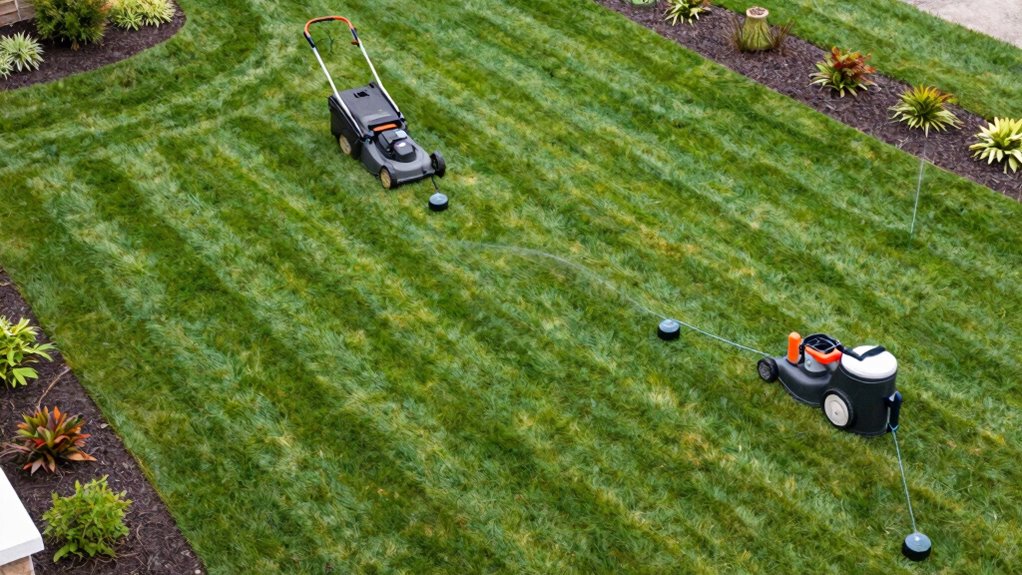
A consistent weekly routine prevents most small lawn problems from becoming major issues.
You’ll develop a sense of pride and connection with your outdoor space when you maintain it regularly. Your neighbors will notice your dedication, and you’ll enjoy the satisfaction of a well-kept lawn.
Create your weekly schedule around these essential tasks:
- Mow grass to the proper height for your grass type
- Water deeply but infrequently early in the morning
- Check for pests, diseases, or nutrient deficiencies
- Remove debris, weeds, and thatch buildup immediately
Stick to this routine every week, regardless of weather conditions.
You’re not just maintaining grass – you’re creating a welcoming outdoor environment that reflects your care and attention. Consistency builds good habits.
Conclusion
Think lawn care is rocket science? Surprise! Your neighbors probably hired a goat. But if you want to impress them with actual grass instead of dirt, stick to this simple formula: water deep, mow smart, feed regularly, and catch problems early. Your lawn doesn’t need a therapist—just consistent love and proper tools. Skip the chemicals, though; your grass is already dramatic enough without a soap opera.
