

You’re trying to hang a shelf on drywall, but your standard bit keeps slipping and damaging the surface. Don’t let the wrong tool ruin your project – choosing the correct drill bit makes all the difference. Each material demands specific bit types and cutting techniques. Let’s explore how matching bits to jobs prevents costly mistakes and guarantees clean, precise holes every time.
What Are Drill Bits and Why Do They Matter?
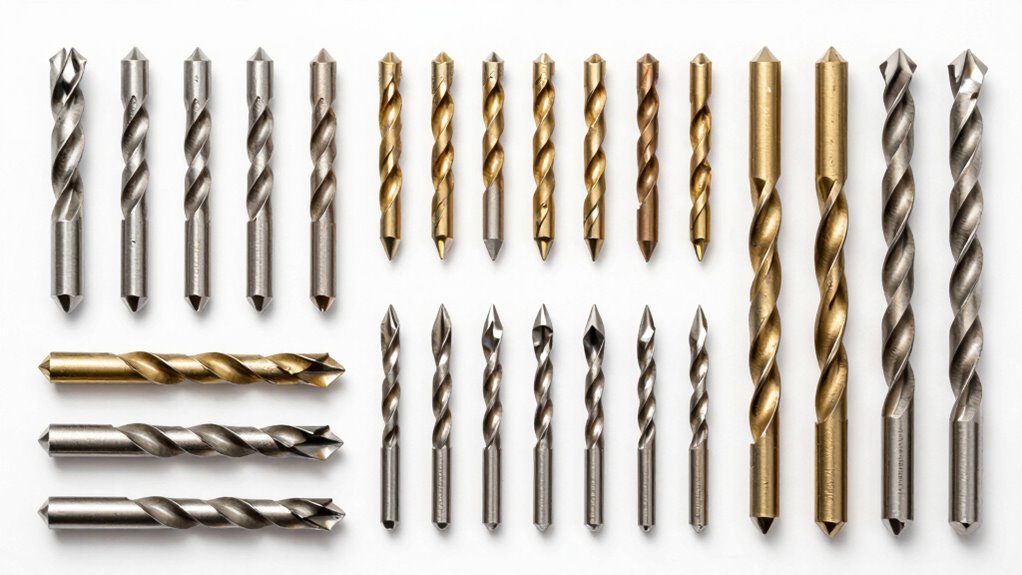
Drill bits are the cutting tools that make holes possible, and they matter because using the wrong type can damage your material or produce poor results.
You need to understand that different bits serve specific purposes – wood bits differ from metal bits, and masonry bits aren’t interchangeable with standard ones.
Each bit’s design affects hole quality, drilling speed, and tool life. You’re not just picking randomly; you’re selecting based on material hardness, hole diameter, and desired finish.
Experienced users know that proper bit selection prevents overheating, reduces wear, and guarantees clean holes.
Don’t let subpar results frustrate you when the right bit makes everything smoother. Your projects deserve precision, and that starts with choosing correctly.
You belong among skilled craftsmen who understand these fundamentals.
Know What You’re Drilling Into
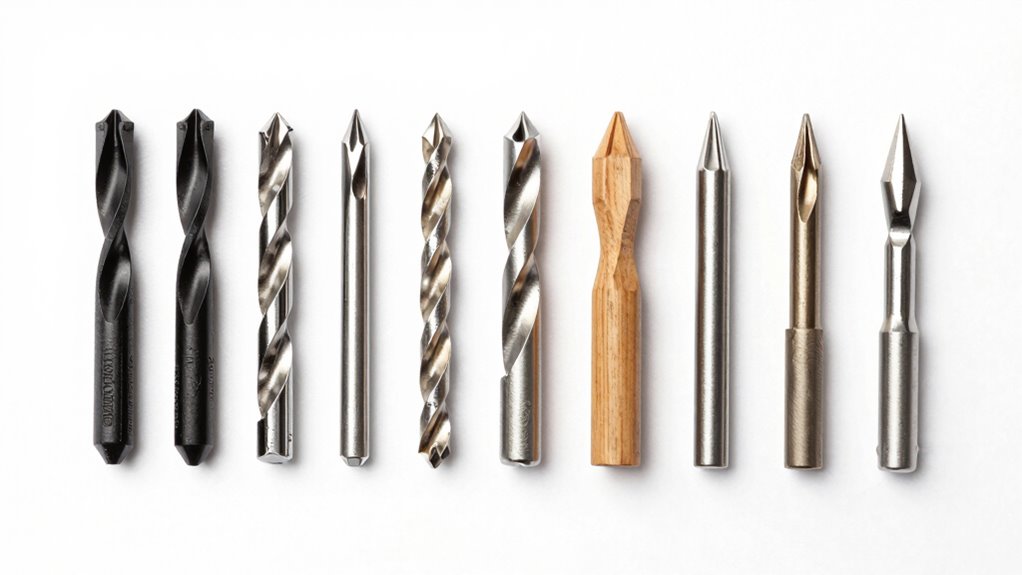
Knowing your material is essential before you start drilling. You need to identify whether you’re working with metal, plastic, concrete, or other materials. Each requires specific drill bits designed for maximum performance.
Check your workpiece composition and hardness level. Soft metals like aluminum need different bits than hardwood or steel. Don’t guess – proper identification prevents bit breakage and guarantees clean holes.
Feeling uncertain about material type creates frustration and wasted effort. You belong in the group that prepares properly, not the ones struggling with wrong tools.
Mark your materials clearly before drilling. This simple step builds your confidence and professional reputation. Understanding material properties makes you part of the knowledgeable crew who gets things right the first time.
Best Bits for Drilling Wood
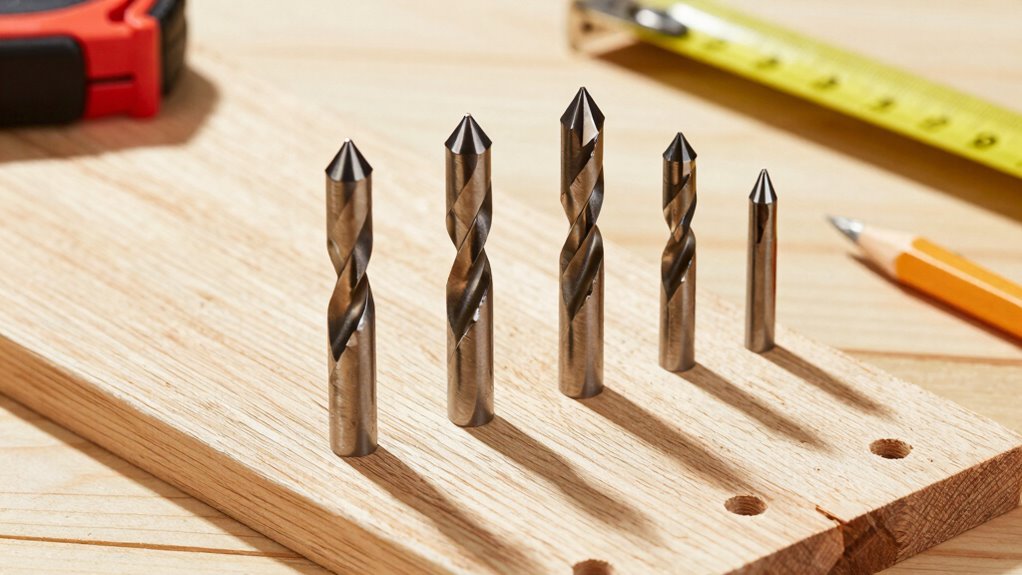
When you’re working with wood, selecting the right drill bits makes all the difference between clean holes and splintered messes.
You’ll want twist bits for general woodworking tasks – they’re versatile and cut cleanly through most wood types. For precise holes, use brad point bits; they prevent wandering and create clean entry holes.
Spade bits handle larger diameters quickly, while Forstner bits create flat-bottomed holes perfect for hinges and hardware.
Always choose bits with sharp cutting edges and appropriate flute designs to efficiently remove wood chips.
Match bit size to your project requirements, and guarantee your bits are properly sharpened.
You’ll achieve professional results when you select the correct bit for each specific wood drilling task.
Choosing the Right Bits for Metal
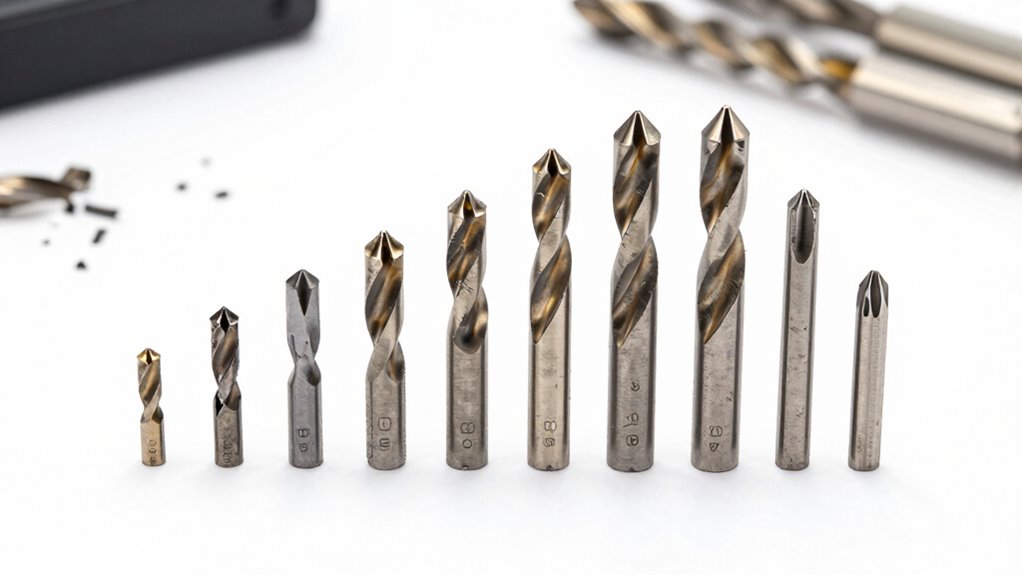
You need different drill bits for various metals, so match your bit type to the specific metal you’re working with.
Control your drilling speed and pressure carefully to prevent overheating and bit breakage.
Always use cutting fluid and follow safety protocols when drilling metal to protect both yourself and your workpiece.
Metal Types And Bit Selection
Different metals require specific drill bits to achieve clean, precise holes without damaging your workpiece.
You’ll want to match your bit material to the metal you’re drilling through for exceptional results.
- Soft metals like aluminum and brass demand bits with sharper cutting edges to prevent melting and maintain clean holes.
- Hardened steel and stainless steel require carbide or cobalt bits that can withstand intense heat and abrasion.
- Cast iron and tough alloys need bits with specialized coatings and geometries to break through effectively.
Your choice directly impacts both bit lifespan and hole quality.
Don’t guess—identify your metal type first.
Soft metals ruin hard bits quickly, while soft bits dull fast on hardened materials.
Matching bit to metal isn’t just about finishing the job; it’s about respecting your craft and achieving professional results every time.
Drilling Speed And Pressure
Proper speed and pressure make or break your metal drilling results, directly affecting both bit performance and hole quality. You need to match your drilling speed to the metal type – softer metals like aluminum require higher RPMs, while hardened steel demands slower speeds.
Apply steady, consistent pressure without forcing the bit. Let the drill do the work. Too much pressure creates heat buildup and dulls bits quickly. Too little pressure causes wandering and poor penetration. Maintain firm, controlled downward force throughout the cut. Feel the resistance and adjust accordingly.
Your drill’s chuck should grip bits securely to prevent slippage. Quality bits perform best at recommended speeds. Don’t rush through metal drilling – patience and proper technique deliver cleaner holes and longer bit life every time.
Coolant Usage And Safety
While selecting the right drill bits for metal projects, consider coolant usage as equally important to bit selection itself. You need coolant to prevent overheating, extend bit life, and achieve clean holes. Without proper cooling, your bits will dull quickly and compromise your work quality.
- Choose the right coolant type – Water-soluble oils work best for most metals, while straight oils handle heavier duty applications.
- Maintain consistent flow – Interrupted coolant delivery creates hot spots that damage both bits and workpieces.
- Protect yourself properly – Wear safety glasses and guarantee adequate ventilation when using coolant sprays.
You belong in this workshop when you master these fundamentals. Proper coolant application separates experienced metalworkers from beginners. Don’t skip this critical step. Your bits, your projects, and your safety depend on getting coolant right every time.
Bits That Work on Masonry and Concrete
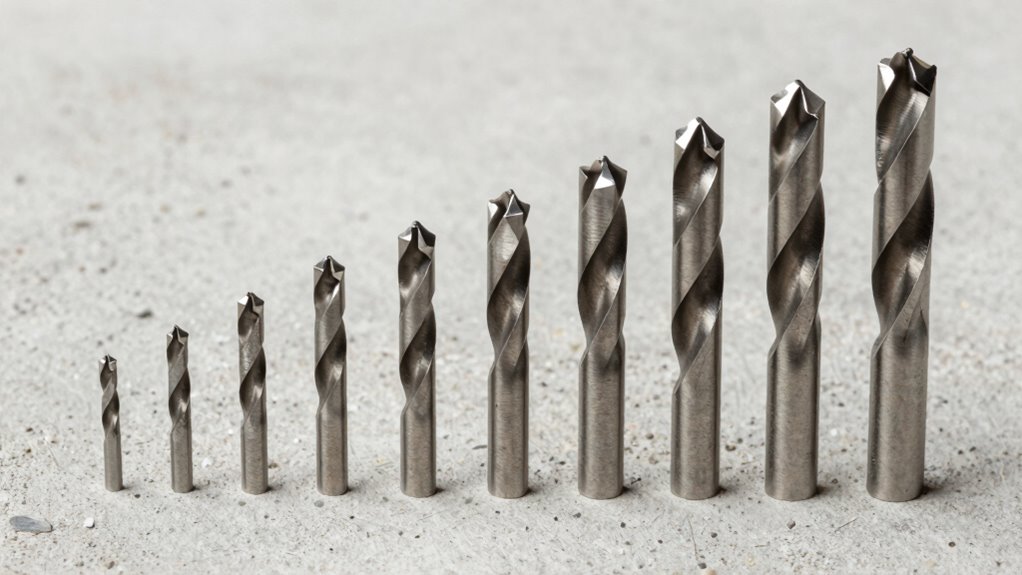
Masonry and concrete demand specialized drill bits that can handle their tough, abrasive surfaces.
You’ll need carbide-tipped bits or diamond-coated options for effective drilling. Carbide bits excel at cutting through brick, block, and stone, while diamond bits work best on concrete and reinforced materials.
Don’t use standard twist bits—they’ll overheat and wear quickly.
Select hammer drill bits when working with solid concrete. These bits combine rotational cutting with percussive impact, making hole creation faster and easier.
Match bit diameter to your anchor size requirements. Check bit shank compatibility with your drill type before purchasing.
Quality masonry bits last longer and deliver cleaner holes.
You’ll recognize proper technique when holes appear crisp rather than ragged. Keep bits sharp and replace worn ones promptly for peak performance.
Bits for Plastic and Soft Materials
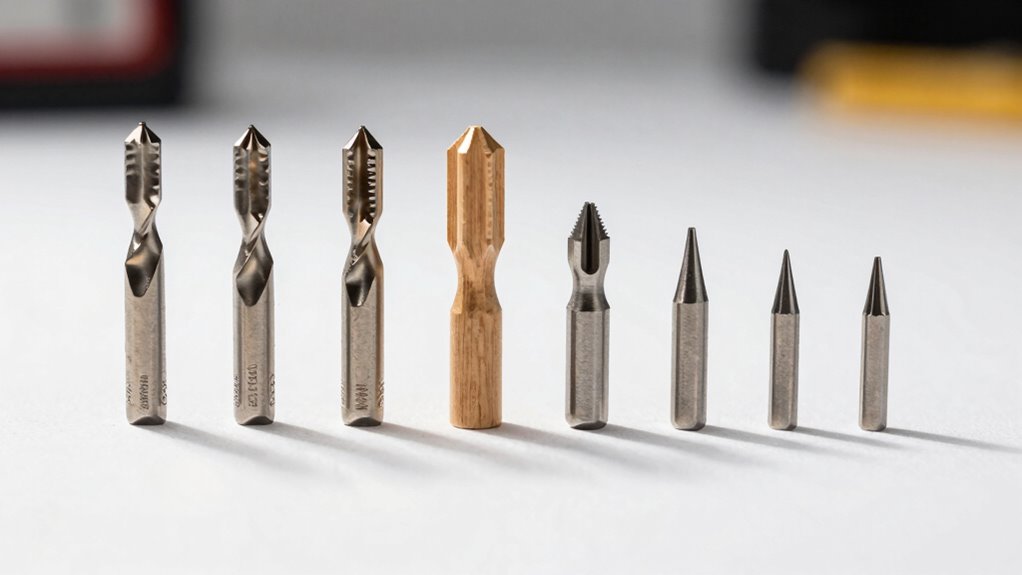
When you’re working with plastic and soft materials, you’ll need drill bits designed to prevent cracking and melting. These materials require special consideration because they’re prone to damage from excessive heat and pressure. You should choose bits with sharp flutes and adequate clearance to avoid material buildup.
- Specialized flute design prevents heat buildup that causes melting and warping
- Sharp cutting edges reduce pressure needed, preventing cracks and material deformation
- Proper speed settings maintain control while avoiding excessive heat generation
Your drill bits should match the specific plastic type you’re working with. Soft woods demand bits with wider flute spacing to clear debris efficiently.
Remember that excessive drilling speed generates heat that ruins plastic workpieces. You belong in this craft when you understand material behavior and tool selection work together.
Why Bit Size Matters
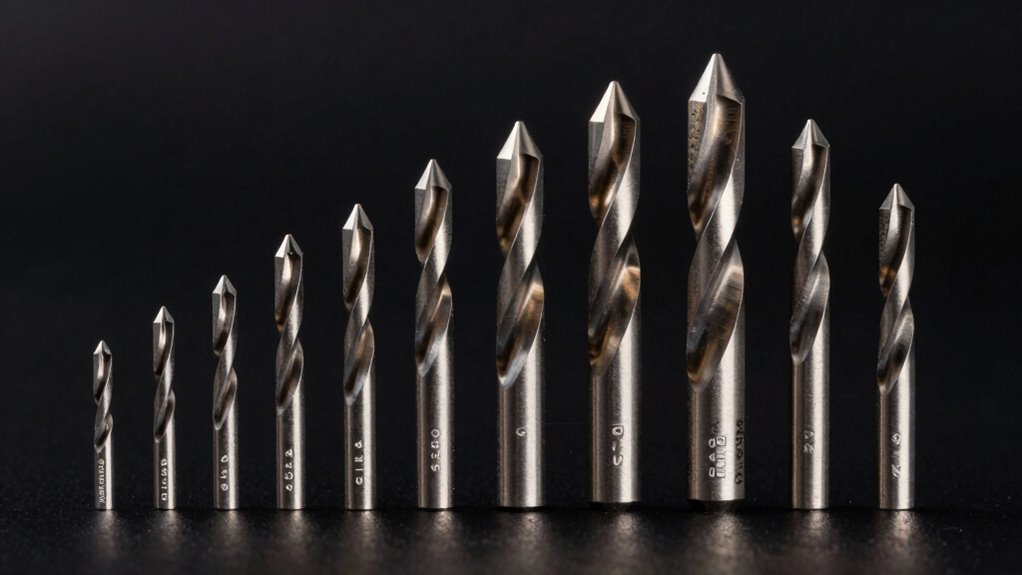
You need to match bit size to your material’s thickness and desired hole diameter for clean, accurate results.
Selecting the wrong size creates problems like tear-out, binding, or holes that are too small or oversized.
Use a drill bit selection guide to quickly find the right size for your specific material and application.
Proper Hole Diameter
Selecting the correct drill bit diameter directly affects your project’s success. You need to match the bit size to your specific requirements for clean, accurate holes every time.
Wrong bit sizes cause problems you can easily avoid. Too small bits create holes that won’t accommodate fasteners or wiring. Too large bits weaken structural integrity and create gaps that compromise your work’s strength.
- Precision matters – Measure twice, drill once to verify proper fitment
- Material compatibility – Different materials require specific diameters for ideal results
- Project longevity – Correct sizing prevents future repairs and callbacks
You belong among skilled craftsmen who understand that proper hole diameter isn’t optional—it’s essential for professional-quality results.
Material Thickness Considerations
While matching drill bit diameter to your material thickness might seem straightforward, incorrect sizing creates complications that skilled craftsmen avoid through proper planning.
You should always consider how thick your material actually is before selecting a bit. Thin materials require smaller diameters to prevent tear-out and backing damage. Thicker stock allows for larger bits, but you still need clearance for fasteners.
Don’t forget pilot holes reduce splitting in wood and prevent material wandering.
Metal thickness demands different approaches entirely. Sheet metal needs smaller bits with proper backing support. Thick plates require stepped drilling or specialized bits.
Your material’s thickness dictates not just bit size, but also drilling speed and feed pressure.
Measure twice, select once. Proper bit-to-material thickness matching separates amateurs from professionals who consistently deliver clean, precise holes every time.
Drill Bit Selection Guide
Every drilling project demands careful consideration of bit size, and three critical factors determine your success: material type, hole depth, and final application.
You need the right diameter to avoid splitting wood or stripping threads in metal. Match your bit size to the job requirements exactly.
- Material hardness dictates speed and pressure needed – harder materials require slower, steady drilling
- Hole depth affects bit length selection – shallow holes need shorter bits, deep holes require longer shafts
- Final application determines precision requirements – clearance holes need exact sizing, pilot holes allow tolerance
Choose bits that fit your specific project needs.
Don’t guess – measure twice, drill once.
Your results depend on proper bit selection every time.
Match Shank Types to Your Drill
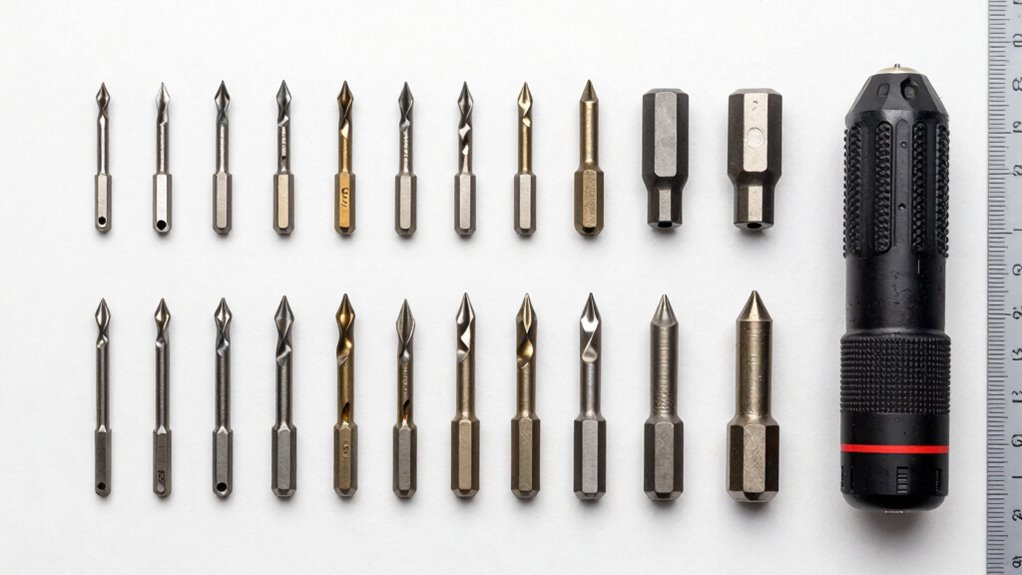
Understanding shank types prevents mismatched bits that won’t fit your drill properly.
You’ll encounter three main shank varieties: straight, hex, and SDS. Straight shanks work with standard chuck drills and magnetic bases. Hex shanks fit directly into impact drivers and some cordless drills. SDS shanks click into hammer drill chucks specifically designed for masonry work.
Check your drill’s specifications before buying bits. Measure existing shank diameters if you’re unsure. Common sizes include 1/4-inch hex, 3/8-inch straight, and various SDS configurations.
Don’t force incompatible bits – you’ll damage both components. Match the bit shank exactly to your drill’s requirements for ideal performance and safety. When in doubt, consult your drill’s manual or take a photo to your local hardware store for proper matching.
How Coated Bits Drill Better and Last Longer
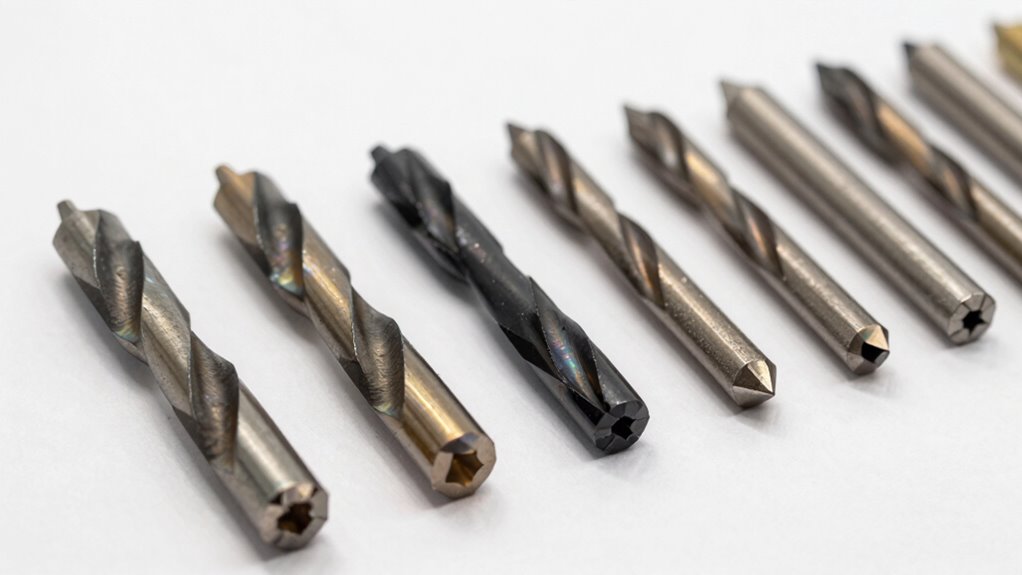
Coated drill bits deliver superior performance because the protective layers reduce friction and heat buildup during operation.
You’ll notice smoother cutting action and less bit wear when tackling demanding materials. These coatings aren’t just marketing gimmicks – they’re essential for serious drilling tasks.
- Titanium coating prevents corrosion while maintaining sharpness longer than uncoated bits
- Black oxide coating dissipates heat effectively, preventing premature dulling during extended use
- Cobalt coating withstands high temperatures, making it ideal for drilling through tough metals
You belong in the group of craftsmen who understand that quality tools make the difference between frustration and success.
Don’t settle for bits that quit halfway through your project. Invest in coated options that’ll push through materials cleanly while staying sharp job after job.
Specialty Bits for Tough or Delicate Jobs
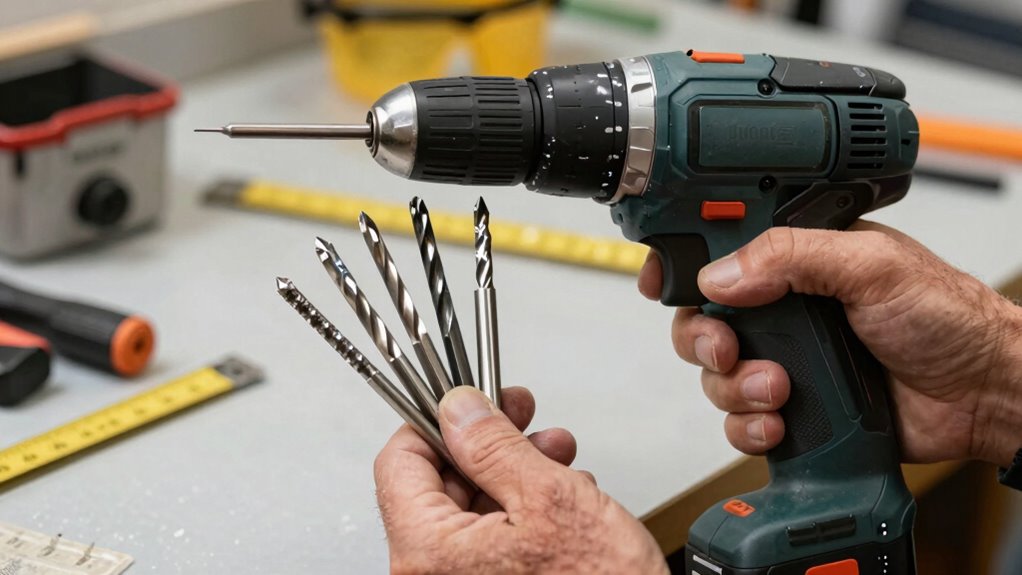
You’ll need masonry bits with tungsten carbide tips when drilling through concrete and stone.
Carbide bits cut cleanly through metal without overheating or dulling quickly.
Diamond-coated bits let you drill precise holes in glass and ceramic without cracking the surface.
Masonry Bits For Concrete Drilling
Masonry bits are essential for concrete drilling because they’re specifically designed to handle the abrasive nature of concrete, brick, and stone.
You’ll need these specialized bits when tackling foundation work, installing anchors, or creating openings in masonry surfaces.
These bits feature tungsten carbide tips that can withstand intense heat and friction.
Without proper masonry bits, you’ll struggle with dulling standard bits and poor penetration.
- Tip diameter matters – Larger tips handle coarse aggregate while smaller ones work better for precise holes
- Spline shanks prevent slipping – They’re designed to grip drill chucks securely during high-torque applications
- Cooling requirements vary – Some bits need periodic water cooling to prevent overheating and extend bit life
Choose masonry bits that match your specific concrete density and hole requirements.
Carbide Bits For Metal Cutting
Carbide bits handle the toughest metal cutting jobs with precision and durability that standard bits can’t match.
You’ll rely on these specialty tools when working with hardened steel, stainless steel, or other demanding metals. Carbide’s exceptional hardness lets you maintain sharp cutting edges longer, reducing bit changes and increasing productivity.
Look for bits with tungsten carbide tips brazed onto steel bodies.
You’ll find these in job shops, automotive repair, and construction sites where metal work demands precision. Choose cobalt or titanium-coated carbide bits for added heat resistance during extended cutting sessions.
Match bit diameter and flute design to your specific metal thickness and hole requirements.
You’ll appreciate how carbide bits deliver clean, accurate holes while resisting wear that destroys lesser bits. Keep them sharp with proper storage and cleaning after each use.
Diamond Bits For Glass Work
When cutting glass, diamond bits provide the precision and control needed for both delicate scoring and aggressive material removal.
You’ll achieve clean edges and accurate holes without chipping or cracking fragile surfaces. These specialized bits excel in glasswork because diamond’s hardness surpasses glass, ensuring smooth penetration.
Selecting the right diamond bit depends on your specific glassworking needs:
- Hollow core bits create large diameter holes efficiently while minimizing stress fractures in tempered glass applications.
- Solid diamond bits deliver precise control for intricate decorative work and detailed glass etching projects.
- Diamond-coated bits offer cost-effective solutions for occasional glass cutting without sacrificing accuracy.
Match your bit choice to project requirements.
You belong in the category of craftspeople who demand reliable results from their tools.
Signs You’re Using the Wrong Drill Bit
If you’re struggling to drill clean holes or finding that your bits dull quickly, you’re likely using the wrong type of drill bit for your material.
You’ll notice excessive heat buildup, burning smells, or chipped edges when your bit doesn’t match your workpiece. Wood bits in metal create jagged holes and rapid wear.
Masonry bits in steel cause overheating and breakage. Plastic requires specialized bits to prevent melting or cracking.
Your drill bit should feel smooth and controlled, not jarring or sluggish.
Pay attention when your bit walks across surfaces or requires excessive pressure. These signs indicate mismatched materials.
Check your bit’s coating and geometry against your material type.
Carbide tips work for masonry, while cobalt bits handle steel effectively.
Choose Bits Based on Your Drill’s Power Level
How do you guarantee your drill bit won’t overwork your drill motor? Match your bit size and material to your drill’s power capacity. Don’t force a heavy-duty bit through a lightweight drill – you’ll burn out the motor quickly.
Choose bits that align with your drill’s voltage rating and torque capabilities. Lower-powered drills need smaller, sharper bits while high-powered models can handle larger, more aggressive cutting tools.
- Check your drill’s specifications – Know your model’s power limits before selecting bits
- Match materials appropriately – Soft metals need different bits than hardwood or masonry
- Start conservative – Begin with smaller bits and work up to avoid motor strain
Your drill deserves bits that complement its strength, not challenge it. Work smart, not hard.
Prevent Bit Breakage and Extend Life
Proper bit selection protects your drill motor and keeps your bits sharp longer. You prevent breakage by matching bit size to your material’s density and your drill’s capacity.
Don’t force oversized bits through hardwoods or metals. Instead, start with pilot holes and gradually increase diameter. Maintain consistent pressure while drilling, letting the bit do the work. Excessive force causes overheating and fractures.
Choose bits with appropriate shank types for your chuck system. Tighten chucks properly but avoid over-tightening, which damages both bits and motors.
Store bits organized and protected from impact damage. Clean debris from flutes regularly.
You’ll extend bit life considerably when you treat them as precision tools rather than disposable items. Quality bits deserve proper handling techniques that maximize their cutting potential.
Keep Your Bits Sharp and Ready
You need to maintain your drill bits properly to avoid costly replacements and guarantee consistent performance.
Sharpen them regularly using appropriate techniques, store them in protective cases to prevent damage, and inspect them frequently for signs of wear.
These simple habits will keep your bits ready for any drilling task.
Sharpening Techniques for Longevity
While drill bits can handle extensive use, they won’t maintain peak performance without regular sharpening. You need to keep those cutting edges precise to avoid wandering bits and damaged workpieces.
Keep your bits performing like new by mastering these essential sharpening techniques:
- Maintain original angles – Match the bit’s original cutting geometry using proper sharpening tools to preserve performance characteristics.
- Use appropriate stones – Select diamond stones or bench grinders with correct grit for your bit material, avoiding overheating that ruins temper.
- Sharpen consistently – Develop a routine before bits become severely dulled, preventing the need for aggressive metal removal that shortens lifespan.
Regular maintenance keeps your drill bits cutting cleanly through every material while extending their working life considerably.
Proper Storage to Prevent Damage
One essential habit separates experienced drillers from novices: storing bits correctly prevents damage that dulls edges and ruins performance.
You should always keep bits in protective cases or foam-lined containers. Never toss them loosely in toolboxes where they bang against other metal objects. Store each bit individually to prevent contact that causes nicks and scratches.
Hang bits vertically when possible, or lay them flat in designated slots. Keep storage areas dry to prevent rust formation. Label your containers clearly so you can quickly identify sizes without rummaging.
Clean bits thoroughly before storage removes metal shavings that accelerate wear. Invest in quality bit holders designed for your specific types. Proper storage maintains sharpness between uses and extends bit lifespan considerably.
Your drill bits are tools that deserve respect. Treat them well, and they’ll perform reliably when you need them most.
Regular Inspection for Wear Signs
Regular inspection of your drill bits prevents costly mistakes and maintains peak performance. You should examine each bit before use, looking for visible signs of wear that compromise effectiveness.
Keep your bits sharp and ready by checking these critical areas:
- Cutting edges – Look for dullness, chipping, or missing segments that reduce drilling efficiency.
- Shaft condition – Check for bends, cracks, or excessive wear that affects chuck grip and alignment.
- Tip geometry – Verify proper angle and shape maintenance for maximum material penetration.
Developing this inspection habit guarantees you’re always prepared for any drilling task.
Your tools become extensions of your expertise when you maintain them properly.
Don’t wait until failure strikes – make checking wear signs part of your routine preparation process.
Where to Buy Long-Lasting Bits
You’ll find long-lasting drill bits at specialty tool suppliers, home improvement stores, and online retailers that cater to professional contractors and serious DIY enthusiasts.
Don’t settle for cheap options that wear out quickly. Visit local hardware stores like Home Depot or Lowe’s, but focus on their professional-grade sections.
Specialty suppliers such as Ace Hardware often carry higher-quality bits from reputable brands like DeWalt, Bosch, and Makita.
Online platforms like Amazon and Toolbarn offer extensive selections with customer reviews to guide your choices.
Professional supply houses provide access to premium cobalt and carbide bits that outperform standard options.
Check manufacturer websites directly for authentic products and warranty information.
Remember that investing in quality bits saves money over time through reduced replacement costs and improved drilling performance.
Conclusion
You’ve got the knowledge to choose drill bits like a pro now. Match your bit to the material – wood, metal, or masonry – and your drill’s power. Keep bits sharp, prevent breakage, and buy quality replacements when needed. Don’t be that person who uses a screwdriver as a chisel; pick the right tool for the job. Your projects will thank you for it.
