

You’re standing in the garage, staring at three different wood glue bottles while your project sits unassembled. Each type promises strong bonds, but which one actually works best for your specific needs? Don’t let the wrong adhesive choice ruin hours of careful craftsmanship. Understanding glue selection comes down to matching the product with your project’s unique requirements.
What Type of Wood Glue Should You Use?
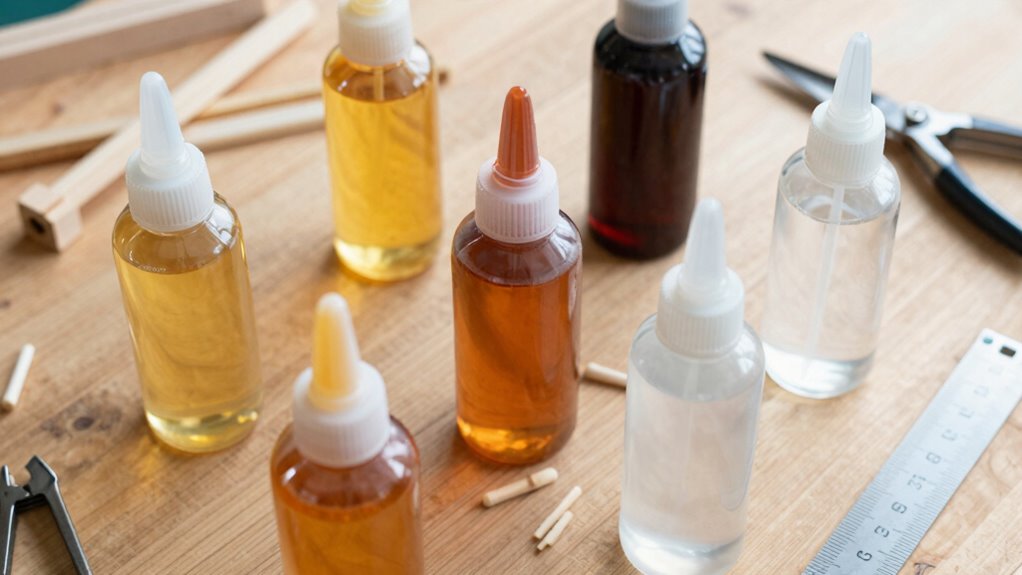
How do you know which wood glue will work best for your project?
You need to understand the different types available. PVA glue works great for most indoor projects and dries clear. Hide glue offers traditional joinery strength but requires more skill. Epoxy handles gaps well and creates incredibly strong bonds.
Polyurethane glue expands slightly, filling voids while creating waterproof joints. Yellow carpenter’s glue provides excellent everyday bonding power.
Consider your wood type too. Hardwoods often need stronger adhesion than softwoods. You want reliability, so choose proven formulas.
Read labels carefully. Check drying times match your working pace. Quality matters more than price when your project’s integrity depends on it.
Make informed choices rather than guessing.
How Does Project Size Change Your Glue Choice?
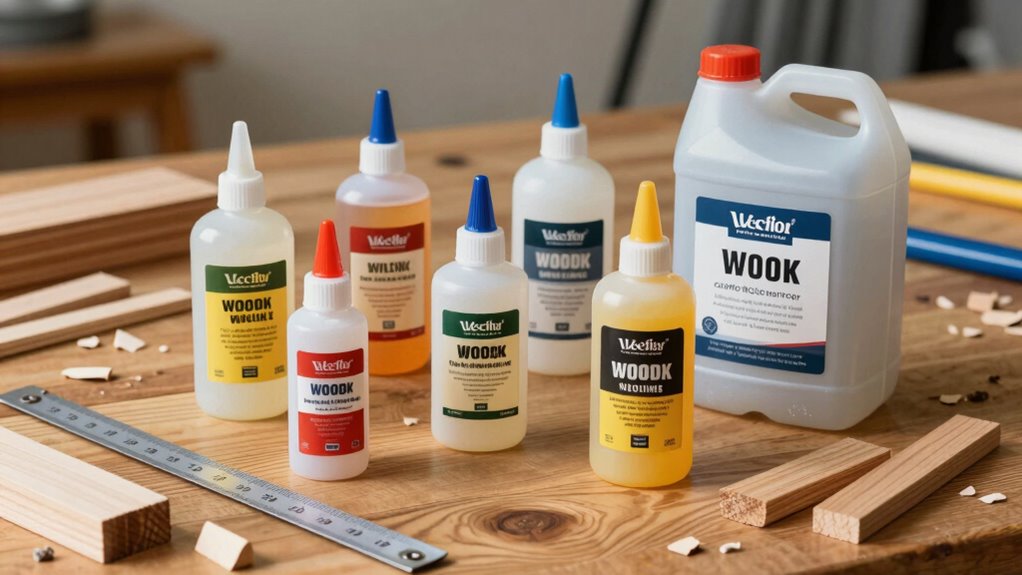
Project size directly impacts which wood glue performs best for your needs. Small projects like jewelry boxes or picture frames require less working time, so you can use fast-setting glues like hide glue or cyanoacrylate. These cure quickly and provide immediate handling strength.
Larger projects such as tables or cabinets demand different considerations. You need extended working time to assemble multiple joints properly. PVA glues offer ideal open time for complex assemblies. Their longer cure time lets you adjust pieces before final bonding occurs.
Don’t overlook glue volume either. Small bottles work fine for occasional repairs, but regular woodworking requires bulk purchasing. Consider your project frequency and size together.
Big projects often justify investing in larger glue containers that won’t run out mid-assembly. Match your glue’s working characteristics to your project’s scale requirements.
Which Glue Holds Up Indoors vs Outdoors?
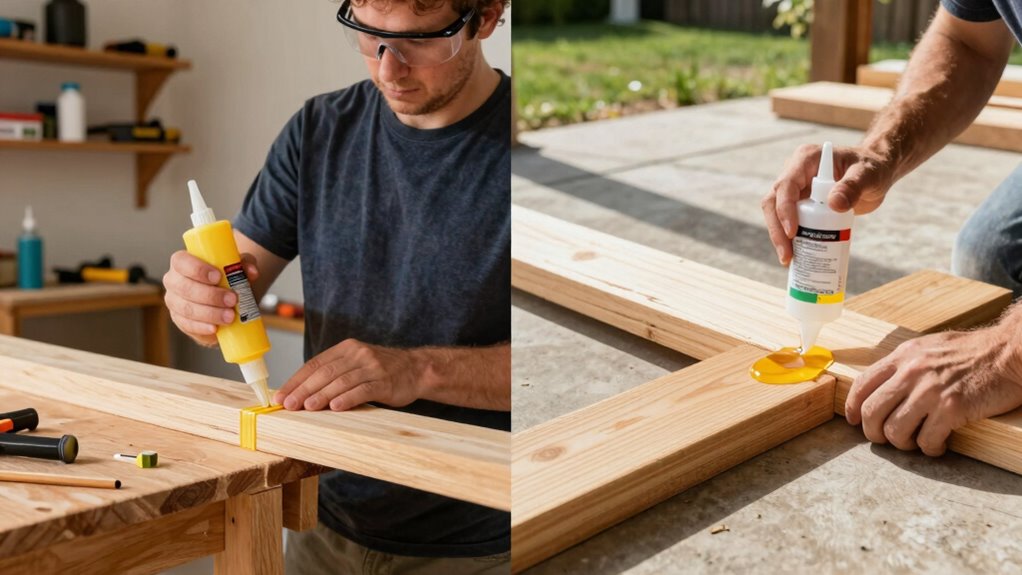
While you might assume any wood glue works equally well whether your project stays inside or braves the elements, the reality is that environmental exposure dramatically affects adhesive performance.
Interior projects demand different characteristics than outdoor applications. For indoor use, PVA glues like Titebond Original work perfectly since they resist normal household humidity and temperature fluctuations.
However, exterior projects require waterproof adhesives rated for outdoor exposure. Look for glues specifically labeled “waterproof” or “exterior grade.”
Polyurethane glues excel outdoors because they expand slightly while curing, creating watertight seals that withstand rain and temperature changes.
Epoxy adhesives also perform well externally, resisting UV damage and moisture penetration that would compromise interior-only glues.
Always check manufacturer specifications before choosing your adhesive.
Understand Drying Time and Clamping Needs
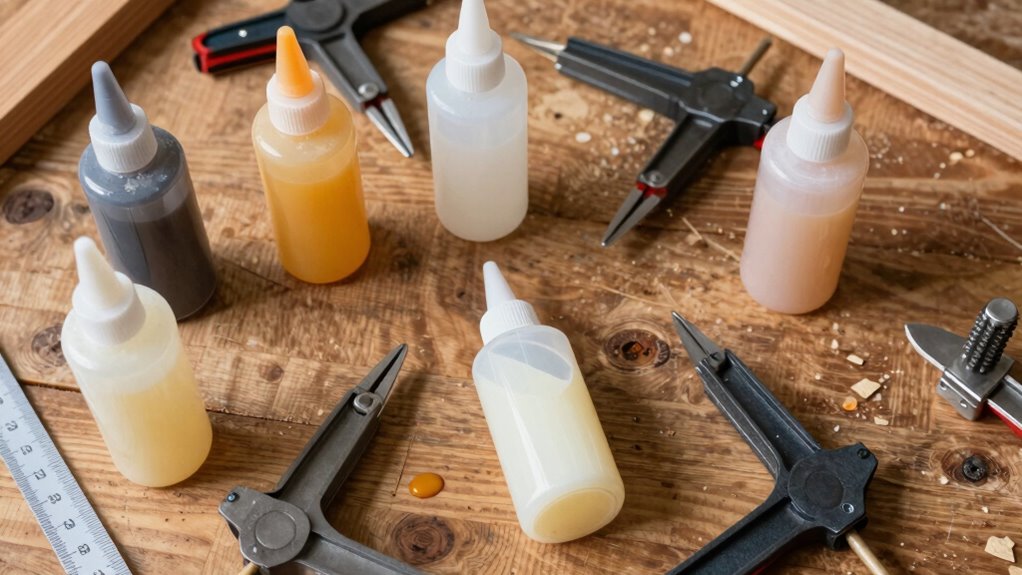
Because different wood glues require varying amounts of time to set properly, you need to understand drying times and clamping requirements before starting your project.
PVA glues typically need 20-30 minutes for initial set and 24 hours for full cure. Hide glue sets faster, usually within 10-15 minutes. Polyurethane glues expand slightly and require 4-6 hours before handling. Yellow glues need 30-60 minutes for initial tackiness.
Clamp pressure varies too – PVA needs firm pressure for 30-45 minutes. Hide glue requires less clamping time due to quicker setting.
Always check manufacturer specifications for your specific glue type. Don’t rush the process or your joints might fail. Plan your work schedule around these timeframes so you’re not waiting unnecessarily or rushing the cure.
Avoid These Common Wood Gluing Mistakes
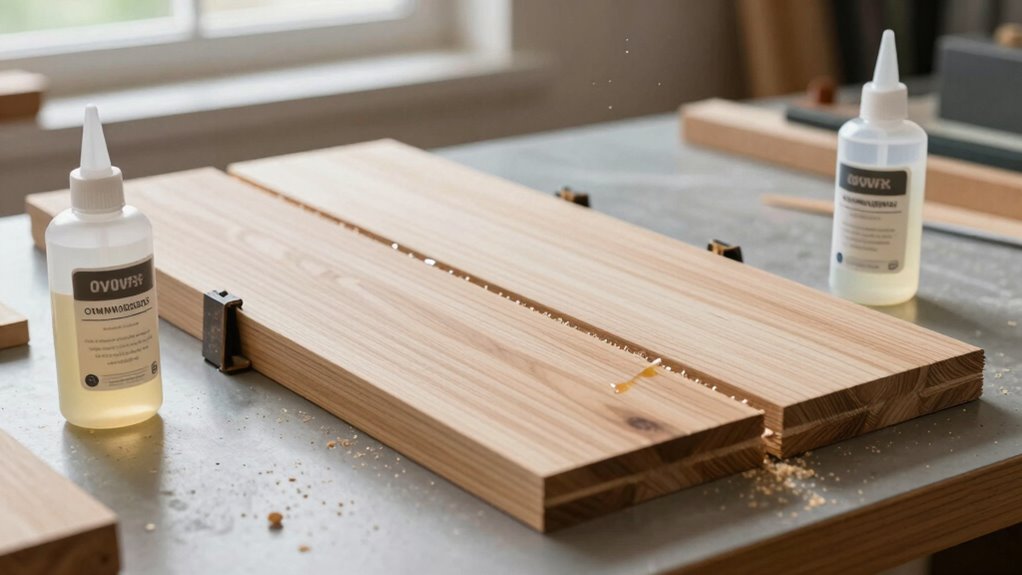
Many woodworkers accidentally sabotage their joints by making simple gluing errors that could easily be avoided.
You shouldn’t apply excessive glue expecting stronger bonds; thin, even layers work better. Don’t rush the clamping process or use insufficient pressure. Your joints need proper alignment before the glue sets. Avoid gluing dirty or oily wood surfaces; clean them thoroughly first.
You shouldn’t ignore grain direction when applying pressure. Don’t skip test-fitting joints dry before gluing. Temperature matters too; cold glue doesn’t flow properly. Don’t forget to remove excess glue immediately while it’s still wet.
Finally, never move or stress joints before full cure time. These mistakes create weak points that fail under pressure, ruining hours of careful work.
Conclusion
You’ve learned the key factors, but here’s a game-changer: 90% of woodworkers choose the wrong glue for their project’s environment. Don’t be part of that majority. Match your glue to your project’s specific needs—indoor PVA for clear finishes, outdoor polyurethane for weather resistance. Consider project size and complexity when selecting drying times. Your project’s success depends on this critical choice, so choose wisely.
