

You might think harvesting vegetables is as simple as grabbing whatever looks ready, but timing can make or break your entire garden’s productivity. Each crop has its own subtle signals that tell you exactly when it’s at peak perfection. Don’t risk overripe tomatoes or bitter lettuce – there’s a precise moment when flavor, texture, and nutrition align perfectly. Mastering these signs will transform your harvest from disappointing to extraordinary.
Recognizing Ripeness Signs in Common Crops
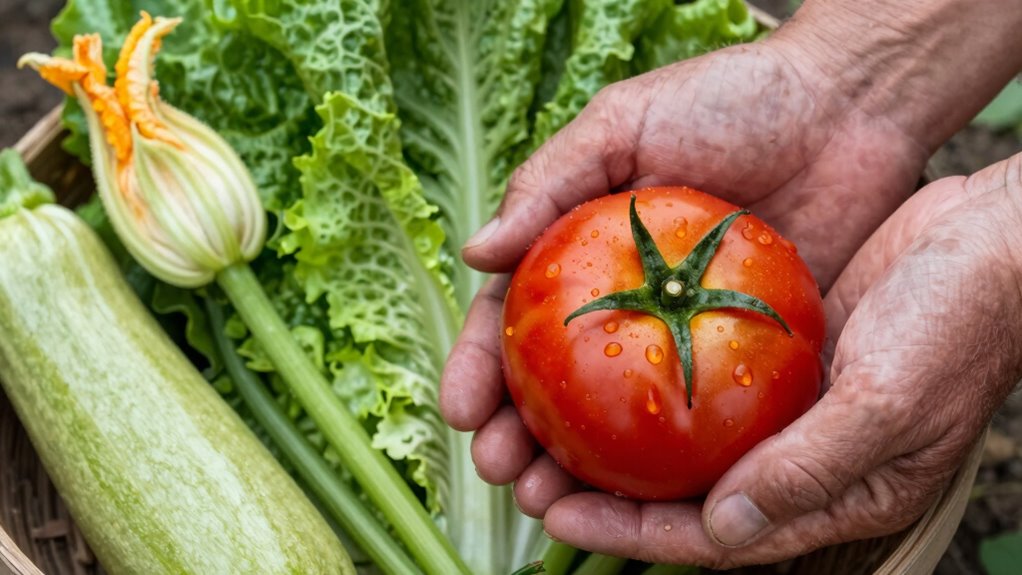
How do you know when your vegetables are ready to harvest? You watch for specific signs that tell you they’ve reached peak ripeness.
Tomatoes should feel firm but give slightly when pressed, with vibrant color. Cucumbers need harvesting when they’re dark green and still firm – don’t let them turn yellow. Leafy greens like lettuce and spinach are ready when leaves are full-sized but still tender.
Root vegetables push upward from the soil when mature. Beans snap easily and feel plump inside their pods. Corn kernels should be plump and release milky liquid when punctured. Peppers change color and feel firm. Squash and zucchini taste best when small to medium-sized.
Trust your instincts – you’re learning to read your garden’s signals. Regular checking prevents overripeness.
Best Time of Day to Harvest for Flavor & Growth
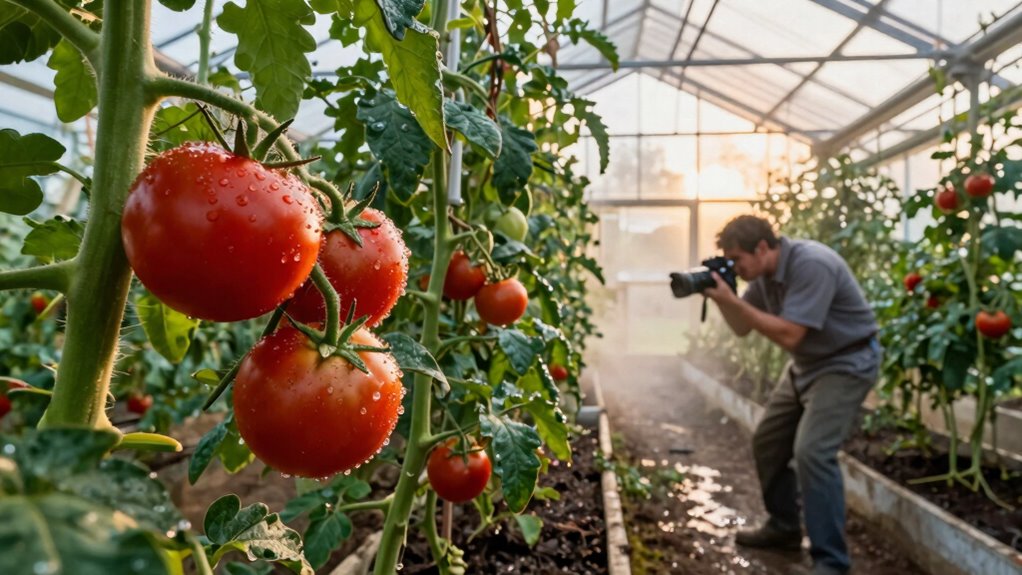
Morning harvests yield the best results for most vegetables because plants are well-hydrated and temperatures are cooler.
You’ll preserve crispness and sweetness that develops overnight. Avoid afternoon picking when heat stresses plants and reduces flavor compounds. Evening harvests work for some crops, but morning’s your safest bet.
Harvest leafy greens before sun hits them hard.
Pick tomatoes when dew evaporates but before midday warmth softens them. Root vegetables maintain crisp texture when pulled early.
Morning harvesting preserves vitamin content and prevents wilting.
You’ll notice better taste and longer storage life compared to afternoon harvests.
Plants recover faster when you harvest during their natural rest period. Early risers reap rewards of superior flavor and texture.
Your vegetables will thank you for timing harvests correctly.
Continuously Harvest Leafy Greens All Season
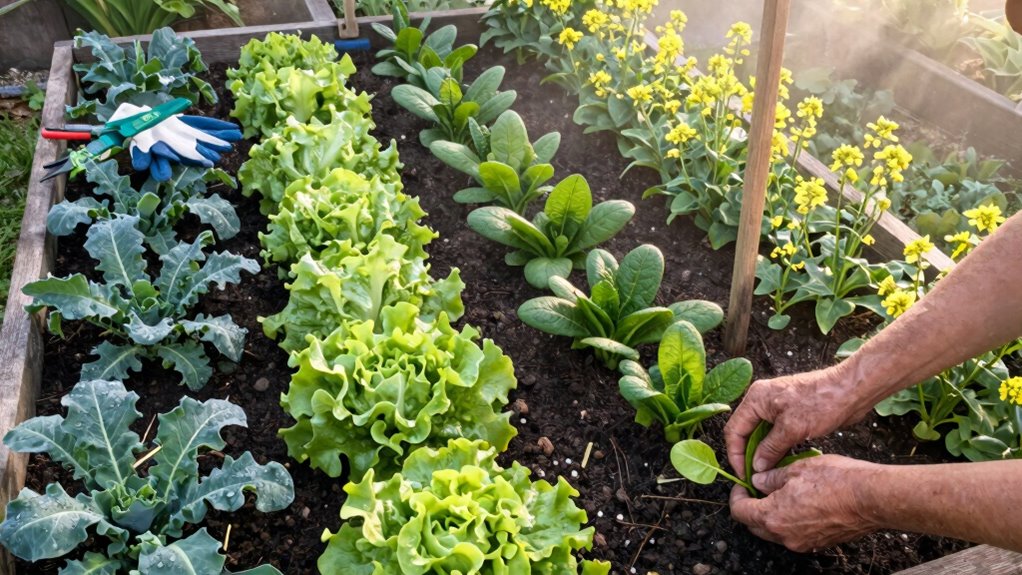
You should pick outer leaves first to keep your leafy greens producing new growth throughout the season.
Stagger your planting times every two weeks to guarantee a continuous harvest from spring through fall. This approach maximizes your yield while maintaining plant health and flavor.
Pick Outer Leaves First
When harvesting leafy greens like lettuce, spinach, and kale, start by picking the outer leaves first while leaving the inner leaves to continue growing. You’ll maximize your harvest by removing mature leaves that are ready while preserving younger ones.
Cut leaves at the base where they meet the stem, using clean scissors or your fingers. Don’t pull entire plants unless you’re doing final harvests. Outer leaves are typically larger and more developed, giving you the best flavor and texture.
By harvesting selectively, you encourage continued production throughout the growing season. Your plants will keep producing new leaves from the center, ensuring fresh greens for weeks.
Regular picking prevents bolting and keeps plants productive longer.
Stagger Planting Times
While succession planting leafy greens every two to three weeks, you’ll maintain a continuous supply of fresh vegetables throughout the growing season.
Start your first planting early, then schedule subsequent sowings consistently. Don’t wait until your current crop is exhausted before planting more seeds.
Plan overlapping harvests so you’re always gathering something fresh. Mix varieties with different maturity dates for extended harvest windows.
Plant quick-growing crops like arugula and lettuce alongside slower ones like kale and collards. This approach keeps your table stocked while preventing gluts that lead to waste.
You’ll never face empty garden beds or overwhelming harvests when you stagger properly. Timing creates abundance without stress.
Harvest Tomatoes and Peppers Perfectly Every Time
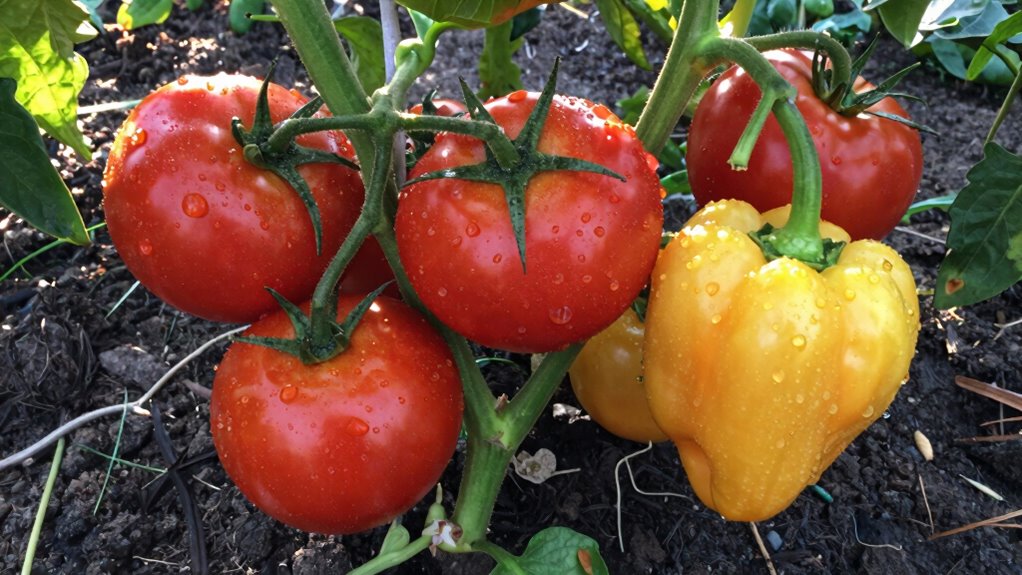
One key difference between harvesting tomatoes and peppers lies in their ripening patterns. You should pick tomatoes when they’re fully colored and slightly soft to the touch. Test them by gently squeezing; ripe ones yield just enough. Don’t wait for them to fall off the vine naturally.
Peppers tell you they’re ready differently. Look for firm, glossy skin that’s reached its mature color. Green peppers can be harvested earlier, but sweeter flavors develop as they change color. Cut peppers cleanly from the plant using sharp shears rather than pulling.
Both vegetables continue ripening after picking, so don’t worry if you harvest them slightly early.
Store tomatoes stem-side down at room temperature. Keep peppers in cool, humid conditions.
Check plants daily during peak season – you’ll soon develop an eye for perfect timing.
Dig Up Roots Without Breaking Them
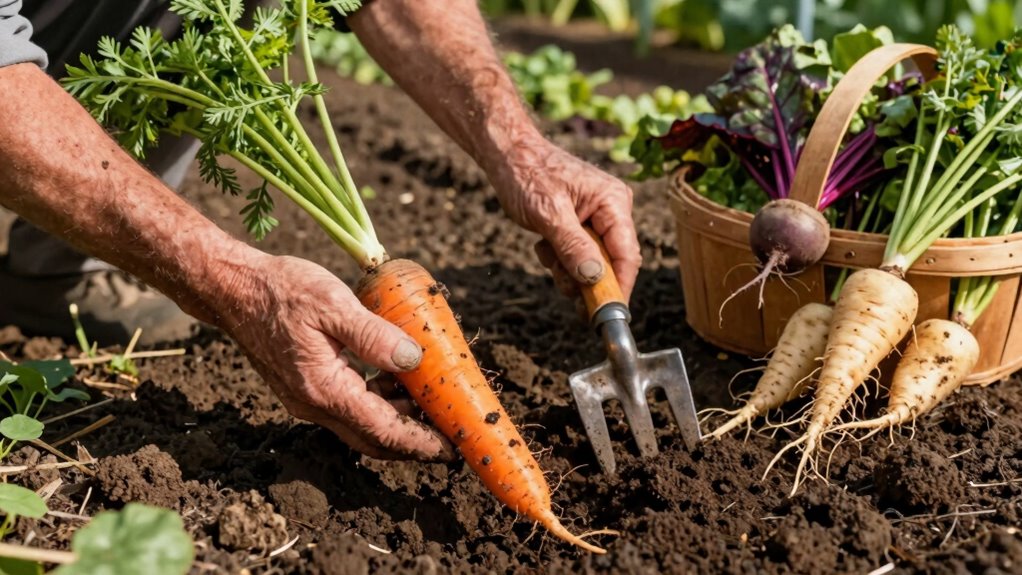
You’ll want to harvest root crops like carrots and beets when they’ve reached ideal size but before they become woody or split.
Use a garden fork to loosen soil around the roots, working from the outside toward the center to avoid stabbing the vegetables.
Gently lift the roots straight up, supporting the greens with your other hand to prevent breakage.
Proper Timing For Root Crops
When should you dig up your root crops for the best results? Timing matters more than you think for perfect harvests.
Don’t rely solely on calendar dates. Your root vegetables tell you when they’re ready through subtle signs you shouldn’t ignore.
- Check sizing guidelines – Most roots reach ideal diameter before full maturity
- Feel the soil surface – Gently brush away dirt to assess sizing without full excavation
- Watch foliage changes – Yellowing or wilting often signals readiness, not distress
- Consider weather patterns – Cool temperatures enhance flavor development greatly
- Test harvest early – Pull one sample to evaluate texture and taste before committing
You’re not just harvesting vegetables; you’re capturing peak flavor and nutritional value.
Each variety has its own timeline, but these indicators work universally. Trust your observations over generic planting schedules. Your garden rewards careful attention with superior results every time.
Gentle Extraction Techniques
Now that you know when your root crops are ready, it’s time to get them out of the ground without damaging what you’ve grown. Start by loosening soil around the plant with a garden fork, working from the outside inward.
Don’t pull directly upward – this breaks roots. Instead, gently wiggle the crop while applying steady, upward pressure. For stubborn vegetables, use a trowel to undercut them carefully.
Carrots and parsnips need extra patience; work the soil loose all around before attempting removal. Always harvest during cool morning hours when plants are hydrated. Support your harvest efforts by watering the area lightly beforehand, making extraction easier.
Clean your tools between uses to prevent disease spread. Handle each vegetable gently – you’ve worked too hard growing them to damage them now.
Know If Your Squash and Zucchini Are Ready
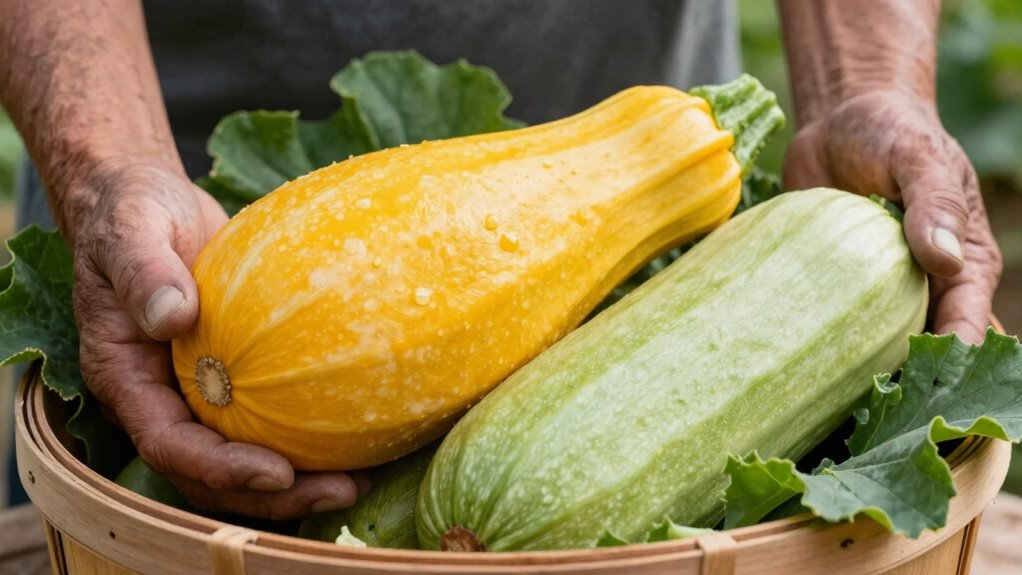
How do you determine the ideal time to harvest your squash and zucchini? You don’t want to pick them too early or let them grow too large. Check these key indicators:
- Size matters – Harvest when fruits reach 6-8 inches long and 2 inches wide.
- Skin texture – Press gently; ripe squash yields slightly but doesn’t feel soft.
- Color development – Look for rich, uniform coloring rather than pale patches.
- Stem condition – Snip where the stem meets the fruit; it should separate easily.
- Growth speed – Pick every other day during peak season before they outgrow perfect size.
Trust your instincts and harvest consistently. Your plants will reward you with continued production throughout the growing season.
Tell When Corn Is Fully Ripe Off the Cob
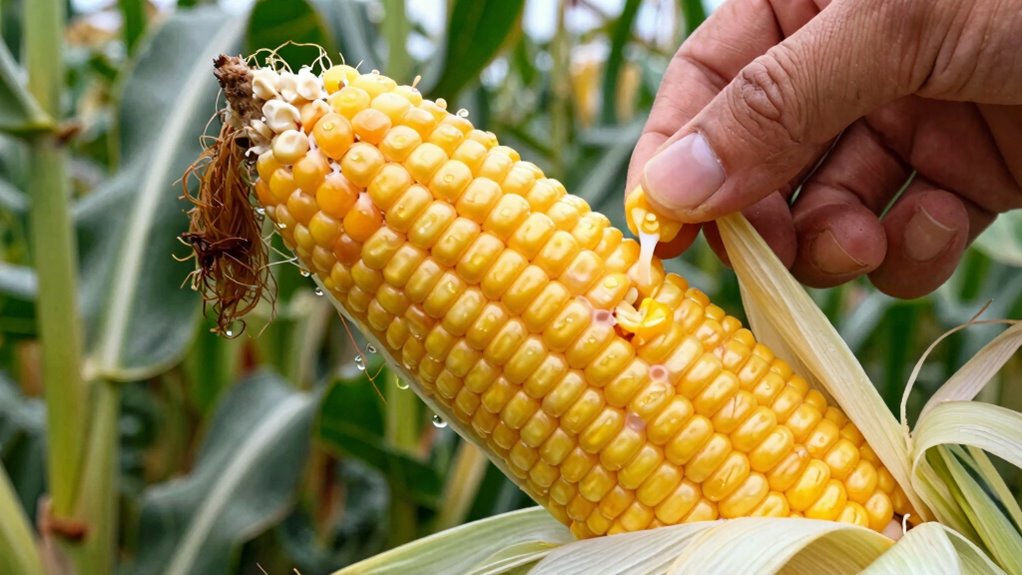
While you’re waiting for your corn to reach peak ripeness, you’ll want to recognize the signs that tell you it’s time to harvest.
Check the silks at the top; they should be brown and dry, not green. Press a kernel with your fingernail – it should release milky fluid, not clear liquid or nothing at all. The husk should feel firm and plump, not loose or shriveled. Kernels should be饱满 and extend to the tip of the ear.
If you’ve been growing corn for a few seasons, you know timing matters. Sweet corn doesn’t improve after picking, so harvest when kernels are fully developed but still tender. Morning harvests preserve sweetness best.
Don’t wait for perfect weather – corn ripens quickly once it starts.
Pick Beans and Peas for Maximum Yield
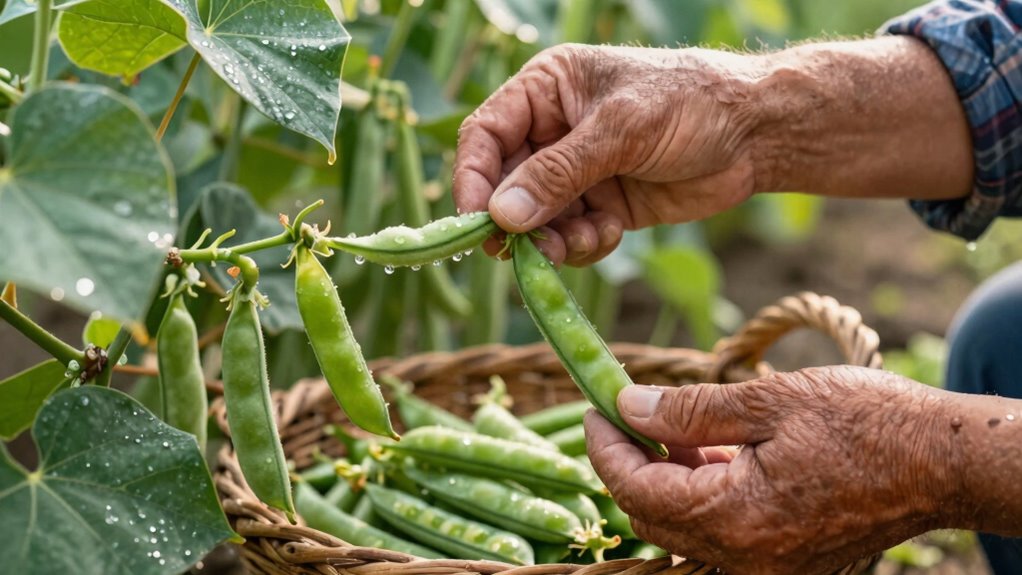
Because beans and peas continue producing throughout the growing season, you’ll want to harvest them regularly to maximize your yield. Pick pods when they’re young and tender, before seeds fully develop. Regular picking encourages more flower production and continuous harvests.
- Check plants every 2-3 days during peak production for ideal pod development
- Harvest in morning when pods are crispest and moisture content is highest
- Pick pods that are firm and snap easily, avoiding overripe, bulging seeds
- Handle gently to prevent bruising and maintain plant productivity
- Remove yellowed or diseased pods immediately to prevent pest attraction
Your consistent attention rewards you with tender, flavorful harvests.
Plants respond to regular picking by producing more flowers and pods. Don’t wait until pods become tough or yellow – frequent harvesting keeps your plants productive longer.
Harvest Herbs for Immediate Use or Drying
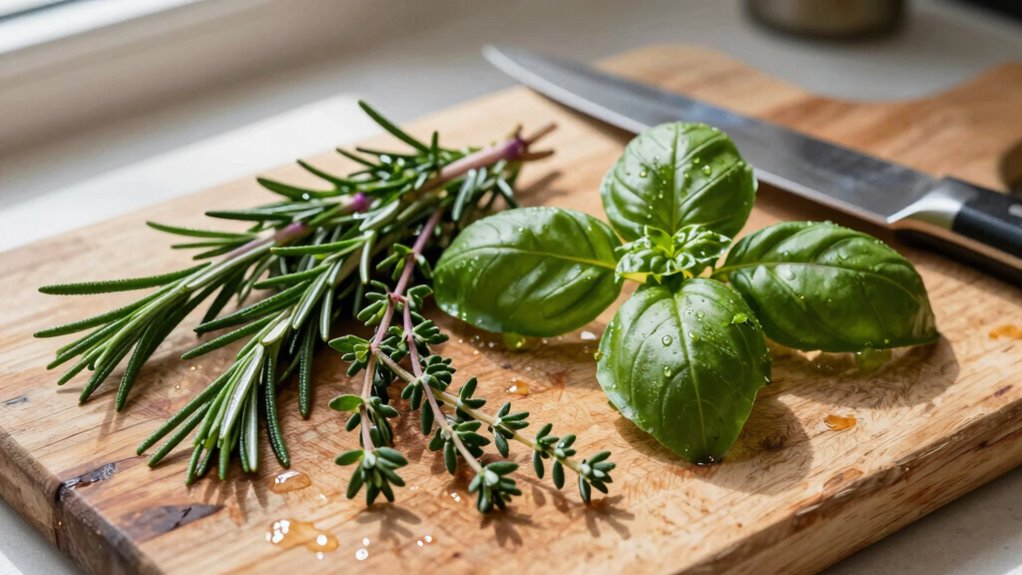
You should harvest herbs in the morning after the dew has dried but before the sun gets too hot.
Cut stems just above a leaf node to encourage new growth, and never remove more than one-third of the plant at once.
Whether you’re using herbs fresh or planning to dry them, proper harvesting techniques guarantee maximum flavor and continued plant health.
Harvesting Herbs for Fresh Use
When should you harvest herbs for the best flavor and potency? You’ll want to pick them just before flowering begins, when essential oils are most concentrated. Harvest in the morning after dew has dried but before heat intensifies.
Here’s what matters most:
- Pinch leaves regularly to encourage bushier growth
- Cut stems just above leaf nodes for continued production
- Harvest individual leaves rather than stripping entire branches
- Use sharp scissors to avoid bruising delicate stems
- Pick what you need daily for maximum freshness
Your herbs will reward you with robust flavor when you harvest properly.
Regular picking keeps plants productive longer, giving you continuous harvests throughout the growing season.
You’re not just gathering herbs; you’re participating in their growth cycle.
Drying Herbs for Long-Term Storage
While harvesting herbs fresh provides immediate flavor, drying extends their usability for months.
You’ll want to harvest herbs just before flowering when essential oils peak. Cut stems in the morning after dew evaporates but before intense heat. Remove leaves from stems, discarding any damaged portions.
Dry herbs using three methods: air drying bundles upside down in ventilated spaces, oven drying at lowest temperatures, or using dehydrators. Store dried herbs in airtight containers away from light and heat. Properly dried herbs retain flavor for six months to a year.
You’ll know drying works when stems snap cleanly and leaves crumble easily. Label containers with harvest dates. Your dried herb collection will soon become your kitchen’s most valuable seasoning arsenal.
Avoid Damage During Vegetable Collection
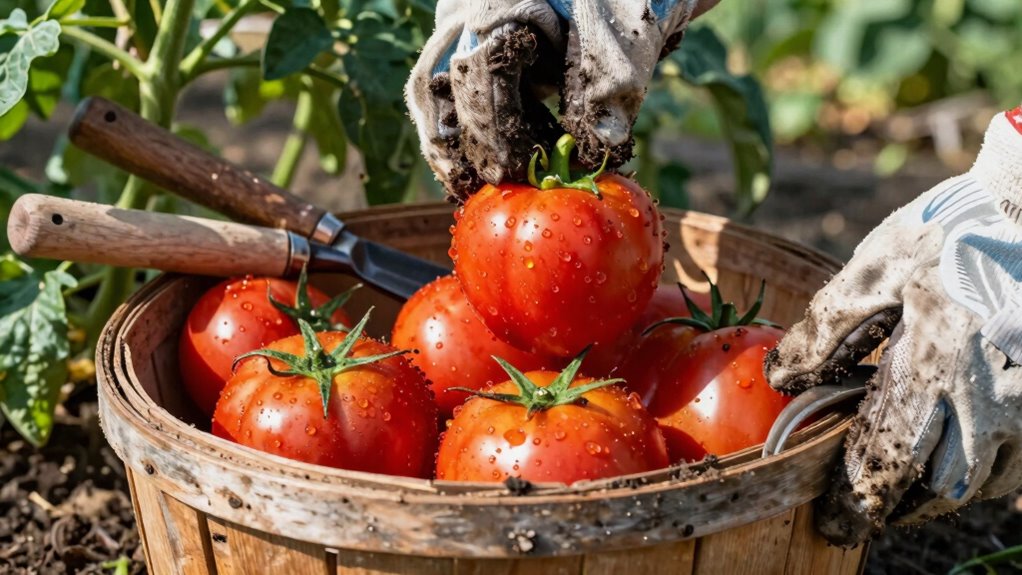
Because vegetables bruise easily during harvest, handle them gently to maintain quality and extend storage life. You’ll want to treat your harvest with care since damaged vegetables deteriorate quickly.
- Use clean, sharp tools to make precise cuts without crushing stems or leaves
- Support heavy vegetables like squash and melons from underneath while cutting
- Harvest during cooler morning hours when vegetables are less stressed and more resilient
- Place harvested vegetables directly into soft containers or padded baskets immediately
- Avoid stacking delicate items like tomatoes or peppers on top of each other
Your careful approach guarantees vegetables stay fresh longer and reduces waste.
Gentle handling preserves both flavor and nutritional value, making your garden efforts worthwhile.
Keep Plants Producing After First Harvest
You’ll maximize your garden’s productivity by implementing successive planting strategies that keep new crops coming while maintaining soil nutrition through regular feeding and composting.
Pruning helps maintain plant health and encourages continued production, so don’t skip this vital step after your first harvest.
These practices guarantee your vegetables keep producing throughout the growing season instead of giving up after initial picking.
Successive Planting Strategies
Successive planting keeps your vegetable garden productive throughout the growing season by replacing harvested crops with new ones. You maximize your harvest potential by timing plantings correctly.
- Stagger seed sowing every two weeks for continuous lettuce, radish, and bean production.
- Replace finished plants immediately with warm-season crops like squash after cool-season peas.
- Choose quick-maturing varieties that fit your local growing window perfectly.
- Plan backward from frost dates to determine final planting times for each crop.
- Keep detailed garden records tracking what works best in your specific climate zone.
You become part of the experienced gardener community when you master these timing strategies. Your neighbors will notice your abundant harvests and seek your advice.
Successive planting transforms you from a seasonal grower into a year-round producer who belongs among serious gardeners.
Maintaining Soil Nutrition
Healthy soil nutrition keeps your plants producing abundantly long after the first harvest. You need to replenish nutrients immediately after picking vegetables.
Add compost or well-aged manure around plant bases. Side-dress with nitrogen-rich fertilizer every two weeks.
Don’t let soil dry out completely between waterings. Mulch heavily to retain moisture and slowly release nutrients.
Test your soil pH regularly; most vegetables prefer slightly acidic conditions. Rotate crop families annually to prevent nutrient depletion.
Consider planting nitrogen-fixing legumes between growing seasons. Remove spent plant material promptly to prevent disease.
Feed your soil consistently, and it’ll reward you with continuous harvests. Remember, tired soil equals tired plants. Keep nourishing the earth that nourishes you.
Pruning And Plant Health
Pruning actively encourages plants to redirect energy toward new growth and continued production. You’ll maximize your harvest by removing spent flowers, damaged leaves, and overcrowded stems promptly.
- Pinch off faded blooms to prevent seed formation and stimulate fresh flower development.
- Cut away yellowing or diseased foliage to halt pathogen spread.
- Trim crowded interior branches to improve air circulation and light penetration.
- Remove suckers and water sprouts that drain resources from productive growth.
- Harvest outer leaves first, allowing inner portions to mature progressively.
Regular pruning isn’t just maintenance—it’s your ticket to sustained productivity.
You’re not merely cutting; you’re directing your plants’ energy toward what matters most: continuous vegetable production.
Trust this process. Your plants will respond with vigor, and you’ll become part of that exclusive group who consistently harvests fresh produce throughout the growing season.
Use the Right Tools for Efficient Picking
When you’re ready to harvest your vegetables, having the proper tools makes all the difference in efficiency and crop quality. You’ll want sharp pruning shears for cutting stems cleanly without crushing delicate plant tissue. A sturdy harvest knife works well for larger vegetables like squash or melons.
Use clean, sanitized tools to prevent disease spread between plants. Keep a breathable harvest basket or crate handy – ventilated containers prevent moisture buildup that causes spoilage. Don’t overlook simple items like gloves for protection and comfort during extended picking sessions.
Having the right tools within reach streamlines your workflow and reduces vegetable damage. Proper equipment also helps you work faster during peak harvest times when timing matters most for peak flavor and texture.
Common Mistakes to Avoid While Harvesting
Unless you pay attention to timing, harvesting vegetables at the wrong stage can ruin months of hard work.
You’ll maximize your garden’s potential by avoiding these common harvesting errors that frustrate many growers.
- Harvesting too early – Pick vegetables when they’ve reached full size and color for ideal flavor and nutrition
- Waiting too long – Overripe vegetables lose taste and texture quickly, so monitor crops closely
- Ignoring weather conditions – Harvest before extreme heat or frost damages delicate produce
- Using improper tools – Sharp scissors or pruners prevent unnecessary plant damage during picking
- Harvesting at wrong times – Cool morning hours preserve freshness better than midday heat
These mistakes steal the satisfaction of successful gardening.
You belong among skilled harvesters who consistently enjoy bountiful, flavorful vegetables.
Extend Your Garden’s Productivity Into Fall
While many gardeners mistakenly believe that vegetable production ends with summer’s peak, you can actually extend your harvest well into fall by making strategic adjustments to your gardening practices.
Start by planting cold-hardy crops like kale, carrots, and Brussels sprouts in late summer. These vegetables actually taste sweeter after light frost exposure.
You’ll want to use row covers or cold frames to protect plants from harsh weather. Don’t forget to harvest regularly – consistent picking encourages continued production.
Water deeply but less frequently as temperatures drop. Mulch heavily around root crops to prevent freezing.
Plant lettuce and spinach successionally every two weeks for continuous harvests. Remember that daylight hours decrease considerably, so choose varieties that mature quickly.
With proper planning, your garden remains productive and provides fresh vegetables well beyond traditional growing seasons.
Conclusion
Harvesting vegetables at the right time takes practice, but soon you’ll read your garden like a book. Watch for vibrant colors, firm textures, and plump fruits. Pick in early morning when plants are hydrated. Use sharp tools and handle produce gently. Don’t let ripe vegetables sit too long – they’ll bolt or become bitter. Regular harvesting encourages continued production. Your garden will reward you with peak flavor and nutrition when you time your harvests just right.
