

Isn’t it ironic that plants need more water when it’s hottest, yet many gardeners struggle with proper hydration during summer? You’re probably wondering how to balance their increased thirst without wasting water or causing stress. The key lies in understanding not just when to water, but how much and where exactly that water should go. Let’s explore the science behind effective summer watering techniques.
Why Plants Need More Water in Summer
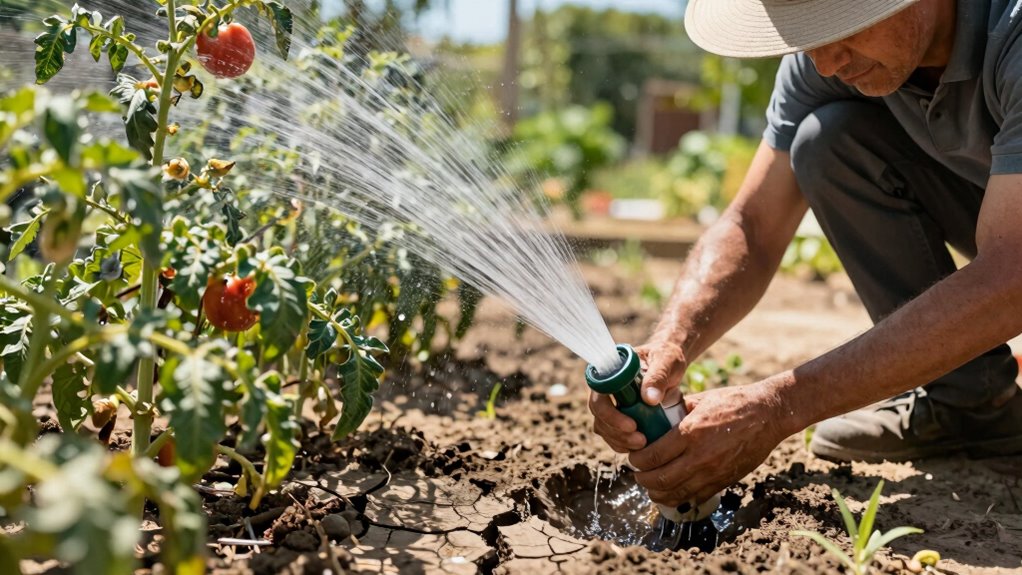
When temperatures rise above 85°F, plants lose water through transpiration at an accelerated rate, which means you’ll need to adjust your watering schedule accordingly.
You’re dealing with increased metabolic activity that demands more hydration. Higher temperatures cause stomata to open wider and more frequently, releasing moisture faster. Your plants aren’t being dramatic—they’re actively trying to cool themselves through evaporative cooling, just like sweating humans.
Don’t wait until wilting occurs. Plant cells lose turgor pressure rapidly in heat, causing irreversible damage.
Check soil moisture daily by inserting your finger two inches deep. Mulching helps retain soil moisture while reducing surface evaporation.
Understanding these physiological responses helps you become part of the solution, not the problem. Summer watering isn’t optional—it’s survival.
What Time Is Best for Watering Plants?
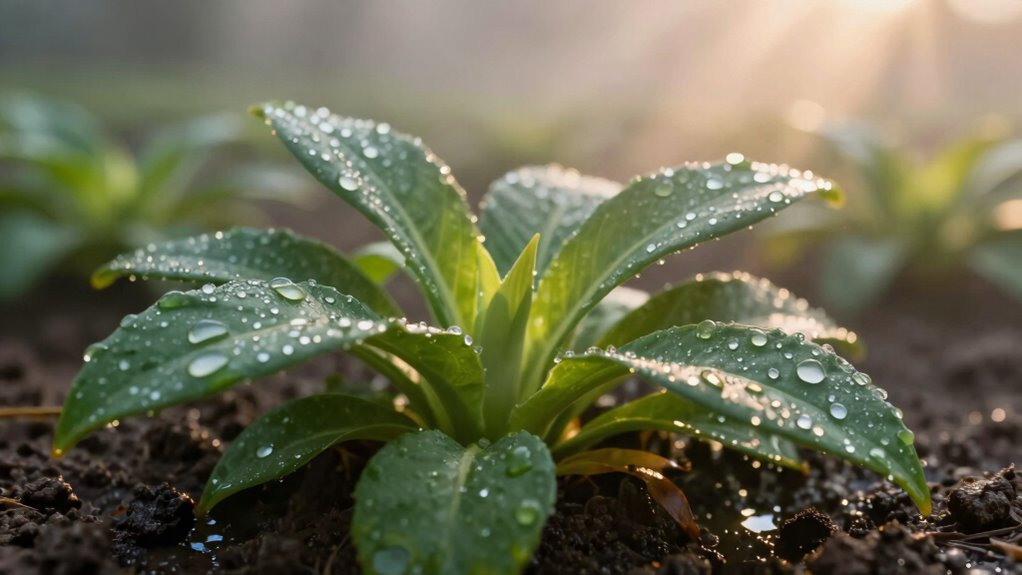
Choosing the right time to water becomes critical once you understand how heat accelerates plant water loss.
You need to work with natural cycles to maximize hydration efficiency.
- Early morning (4-8 AM) gives plants maximum absorption time before temperatures rise, reducing evaporation losses by up to 30%.
- Late evening (6-10 PM) works as your second-best option, allowing soil penetration without immediate heat stress, though you should avoid leaf wetness overnight.
- Avoid midday watering between 10 AM-4 PM when solar intensity peaks, causing rapid evaporation that wastes up to 50% of applied water.
- Monitor weather patterns and adjust timing based on humidity levels, wind conditions, and upcoming heat waves to stay ahead of plant stress indicators.
Timing directly impacts your garden’s survival success.
How Much Water Do Plants Really Need in Heat?
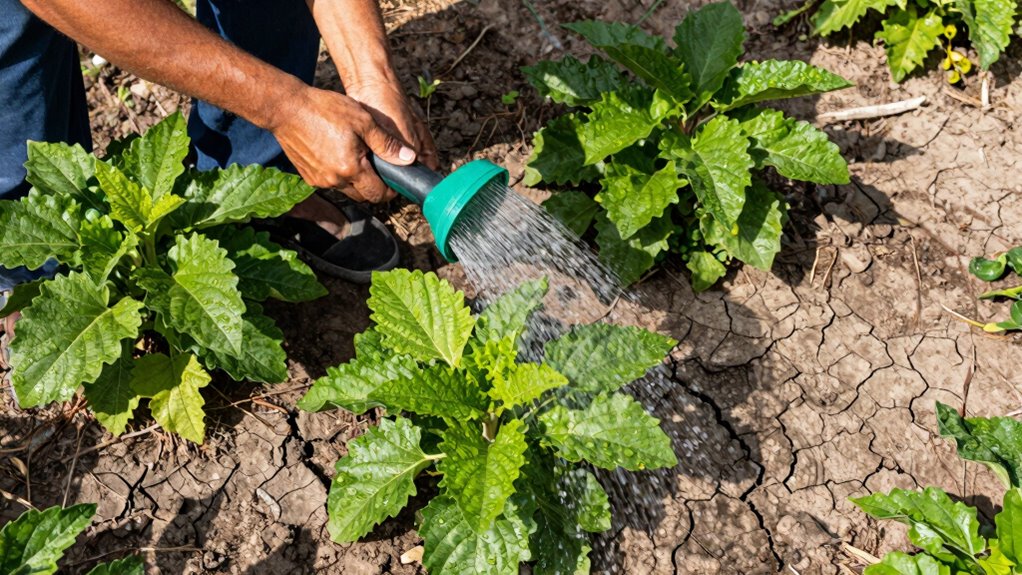
You must greatly increase watering amounts during extreme heat because plants lose moisture rapidly through transpiration, requiring up to 50% more water than normal conditions.
Deep, infrequent watering sessions encourage roots to grow downward and access cooler, moister soil layers rather than staying near the surface where heat dries them out quickly.
Your plants’ survival depends on understanding that adequate hydration during heat stress requires both increased volume and strategic application depth.
Increased Water Requirements
Plants require considerably more water during hot weather because elevated temperatures accelerate transpiration rates and increase metabolic demands. You’ll notice your watering schedule needs adjustment as heat intensifies.
- Temperature impact: For every 10°F increase, transpiration rates double, meaning plants lose water twice as fast through their leaves.
- Soil evaporation: Hot weather causes soil to dry out rapidly, reducing water availability to plant roots by up to 50% faster than normal conditions.
- Growth acceleration: Plants grow faster in heat, increasing their water consumption by 25-40% to support rapid cellular expansion and nutrient transport.
- Stress response: Heat-stressed plants develop deeper root systems and wider leaf surfaces, requiring consistent moisture to maintain these adaptive mechanisms.
Understanding these factors helps you become part of the community that successfully grows thriving plants despite challenging conditions.
Deep Watering Benefits
Determining proper water amounts becomes critical when temperatures soar, as surface watering only addresses immediate symptoms rather than underlying root needs. You must water deeply to reach the root zone where moisture is essential for nutrient uptake and cellular function.
Deep watering encourages roots to grow downward, creating stronger, more drought-resistant plants. Shallow watering promotes weak surface roots that quickly dry out. Aim for six to eight inches deep penetration.
Check soil moisture by inserting your finger or a moisture meter. Water slowly to allow absorption rather than runoff. Mulching retains soil moisture and reduces evaporation rates.
Your plants’ survival depends on consistent, thorough hydration during heat stress periods. Deep watering isn’t just about quantity—it’s about targeting the root system’s actual water requirements for peak physiological function and stress tolerance.
Is Overhead Watering Safe in High Heat?
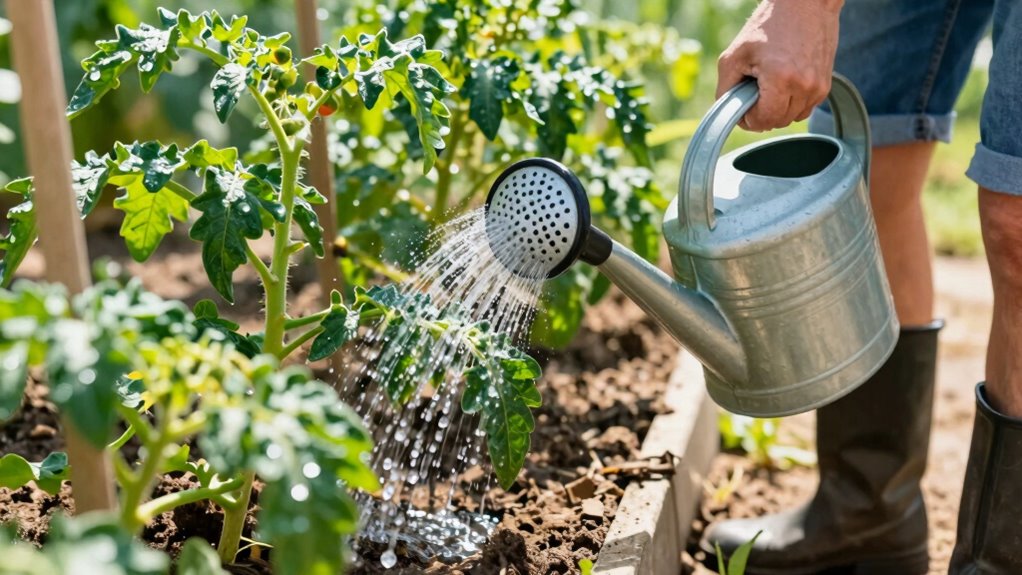
You shouldn’t overhead water plants during peak heat because water droplets act like magnifying glasses, potentially burning leaves and creating ideal conditions for fungal diseases.
Ground-level irrigation keeps foliage dry while delivering water directly to root zones where it’s needed most.
Apply water early morning or late evening when temperatures drop to minimize evaporation and stress on your plants.
Risks Of Overhead Watering
While overhead watering might seem like a convenient option during hot weather, it creates several problematic conditions that can stress your plants.
- Leaf burn occurs when water droplets act as magnifying glasses, intensifying sunlight and scorching foliage during peak heat hours.
- Fungal diseases spread rapidly because moisture lingers on leaves overnight, creating ideal conditions for powdery mildew and blight.
- Water evaporates quickly before reaching roots, wasting up to 50% of applied water and leaving plants parched.
- Root systems become shallow and weak since they don’t need to seek deep moisture, making plants more susceptible to drought stress.
You’re part of a community that values plant health.
These risks affect everyone’s garden success.
Benefits Of Ground-Level Irrigation
Ground-level irrigation delivers water directly to root zones where plants need it most, bypassing the leaf surface entirely.
You maximize water efficiency since evaporation rates decrease considerably when water doesn’t contact heated foliage.
This method prevents leaf burn and fungal diseases that develop when moisture sits on plant surfaces during intense heat. Your plants absorb water more effectively through their root systems rather than stressed leaf tissues.
Soil microorganisms thrive better with consistent moisture levels, enhancing nutrient availability.
You’ll notice improved plant resilience and reduced water waste compared to overhead systems.
Root development strengthens as plants don’t become dependent on surface moisture.
Your garden establishes deeper, more extensive root networks that access water reserves during drought periods, creating self-sufficient plant communities.
Timing And Temperature Considerations
When does overhead watering become problematic during extreme heat conditions? You need to understand how timing and temperature affect plant health. Water droplets act like magnifying glasses under intense sunlight, potentially burning leaves. Here’s what you should know:
- Morning hours (6-10 AM) work best because temperatures are cooler and sunlight isn’t intense enough to cause leaf scorching.
- Avoid midday watering (10 AM-4 PM) when temperatures peak above 90°F, creating dangerous conditions for foliage.
- Evening watering (after 6 PM) reduces evaporation but increases fungal disease risk due to prolonged leaf wetness.
- Temperature thresholds matter: when air temperature exceeds 95°F, overhead watering becomes risky regardless of timing.
You belong in this gardening community when you master these critical timing decisions.
Should You Water Leaves or Just the Roots?
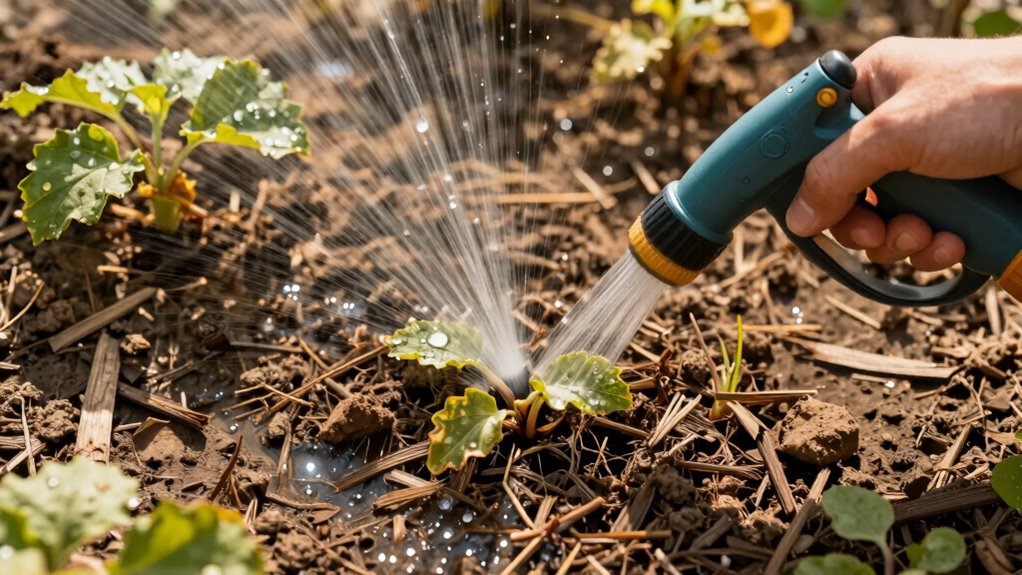
Although many gardeners debate whether to water plant leaves directly or focus solely on root hydration, understanding the physiological processes involved reveals that both methods have distinct advantages and limitations.
You should know that roots absorb water and nutrients most efficiently, making soil-level watering your primary strategy. However, foliar watering can provide immediate cooling relief during extreme heat.
Plant leaves transpire water vapor, and direct misting temporarily reduces leaf temperature while increasing humidity around foliage.
Root watering promotes deeper root growth and prevents moisture-related fungal issues. You’ll achieve ideal results by watering soil directly at the root zone while occasionally misting leaves during peak heat periods.
This combination approach maximizes both hydration efficiency and plant cooling without creating conditions that encourage disease development.
How Mulch Keeps Soil Moist in Summer
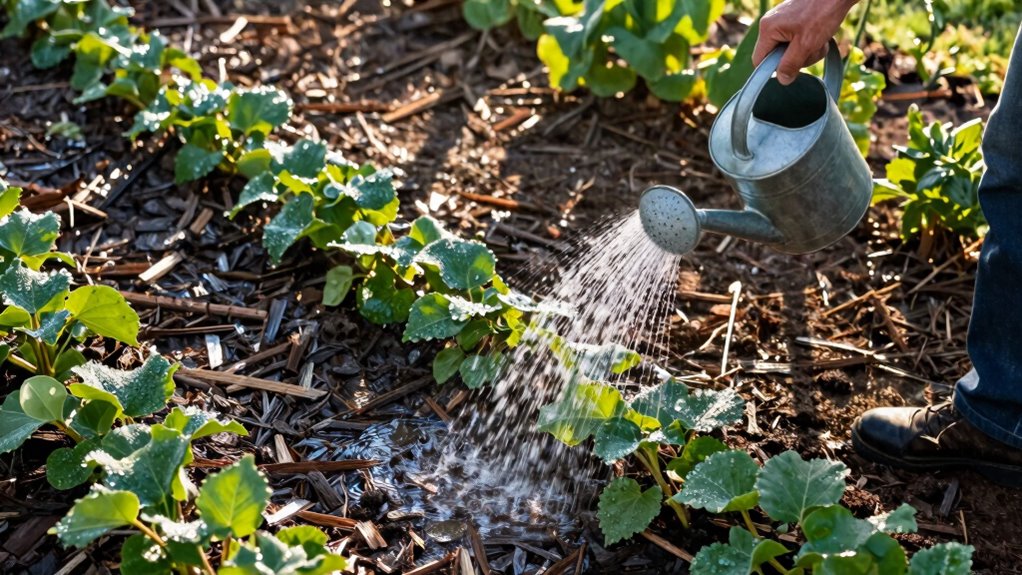
Mulch acts as a protective barrier that considerably reduces soil moisture loss during hot summer months.
You’ll discover mulch works through several key mechanisms that keep your plants thriving when temperatures soar.
- Temperature regulation – Mulch insulates soil, preventing rapid heating that accelerates water evaporation from root zones.
- Evaporation prevention – Organic materials create a physical shield between sun exposure and soil surface, blocking direct UV rays.
- Water retention enhancement – Mulch layers trap moisture longer, allowing gradual penetration instead of rapid surface runoff during irrigation.
- Soil structure improvement – Decomposing organic matter increases soil’s water-holding capacity while improving drainage properties.
You’re not just adding a surface layer – you’re creating an ecosystem that supports plant health.
Mulch transforms your garden’s microclimate, making watering more efficient and reducing stress on your plants during extreme heat conditions.
Signs Your Plants Are Over or Under-Watered
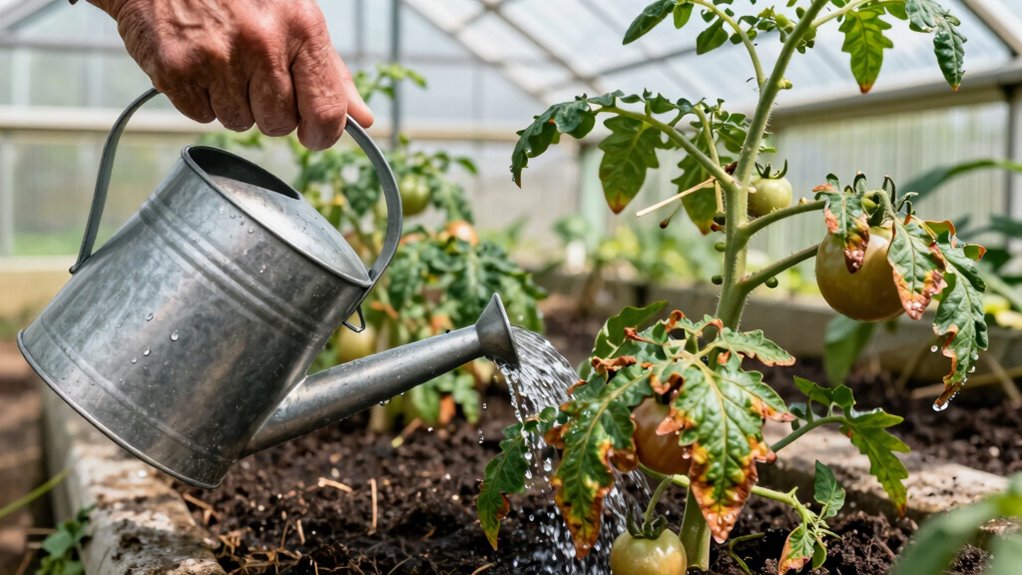
You must recognize wilting leaves as your plant’s primary stress signal, indicating either insufficient water uptake or root damage from overwatering.
Yellowing leaves typically show nitrogen deficiency caused by waterlogged soil that prevents proper nutrient absorption.
Dry soil cracking between watering sessions signals dehydration that stresses plant tissues and reduces photosynthetic efficiency.
Wilting Leaves Signal Stress
When plants wilt during hot weather, they’re sending you a clear distress signal that requires immediate attention.
Don’t ignore these vital warning signs that indicate your plant’s survival is at stake.
- Check soil moisture – Stick your finger two inches into the soil; if it’s bone dry, your plant desperately needs water right now.
- Examine leaf texture – Crispy, brittle leaves mean severe dehydration has already damaged cellular structure beyond repair.
- Look for color changes – Dark green leaves turning pale or developing brown edges show stress from inconsistent watering patterns.
- Assess stem condition – Wilting stems that feel soft or mushy indicate root system failure from either drowning or extreme drought stress.
Act quickly because prolonged wilting kills plant tissue permanently.
Your garden family depends on you to respond immediately when they signal distress.
Yellowing Leaves Indicate Overwatering
One of the most telling signs that your plants are receiving too much water is the appearance of yellowing leaves, which occurs when oversaturated soil prevents roots from absorbing essential nutrients.
You’ll notice this discoloration starting at leaf edges and spreading inward. Overwatering creates oxygen-depleted conditions that damage root systems, causing nutrient deficiencies that manifest as chlorosis.
Check your watering schedule if multiple yellow leaves appear suddenly. Feel soil moisture before watering – roots need air pockets to function properly.
Yellowing accompanied by soft, mushy stems indicates root rot. Adjust your routine immediately by reducing water frequency and improving drainage.
Remember that yellow leaves won’t green up again, so focus on preventing new ones rather than reversing existing damage.
Dry Soil Cracks Show Underwatering
While yellowing leaves signal overwatering issues, dry soil cracks tell a different story of underwatering stress. You’re witnessing your plant’s desperate cry for hydration when the soil pulls away from container edges.
- Check soil moisture depth – Insert your finger two inches into the soil; if it feels bone dry, you’ve waited too long between waterings.
- Observe crack patterns – Wide, deep fissures indicate severe dehydration stress affecting root absorption capacity.
- Monitor plant posture – Wilting, crispy leaf edges accompany soil cracking as cellular turgor pressure drops critically low.
- Establish consistent watering schedules – Prevent future cracking by maintaining even soil moisture without saturation, adjusting frequency based on temperature spikes.
Your plants depend on you recognizing these visual cues promptly.
Dry soil cracks aren’t just cosmetic issues; they represent compromised root health and nutrient uptake efficiency that threatens your plant’s survival.
Which Plants Need Extra Water in Extreme Heat?
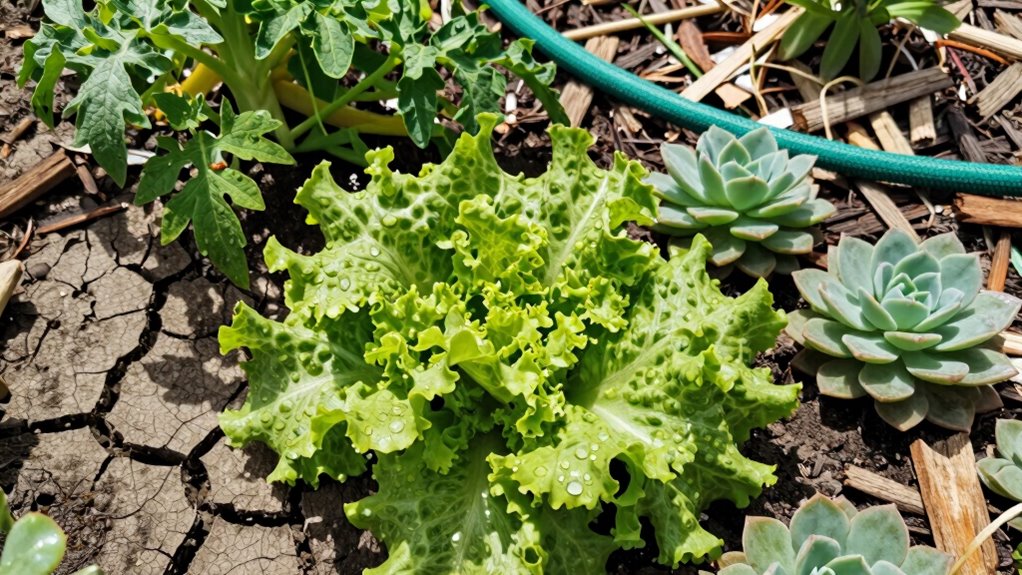
Although extreme heat affects all plants to some degree, certain species demand considerably more water to maintain physiological function and prevent stress-induced damage.
You’ll notice shallow-rooted vegetables like lettuce, spinach, and radishes require frequent watering because their root systems can’t access deeper soil moisture. Annual flowers such as marigolds and zinnias also need extra attention since they haven’t established extensive root networks.
Young transplants and newly planted specimens struggle most because their developing roots can’t efficiently uptake water. Plants with large leaves like tomatoes and squash lose more water through transpiration, creating greater demand.
Don’t forget herbs like basil and cilantro that bolt quickly under heat stress. These plants become your priority during extreme temperatures.
You must monitor their soil moisture daily and water deeply when the top inch feels dry.
Do Container Plants Need Daily Watering?
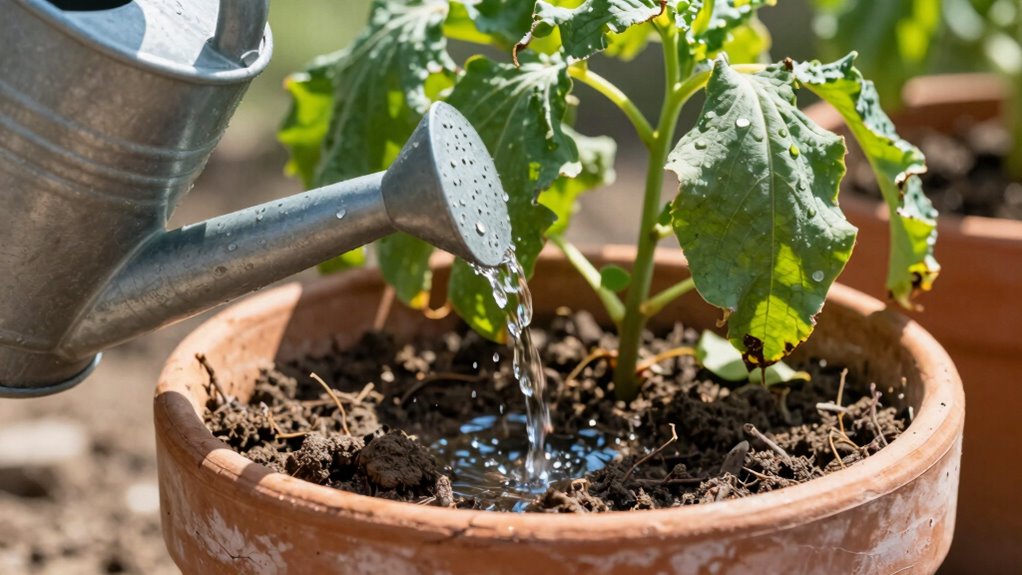
Container plants often require daily watering during hot weather because their limited soil volume dries out much faster than ground-planted specimens.
You’ll notice this becomes critical as temperatures rise.
- Check soil moisture by inserting your finger one inch deep; water when it feels dry
- Morning watering works best since it reduces evaporation and prepares plants for daytime heat stress
- Self-watering containers can reduce daily maintenance while maintaining consistent moisture levels
- Mulching helps retain soil moisture and decreases how frequently you need to water
You’re not alone in this struggle – every container gardener faces these challenges.
Your plants depend on you for consistent hydration, especially when Mother Nature turns up the heat.
Pay attention to these signs and adjust accordingly.
Does Soil Type Change Watering Needs?
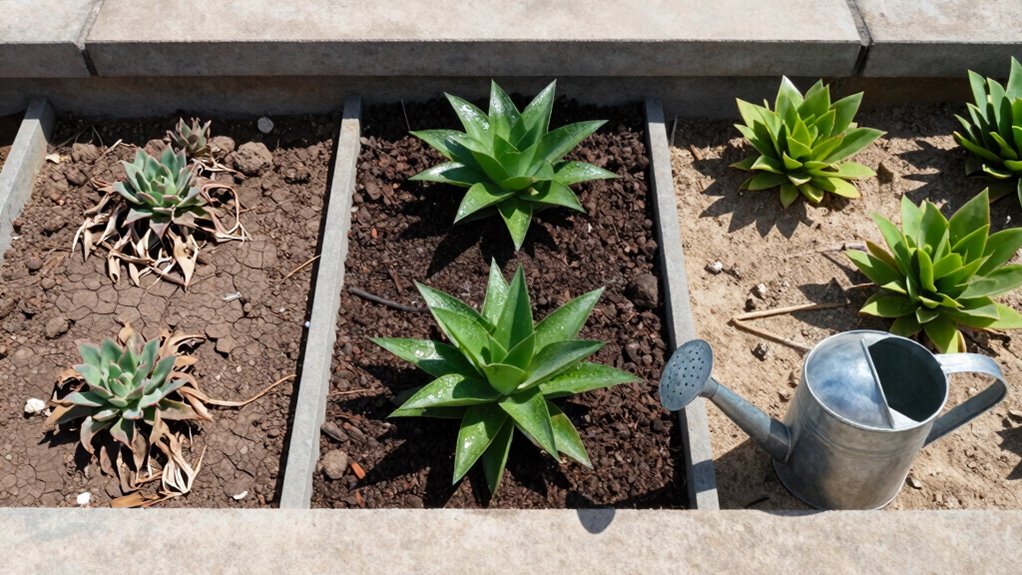
Because different soil types have varying water retention capacities, you’ll need to adjust your watering frequency and methods accordingly. Sandy soils drain quickly and require more frequent watering, while clay soils retain moisture longer and need less frequent irrigation.
You should check your soil type by performing a simple jar test or observing drainage patterns after watering.
Loamy soils offer ideal balance, retaining adequate moisture without becoming waterlogged. If you’re gardening in sandy conditions, water smaller amounts more frequently to prevent runoff.
Clay soils benefit from deep, infrequent watering to encourage root penetration. Mulching helps all soil types retain moisture and reduces evaporation rates considerably.
Test your soil’s moisture level regularly by inserting your finger two inches deep before deciding whether to water.
Is Drip Irrigation Worth It in Summer?
Why should you consider drip irrigation during scorching summer months? This method delivers water directly to plant roots, minimizing evaporation losses that plague overhead sprinklers. You’ll maximize efficiency while reducing water waste.
- Water Efficiency: Drip systems use 30-50% less water than traditional methods by targeting root zones precisely.
- Heat Stress Prevention: Consistent moisture delivery prevents plants from experiencing drought cycles that weaken growth.
- Disease Control: Keeping foliage dry reduces fungal infections thriving in hot, humid conditions.
- Labor Savings: Automated drip systems eliminate daily manual watering routines, giving you reliable results without constant attention.
Drip irrigation creates ideal growing conditions despite extreme temperatures.
You’re not just surviving summer heat; you’re mastering it. Your plants respond with healthier growth, better yields, and reduced maintenance demands.
Smart gardeners embrace this proven technology.
Best Tools for Efficient Summer Watering
You should evaluate drip irrigation systems for their ability to deliver water directly to root zones while minimizing evaporation losses.
Consider soaker hoses as an alternative that provides similar benefits through porous material that releases water slowly along their entire length.
Your choice of watering can techniques matters considerably, as proper pouring methods can reduce water waste and guarantee deeper soil penetration during extreme heat conditions.
Drip Irrigation Systems
Drip irrigation systems deliver water directly to plant root zones through a network of tubes, emitters, and connectors that minimize evaporation and runoff.
You’ll discover how these systems maximize water efficiency while promoting healthier plant growth during scorching summer months.
- Install pressure regulators to maintain consistent water flow and prevent emitter clogging
- Choose adjustable emitters that let you customize water delivery rates for different plant types
- Layout tubing along plant rows to guarantee uniform water distribution across your garden
- Schedule early morning watering to reduce evaporation losses and optimize water uptake
These systems reduce water waste by up to 50% compared to traditional sprinklers.
You’ll save money on water bills while maintaining lush, thriving plants.
Professional-grade components assure reliable performance throughout extended growing seasons.
Soaker Hoses Benefits
Soaker hoses provide an efficient solution for delivering water directly to plant root zones during hot weather conditions.
You’ll maximize water retention while minimizing evaporation losses that plague overhead sprinklers. These porous hoses release water slowly through tiny perforations, creating consistent soil moisture levels your plants crave.
You can easily customize watering duration and placement along garden rows or around individual plants. The gentle seepage prevents soil compaction and erosion common with high-pressure systems.
Your plants benefit from deeper root development since moisture penetrates several inches below surface layers. Soaker hoses reduce fungal diseases by keeping foliage dry compared to sprinkler systems.
You’ll conserve water while ensuring thorough hydration reaches critical root absorption zones where nutrient uptake occurs.
Watering Can Techniques
One effective watering can feature is the long, narrow spout that delivers water precisely where needed. You’ll maximize efficiency by choosing the right tool for hot weather conditions.
- Select brass or galvanized steel cans – they won’t crack under summer heat like plastic varieties.
- Use perforated rose attachments – these create gentle rainfall patterns that prevent soil erosion around delicate roots.
- Fill early morning or evening – cooler temperatures reduce evaporation loss by up to 30% compared to midday watering.
- Target base watering technique – direct water flow toward plant root zones rather than foliage to minimize disease risk.
Your watering can becomes an extension of your gardening knowledge. Proper technique guarantees deep soil penetration while avoiding wasteful surface runoff.
You’re not just watering plants; you’re becoming part of the solution for sustainable gardening practices.
How to Stop Water Waste in Hot Weather
When temperatures soar, preventing water waste becomes critical for maintaining healthy plants while conserving resources.
You should water early morning or late evening to minimize evaporation losses. Apply mulch around plant bases to retain soil moisture and regulate temperature. Use drip irrigation or soaker hoses instead of overhead sprinklers for targeted delivery.
Check your watering schedule regularly, adjusting based on rainfall and plant needs. Install rain gauges to track natural precipitation accurately.
Group plants with similar water requirements together to avoid overwatering some while underwatering others. Repair leaky hoses and faucets promptly. Consider collecting rainwater in barrels for supplemental irrigation.
Monitor soil moisture with a moisture meter to prevent unnecessary watering. These practices help you become part of the solution while keeping your plants thriving.
When to Let Go of Plants in Drought
While drought conditions persist, you must recognize that not all plants can survive extreme water stress.
Knowing when to remove struggling specimens prevents wasted resources and potential pest problems.
You should consider these four critical signs:
- Leaf discoloration – When leaves turn brown, crispy, or show extensive yellowing despite reduced watering, cellular damage has likely occurred beyond recovery.
- Root system failure – Gently check root health; if roots appear mushy, blackened, or completely dried out, the plant can’t absorb nutrients effectively.
- Stunted growth patterns – Plants that stop producing new growth or show dying branch tips indicate severe stress responses.
- Pest infestations – Stressed plants attract insects and diseases more readily, creating cascading problems in your garden ecosystem.
Remove compromised plants promptly to protect neighboring vegetation and conserve precious water resources during challenging drought periods.
Conclusion
Don’t put all your eggs in one basket when it comes to summer watering. You’ve learned the science behind plant hydration during heat stress, from timing deep root watering to using efficient drip systems. Monitor soil moisture closely, mulch heavily, and accept that some plants may need replacing during severe drought. Your garden’s survival depends on consistent, targeted watering practices that work with natural cycles rather than against them.
