

You can dramatically increase your small garden’s productivity by thinking vertically rather than horizontally. Trellises, hanging baskets, and wall-mounted planters transform unused air space into growing areas without expanding your footprint. This approach works especially well with vining crops like tomatoes, cucumbers, and beans that naturally climb. By training plants upward, you’ll free up valuable ground space for other crops while improving air circulation and reducing disease pressure. Imagine harvesting twice as much from the same square footage.
Use Vertical Space to Grow More in Less Room
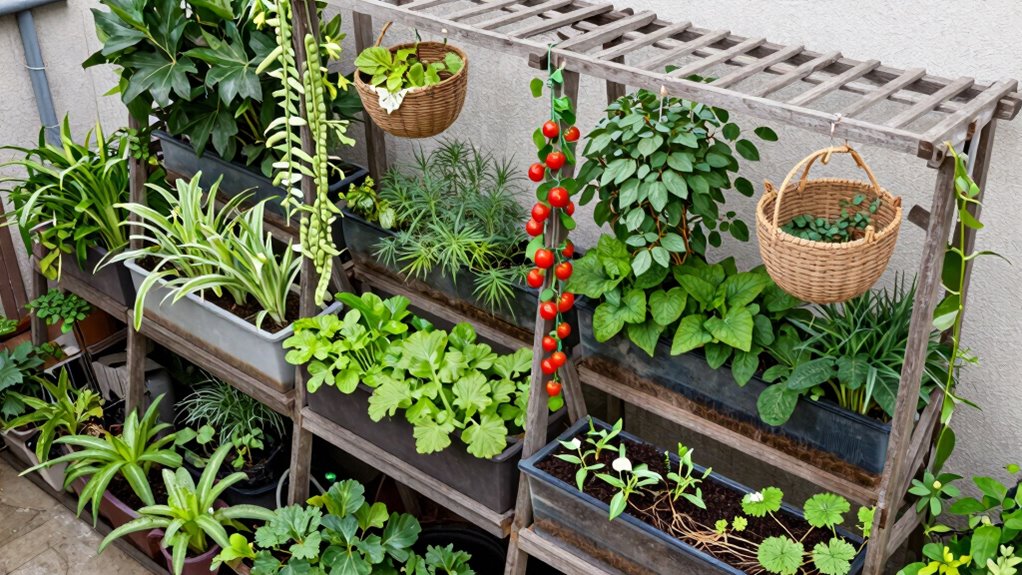
Vertical gardening maximizes your growing area by utilizing upward space rather than spreading crops horizontally across limited ground area.
You’ll discover that trellises, wall planters, and hanging containers dramatically increase productivity per square foot. Plants like tomatoes, cucumbers, and beans naturally climb when provided proper support structures.
Installing vertical systems lets you grow vining crops while maintaining accessible pathways between plants. Your garden becomes more efficient when you stack growing layers rather than sprawling outward.
Compact herbs and lettuce varieties thrive in vertical pocket planters. You’re not confined to traditional row planting anymore.
Smart vertical placement means better air circulation reduces disease pressure. Training plants upward also improves light exposure for lower leaves.
Your small space transforms into a productive growing environment where every inch contributes meaningfully to total yield.
Pick Crops That Give You the Most Bang for Your Buck
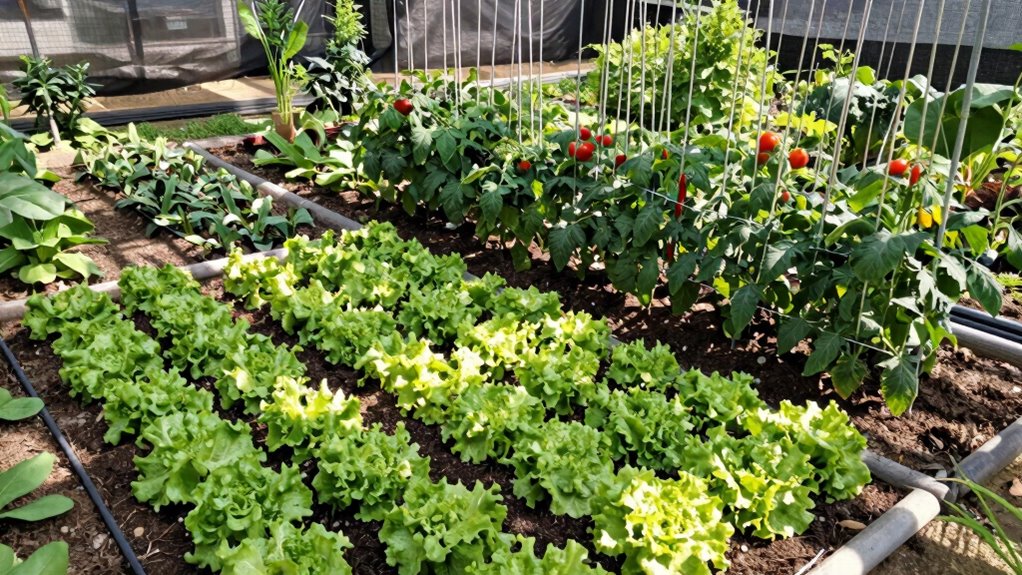
When you prioritize high-value crops in your small garden space, you maximize both nutritional return and economic benefit per square foot.
Focus on crops that provide substantial yields relative to their space requirements and market value.
- Leafy greens like spinach and arugula produce multiple harvests in minimal space.
- Herbs such as basil and cilantro offer continuous picking with high culinary value.
- Tomatoes deliver exceptional flavor and nutrition per plant compared to their footprint.
- Beans provide protein-dense harvests while fixing nitrogen for soil health.
- Root vegetables like carrots and radishes maximize underground space efficiently.
These selections guarantee you’re not just growing food, but cultivating crops that truly reward your investment of time, effort, and garden real estate with abundant returns.
Plant in Waves for Nonstop Harvests All Season
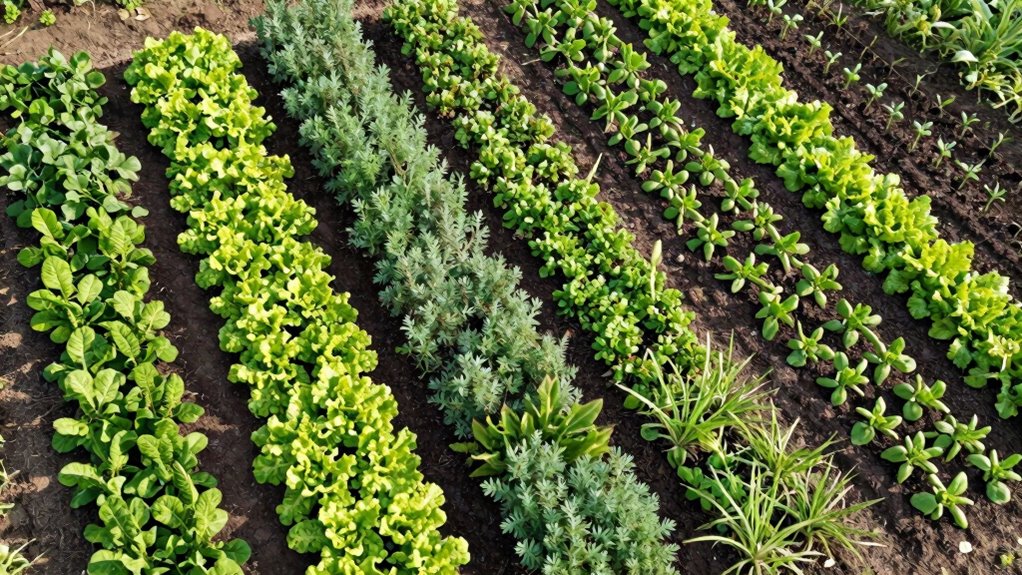
You should stagger your planting times to maximize garden space and guarantee continuous harvests throughout the growing season.
This method prevents empty garden beds while maintaining steady production of fresh vegetables.
Stagger Planting Times
Staggering planting times guarantees continuous harvests throughout the growing season by preventing all crops from maturing simultaneously. You maximize yield efficiency when you plant successive batches of the same crop every two to three weeks. This method guarantees you never experience a complete harvest gap while maintaining steady food production.
- Plant lettuce every 14 days for continuous salads
- Sow beans in three-week intervals for extended picking
- Start tomato transplants bi-weekly for prolonged fruiting
- Direct sow radishes weekly for constant crisp harvests
- Seed cucumbers every 10 days for steady vine production
Timing varies by crop hardiness and local frost dates. Calculate your area’s last frost date, then work backward from recommended days to maturity.
You’ll create a reliable harvest schedule that keeps your family supplied while preventing overwhelming abundance all at once.
Maximize Garden Space
Building on the timing strategies of staggered planting, maximizing garden space requires a systematic approach to spatial efficiency that maintains continuous harvests throughout the growing season.
You should plant crops in waves, sowing new seeds every two to three weeks for leafy greens like lettuce and spinach. Succession planting works best with fast-maturing vegetables that you harvest continuously.
Interplant tall crops like tomatoes with shorter companions such as radishes or herbs. Vertical growing maximizes upward space through trellises and cages. Square foot gardening techniques help you organize small areas efficiently.
You must plan crop rotations carefully, replacing harvested plants immediately with new seedlings. This systematic approach guarantees your garden produces abundantly while maintaining soil health through proper spacing and companion planting strategies.
Test and Prep Soil to Unlock Bigger Yields
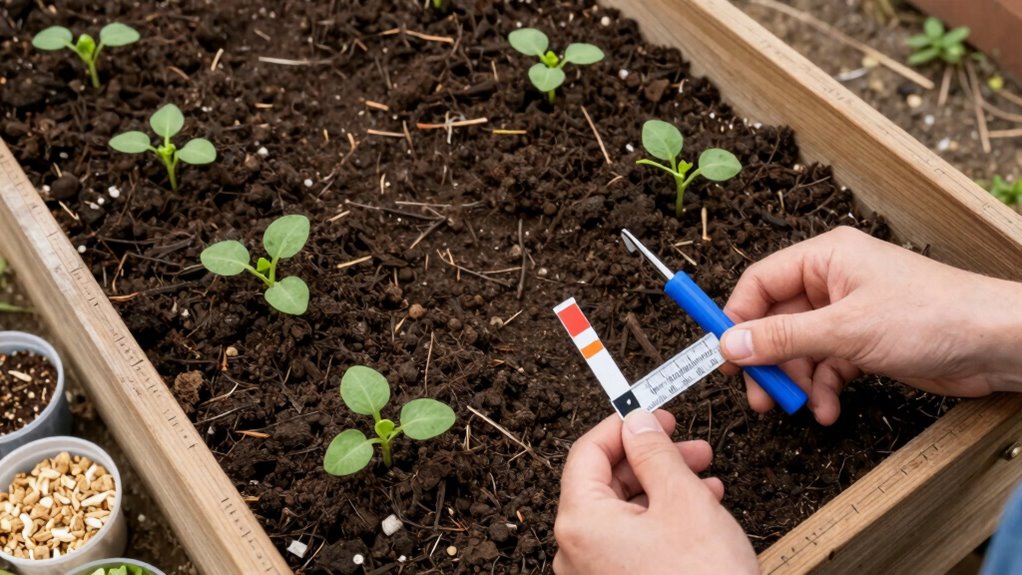
Soil testing reveals critical nutrient levels and pH balance that directly impact plant growth and productivity.
You’ll discover exactly what your garden needs to thrive. Don’t guess about amendments when you can measure precisely what’s missing.
- pH levels between 6.0-7.0 release nutrients your plants crave most
- Nitrogen, phosphorus, and potassium ratios guide fertilizer decisions
- Organic matter content determines soil structure and water retention
- Micronutrient deficiencies often limit growth more than major nutrients
- Soil texture analysis helps you choose appropriate crops and amendments
You belong among gardeners who understand that great harvests start beneath the surface.
Test soil before planting, then amend based on results. Add compost, lime, or sulfur as needed.
Your plants will respond dramatically when you give them the foundation they need. Smart soil preparation doubles yields in small spaces.
Grow Smarter With Companion Planting
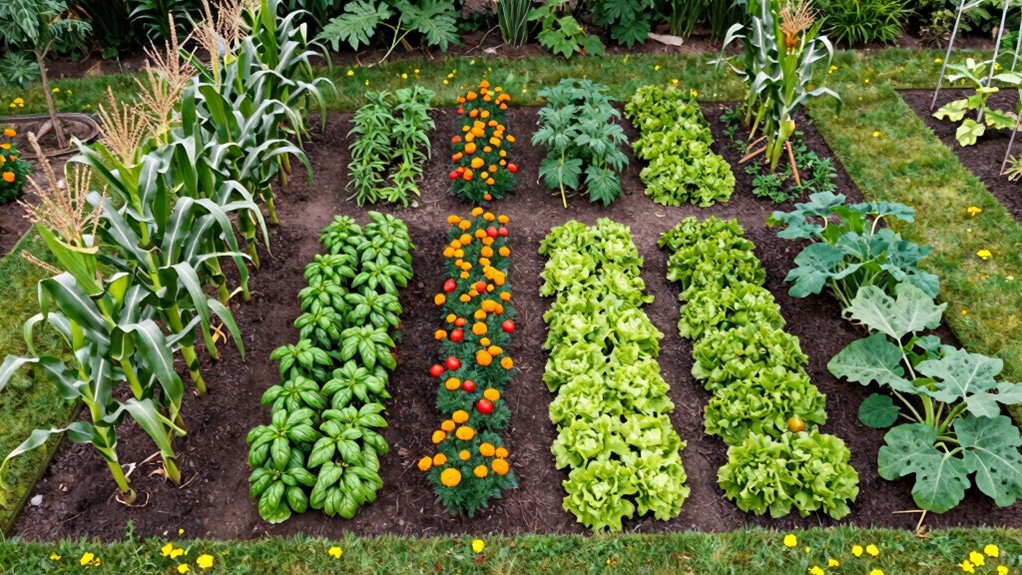
When you strategically pair compatible plants together, you create beneficial relationships that boost growth and deter pests naturally.
You should plant basil near tomatoes to repel aphids and whiteflies while enhancing flavor.
Marigolds work as natural pest deterrents when interspersed with vegetables, releasing compounds that disrupt harmful insects’ feeding patterns.
You can maximize space by growing lettuce under taller plants like beans, creating microclimates that benefit both crops.
Legumes fix nitrogen in soil, enriching nearby heavy feeders like squashes and corn.
You must consider plant families when planning pairings; avoid placing members of the same family together to prevent disease spread.
Companion planting increases biodiversity, attracting beneficial predators like ladybugs and lacewings that control pest populations naturally while you sleep.
Match Containers to Your Garden’s Limits
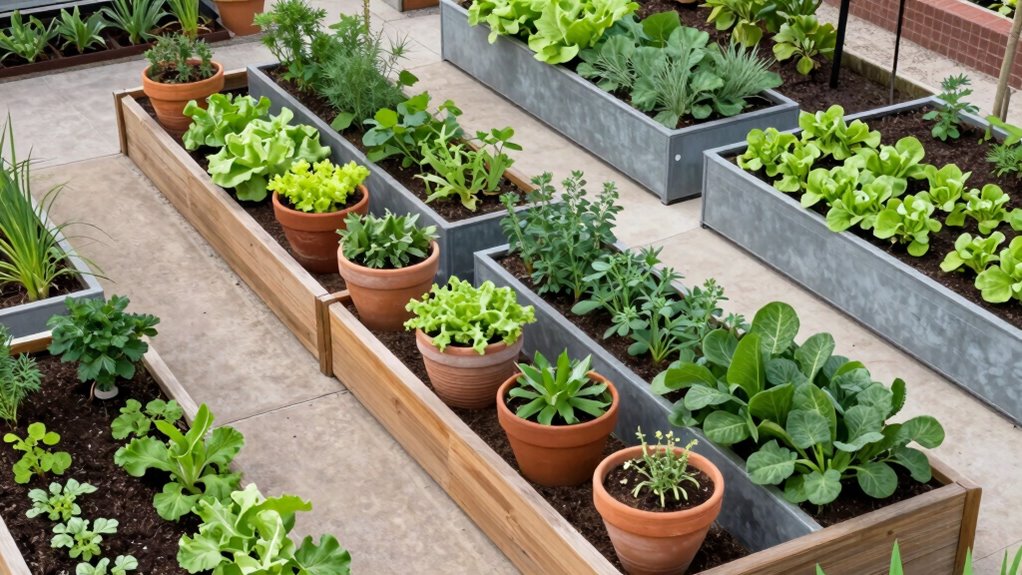
You must select container dimensions that align with your garden’s spatial constraints and plant requirements.
Compact containers work best for shallow-rooted vegetables like lettuce and herbs, while deep-root crops such as carrots and tomatoes need containers at least 12 inches deep.
Vertical growing pots maximize your limited space by allowing vining plants like cucumbers and beans to climb upwards rather than spread outward.
Choose Compact Container Sizes
Matching container sizes to your garden’s spatial limits maximizes both plant health and harvest efficiency.
Compact containers prevent root overcrowding while guaranteeing adequate drainage and nutrient distribution.
You’ll discover that proper sizing creates ideal growing conditions without wasting valuable space.
- Measure your available area before purchasing containers to guarantee perfect fit
- Select 5-gallon pots for most vegetable varieties to provide sufficient root space
- Use square containers to maximize growing area within tight corners
- Choose self-watering containers to maintain consistent moisture levels
- Group containers by plant family to create micro-climates and simplify care routines
Compact sizing doesn’t mean cramped conditions.
You’re creating a harmonious growing environment where every plant thrives within your garden’s unique boundaries.
Select Deep Root Containers
Root development demands containers that accommodate downward growth while respecting your garden’s vertical constraints.
You should select pots at least 12-18 inches deep for tomatoes, carrots, and peppers. Shallow-rooted herbs need 6-8 inch containers, while lettuce and radishes thrive in 4-6 inch depths.
Clay pots provide excellent drainage but dry quickly, requiring more frequent watering. Plastic containers retain moisture longer and are lightweight for small spaces.
Fabric grow bags offer superior aeration and prevent root circling. Measure your available space before purchasing containers. Consider container width too – roots need horizontal room alongside vertical depth.
Don’t overcrowd plants in large pots meant for multiple specimens. Match container material and size to your specific crops’ root requirements for maximum yield.
Use Vertical Growing Pots
While space constraints often limit traditional gardening methods, vertical growing pots maximize yield within confined areas.
You’ll discover that stacking plants vertically transforms limited square footage into productive growing space. These systems utilize gravity-fed watering and nutrient distribution, creating efficient microenvironments for each plant level.
- Root zone optimization: Each pot’s depth supports specific plant requirements, preventing root competition.
- Air circulation enhancement: Vertical spacing reduces fungal disease transmission between plants.
- Light exposure maximization: Tiered arrangements guarantee upper plants don’t shade lower crops excessively.
- Water conservation: Drip irrigation systems deliver precise moisture directly to root zones.
- Harvest accessibility: Elevated growing positions reduce back strain while improving picking efficiency.
You’re not just saving space; you’re creating a thriving community of plants that work together harmoniously.
Play to Your Space’s Light Strengths
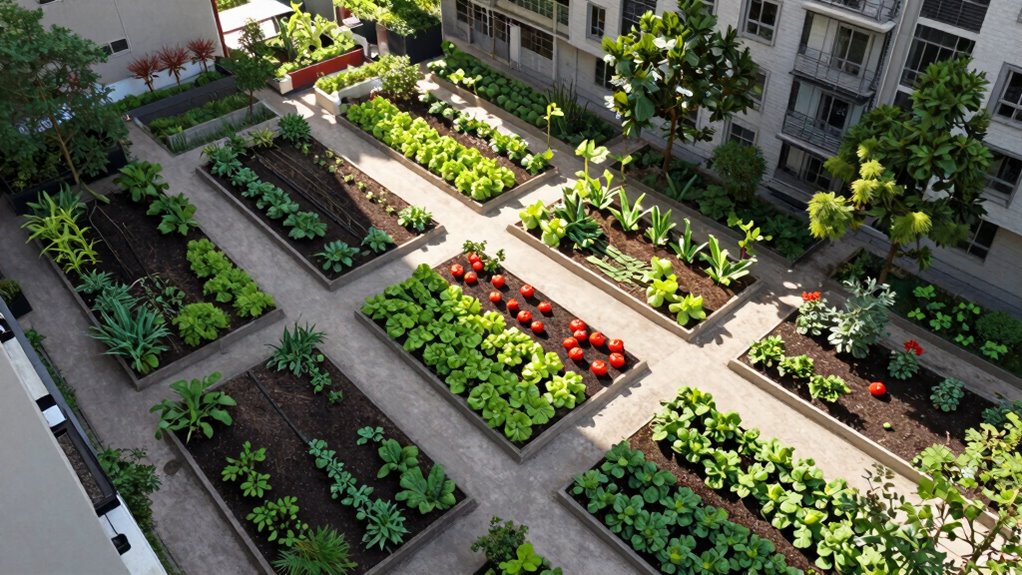
Since light exposure directly affects photosynthesis and plant development, you must carefully assess your garden’s illumination patterns throughout the day.
Observe how sunlight moves across your space, noting areas receiving full sun, partial shade, and deep shadow. Full-sun crops like tomatoes and peppers need six or more hours of direct sunlight daily.
Leafy greens and herbs often thrive in partial shade with three to six hours of sun. Don’t overlook reflected light from walls or fences that can boost growth in seemingly dim spots.
Match plants to your space’s natural light zones rather than forcing them into unsuitable conditions. This strategic placement maximizes photosynthetic efficiency and reduces stress on your crops.
Understanding these light relationships helps you work with your garden’s inherent strengths instead of against them.
Shield Plants to Stretch the Season
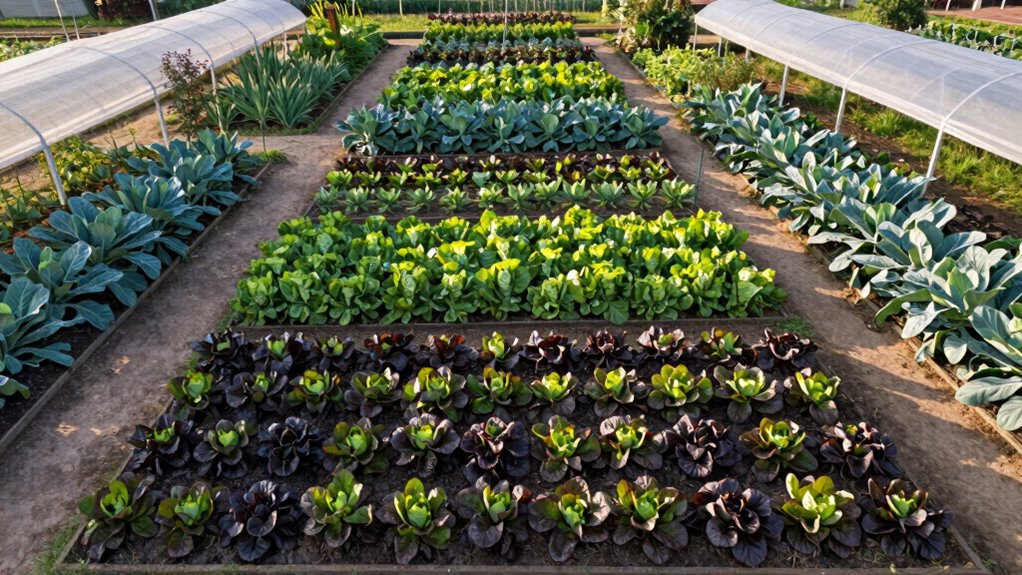
You can extend your growing season by using row covers that trap warm air and protect plants from frost damage.
Cold frames create a mini-greenhouse effect that allows you to start plantings earlier in spring and continue harvesting later into fall.
These protective barriers help maximize your garden’s productivity by adding several weeks to both ends of the growing season.
Row Covers Extend Growing Season
Row covers extend your growing season by creating a protective barrier that shields plants from frost, wind, and temperature fluctuations. You’ll gain several weeks of extra growing time by trapping warm air around your crops. These lightweight fabrics allow sunlight and water penetration while blocking damaging weather conditions.
- Frost protection: Covers raise plant temperature 2-5°F above ambient air temperature
- Wind shielding: Reduces desiccating effects that stunt growth and cause cellular damage
- Temperature regulation: Create microclimates that buffer against sudden weather changes
- Pest barrier: Lightweight fabrics deter insects while permitting beneficial pollinators when opened
- Moisture retention: Covers reduce evaporation while maintaining ideal humidity levels around plants
Deploy row covers directly over plants or use hoops for larger crops. Secure edges firmly to prevent wind lift. Remove covers during flowering stages to allow pollination access.
Cold Frames Protect Early Plantings
Cold frames amplify season extension by providing a sheltered environment that protects early plantings from harsh weather conditions.
You’ll create a mini-greenhouse effect using transparent covers that trap solar heat while shielding plants from frost and wind damage.
Position your cold frames in south-facing locations to maximize sunlight exposure.
Ventilate properly during warm days to prevent overheating that damages tender seedlings.
Start seeds directly in cold frames or transplant hardened-off seedlings when soil temperatures reach ideal levels.
Monitor internal temperatures daily, ensuring they stay between 60-75°F for healthy growth.
Insulate frame walls with straw bales or hay during extreme cold snaps.
You’ll successfully overwinter hardy vegetables like kale, spinach, and lettuce while getting jump-start on spring plantings.
Cold frames let you harvest fresh produce weeks earlier than unprotected gardens, maximizing your growing potential.
Water Smart Without Extra Gear or Space
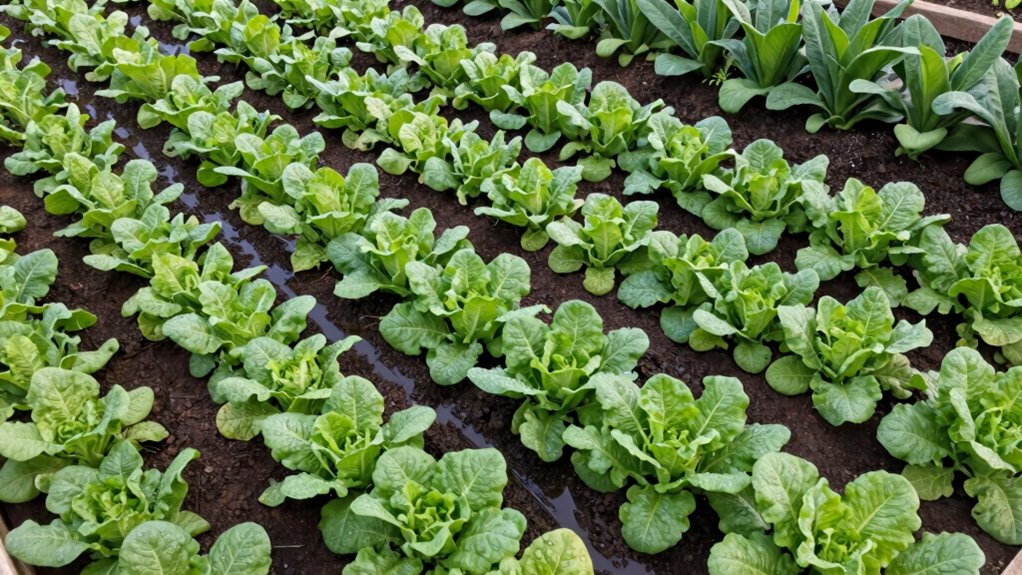
When garden space is limited, efficient watering becomes critical for maximizing crop yield without relying on additional equipment or area.
You must optimize every drop where it matters most.
- Water deeply but less frequently to encourage roots grow downward seeking moisture, creating stronger plant foundations.
- Apply mulch immediately after planting to reduce evaporation while soil organisms break it down for natural water retention.
- Group plants with similar water needs together so you’re not overwatering some while underwatering others.
- Water early morning when stomata open for maximum absorption before heat stress begins.
- Use your hands to test soil moisture by inserting fingers two inches deep; water only when soil feels dry at that depth.
These methods create sustainable growing conditions that maximize yield through precise hydration management.
Stop Pests Before They Take Over
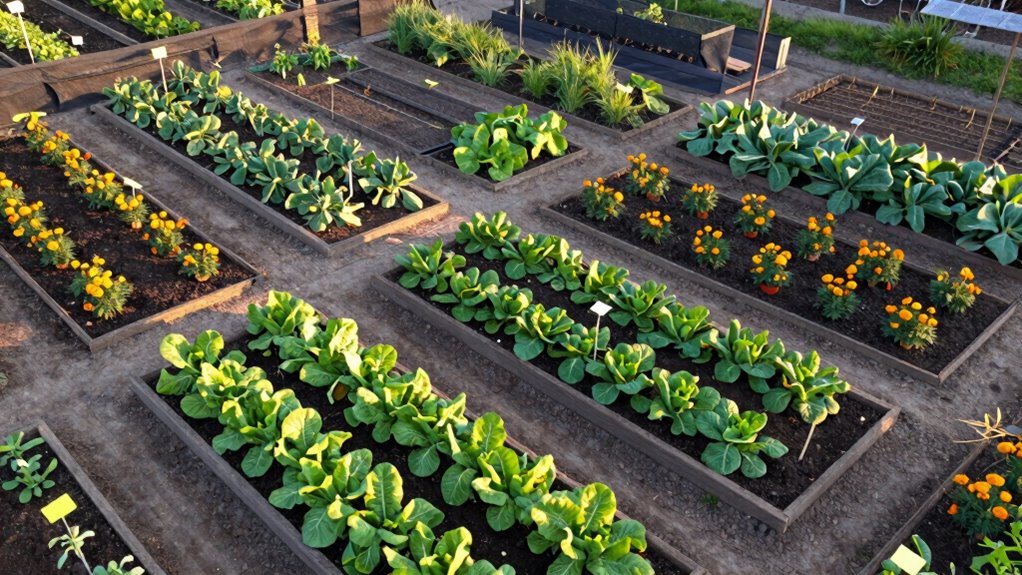
Prevention remains your most powerful tool against garden pests, especially in small spaces where infestations can quickly devastate entire crops.
You must monitor plants daily, checking undersides of leaves where pests often hide. Remove weeds that harbor harmful insects and maintain clean garden beds.
Install physical barriers like row covers or copper tape to deter slugs and crawling insects. Introduce beneficial insects such as ladybugs and lacewings that prey on aphids and mites.
Use companion planting strategies—marigolds repel nematodes while basil protects tomatoes. Apply organic solutions like neem oil or insecticidal soap at first sign of trouble.
Rotate crops annually to disrupt pest life cycles. You’ll build confidence knowing you’re taking smart, proactive steps that work.
Keep a Garden Journal for Bigger Harvests Next Year
Because detailed record-keeping directly correlates with increased yields, maintaining a garden journal becomes vital for maximizing your small garden’s potential.
You’ll track essential data that transforms guesswork into strategic planning.
- Planting dates and varieties help you identify which crops perform best in your specific microclimate and soil conditions.
- Weekly growth measurements reveal ideal spacing and timing patterns for successive plantings.
- Pest and disease occurrences with dates let you predict and prevent future outbreaks before they devastate your harvest.
- Weather patterns and soil moisture levels connect environmental factors to plant performance and water requirements.
- Harvest yields and quality ratings provide concrete evidence for selecting next year’s most productive varieties.
Your journal becomes your garden’s DNA, containing everything needed to replicate success and avoid past mistakes.
Conclusion
You’ve now revealed the secrets to maximizing your small garden’s potential. By implementing these strategies—from vertical growing to wave planting—you’ll boost yields dramatically. Your garden will become so productive it’ll feel like you’re harvesting from a farm twice its size. Keep detailed records, stay consistent with soil testing, and watch your harvests explode beyond expectations.
