

Like a key revealing hidden potential, the right fertilizer can transform your vegetable garden from struggling to thriving. But with countless options available, choosing wisely depends on understanding your soil’s unique needs and your plants’ specific demands. You’ll need to decode N-P-K ratios, recognize deficiency signs, and time applications perfectly. Get this wrong, and you’re either wasting money or damaging your crops. Ready to make every nutrient count?
How Do You Read Fertilizer Labels and N-P-K Ratios?
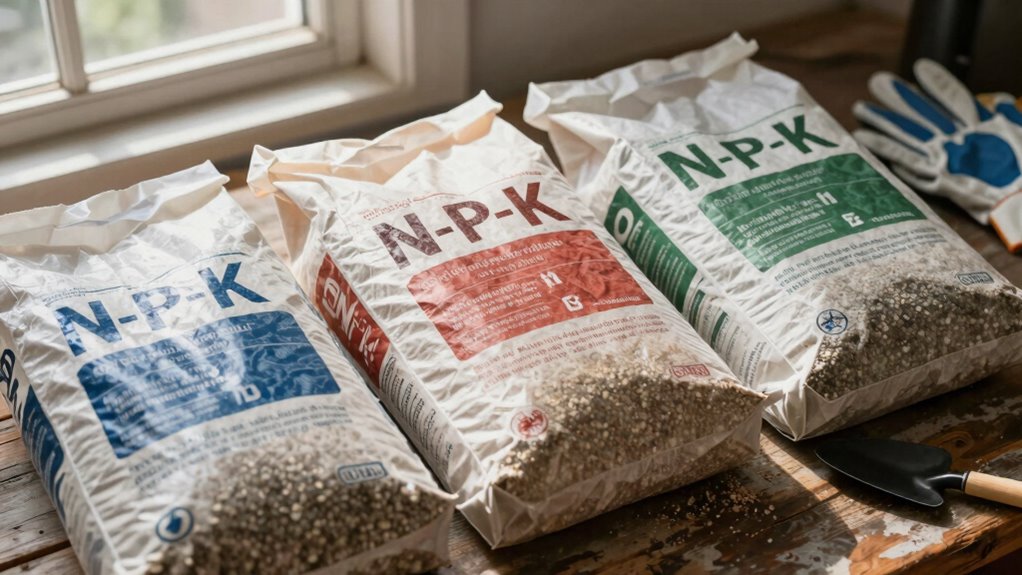
How do you decode the numbers on fertilizer labels?
You’re looking at the N-P-K ratio, which shows nitrogen, phosphorus, and potassium percentages. A 10-10-10 label means 10% nitrogen, 10% phosphorus, and 10% potassium.
These macronutrients fuel different growth stages. Nitrogen promotes leafy green growth, phosphorus supports root development and flowering, while potassium strengthens overall plant health and disease resistance.
You should match these ratios to your vegetables’ needs. Leafy greens benefit from higher nitrogen, while tomatoes and peppers need more phosphorus for fruiting.
Don’t overlook the guaranteed analysis section listing micronutrients like iron and zinc. Understanding these labels helps you choose fertilizers that actually meet your garden’s specific requirements.
How Do You Test Soil and Pick the Right Fertilizer?
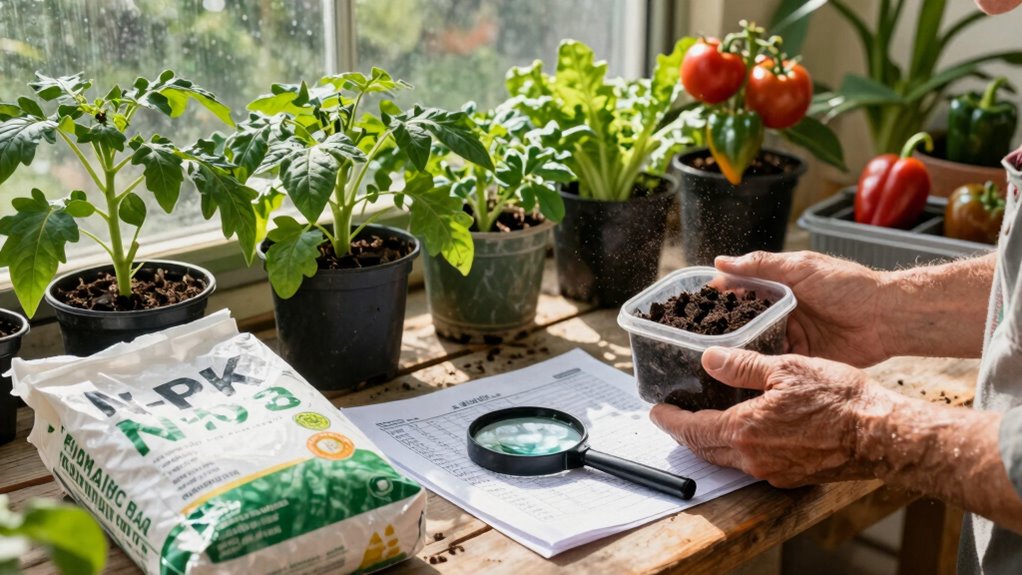
Why test your soil before choosing fertilizer? You need to understand what nutrients your soil lacks or has in excess. Purchase a home testing kit or send samples to your local extension office for detailed analysis.
Test for pH levels, nitrogen, phosphorus, and potassium content. Your results reveal specific deficiencies affecting plant growth. Don’t guess – let science guide your fertilizer selection. Home kits provide immediate basic readings, while professional tests offer thorough nutrient breakdowns.
Pay attention to pH levels since they affect nutrient availability. Record your findings and compare them against recommended vegetable growing conditions. Armed with this data, you’ll make informed decisions about which fertilizers address your soil’s exact needs.
Testing eliminates waste and prevents over-fertilization that damages plants. You’re taking control of your garden’s success through smart, targeted nutrition choices.
Which Vegetables Need More Nitrogen, Phosphorus, or Potassium?
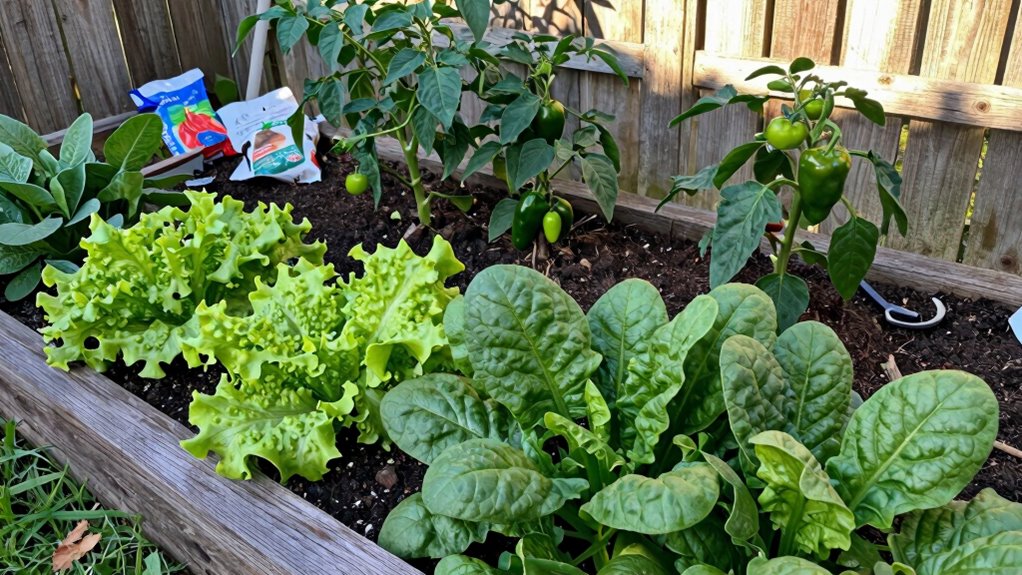
You’ll want to match your fertilizer choices to each vegetable’s primary nutritional demands.
Leafy greens like lettuce and spinach thrive with nitrogen-rich formulas that promote lush foliage growth.
Root crops including carrots and potatoes respond best to phosphorus-heavy fertilizers, while fruit-bearing vegetables such as tomatoes and peppers require potassium-dominant nutrients for ideal yields.
Nitrogen-Rich Leafy Greens
Leafy greens like spinach, lettuce, and kale demand higher nitrogen levels than most vegetables because they continuously produce tender, chlorophyll-rich foliage that requires substantial protein synthesis. You’ll notice these crops respond dramatically to nitrogen availability.
- Spinach needs consistent nitrogen feeding throughout its growth cycle for ideal leaf development.
- Lettuce varieties require steady nitrogen supply to prevent premature bolting and maintain tender textures.
- Kale benefits from moderate nitrogen applications to support continuous leaf production.
- Arugula responds well to balanced fertilizers with slightly elevated nitrogen content.
Monitor your leafy greens closely. Yellowing lower leaves often indicate nitrogen deficiency, while overly lush growth might signal excess nitrogen.
You want vibrant green foliage without compromising root health. These plants thrive when you provide steady, moderate nitrogen levels through regular feeding schedules.
Phosphorus-Heavy Root Crops
Root crops like carrots, beets, and radishes demand substantial phosphorus to fuel their underground development.
You’ll want to choose fertilizers with higher phosphorus content, indicated by the middle number on fertilizer labels. Phosphorus promotes strong root formation and energy transfer within plants.
Apply bone meal, rock phosphate, or balanced fertilizers with elevated phosphorus levels. Test your soil pH regularly, as phosphorus availability decreases in alkaline conditions.
Feed these crops consistently throughout their growing season, but avoid over-fertilization which can cause misshapen roots. Incorporate compost rich in organic matter to slowly release phosphorus.
Remember that phosphorus doesn’t leach easily, so apply it before planting. You’re nurturing the foundation of healthy root vegetables when you prioritize phosphorus nutrition.
Potassium-Demanding Fruit Bearers
Tomatoes, peppers, and eggplants require abundant potassium to produce robust fruits and maintain healthy plant structure.
You’ll notice these fruit-bearing vegetables need extra potassium during flowering and fruit development stages.
When fertilizing potassium-demanding plants, remember these key points:
- Apply potassium-rich fertilizers like potassium sulfate or wood ash
- Side-dress plants during bloom time for maximum fruit production
- Monitor leaves for yellowing edges, which signals potassium deficiency
- Avoid over-fertilizing nitrogen, which can reduce potassium uptake
These vegetables reward you with bountiful harvests when you provide adequate potassium.
Your plants will develop stronger stems, better disease resistance, and higher yields.
Test your soil regularly to guarantee proper potassium levels, and adjust fertilization based on plant performance and soil conditions.
When Should You Apply Fertilizer to Your Vegetable Plants?
You shouldn’t apply fertilizer at random intervals – timing matters for maximum plant uptake and growth.
Spring planting requires different nutrient scheduling than summer maintenance or fall preparations, so you’ll need to adjust your feeding approach based on seasonal plant demands.
Watch for yellowing leaves, stunted growth, or poor fruit development as clear signals that your vegetables need immediate nutritional support.
Optimal Timing For Fertilizer Application
While understanding your vegetables’ nutritional needs is essential, timing your fertilizer application correctly can make the difference between a thriving garden and disappointing yields. You shouldn’t apply fertilizer randomly – precision matters for maximum uptake and plant health.
Apply fertilizer when plants show active growth, not during dormancy. Side-dress leafy greens every two weeks during harvest season. Root vegetables need phosphorus-heavy fertilizer early, then reduced applications. Fruit-bearing plants require consistent feeding during flowering and fruit development.
- Early morning or late evening prevents fertilizer burn from direct sunlight
- Water before applying guarantees nutrients reach root zones effectively
- Monitor plant response and adjust frequency based on growth patterns
- Avoid fertilizing stressed plants – wait until they recover from drought or pest damage
Timing creates belonging in your garden’s ecosystem.
Seasonal Considerations For Vegetable Feeding
Although timing fertilizer applications throughout the growing season maximizes plant health and yield, understanding seasonal nutrient demands guarantees your vegetables receive ideal feeding.
Spring planting requires balanced fertilizers to support initial growth and root development. During summer’s peak growing period, nitrogen-heavy feeds promote lush foliage and robust plant structure.
As fall approaches, switch to phosphorus and potassium-rich formulas that strengthen root systems and prepare plants for seasonal shifts.
Cool-season crops like lettuce and spinach need lighter feeding compared to heavy feeders like tomatoes and peppers.
You should adjust application rates based on weather patterns and soil temperature fluctuations.
Regular soil testing reveals nutrient depletion patterns, helping you customize seasonal feeding schedules.
Consistent monitoring assures your vegetable garden receives precisely what it needs when it needs it most.
Signs Your Plants Need Immediate Nutrients
When plants display specific visual cues, they’re signaling an urgent need for nutrient intervention. You should respond immediately to these warning signs to prevent crop failure and maintain healthy yields.
- Yellowing leaves especially between veins, indicate nitrogen deficiency requiring quick nitrogen-rich fertilizer application.
- Purple or red discoloration on leaf undersides and stems signals phosphorus shortage needing immediate phosphorus boost.
- Brown, crispy leaf edges show potassium deficiency demanding rapid potassium supplementation.
- Stunted growth with pale green foliage suggests general nutrient starvation requiring balanced fertilizer treatment.
Don’t wait for these symptoms to worsen. Apply appropriate fertilizers within 24-48 hours of noticing these signs.
Your plants recover quickly when you provide missing nutrients promptly. Regular observation prevents major nutrient deficiencies that reduce yields and compromise plant health.
Can You Use Organic Fertilizers Instead of Synthetic Ones?
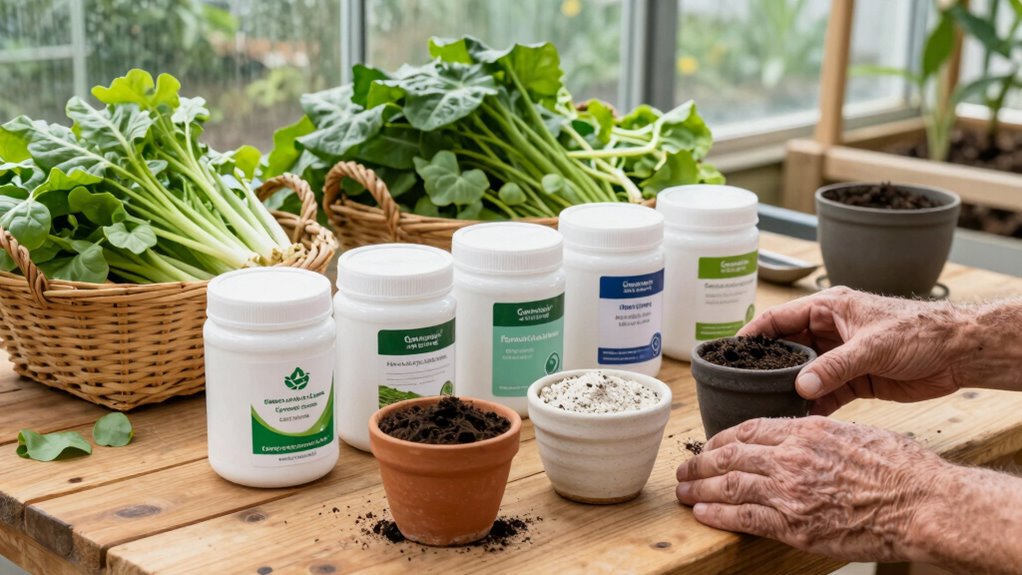
Why choose organic fertilizers over synthetic ones for your vegetable garden?
You’ll build healthier soil structure and support beneficial microorganisms that synthetic options can’t provide.
Organic fertilizers release nutrients slowly, preventing harmful salt buildup that damages plant roots.
You’re also avoiding synthetic chemicals that may affect your family’s health.
Organic options like compost, bone meal, and fish emulsion deliver balanced nutrition while improving soil biology.
You’ll notice better-tasting vegetables and stronger plant growth over time.
Yes, you absolutely can use organic fertilizers instead of synthetic ones.
Your garden will thrive while you contribute to environmental sustainability.
Make the switch and watch your vegetables flourish naturally.
How to Spot Nitrogen, Phosphorus, and Potassium Deficiencies in Vegetables
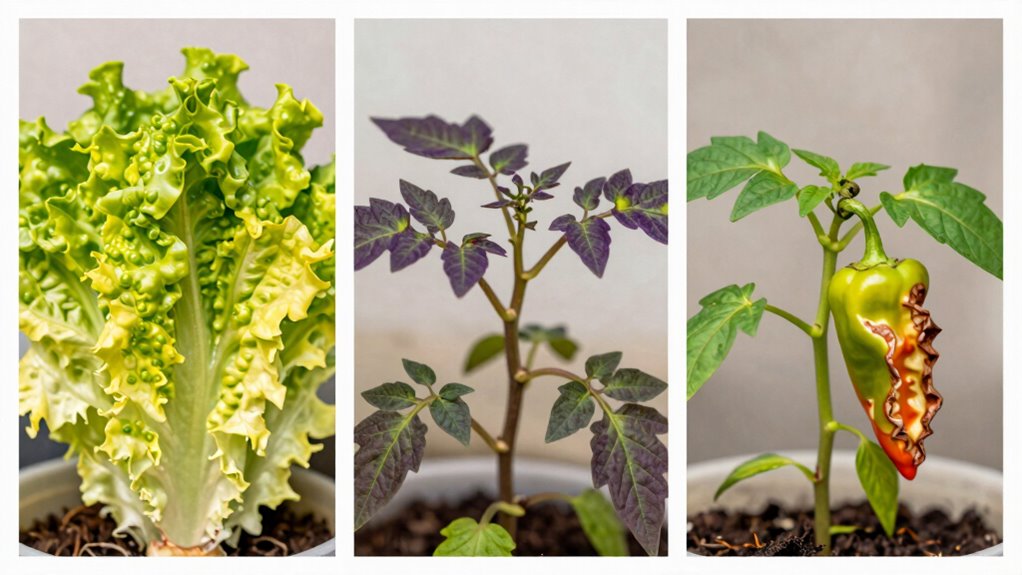
Recognizing nutrient deficiencies in your vegetable plants is just as important as choosing the right fertilizer type.
You need to spot these problems early to maintain healthy crops and maximize your garden’s potential.
- Nitrogen deficiency shows as yellowing leaves starting from the bottom, with pale green or yellow new growth.
- Phosphorus deficiency causes dark green or purple leaves with stunted growth and poor root development.
- Potassium deficiency appears as brown leaf edges and yellowing between leaf veins, often starting at the bottom.
- General deficiency symptoms include slow growth, weak stems, and reduced yields.
Trust your observations and act quickly when you notice these signs.
Your plants depend on you to recognize what they need.
Which Fertilizers Work Best for Different Vegetable Types?
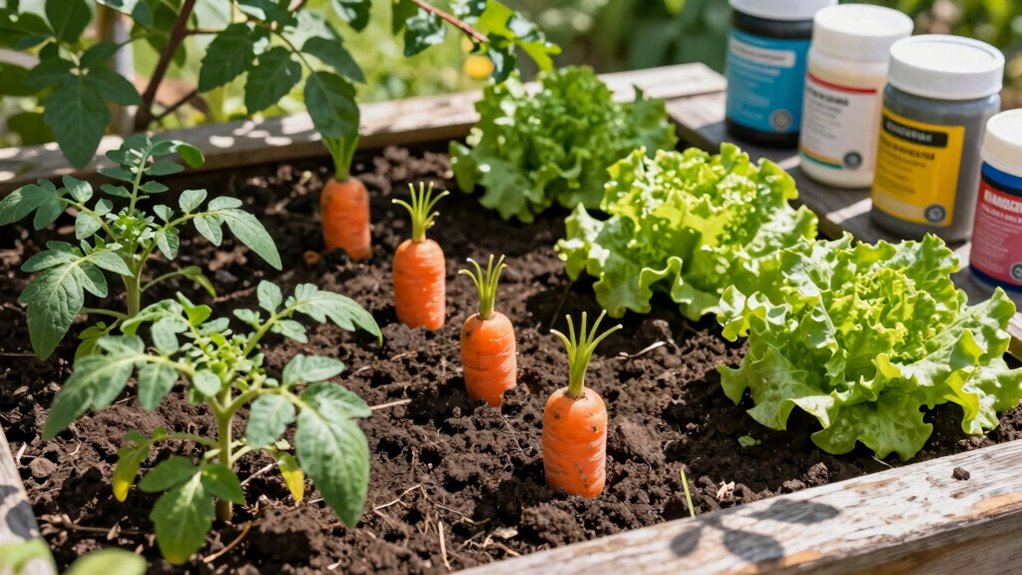
How do you match the right fertilizer to your specific vegetable crops?
Leafy greens like lettuce and spinach thrive with nitrogen-rich fertilizers that promote lush foliage growth.
Root vegetables such as carrots and radishes need phosphorus-heavy formulas to develop strong root systems.
Fruit-bearing plants including tomatoes and peppers require balanced nutrients with extra potassium for robust fruit production.
Legumes like beans naturally fix nitrogen, so they need less nitrogen supplementation.
Brassicas including broccoli and cabbage benefit from steady nitrogen supply throughout their growing season.
Cucumbers and squash respond well to compost-based fertilizers that provide slow-release nutrients.
Remember that soil testing reveals your garden’s specific deficiencies, helping you choose fertilizers that address actual needs rather than applying generic solutions.
What Are the Best Methods for Applying Fertilizer to Vegetables?
While selecting the right fertilizer is essential for vegetable success, applying it correctly determines whether your plants receive ideal nutrition.
You need targeted methods that deliver nutrients efficiently while protecting your garden’s health and productivity.
Your application approach should match your fertilizer type and vegetable needs:
- Broadcast spreading works well for granular fertilizers across large planting areas
- Side-dressing places nutrients directly beside growing plants for targeted feeding
- Foliar spraying delivers quick nutrient absorption through leaf surfaces when plants need immediate support
- Band application concentrates fertilizer in planting rows before seeding or transplanting
Each method maximizes nutrient uptake while minimizing waste and environmental impact.
How to Apply Fertilizer to Vegetables Without Overdoing It

Overfertilizing can do more harm than good, so you’ll want to apply nutrients carefully to avoid burning plants or creating runoff issues. You should always follow package directions and err on the side of less rather than more.
Test your soil first to understand existing nutrient levels and pH balance. Apply fertilizer evenly using a spreader for granular types, and water thoroughly afterward to activate nutrients without washing them away.
Side-dress plants by placing fertilizer several inches from stems, never directly on them. Monitor plant health closely after application – yellowing leaves or stunted growth signal overapplication.
You’re part of a community that values sustainable gardening practices, so remember that slow-release fertilizers provide steady nutrition while reducing environmental impact and giving you better long-term results.
Conclusion
Think of fertilizing vegetables like tuning a guitar—too little or too much throws everything off key. Just as 60% of gardeners struggle with nutrient imbalance, you can avoid common pitfalls by understanding your soil’s needs. Match N-P-K ratios to your crops, time applications correctly, and watch your harvest hit the right notes. Your vegetables will thank you with bumper yields.
