

You might think raised beds are just another gardening trend, but they actually solve real problems that plague traditional gardens. Poor drainage, compacted soil, and back-breaking maintenance become manageable when you build up your growing space. Starting with the right location and materials makes all the difference in your harvest success. Let’s explore how to set up your first raised bed system properly.
Why Raised Beds Beat Regular Gardens
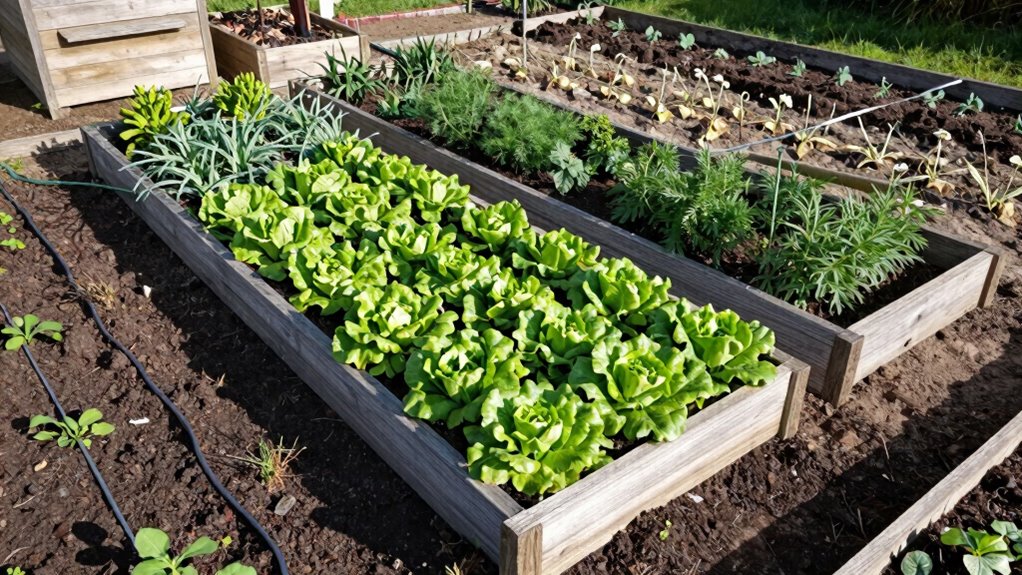
While traditional in-ground gardens have been the standard for centuries, raised bed gardening offers distinct advantages that make it the superior choice for modern cultivators.
You control soil quality precisely, avoiding compacted earth and drainage issues common in regular gardens. Raised beds warm up faster in spring, extending your growing season considerably.
You’ll experience less back strain since you’re working at waist level, making gardening more accessible. Soil management becomes simpler because you’re not dealing with existing ground conditions.
Pest control improves dramatically with physical barriers around your plants. Water efficiency increases through reduced runoff and targeted irrigation.
You’ll achieve higher yields per square foot while using less space. Disease prevention improves through better air circulation and soil drainage.
These technical advantages create better growing conditions that produce superior results consistently.
Choose the Perfect Raised Bed Location
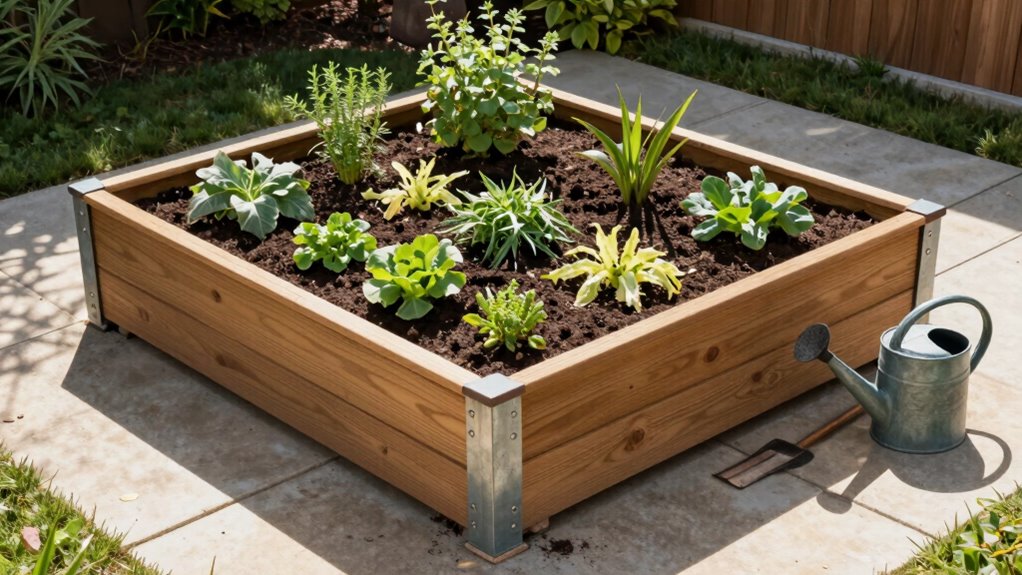
Everyone should carefully evaluate several critical factors before selecting a location for raised bed gardening.
You’ll want to choose a spot that receives six to eight hours of direct sunlight daily for ideal plant growth.
Make sure the area has proper drainage to prevent waterlogging your crops.
You should avoid locations near large trees or shrubs that compete for nutrients and water.
Select level ground whenever possible to simplify maintenance and irrigation.
Consider proximity to water sources for convenient watering.
You’ll also want to place your raised bed where it’s easily accessible from all sides for planting, weeding, and harvesting.
Don’t forget to check for underground utilities before finalizing your location choice.
Gather Essential Materials for Building
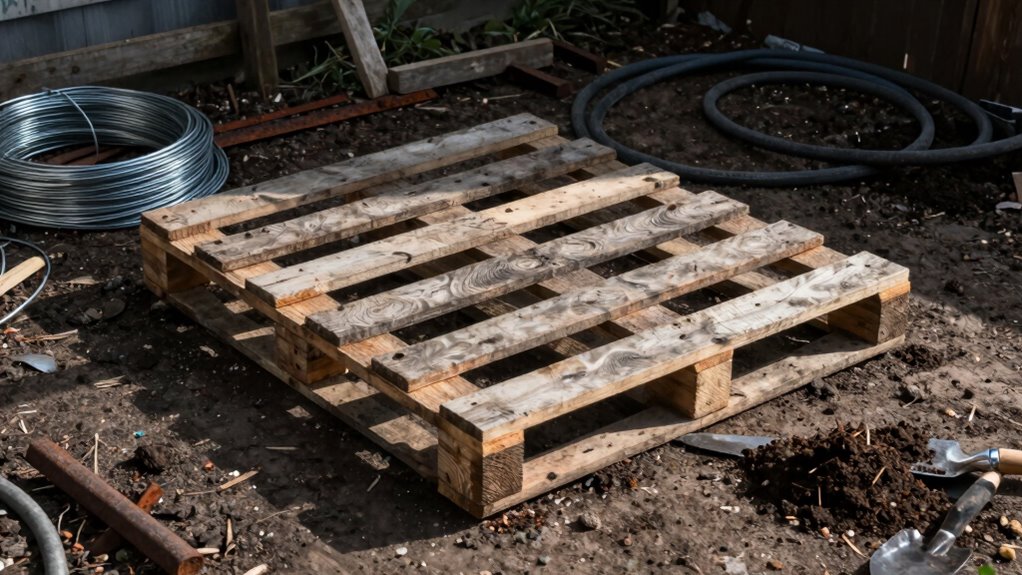
Several key materials form the foundation of successful raised bed construction.
You’ll need durable lumber like cedar or composite boards that resist rot and weather damage. Measure your planned bed dimensions carefully to calculate required board lengths. Purchase galvanized screws or bolts for assembly, as they won’t corrode quickly in outdoor conditions.
Landscape fabric prevents weeds while allowing drainage, so don’t skip this essential layer. You’ll also require basic tools: drill, measuring tape, level, and shovel. Consider buying corner brackets for extra structural support.
Soil amendments like compost improve growing conditions immediately. Plan your material purchases based on bed size and design complexity.
Quality materials guarantee your raised bed lasts years, so invest wisely in components that withstand seasonal weather changes and soil pressure effectively.
Plant High-Yield Crops in Limited Space
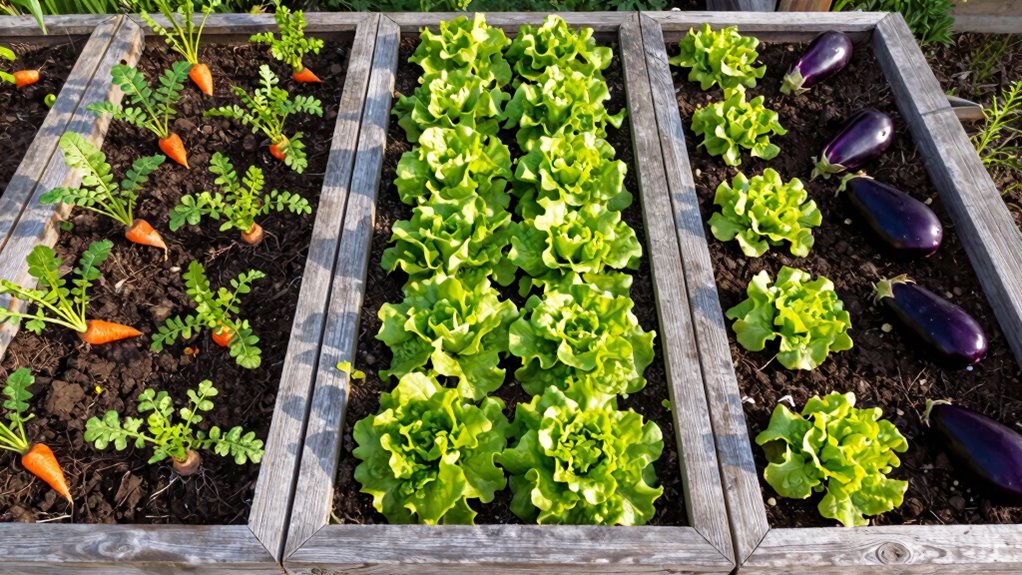
With your raised bed structure assembled and filled with prepared soil, you can maximize your growing potential by selecting high-yield crops that produce abundant harvests in confined areas.
Choose compact varieties like cherry tomatoes, bush beans, and leaf lettuce that mature quickly and produce continuously. Plant succession crops: sow radishes every two weeks for steady harvests.
Utilize vertical space with trellised cucumbers and pole beans. Square foot gardening maximizes production through intensive planting patterns.
Focus on crops yielding multiple harvests: cut-and-come-again lettuce, perpetual spinach, and herbs like basil. Determinate tomato varieties fruit heavily over short periods.
Root vegetables like carrots and onions produce high yields in small spaces. Research companion planting combinations that increase overall productivity while optimizing your bed’s limited real estate for maximum food production.
Maintain Soil Health and Rotate Crops Annually
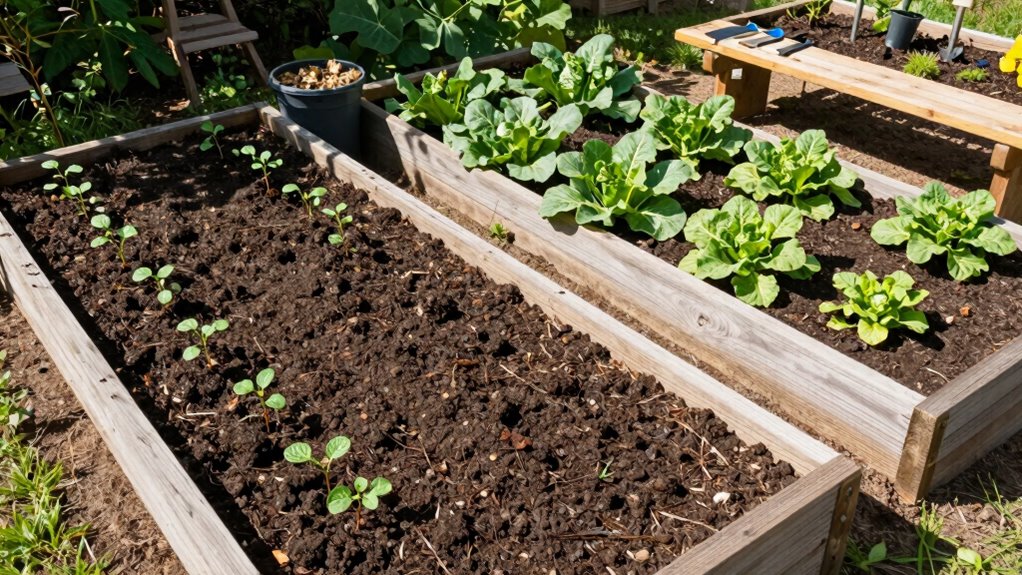
Although your raised garden bed may seem like an isolated growing environment, maintaining soil health requires the same fundamental principles as traditional gardening while offering unique advantages for crop rotation.
You control the soil composition and can easily implement annual rotation strategies that prevent nutrient depletion and disease buildup.
- Test soil pH annually and amend with compost or organic matter to maintain ideal nutrient levels between crops.
- Rotate plant families systematically – follow heavy feeders like tomatoes with light feeders like herbs.
- Incorporate cover crops during off-seasons to prevent erosion and add nitrogen naturally.
- Keep detailed records of planting locations to track rotation patterns and identify potential issues early.
These practices confirm your raised bed remains productive while building a sustainable growing system.
Conclusion
You’ve now revealed the secrets to successful raised bed gardening. By controlling soil quality, maximizing space efficiency, and rotating crops strategically, you’ll harvest abundance from your compact growing area. Think of your raised bed as a garden laboratory where precision meets productivity—every square foot works harder than traditional plots. With proper maintenance and smart plant choices, your elevated oasis will yield exceptional results year after year.
