

Heavy rainfall can devastate your garden through soil erosion, root suffocation, and physical damage you might not immediately notice. You’ll want to understand how excess water impacts different plant types and learn proactive strategies to shield your greenery before storms hit. What simple materials can you use to create effective protective barriers that won’t crush delicate foliage?
How Heavy Rain Hurts Plants : And What To Do
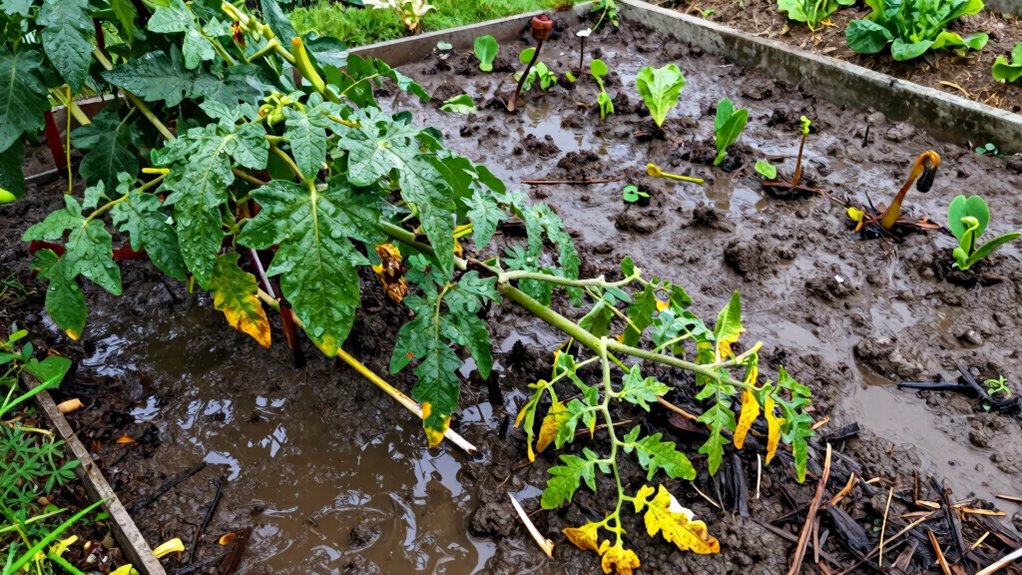
Heavy rainfall can devastate your garden in several ways, from soil erosion to root suffocation.
You’ll notice waterlogging displaces oxygen in soil pores, causing root cells to die from hypoxia. Compacted soil prevents proper drainage, creating toxic conditions. Nutrient leaching washes away essential minerals before plants absorb them.
Physical damage occurs when droplets strike leaves at high velocity, rupturing cell walls and creating entry points for pathogens. Standing water promotes fungal growth, particularly root rots.
Soil particles carry contaminants that coat leaf surfaces, blocking photosynthesis. Young seedlings succumb quickly to these stresses. Mature plants develop weak root systems unable to support healthy growth.
Monitor drainage patterns in your garden. Observe where water pools after storms. Check soil moisture levels regularly. Early detection prevents permanent damage.
Understanding these mechanisms helps you protect your garden investment effectively.
Build Cheap DIY Plant Covers Before Storms Start
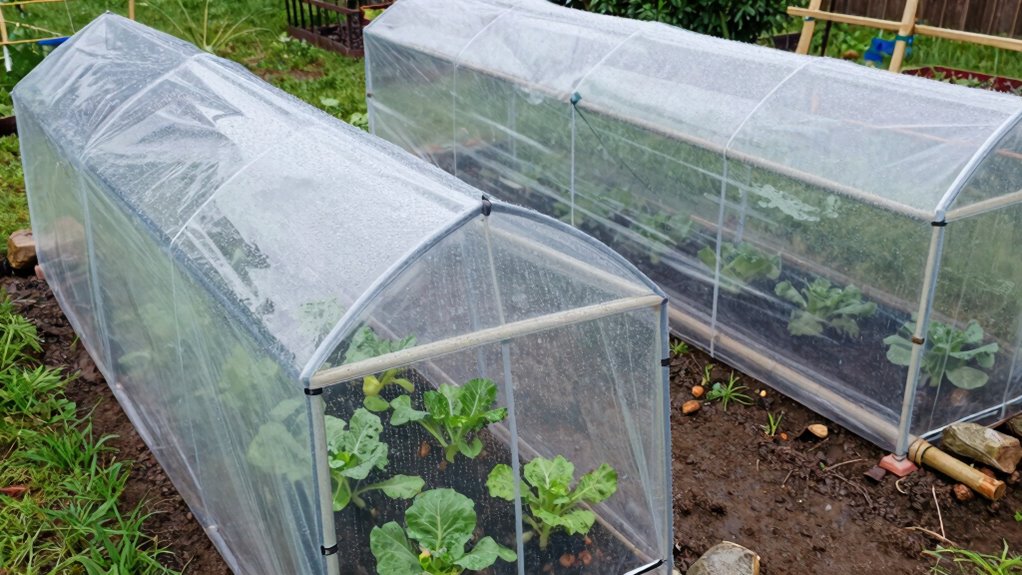
When storms approach, you should prepare inexpensive protective covers that shield vulnerable plants from damaging rainfall.
Use plastic sheeting, burlap, or old bed sheets stretched over wire frames or stakes. Create simple A-frame structures with PVC pipes or wooden dowels for smaller plants. Position covers high enough to prevent crushing plant stems while ensuring adequate airflow. Secure edges with rocks, soil, or clips to prevent wind displacement.
Focus on protecting delicate foliage and flowers first, as these suffer most damage. Store materials in easily accessible locations before weather warnings appear. Quick deployment becomes possible when you pre-position covers near vulnerable garden areas.
Check that covers don’t trap excessive moisture underneath, which could promote fungal growth. Remove covers immediately after storm threats pass to restore normal growing conditions.
Which Plants Suffer Most From Flooded Soil?
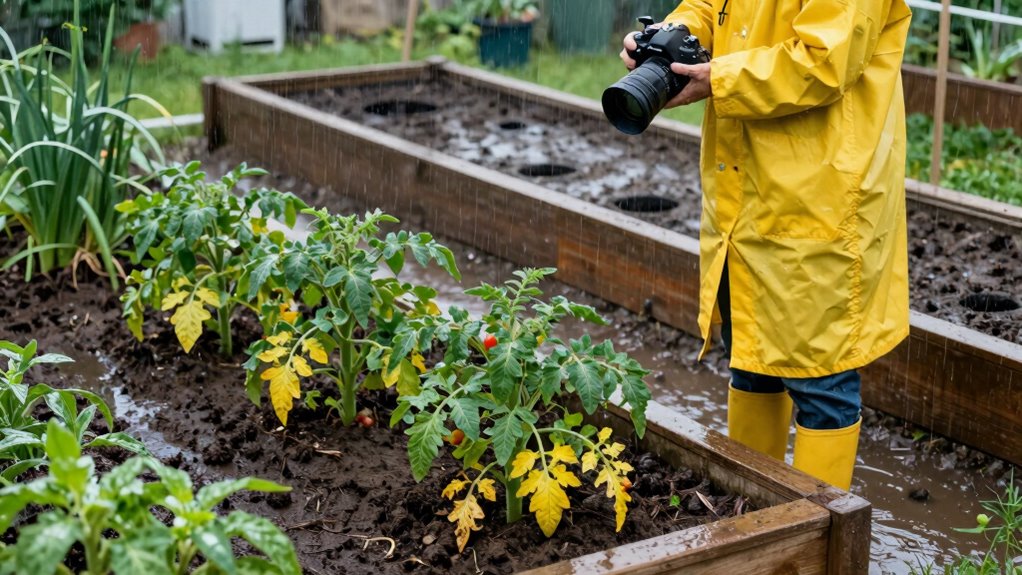
You’ll notice that plants requiring excellent drainage suffer most when soil becomes waterlogged, as their root systems can’t tolerate saturated conditions.
Most vulnerable are succulents, cacti, and Mediterranean herbs like rosemary and lavender, which evolved in arid environments where excess water quickly drains away.
These plants need soil that pulls moisture away from their roots within 24-48 hours to prevent root rot and fungal diseases.
Most Vulnerable Plant Types
Plants with shallow root systems and poor drainage tolerance suffer the most damage when soil becomes waterlogged.
You’ll notice that seedlings, herbs like basil and cilantro, and vegetable crops such as lettuce and spinach are particularly susceptible. These plants can’t access deeper oxygen reserves during flooding events. Their roots suffocate quickly in saturated conditions.
You should also watch annual flowers like marigolds and zinnias, which haven’t developed extensive root networks.
Tropical plants including tomatoes and peppers struggle with excess moisture around their roots. Bulb plants like tulips and daffodils rot when soil stays waterlogged too long.
Identifying these vulnerable types helps you prioritize protection efforts.
You’ll want to relocate containers, improve drainage, or provide temporary shelter for these susceptible plants before heavy rains arrive.
Soil Drainage Requirements
Understanding which plants suffer most from flooded soil builds directly on recognizing vulnerable plant types, since soil drainage requirements vary greatly among species.
You’ll find that plants native to arid regions, like succulents and cacti, possess minimal tolerance for waterlogged conditions. These species develop root rot rapidly when soil remains saturated beyond forty-eight hours.
Mediterranean herbs, including rosemary and lavender, share similar vulnerabilities due to their evolutionary adaptation to well-draining soils.
Woody shrubs and trees typically handle brief flooding better than herbaceous plants. However, even these sturdy specimens succumb to prolonged water saturation.
Container plants require your immediate attention, as restricted drainage makes them exceptionally prone to drowning.
Sandy or raised bed environments usually provide adequate drainage, while clay soils retain moisture far too long for ideal plant health.
Should Potted Plants Be Moved Indoors in Heavy Rain?
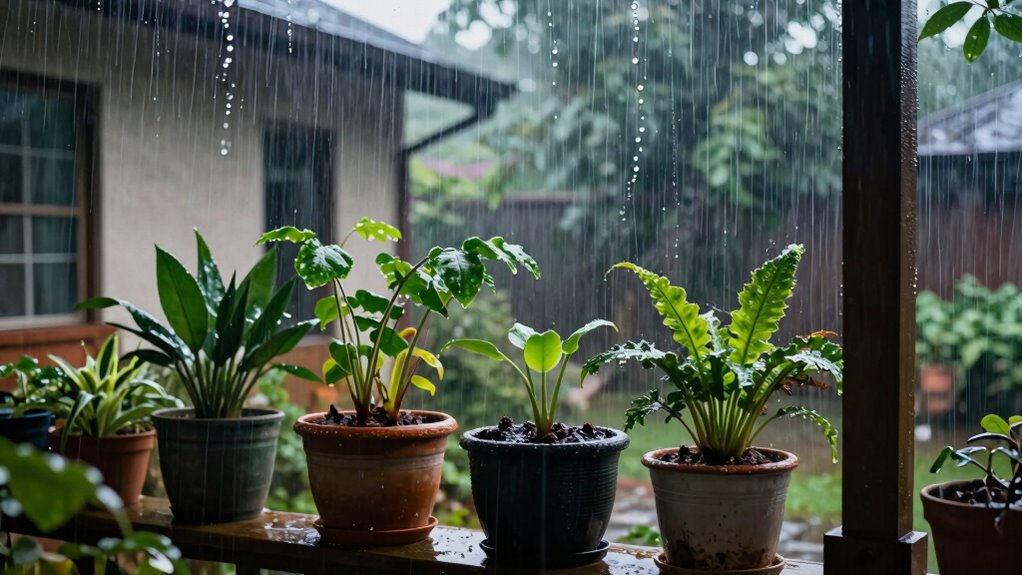
You should move potted plants indoors during heavy rain to prevent soil compaction and root damage from excessive water accumulation.
If indoor relocation isn’t possible, make sure containers have adequate drainage holes and consider elevating pots to improve water runoff.
These protective measures help maintain proper soil aeration and prevent the anaerobic conditions that can quickly kill your plants.
Indoor Protection Benefits
Why shouldn’t you move potted plants indoors during heavy rainstorms? You’ll discover several compelling benefits that make indoor protection worthwhile for your plant collection.
Moving plants inside prevents multiple damage factors simultaneously. You’re shielding foliage from physical tearing caused by intense water impact while protecting soil structure from oversaturation. Root systems avoid shock from temperature fluctuations that accompany storm conditions.
Consider these key advantages:
- Prevents soil erosion and nutrient leaching from excessive rainfall
- Maintains ideal humidity levels around leaves and stems
- Reduces risk of fungal infections developing on wet foliage
- Preserves flowering cycles by avoiding cold stress from rain exposure
You’re creating a stable environment that supports continued growth. Indoor relocation works especially well for tropical specimens that thrive in consistent conditions. Your plants recover faster when you minimize environmental stress during severe weather events.
Outdoor Drainage Solutions
While indoor relocation offers immediate protection during heavy rainfall, outdoor drainage solutions provide a practical alternative for gardeners who can’t move potted plants inside.
You should install proper drainage systems like French drains or perforated pipes around plant areas to redirect excess water. Consider using raised beds with adequate drainage holes and gravel bases to prevent waterlogging.
Position potted plants on elevated surfaces or drainage trays that allow water runoff. You can also create temporary diversion channels using sandbags or soil berms to redirect rainfall away from vulnerable plants.
These solutions work best when you implement them before storm forecasts, giving you proactive control over your garden’s water management and helping you feel prepared alongside fellow gardeners facing similar challenges.
Plant Recovery Techniques
One effective approach to safeguarding potted plants during heavy rainfall involves strategic indoor relocation. You should move containers to sheltered areas before storm arrival, preventing soil erosion and root damage.
Timing matters significantly – relocate plants when rainfall intensity increases beyond moderate levels.
- Assess container weight – Heavier pots resist wind displacement better than lightweight alternatives.
- Choose appropriate indoor locations – Near windows provides natural light while protecting from direct storm impact.
- Monitor drainage requirements – Indoor spaces need adequate drainage to prevent water accumulation.
- Consider plant-specific needs – Some species tolerate relocation stress better than others.
You’ll notice improved survival rates when implementing these techniques consistently.
Strategic relocation becomes second nature once you understand your plants’ individual requirements and respond proactively to weather forecasts.
Improve Garden Drainage to Avoid Waterlogged Soil
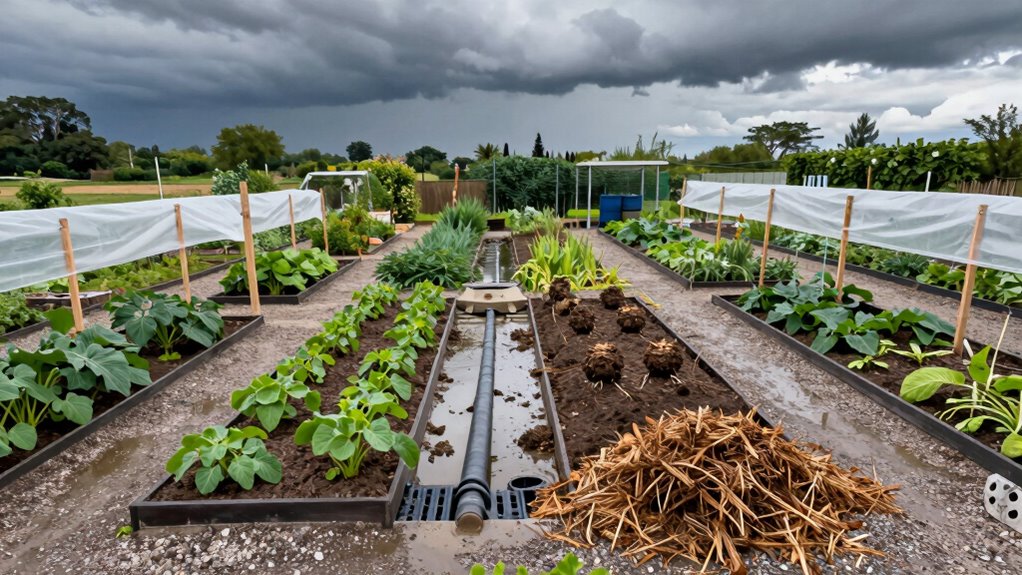
Waterlogged soil creates anaerobic conditions that deprive plant roots of oxygen and promote harmful bacterial growth. You must improve drainage before heavy rains arrive.
Test your soil’s drainage by digging a twelve-inch hole and filling it with water. If water remains after thirty minutes, drainage needs improvement.
Install French drains or perforated pipes to redirect excess water away from plant beds. Add organic matter like compost to heavy clay soils, which increases porosity and water infiltration.
Create raised planting areas or mounds for better natural drainage. Consider installing drain tiles around garden perimeters.
Mulch heavily around plants to prevent surface compaction while allowing excess water to evaporate naturally between rainfall events.
Greenhouse vs Raised Beds: Which Protects Plants More?
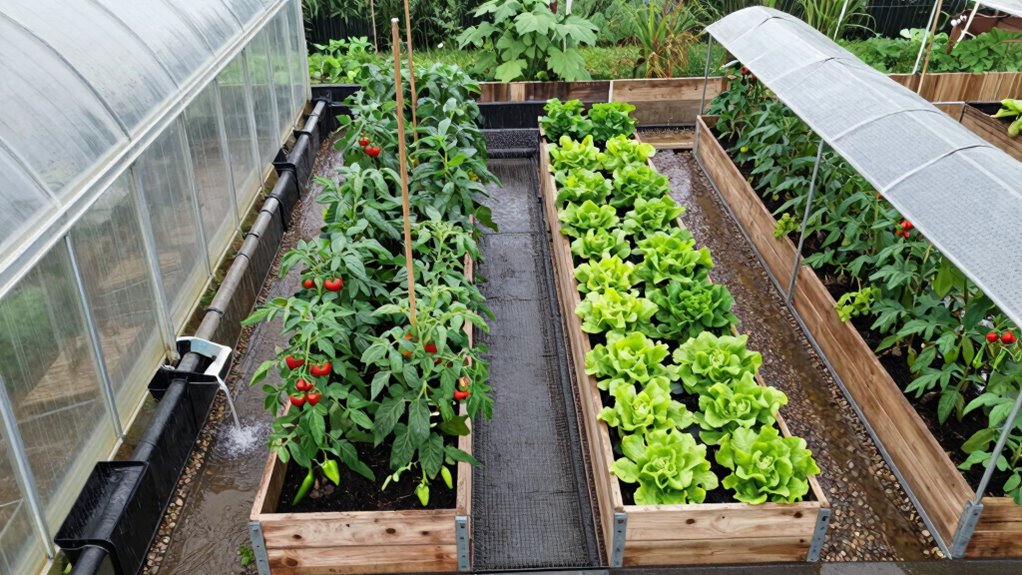
You’ll find that greenhouses provide superior structural protection through their enclosed framework and drainage systems, while raised beds offer enhanced soil aeration and faster water runoff due to their elevated design.
Both methods require different financial investments, with greenhouses typically costing more upfront but potentially offering greater long-term protection for your plants.
Consider your specific growing conditions and budget constraints when choosing between these two effective rain damage prevention strategies.
Greenhouse Structural Advantages
While both greenhouses and raised beds offer protection from heavy rain, greenhouses provide superior structural advantages that make them more effective at safeguarding plants during severe weather conditions.
You’ll discover that greenhouse construction creates a controlled environment that actively shields crops from nature’s fury.
Greenhouse structures offer several key benefits:
- Complete overhead coverage prevents direct rain impact and soil compaction
- Sturdy framing systems withstand high winds and heavy precipitation loads
- Adjustable ventilation lets you control humidity while maintaining protection
- Transparent materials allow peak light transmission despite overcast conditions
These engineered features create microclimates where plants thrive regardless of external weather patterns.
You become part of a community that understands protective gardening infrastructure works best when designed specifically for storm resistance.
Greenhouses simply outperform raised beds structurally.
Raised Beds Drainage Benefits
Heavy rainfall can quickly overwhelm plant root systems when soil drainage proves inadequate, making raised beds a practical solution for preventing waterlogging.
You’ll find that elevated planting areas allow excess water to drain naturally through gravity, preventing root rot and oxygen deprivation. Unlike traditional ground planting, raised beds give you control over soil composition, letting you mix coarse materials that enhance permeability. You can customize drainage holes and spacing based on your specific plant needs.
The improved aeration around root zones helps beneficial microorganisms thrive while preventing waterborne diseases. Raised beds also warm up faster in spring, allowing you to plant earlier.
You’re not just protecting plants from drowning; you’re creating an environment where roots can breathe and flourish, giving your garden better chances of surviving heavy downpours.
Cost Comparison Analysis
When evaluating protective structures for your garden, raised beds typically cost $15 to $30 per square foot installed, while greenhouses range from $25 to $50 per square foot depending on materials and complexity.
You’ll want to take into account these key factors:
- Initial investment: Raised beds require less upfront capital, making them accessible for budget-conscious gardeners.
- Long-term durability: Greenhouses offer decades of protection, while raised beds may need replacement every 10-15 years.
- Plant capacity: Greenhouses maximize growing space vertically, accommodating more plants per square foot.
- Maintenance costs: Raised beds demand ongoing soil amendments and drainage management.
Both options effectively shield plants from heavy rain damage.
Your choice depends on budget, space constraints, and long-term gardening goals. Calculate total cost of ownership before deciding.
Use Mulch to Absorb Excess Rainwater Fast
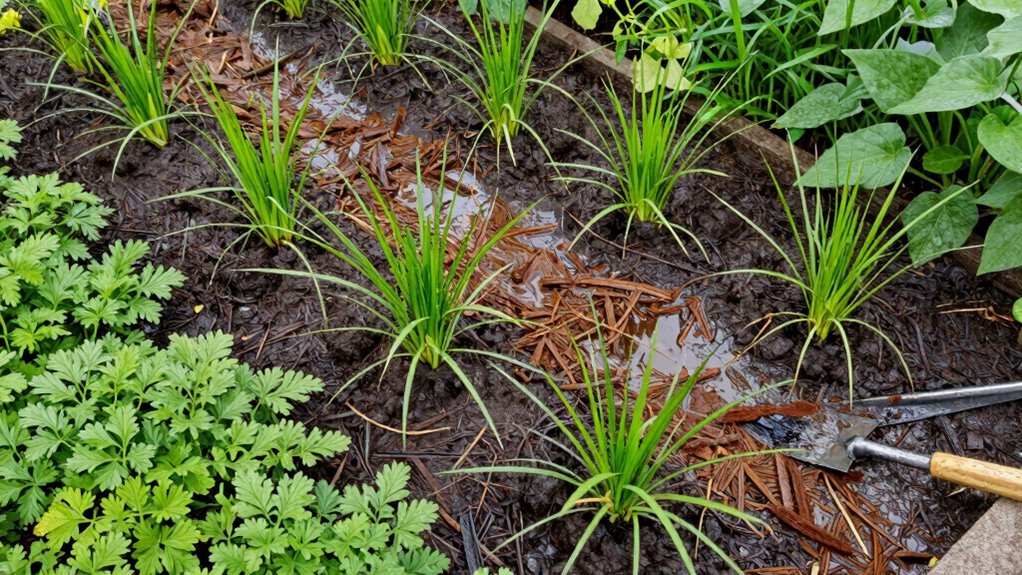
Mulch serves as an essential barrier that absorbs excess rainwater before it can pool around plant roots and cause waterlogging.
You should apply 2-4 inches of organic mulch like wood chips, straw, or shredded leaves around your plants. This layer captures rainfall impact, reducing soil compaction while creating air pockets that improve drainage.
Mulch acts like a sponge, holding water temporarily before it slowly percolates into deeper soil layers. You’ll prevent root rot and fungal diseases that thrive in waterlogged conditions.
Apply mulch in early spring before heavy rains arrive. Keep mulch a few inches from plant stems to avoid moisture buildup against bark.
Replenish mulch annually as it decomposes, maintaining ideal protection throughout growing seasons.
When to Use Row Covers for Rain Shielding
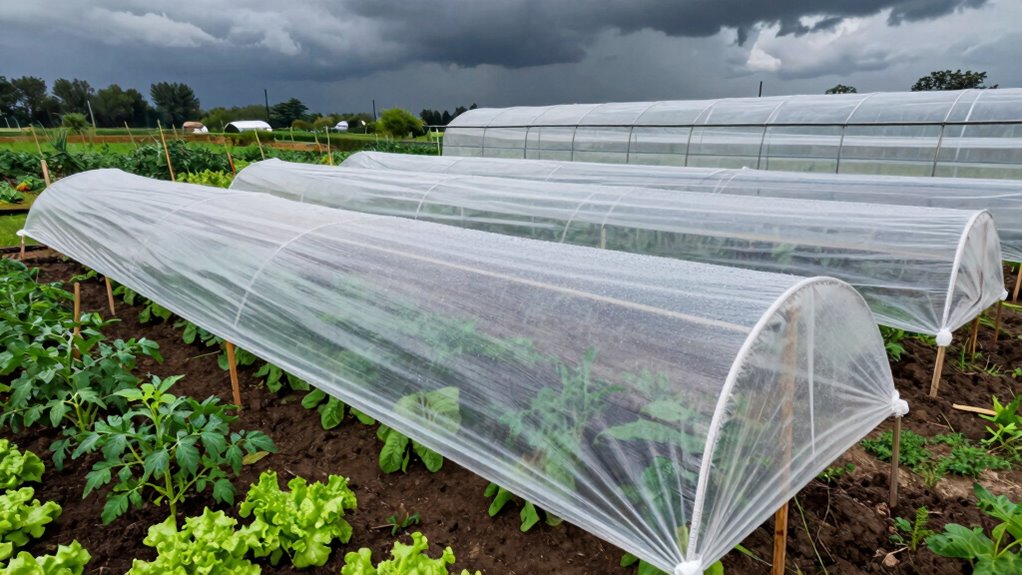
Row covers provide an effective barrier against excessive rainfall when applied during periods of sustained precipitation or before severe weather events. You should deploy these protective barriers when weather forecasts predict heavy downpours exceeding two inches or when plants show vulnerability to waterlogging.
Consider using row covers when:
- Soil drainage proves inadequate for your garden’s specific conditions
- Young seedlings face potential drowning from intense rainfall
- Extended rainy periods threaten fungal disease development
- Plants exhibit signs of root stress from oversaturation
Row covers work by creating a permeable shield that reduces direct water impact while maintaining essential air circulation.
You’ll want to secure edges properly to prevent wind displacement. These covers allow light penetration and gas exchange while deflecting excess moisture, making them ideal for preventing soil compaction and root damage during severe weather conditions.
How to Shield Tall Plants From Breaking in Storms
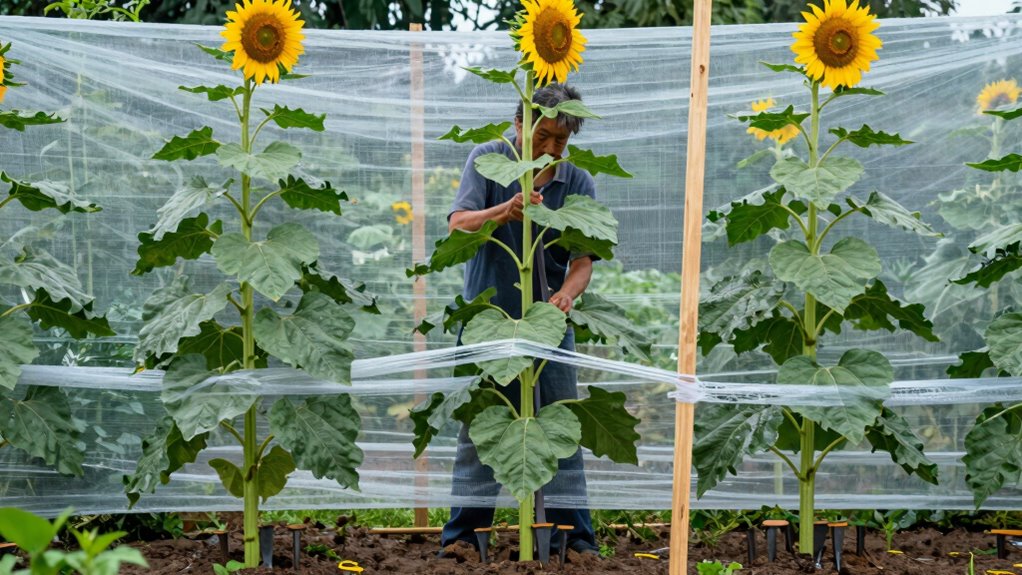
While row covers effectively protect plants from excessive moisture, tall plants require additional structural support to prevent stem breakage during severe weather events. You should install sturdy stakes or bamboo poles next to vulnerable stems, securing them with soft plant ties that won’t damage tissue.
Consider using guy wires anchored to the ground for extra stability. Cluster tall plants together to create mutual support systems. You’ll want to prune top-heavy branches before storms hit, reducing wind resistance.
Mulching around base areas helps prevent soil erosion that could undermine root stability. Don’t forget to check existing supports regularly, tightening loose connections. Your tall plants need this proactive approach because once stems snap, recovery becomes difficult.
Position supports early in growing season before plants become too large. Remember, prevention works better than repair.
What to Do Right After a Rainstorm Hits
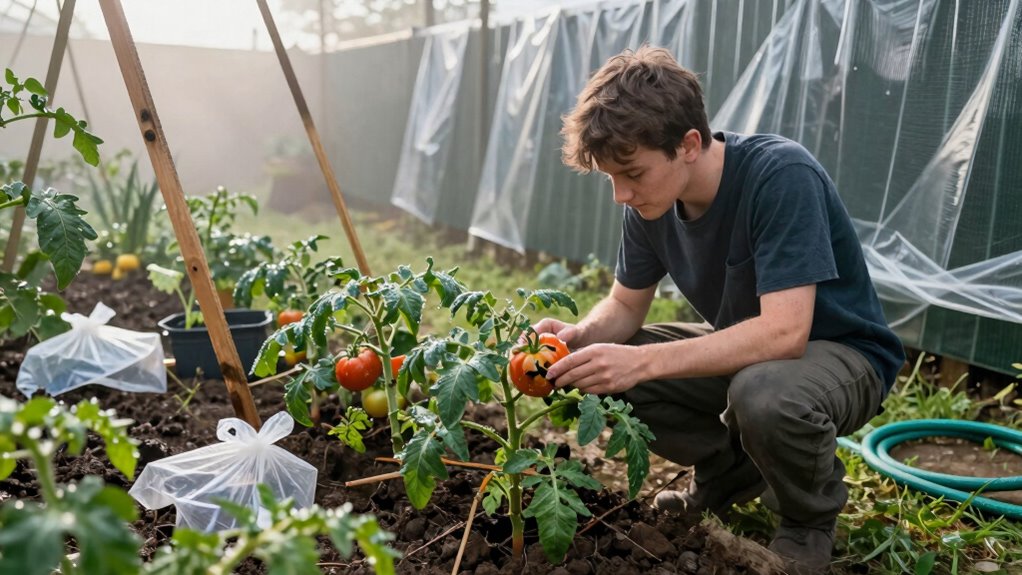
You should immediately assess plant damage by examining stems, leaves, and root zones for breaks, bends, or saturated conditions that compromise structural integrity.
Remove standing water from plant beds and containers using a garden hose or bucket to prevent root suffocation and fungal pathogen proliferation.
Apply protective mulch around affected plants to stabilize soil temperature, reduce erosion, and create a barrier against soil-borne diseases that thrive in waterlogged conditions.
Assess Plant Damage
After heavy rain subsides, you should immediately evaluate your garden’s condition to determine which plants need urgent attention.
Don’t wait too long – quick assessment prevents minor issues from becoming major problems that could devastate your entire growing season.
- Check for broken stems and branches that require immediate pruning
- Look for soil erosion around plant roots that needs replacing
- Identify completely submerged or drowned plants beyond recovery
- Spot fungal infections developing on wet leaves and stems
Your thorough evaluation helps prioritize rescue efforts effectively.
Focus first on damaged but salvageable plants rather than those already lost.
This systematic approach guarantees you’re protecting your garden investment wisely.
Remember, prompt assessment makes the difference between a temporary setback and permanent landscape damage.
Your plants depend on your immediate, knowledgeable action today.
Remove Standing Water
Standing water creates immediate threats to plant health by depriving roots of oxygen and promoting destructive fungal growth. You must act quickly to remove excess water from your garden beds and containers.
Use a garden hose or bucket to drain standing water from plant saucers, pots, and low-lying areas. Tilt containers gently to allow water evacuation without disturbing root systems. For garden beds, create small channels with your fingers or a hand tool to redirect water away from plant bases.
Check underneath leaves and in flower heads where water collects. Remove trapped water from leaf axils and blooms to prevent rot. Work systematically through your garden, focusing on areas where water pools naturally. Quick action prevents root suffocation and fungal diseases from taking hold.
Apply Protective Mulch
A protective mulch layer serves as a critical barrier against soil erosion and compaction that occurs when heavy rainfall hits garden beds. You should apply mulch immediately after rainstorms to safeguard your plants’ root systems and maintain soil structure.
Choose materials that provide superior protection:
- Organic mulches like shredded bark or compost create nutrient-rich barriers.
- Straw mulch offers excellent water absorption while preventing soil splash.
- Leaf mold adds beneficial microorganisms while protecting plant bases.
- Wood chip mulch provides long-lasting coverage for permanent garden beds.
Apply 2-4 inches evenly around plants, keeping mulch away from stems to prevent rot.
You’ll notice improved soil moisture retention and reduced erosion. Mulch acts as a sponge, absorbing excess water while allowing proper drainage.
This protective layer becomes your garden’s first defense system, ensuring plants recover quickly from storm damage.
Can Garden Gazebos Protect Against Rain Damage?
While garden gazebos can provide some protection from heavy rain, their effectiveness depends on several structural and design factors that determine how well they shield your plants.
You need to evaluate your gazebo’s roof material, slope, and coverage area. Solid roofs offer better protection than slatted ones, while proper drainage prevents water pooling. Consider your gazebo’s height clearance and whether it fully encompasses your vulnerable plants.
Positioning matters greatly. You should place gazebos strategically over susceptible plant beds rather than randomly. Check that rainwater drains away from plant roots to prevent waterlogging. Lightweight gazebos might shift during storms, so secure anchoring is essential.
You’ll find that partial coverage creates microclimates beneficial for plant recovery.
However, complete enclosure can reduce air circulation, potentially causing humidity issues.
Strengthen Plant Supports Before Storms Hit
When heavy rain approaches, you should reinforce plant supports to prevent structural failure and minimize damage. Strong winds and water saturation weaken stems and branches, making proper support systems essential for plant survival.
You’ll want to focus on these key reinforcement strategies:
- Install additional stakes around vulnerable plants, driving them deep into compacted soil for maximum stability.
- Tighten guy wires and adjust plant ties to eliminate slack that could cause swaying during storms.
- Add extra bamboo canes or support poles to distribute weight evenly across larger plants.
- Wrap protective materials like burlap around delicate stems to prevent breakage from wind-driven debris.
These preparations create a supportive framework that helps your garden withstand harsh weather conditions while maintaining plant integrity.
Harvest Crops Before a Rainstorm Damages Them
Heavy rainfall can devastate your crops within hours, so you should harvest ripe produce immediately before storms arrive. Monitor weather forecasts closely and prioritize harvesting tomatoes, peppers, and squash that show color changes indicating maturity.
Leafy greens like lettuce and spinach become bitter when waterlogged, while root vegetables may crack from rapid water absorption. Pick fruits with slightly soft skin texture and those easily detached from stems.
Store harvested crops in breathable containers away from direct sunlight. You’ll preserve nutritional value and prevent mold growth. Don’t wait until after storms pass because water damage creates irreversible cellular breakdown in plant tissues.
Your community depends on fresh local produce, so act swiftly when rain threatens. Harvesting proactively guarantees you’re contributing quality food rather than waste.
Spot Early Signs of Rain Damage Quick
How quickly can you identify the first indicators of rain damage before it becomes irreversible? You must act fast when heavy precipitation threatens your garden’s health.
Look for these critical warning signs immediately after storms:
- Leaf discoloration – Yellowing or browning edges signal cellular damage from waterlogged tissues
- Stem splitting – Vertical cracks indicate rapid water absorption has overwhelmed plant structure
- Fungal spots – Dark lesions appearing within hours show spore activation in humid conditions
- Root exposure – Soil erosion around bases means protective root systems need immediate attention
You should examine plants systematically, checking undersides of leaves where damage often begins unnoticed.
Early detection prevents cascading failures throughout your garden ecosystem. Don’t wait for obvious wilting or plant death – those signs indicate irreversible damage has already occurred.
Your quick response determines whether plants recover fully or require replacement. Time matters when dealing with rain-induced stress.
Which Containers Trap Water and Risk Root Rot?
Certain containers create waterlogged conditions that lead to root rot within 24-48 hours if drainage is inadequate. You should avoid using solid-bottom pots, decorative cachepots without drainage holes, or containers made from non-porous materials like glazed ceramics. These trap excess water around root zones, depriving them of oxygen.
Plastic nursery pots with blocked drainage holes also pose risks during heavy rainfall events. Terracotta pots, while porous, can still cause problems if saucers underneath retain water. You must guarantee your chosen containers have adequate drainage holes and elevate them slightly to prevent water accumulation.
Fiber pots and wooden planters typically offer better drainage than synthetic alternatives. Check existing containers regularly, clearing blocked drainage holes and replacing water-retentive saucers promptly.
Design a Garden That Handles Heavy Rain
When designing a garden that handles heavy rain effectively, you must plan for rapid water movement and absorption rather than relying on surface drainage alone. Your garden’s success depends on creating systems that work with natural water flow patterns.
Consider these essential design elements:
- Install French drains to redirect excess water away from plant roots and foundations.
- Create swales that channel water toward absorption areas like rain gardens or permeable surfaces.
- Use raised beds with proper drainage holes to prevent waterlogging sensitive plants.
- Plant ground covers on slopes to stabilize soil and reduce erosion during downpours.
These strategies protect your plants while managing water responsibly.
You’re not just preventing damage; you’re creating a sustainable ecosystem that thrives regardless of weather conditions.
Your garden becomes resilient, productive, and part of the solution rather than the problem.
Plants That Love Rain: What Grows in Flooding?
Why do some plants thrive in conditions that kill others? You’re witnessing nature’s incredible adaptation strategies.
Plants like cattails, sedges, and cardinal flowers possess specialized root systems that absorb oxygen directly from water. They’re not just surviving flooding—they’re designed for it.
These water-loving species develop aerenchyma tissue, creating air channels that transport oxygen to submerged roots. Their cellular structure differs fundamentally from drought-tolerant plants.
You’ll find that native wetland species handle excess moisture naturally.
Don’t fight your garden’s natural drainage patterns. Instead, embrace plants that call wet conditions home. Research your local floodplain species—they’ve evolved specifically for your climate’s extreme moisture events.
These plants don’t just survive heavy rain; they flourish.
Conclusion
Don’t wait for disaster to strike—protect your garden now. Heavy rain causes soil compaction, root suffocation, and nutrient leaching. Install proper drainage, elevate plant covers, and choose flood-tolerant species. Monitor soil moisture levels closely after storms. Prevention saves countless hours of repair work later. A stitch in time saves nine.
