

Over 80% of new gardeners start with less than 100 square feet of growing space, so you’re not alone if your backyard feels cramped. You can grow surprisingly well in small areas when you pick the right spots and plants. Let’s explore how to maximize your yield without needing much room.
Start Small: Check Your Backyard’s Sun and Layout
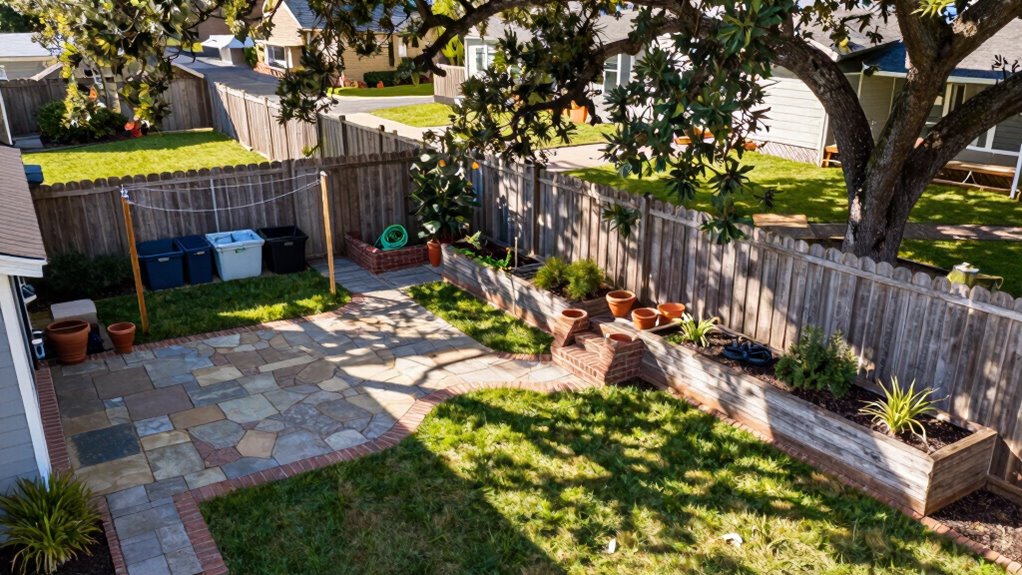
Before you dig your first garden bed, take time to observe your backyard’s natural conditions.
You’ll want to identify spots that receive at least six hours of direct sunlight daily—these areas are your prime growing locations.
Walk around your yard at different times to see how shadows shift throughout the day. Notice where water pools after rain and which areas drain quickly.
Your future vegetables will thank you for choosing well-draining spots.
Start by mapping your space with a simple sketch. Mark existing structures, trees, and fences that cast shadows.
Don’t feel intimidated if your yard seems challenging—every gardener starts somewhere.
Even small patches can yield surprisingly abundant harvests when you match plants to their ideal conditions.
Choose Vegetables That Thrive in Tight Spaces
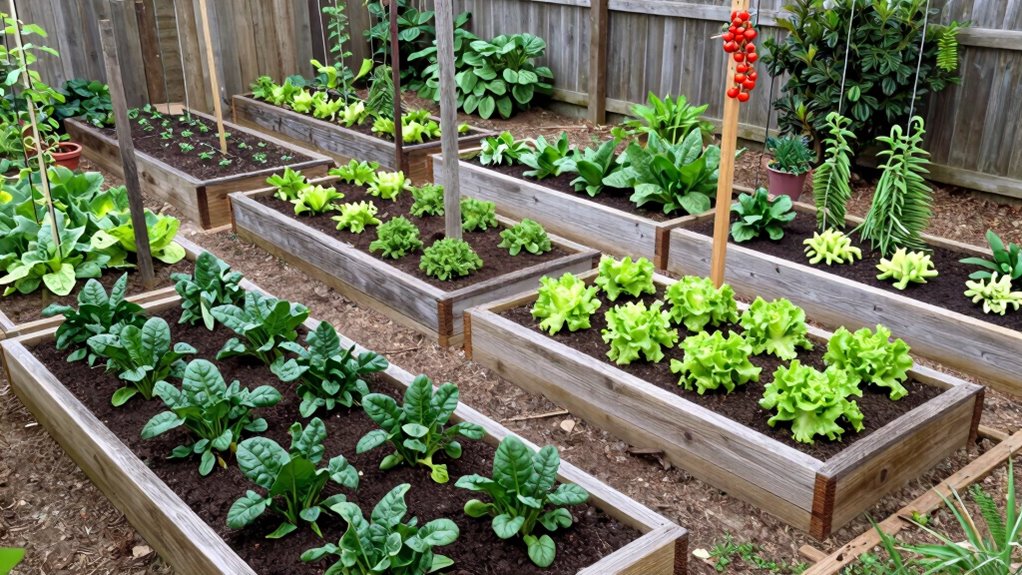
You can maximize your small garden space by selecting compact vegetable varieties like cherry tomatoes, bush beans, and mini bell peppers that don’t need much room to flourish.
Vertical growing solutions such as trellises, hanging baskets, and stackable planters help you grow upwards instead of outwards, making the most of every square inch.
These space-saving strategies let you enjoy a bountiful harvest even in the smallest gardening areas.
Compact Vegetable Varieties
Several compact vegetable varieties prove that limited space doesn’t mean limited harvest. You can grow bush beans instead of pole varieties, which mature faster and produce abundantly in small areas.
Choose cherry tomatoes over large beefsteak types – they’re perfect for containers and small plots. Radishes mature quickly and don’t require deep soil, making them ideal for tight spaces.
Leafy greens like spinach and lettuce grow well in shallow containers. Try compact cucumber varieties that don’t spread extensively.
Bush squash saves space compared to traditional vining types. Plant determinate pepper varieties that stay manageable.
These smaller cultivars might actually yield more per square foot than their larger counterparts, giving you impressive results even in modest garden spaces.
Vertical Growing Solutions
While compact varieties help maximize your harvest in small spaces, vertical growing solutions let you take advantage of height to grow more vegetables without expanding your footprint.
You can grow vining crops like cucumbers, peas, and pole beans on trellises or teepees. Install wall-mounted planters or stackable containers to grow herbs and lettuce. Try using hanging baskets for strawberries and cherry tomatoes.
Vertical systems like ladder planters or pallet gardens work perfectly in tight corners.
Don’t forget to position taller structures where they won’t cast shadows on other plants. Training plants upward also makes harvesting easier and keeps fruits cleaner.
You’ll be amazed how much you can grow when you think beyond horizontal space.
Vertical gardening connects you with other urban gardeners who maximize every inch.
Decide Between Containers or Raised Beds
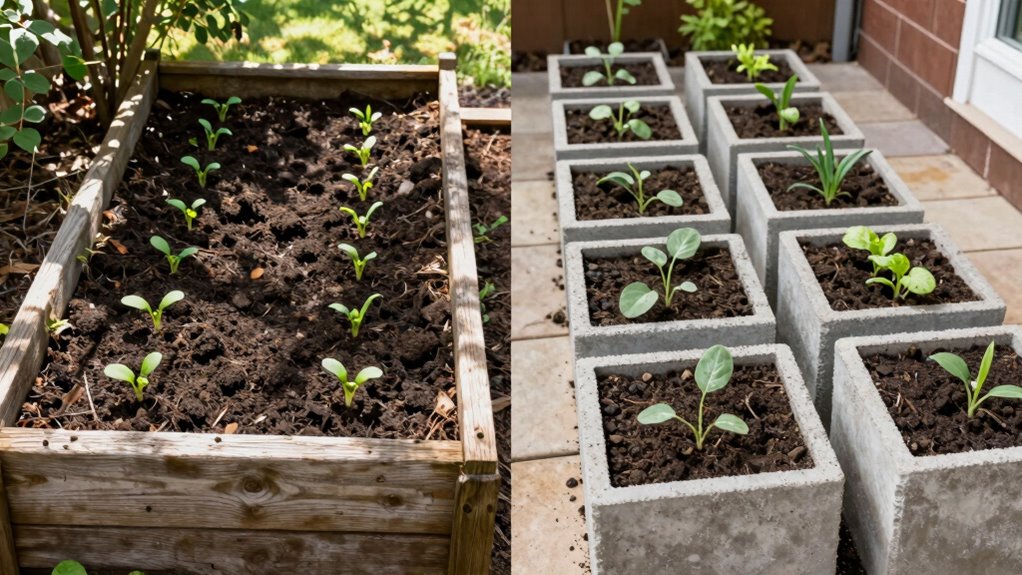
You’ll need to weigh containers against raised beds based on your available space, budget, and gardening goals.
Consider how much room you have for gardening and whether you’re working with limited space or dealing with poor soil conditions.
Both options offer unique benefits, so let’s explore how space requirements and costs factor into making the best choice for your vegetable garden.
Containers Versus Raised Beds
Both containers and raised beds offer distinct advantages for growing vegetables, and choosing between them depends on your specific gardening situation and preferences.
Containers give you ultimate flexibility – you can move them around, perfect for renters or those with limited space. They’re easier to control for soil quality and drainage issues.
Raised beds provide more growing area and better root development for larger plants like tomatoes and squash. They’re ideal if you want to create a permanent garden spot.
Consider your mobility needs, budget, and long-term gardening goals. Don’t feel locked into one choice – many successful gardeners use both methods.
Start with what feels right for your lifestyle and space constraints. You’ll find your gardening community values practical solutions over perfection.
Space Requirements And Limitations
Since your available space often dictates your gardening success, understanding how much room you need for containers versus raised beds becomes essential.
Containers fit perfectly in small patios, balconies, or corners where every square foot counts. You can easily move them around to follow sunlight patterns throughout the day.
Raised beds require more upfront space but maximize your growing area efficiently. They work best when you have at least 4×4 feet of dedicated garden space.
Don’t let limited space discourage you – many successful gardeners start with just a few containers. Measure your available area carefully, consider vertical growing options, and remember that even small spaces can yield impressive harvests when planned thoughtfully.
Your future self will thank you for maximizing every inch wisely.
Cost Comparison And Budget Planning
While space often determines your garden’s layout, your budget plays an equally important role in deciding between containers and raised beds.
Containers cost less upfront—expect to spend $20-50 for decent pots that’ll last years. Raised beds require more investment, typically $100-300 depending on materials and size.
However, raised beds offer better value long-term since they improve soil drainage and reduce maintenance. You’ll save money on replacing soil and plants compared to containers.
Consider starting small with containers if you’re budget-conscious, then upgrading to raised beds as your garden grows. Both options let you join the rewarding community of home gardeners who understand the joy of growing your own food.
Your choice depends on balancing initial costs with long-term gardening goals.
Build Vertical Gardens With Trellises and Towers
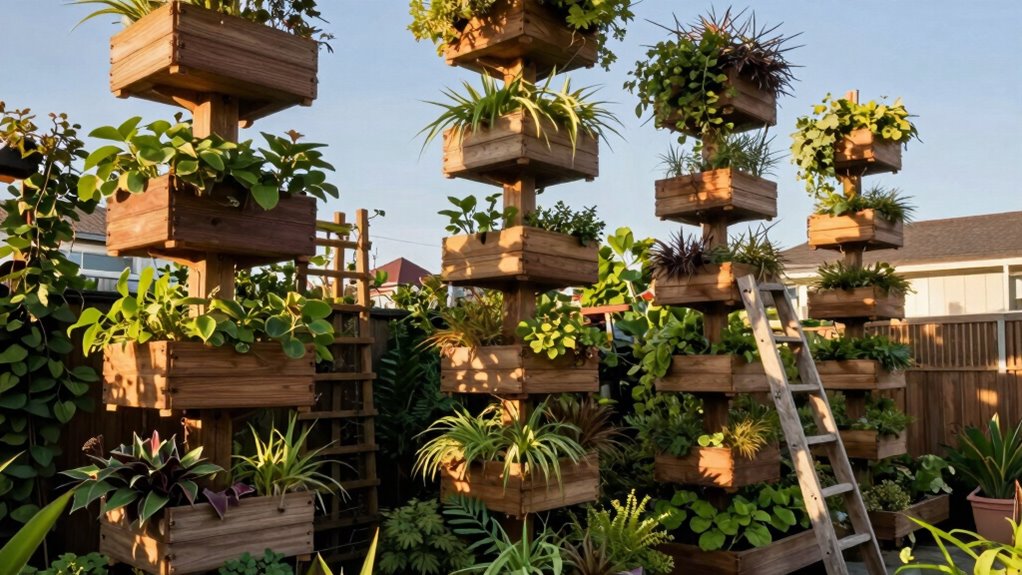
Vertical gardening transforms small spaces into productive growing areas by training plants upward rather than letting them sprawl.
You’ll maximize your growing potential while saving precious ground space. Install trellises for climbing vegetables like cucumbers, beans, and peas. Use vertical towers or stacked planters for herbs and compact vegetables.
Wooden frames work well for DIY projects, while metal trellises offer durability. Position your vertical structures against walls or fences to create natural growing columns. This method keeps your garden organized and accessible.
You’ll harvest fresh produce without bending or kneeling. Vertical gardens also improve air circulation around plants, reducing disease risks.
Start with simple bamboo poles or lattice panels if you’re new to this approach. Your small backyard suddenly becomes a thriving, space-efficient oasis that neighbors will admire.
Plan Crop Placement to Maximize Space and Seasons
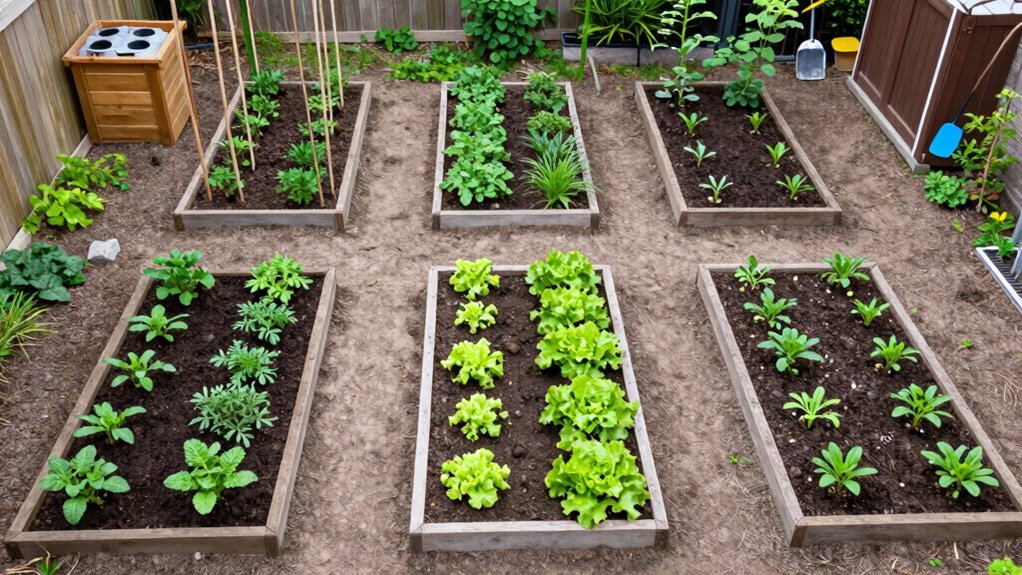
Strategic crop placement lets you harvest fresh vegetables throughout multiple seasons while making the most of every square foot in your garden space.
You’ll maximize your growing potential by thinking ahead about what goes where and when.
- Practice succession planting – Sow lettuce, radishes, and herbs every two weeks for continuous harvests instead of one big harvest all at once.
- Combine vertical and horizontal growing – Plant tall tomatoes or beans on trellises at the back, with shorter crops like peppers and herbs in front rows.
- Plan seasonal rotations – Follow cool-season greens with warm-season tomatoes, then fall crops like kale and carrots in the same spots.
This approach guarantees you’re never staring at empty dirt while making every plant count in your small space.
Prep Soil and Containers the Right Way
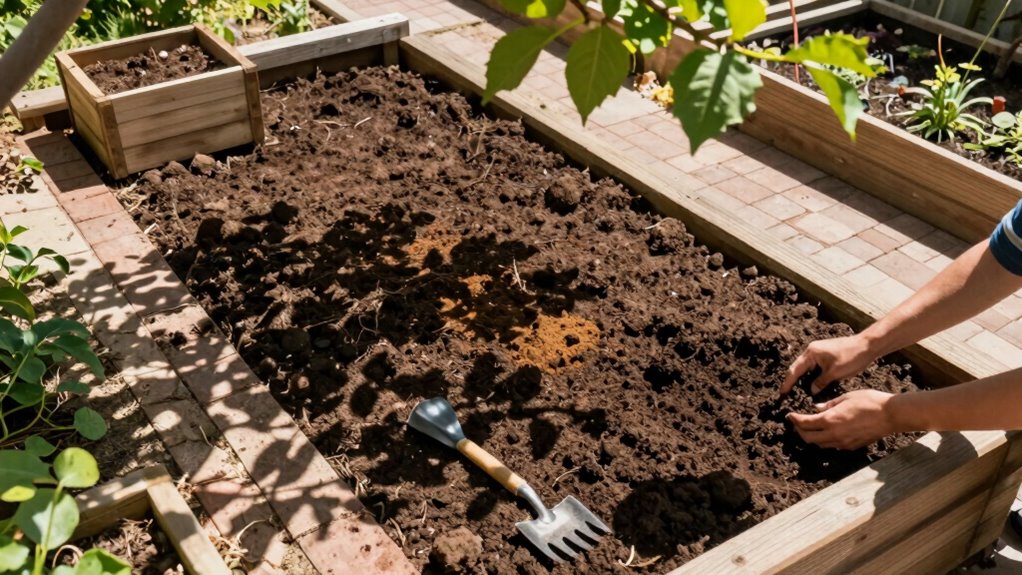
You’ll want to test your soil’s pH and nutrient levels before planting, then amend it with compost or organic matter to create the rich, well-draining foundation your vegetables need.
Choose containers that are at least 12 inches deep with drainage holes, and consider lightweight options like fabric pots or traditional clay pots depending on your space and mobility needs.
Getting these basics right sets you up for a thriving garden that’ll reward you with fresh produce throughout the growing season.
Soil Preparation Techniques
Preparing your soil properly makes all the difference between a thriving vegetable garden and one that struggles to survive.
You’ll want to start by testing your soil’s pH level, which should ideally fall between 6.0 and 7.0 for most vegetables.
1. Clear and Loosen: Remove weeds, grass, and debris from your planting area.
Use a garden fork or tiller to break up compacted soil to a depth of 12 inches, creating space for roots to grow strong and deep.
2. Amend with Organic Matter: Mix in compost, aged manure, or leaf mold to improve soil structure, drainage, and nutrient content.
This creates the rich, dark soil your vegetables crave.
3. Level and Mulch: Smooth the soil surface with a rake and apply organic mulch like straw or shredded leaves to retain moisture and suppress weeds.
Container Selection Guide
Garden soil preparation sets the foundation for success, but container gardening requires you to build that perfect growing environment from scratch.
You’ll need containers that are at least 12 inches deep for most vegetables, with drainage holes to prevent waterlogging. Plastic pots are lightweight and retain moisture well, while ceramic containers offer better insulation. Fabric grow bags provide excellent aeration and prevent root circling.
Don’t forget to contemplate your space constraints and plant mature sizes when selecting containers. Mix high-quality potting soil with compost for nutrient-rich growing medium.
Your container garden will thrive when you choose the right vessel and prepare it properly from the start.
Smart Watering for Cramped Garden Beds
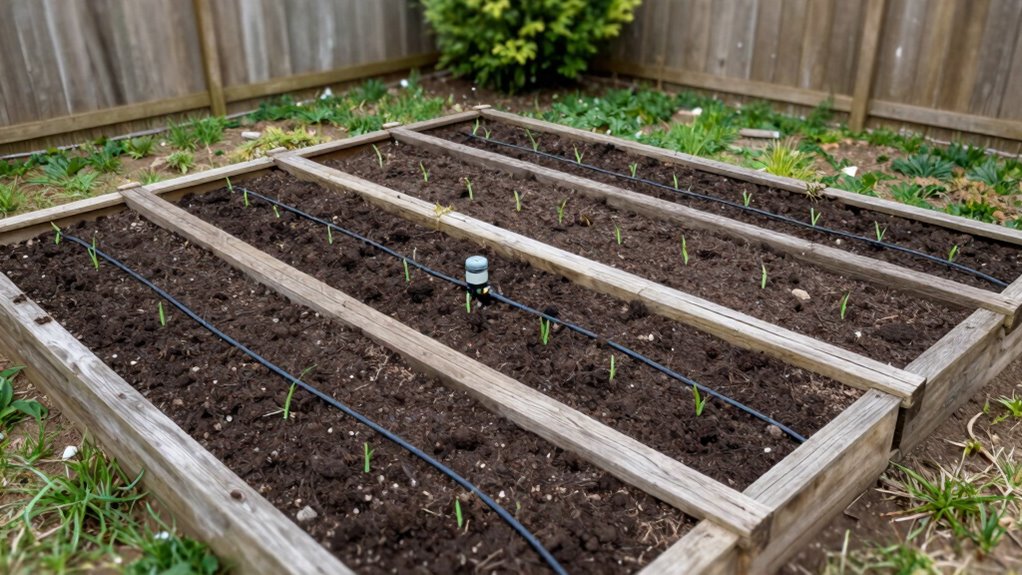
When space is limited, efficient watering becomes even more essential for your vegetable garden’s success.
You’ll maximize every drop while keeping your plants thriving in those tight spots.
- Install drip irrigation systems – These deliver water directly to roots, minimizing waste and preventing fungal diseases that spread in cramped conditions.
- Use self-watering containers – They’re perfect for small spaces and guarantee consistent moisture without daily attention, helping you feel confident your garden is cared for.
- Collect and reuse greywater – Capture water from sinks and showers to irrigate your vegetables, reducing waste while nurturing your garden.
You’ve got this!
These smart watering techniques will help your small garden flourish.
Stop Pests Early With Natural Barriers
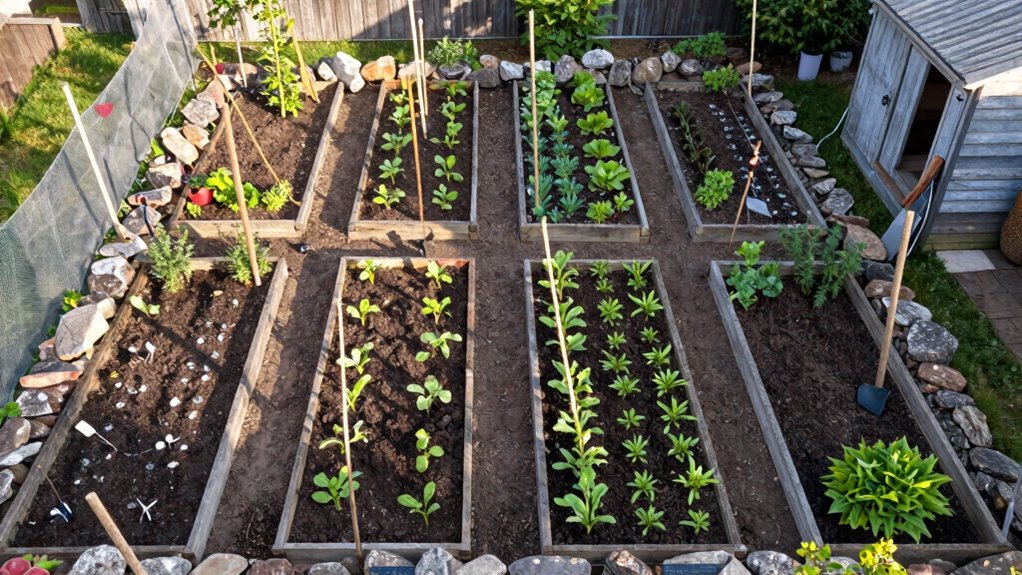
Smart watering helps your vegetables thrive, and keeping pests away early guarantees they stay healthy. You don’t need harsh chemicals to protect your garden.
Create natural barriers using companion planting like marigolds, basil, and nasturtiums around your vegetables. These plants repel common pests while attracting beneficial insects.
Install physical barriers such as copper tape for slugs, row covers for flying insects, and mesh barriers around plant bases. Diatomaceous earth works wonders against crawling pests when sprinkled around stems.
Regular inspection helps you catch problems before they escalate. Check undersides of leaves and plant bases weekly. Early intervention prevents infestations from spreading throughout your small garden space, ensuring healthy plants and bountiful harvests.
Stretch Your Harvest With Season Extenders
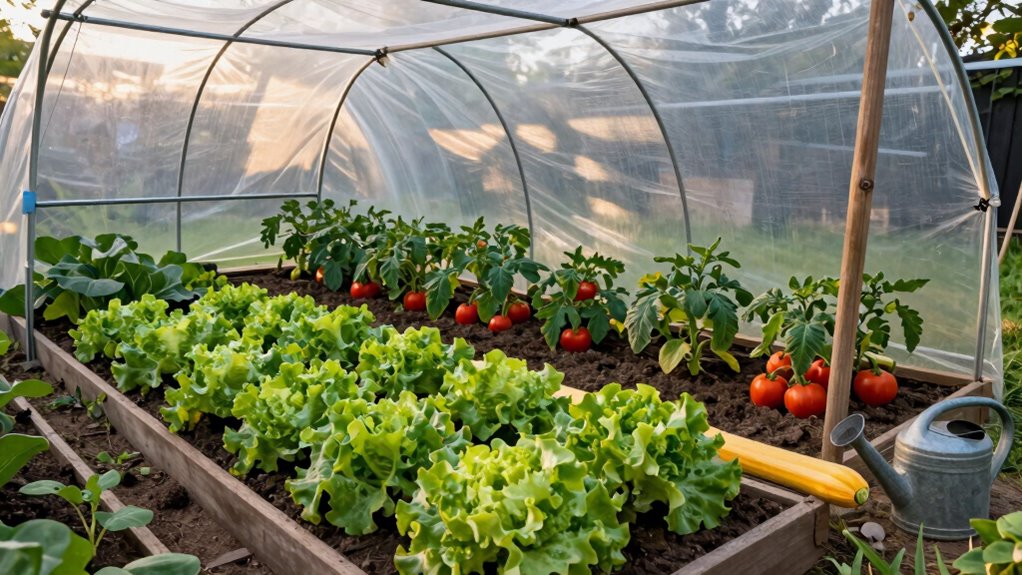
One effective way to maximize your vegetable garden’s productivity is by using season extenders that let you harvest fresh produce for months longer.
You’ll stretch your growing season and enjoy homegrown vegetables well past typical frost dates.
- Cold frames create mini greenhouses that protect plants from freezing temperatures while allowing sunlight through.
- Row covers act as lightweight blankets that shield crops from harsh weather while letting air circulate freely.
- Cloches serve as individual plant protectors that you can easily move around your garden as needed.
These simple tools help you belong to the group of gardeners who harvest fresh vegetables long after others have finished their growing season.
Quick Weekly Habits That Keep Your Garden Thriving
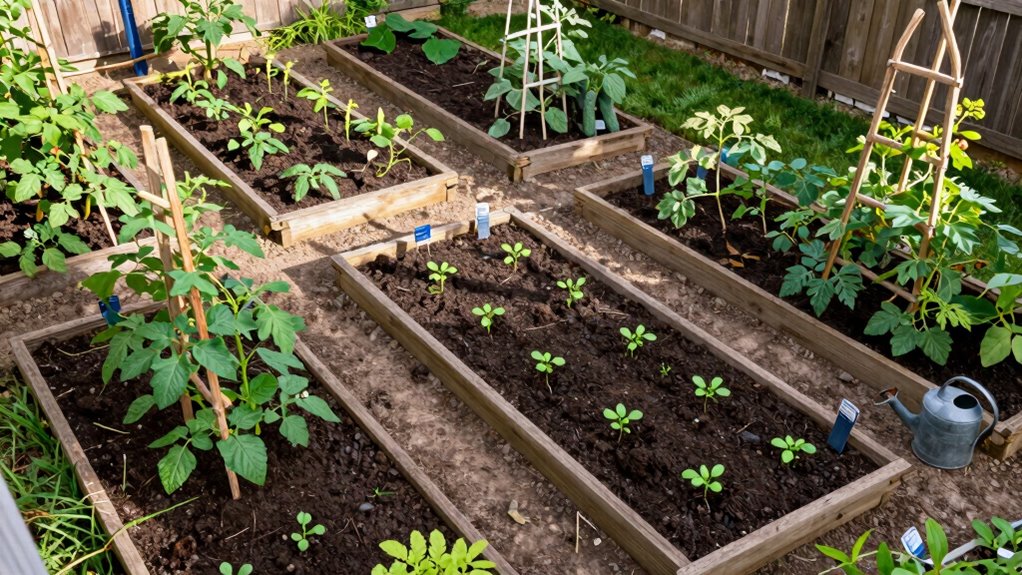
While season extenders help you harvest longer, consistent weekly habits guarantee your garden stays productive and healthy throughout the growing season.
Check soil moisture regularly and water deeply when the top inch feels dry. Remove weeds before they establish deep roots and compete with your vegetables.
Harvest ripe produce frequently to encourage continued production. Trim dead or diseased leaves immediately to prevent spread.
Apply compost tea or balanced fertilizer every two weeks for steady growth. Mulch around plants to retain moisture and suppress weeds.
Rotate crops seasonally to maintain soil health. These simple practices make you part of the thriving gardener community who knows that small, regular efforts create abundant harvests everyone can enjoy.
Conclusion
You’ve got this! Starting small and thinking smart will help you grow more in less space. Don’t put all your eggs in one basket—try different methods like containers, raised beds, and vertical growing. Keep things simple with easy-care vegetables, water wisely, and stay on top of pests. With regular care and these space-saving tricks, you’ll be harvesting fresh vegetables from your backyard in no time.
