

You need a drill that matches your home repair tasks. Light jobs like hanging pictures don’t require much power, but building shelves or driving screws into dense materials demands more torque. Voltage matters, but so does battery life and motor type. Before you buy, consider what projects you’ll actually tackle and whether you need extra batteries for uninterrupted work.
What Type of Home Projects Will You Use This Drill For?
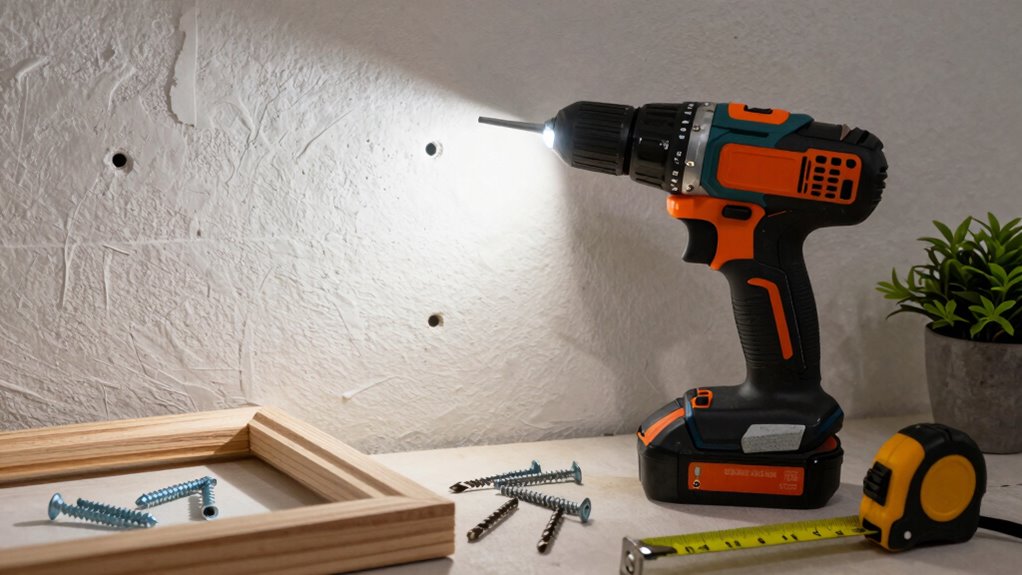
What type of home projects will you tackle with your new cordless drill?
If you’re hanging pictures or assembling furniture, you’ll need a lightweight model that’s easy to handle.
For basic repairs like fixing loose hinges or tightening screws around the house, almost any cordless drill will work fine.
When you’re building shelves or installing cabinets, you’ll want something with enough torque to handle heavier-duty tasks.
DIY enthusiasts who plan to construct furniture or tackle larger renovation projects should consider drills with multiple speed settings and clutch options.
Your project list determines the features you actually need.
Don’t overthink it – match your drill’s capabilities to your typical home improvement tasks.
Most homeowners find that a mid-range drill handles eighty percent of their needs perfectly.
How Much Power Do You Really Need in a Cordless Drill?
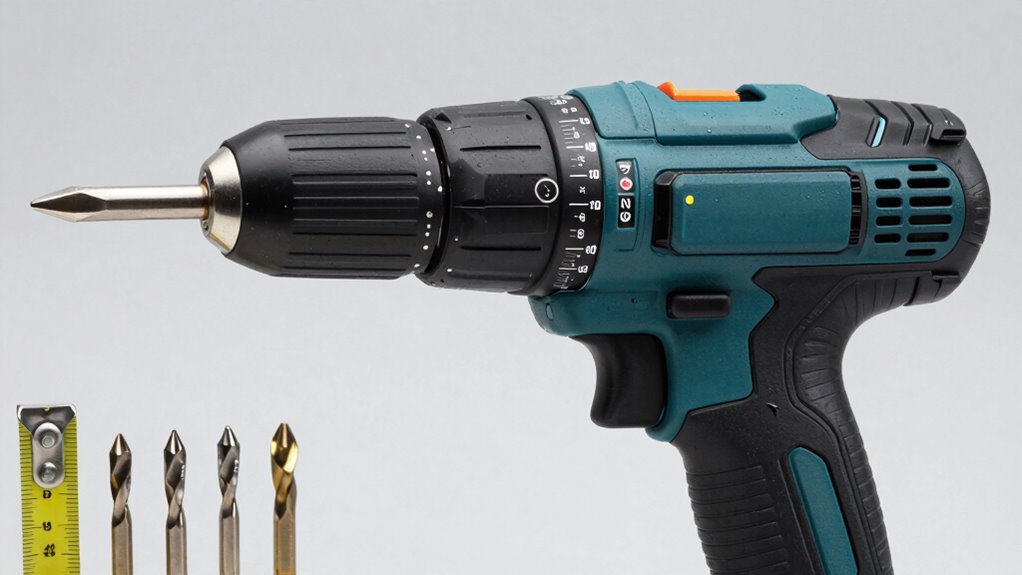
You need to match the drill’s voltage to your typical projects – 12V handles light tasks while 18V or 20V tackles heavy-duty work.
Torque settings matter because you’ll strip screws or struggle with stubborn bolts without the right power delivery.
Don’t overlook battery life since you’ll waste time swapping packs during extended projects.
Understanding Voltage Requirements
Most homeowners don’t realize that voltage isn’t always the best indicator of a cordless drill’s actual performance.
You’ll find that a 12-volt drill can handle most household tasks efficiently. Don’t automatically assume you need higher voltage for better results.
For light-duty work like hanging pictures or assembling furniture, 12 volts provides adequate power while keeping the tool compact and lightweight.
Medium-duty projects such as installing cabinets or drilling into softwoods perform well with 18 volts.
Reserve 20 volts or higher for heavy-duty applications involving hardwood or frequent use.
Consider your typical projects before choosing voltage. Higher voltage means more weight and cost.
You don’t want to overpay for unnecessary power. Match the voltage to your actual needs, not your aspirations.
This approach saves money while ensuring you have sufficient power for your home repair tasks.
Assessing Torque For Tasks
How much torque do you actually need for your home projects? For most household repairs, you’ll want between 400-600 inch-pounds of torque.
Driving screws into wood requires less power than drilling through metal or masonry. Light-duty tasks like assembling furniture or hanging pictures work fine with lower torque settings.
Heavy-duty jobs such as installing deck screws or drilling into concrete demand higher torque capabilities.
Don’t overlook variable speed triggers – they let you match power to the material. You’ll appreciate having extra torque when tackling stubborn screws, but excessive power isn’t always better.
Consider your typical projects before overspending. A mid-range torque specification suits most homeowners adequately while keeping costs reasonable.
Match the tool’s capability to your actual needs.
Battery Life Considerations
Everyone wants a cordless drill that won’t die halfway through a project.
You’ll need to balance battery life with your typical usage patterns. For occasional home repairs, a 12-volt drill with 1.5-hour runtime works fine. Heavy-duty projects demand 18-volt or 20-volt models with 2-3 hour runtimes.
Don’t overlook lithium-ion batteries—they’re lighter and hold charge longer than older nickel-based options. Keep an extra battery handy for long jobs.
Pay attention to charging time; faster chargers get you back to work quicker. Consider battery indicators that show remaining power.
You don’t need maximum voltage for simple tasks like hanging pictures, but basement renovations require serious power. Match battery capacity to your actual needs, not just maximum specs.
Which Battery Gives You More Bang for Your Buck?
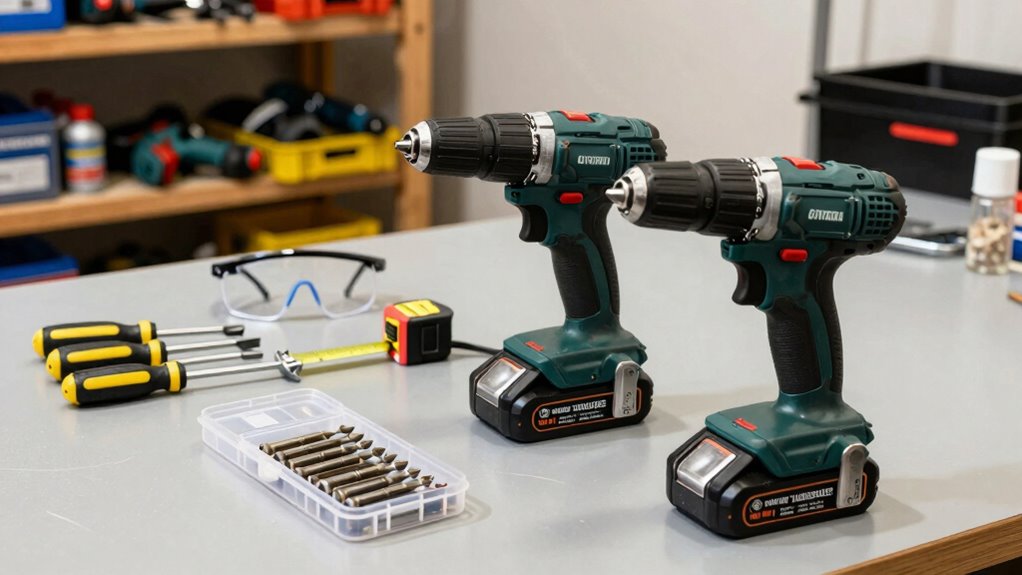
You’ll want to compare battery life, voltage output, and charging times to find the best value for your money.
Higher voltage doesn’t always mean better performance if the battery drains quickly or takes forever to recharge.
Smart shoppers look at these three factors together rather than focusing on just one specification.
Battery Life Comparison
While lithium-ion batteries dominate the cordless drill market today, understanding their real-world performance requires looking beyond manufacturer claims.
You’ll find that actual runtime varies considerably based on your drilling habits and material types. Higher amp-hour ratings don’t always translate to longer work time when tackling tough projects.
Nickel-metal hydride batteries still linger in budget models, but they’re heavy and memory-prone.
Lithium-ion batteries deliver consistent power until they suddenly quit, so keep spare batteries handy. Pay attention to charging time too – some batteries claim fast charging but deliver weak performance.
Test batteries under load rather than idle time. Your best bet is reading user reviews from people doing similar work.
Don’t overlook battery indicator lights; they prevent surprises mid-project. Quality batteries cost more but save frustration.
Voltage Power Output
Battery life matters less if you don’t have enough power to drive screws or drill through tough materials. You need sufficient voltage to handle your home repair tasks effectively.
Higher voltage typically means more torque and better performance through dense woods, metals, and masonry. Don’t assume bigger numbers always equal better results. Match voltage to your actual needs. Eighteen-volt drills handle most household jobs well. Twelve-volt models work fine for lighter tasks. Twenty-volt options give you extra muscle when you need it.
Consider your typical projects before spending more. Pay attention to amp-hour ratings too. These indicate battery capacity and runtime. Look for lithium-ion batteries. They’re lighter, hold charge longer, and perform better than older nickel-based technologies. You’ll find they deliver consistent power throughout discharge cycles.
Charging Time Efficiency
Since lithium-ion batteries deliver consistent power throughout discharge cycles, they’ve become the standard for cordless drills that need reliable charging efficiency.
You’ll find these batteries recharge faster than older nickel-based options, typically needing just one to three hours for full charges.
Look for drills with lithium-ion batteries rated at 2.0Ah or higher for better runtime between charges. Higher amp-hour ratings mean longer work periods, but also slightly longer charging times.
Consider having spare batteries on hand for continuous work. Fast-charging capabilities matter when you’re in the middle of projects and can’t afford long downtime. Quality chargers with cooling fans prevent overheating and extend battery life.
Don’t overlook brushless motors that reduce power consumption, giving you more actual working time per charge cycle.
How Important Is Run Time When Choosing a Drill?
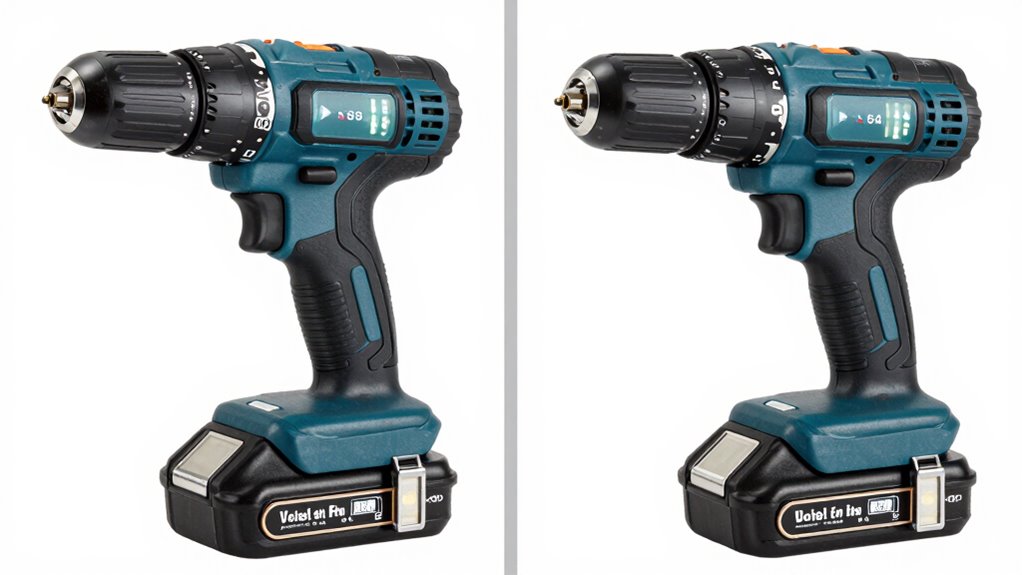
Why does battery life matter so much when you’re shopping for a cordless drill?
You’ll quickly realize that runtime determines whether you finish your project or hunt for an outlet halfway through. A drill with poor battery life leaves you stranded during critical moments, especially when working in areas without easy access to power.
You want a drill that lasts through complete projects, not one that dies after drilling a few holes. Longer runtime means fewer interruptions and less frustration.
Pay attention to amp-hour ratings – higher numbers usually mean better performance. Don’t overlook voltage either, since it affects both power and runtime.
Your drill should work as hard as you do, completing tasks without constant recharging breaks.
Should You Get Extra Batteries and Chargers?
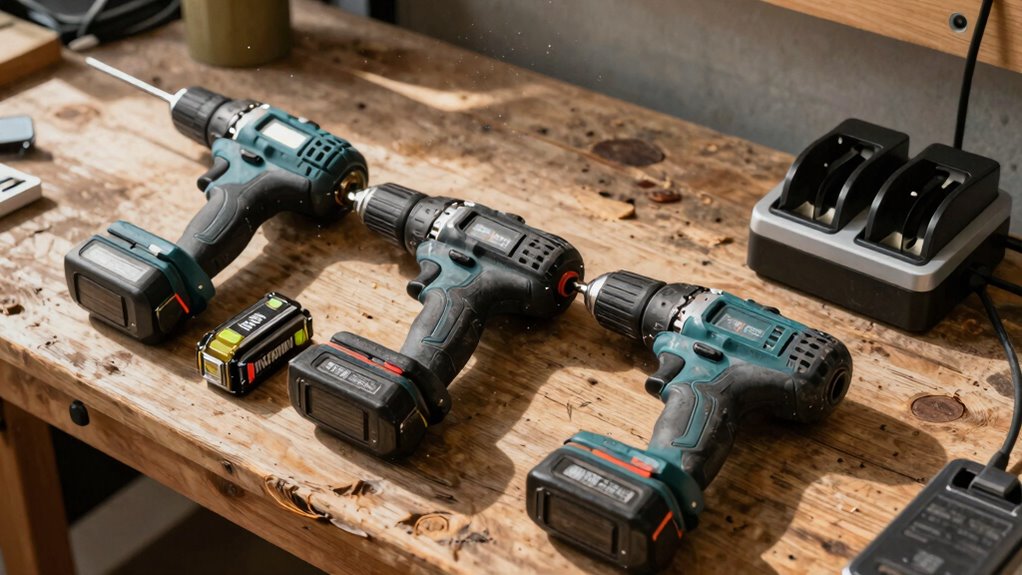
You should consider extra batteries if you do lengthy projects or hate waiting around for charges.
Check that any additional chargers work with your drill’s battery type before buying.
Weigh the upfront cost against the convenience of never running out of power mid-job.
Extra Battery Benefits
While you mightn’t think twice about it, having extra batteries for your cordless drill can save you from frustrating interruptions during important projects.
You’ll avoid scrambling when your battery dies mid-task, keeping your workflow smooth and productive. Extra batteries mean you can tackle larger jobs without waiting for recharges.
They’re especially valuable when working in areas without easy access to power outlets. You’ll feel more prepared and confident knowing you have backup power ready.
Battery swaps take seconds, eliminating downtime completely. For frequent DIYers, having spare batteries becomes essential rather than optional.
You’ll discover that extra batteries aren’t just convenient—they’re practically necessary for serious home repair work.
Don’t underestimate how much smoother your projects run when you’re never stuck waiting.
Charger Compatibility Options
Having extra batteries becomes more valuable when you understand how charger compatibility affects your workflow. You don’t want to discover mid-project that your spare battery won’t charge because of incompatible chargers.
Consider these key compatibility factors:
- Voltage matching – Your charger must match your battery’s voltage exactly. A 20V battery needs a 20V charger, not a 12V or 40V unit.
- Brand-specific designs – Many manufacturers use proprietary charging systems. Generic chargers might seem cost-effective but often fail to work properly with your drill’s battery chemistry.
- Multi-battery charging – Some chargers handle multiple batteries simultaneously, letting you rotate charged units while others charge. This keeps your work flowing smoothly without interruption.
Check compatibility before purchasing extras.
Cost Versus Convenience
Convenience often comes with a price tag when it comes to cordless drill accessories.
You’ll face the extra battery dilemma during extended projects or when your charger dies unexpectedly. Having spare batteries means uninterrupted work, but they cost money upfront.
Consider your usage patterns honestly. If you tackle frequent repairs, extra batteries save time and frustration. You’ll avoid project delays waiting for charging cycles.
However, if you’re budget-conscious and use your drill occasionally, sticking with one battery works fine. The key is matching your purchase to actual needs, not hypothetical scenarios.
Don’t let sales pressure push unnecessary extras. Your wallet and workflow will thank you for making practical choices based on real usage.
What Chuck Type Fits Your Fastener Needs?
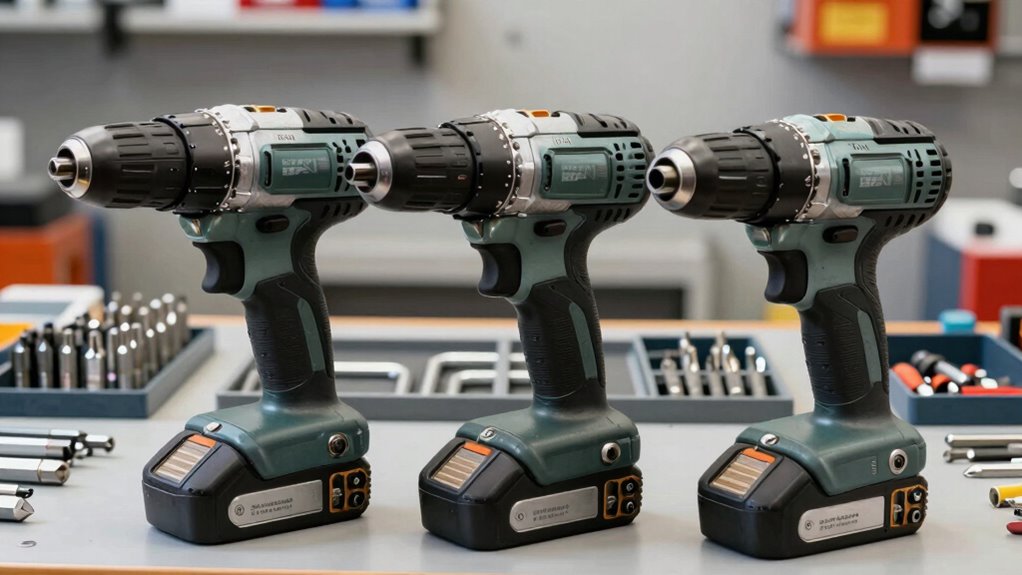
How do you know which chuck type will handle your fasteners effectively? You need to match your drill’s chuck to your most common fastener types for better control and efficiency.
Key chuck types include:
- Keyless chucks – These let you quickly change bits by hand, perfect for frequent bit swapping during varied home projects.
- Keyed chucks – While requiring a separate tool, they provide superior bit gripping power for heavy-duty applications like concrete or metal work.
- Hammer chucks – Specifically designed for masonry bits, these create hammering action essential for drilling into concrete and brick.
Your typical fastener materials and sizes should guide your choice.
Wood and general household repairs work well with keyless chucks, while construction-grade tasks might demand keyed or hammer chucks.
Brushed vs Brushless Motor – Which One Matters More?
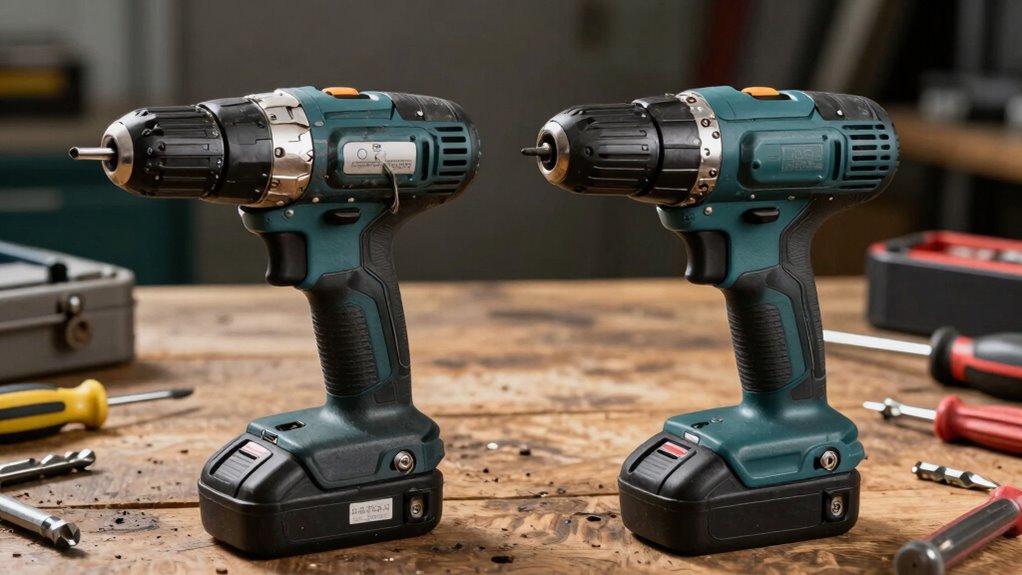
When you’re tackling home repairs, the motor type in your cordless drill greatly impacts performance and longevity.
Brushed motors work fine for occasional use, but they wear out faster because carbon brushes create friction and need replacement. You’ll notice reduced power over time as brushes degrade.
Brushless motors eliminate this problem entirely. They’re more efficient, generate less heat, and deliver consistent power throughout the battery’s life. You’ll get longer runtime and better performance in demanding situations.
For serious home improvement projects, brushless motors matter more because they handle varied materials and extended use better.
While they cost more upfront, you’ll appreciate the reliability and performance when drilling through tough materials or working in tight spaces where power matters.
How Does Torque Control Improve Your Work Quality?
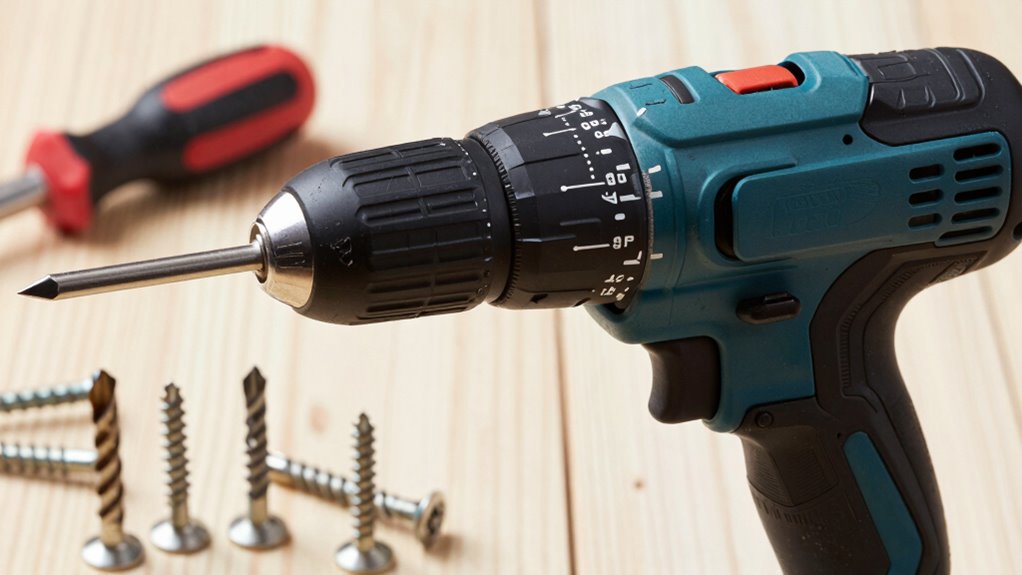
You’ll notice how torque control lets you adjust speed and power output to match different materials and fastener sizes.
This feature prevents overdriving screws and stripping threads while giving you better control when driving into various surfaces.
Your work becomes more efficient and precise when you can easily switch between delicate and heavy-duty drilling tasks.
Precise Speed Regulation
One key feature that separates good cordless drills from great ones is their ability to deliver precise speed regulation through advanced torque control systems. You need this precision to avoid stripping screws and damaging materials during home repairs.
When you’re working with different materials, precise speed regulation becomes essential:
- Wood projects require variable speeds to prevent splitting while driving screws home.
- Metal applications demand consistent low speeds to maintain control and prevent overheating.
- Delicate drywall installations need gentle torque settings to avoid damaging thin sheets.
You’ll notice the difference immediately when switching between materials. Advanced torque control prevents you from applying too much force, which means fewer mistakes and better results.
This precision gives you confidence tackling various household projects without second-guessing your drill’s performance. You belong among confident DIYers who understand that proper speed regulation transforms frustrating repairs into satisfying accomplishments.
Enhanced Driving Control
Precision matters most when you’re driving screws into various materials around your home. Torque control lets you dial in exactly how much force your drill applies, preventing stripped screws and damaged surfaces.
You’ll find adjustable clutch settings that match your material – lower torque for drywall, higher for hardwood. This control means you’re not fighting your tool anymore. Instead, you’re working with it, feeling confident that each screw drives perfectly.
Your work quality improves because you’re not overdriving fasteners or leaving them too loose. You’ll achieve consistent results every time, making your repairs look professional.
Torque control transforms frustrating stripping issues into smooth, controlled driving. You’ll spend less time fixing mistakes and more time completing projects properly.
Improved Work Efficiency
Torque control directly impacts how efficiently you complete home repair tasks.
You’ll notice the difference immediately when driving screws without stripping heads or damaging materials. Proper torque settings prevent common mistakes that slow you down and compromise your work quality.
- Prevent screw stripping – You avoid backing out stripped screws and starting over, saving valuable time on every project.
- Reduce material damage – You won’t over-drive screws into soft woods or drywall, maintaining clean surfaces that require less cleanup.
- Increase driving speed – You can work faster knowing your drill automatically stops at the right depth, eliminating guesswork and constant adjustments.
Torque control makes you more confident and productive during repairs.
Can Your Drill Handle Wood, Metal, and Concrete?
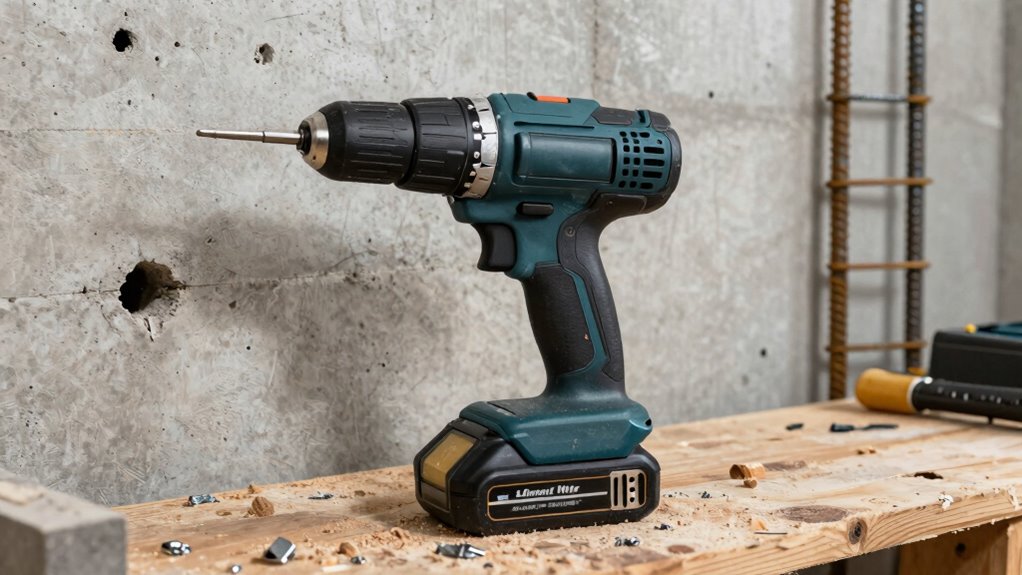
How do you know if your cordless drill can handle the variety of materials you’ll encounter during home repairs?
Check your drill’s specifications and capabilities before tackling different projects. Wood requires less torque and standard drill bits, while metal demands higher RPM settings and specialized bits like cobalt or titanium-coated ones.
Concrete needs carbide-tipped masonry bits and significant power output. Your drill’s chuck type matters too – keyless chucks work better with standard bits, while keyed chucks provide more torque for heavy-duty materials.
Look for drills with adjustable torque settings and multiple speed options. Don’t assume all cordless drills perform equally across materials.
Read user manuals and manufacturer guidelines to understand your drill’s limitations and best applications for each material type.
When Do You Need a Hammer Drill Mode?
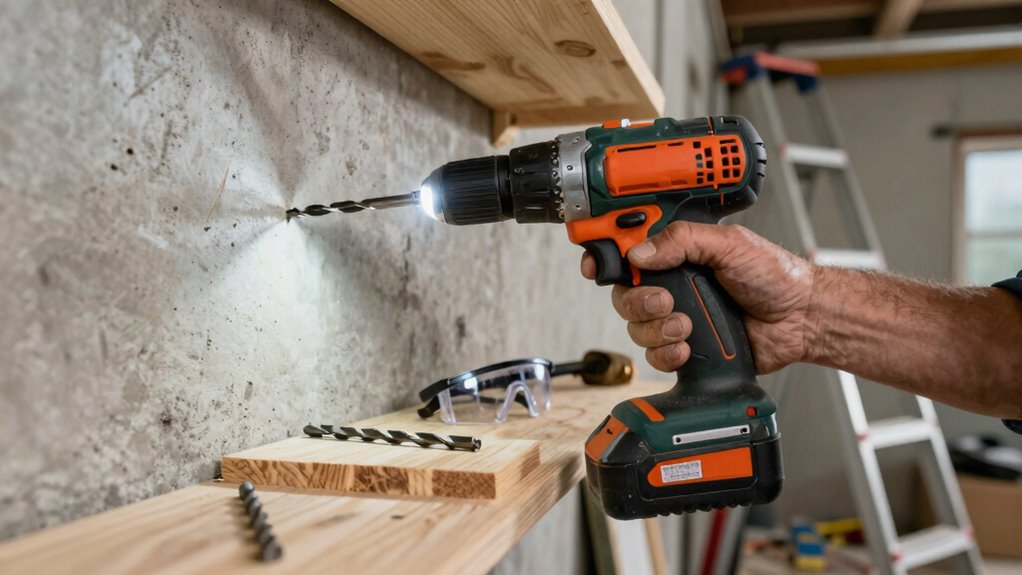
You’ll want a hammer drill mode when regular drilling just can’t cut it through tough materials like concrete, brick, or stone. This feature delivers rapid impacts that break down resistance while rotating the bit.
Consider these situations where hammer drill mode becomes essential:
- Anchoring into concrete walls – When mounting heavy shelves or cabinets, you need those explosive impacts to penetrate concrete effectively.
- Drilling through masonry – Whether it’s red brick or stone veneer, hammer action prevents bit wandering and reduces user fatigue.
- Heavy-duty fastening applications – Driving large screws or bolts into dense materials requires the extra punch only hammer mode provides.
Without this capability, you’ll struggle with slower progress and premature bit wear.
Hammer drill mode isn’t just helpful—it’s necessary for serious home improvement projects involving tough substrates.
Is Weight Going to Slow Down Your Work?
While heavier drills can feel more substantial and powerful, they’ll actually slow you down during extended use. Your arm fatigue faster when holding a bulky drill for hours, especially when working overhead or in tight spaces.
You’ll find yourself struggling to maintain precision as your muscles tire.
Lighter drills let you work longer without exhaustion. You’ll move quicker between tasks and maintain better control throughout your project.
Don’t mistake weight for quality – modern lightweight drills deliver excellent performance without the burden.
Consider your typical projects. If you’re doing lots of drilling overhead or working in cramped areas, a lighter tool makes sense.
Your body will thank you after long work sessions. Choose a drill that feels comfortable in your hands, not one that feels like a workout.
Can a Compact Drill Deliver Enough Punch?
Compact drills often surprise people with their capabilities. You might think you need a heavy-duty model, but modern compact drills pack serious power for most home projects.
Don’t underestimate what these smaller tools can handle:
- Battery voltage matters more than size – A 20V compact drill outperforms older 18V full-size models while fitting in tight spaces.
- Gear mechanisms amplify torque – Quality compact drills use advanced gearing to deliver unexpectedly strong performance.
- Workload matches capability – For typical household repairs like hanging shelves or assembling furniture, compact drills provide plenty of punch.
You’ll find that compact drills handle everyday tasks effortlessly. Their smaller size actually improves control during precision work.
Trust your compact drill to tackle jobs you might’ve reserved for larger tools.
Do You Prefer Multiple Modes Like Drill/Driver?
Having multiple modes like drill/driver functionality gives you precise control over different materials and applications.
You’ll tackle wood, metal, and masonry with appropriate torque settings while driving screws without stripping them. Single-mode drills force you to guess pressure and speed, often damaging materials or creating imperfect holes.
Multiple modes let you match the tool’s behavior to your specific task – low speed high torque for driving lag bolts, high speed low torque for drilling pilot holes. This versatility means you’re prepared for whatever DIY project comes your way.
Don’t settle for basic models when adjustable settings make your work cleaner and faster. You deserve tools that adapt to your needs, not the other way around.
Multiple modes are essential for serious home improvement work.
Which Brand Delivers Reliable Value for DIYers?
When you’re investing in a cordless drill, brand reliability directly impacts your long-term satisfaction and tool performance. You want a tool that won’t let you down mid-project.
1. DeWalt delivers consistent power and durability that serious DIYers trust. Their tools handle heavy-duty tasks without complaint.
2. Makita offers excellent build quality and innovative features that make your work easier. You’ll appreciate their reliable lithium-ion batteries.
3. Bosch provides precision engineering and long-lasting performance. Their compact designs fit comfortably in your hand during extended use.
These brands understand DIYers need tools that perform consistently. You’ll find their warranties back up their confidence.
Don’t chase cheap knockoffs – invest in brands that stand behind their products. Your future self will thank you for choosing reliability over flashy marketing.
Pick a brand that’s proven itself in garages and workshops just like yours.
What Safety Features Are Worth Paying Extra For?
Powerful cordless drills demand respect for their capabilities, and smart safety features can prevent accidents before they happen.
You should prioritize drills with variable speed triggers that let you control power output precisely. Clutch settings matter because they prevent overdriving screws and stripping materials. Look for models with keyless chucks that tighten automatically, reducing slippage risks.
Battery level indicators keep you from getting caught mid-project with dead power. Anti-slip grips improve control during extended use. Don’t overlook LED work lights for visibility in dark spaces.
These features aren’t luxuries; they’re practical investments that make your drilling experience safer and more efficient. You’ll appreciate them every time you tackle repairs.
Where to Buy and What Common Mistakes to Avoid?
You’ll want to shop at reputable retailers like home improvement centers, hardware stores, or authorized online dealers where you can compare models side-by-side and get expert advice.
These locations offer warranties and return policies that protect your investment.
Avoid these common mistakes:
- Don’t buy based solely on price – Cheap drills often lack torque and durability. Spend a bit more for quality that lasts.
- Skip the impulse purchases – Test the drill’s weight and grip comfort before buying. You’ll use it for hours.
- Ignore battery compatibility – Check if replacement batteries are readily available and affordable.
Stick to trusted brands and read reviews from actual users who’ve tackled similar projects.
Conclusion
You’ve got this. Don’t let drill selection overwhelm you – it’s simpler than threading a needle. Focus on your project needs, prioritize reliability over bells and whistles, and remember that a quality mid-range option often hits the sweet spot. Your future self will thank you when projects flow smoothly without frustrating power gaps or cumbersome setup. Choose wisely, work confidently.
